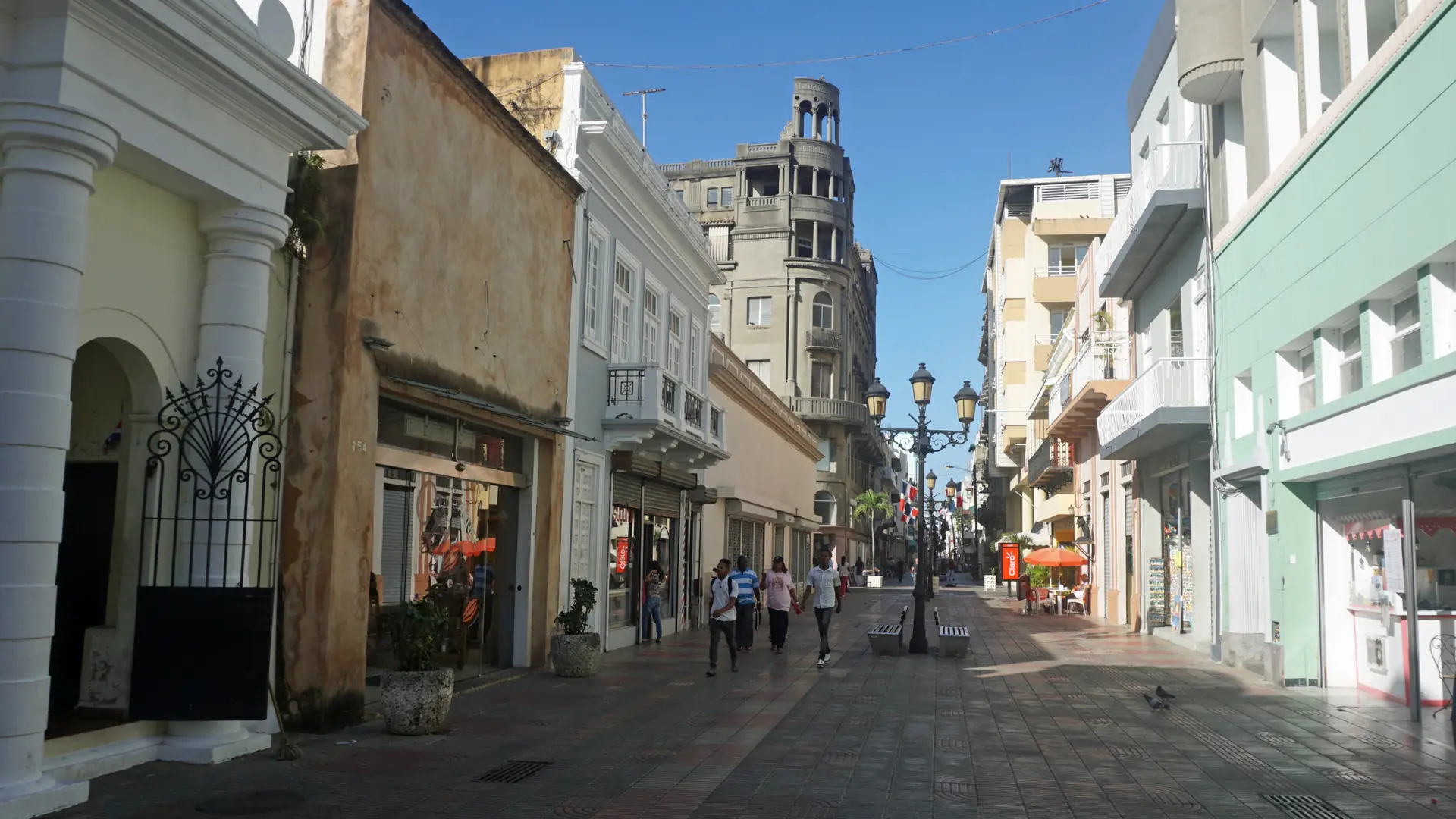
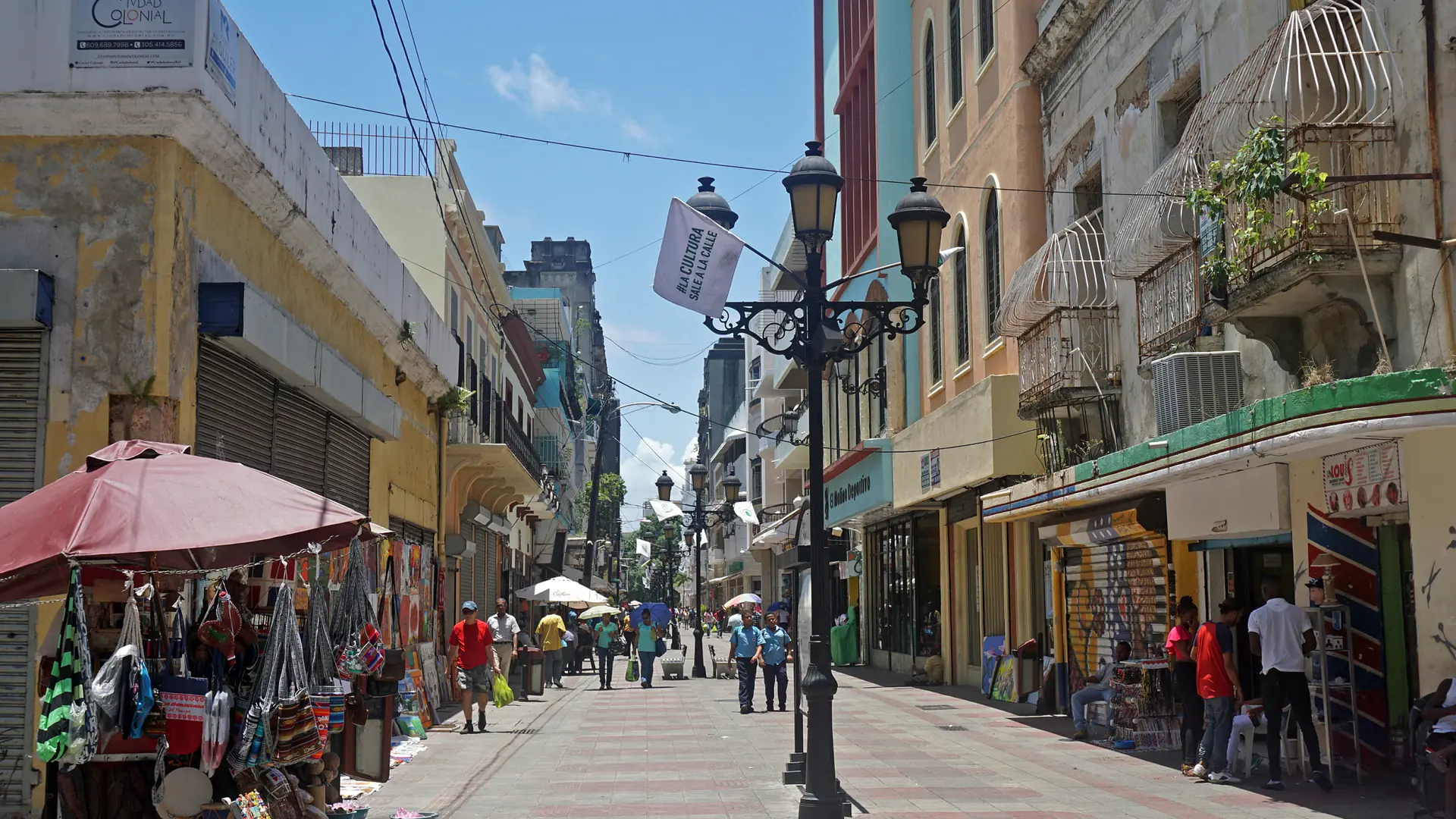
Sunlit Calle El Conde street with colonial buildings and a church tower in Santo Domingo

Santo Domingo: give the capital more than a stopover

Loading Santo Domingo hotel search

Find your Santo Domingo city base

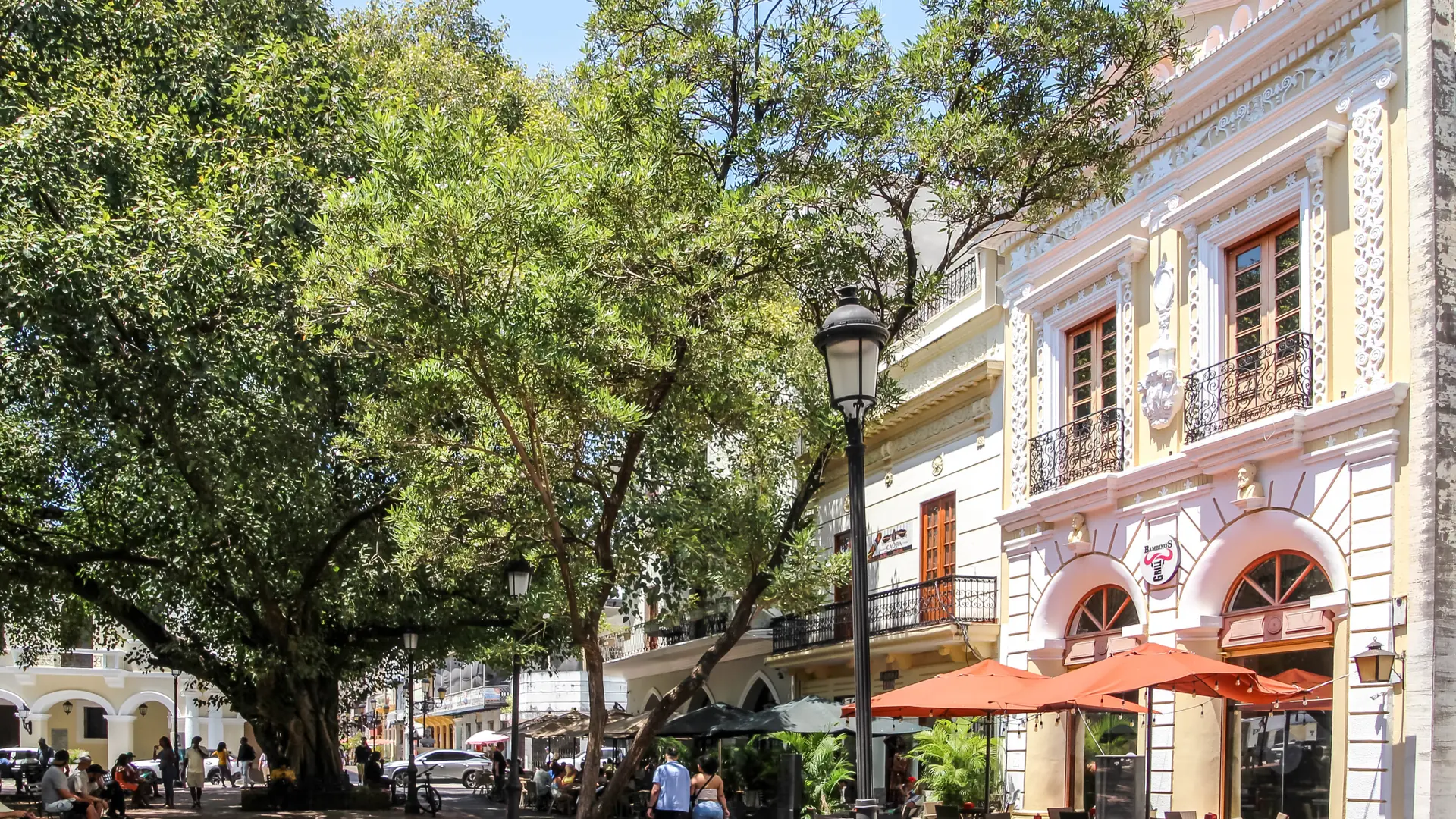
Santo Domingo brings together stone churches, leafy plazas and the daily life of a Caribbean capital. In the Colonial City, start around Parque Colón and the cathedral, follow Calle Las Damas toward the Ozama River, then leave time for a meal and a second walk. The Alcázar de Colón faces broad Plaza de España, while shops and cafés line pedestrian Calle El Conde. Beyond the old streets, the Malecón gives you sea air and an evening promenade; modern districts offer larger hotels and a different restaurant scene. Three nights make a useful first stay, with two full days to divide between history and another side of the city. Give the Colonial City one day, then choose Los Tres Ojos for cave lagoons, or a slower day of waterfront walks and city dining. A central heritage room makes short walks and breaks easy. Gazcue suits a residential setting, Piantini a modern hotel routine, and the Malecón a sea-facing stay. Choose the area around how you want to spend those days.

Colonial City Plazas, churches and a walkable street grid

Start at Parque Colón and the cathedral, follow Calle Las Damas and continue toward Plaza de España. A room in the old district leaves time for a museum, lunch and another walk later in the day.

Gazcue A residential base near the old centre

Gazcue has an everyday city feel, with houses, small hotels and access to central sights. It suits a stay with local meals and a planned walk or short ride into the Colonial City.

Piantini Modern hotels and contemporary dining

Choose Piantini when meetings, restaurants and a full-service hotel will shape most days. Set aside a separate outing for the historic centre, with transport there and back.

Malecón A city walk beside the Caribbean

Avenida George Washington follows the coast, with recreation areas, sea-facing hotels and places to eat. Walk around Plaza Juan Barón or Güibia, then return for dinner in the city.

Nature outing Cave lagoons at Los Tres Ojos

East of the centre, Los Tres Ojos offers freshwater lagoons beneath limestone walls. Stairs lead down to paths around the water, and a small barge reaches a fourth, open-air lagoon.

Arrival Land at Las Américas Airport

Reserve a transfer from SDQ to your named hotel. A colonial street, a Gazcue address and a Piantini hotel have different final approaches; keep the arrival afternoon for settling in and a nearby meal.

StartBooker answer

Where should I stay in Santo Domingo for a first cultural visit?

Choose Zona Colonial for a first visit built around historic streets, museums and dinners on foot. Gazcue offers a residential base nearby, while Piantini suits modern hotels, meetings and contemporary dining, with a ride to the old city. The Malecón adds sea views and a daily promenade walk. Three nights give you two full days: one for the Colonial City and another for Los Tres Ojos, the waterfront or modern neighbourhoods. Stay near the places you will return to each day, then choose the hotel.

Heritage
The Colonial City is Santo Domingo’s UNESCO World Heritage area.
Urban sea
The Malecón is a city promenade along Avenida George Washington.
Outing
Los Tres Ojos is east of the historic core and requires a separate trip.
Airport
Las Américas Airport (SDQ) serves the capital, with a road transfer to your hotel.
Entry
The no-cost official e-ticket covers commercial air arrival and departure.
Colonial landmark
The Alcázar de Colón faces Plaza de España in the Colonial City.

Things to do in Santo Domingo, Dominican Republic

Explore tours, attractions and local experiences in Santo Domingo, Dominican Republic.

Loading activities…

Activities provided by GetYourGuide. We may earn a commission on bookings.

AI-powered

Plan three nights in Santo Domingo

Choose a city district, add your arrival time and build a stay with one full heritage day and another for cave lagoons, the waterfront or modern dining.

Four districts for four kinds of city stay

Stay in Zona Colonial for history on foot, Gazcue for a residential setting, Piantini for modern hotels or the Malecón for sea air. Each puts a different part of the capital into your daily routine.

Sunny Calle El Conde pedestrian street and shops in Santo Domingo Colonial City

Zona Colonial

Heritage walks, museums and old-city evenings

Zona Colonial puts churches, plazas and old stone streets close together. Start with the cathedral and Parque Colón, walk Calle Las Damas and continue toward the Alcázar on Plaza de España. This is the easiest first base for a cultural visit, with a room nearby for a break and plenty of reasons to come out again for dinner.

UNESCO Walk Culture
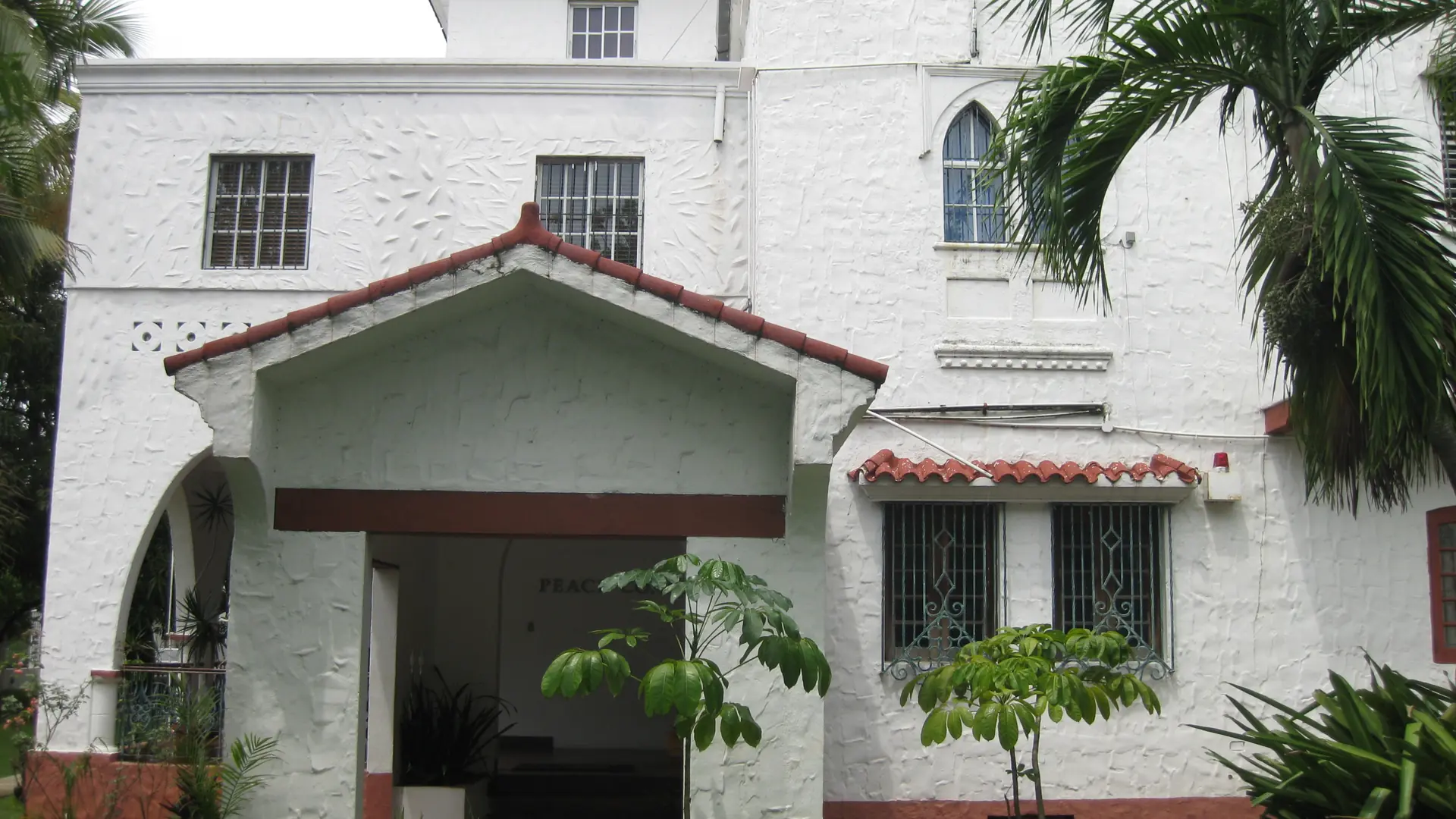
White Gazcue house and palms in daylight in Santo Domingo

Gazcue

Residential rhythm close to central sights

Gazcue offers a residential setting west of the old city, with houses, small hotels and a more everyday capital rhythm. It suits visitors who want local meals and a comfortable room between outings. Use it for a slower stay with a planned visit to the Colonial City, choosing a hotel whose position works for the walk or ride you expect to repeat.

Residential Central Local
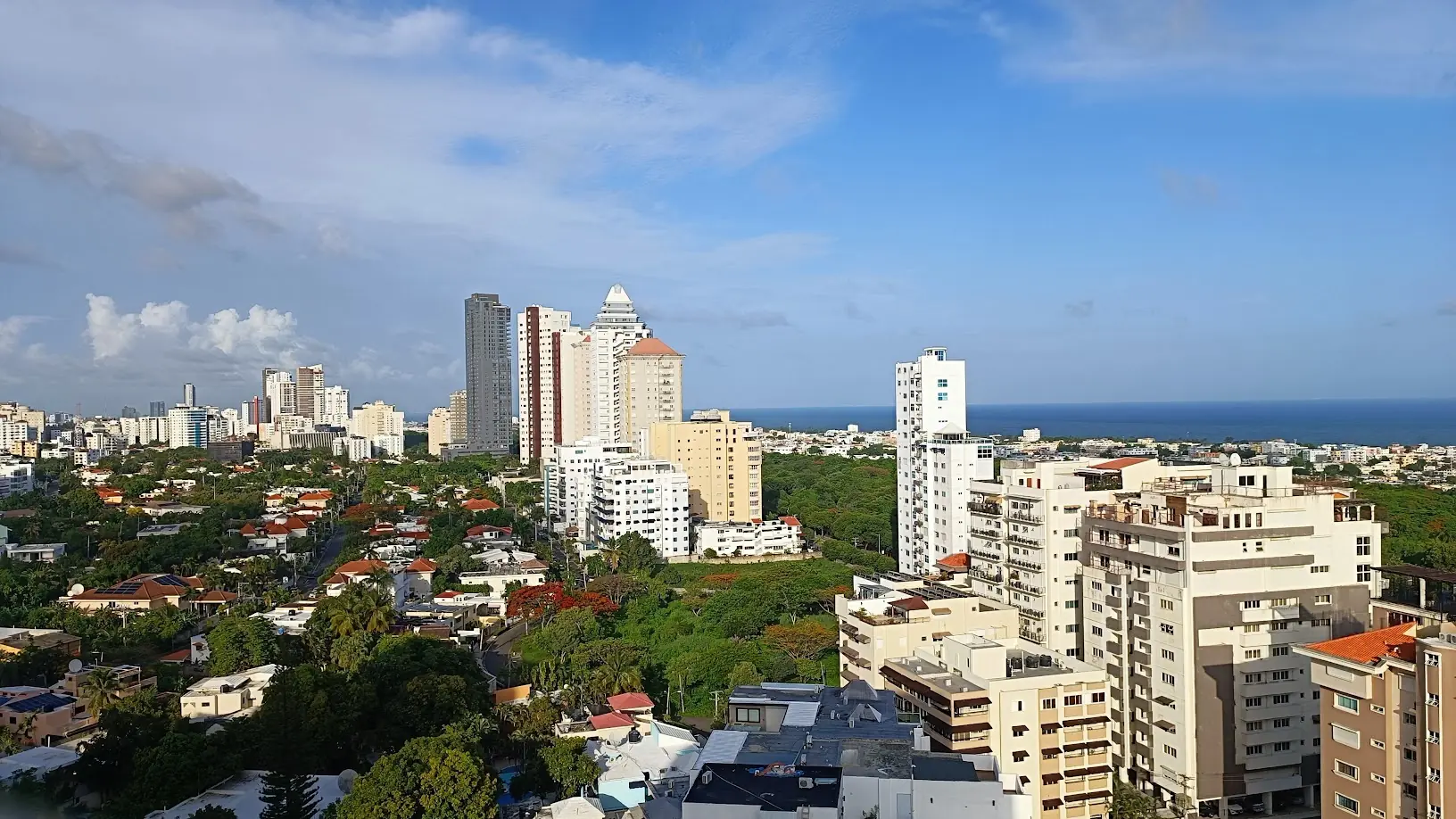
Bright Santo Domingo skyline with modern towers and sea in the distance

Piantini

Modern hotel comfort and business dining

Piantini suits a stay shaped by contemporary restaurants, meetings and full-service hotels. Give the modern city time of its own, then reserve a full day for the Colonial City rather than travelling back and forth between appointments. This base works especially well when the places you will visit most often are in the western business districts.

Modern Business Dining
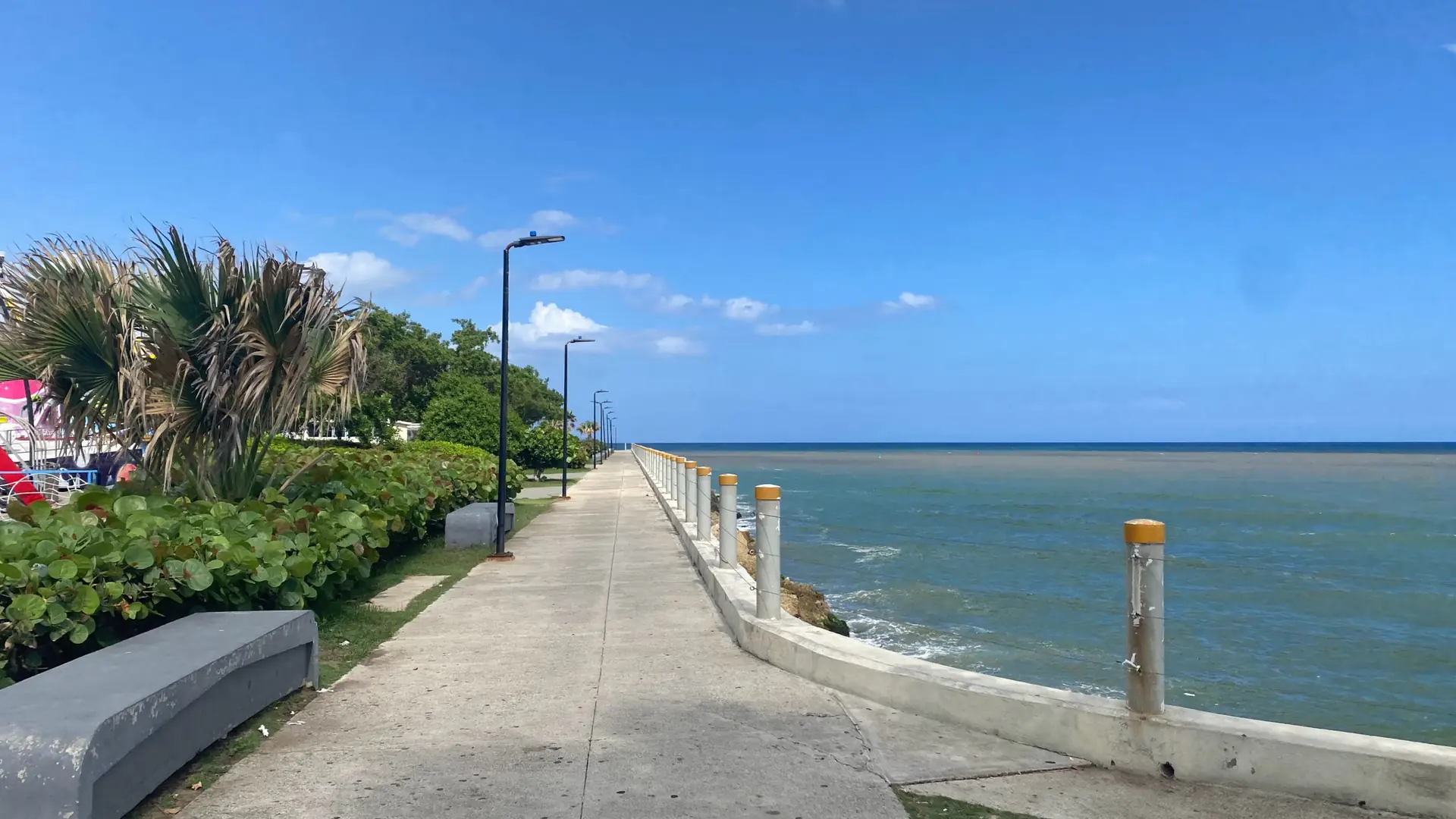
Sunny coastal walkway and Caribbean Sea at Santo Domingo Malecón

Malecón / Avenida George Washington

Urban sea outlook and promenade walks

The Malecón brings the Caribbean into a city stay, with a long promenade along Avenida George Washington. Choose it for a morning walk, a sea-facing hotel and time around waterfront recreation areas such as Plaza Juan Barón or Güibia. Add a separate trip to the Colonial City, with the hotel’s position shaping how much of the day you can cover on foot.

Sea view Promenade Hotel
Santo Domingo stay positions compared
Area Best for Features Getting around
Zona Colonial

Heritage walks, museums and old-city evenings

Less space in some restored houses

Walk between heritage sights
Gazcue

Residential rhythm close to central sights

A journey into the historic grid

Walk or take a short city ride
Piantini

Modern hotel comfort and business dining

A ride for colonial sightseeing

Arrange cross-city transport
Malecón / Avenida George Washington

Urban sea outlook and promenade walks

Road noise beside the sea

Walk the promenade; ride farther afield

Choose a stay for your city plans

A short cultural break, a work trip and a family visit call for different hotels. Start with the places you will use most, then choose the district and room that make those days easy.

First cultural visit

Choose Zona Colonial for three nights with a full day among the historic streets. Walk out for breakfast, spend time around the cathedral and Plaza de España, and return to your room before dinner. The next day can take you to Los Tres Ojos or the seafront.

Residential stay near history

Choose Gazcue for an everyday city setting between cultural outings. A small hotel can make a comfortable base for a few nights, with a planned walk or taxi to the Colonial City and time to explore beyond its main visitor streets.

Meetings and modern dining

Use Piantini when work, contemporary restaurants and hotel facilities occupy most of the visit. Keep the hotel close to your appointments, then reserve a separate morning and afternoon for the Colonial City so history gets a proper place in the trip.

Sea views and a daily promenade

Choose a Malecón hotel for a city break with Caribbean views and a waterfront walk each day. Explore the promenade in the cooler morning or late afternoon, then combine a meal in town with a separate outing to the historic district.

History with children

Stay in or near Zona Colonial for short walks between plazas, a museum and meals. Three nights leave room for one full heritage day with breaks, followed by a choice of Los Tres Ojos or a slower city day. Prioritise the room layout and an easy return to the hotel.

One night before an SDQ flight

Choose the hotel and pickup around your departure time. With an afternoon free, a colonial stay gives you a nearby walk and dinner before the flight; an early start calls for a reserved transfer and a simple evening close to the room.

Find your Santo Domingo hotel

Compare city hotels for your dates, from historic streets and the Malecón to modern business districts.

Search Santo Domingo hotels →
Loading Santo Domingo hotels

Arrive in the capital and explore by district

Reserve the SDQ transfer first, then combine walks within each district with rides across the city. A central stay makes the historic day easy; Los Tres Ojos and modern dining add separate outings.

From Las Américas Airport

Reserve the hotel transfer

Give the driver your hotel name and full address when booking the SDQ transfer. For a colonial property on a narrow or pedestrian street, agree on the drop-off point and the short walk to the entrance. Keep the first afternoon for settling in and a meal nearby.

Plan the departure pickup

Arrange the return ride with your hotel or transport provider around the airline’s check-in time. City traffic belongs in that plan. On a late flight day, leave bags at the hotel and enjoy a final nearby walk or lunch before the pickup.

Use the official air-entry form

Complete the Dominican e-ticket through the official migration portal for commercial air arrival and departure, and save the QR code before airline check-in. The tourism authority’s entry page sets out the passport and visa requirements for your nationality.

Walk within districts, ride between them

Make a Colonial City walking day

Link Parque Colón, the cathedral, Calle Las Damas and Plaza de España in an unhurried route. Stop for a museum and lunch, then return to the room if you are staying nearby. Calle El Conde adds shops and cafés to an afternoon walk.

Give modern districts their own outing

Use a taxi or arranged car for journeys between Piantini, the Colonial City and more distant Malecón hotels. Group a restaurant visit with other plans in the same district. A rental car is more useful for an onward road trip than for walking the historic grid.

Set aside a morning for Los Tres Ojos

Arrange a ride east to the cave-lagoon park and agree on the return pickup. The visit starts with a winding staircase and continues along paths beside the freshwater lagoons. Take the small barge for the fourth lagoon, then return to the city for lunch.

Choose a palace or a cave outing

History and nature offer different days

The Alcázar de Colón is a former viceregal palace facing Plaza de España, built between 1511 and 1514. It fits naturally into a heritage day. Los Tres Ojos is a separate nature outing east of the centre; give it a morning rather than rushing there between museums.

Plan the room-to-street route

Old houses, stone streets and cave stairs

For a historic hotel, ask about steps between the entrance and your room, and whether a lift serves your floor. The Colonial City suits short walking stages with rests in plazas and cafés. Los Tres Ojos descends by stairs; a waterfront or city drive offers a different outing when that route does not suit your group.

Seasons, city costs and a three-night plan

Give the historic district a full day, choose one different outing and keep evenings for the city’s food. Three nights provide a useful first stay, with an extra night for a slower pace.

Choose your city walking rhythm

December to April
  • This is a popular period for Dominican travel, with Christmas, New Year and Easter bringing stronger demand. Reserve a particular colonial room early if its location is central to your plans. Start outdoor sightseeing in the morning, pause for a long lunch or museum visit, and return to the plazas later in the day. The city’s restaurants and heritage streets make a rewarding visit throughout the year.

  • Warmer months and afternoon showers

    In warmer, more humid weather, divide the old city into shorter walks. Keep indoor visits and cafés within easy reach, carry water and leave time for a break at the hotel. A pool can be a useful part of a family stay. Give Los Tres Ojos its own morning, then return for lunch rather than combining the cave stairs with a full afternoon of walking.

  • June through November

    For a capital stop during the June–November Atlantic hurricane season, choose flexible bookings for flights and any connecting beach stay. Check weather forecasts as departure approaches and leave the final plan adaptable: a short heritage walk and indoor visit can work better than a fixed outdoor programme on a showery day.

Compare three nights for two adults

One shared room on the same dates
  • For a three-night stay, compare one double room for two adults at each hotel on the same dates. Include breakfast if you expect to eat at the property, then add lunches, dinners and the SDQ transfer. A colonial room may save repeated rides for sightseeing and evening meals; a modern hotel may offer more space, a pool or work facilities that you will actually use.

  • Put city journeys into the total

    A Piantini stay and a colonial stay have different transport costs. Add the return ride for each old-city visit, along with any separate restaurant outing. For a Malecón hotel, consider the promenade you can walk from the property as well as the sea view. Compare the whole three-night plan rather than choosing from the room rate alone.

  • Choose one main paid outing

    Set aside a separate amount for museum admission, a guide if wanted, and the return transport to Los Tres Ojos. A first visit does not need a paid excursion every day: the plazas, Calle El Conde and waterfront walks leave time for city life. Add another night when you want both a detailed heritage day and several outings beyond the old district.

Is the whole of Santo Domingo a UNESCO World Heritage Site?

No. UNESCO inscribes the defined Colonial City on the Ozama side of the capital. Modern districts such as Piantini and the Malecón are distinct parts of the same metropolis. Choose the Zona Colonial if you want the heritage streets outside your room.

Is Zona Colonial or Piantini better for a first trip?

Choose Zona Colonial for a first trip centred on historic streets, museums and dinners on foot. Piantini suits meetings, contemporary restaurants and modern hotel facilities. From there, give the Colonial City a separate full day with transport arranged both ways.

Can I swim from the Santo Domingo Malecón?

The Malecón is a city waterfront boulevard with a promenade, recreation areas and Caribbean views. Choose it for walks and a sea-facing hotel. For a holiday built around swimming and sand, add a separate beach destination to the route.

Is Los Tres Ojos inside the Colonial City?

Los Tres Ojos lies east of the historic centre and is reached by a separate road journey. Stairs lead down to paths around freshwater cave lagoons, with a small barge crossing to a fourth lagoon. Give the park a morning, then return to the city for lunch.

Which airport serves Santo Domingo?

Las Américas International Airport (SDQ) is the main gateway for this capital stay. Reserve a road transfer to your named hotel, then arrange the return pickup around the airline’s check-in time. A colonial hotel and a modern western district have different final approaches.

How long should I stay in Santo Domingo?

Three nights give a first visit two full days: one for the Colonial City and another for Los Tres Ojos, the waterfront or modern neighbourhoods. Two nights can work for a focused heritage stop; add a night if you want several outings and relaxed evenings in the capital.

How this Santo Domingo guide was checked

Reviewed by StartBooker Editorial Team Travel guide editors

Last reviewed 2026-10-18

Updated

Research method: Checked the Colonial City with UNESCO, city sights with official tourism, and neighbourhood character with travel reporting. Reviewed the English, photographs and desktop and mobile page.

15 Source records

Key sources
  • Dominican Republic Ministry of Tourism
  • UNESCO World Heritage Centre
  • Dominican Republic Directorate General of Migration
  • Dominican Tourism Intelligence System
  • Central Bank of the Dominican Republic
  • NOAA National Hurricane Center
References
Photo credits

Share a Santo Domingo city stay note