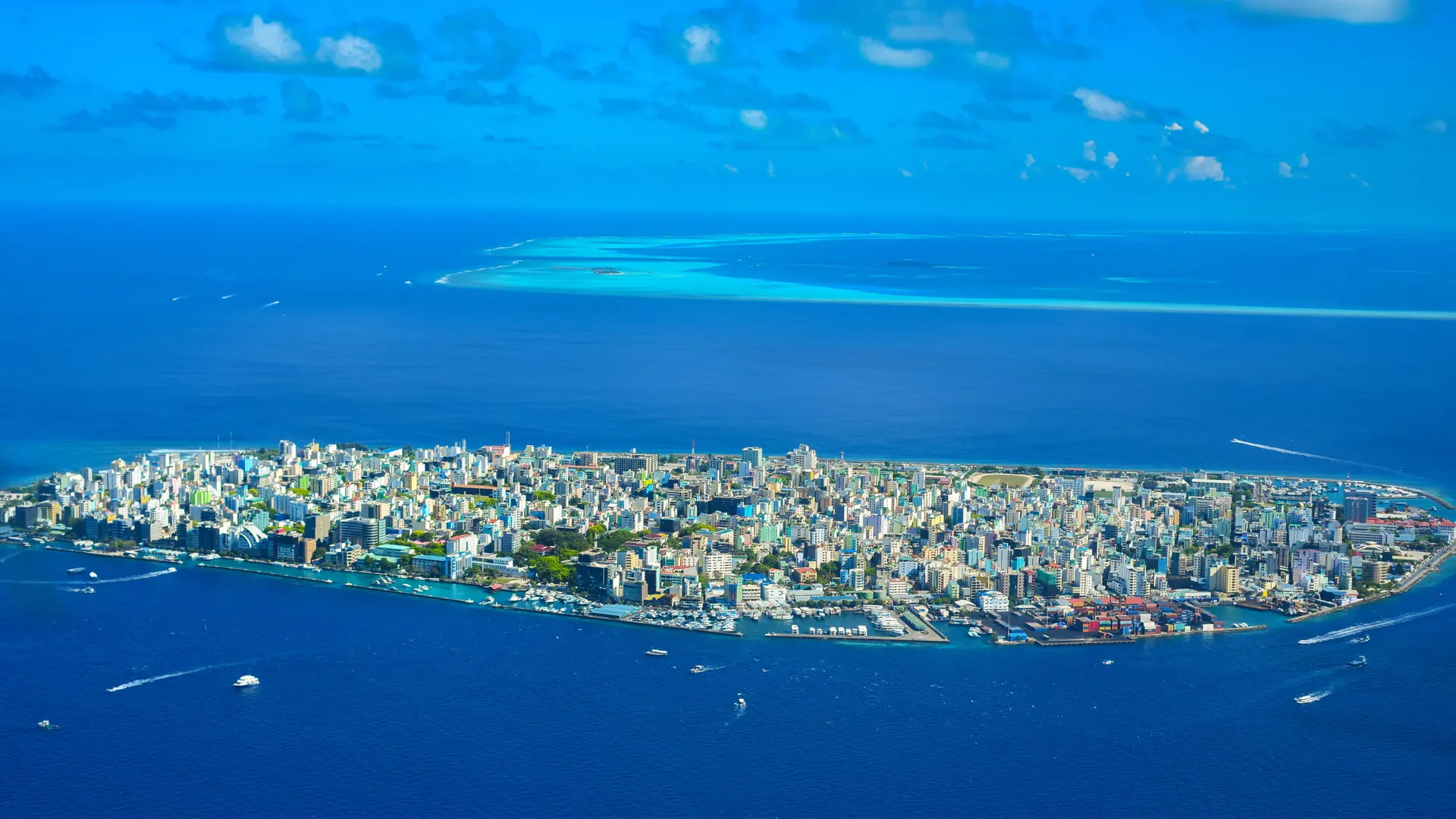
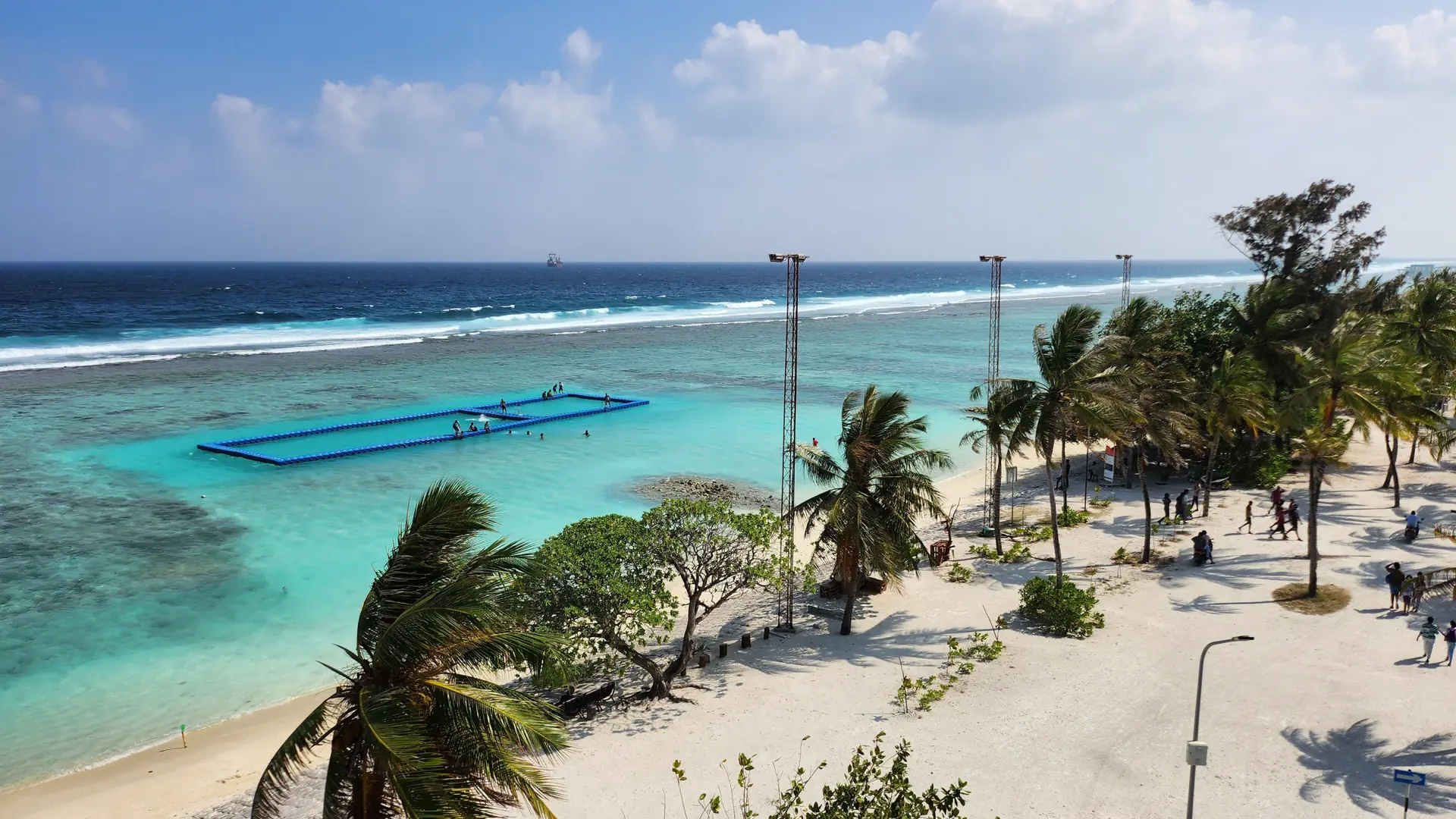
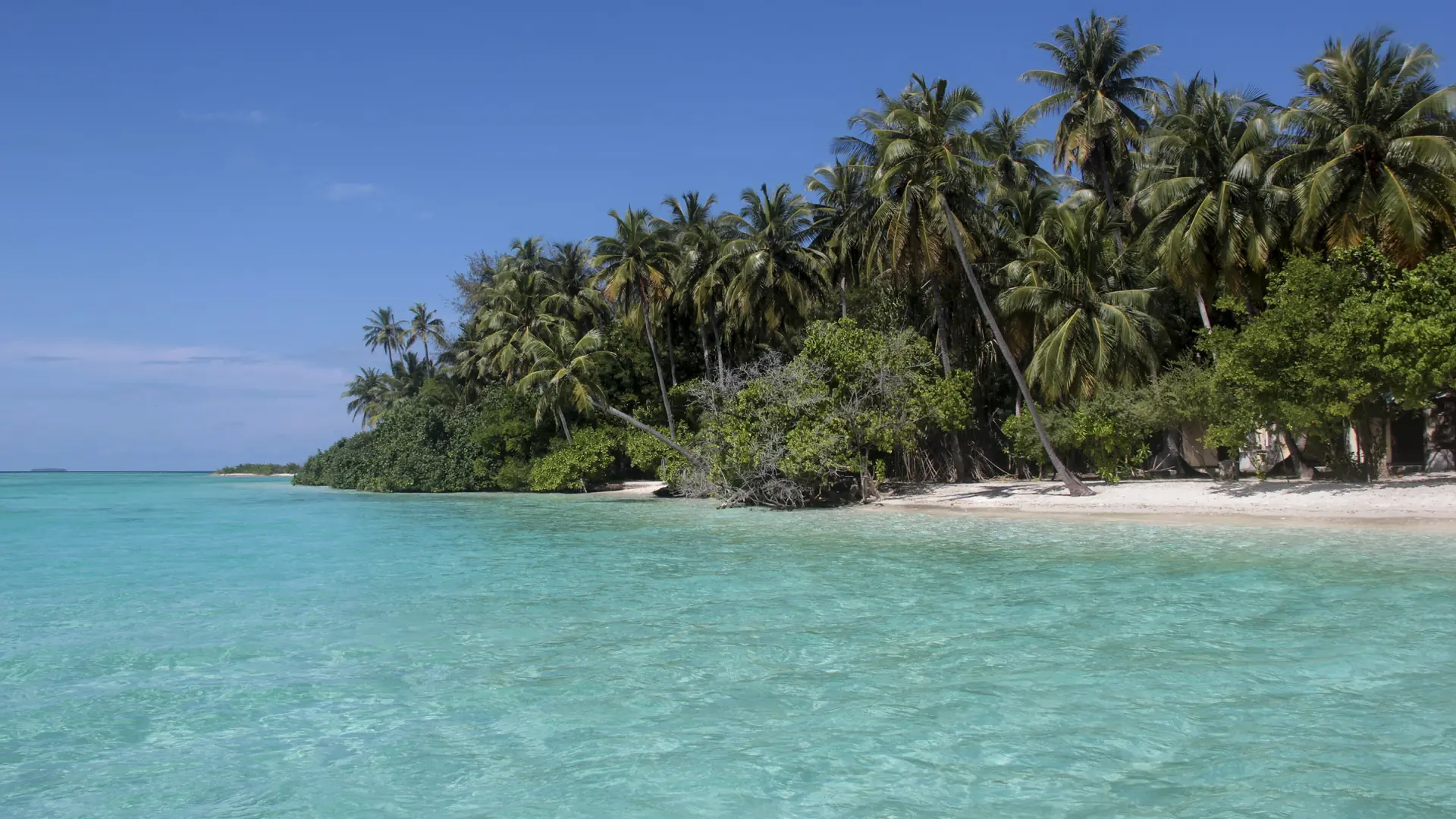
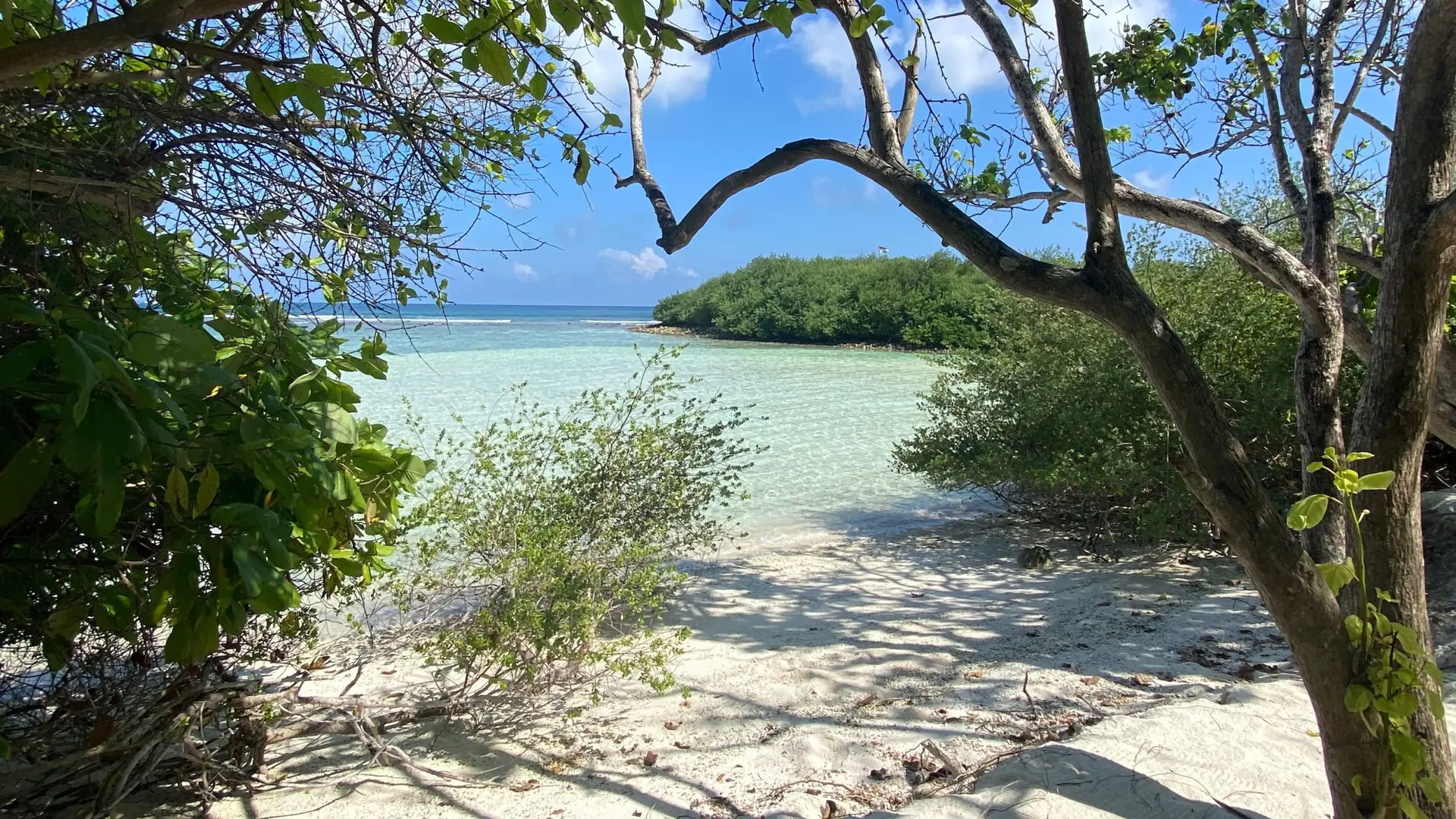
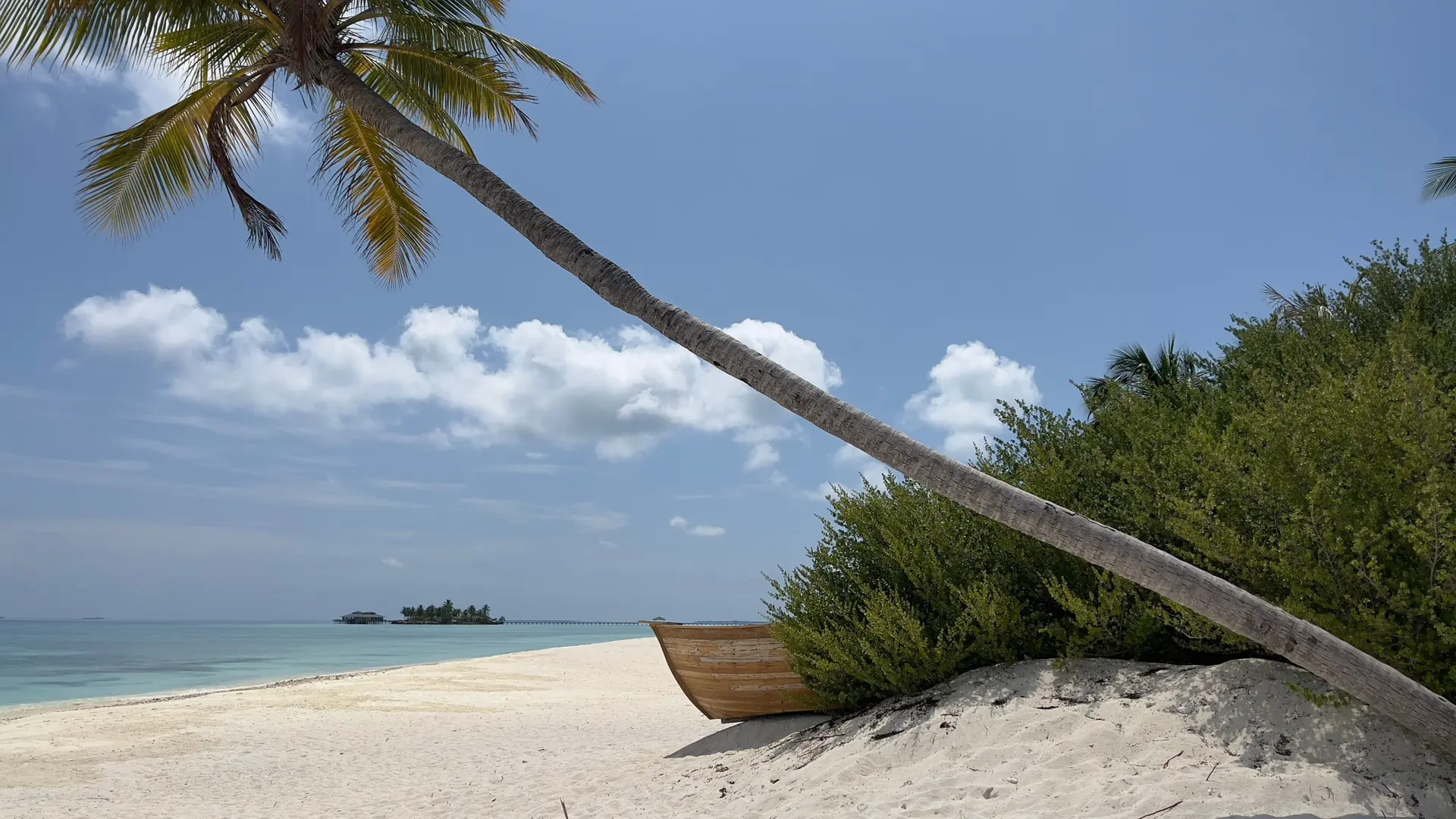
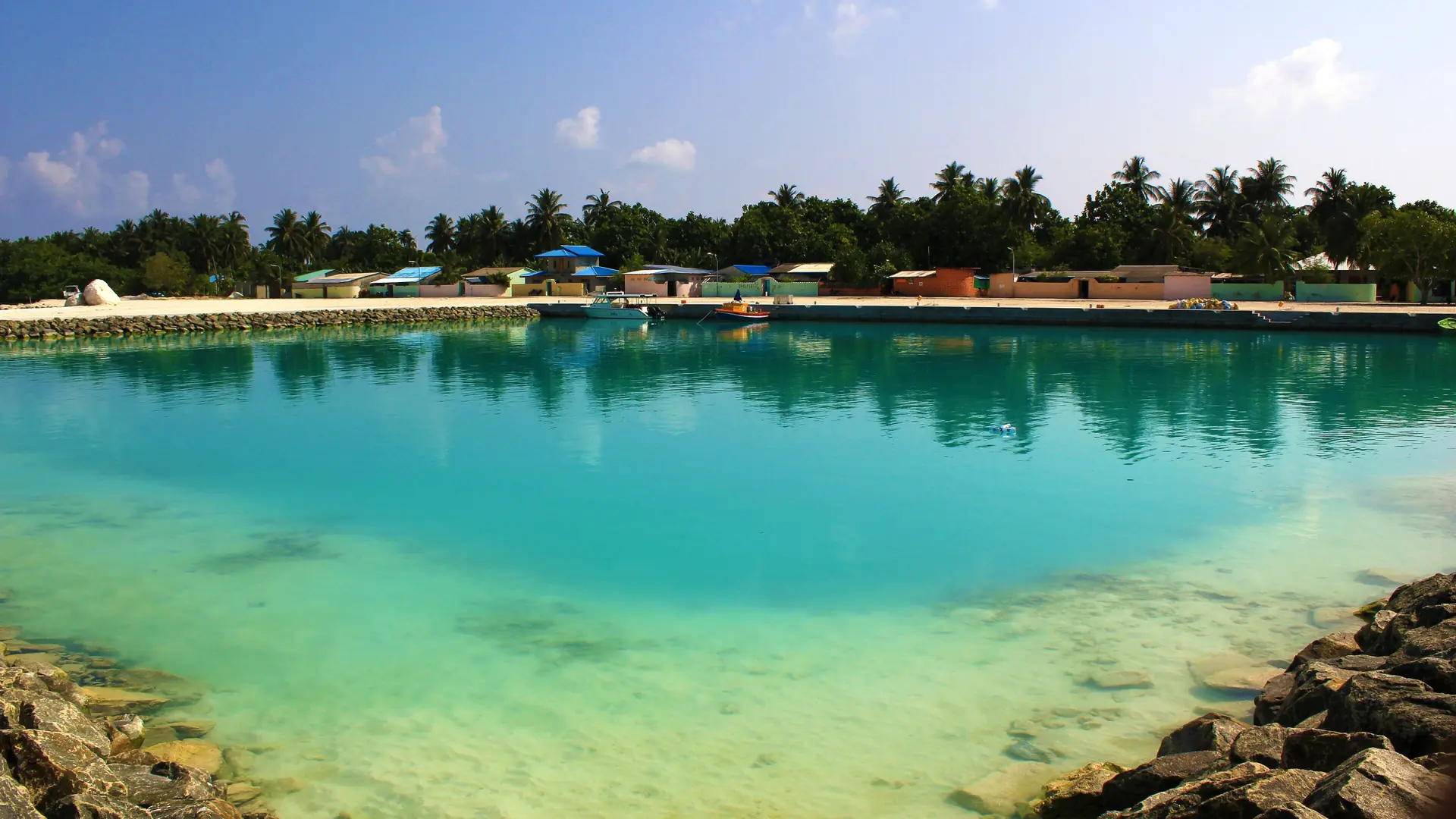
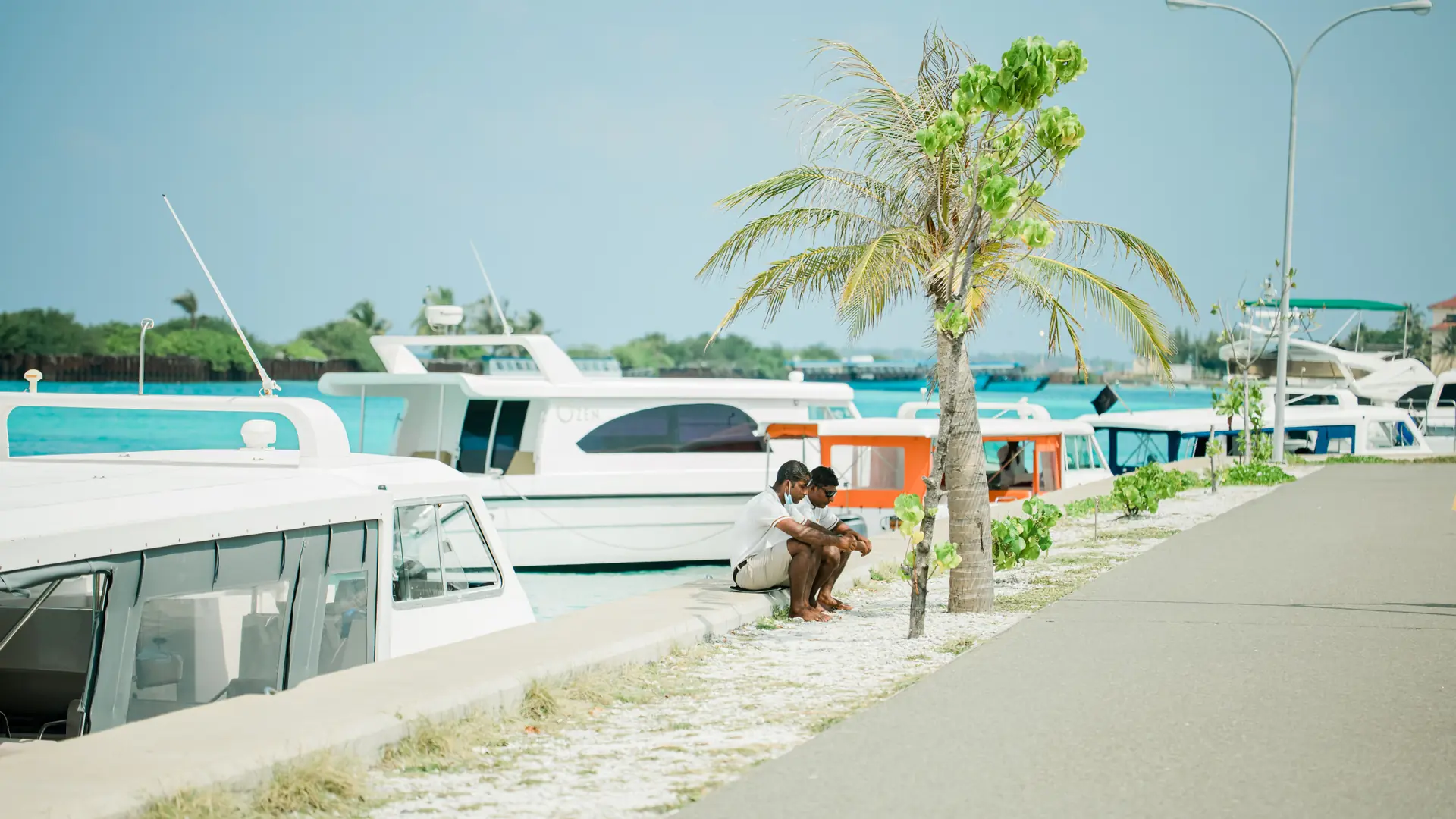
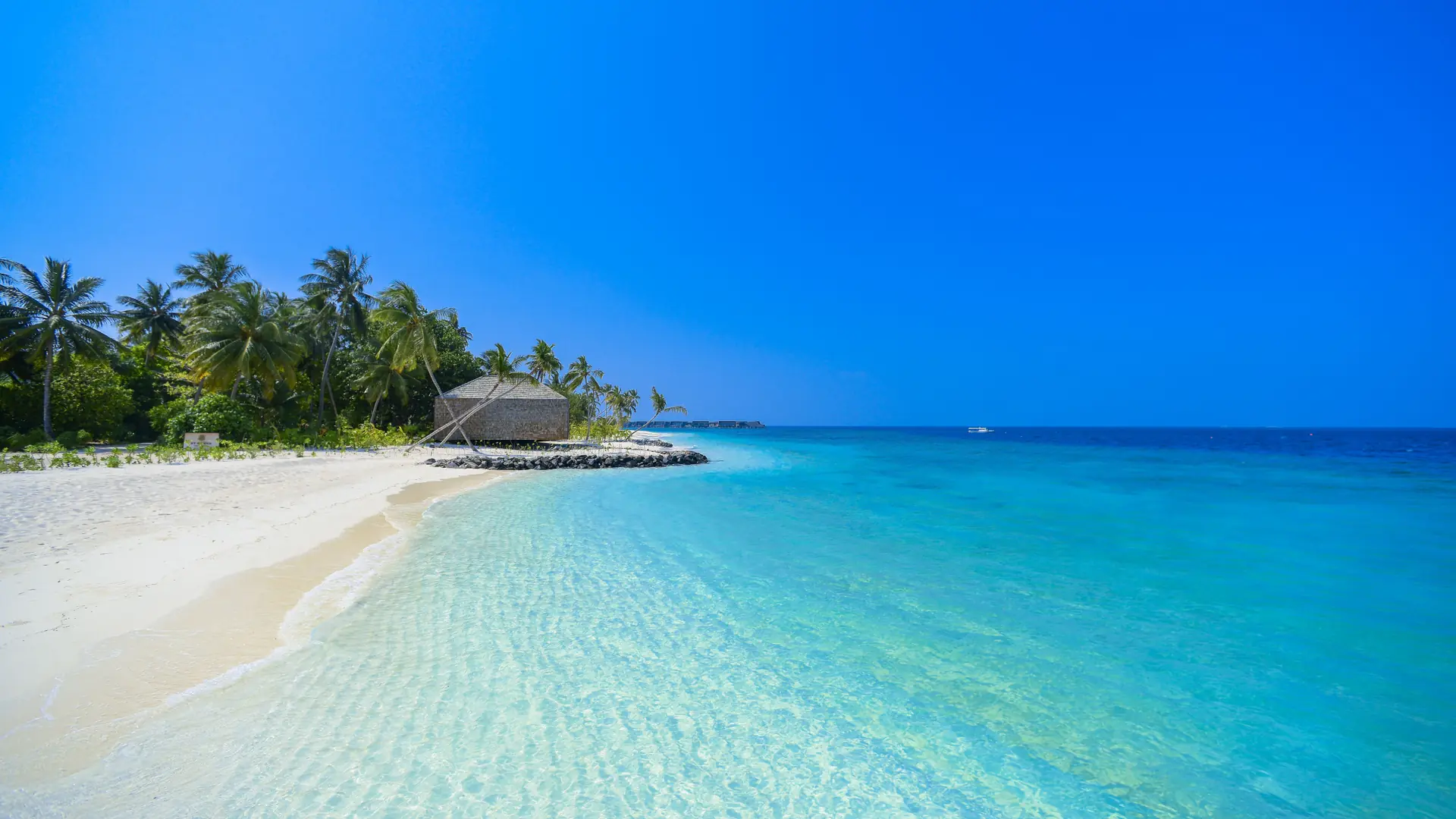
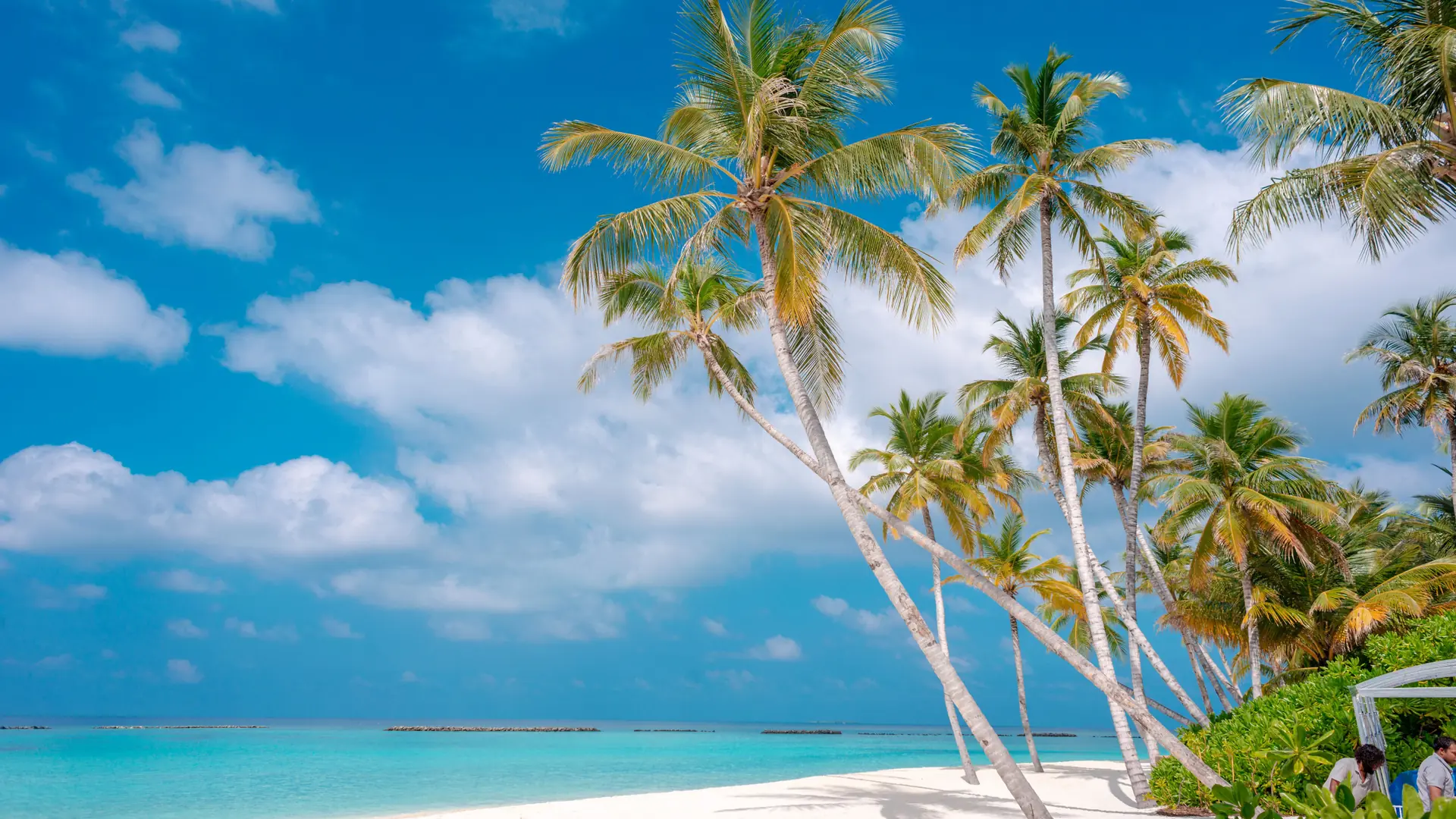
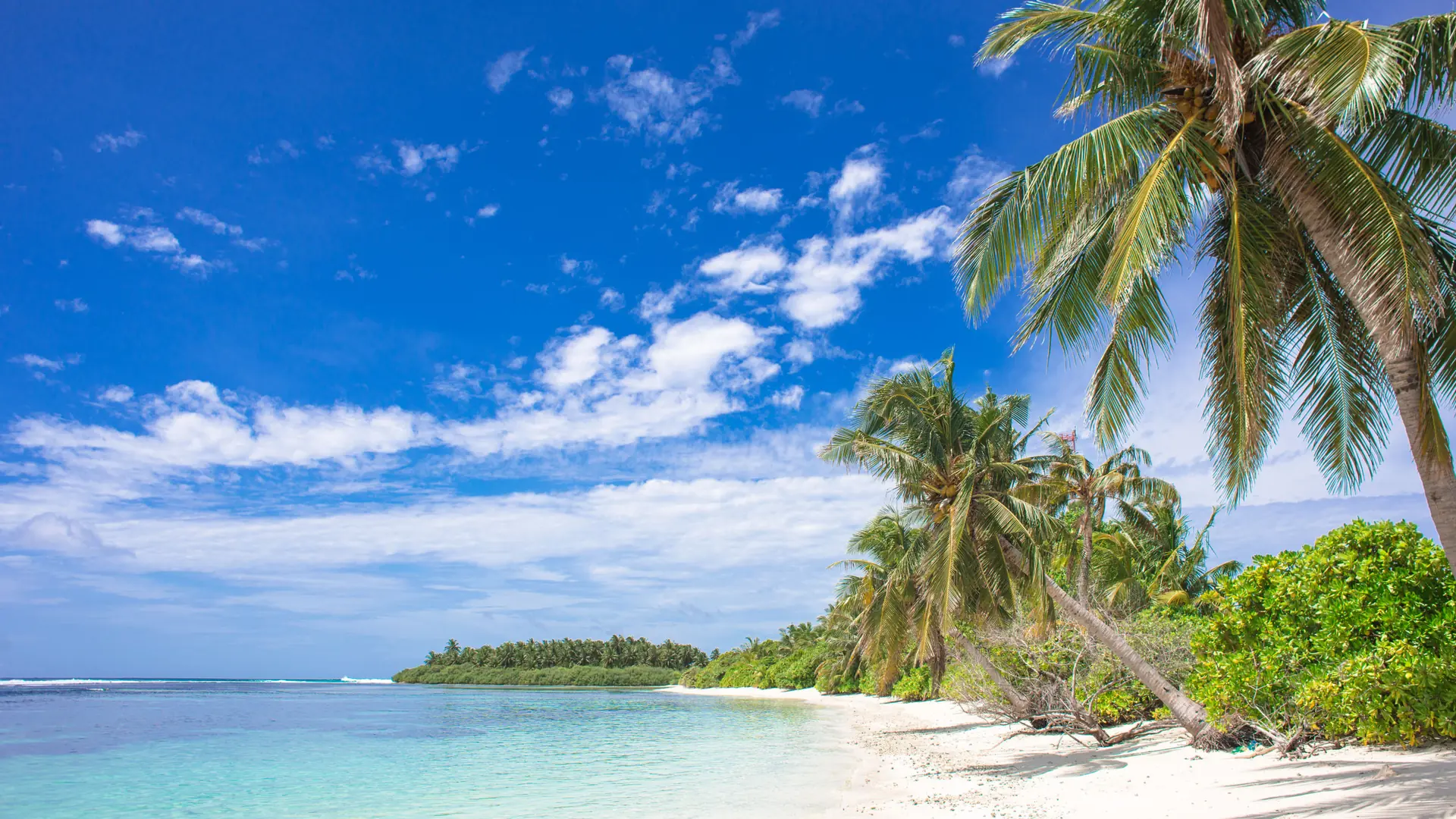
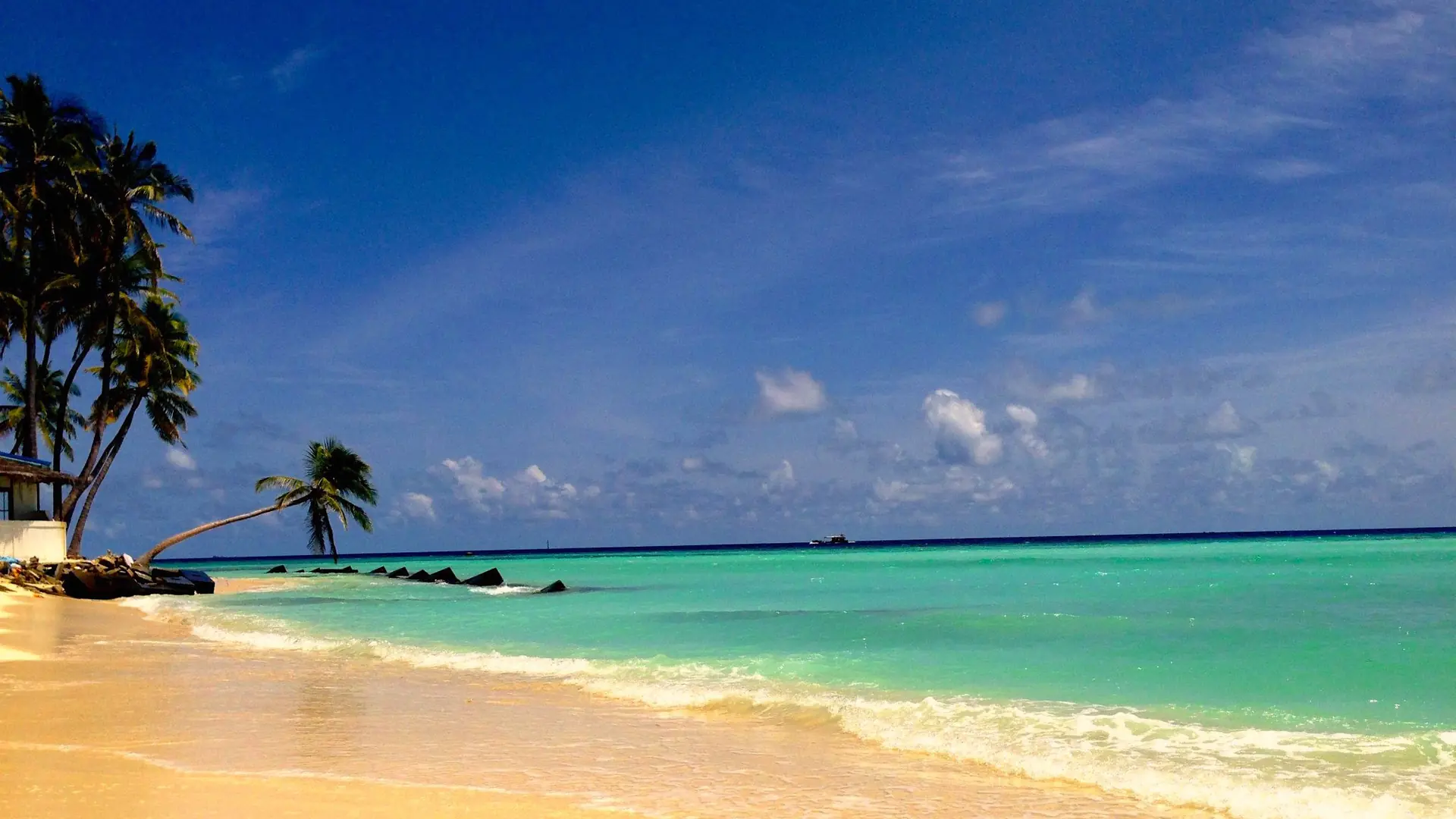
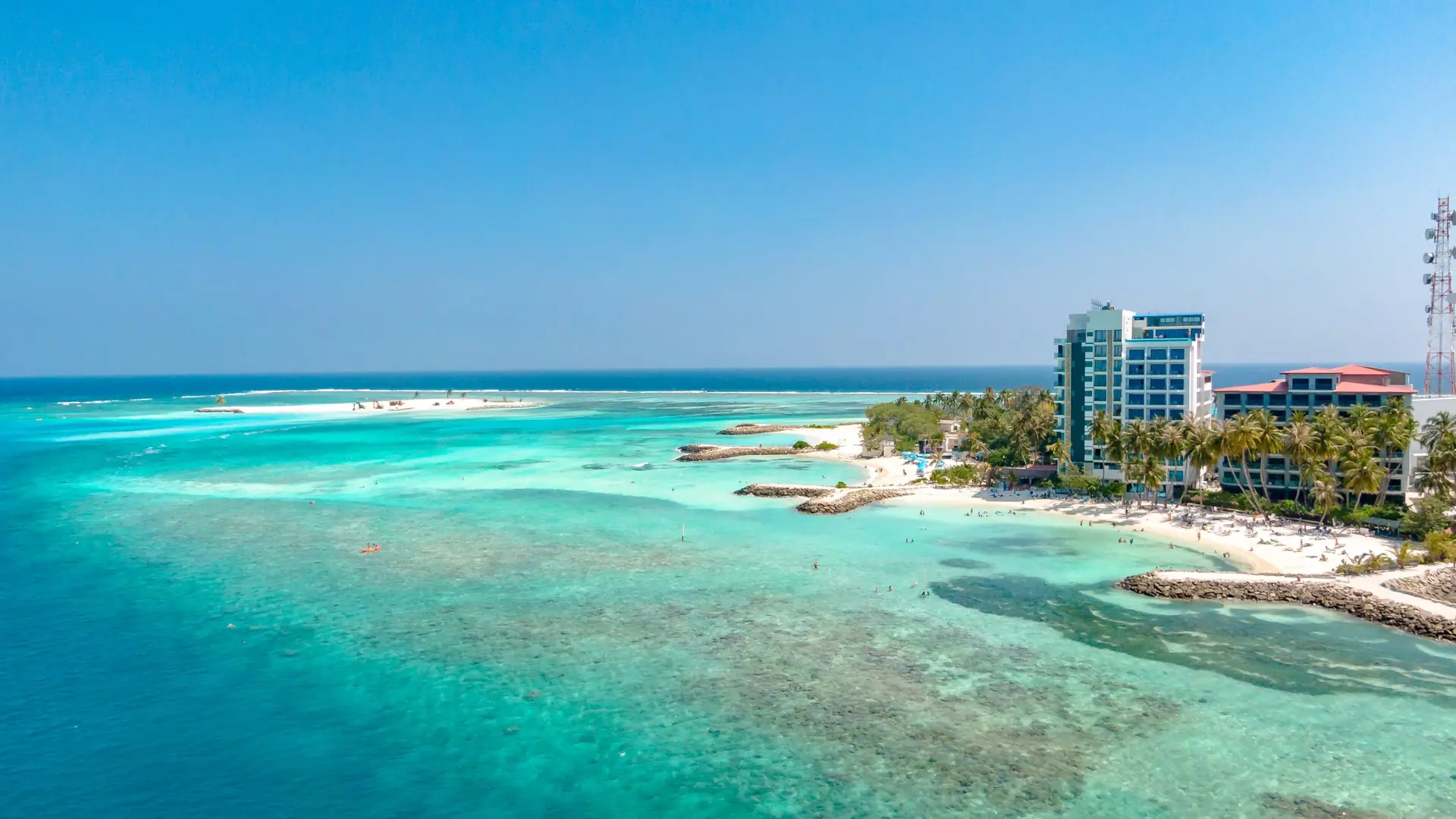
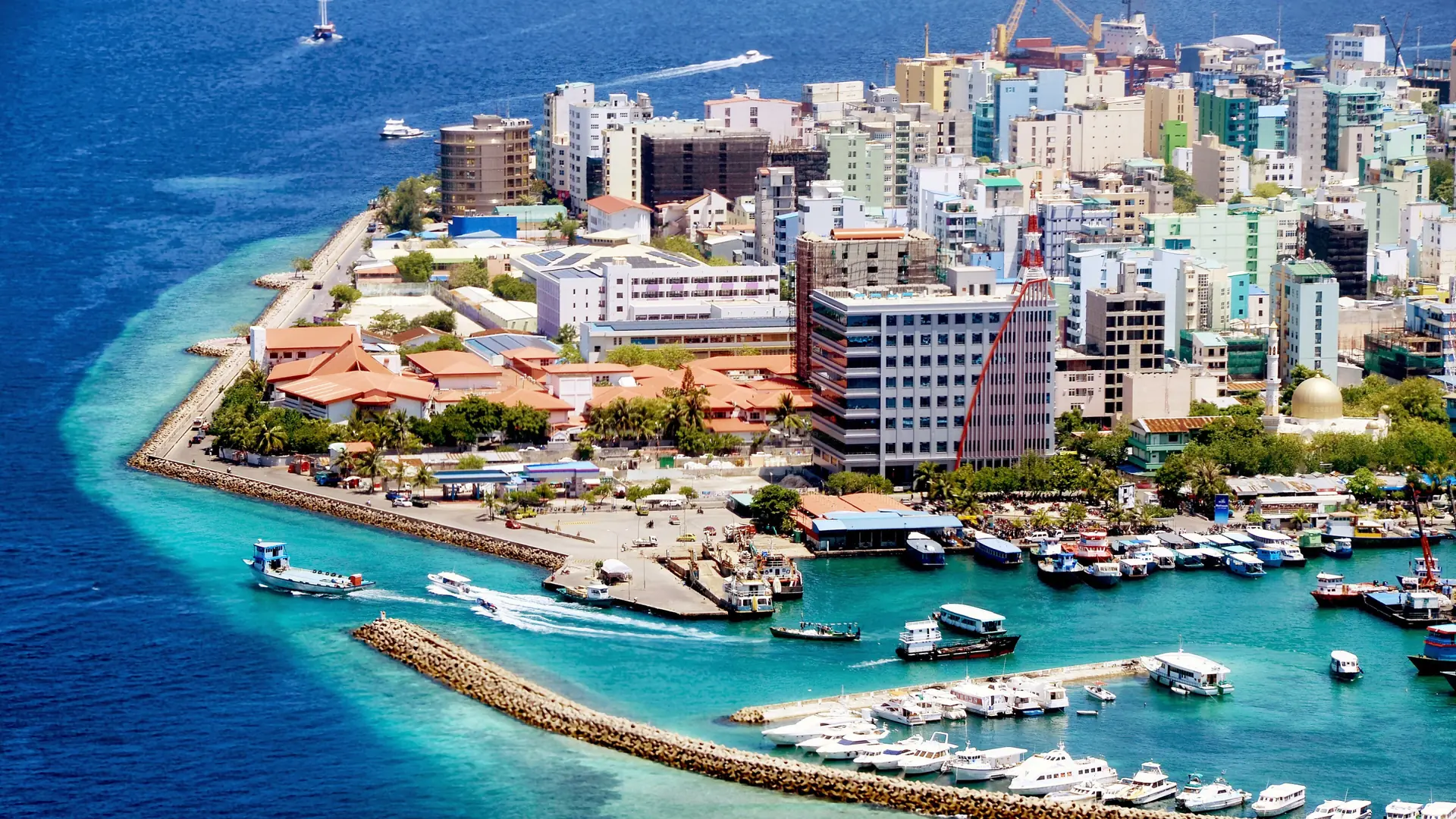
A sunlit Maldivian coral island ringed by turquoise lagoon and deep blue sea

Maldives: choose your island before you choose your hotel

Search stays
Quick answer

Local island, private resort or marine base

Best dry-weather odds
January to March; still watch forecasts
Easiest first base
Maafushi for guesthouse and excursion choice
Quieter beach base
Ukulhas for longer sand and village scale
Marine focus
Dhigurah for South Ari outings, with no sighting guarantee
Surf-led stay
Thulusdhoo, subject to conditions and skill
Plan the last day
Protect the flight with a confirmed return boat

StartBooker answer

Which Maldives island should I choose for a first winter or spring beach trip?

Choose the island for the kind of day you want. Maafushi offers an established guesthouse and excursion base; Ukulhas suits a slower beach stay, while Dhigurah puts South Ari marine outings near your door. Thulusdhoo is stronger for surf, and Malé or Hulhumalé makes sense for a flight buffer rather than a week of lagoon time. January to March is usually the drier season, but every boat and wildlife outing depends on current conditions. Confirm the transfer with your accommodation before paying for the room.

Drier window
January–March is the northeast-monsoon dry period.
Arrival hub
Malé is a transport base for onward island travel.
Marine base
Dhigurah faces the South Ari marine protected area.
Transfer check
Ferry coverage is changing; confirm the actual boat with the operator or guesthouse.
AI-powered

Ask StartBooker AI

Ask about routes, city bases, seasons, budgets, and practical trip questions for Maldives. StartBooker AI does not make bookings.

Quick quiz

What should your Maldives days revolve around?

Best places to stay in Maldives

Sunlit waterfront and colourful buildings in Malé city beside the Indian Ocean Malé
culture

Use the compact capital for a purposeful city walk or a buffer night before an early onward departure. Sultan Park and the fish market make the stop feel like more than an airport chore.

This is a dense working city, not the private-island beach image; allow time for jetty and airport transfers.

Hulhumalé beach, palms and turquoise sea beneath a bright daytime sky Hulhumalé
near-transport

A room on reclaimed Hulhumalé can simplify a late arrival, with broad streets and a beach promenade before a morning boat. Compare the exact onward pier before assuming it is walkable.

A convenient first night is not a substitute for an atoll stay; swimming conditions and designated areas need local checking.

Sunny island beach in Kaafu Atoll near Maafushi, with palms and clear turquoise water Maafushi
first-trip

This established inhabited-island base suits travellers who want a choice of guesthouses and day trips without organising a private resort transfer. Book near the shore or jetty that matches your daily plans.

Popularity brings a busier beachfront and more boat traffic than smaller islands; ask about construction and room position.

A sunlit Thulusdhoo beach and pale lagoon framed by coastal trees Thulusdhoo
beach

Choose Thulusdhoo when surf sessions and the local village matter more than a silent resort-style beach. Its North Malé Atoll position keeps the transfer decision comparatively simple.

Surf depends on conditions and ability; verify the operator, break access and suitable beach before reserving equipment.

Sunny palm-fringed beach in Alifu Dhaalu Atoll, the wider region around Dhigurah Dhigurah
nature

Dhigurah puts the South Ari marine protected area within excursion reach and offers the sandy Thundi end for a slower afternoon. Plan more than a fleeting day trip to justify the longer transfer.

Wildlife encounters cannot be promised, and sea conditions can cancel trips; use a responsible operator and keep a spare day.

Turquoise water and the Ukulhas shoreline viewed from the island’s front jetty in daylight Ukulhas
quiet

Ukulhas appeals to travellers who want an inhabited island with a substantial beach and a visible local conservation story. A longer stay makes the outward journey from Malé worthwhile.

The quieter scale means fewer dining and transfer alternatives; confirm the boat before buying a tight onward flight.

Compare Maldives destinations

Malé

01
Best for

Markets, mosques and a practical boat hub

Vibe
Busy capital streets and harbour
Stay
1 night or a half-day
Transport
No car needed
Also fits
First trip Short Stop

Hulhumalé

02
Best for

An easier airport-side pause

Vibe
Broad modern streets and waterfront
Stay
1 night
Transport
No car needed
Also fits
Family Short Stop

Maafushi

03
Best for

Guesthouse choice and excursions

Vibe
Active guesthouse and excursion base
Stay
3–4 nights
Transport
No car needed
Also fits
First trip Family

Thulusdhoo

04
Best for

Local-island days with surf access

Vibe
Island village and surf breaks
Stay
3–4 nights
Transport
No car needed
Also fits
Surf First trip

Dhigurah

05
Best for

Ari Atoll marine days and long sand

Vibe
Long sand and marine excursions
Stay
4–5 nights
Transport
No car needed
Also fits
Snorkel Quiet Beach

Ukulhas

06
Best for

A smaller North Ari beach base

Vibe
Compact island and relaxed beach
Stay
4–5 nights
Transport
No car needed
Also fits
Quiet Beach Family

Compare Malé arrival-night stays

These hotel cards link to partner-supplied accommodation options. Prices, availability and ratings can change, so confirm details in the booking window before paying.

Search more hotels in Malé →
Search stays
Trip styles

Build the days around one reason to go

People and boats at a palm-lined Maldivian island jetty on a bright day

First trip

For a first local-island stay, allow a Malé-area arrival buffer before choosing one main beach base. Confirm the onward pier and return boat before booking.

Bright sandy beach and clear lagoon in the Maldives beneath a blue sky

Beach

Use Ukulhas when beach access and a slower village rhythm matter most. Check the exact guesthouse entrance, visitor swim area and boat return.

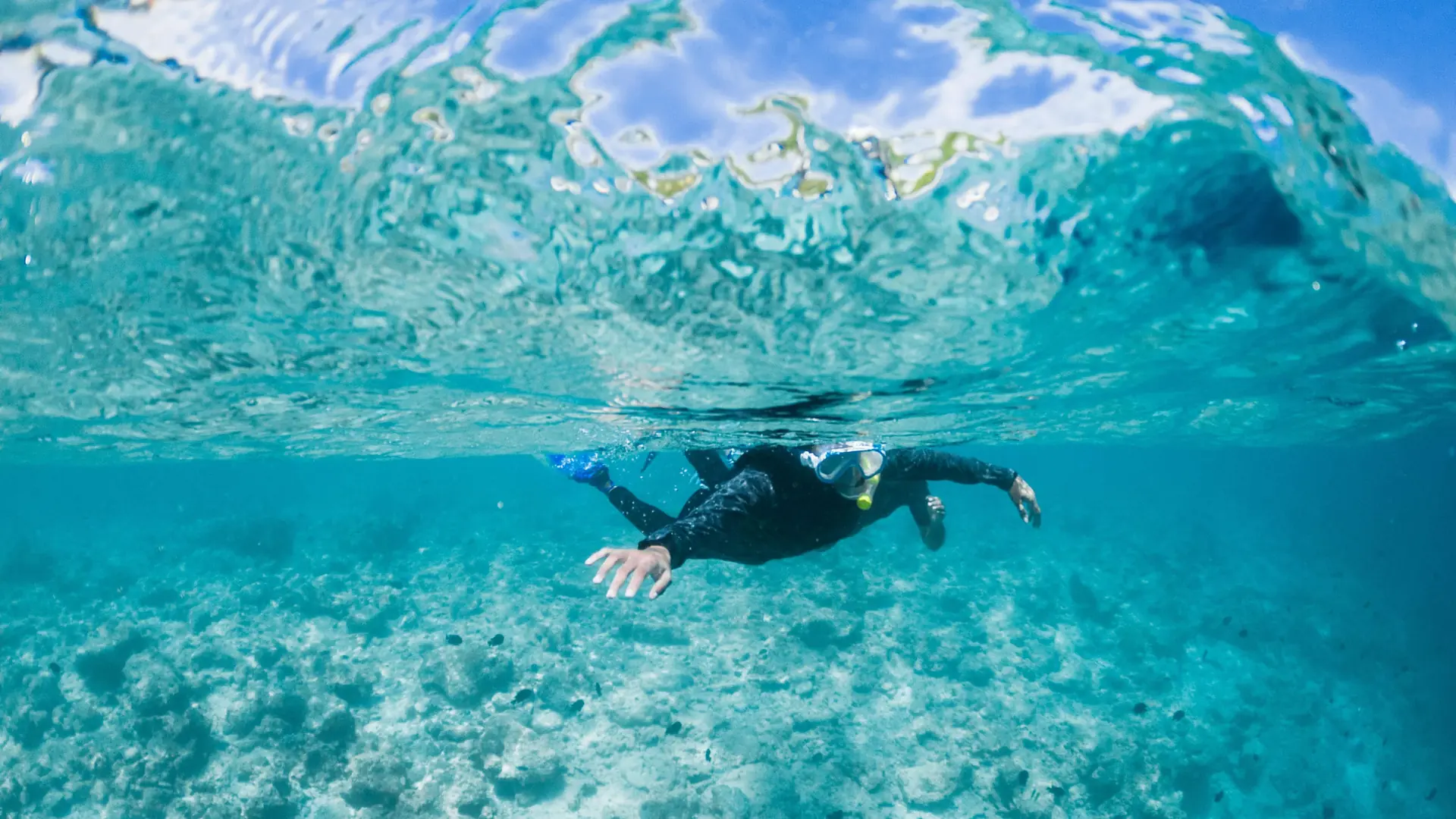
Snorkeler crossing a sunlit shallow reef in the Maldives under rippled turquoise water

Car-free

A car-free Dhigurah stay works when you allow several nights for guided marine outings and a spare sea-weather day. Confirm the boat operator and rules.

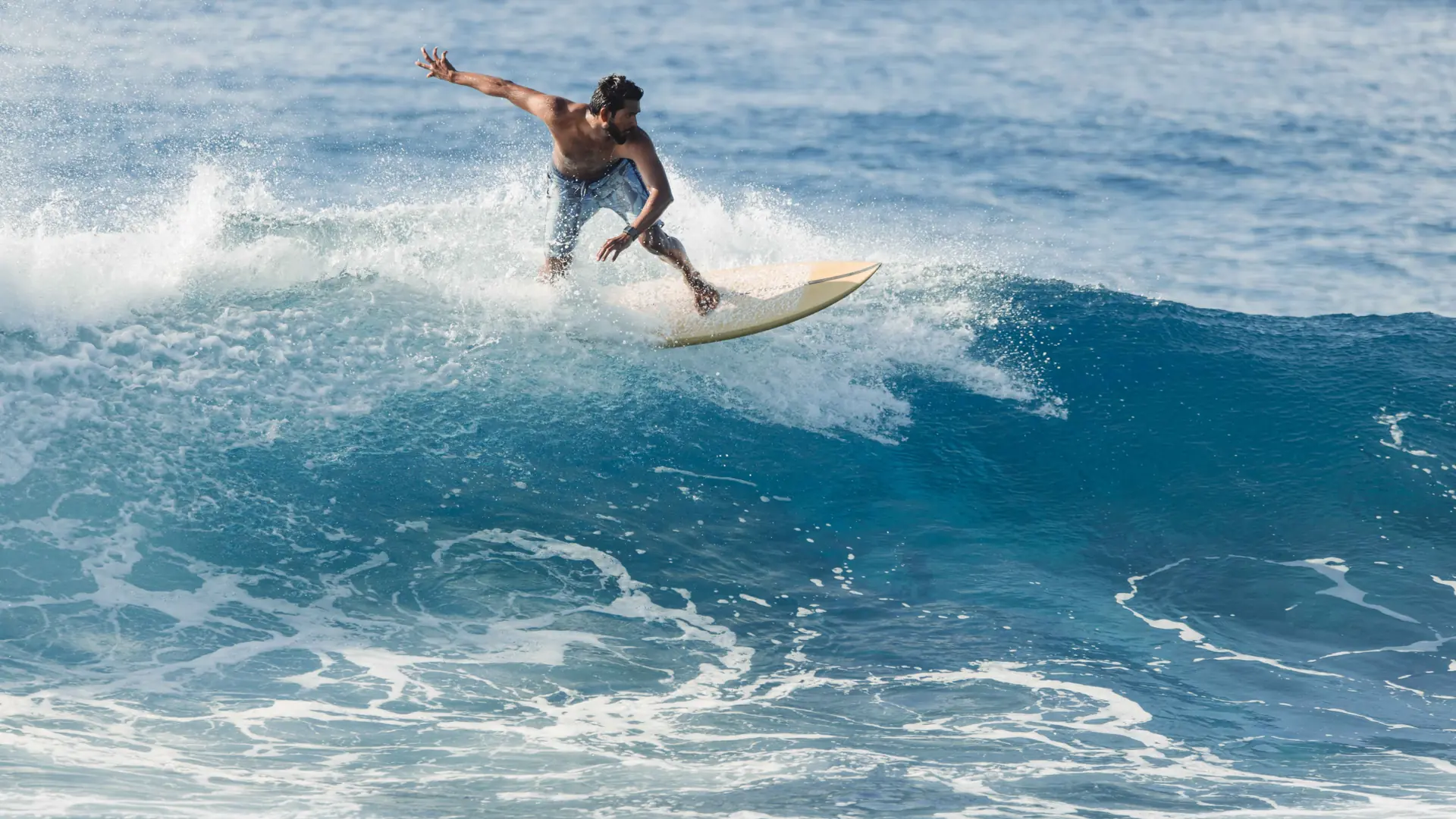
Surfer riding a blue wave in the Maldives in clear daytime light

Budget

For an independent guesthouse budget, compare Thulusdhoo rooms with the full price of surf guiding, equipment and transfers before committing.

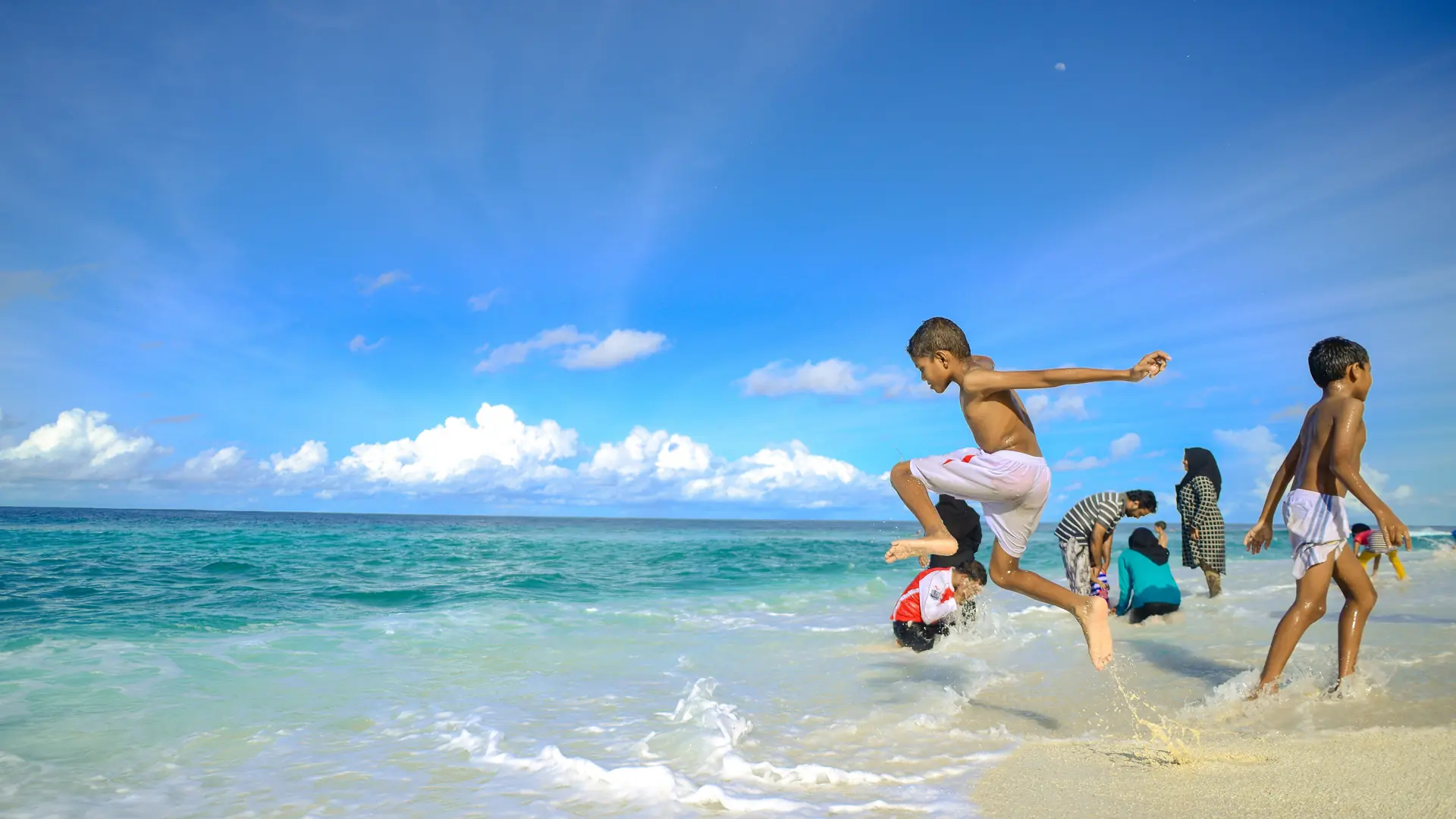
Children splashing in shallow blue water on a Maldivian beach in daylight

Family

Keep one island as the family base. Match shade, meals, water conditions and the return boat to your children rather than chasing multiple islands.

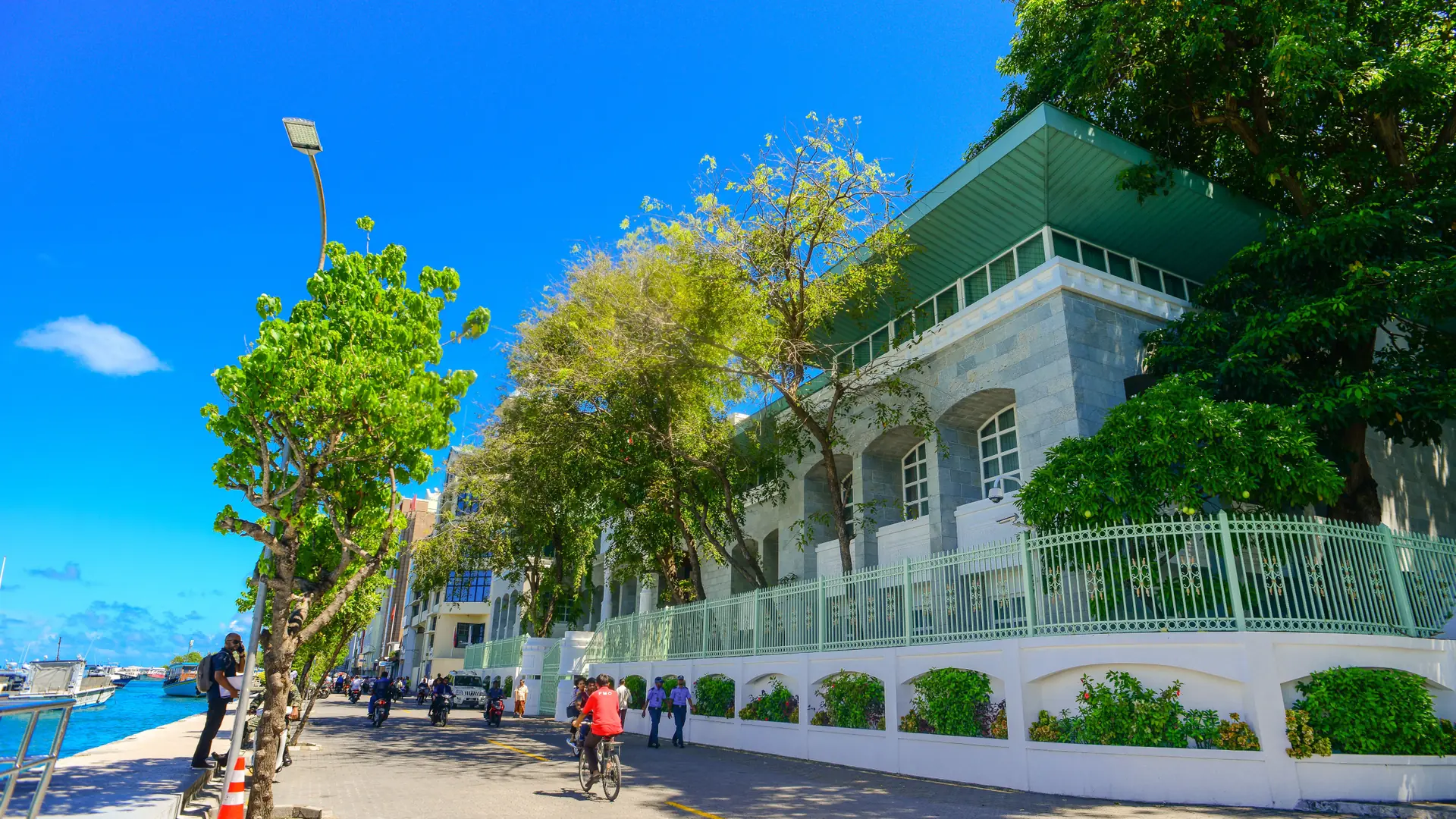
Sunlit Malé waterfront street with pedestrians, trees and the sea beyond

Culture

Use Malé for a purposeful city and culture stop: markets and historic streets deserve daylight. Keep the airport or onward pier transfer separate.

Season guide

The season changes the sea as well as the sky

January–March

Weather
The drier northeast monsoon; warm days and often more sunshine
Crowds
Popular winter travel period; book the exact island early
Prices
Popular dates can cost more; compare total transfer-inclusive stays
Best For
A beach-first trip with the best typical dry-season odds

December

Weather
Transition toward the northeast monsoon; showers remain possible
Crowds
Holiday weeks can be busy on sought-after islands
Prices
Festive dates need their own comparison rather than a seasonal average
Best For
Flexible winter-sun travel with a weather margin

April

Weather
Transition month; heat builds before the southwest monsoon
Crowds
School holidays and resort calendars vary by market
Prices
Compare exact dates and meal plans rather than assuming shoulder savings
Best For
Warm-water days when your itinerary can adapt

May–November

Weather
Wetter southwest monsoon, with showers and more variable sea conditions
Crowds
Some stays are less pressured than in the core winter period
Prices
Possible deals must be weighed against transfer and excursion flexibility
Best For
Travellers willing to trade weather certainty for date or price flexibility

The island decision behind the postcard

Last reviewed 29 September 2026

An inhabited island and a private resort offer different versions of the same sea. On Maafushi or Ukulhas, you share streets, cafés, schools and a harbour with a community; a guesthouse is a base within a working settlement. A private resort keeps dining and activities on its own island, which can simplify a short stay but tie you to its transfer and meal choices. Ask what is included in the final price: room, board, tax, boat, baggage and excursions. A cheaper bed far from Malé can become expensive if its transport is difficult, while a convenient island can justify a slightly higher nightly rate by giving you more usable hours.

Malé makes sense as a planned pause. Its fish market, Sultan Park and compact streets offer a glimpse of the capital that the lagoon islands cannot, but the city is busy and urban. Hulhumalé, connected to the airport area, is a different arrival-night choice with wider streets and a waterfront. Neither should be sold as an equivalent to a quiet atoll beach. Book the buffer if your onward boat leaves before you land, your return flight is early, or a domestic-air connection creates an awkward gap. Otherwise spend the extra night on the island you came to see.

Maafushi is the pragmatic local-island starting point. It has an established guesthouse scene, organised excursions and a stronger choice of places to eat than many small islands. That makes it useful for travellers who are still learning what they enjoy on the water. The cost is a livelier, busier shoreline and a greater need to choose the actual room position rather than the island name alone. Check whether the property faces the beach you intend to use, a working harbour or a boat pickup point, and ask about current construction before making a long non-refundable reservation.

Thulusdhoo gives a different North Malé Atoll trip. Its appeal is strongest for people who will organise their days around surfing and local island life. The council profile confirms it is a functioning settlement, not a detached surf camp. A photograph of waves does not prove that the break suits a beginner or that a board can be rented when you arrive. Ask a current local surf operator about season, swell, access and instruction. If your main hope is gentle lagoon swimming, inspect the designated beach and sea-entry conditions as carefully as the surf options.

Dhigurah earns its longer transfer when marine encounters are the heart of the holiday. The South Ari marine protected area is associated with whale sharks, and the island also has the sandy Thundi end for a day that requires no boat. Treat sightings as a possibility, never a promise. A responsible excursion has rules about distance and touching; an operator that sells guaranteed close contact is giving you the wrong signal. Leave a spare day so a cancelled trip does not erase the main purpose of the visit, and arrange the return to Malé with particular care if you have a fixed international flight.

Ukulhas has its own reason to choose it: the council documents both its beach and a long-standing local waste-management effort. It suits a traveller who wants an island stay measured in unhurried beach walks, meals and short outings, with a smaller set of choices than Maafushi. That smaller scale is a benefit only if its transport and restaurant pattern fit you. Ask the guesthouse which stretch is open for tourist swimwear, how the sand and entry change seasonally, and how it will handle a delayed boat. Do not choose a tiny island solely because it looks empty in a photograph.

The calendar changes more than the chance of rain. Maldives Meteorological Service distinguishes the relatively dry January–March northeast monsoon from wetter southwest-monsoon months and calls December and April transitions. That is a pattern, not a daily forecast. An afternoon shower may leave plenty of sun; a rough crossing can still undo a tight connection. Look at the expected wind and sea when your trip approaches, especially if you plan a small boat, a sandbank or a wildlife excursion. The dry-season premium is easiest to justify when clear-weather beach time is your main priority.

Local-island customs are part of the practical choice. Tourism-board guidance says swimwear belongs at a designated tourist beach and asks visitors to dress modestly in the rest of an inhabited settlement. That is straightforward when you pack a cover-up and learn the beach boundary on arrival. A resort stay has a different daily setting. Alcohol and nightlife expectations should be discussed with the actual accommodation, not inferred from generic Maldives marketing. In either setting, behave carefully around reefs and wildlife: the marine area is habitat rather than a guaranteed attraction on a timetable.

Before paying, put the whole trip on one line: international landing time, immigration, airport-to-jetty movement, island boat, first check-in, final island departure and international takeoff. The 2026 government update describes the RTL ferry network as still expanding across several atolls; an older tourism article cannot guarantee a boat on your chosen day. A guesthouse can often explain the workable shared speedboat or ferry for its island, but confirm the operator and current departure yourself. For a distant island, an extra buffer is a small price for protecting the flight home.

Compare Maafushi guesthouse bases

These hotel cards link to partner-supplied accommodation options. Prices, availability and ratings can change, so confirm details in the booking window before paying.

Search more hotels in Maafushi →
Search stays

Getting around

Connect through the right pier

Velana airport, Malé city and Hulhumalé are related but separate arrival points. Your booking should name the boat operator, departure pier and meeting instructions, not merely promise an airport transfer. If you arrive after the last suitable sailing, plan a buffer night instead of betting on a private late boat. Reconfirm close to departure because current services and weather conditions can change.

Use the public ferry when time allows

A slower public ferry can make an inhabited-island trip more affordable and lets you see the atoll as a working transport network. It is a poor match for a tight flight connection or an island whose route is not running on your date. The government described network expansion as ongoing in 2026, so check the current RTL or MTCC timetable and the correct jetty before choosing the cheap option.

Compare shared speedboats fairly

Shared speedboats usually save hours compared with a slow ferry but add a separate charge and depend on a specific departure. Ask whether the quoted ticket includes airport pickup, luggage and a return reservation. A property may arrange the booking for you; still request an operator confirmation. Seas can be uncomfortable, so travellers prone to motion sickness should consider the crossing as part of the island choice.

Make distant Ari islands worth the travel

Dhigurah and Ukulhas are in Ari Atoll, farther from the Malé gateway than nearby Kaafu islands. Ari access includes shared boats, some public ferries and, for suitable nearby airports, domestic flights. These are alternatives rather than interchangeable schedules. Compare total door-to-door time and the cost of the final small boat, then give the island enough nights for the journey to pay off.

Keep resort transfers in the room budget

A private resort may control its own speedboat or seaplane connection, with separate baggage, operating-hour and payment rules. Ask for the final transfer total and last possible arrival before booking an international flight. For a mixed resort and guesthouse holiday, the two properties may route you back through Malé rather than directly between nearby-looking islands. That extra connection can consume a full usable beach day.

Confirm the return before an excursion

The day before leaving an island, reconfirm the boat, weather plan and the buffer to your onward flight. Do not schedule a late sandbank or whale-shark outing as if it could not run over or be cancelled. People with mobility needs should ask the operator about jetty steps, boat boarding, sea state and assistance in writing; island names alone say nothing about accessible boarding.

Budget Snapshot

Compare a guesthouse and shared boat with a resort package for the same nights and party. Neither island’s headline room rate prices the whole stay.
Compare dates outside the busiest winter and festive weeks, allowing for wetter-season seas. Choose the period for the beach and excursions you actually want to use.
An inhabited-island guesthouse can offer a lower total than a private resort, especially where shared transport works.
January–March and festive weeks can raise room costs. Compare the same room category across dates; a fully catered resort and a guesthouse with local meals are different winter purchases.
Include the room, meals, taxes, return boat or domestic flight, excursions and any airport-buffer night. Check the quote’s baggage and pickup inclusions before comparing totals. A cheaper distant guesthouse can lose its advantage if the usable connection requires a private boat.

Mistakes To Avoid

  1. Booking the cheapest room before checking its island’s connection to your arrival flight; include any necessary gateway overnight in the comparison.

  2. Treating a Malé or Hulhumalé airport night as an atoll beach stay. Use it for a city walk or flight timing, with the main beach nights on the island you chose.

  3. Counting on a Dhigurah whale-shark sighting as an included ticket benefit. Ask what happens to the booking if conditions prevent the boat from leaving.

Explore destination guides: Maldives

Find another destination and compare its areas and accommodation.

Explore itineraries: Maldives

Compare routes by length, stops and transport.

Sources

Reviewed by StartBooker editorial team; source review 2026-09-29

Updated

14 references reviewed

Key sources
  • Maldives Immigration
  • Visit Maldives Atolls
  • Visit Maldives
  • Ukulhas Council
  • Malé Atoll Council
  • Ministry of Economic Development, Transport & Trade
References
Photo credits

Some photos provided by Pexels.

Which Maldives island is easiest for a first local-island trip?

Maafushi is a practical starting point if you want a wider guesthouse and excursion choice. The right room still depends on the beach, harbour and boat pickup you will actually use. If your flight arrives late, book Malé or Hulhumalé as a deliberate buffer and take the island boat the next day.

Is Dhigurah a good choice for whale sharks?

Dhigurah faces the South Ari marine protected area, where whale shark sightings are known. The island is a strong base for a marine-focused holiday, but no sighting is guaranteed. Leave a weather spare day and choose an operator that enforces distance and no-touch rules.

When is the driest period in the Maldives?

The Maldives Meteorological Service describes January to March as the drier northeast-monsoon period. December and April are transition months, while the southwest monsoon normally brings more rain from mid-May to November. These are climate tendencies; check the forecast and sea conditions near departure.

Can I use public ferries to visit every island?

No. Ferries do not serve every island or every travel date, and the government describes parts of the network as still expanding. Check the live RTL or MTCC route and your guesthouse’s instructions before relying on a ferry for a flight connection. A shared speedboat may be the more workable choice on a tight schedule.

Do I need a visa application before arriving in the Maldives?

Maldives Immigration says tourist visas are granted on arrival when entry requirements are met, including a confirmed booking and onward journey. Every traveller must submit the free Traveller Declaration through official IMUGA within the stated pre-arrival window. Nationality and passport circumstances can matter, so verify your own documents on the current immigration page.

What changes when I stay on a local island?

A guesthouse puts you in an inhabited community rather than a private resort. Expect everyday streets and cafés, follow local dress customs, and use the designated tourist swimwear beach. Ask the property about the actual beach zone, alcohol rules, meals and transfer; these affect the experience as much as the room itself.

Been here? Share your experience