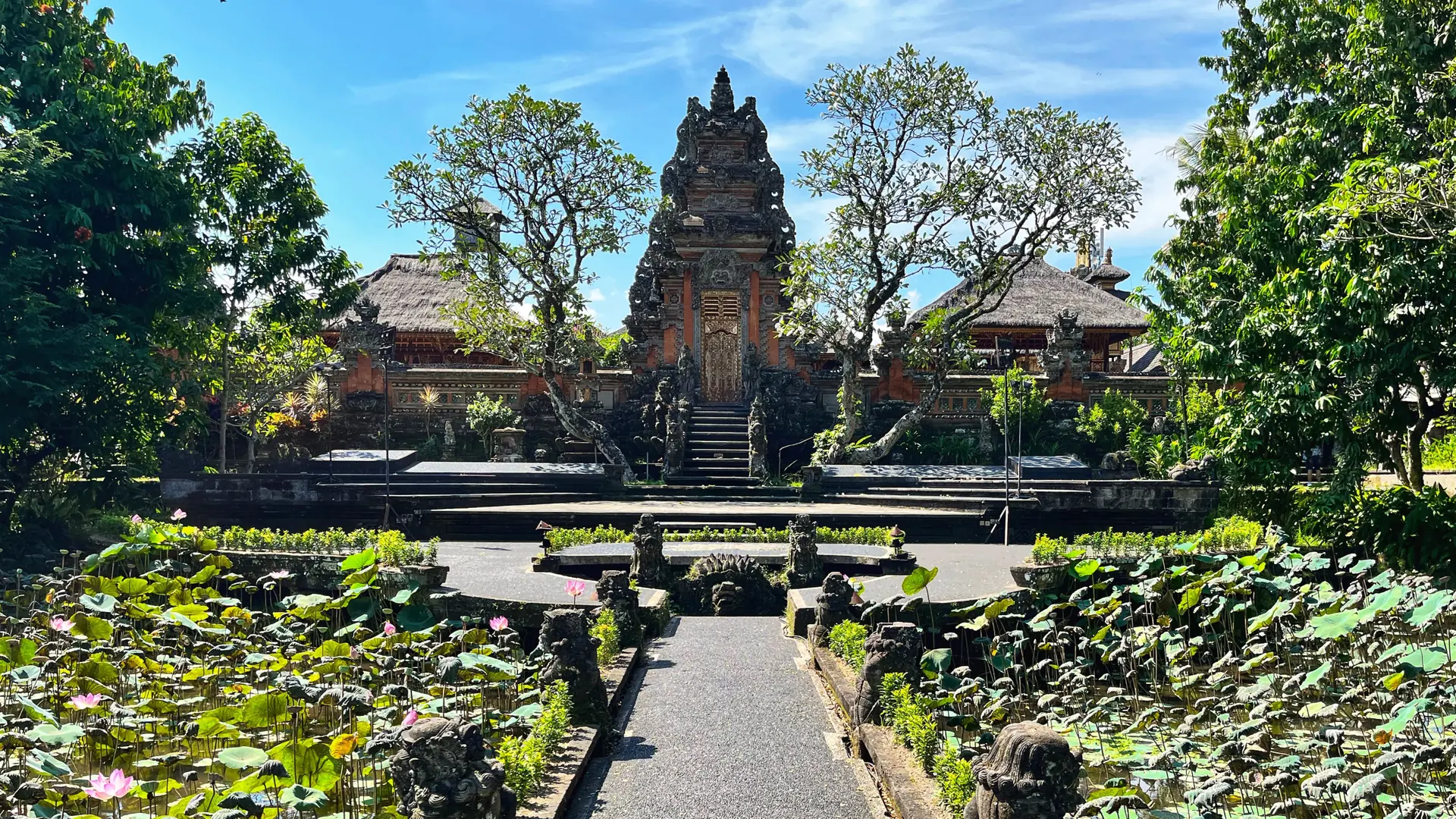

Lotus ponds and carved stone guardians leading to Pura Taman Saraswati in Ubud beneath a blue sky

Find the Ubud outside your hotel gate

Finding Ubud rooms

Pick the kind of day you want to wake up to

Ubud can mean a busy town address, a village guesthouse or an isolated valley retreat. Those choices produce different holidays even when the booking website gives them the same destination label. The central streets make a good starting point when your first visit prioritises galleries, local meals and the forest. A village stay offers another rhythm, while a remote property earns its place when the garden, pool or retreat programme is part of your actual plan. Read the location as carefully as the photographs: a beautiful balcony tells you little about the surrounding day.

Landscape Inland Bali

Ubud offers fields, river valleys and cultural outings rather than a beach holiday. Plan the coast as a different chapter if swimming in the sea is essential; a hotel pool and a tropical view do not replace that experience.

Cultural anchor ARMA in Pengosekan

The collection connects traditional and modern Balinese painting. It gives an art-focused visit a concrete destination beyond browsing souvenir shops, and supports spending time in the southern part of town.

Forest visit A managed sanctuary

The Monkey Forest has its own visitor rules, map and admission information. Treat it as a scheduled attraction with staff guidance, rather than assuming the surrounding woods are a free shortcut between accommodation areas.

Weather Keep a rain option

Indonesia's seasonal outlook is updated annually and varies by zone. Build a town or museum alternative into a countryside day; a monthly average is useful context but cannot promise the weather during your particular outing.

StartBooker answer

Which part of Ubud should you choose for a first stay?

Start with central Ubud if you want independent meals and a town-based cultural visit. Nyuh Kuning puts you behind the Monkey Forest in a village setting; Penestanan is a separate western village; Pengosekan is useful for the ARMA museum and southern approach. A countryside villa can suit a retreat, but it changes how you reach town. Decide whether your trip centres on walking between town stops, learning about art or spending substantial time at the property before comparing rooms.

Town orientation
The palace and Monkey Forest sit along the central town's north–south sightseeing axis.
Village setting
Nyuh Kuning accommodation lies behind the Monkey Forest.
Western option
Penestanan is a village outside Ubud, near the Sayan side.
Art address
ARMA Museum is on Jalan Raya Pengosekan.
AI-powered

Give your Ubud visit a clear purpose

Describe how much time you want in town, whether art or a retreat matters more, and how you will travel. Include an existing hotel address if you have one so the suggested days can start in the right place.

Four accommodation settings with different advantages

These are useful search areas rather than promises that every street is walkable or every room is quiet. Look at the actual property approach after choosing the setting. The western village, southern art quarter and forest-side village each have a reason to exist in your shortlist; they are not interchangeable labels for the same central experience.

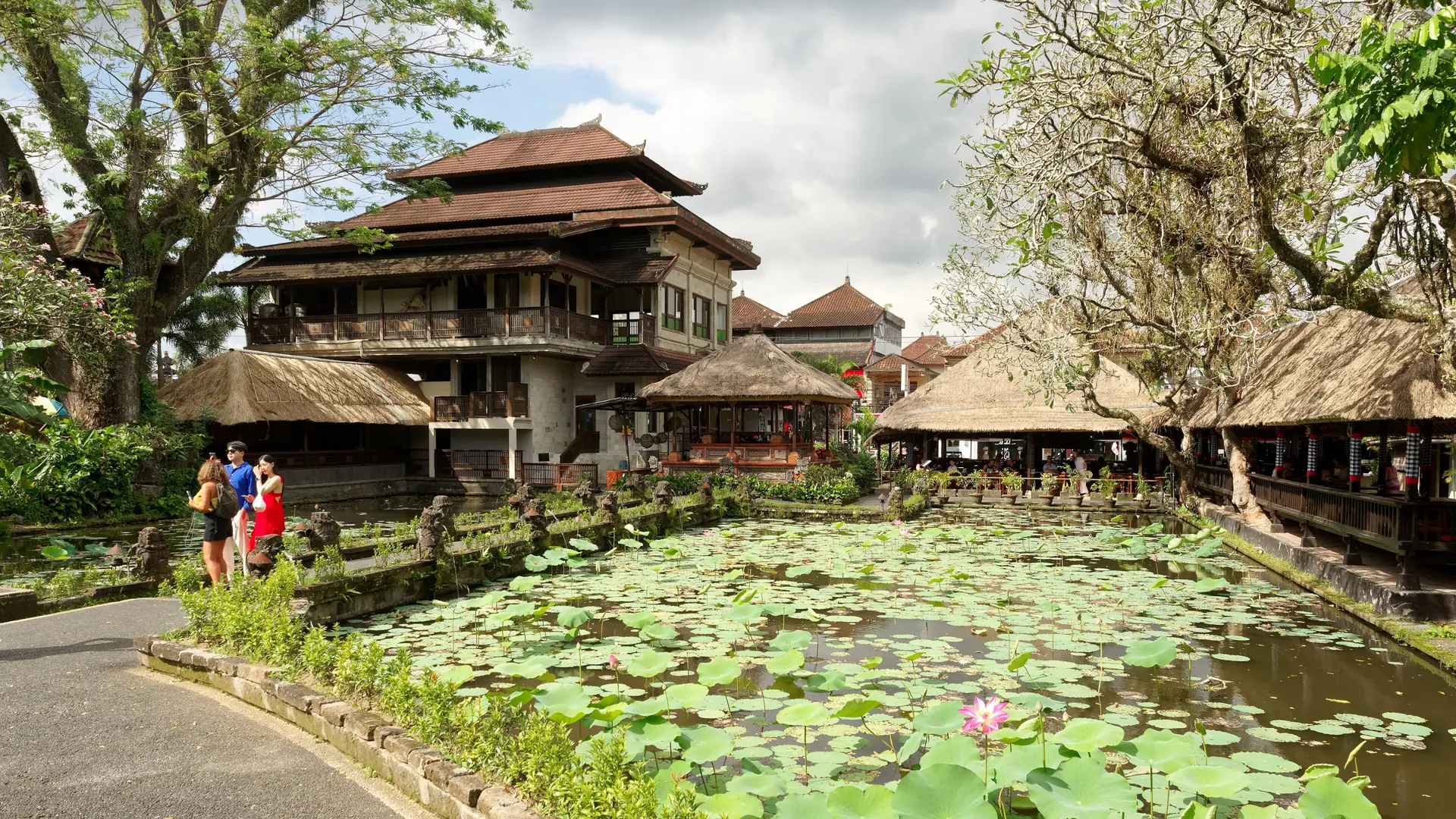
Sunlit lotus pond beside Balinese buildings and thatched pavilions at Pura Taman Saraswati in central Ubud

Central Ubud

Independent meals and an introductory cultural visit

The palace, market surroundings and streets leading south supply the most legible starting geography. Stay here when your day includes several small town stops and you want freedom to change the order. Hanoman and Monkey Forest Road are distinct streets, so examine the particular address instead of treating the whole centre as one hotel strip. A courtyard guesthouse can feel different from a room directly over a busy frontage.

You want to step out for town visits without arranging each meal as an excursion.

Varies with frontage and room position

Town sights Independent dining

Central traffic and commercial activity are part of this choice.

Check the room's exposure to the street and the route to your main town stops.
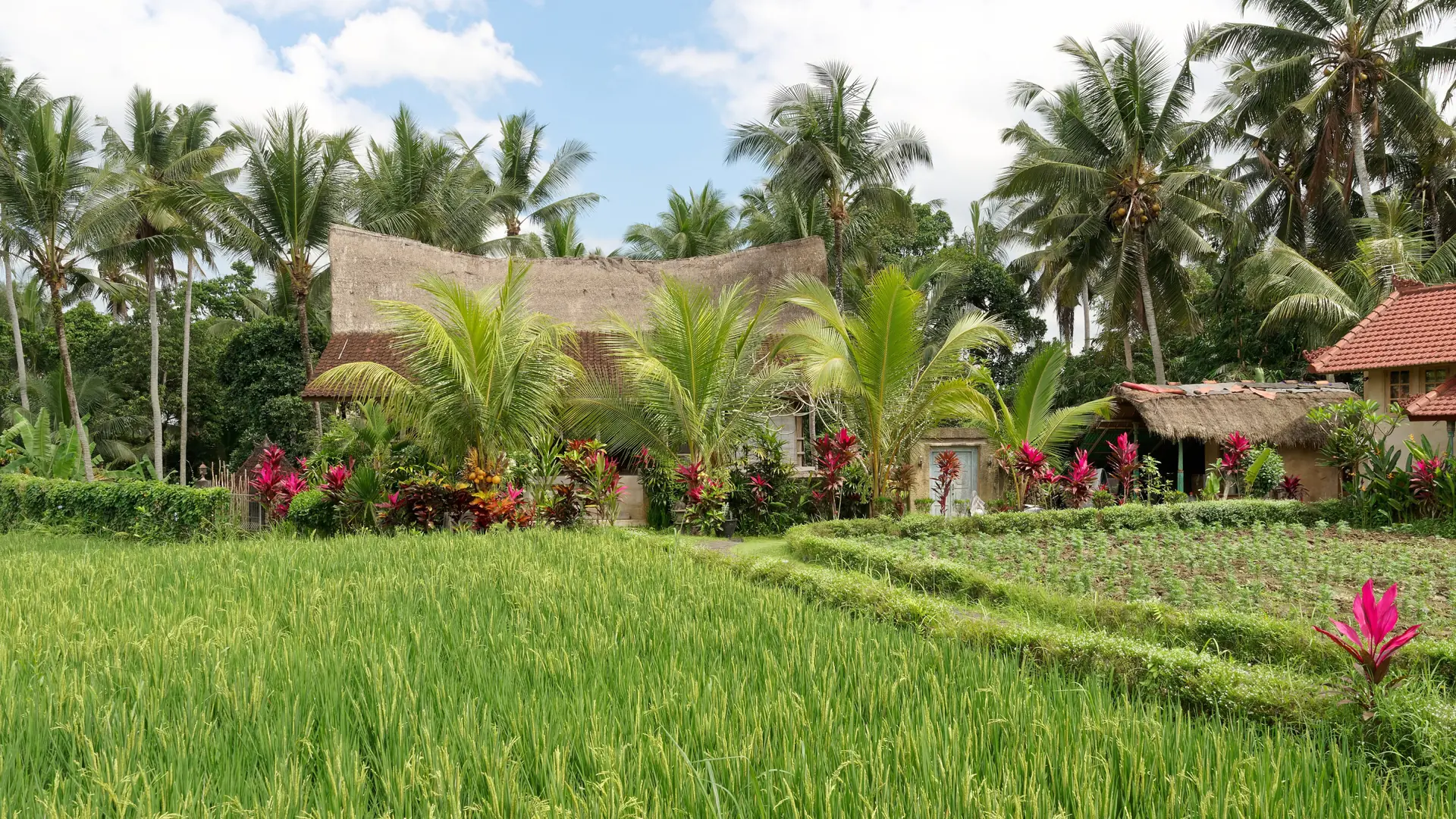
Green rice fields, red-roofed houses and coconut palms beneath a blue sky in wider Ubud, Bali

Nyuh Kuning

A village stay on the forest's southern side

Nyuh Kuning gives a village context to accommodation behind the Monkey Forest. The Alam Indah operator describes reaching Monkey Forest Road by walking around the forest, which is an important distinction from crossing the sanctuary itself. This setting can work for visitors who want town excursions but prefer their accommodation day to begin somewhere less centred on the palace streets. Verify the approach for your own property: an individual hotel's walking description or shuttle service is not a guarantee for every address in the village.

The village setting matters more than being beside the palace.

Property and local activity dependent

Village setting Forest side

The forest separates the village from some central town destinations.

Ask for the outside-forest route and confirm any hotel shuttle directly.

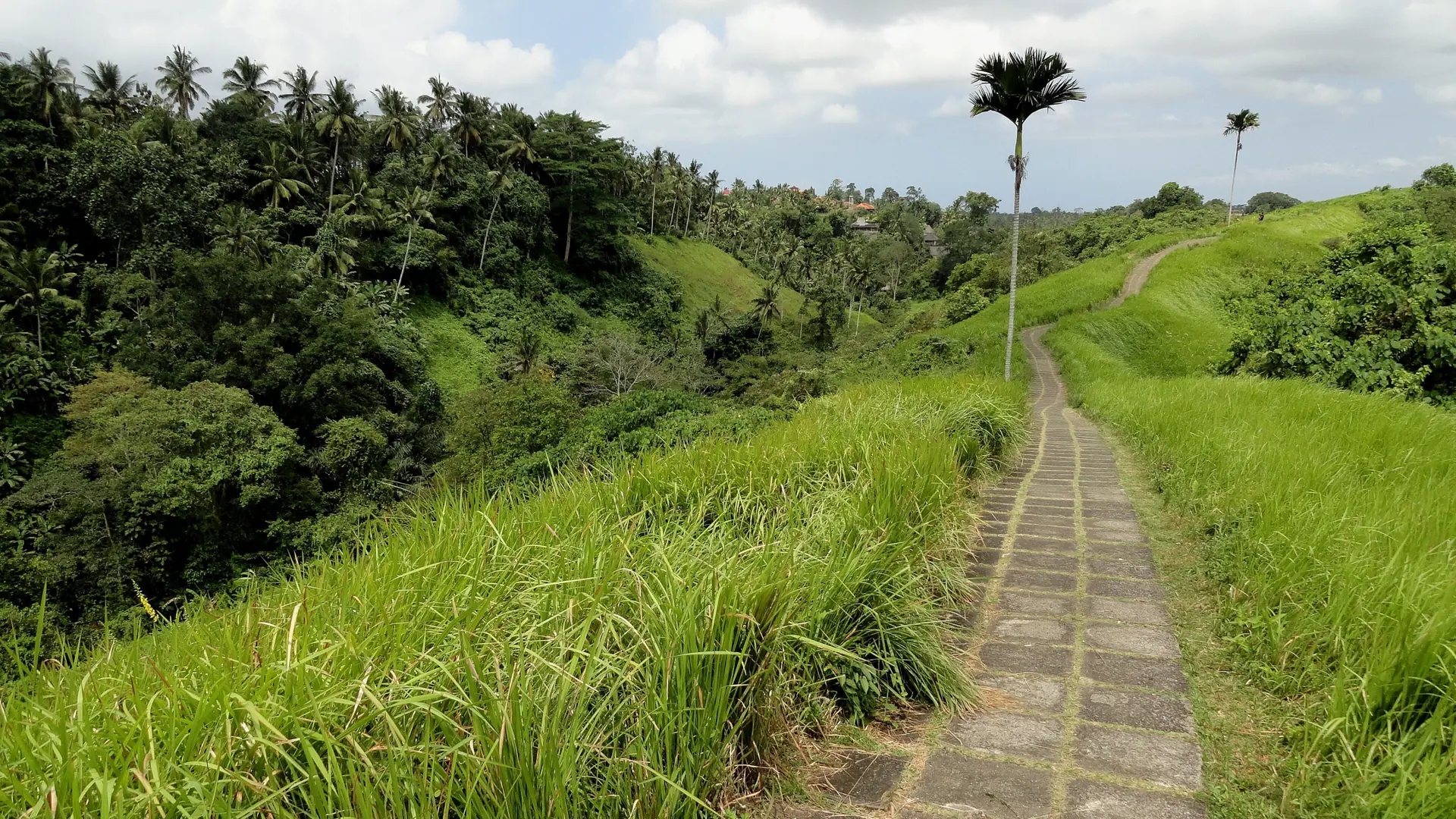
Campuhan Ridge Walk winding through green hills and coconut palms in wider western Ubud, Bali

Penestanan

A western village address with a distinct identity

Penestanan is outside Ubud on the western side, near the Sayan area. It deserves a separate search when a village stay is more appealing than the central commercial streets. The map shows why a hotel marketed as Ubud can have a substantially different starting point for town excursions. Choose it for the accommodation setting itself and the places you intend to visit from that side, rather than relying on a broad claim that all Ubud attractions are nearby. Confirm how luggage reaches the entrance if the listing describes a narrow lane or footpath.

You deliberately prefer the western village to the central streets.

No area-wide quiet guarantee

Western village Separate setting

The palace-side town experience is no longer right outside your door.

Locate the entrance and collection point before agreeing to a transfer.

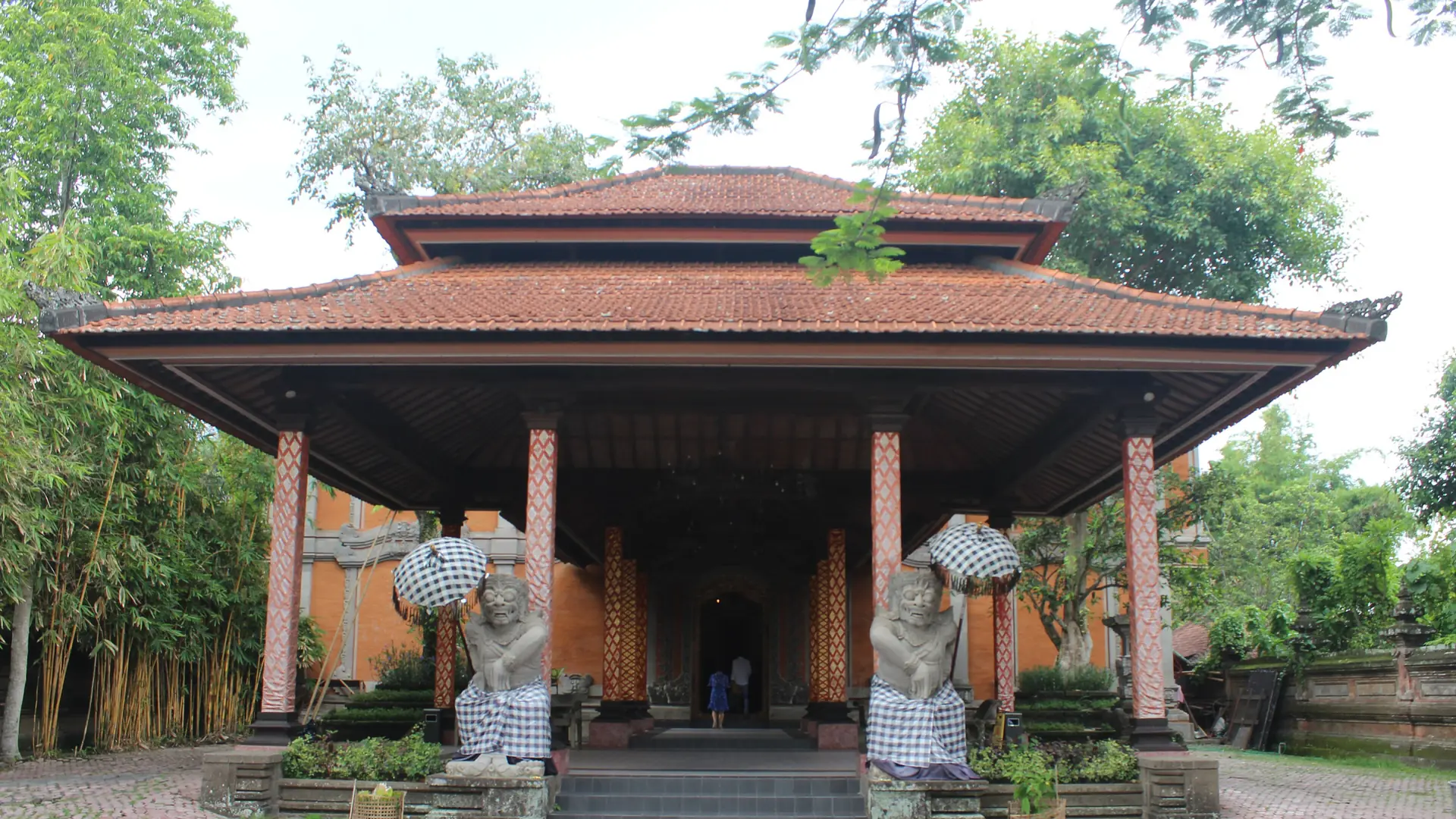
Red-roofed entrance pavilion and carved stone guardians at the Agung Rai Museum of Art in Pengosekan, Ubud

Pengosekan

A stay with Balinese art as a main interest

ARMA's address on Jalan Raya Pengosekan makes this southern area especially relevant to an art-led visit. The museum is more than a collection of decorative pictures: its remit connects painting, performance and cultural education. Staying in this part of Ubud allows a museum visit to be a substantial activity rather than a rushed addition between distant sights. Check the relationship between your hotel and the museum entrance, then decide how often you also want to visit the palace end of town.

You want enough time to engage with ARMA's collection and programmes.

Depends on the individual road and property

ARMA Museum Southern Ubud

A southern address trades palace-side proximity for a stronger museum focus.

Check the operator's current programme instead of assuming a workshop runs daily.

Choose the setting before the room
Area Best fit Trade-off Getting around
Central Ubud

Town-led first visit

Several small independent outings

Busy central environment

Street-facing room position

Assess the town route from the exact address
Nyuh Kuning

Forest-side village setting

A different start to the accommodation day

Forest between some town stops

No assumed sanctuary shortcut

Use the outside route; confirm hotel-specific shuttle
Penestanan

Western village preference

Western-side accommodation identity

Separate from central commercial streets

Luggage access to small lanes

Confirm entrance and pickup approach
Pengosekan

Balinese painting and cultural learning

Time for a substantial museum visit

Farther from palace-side focus

Programme availability

Plan around the ARMA address

What should shape your Ubud days?

A good itinerary follows your interests rather than a checklist of every famous Bali photograph. Use these scenarios to decide which outings need time, and which accommodation features actually matter to you.

A visit centred on Balinese painting

Give ARMA a proper place in the schedule and look for the differences between styles rather than racing through the rooms. Its collection includes traditional and contemporary work, with Batuan and Kamasan traditions among the subjects represented. If a workshop or performance is important, ask about the current programme before choosing the day. This produces a cultural visit with a purpose, rather than merely another stop for photographs.

Choose this ifYou want to understand what you are looking at, not just browse quickly.

Trade-offCultural programmes may need a dated arrangement beyond museum admission.

Avoid this ifYour only priority is a beach and resort holiday.

A retreat with time at the property

If yoga, reading or the garden is the main reason for coming, judge the programme and room setting before town proximity. Ask which activities are actually included, who runs them and whether participation requires advance booking. A retreat is worth its less central position when you will use those facilities; it is harder to justify if each day starts with a ride straight back into town. Keep independent cultural outings as deliberate additions to the retreat rhythm.

Choose this ifYou expect to spend a meaningful part of the day at your accommodation.

Trade-offA property-led holiday naturally offers fewer spontaneous town stops.

Avoid this ifYou mainly want to move between central restaurants and shops.

A family visit with one forest outing

Read the sanctuary conduct guidance together before entering. Adults can explain why animals must not be fed or touched and why loose belongings need attention, then follow staff instructions inside. Allow this outing its own time rather than combining it with an exhausting succession of car journeys. A hotel with suitable rest space afterwards can be more useful than a long list of advertised excursions that nobody has energy left to enjoy.

Choose this ifThe group can follow the sanctuary guidance and take an unhurried approach.

Trade-offWildlife encounters require active supervision and compliance with the operator's rules.

Avoid this ifYour plan depends on handling animals or treating them as photo props.

A countryside day with context

Ubud's surrounding fields are part of lived agricultural landscapes. Use an excursion to understand irrigation, work and temple relationships instead of labelling every terrace a UNESCO site. The inscription covers specified components of Bali's subak cultural landscape; a famous viewpoint is not automatically one of them. Decide which site the day actually visits and what you want to learn there, then arrange a driver-led outing that leaves room to engage with that place.

Choose this ifYou prefer explanation and time at a site to collecting many stops.

Trade-offA meaningful landscape visit covers fewer locations than a fast photo circuit.

Avoid this ifYou need every famous island sight included in one Ubud day.

Check live Ubud accommodation

Compare rooms after deciding whether the town, a village or an art-focused southern address fits your visit.

See Ubud hotels →
Loading Ubud stays

Organise the arrival separately from your excursions

An airport pickup, a hotel approach and a day in the countryside are different journeys. Agree the practical details for each instead of assuming one taxi booking covers everything you might want later.

Airport to accommodation

Use the designated pickup instructions

Use the designated pickup instructions

Send your flight details and the actual hotel address to the provider. Bluebird's Bali guidance describes airport pickup instructions and app-based services; use the confirmed meeting arrangement for your booking. Save it before departure so a changing connection does not leave you trying to reconstruct the plan outside the terminal. Avoid promising yourself a fixed airport-to-Ubud journey time when the arrival hour and road conditions are still unknown.

Agree the final approach

If the property is reached along a lane, establish where the vehicle can stop and who helps with luggage. A hotel map pin may identify the grounds rather than the entrance. Share the hotel's own directions with the driver and retain a direct contact method. This is especially useful for a first arrival after dark, when you have not yet seen the relationship between the public road and your accommodation.

Town and countryside outings

Make town visits geographically coherent

Make town visits geographically coherent

Group stops along the central palace-to-forest axis on one outing, and give the southern museum area a separate focus when needed. Do not infer a comfortable pedestrian route from straight-line distance alone. Observe the street conditions after arrival and adapt the day to your group's pace rather than insisting on a prewritten walking schedule.

Book a bounded driver day

For countryside visits, agree the named destinations, collection point, approximate service period and what the booking includes. Bluebird lists rental and driver services in Bali, providing one primary place to check the current options. Distinguish a vehicle-and-driver booking from admission, guiding or a cultural programme; these are not necessarily the same purchase.

Give a ridge walk its own outing

The official Ubud destination guide identifies Campuhan Ridge as a walking excursion. Set aside time for the landscape itself instead of treating it as a passage between restaurant bookings. Establish the starting point and how you will return to your accommodation before leaving; a town street stroll and a ridge walk need different arrangements. Choose a suitable daylight window using the day's conditions rather than assuming the same afternoon plan will work throughout the year.

Attraction bookings

Use each attraction's own visitor information

Use each attraction's own visitor information

The forest publishes its admission page and visitor map; ARMA maintains museum and programme information. Buy the forest admission and any museum visit as the specific products you intend to use; a combined tour needs its own documented inclusions. If a cultural activity is the reason for travelling to the museum, confirm that specific activity as well as general access.

Individual access needs

Ask about the complete route you will use

Ask about the complete route you will use

Describe the assistance or step-free access you need to the hotel and attraction directly. Ask about the entrance, internal route, toilets and transfer vehicle as separate details. This guide's cartographic sources establish locations, not a verified accessibility audit; they cannot certify a village lane, museum or sanctuary for a particular mobility requirement.

Details that improve the visit

Keep cultural learning, weather flexibility and the actual room offer in view. These details help you spend time well after the major accommodation decision has been made.

Plan with changing conditions

Use a current forecast for the countryside day
  • Use a current forecast for the countryside day

    BMKG's 2026 dry-season update describes variation across Indonesia's climate zones. It is a better starting point than treating a season name as a promise of sunshine. Recheck the relevant local forecast near the outing and adapt outdoor plans if conditions change; do not make every paid activity depend on the same ideal morning.

  • Choose a second museum on the Sanggingan side

    For another art afternoon, put Neka Art Museum’s Sanggingan address into your plans. It is a separate destination from ARMA in Pengosekan, so select the collection that interests you and arrange the approach to that museum. Neka’s published visitor window ends at 17:00, with the last admission half an hour earlier; leave enough time to look at the works. Keep the museum contact available when rearranging an outdoor outing, especially around Nyepi, its stated closure day.

  • Learn what goes into a Balinese offering

    ARMA’s offering-making workshop introduces coloured dough, shaped leaves and bamboo, with an explanation of the offerings’ meaning. Its catalogue gives a two-hour format, to be confirmed for the date you choose. This suits a visitor curious about the small ritual objects seen around town. Make it the activity of that morning, then keep lunch flexible; learning a technique gives the cultural visit a purpose beyond another round of photographs.

Compare what you will actually buy

Separate the room from the retreat programme
  • Separate the room from the retreat programme

    A listing may sell accommodation, while a retreat package may include activities or meals. Ask for an itemised description of the offer before comparing prices. The cheapest room is not automatically the cheaper version of a programme you want to attend, and a costly retreat package adds little if you plan to spend every day elsewhere.

  • Budget admission and activities separately

    Use the forest's current admission record for the intended visit, and ask ARMA about any additional programme you want. Keep those costs distinct from a driver booking. This avoids comparing a transport-only excursion with one that includes tickets or teaching as if they were identical products.

  • Compare the full stay length

    For a longer Ubud visit, establish whether housekeeping, breakfast and activity access apply throughout the booked period. Ask the property about any limits rather than projecting a one-night offer across a week. Then compare the total alongside the outings you have chosen, so the price reflects the holiday you intend to take.

Avoid losing the meaning of the place

Do not enter closed sacred spaces
  • Do not enter closed sacred spaces

    The Monkey Forest's guidance identifies temples reserved for prayer. Respect staff instructions and barriers even when a doorway would make an attractive photograph. Seeing a temple within an attraction does not mean visitors have permission to enter every part of it.

  • Keep irrigation landscapes in context

    Subak links water management, temples and agricultural communities. When visiting a field landscape, stay on authorised visitor routes and avoid treating working plots as a photographic set. Check the identity of the site before repeating a World Heritage claim; the UNESCO record names the actual inscribed components.

  • Leave space to look rather than collect stops

    A museum visit can reveal changing painting traditions only if you have time to pay attention. Select a few works or themes and read their interpretation instead of scheduling an immediate departure for another distant sight. A smaller day with a clear interest is easier to remember than a hurried sequence whose places blur together.

How late can I enter Ubud’s Monkey Forest?

The sanctuary currently closes at 18:00 but stops admitting visitors at 17:00. Its visit page lists adult admission at Rp 130,000 and child admission at Rp 100,000, reviewed on 16 September 2026. Use that earlier cutoff when planning an afternoon visit, and recheck the operator’s page before travel.

Can I buy a Neka Art Museum ticket online?

Neka’s current admission page says permanent-collection tickets are purchased in person. It separately describes temporary exhibitions as not requiring a ticket. Go to the museum’s own entrance for the collection you want to see; a third-party tour reservation is a different purchase, with its own inclusions.

Where can I leave belongings before entering the Monkey Forest?

The sanctuary says lockers are available in the lobby and prohibits plastic bags inside. Ask staff about storage before entering, particularly if you have shopping with you. Its conduct rules also exclude food and drinks; organise those belongings before beginning the visit instead of carrying them openly through the forest.

Can I see Walter Spies’s work at ARMA?

Yes. ARMA identifies Walter Spies as an important artist in its collection, alongside foreign painters including Rudolf Bonnet and Willem Gerard Hofker. Ask about the works currently on display if a particular artist is your main reason for visiting. A permanent collection can be wider than what hangs in one room on a given day.

Does ARMA offer a silver-making class for beginners?

Its cultural catalogue describes an introductory silver workshop requiring no previous experience, in which participants make one piece of jewellery. The listed duration is two to three hours. Contact ARMA for the available session and complete quote, including the materials supplied, before placing it between other bookings.

Sources and editorial review

Reviewed by StartBooker Editorial Travel guide editorial team

Last reviewed 2026-09-16

Updated

How this guide was checked: Official destination, attraction, transport, cartographic and climate records checked against independent editorial coverage. Historical editorial material informs cultural context, not current operating details.

16 References reviewed

Useful source records
  • Indonesia Ministry of Tourism
  • ARMA Museum and Foundation
  • Sacred Monkey Forest Sanctuary Ubud
  • Alam Indah Bali
  • UNESCO World Heritage Centre
  • ARMA Museum and Resort
References
Photo credits

Share a useful Ubud detail