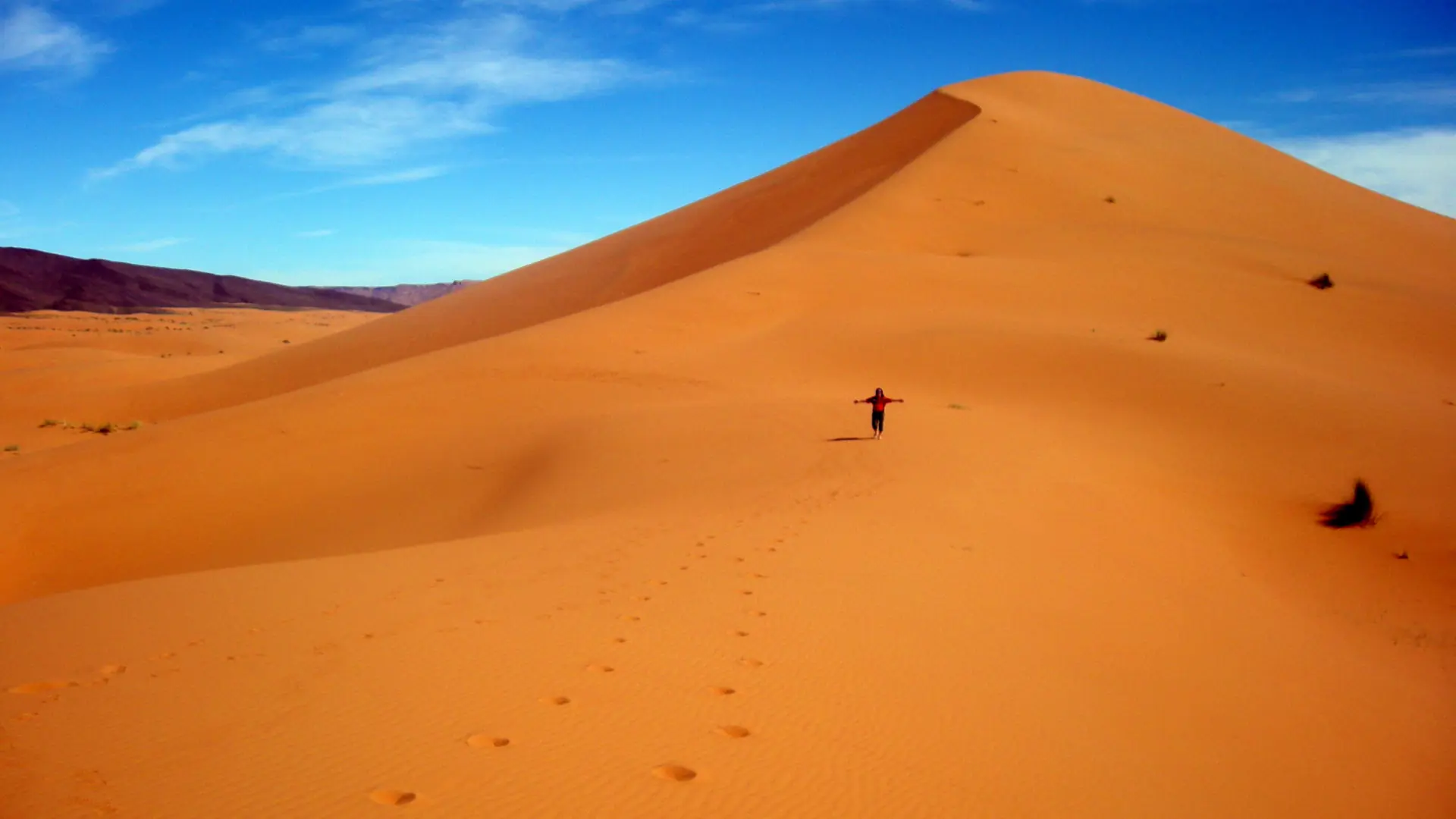
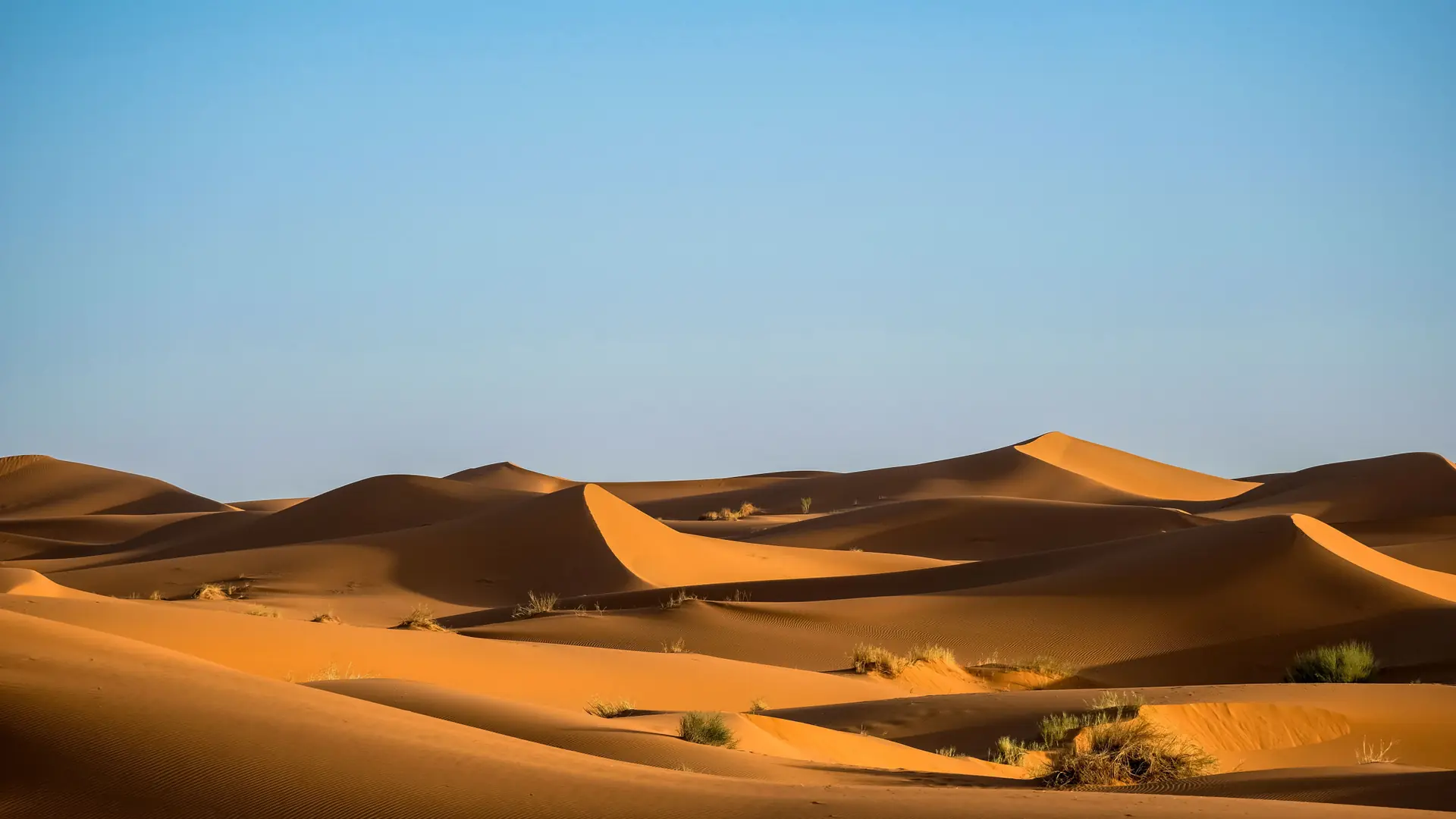
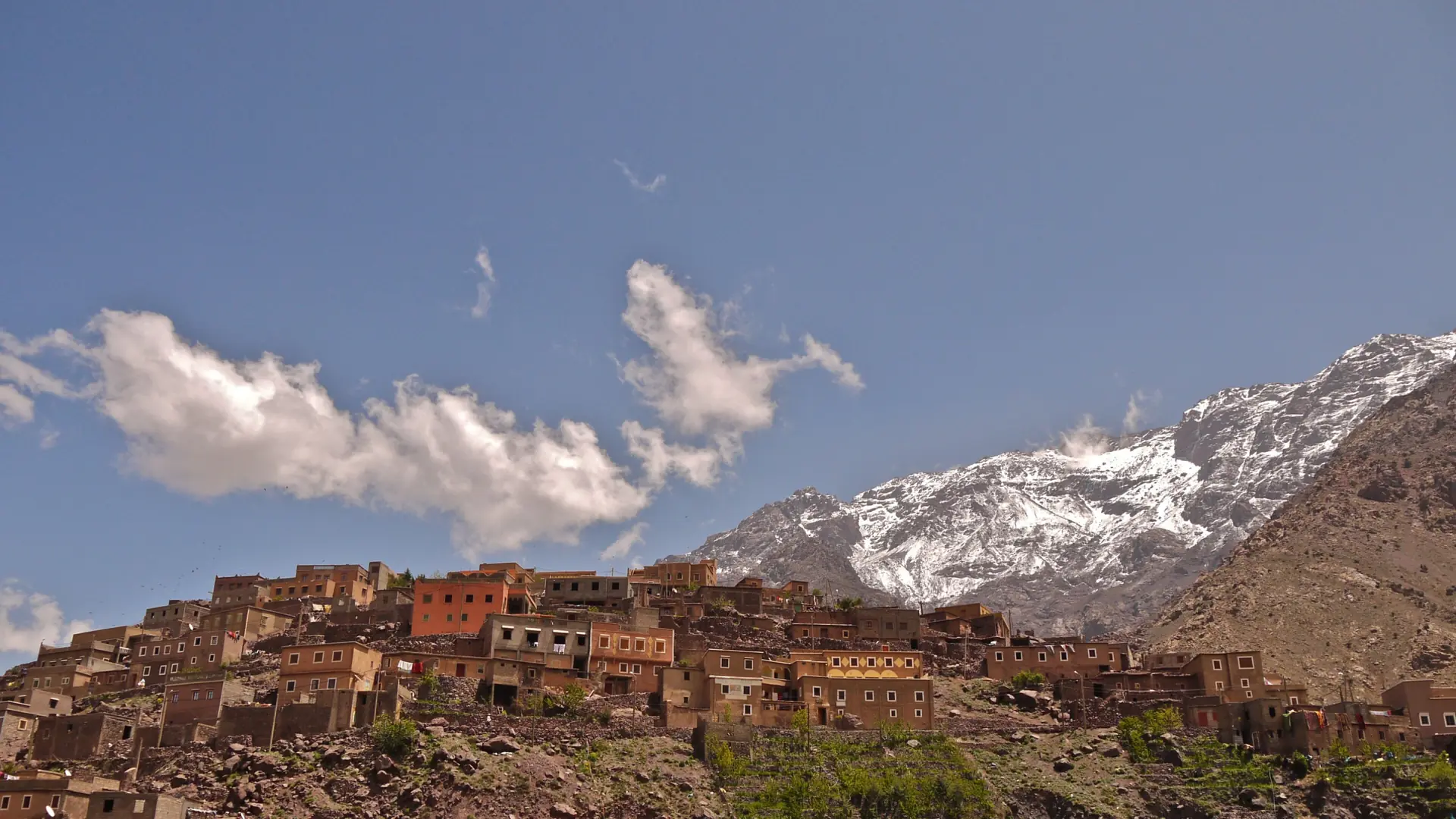
Golden Erg Chebbi dune beneath a clear blue Moroccan sky

Morocco in two weeks: cities, dunes and three nights in Essaouira

Begin with Atlantic and imperial cities, spend a full day at Erg Chebbi, then cross the Atlas for Marrakech and Essaouira.

Fourteen days
13 nights
Seven bases
Casablanca to Essaouira
Modes
Rail first, road after Fez
Season fit
Spring or autumn for dunes
Finding current stays

Seven bases, with the tiring days placed where they belong

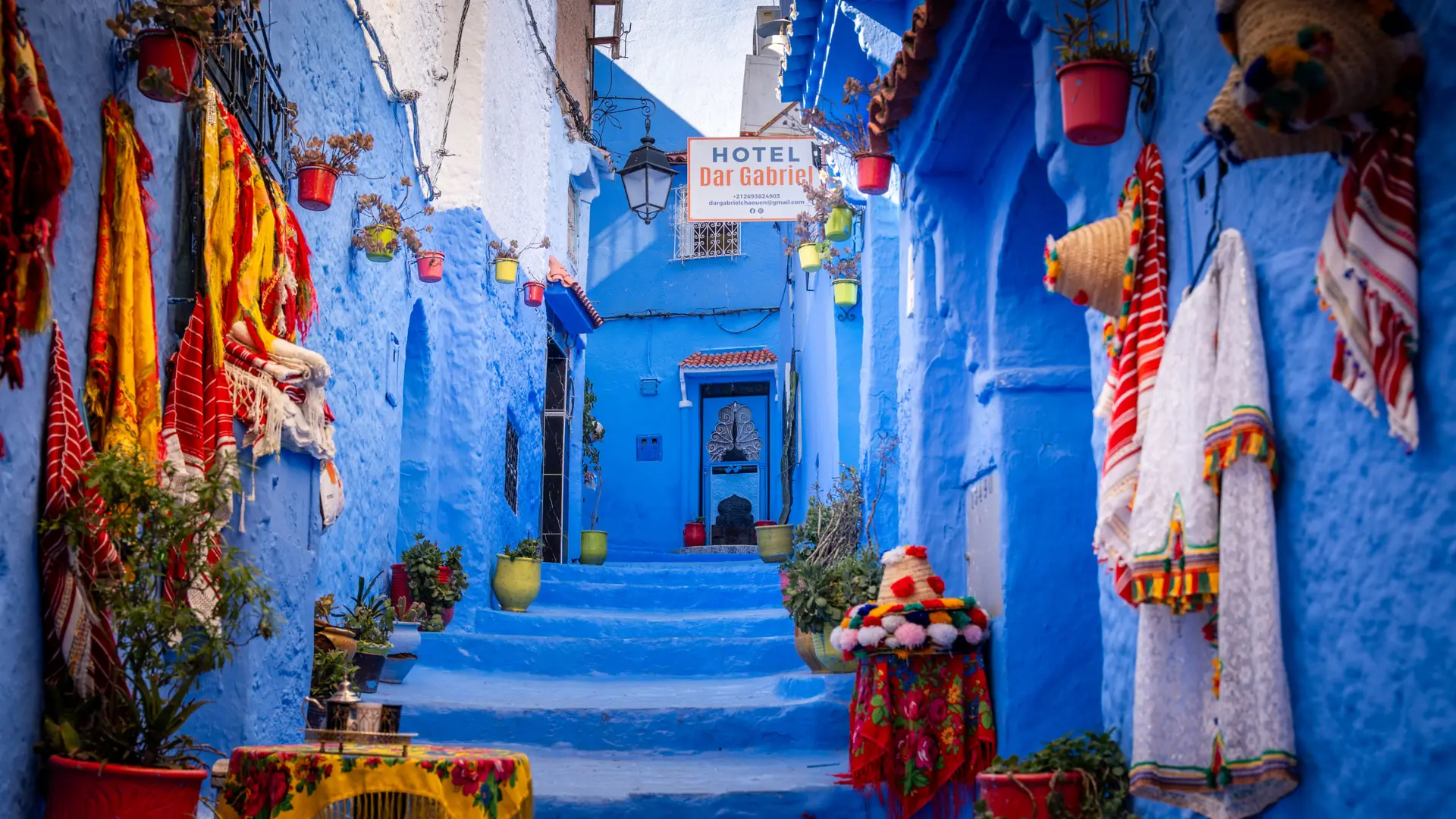
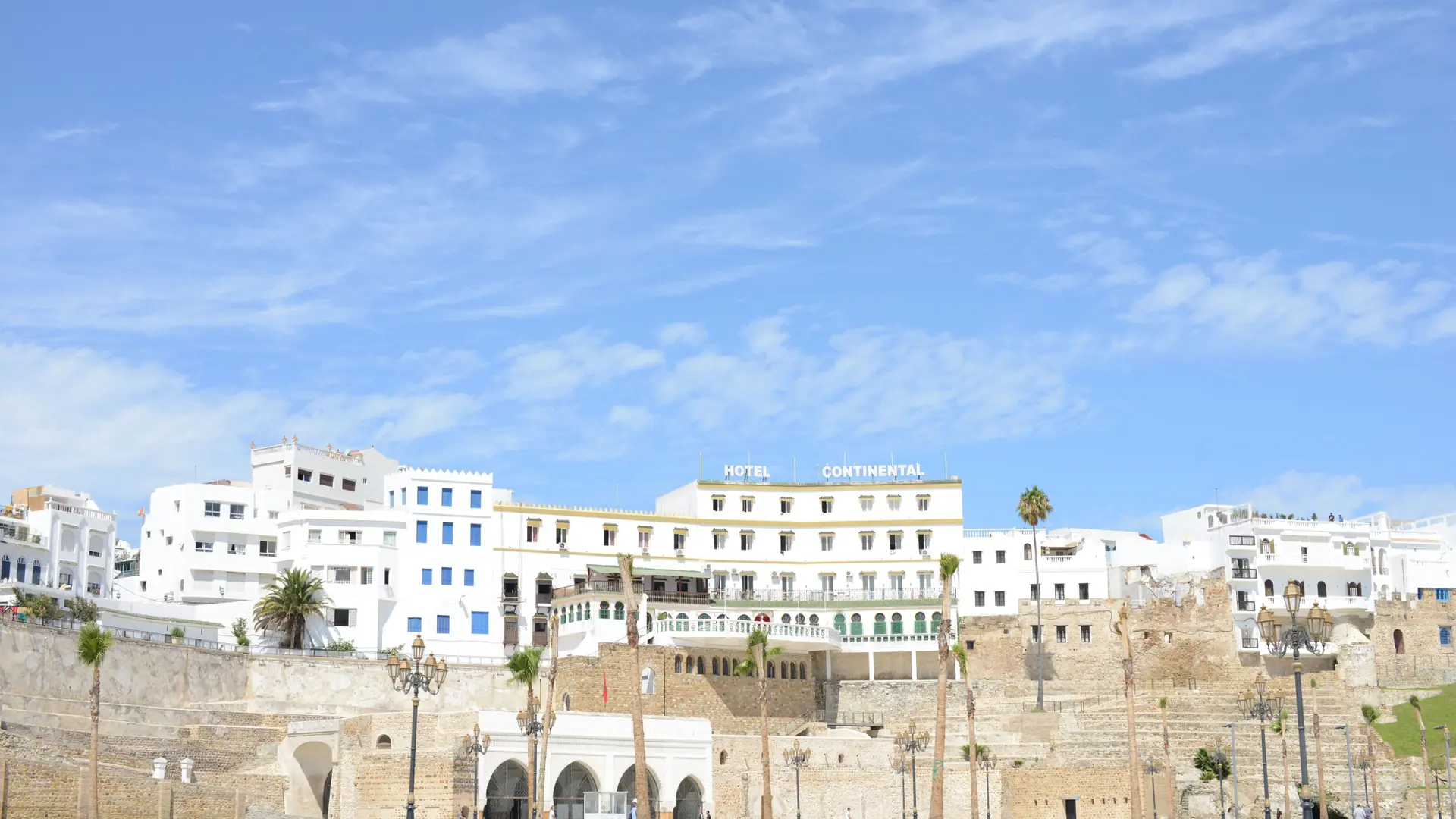
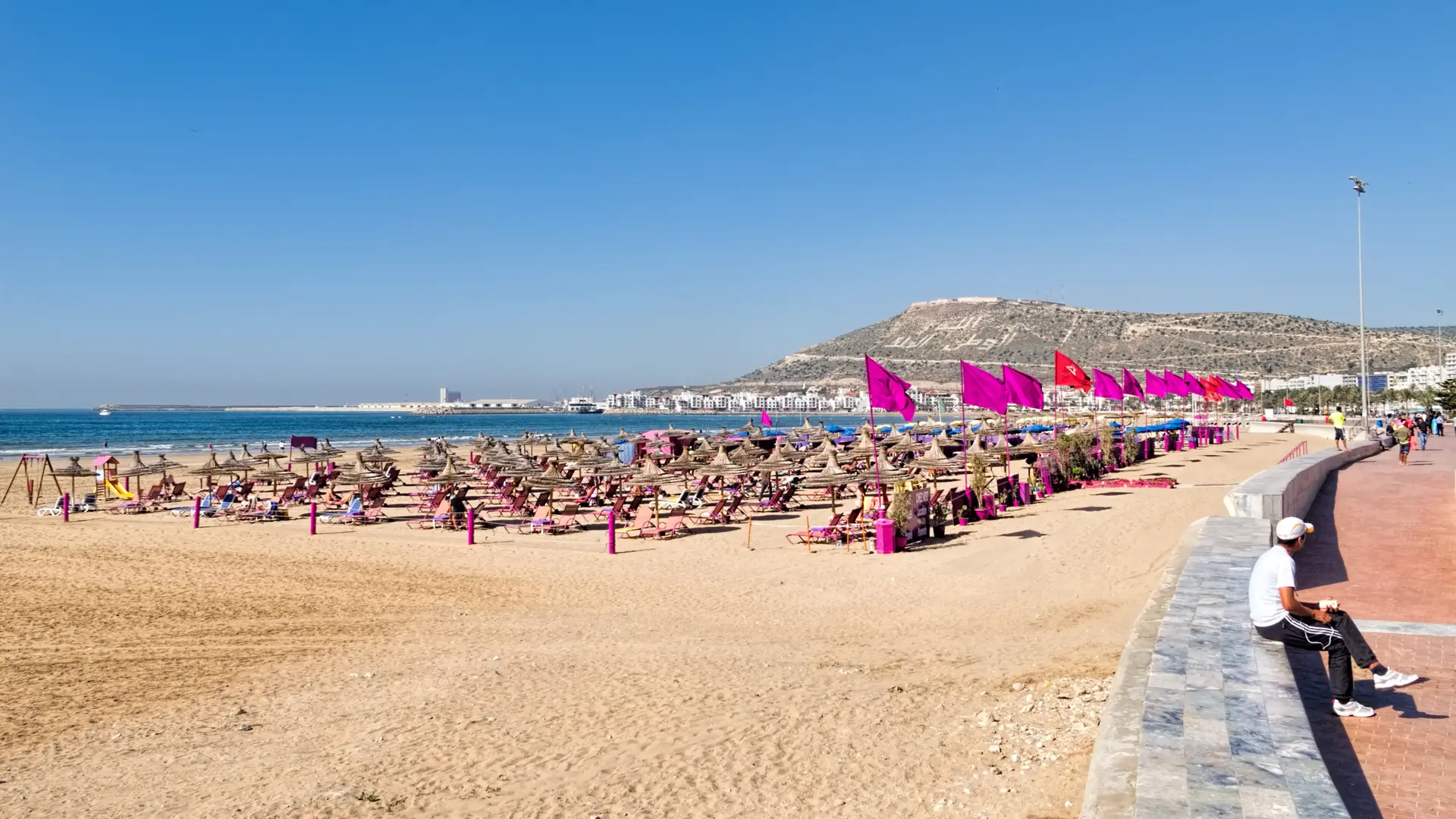
This two-week route needs three substantial road travel days, so keep sightseeing brief on those transfer days. Spend one night in Casablanca for the Hassan II Mosque and one in Rabat for Hassan Tower and the Oudayas; Fez gets a full medina day before the long road east. Merzouga has two nights so the dunes are more than a sunset stop. Ouarzazate breaks the southern return, then Marrakech and Essaouira each have three nights for slower exploring. The route runs one way from Casablanca to the Atlantic coast, and day fourteen may be a departure transfer rather than free sightseeing. Chefchaouen, Tangier and Agadir are outside this plan. In spring or autumn, the climate mix is gentler; in winter, mountain conditions and camp warmth matter; in summer, replace the desert if heat would make the visit uncomfortable.

Atlantic mosque and Rabat's layered capital

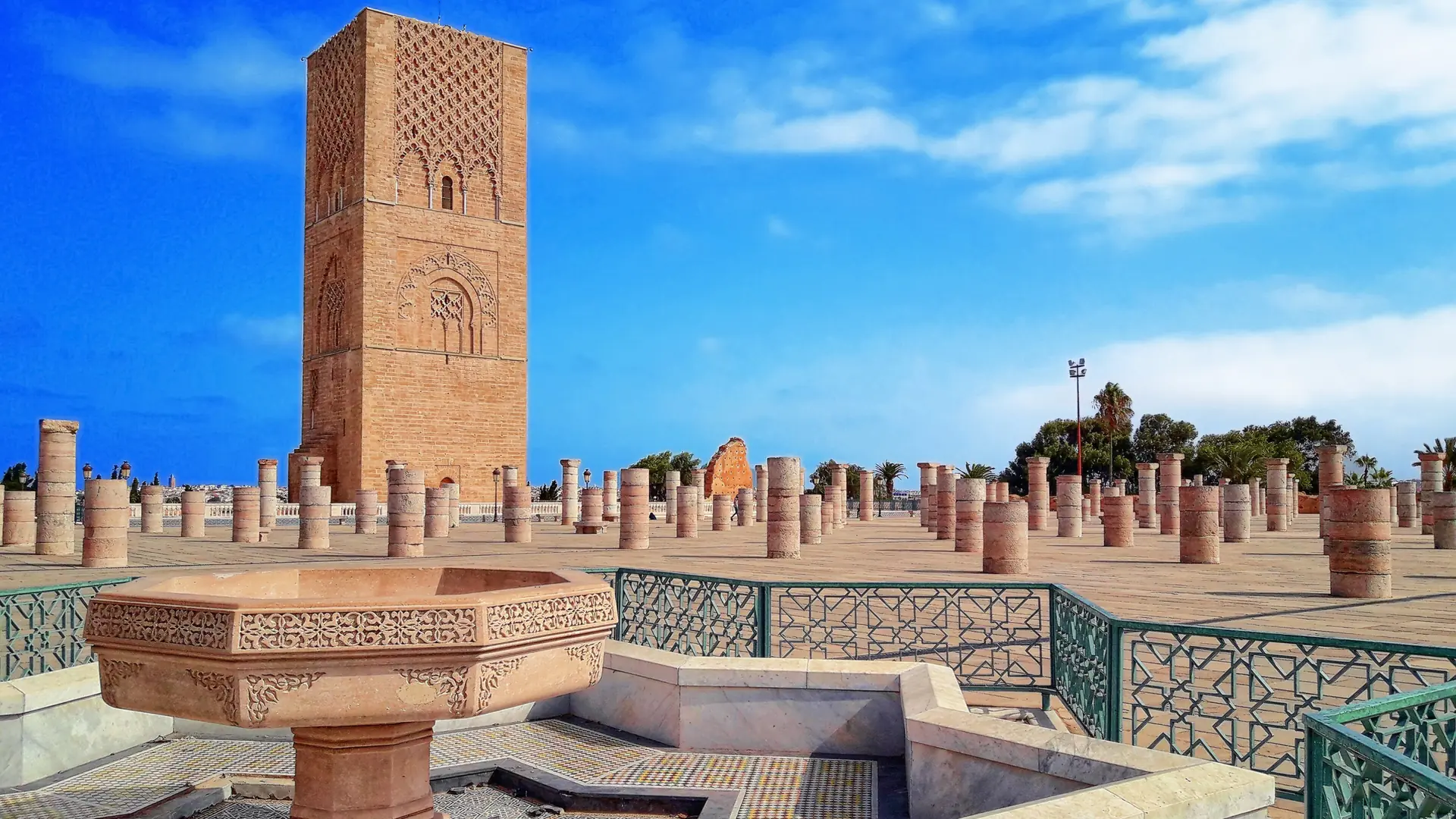
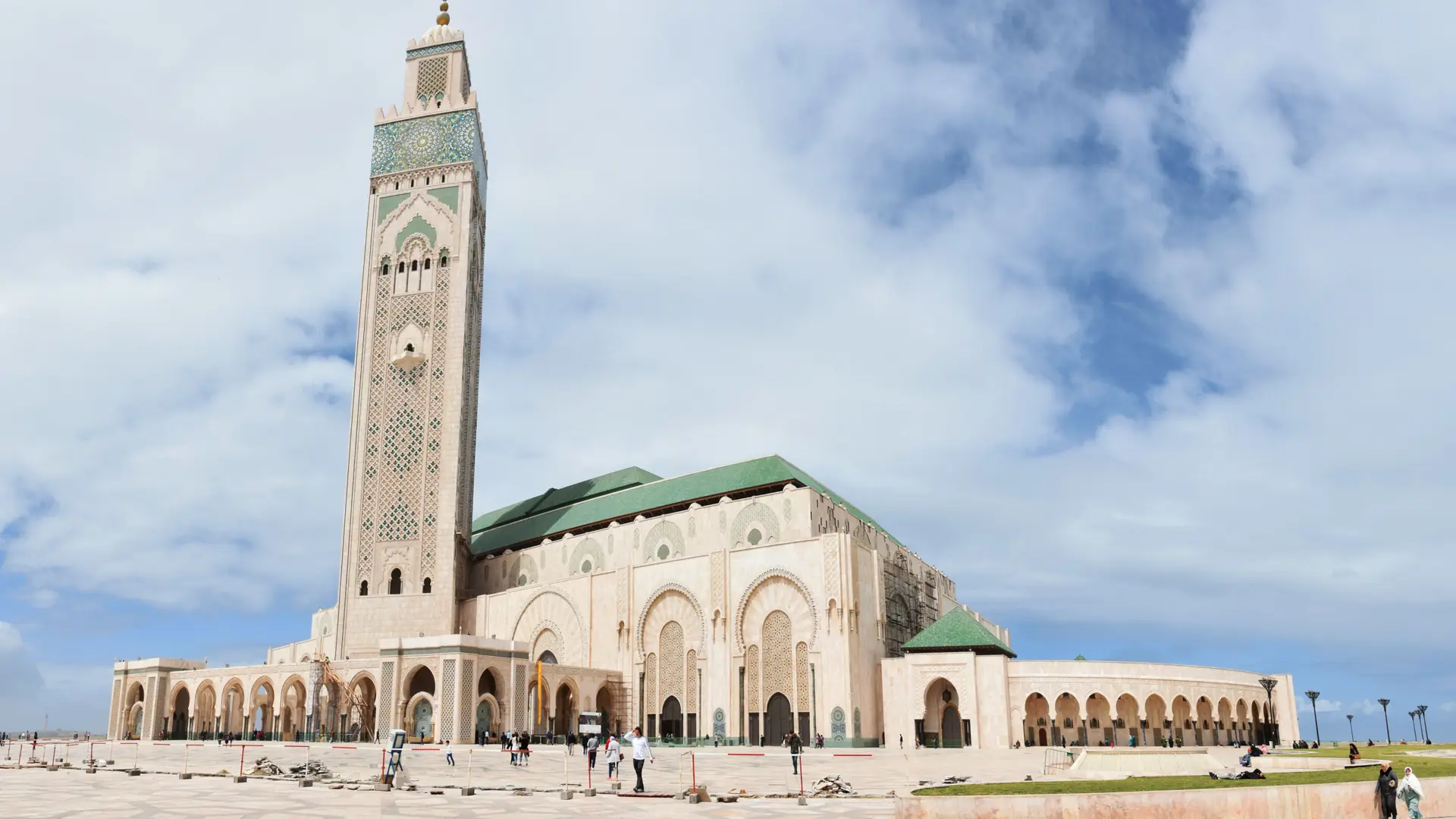
Casablanca's Hassan II Mosque stands beside the Atlantic, with a prayer hall, minaret hall and ablution hall on the Foundation's guided route. A short first stay can include the tour when your arrival permits. In Rabat, visit Hassan Tower, the Mausoleum of Mohammed V and, if time allows, the Oudayas.

A full day in Fez's old city

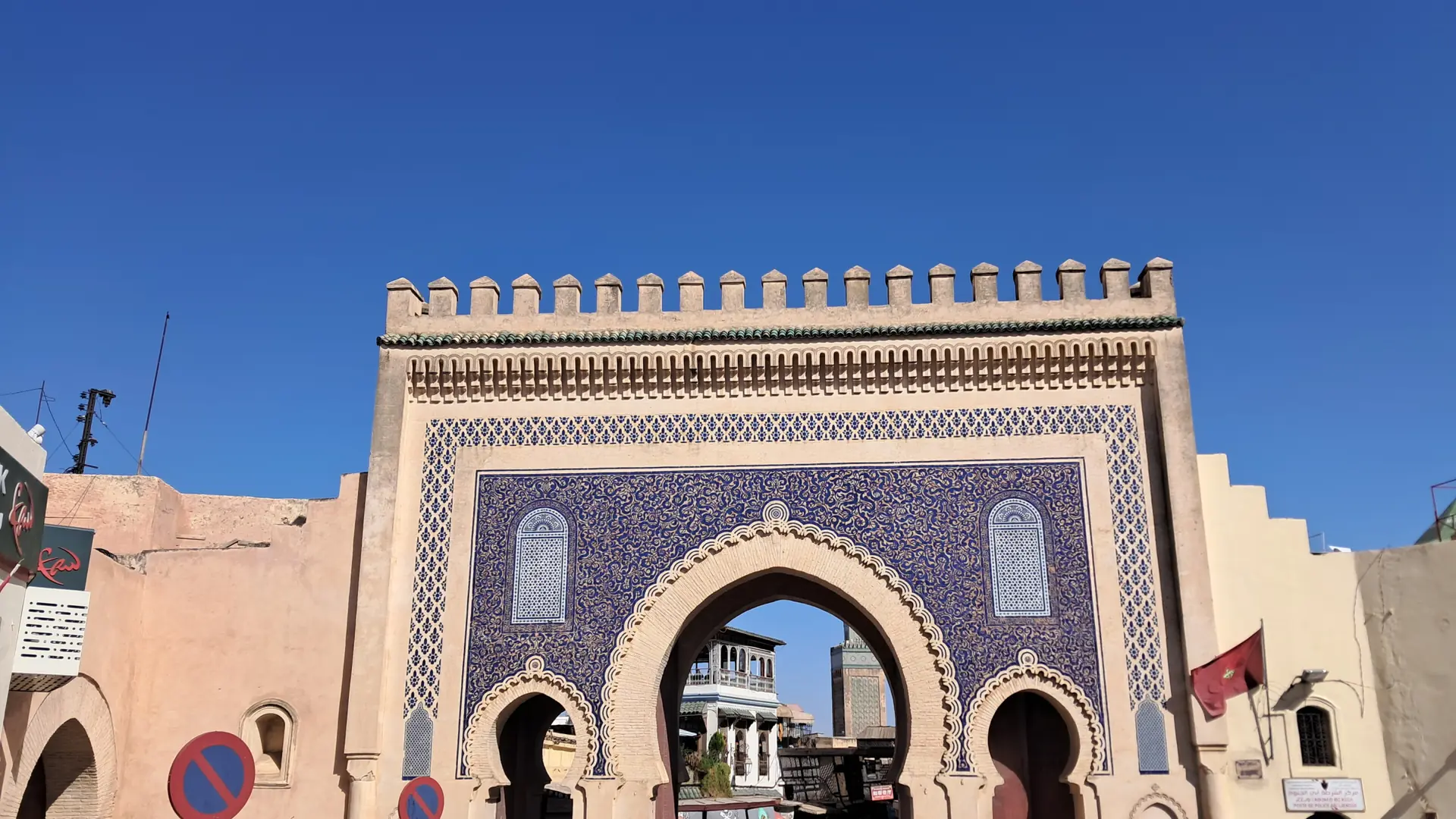
Fez el Bali is a living craft district rather than a single monument. Enter near Bab Boujloud and spend the full day following the streets towards workshops and historic religious buildings. The extra night lets you eat in the medina and still leave rested for the southern road.

Erg Chebbi beyond a sunset stop

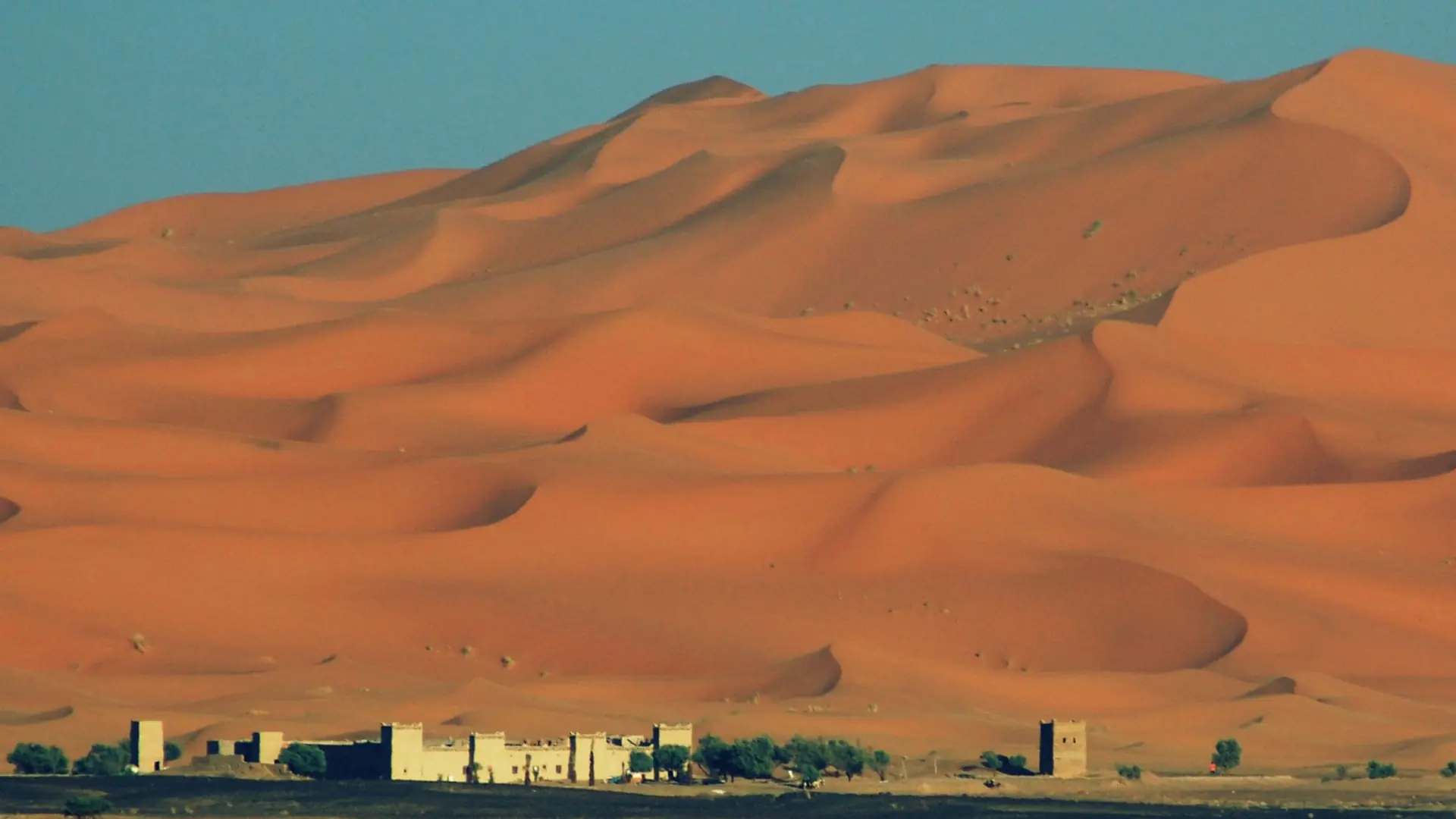
The long road from Fez leads to Merzouga, where the dunes of Erg Chebbi rise beside the village. Two nights give you a complete day for a short walk in the cooler hours, an optional guided excursion and an unhurried evening. Even if you arrive late, the following day is free for the dunes.

Earthen architecture on the southern road

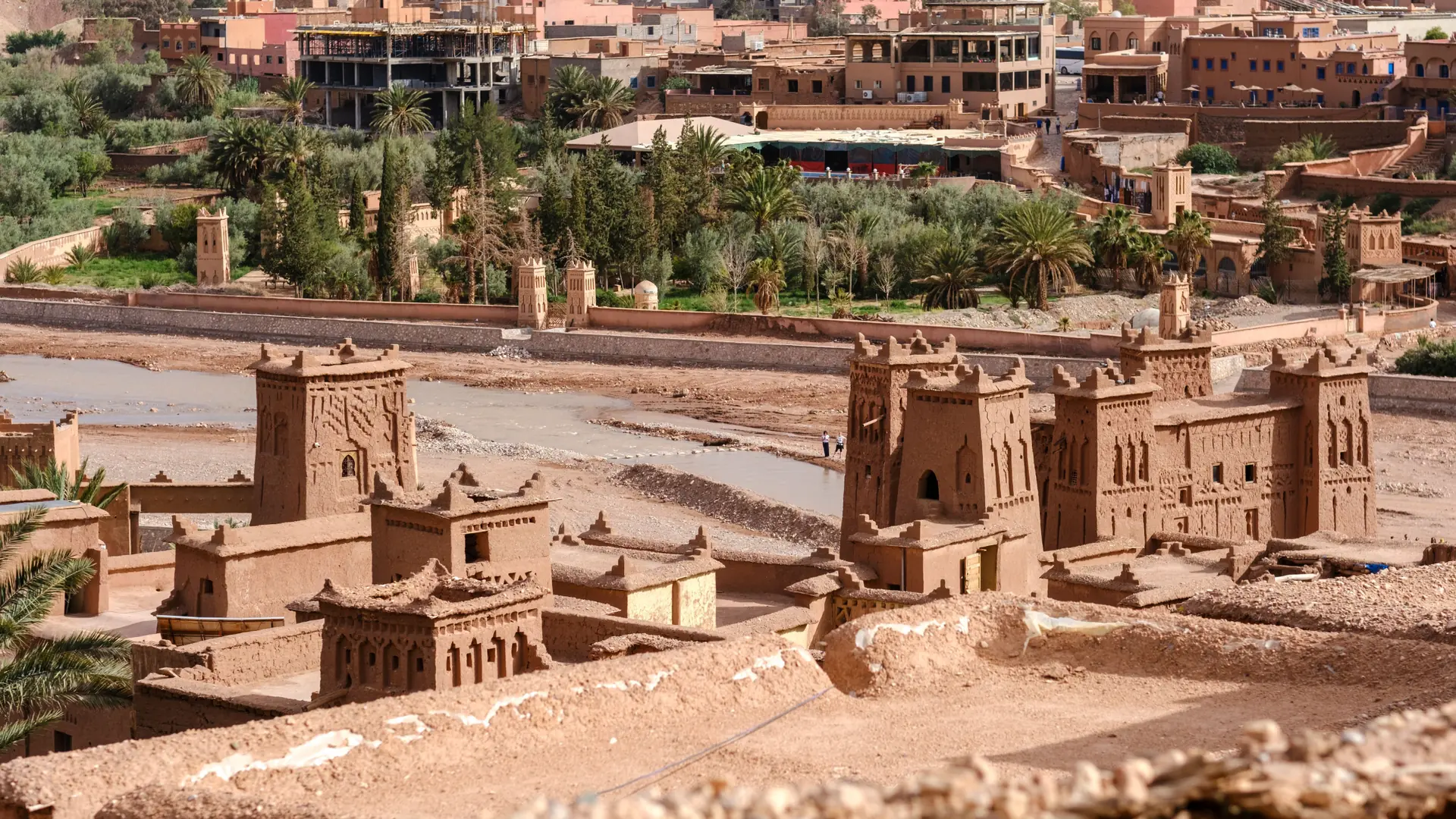
Ouarzazate breaks the westbound drive before the High Atlas. If the crossing and daylight allow, stop at Aït Ben Haddou to see how the earthen ksar is built along the slope. The UNESCO site is a separate visit rather than a sight automatically covered from the road.

Marrakech after the mountain road

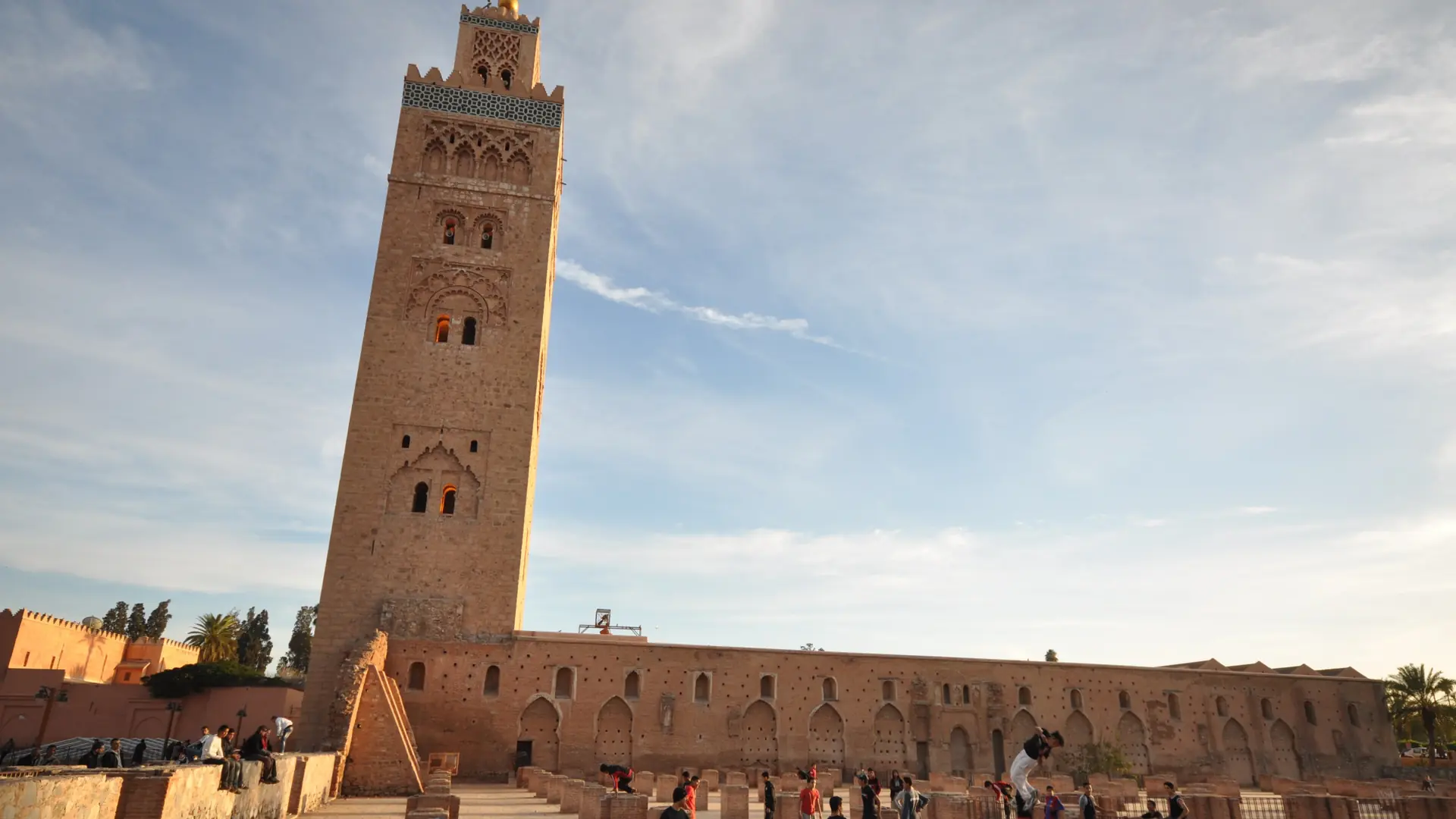
Marrakech rewards time on foot: the Koutoubia minaret stands near Jemaa el-Fna, while the market lanes and historic buildings make a distinct city day. A second full day can centre on a garden or Guéliz, giving you a change of scene after the mountain crossing.

Essaouira's harbour and ramparts

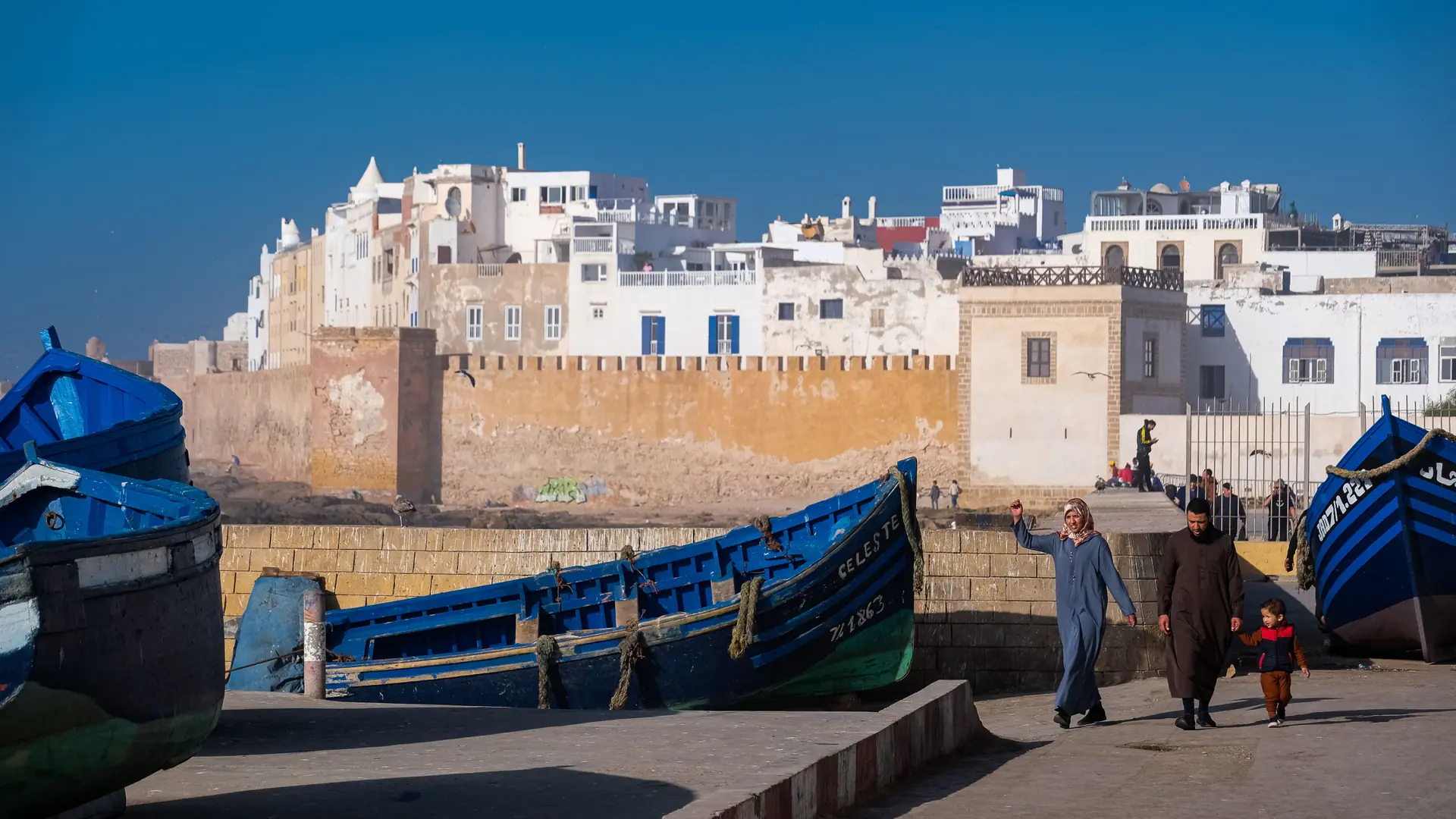
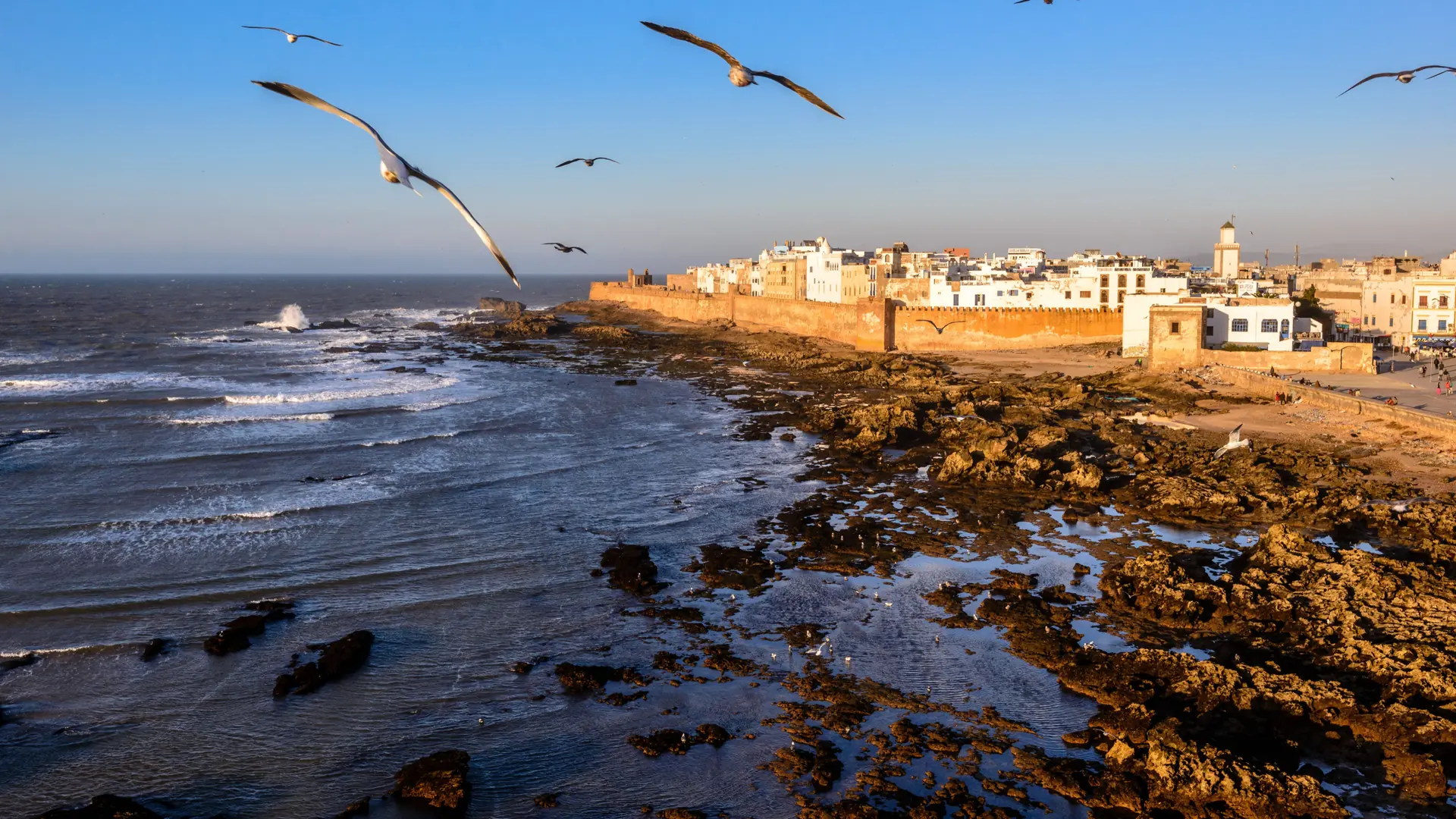
Essaouira's sea walls, ordered medina streets and working fishing harbour tell the story of an Atlantic trading port. Three nights leave one day for the fortified town and another for the beach or a sheltered alternative when the wind picks up. The coast becomes a real destination, not a hurried last photograph.

Best for

  • Travellers with two weeks and a strong interest in cities, dunes and coast
  • Visitors willing to pay attention to rail stations and road handovers
  • Spring or autumn travellers who can use an open-jaw itinerary

StartBooker answer

What can I realistically see on a two-week Morocco route with a desert stay?

A one-way route can combine Casablanca, Rabat, Fez, Merzouga, Ouarzazate, Marrakech and Essaouira in fourteen days if the nights are allocated honestly. The first two moves are by rail, then the desert and Atlas sections require several substantial road days. Two nights by Erg Chebbi preserve a full dune day; three nights each in Marrakech and Essaouira let the trip finish without another frantic stop. Place the Erg Chebbi nights in spring or autumn when your dates are flexible. Winter needs mountain-road and camp flexibility; summer makes the dune section a much tougher choice. The final departure must be arranged from Essaouira or a separately timed onward city.

Seven bases
Casablanca and Rabat one night each; Fez and Merzouga two each; Ouarzazate one; Marrakech and Essaouira three each
Rail start
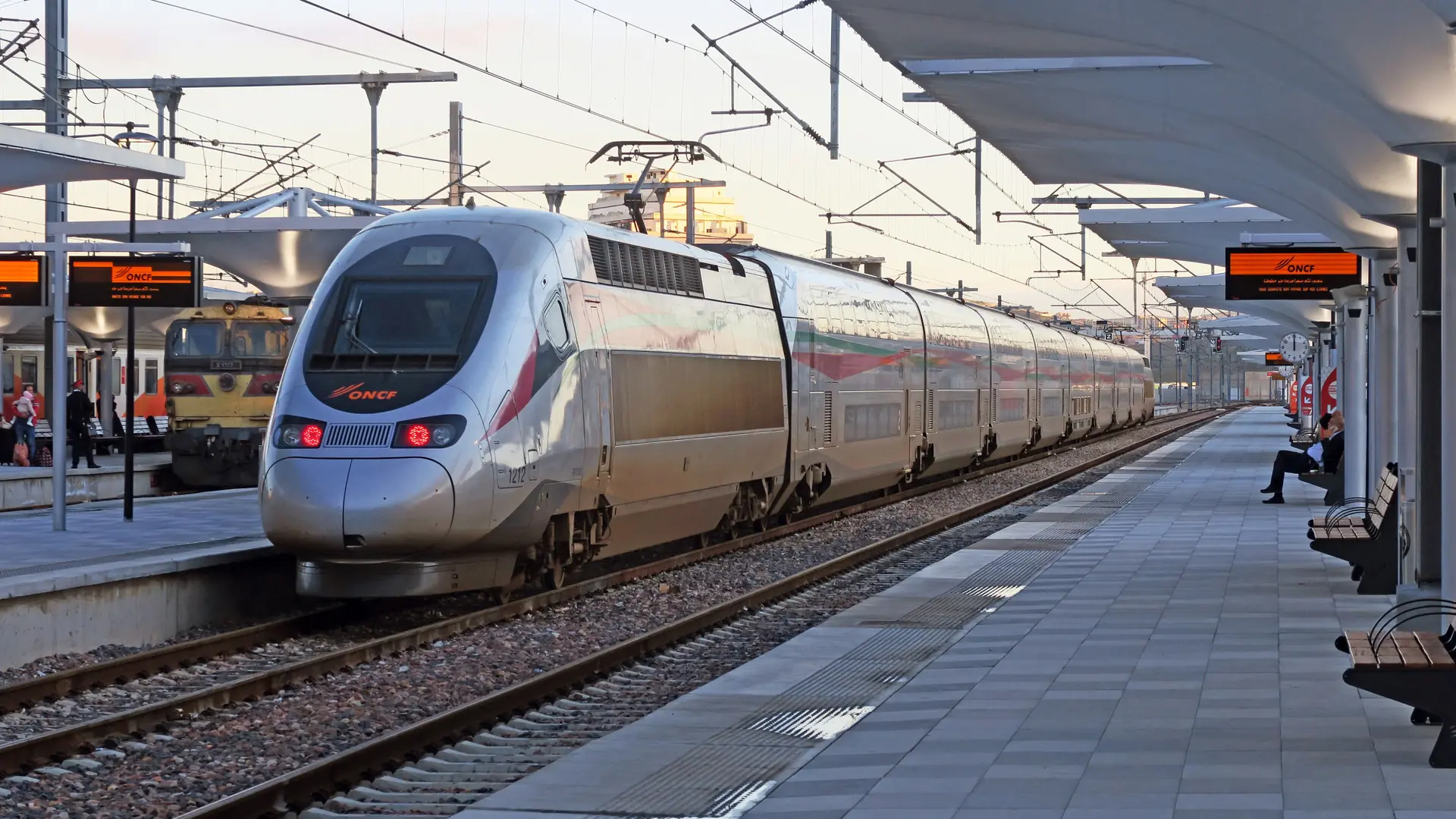
Casablanca to Rabat, then conventional rail to Fez
Road section
Fez–Merzouga–Ouarzazate–Marrakech–Essaouira
Season choice
Spring or autumn is gentler for the desert and mountain roads

Things to do in Casablanca, Rabat, Fez, Merzouga, Ouarzazate, Marrakech, Essaouira, Morocco

Explore tours, attractions and local experiences in Casablanca, Rabat, Fez, Merzouga, Ouarzazate, Marrakech, Essaouira along this route through Morocco.

Loading activities…

Activities provided by GetYourGuide. We may earn a commission on bookings.

Seven bases with purposeful night allocations

The first two are brief rail-linked stays; Fez and the dunes have two nights each; Marrakech and Essaouira give the route a slower finish.

7 stops · swipe

  1. Hassan II Mosque and minaret beneath a blue Casablanca sky 1

    Casablanca

    1 night

    Atlantic arrival and mosque visit

    For the first night, choose a hotel with an easy transfer from your arrival point and to the station on tomorrow's ticket. Casa-Voyageurs suits an Al Boraq departure; a seafront stay may suit the mosque better but adds a station transfer. Keep the evening close to your room after a late flight.

    Read the Casablanca guide →
  2. Sunlit Hassan Tower and Rabat stonework 2

    Rabat

    1 night

    Planned capital and older heritage

    For one night, a central hotel near Rabat Ville makes the old city and the next rail departure easier to combine. Rabat Agdal is a different station and may require a separate tram or taxi transfer. Choose the hotel after checking both station names on the booked journeys.

    Read the Rabat guide →
  3. Bright Bab Boujloud gate and Fez medina 3

    Fez

    2 nights

    Medina craft day before the southern road

    Stay near Bab Boujloud or another named medina gate if walking Fez el Bali is the priority; you can enter the old city without a long taxi ride. A new-town hotel makes rail arrival and the early road pickup simpler. Either way, confirm where a vehicle can stop and how far you must carry bags.

    Read the Fez guide →
  4. Sunlit golden Erg Chebbi dune ridge near Merzouga 4

    Merzouga

    2 nights

    Erg Chebbi dunes without a same-day departure

    A village lodge gives you a straightforward road arrival and independent access to meals; a camp trades that convenience for a night among the dunes. For both nights, check the vehicle handover, bathroom, bedding and heating before paying. Two nights preserve a full day after the long drive from Fez.

    Read the Merzouga guide →
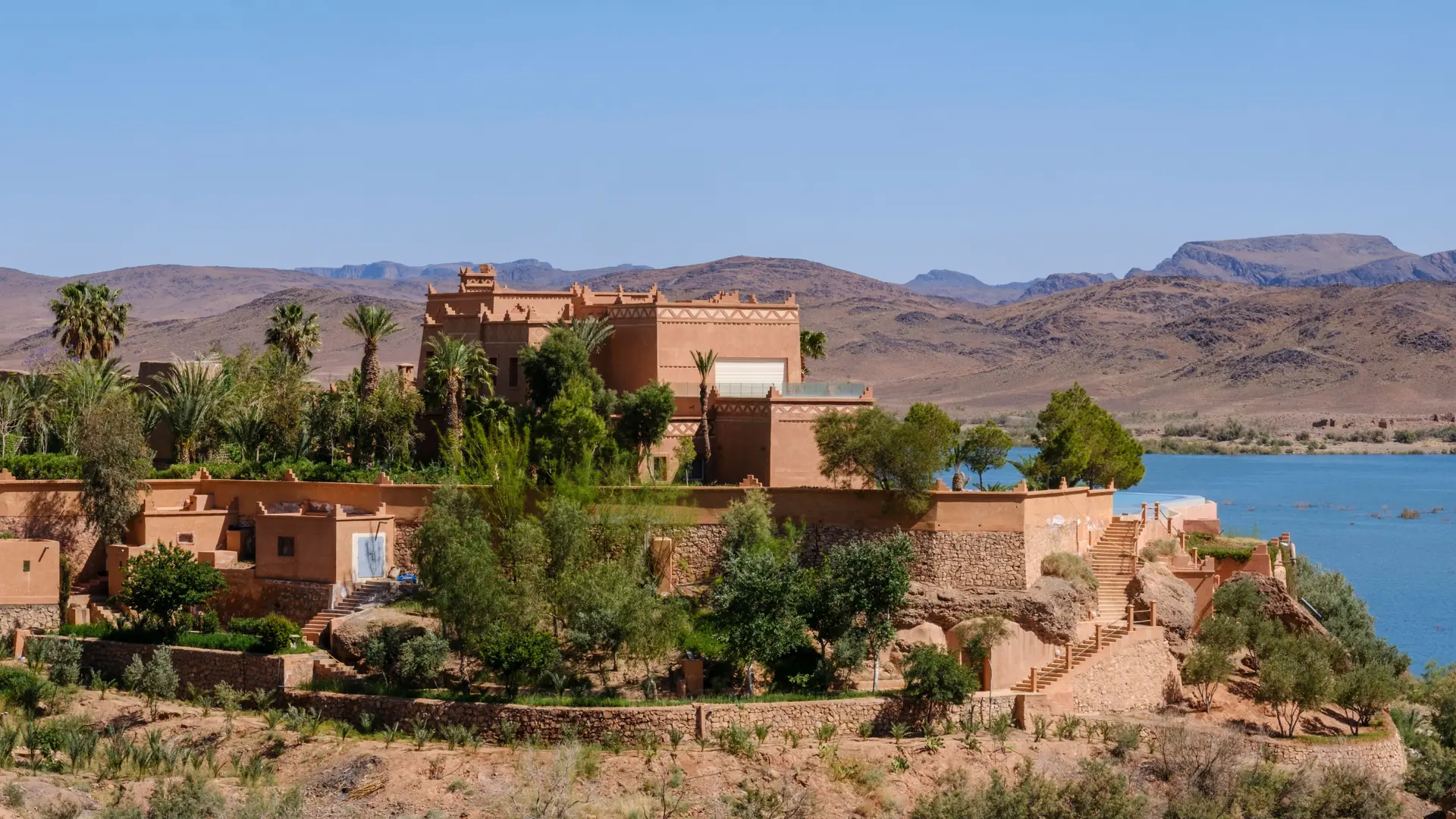
  5. Ouarzazate buildings and palms beside the lake in daylight 5

    Ouarzazate

    1 night

    Southern kasbah pause

    Choose a vehicle-accessible Ouarzazate hotel for this single road-stop night, with parking or a clear driver drop-off. A central room keeps dinner simple after the southern drive; an out-of-town kasbah stay may be more atmospheric but adds another transfer. Aït Ben Haddou is a separate visit on the next leg.

  6. Koutoubia minaret and sunlit mosque walls in Marrakech 6

    Marrakech

    3 nights

    Medina and garden time after road fatigue

    A medina room near a named gate puts the old-city walks close to your door but can leave a pedestrian luggage stretch. Guéliz offers simpler vehicle access after the Atlas crossing and before the Essaouira road. Three nights let you choose a base for your city days as well as your transfers.

    Read the Marrakech guide →
  7. Blue fishing boats and Essaouira's sunlit harbour walls 7

    Essaouira

    3 nights

    Fortified Atlantic finish and weather choice

    A medina room places the harbour and ramparts within walking distance, while a beach-side stay makes the shore the daily focus. Ask where the vehicle stops and whether stairs stand between the gate and the room. Three nights give you time for the town even if Atlantic wind changes the beach plan.

    Read the Essaouira guide →

Fourteen days with the long moves visible

This thirteen-night route is one way: one night each in Casablanca, Rabat and Ouarzazate; two in Fez and Merzouga; three in Marrakech and Essaouira.

1 Day 1 Arrive in Casablanca without a rushed plan

After arrival, confirm the station on tomorrow’s rail ticket and the hotel route to it. If the Foundation offers a guided Hassan II Mosque visit that fits the real flight and transfer, use it as the day’s single appointment. If not, take a manageable centre or seafront walk and keep the mosque for another trip rather than paying for a slot you may miss. Casablanca’s scale makes cross-city taxis slower than a map suggests at busy times. Eat close to the room and leave the first night deliberately light.

  • official mosque slot if practical
  • exact station check
  • short city walk instead of a race

Base: Casablanca

2 Day 2 Ride north for a focused capital day

Take the booked train to the Rabat station printed on your ticket. If it is Rabat Agdal, allow for the final tram or taxi leg; it is not Rabat Ville. After dropping your bags, see Hassan Tower and the nearby Mausoleum of Mohammed V, then continue to the Kasbah of the Oudayas if you have time. The unfinished tower and older kasbah show two sides of the capital's history. Keep to this one circuit, with time for a pause, rather than adding a museum. Check the next day's Fez train before dinner.

  • ticketed Rabat station, not a generic pin
  • Hassan Tower and the Oudayas
  • tomorrow’s rail departure saved

Base: Rabat

3 Day 3 Continue by rail and enter Fez carefully

Use ONCF’s current itinerary for the Rabat-to-Fez service you actually want; Al Boraq does not run into Fez. If the train arrives early enough and your host has identified the medina gate nearest your room, take a short first walk; otherwise rest. Ask where the taxi can stop and whether someone can meet you if the entrance is farther on foot. A late arrival is no reason to buy a hurried guided tour. The long southern drive comes in two days, so check the pickup point and enjoy a meal that does not require another cross-town move.

  • current conventional rail itinerary
  • named Fez gate for bags
  • short medina walk or rest

Base: Fez

4 Day 4 Give the Fez medina its full day

Enter Fez el-Bali through Bab Boujloud, then follow the medina lanes towards Nejjarine Museum for a closer look at Fez's woodcraft. Pass working craft shops and fountains on the way; together with the old religious schools, they show how this historic district is still used. If you want a guide to connect the sites, agree on the price, duration and any shopping stops before setting out. Have lunch in the medina and leave time for quieter side lanes instead of crossing the city for another viewpoint. Check the museum's current opening and entry terms before going. In summer, walk early and rest in the midday heat; in winter, bring warm layers for the evening.

  • Bab Boujloud to Nejjarine
  • guide terms upfront
  • season-led walking hours

Base: Fez

5 Day 5 Commit a full day to the eastern road

Fez to Merzouga is a major journey through changing country, not a short taxi leg. Set out early with the prebooked private driver used in this plan, carry water and food, and agree on rest stops. The advertised dune sunset should not be allowed to make the road unsafe if weather or traffic delays you. Confirm whether your accommodation is in the village or a camp reached by another vehicle, plus where baggage changes hands. After arrival, settle in and eat; the full dune day is tomorrow. This protects both safety and the quality of the desert visit.

  • early start and rest plan
  • separate camp handover
  • no forced sunset after delay

Base: Merzouga

6 Day 6 Stay at the dunes long enough to choose well

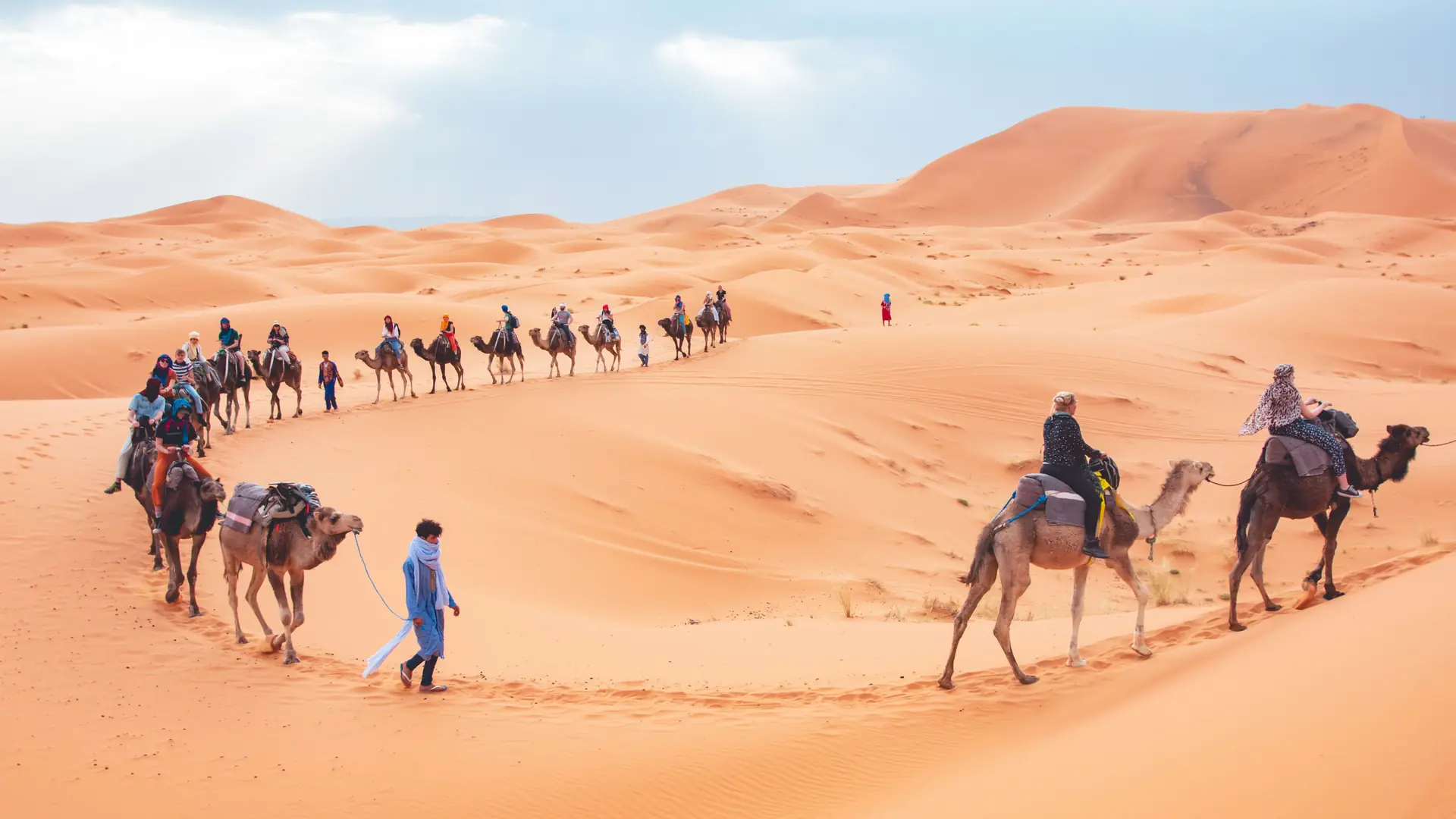
Walk a modest section of dune in the cooler hours with a known return point, or use a reputable guide for a longer excursion. Ask what the quote includes and whether a camel ride is optional rather than assumed. A second night lets you see the dunes in morning and evening light without immediately packing for another long road. Village time and a relaxed meal are valid uses of the afternoon. Spring and autumn are the most comfortable desert choices; winter asks for warm bedding at night, and summer heat can make even a gentle walk unpleasant or unsafe.

  • cool-hour dune plan
  • clear activity inclusions
  • quiet village option

Base: Merzouga

7 Day 7 Turn west through the southern oases

Travel toward Ouarzazate with realistic pauses and leave optional stops subordinate to a safe daylight arrival. The terrain changes along the southern route, but every gorge or kasbah detour adds time. Decide with the driver which one is genuinely possible rather than listing all of them as completed. A simple vehicle-accessible hotel makes tomorrow’s Atlas crossing less awkward. If conditions are unusually hot, reduce exposed walks; if winter weather is moving in, check the next day’s mountain road before making a fixed dinner plan.

  • road day rather than a sightseeing promise
  • one optional stop only
  • Atlas condition check

Base: Ouarzazate

8 Day 8 Cross the Atlas into Marrakech

Leave Ouarzazate with a weather-aware plan for the mountain crossing. Ait Ben Haddou may fit as a real heritage visit if daylight and the chosen road allow it; do not claim it as a guaranteed ten-minute photograph. The UNESCO site is a ksar with access rules and living context. Arrive in Marrakech with time for the driver to reach your named gate or Guéliz hotel, then take the evening gently. Road fatigue is the reason for three nights here, so do not schedule a non-refundable dinner event at an optimistic arrival hour.

  • current pass and road status
  • heritage stop only if feasible
  • clear Marrakech vehicle gate

Base: Marrakech

9 Day 9 Walk the Marrakech medina

Start near the Koutoubia minaret, then cross Jemaa el-Fna and choose a souk lane for a slower look at its workshops and stalls. If Bahia Palace is open, make it the day's one paid interior: its coloured tilework and gardens give you a different view of Marrakech's architecture. Check current entry arrangements before going, and skip the palace if it would crowd lunch and a rest, especially in summer. From Guéliz, take a taxi to the medina edge; if you stay inside the walls, start on foot. Agree a guide's fee and shopping stops before entering the lanes, and save your hotel gate for the return.

  • Koutoubia and Jemaa el-Fna
  • Bahia Palace if open
  • lunch and a clear return path

Base: Marrakech

10 Day 10 Choose a garden or a modern-city contrast

Let this day show a different Marrakech from yesterday. A timed Jardin Majorelle visit, a palace left unexplored or a Guéliz walk can each work, but stacking all three ignores travel and entry windows. Buy an official slot only when the rest of the day can absorb it. The Essaouira road is tomorrow, so use late afternoon to confirm coach terminal or driver pickup and the medina gate at the coast. Winter often suits a longer garden-and-city day; summer needs early outdoor time and a calm shaded middle.

  • one distinct Marrakech theme
  • official timed booking if needed
  • Essaouira arrival instructions

Base: Marrakech

11 Day 11 Go west and learn the fortified port

Travel by booked road service from Marrakech to Essaouira, allowing for the terminal-to-gate and final pedestrian luggage leg. There is no intercity train finishing in Essaouira. Once settled, walk a short circuit between the port, ramparts and central streets, and keep the beach as an optional late light stop. The Atlantic wind may make it feel cooler than inland Marrakech. Ask the host how to reach the room when the medina gate is busy; an address pin alone is rarely enough. The first coast night should be easy, not a forced water-sport lesson after a transfer.

  • actual coach or driver departure
  • named Essaouira gate
  • short wall-and-port orientation

Base: Essaouira

12 Day 12 Spend a proper day inside Essaouira’s walls

Follow the fortified street plan, port edge and working commercial lanes as one story. UNESCO describes a trading town, not merely a scenic rampart; take time to understand how the walls and grid meet the sea. Check current access before climbing any exposed viewpoint, and leave a sheltered café or gallery as the wind fallback. A fixed lunch price prevents an avoidable surprise near the harbour. If the beach is comfortable, walk it late; if sand is blowing, the medina still gives a complete day. This is why the coast earned three nights rather than one rushed stop.

  • port and street-plan circuit
  • opening and access checks
  • wind-safe afternoon alternative

Base: Essaouira

13 Day 13 Keep the last full day weather-led

Use the forecast to choose between a supervised water activity, a longer beach walk or a deeper town day. Ask a water-sport provider where the lesson meets, what equipment and insurance are included, and what changes if wind or swell is unsuitable. A winter visitor may prefer galleries and a shore stroll; a spring visitor might get a comfortable mix; summer breeze can make the beach pleasant but exposed. Do not spend the day on a remote detour if your onward travel tomorrow requires an early transfer. Confirm the actual flight or road departure and luggage storage before dinner.

  • conditions-led activity choice
  • sheltered cultural alternative
  • tomorrow’s departure confirmed

Base: Essaouira

14 Day 14 Depart from Essaouira or allow for the road

The itinerary ends in Essaouira. If your ticket leaves from an airport elsewhere, the road connection is part of day fourteen and needs its own booked time; an early flight may require changing the previous night’s base. A local departure can leave space for a short harbour walk, but only after you know how you will reach the terminal with your bags. Keep a copy of the final transfer booking offline, and leave enough time for the road journey if you must depart from another city.

  • real departure city verified
  • road connection budgeted separately
  • time allowed for the actual departure

Base: Essaouira

Rail first, then four road moves

After Fez, every move is by road. The long desert and Atlas sections cannot be treated as empty time.

6 transfers

  1. Casablanca Rabat

    Train Travel time: Short northbound rail move

    Use the current ONCF service and the exact stations shown on the ticket. A Casablanca hotel near one station may still be far from the high-speed departure; Rabat Agdal and Rabat Ville are separate arrival choices.

  2. Rabat Fez

    Train Travel time: Conventional eastbound journey

    Travel onward by the applicable ONCF conventional service. The Al Boraq high-speed spine does not continue into Fez, so check the current itinerary rather than assuming one train type throughout.

  3. Fez Merzouga

    Transfer Travel time: Long eastern road day

    This is one of the route’s demanding road transfers. Rest stops, food, weather and the final camp handover all belong in the day’s plan; the dunes should not be reached by rushed night driving for a promised sunset.

  4. Merzouga Ouarzazate

    Transfer Travel time: Southern oasis road day

    The westbound trip may pass striking landscapes, but a list of possible detours is not a schedule. Pick one feasible stop if road conditions and daylight allow, then continue to the Ouarzazate hotel.

  5. Ouarzazate Marrakech

    Transfer Travel time: High Atlas crossing

    The mountain road makes winter weather and daylight material. Ait Ben Haddou can be a separate heritage stop when access is open and the timing works; it is not included by simply driving nearby.

  6. Marrakech Essaouira

    Bus Travel time: Road transfer to the Atlantic

    A booked road service links the inland city to the coast; Essaouira has no intercity rail arrival on this plan. Include coach terminal transfers and the final walk through the medina gate when comparing options.

What fourteen days across Morocco may cost for two

This planning example covers two adults sharing a room for thirteen nights, with a private driver from Fez to Marrakech over four calendar days. It is not a live quote. Dollar amounts use the 9 October 2026 closing rate of 9.7497 dirhams per US dollar, rounded. International flights and onward travel after Essaouira are excluded.

Thirteen nights for two Planning allowance for one shared room, including the two Merzouga nights; compare camp board and transfer inclusions before choosing.
MAD 5,200–9,000 (≈ US$530–925) per room
Private southern driver Four calendar days from Fez through Merzouga and Ouarzazate to Marrakech; the operator's starting rate covers vehicle, fuel, tolls and driver costs.
MAD 8,000–10,000 (≈ US$820–1,025) per vehicle
Rail, coach and local transfers Editorial reserve for two rail legs, the coast coach and station or terminal taxis for two travellers; replace with date-specific operator quotes.
MAD 1,200–2,000 (≈ US$125–205) for two
Meals and drinks Editorial allowance for two over fourteen days, allowing more than a basic restaurant meal; subtract any dinners included with the desert camp.
MAD 5,600–8,400 (≈ US$575–860) for two
Visits and local guides Allowance for selected paid sites and optional guiding; the Foundation currently lists MAD 140 (≈ US$15) per foreign adult for the Hassan II Mosque tour.
MAD 1,000–2,000 (≈ US$100–205) for two
Planning total for two Sum of the five allowances above for thirteen nights and fourteen days; excludes international flights, major optional activities and onward travel after Essaouira.
MAD 21,000–31,400 (≈ US$2,155–3,220)
Booking tips

  • Price your flight into Casablanca and your actual departure from Essaouira first; a return from Marrakech or Casablanca adds a road transfer or another night.
  • Request one written Fez-to-Marrakech driver quote for days five to eight. It should name fuel, tolls, the driver's overnight costs, your camp handover and any return-vehicle charge.
  • Compare room and camp offers on the same basis: two adults, all thirteen nights, local tax, breakfast, dinner, heating and any dune transfer. The lowest headline room rate may omit the costly parts.
  • Use the ONCF journey for your dates to price the two rail legs and check the exact station pair. Then compare a booked Marrakech-to-Essaouira coach with a private road transfer.

Find a Marrakech mid-route base

Compare Marrakech rooms by the actual Ouarzazate road arrival and Essaouira departure pickup, not only proximity to a famous square.

Compare stays in Marrakech →
Loading current Marrakech stays

Casablanca to Essaouira via the dunes

Seven markers show the overnight stops from Casablanca through Merzouga to Essaouira. Use the transfer notes for rail and road details.

Marrakech

Before reserving the grand route

Does this route form a loop?

No. It begins in Casablanca and ends in Essaouira. A return to Casablanca or another airport needs a separately booked connection, potentially an extra night.

Why only one night in Rabat?

It permits one purposeful capital circuit before Fez. Add a second Rabat night if museums and Oudayas are major priorities, taking it from another base rather than pretending a transfer day is free.

Is the desert portion suitable in winter?

It can be, with warm camp bedding and a driver who checks the weather and mountain road. The coast at the end is a useful milder contrast, not a guarantee of swimming.

Should I take the same route in summer?

Cities and coast can work with early walks and shade, but the dune leg can be oppressively hot. A summer version should replace the desert with more Atlantic or northern time rather than forcing this exact plan.

Can a train cover the whole journey?

No. Rail serves Casablanca, Rabat and Fez at the start. Merzouga and Ouarzazate require road travel, as does the final move from Marrakech to Essaouira. Plan the desert section as several travel days, not as a train excursion.

Sources and editorial review

Reviewed by StartBooker editorial team Morocco route editor

Last reviewed 2026-10-12

Updated

How this route was checked: Research drew on Moroccan tourism, UNESCO heritage, the mosque operator, UK safety advice, supplier costs and independent travel sources. The source list gives individual check dates between 25 September and 12 October 2026. ONCF rail references were last checked on 25 September 2026; confirm current train services with ONCF. Check road status, camp terms and onward flights with their operators.

31 references reviewed

Key sources
  • Moroccan National Tourist Office
  • Hassan II Mosque Foundation
  • UNESCO World Heritage Centre
  • UK Foreign Office
  • Morocco Private Driver
  • ONCF
References
Photo credits

Some photos provided by Pexels.

Two-week Morocco route reports