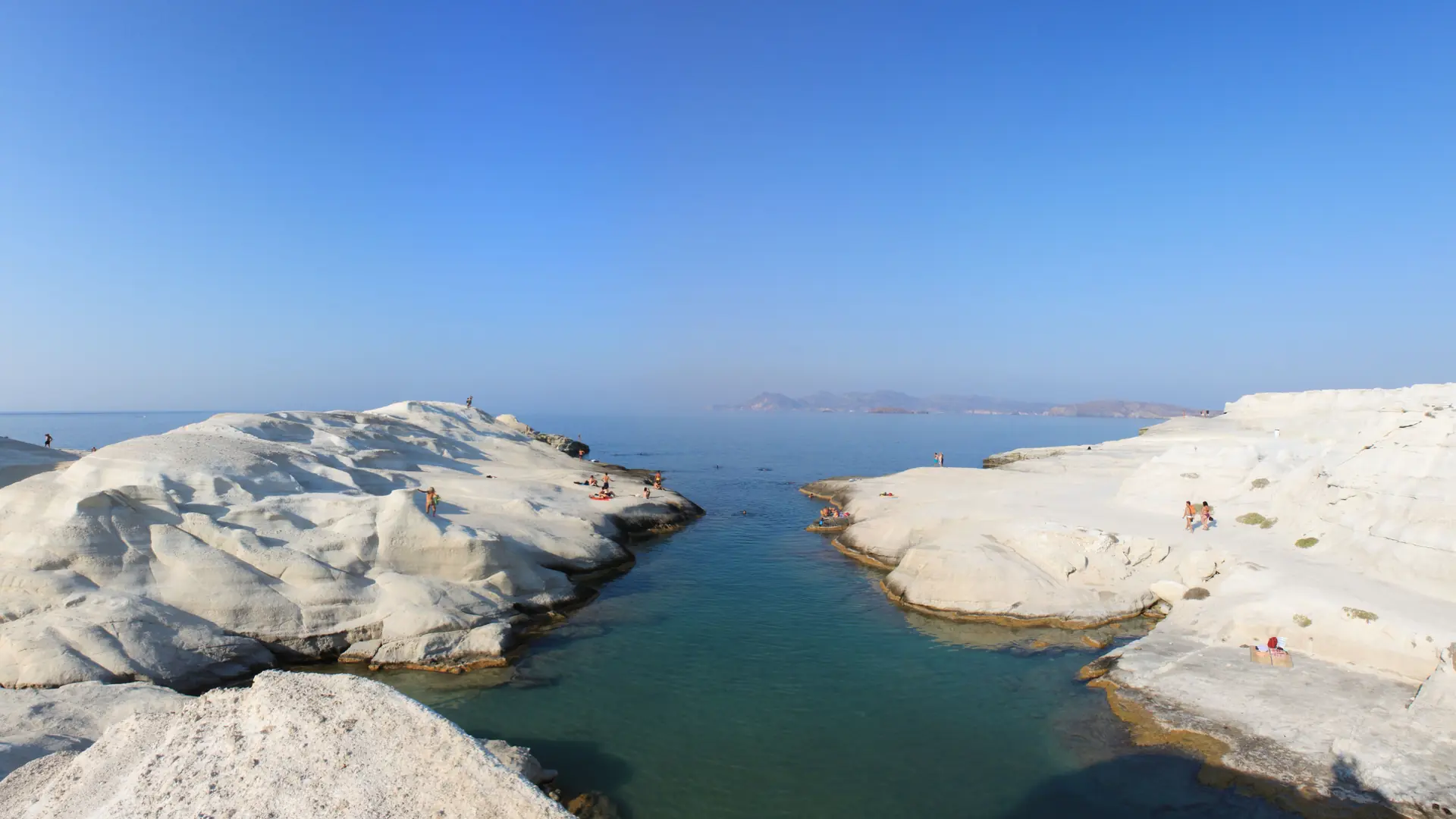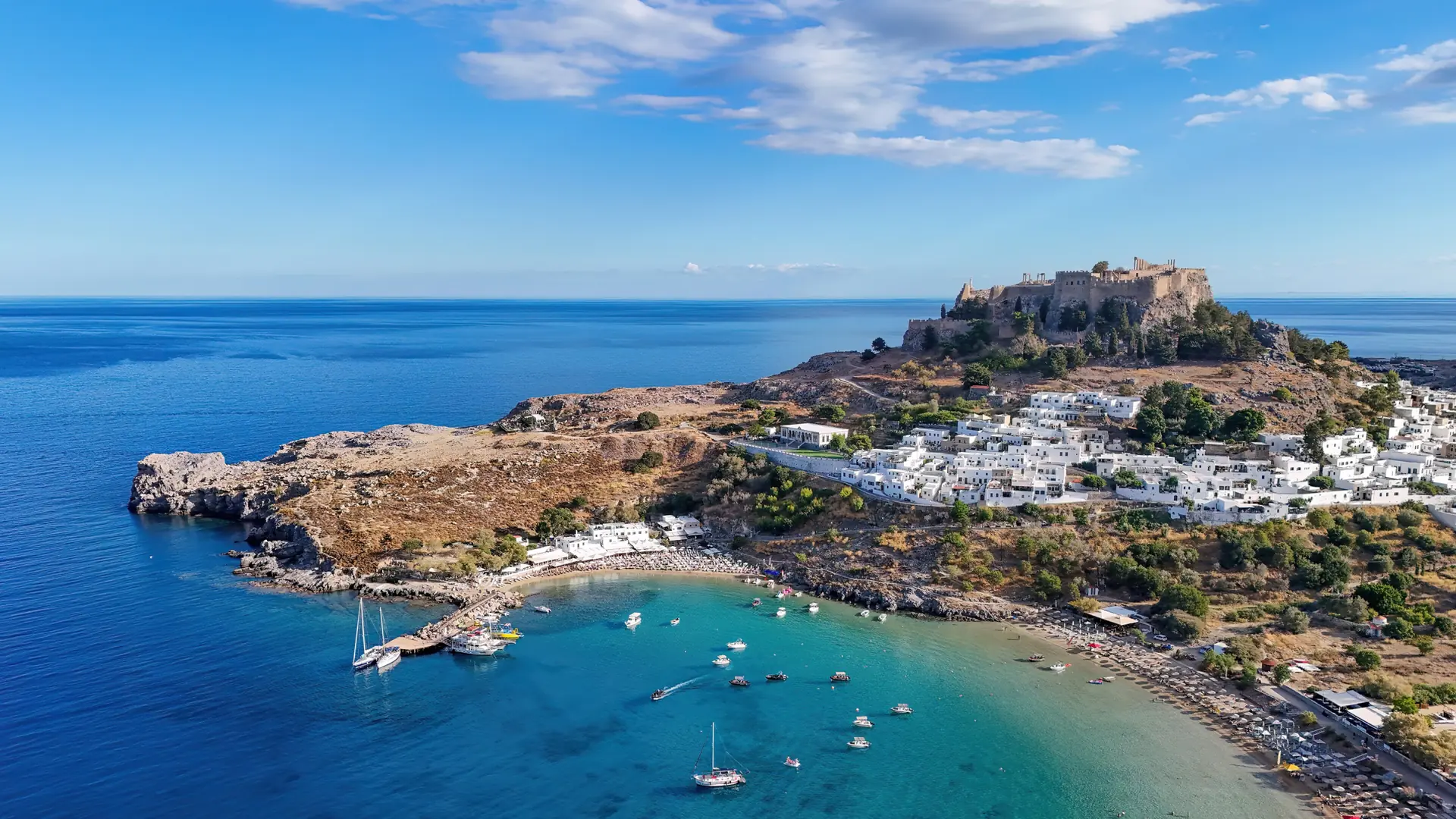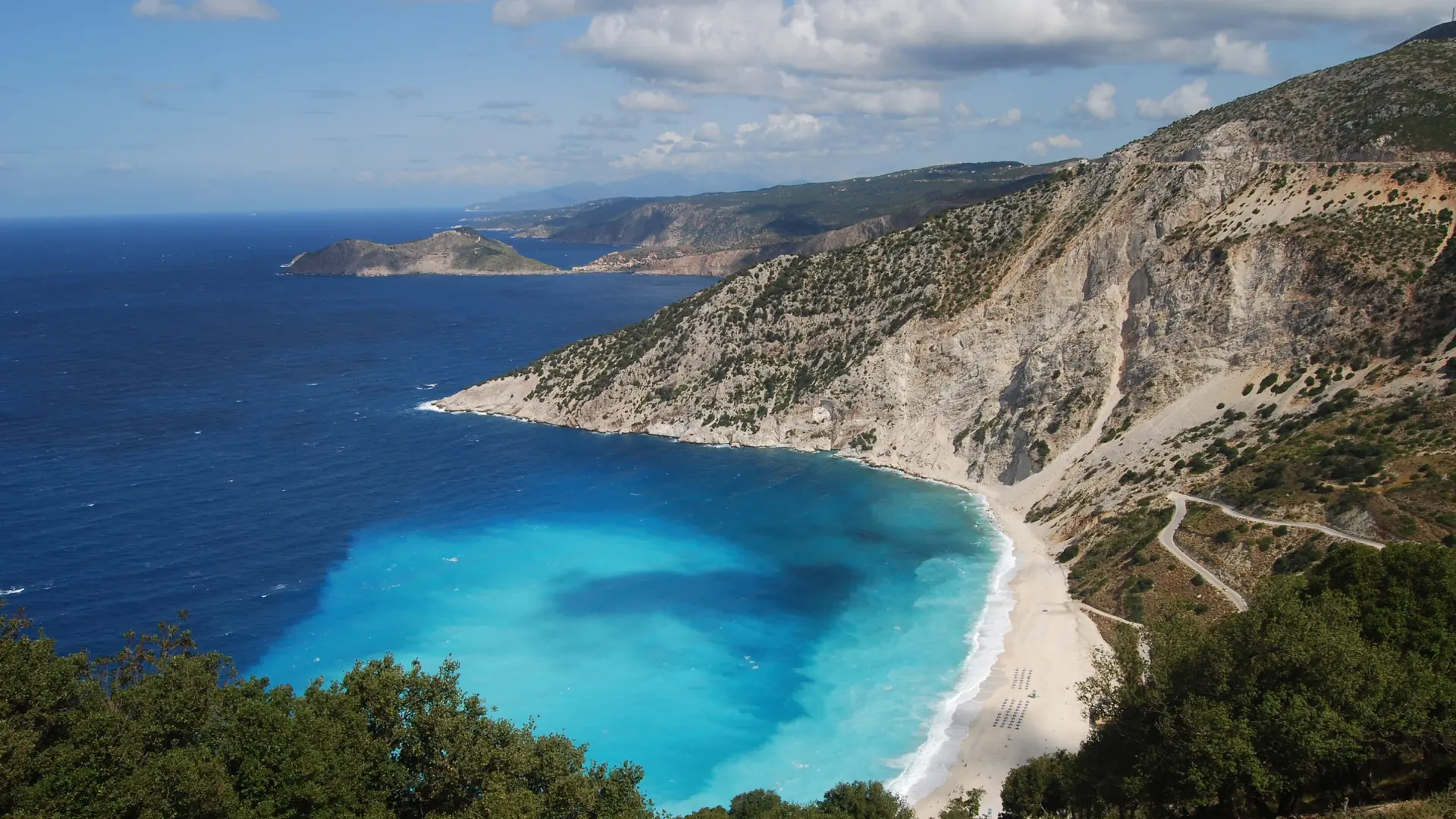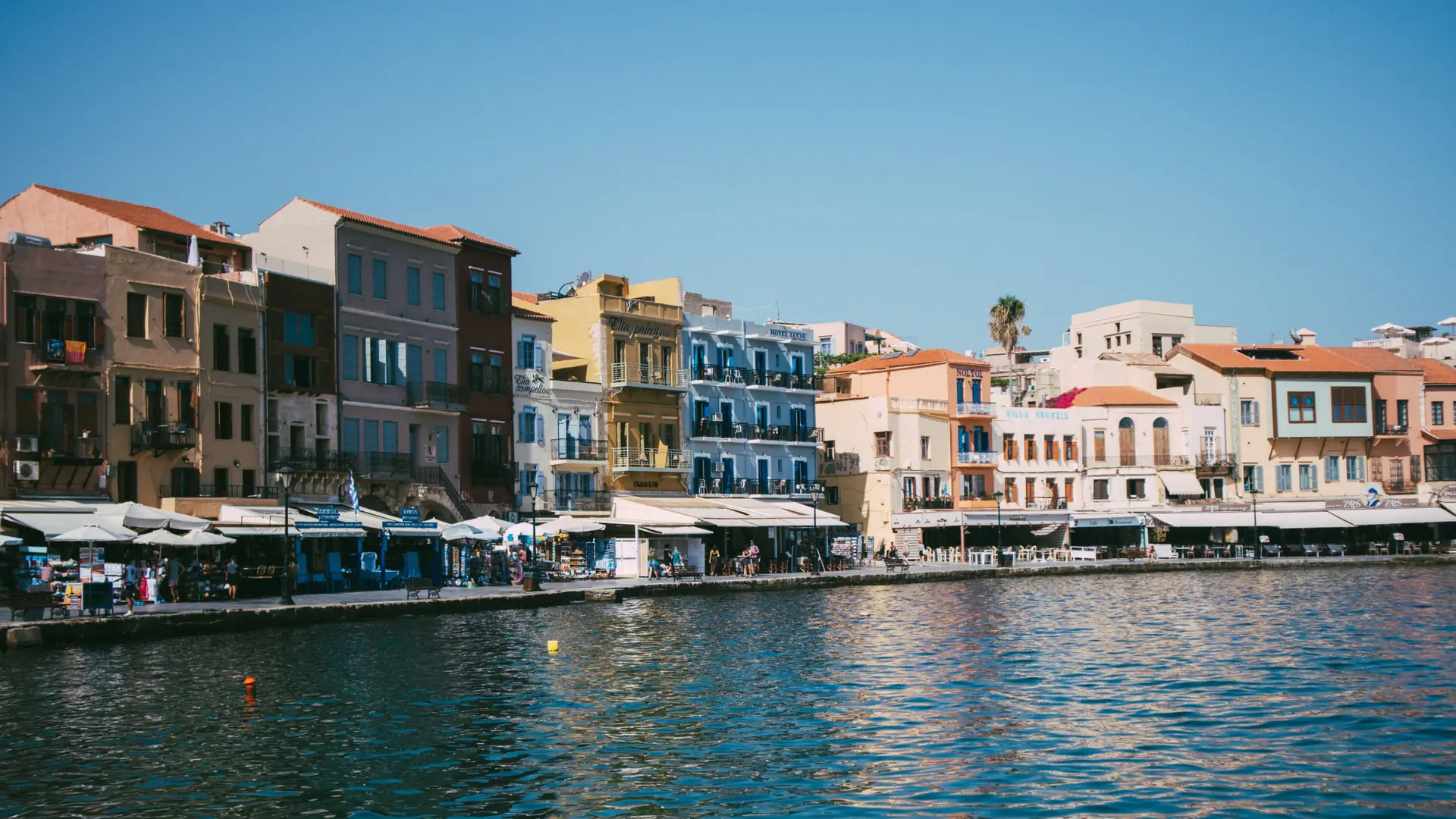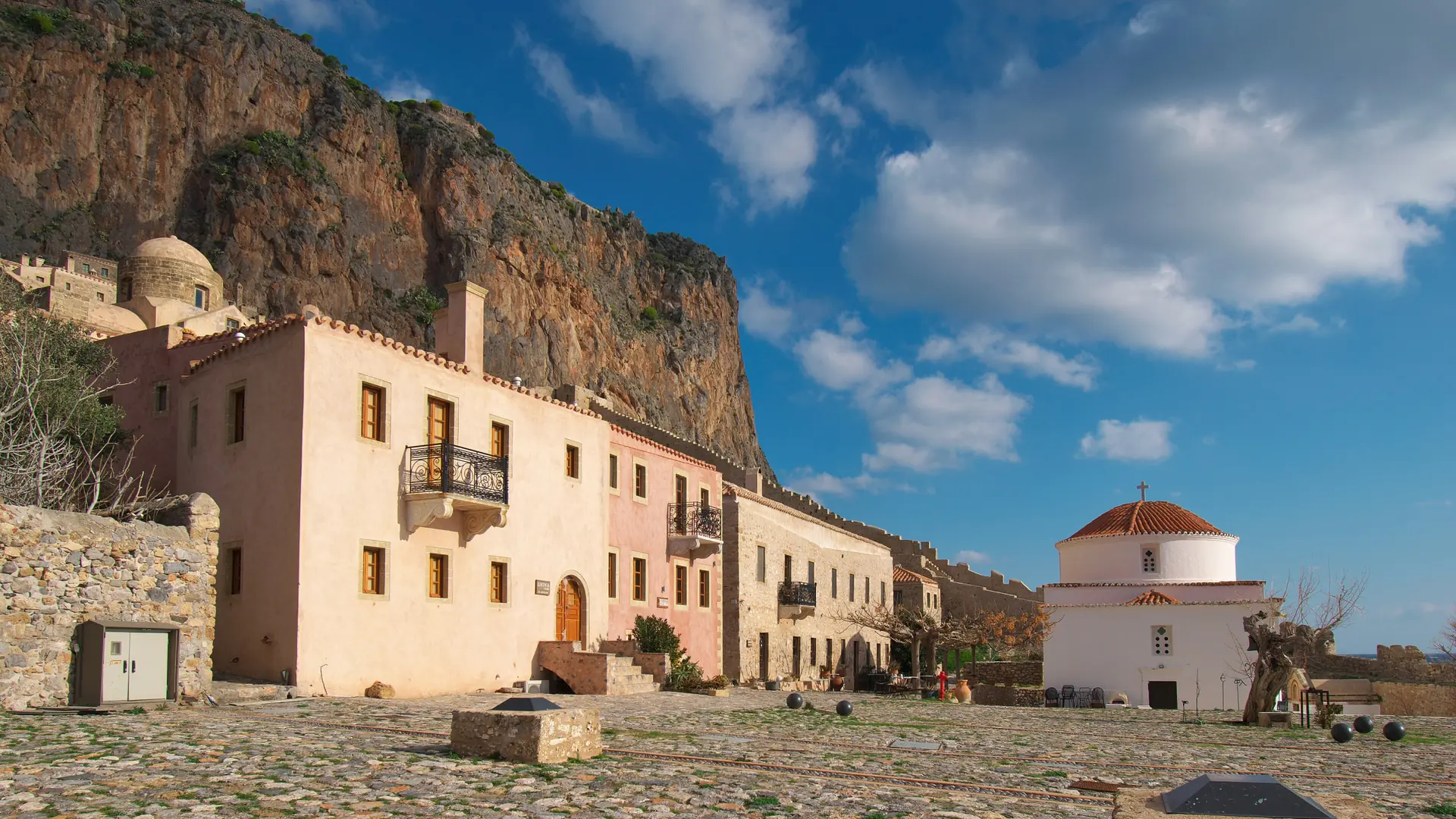
White volcanic rock formations at Sarakiniko beach with turquoise water, Milos, Greece

Milos's white rock coast, from Sarakiniko to Klima

Loading Milos hotel search

Fix the boat-only beaches and the crowds before choosing a base

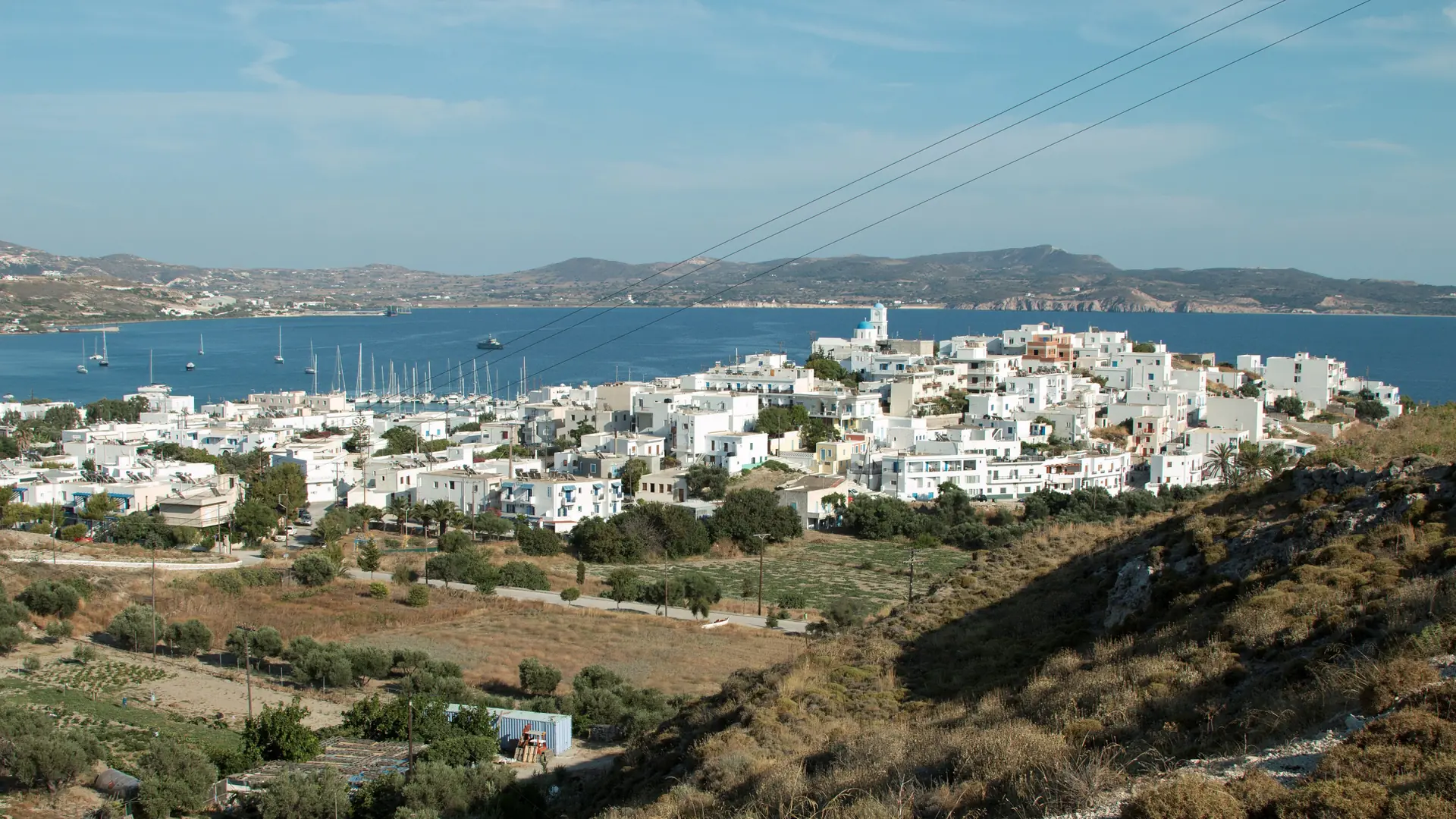
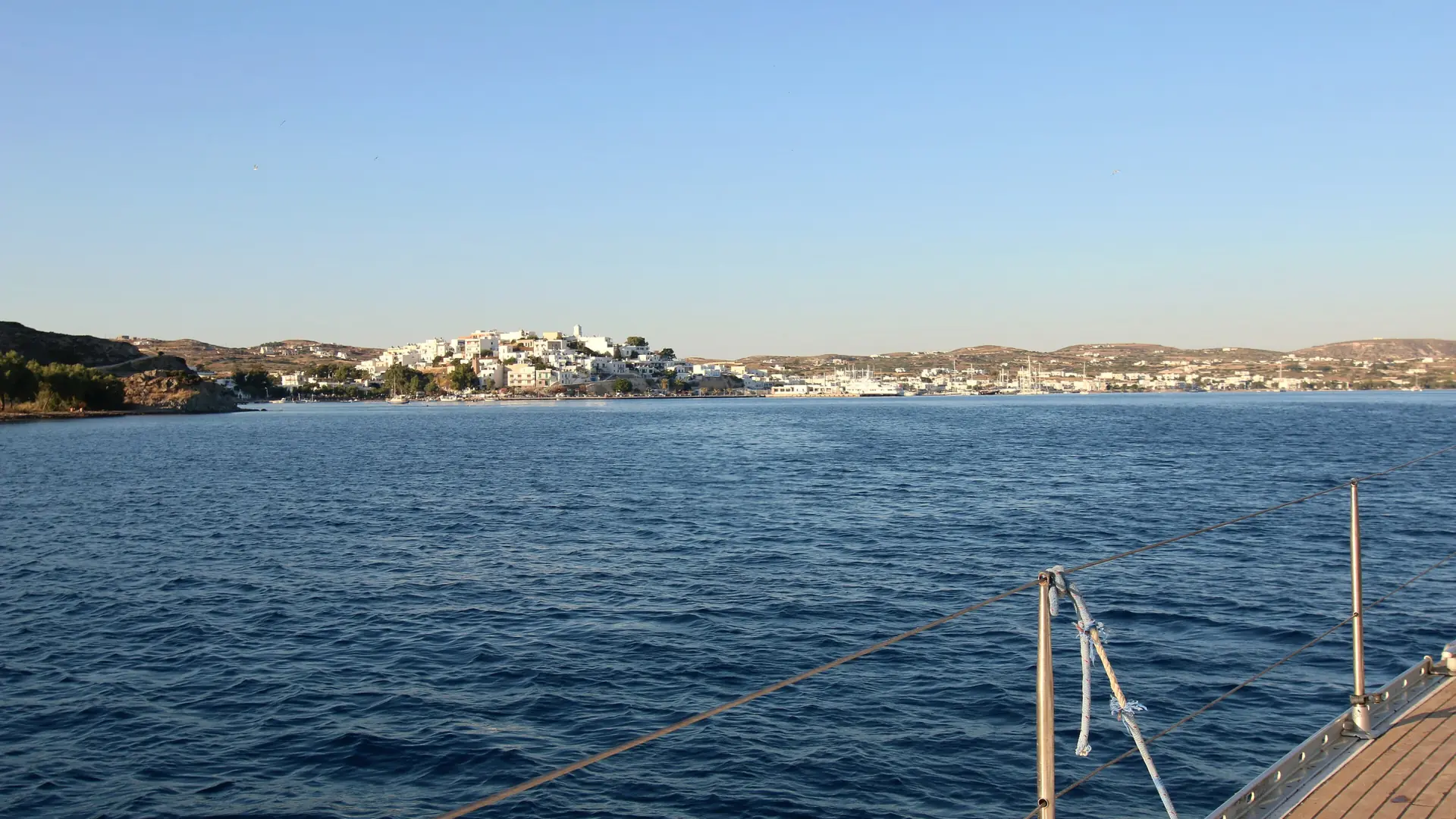
Milos pairs a port-town base in Adamas with Plaka's hilltop views, Sarakiniko's white volcanic coast and early Christian catacombs rivalling Rome's, while staying quieter than Santorini or Mykonos.

Best first base Adamas

Closest to the port and airport road, with the widest hotel choice.

Getting there Direct from Athens

A 50-minute flight or a Piraeus ferry ranging from 2.5 to 7 hours.

Sarakiniko Milos's lunar-landscape beach

White volcanic rock with no shade; visit early to avoid crowds and heat.

Milos Catacombs Guided, time-limited visits only

Discovered in 1844, with only one gallery currently open to guided visitors.

Venus de Milo Discovered on Milos, not displayed here

The statue itself has been in the Louvre since shortly after 1820.

Best months May-June or September

Quieter than Santorini or Mykonos even at peak season.

StartBooker answer

Should I base in Adamas or Plaka on Milos, and how do I get to its best beaches?

Adamas, the port town where ferries and flights arrive, is the practical first base; Plaka, the hilltop capital ten minutes above it, holds the Venetian Kastro and sweeping bay views. Klima, directly below Plaka, is known for its colourful two-storey boat garages built straight into the rock, and Pollonia, on the island's north-east tip, is a quieter fishing village and the gateway to nearby Kimolos. Sarakiniko's white volcanic rock landscape and the early Christian catacombs near Trypiti, among the largest of their kind after Rome and the Holy Land, round out Milos's case as a quieter, geologically distinct alternative to Santorini or Mykonos.

Best first base
Adamas, near the port and airport
Getting there
Ferry from Piraeus, 2.5 to 7 hours, or a 50-minute flight
Sarakiniko
Volcanic rock beach, no shade, sturdy shoes recommended
Milos Catacombs
Among the largest early Christian catacombs after Rome and the Holy Land
AI-powered

Plan around beaches that need a boat, not a road

Milos rewards a car or boat tour more than most Cyclades islands, since many of its best beaches have no road access at all. Say how many days you have and whether renting a car is part of the plan.

Four Milos bases, from the port town to the fishing village

Adamas's port convenience, Plaka's hilltop views, Klima's boat garages and Pollonia's quieter pace pull very different kinds of visitors.

Traditional fishing boats moored at the harbour in Adamas, Milos, Greece

Adamas

the ferry port, the airport road, and the island's widest hotel choice

Book Adamas for the easiest arrival and the most restaurant choice.

Sleep: Lively along the waterfront in summer, quieter on side streets.

Neighbourhood stay Walkable

Rooms near the ferry dock can pick up noise around late sailings in peak season.

Whitewashed church on a hilltop overlooking the bay in Plaka, Milos, Greece

Plaka

the Venetian Kastro's panoramic views and Milos's hilltop capital

Choose Plaka for the views and a quieter pace than the port.

Sleep: Quiet, a genuine village pace after dark.

Neighbourhood stay Quiet

The Kastro summit has no shade, facilities or barrier-free path; plan the climb for cooler hours.

Colourful two-storey boat garages built into the rock at Klima, Milos, Greece

Klima

colourful two-storey boat garages built straight into the rock

Pick Klima for its distinctive waterfront character, not a wide hotel choice.

Sleep: Very quiet, a small fishing-village pace.

Neighbourhood stay Quiet

Most syrmata are now holiday rentals rather than working fishing garages; book well ahead given how few there are.

Fishing boats in the harbour at Pollonia with whitewashed buildings, Milos, Greece

Pollonia

a quieter fishing village and the gateway to nearby Kimolos

Base in Pollonia for a slower pace and an easy boat trip to Kimolos.

Sleep: Quiet, family-paced.

Neighbourhood stay Quiet

Fewer restaurants and shops than Adamas; check what's actually open outside peak summer before booking.

Choose an area by the trip you want
Area Best for Trade-off Getting around
Adamas the ferry port, the airport road, and the island's widest hotel choice A working port feel rather than hilltop views. Adamas is the island's transport hub, with buses and rentals reaching everywhere else.
Plaka the Venetian Kastro's panoramic views and Milos's hilltop capital A drive separates it from the port and airport road. Plaka needs a short drive or bus ride to reach the port and airport road.
Klima colourful two-storey boat garages built straight into the rock Very limited accommodation and few restaurants. Klima needs a car or short taxi to reach Adamas or Plaka.
Pollonia a quieter fishing village and the gateway to nearby Kimolos The furthest main village from the port and airport. Pollonia needs a car or bus to reach Adamas and the rest of the island.

Match the base to what actually brought you to Milos

The cards above sort Milos by village; these sort it by the reason you're actually here.

A simple port-town base

This works well when a simple, low-effort arrival matters most.

Skip this if Plaka's hilltop views matter more than easy transport.

A hilltop base with sweeping bay views

Choose this for the Kastro's panoramic views and a quieter pace.

Skip Plaka if being right at the port matters more than the views.

A trip centred on Milos's volcanic coastline

This matters for anyone building the trip around Sarakiniko and the coastline.

Skip this unless the geology and lunar landscape genuinely draw you.

A quieter village stay with an island-hop option

This fits a traveller wanting a slower village pace and easy Kimolos access.

Skip this if Adamas's wider restaurant choice matters more than quiet.

Search Milos hotels

Once you know whether Adamas, Plaka or Pollonia fits your trip, compare live availability, exact hotel locations and room details. Editorial advice here is separate from provider prices and availability.

Search Milos hotels →
Loading Milos hotel results

A short flight or ferry in, then a bus, car or boat for the rest

Milos connects to Athens by both a short domestic flight and Piraeus ferries whose duration varies considerably depending on the specific sailing.

A short flight or a ferry of varying length

A short flight from Athens, seasonal frequency

A short flight from Athens, seasonal frequency

Milos Airport (MLO) has direct flights from Athens on Olympic Air and Sky Express, taking about 50 minutes; frequency is seasonal, so check the current schedule directly with the airline before booking around a fixed number of daily flights.

A ferry from Piraeus, from two and a half to seven hours

Ferries from Piraeus range from about two and a half hours on the fastest high-speed services to as much as seven hours on slower, multi-stop conventional routes; Blue Star, SeaJets and Fast Ferries all serve the route, so compare the specific sailing rather than assuming a single duration.

A local bus for the main sights, a boat for the rest

A local bus covers Adamas, Plaka and Sarakiniko

A local bus covers Adamas, Plaka and Sarakiniko

MilosBuses runs a route from Adamas through Triovasalos and Plaka to Trypiti and the catacombs roughly hourly, for around €2 a ride, plus a separate line out to Sarakiniko; check milosbuses.com directly since timetables shift seasonally.

Several beaches need a boat, not a car

Many of Milos's best-known beaches have no road access at all and are reached only by boat tour or a rented small boat; a car covers Sarakiniko and the main villages, but doesn't replace a boat trip for the island's more remote coves.

A car or quad bike adds flexibility beyond the bus route

A rental car or quad bike gives the most flexibility for reaching Plaka, Klima, the catacombs and Sarakiniko on your own schedule, useful given the bus network's limited frequency outside peak hours.

The catacombs and the ancient theatre have their own separate access rules

The catacombs are guided and time-limited, not self-guided

The catacombs are guided and time-limited, not self-guided

The Milos Catacombs require a guided, time-limited visit due to humidity concerns for the preserved wall paintings, with only one gallery currently open to visitors; check current hours and any ticket price locally rather than assuming a fixed fee.

The Ancient Theatre overlooks the bay near Trypiti

The Ancient Theatre of Milos, between Trypiti and Klima, is a Roman-era rebuild of a Hellenistic original, overlooking the bay; check the Ministry of Culture's own listing for current access hours before visiting.

An easy port, a real climb at the Kastro

The port is flat; the hilltop and Klima's lanes are not

The port is flat; the hilltop and Klima's lanes are not

Adamas's waterfront is flat and easy going, but Plaka's Kastro summit has no lift or accessible path to the top, and Klima's lanes down to the boat garages include steps with no barrier-free alternative.

Plan around the boat-only beaches and Sarakiniko's midday crowds

Milos rewards planning around two things that differ from a typical Cyclades trip: several of its best beaches need a boat rather than a road, and its geology and history, not just its villages, are a real part of the appeal.

A quieter island year-round, with its own boat-tour calendar

Late spring and September ease the crowds and the heat
  • Late spring and September ease the crowds and the heat

    May, June and September give warm, swimmable weather with noticeably lighter crowds than the July-August peak, an easier window for both beach days and the exposed, shadeless walk around Sarakiniko.

  • Milos stays quieter than Santorini or Mykonos even at peak season

    Even at its busiest, Milos's beaches and villages feel far less packed than Santorini or Mykonos at the same time of year, so a peak-season visit here doesn't carry the same crowd pressure.

  • Boat-tour schedules thin out in the shoulder months

    Boat tours to Milos's harder-to-reach beaches run most reliably in the core summer season; shoulder-month visitors should confirm current operator schedules before planning a trip around a specific boat-only beach.

Price the boat tours and the car separately from the sights

The headline sights cost little; boat tours are the real expense
  • The headline sights cost little; boat tours are the real expense

    Sarakiniko and most of Plaka's Kastro are free to visit; the catacombs' guided visit and any boat tour to remote beaches are the main paid extras worth budgeting separately.

  • Weigh a rental car against the bus timetable

    A rental car or quad bike costs more than the local bus, but it's the realistic way to combine Plaka, Klima, the catacombs and Sarakiniko in one day without depending on the bus timetable.

  • Adamas carries a premium over Plaka or Pollonia

    Adamas's central hotels typically cost more than equivalent rooms in Plaka or Pollonia; run the numbers for identical dates in each before deciding the port town's convenience justifies the higher rate.

Where Milos visitors most often misjudge access or timing

Assuming a car covers every beach on the island
  • Assuming a car covers every beach on the island

    Assuming a rental car reaches every notable Milos beach overlooks that several of the most photographed coves have no road access at all; a boat tour or rental boat is the only way to reach them, not an optional upgrade.

  • Visiting Sarakiniko at the busiest, hottest time of day

    Visiting Sarakiniko at midday in peak summer means both the harshest sun with no shade and the heaviest crowds; an early morning or early evening visit gives a considerably more comfortable experience of the same rock formations.

  • Expecting to see the Venus de Milo statue on Milos

    Expecting to see the original Venus de Milo statue on the island itself leads to disappointment; the statue has been in the Louvre in Paris since shortly after its 1820 discovery, and Milos itself has no original on display.

How many nights make sense for a first Milos trip?

Four nights covers Adamas, Plaka, Klima, Sarakiniko and the catacombs without rushing; add a fifth or sixth to fit in a boat tour of the island's harder-to-reach beaches and a day trip to Pollonia or Kimolos.

How significant are the Milos Catacombs really?

The Milos Catacombs are widely described as among the largest and most significant early Christian catacombs after those of Rome and the Holy Land, discovered in 1844; visits are guided and time-limited to protect the preserved wall markings, with only one gallery currently open.

What makes Sarakiniko's rock formations white?

Sarakiniko's white volcanic rock, an ignimbrite formed by ancient submarine eruptions, has been bleached and sculpted by sun, salt and wave erosion into ridges and hollows resembling a lunar landscape; it has no natural shade and the rock can be slippery near the water, so sturdy shoes and sun protection matter.

Is the Venus de Milo statue still on Milos?

The Venus de Milo, now in the Louvre, was discovered on Milos in 1820 by a farmer named Yorgos Kentrotas, witnessed by a French naval officer who helped secure it for France; the statue itself remains in Paris, so visitors to Milos won't see the original on the island.

Do I need a boat to reach Milos's best beaches?

Yes, though several of the most photographed ones, including some coves accessible only by boat, have no road at all. Sarakiniko and the beaches near the main villages are reachable by car or the local bus; a boat tour or rental boat is the only way to several others.

Is Milos less crowded than Santorini or Mykonos?

Milos draws noticeably fewer visitors than Santorini or Mykonos even in peak season, and shoulder months of May, June and September give warm weather with lighter crowds still.

How this guide was researched

Reviewed by StartBooker editorial team Travel editorial research and rewrite

Last reviewed 2026-09-11

Editorial method: Original editorial guidance based on the Greek Ministry of Culture's museum and monument listings, MilosBuses and Piraeus-Milos ferry operator sources, cross-checked against independent Milos-focused travel and geology publishers for neighbourhood character, catacombs history and Sarakiniko's rock formations. Time-sensitive prices, boat-tour availability and flight schedules are left to the linked operators.

11 sources reviewed

Primary sources
  • Greek Ministry of Culture
  • MilosBuses
  • Milos Mining Museum
  • Ferryhopper
  • SkyExpress
  • Catamaran Milos
Photo credits

Photos provided by Pexels.

Share one Milos lesson: Adamas's convenience versus Plaka's views

Did you need a boat tour to reach Milos's best beaches, or did a car cover what you needed?