Santorini's white caldera-edge villages above the deep blue Aegean Sea in bright sunshine

Greece: the Acropolis, the caldera, or the coast

Search stays
Quick answer

Athens for 2-3 nights, then two islands for 3-4 nights each

Best caldera view
Oia at sunrise, before the sunset crowds arrive
Best medieval old town
Rhodes Old Town, a UNESCO site since 1988
Best months for a mixed trip
May-June or September, with local conditions checked before travel
Do you need a car?
No for Athens or any single island; yes for the Peloponnese and Meteora
Book ahead
Acropolis tickets, peak-season island rooms and any dated ferry

StartBooker answer

How should you plan a first trip to Greece across Athens, the islands and the mainland?

Build a first Greece trip around one real shape: Athens plus one island cluster, or a mainland history route through Delphi and Meteora. Athens earns two nights for the Acropolis and its museum before any island; Santorini and Mykonos are reachable by direct ferry or a short domestic flight, but inter-island hops often need Athens as a hub rather than a direct line. Blue Star Ferries and similar operators publish dated seasonal schedules, so island order should follow the actual sailing board, not a straight line on a map. Ten days suits Athens with two islands; two weeks lets you add Crete or a Peloponnese loop without rushing every base.

Acropolis tickets
The Hellenic Ministry of Culture sells timed-entry Acropolis tickets directly through hhticket.gr, no third-party markup
Island transport
Blue Star Ferries and partner operators publish dated seasonal routes from Piraeus; inter-island hops often route through a hub rather than directly
Heritage anchors
UNESCO lists the Medieval City of Rhodes; the Acropolis and Delphi are managed directly by the Ministry of Culture's Odysseus portal
Best pacing
Two nights minimum in Athens, three or more on any island reached by ferry, since a single-night island stop wastes half its value on arrival and departure logistics
AI-powered

Ask StartBooker AI

Ask about routes, city bases, seasons, budgets, and practical trip questions for Greece. StartBooker AI does not make bookings.

Quick quiz

What kind of Greece trip are you planning?

Best places to stay in Greece

The Acropolis and Parthenon glowing gold above Athens at sunset Athens
culture

Choose Athens for the Acropolis and its museum, the ancient Agora and Plaka's lanes below the rock, plus the country's main international airport gateway.

Book Acropolis timed-entry slots on hhticket.gr days ahead in peak season; morning slots before 10am sell out first and beat the worst heat.

White cliffside houses and blue-domed churches above Santorini's volcanic caldera Santorini (Oia)
romantic

Choose Oia for the caldera view that defines Greece in every postcard: whitewashed houses stacked above a sheer volcanic cliff, blue-domed churches and a sunset the whole village turns out to watch.

The famous sunset spot is packed by 7pm in July and August; arrive at 7am instead for the same view with almost nobody else there.

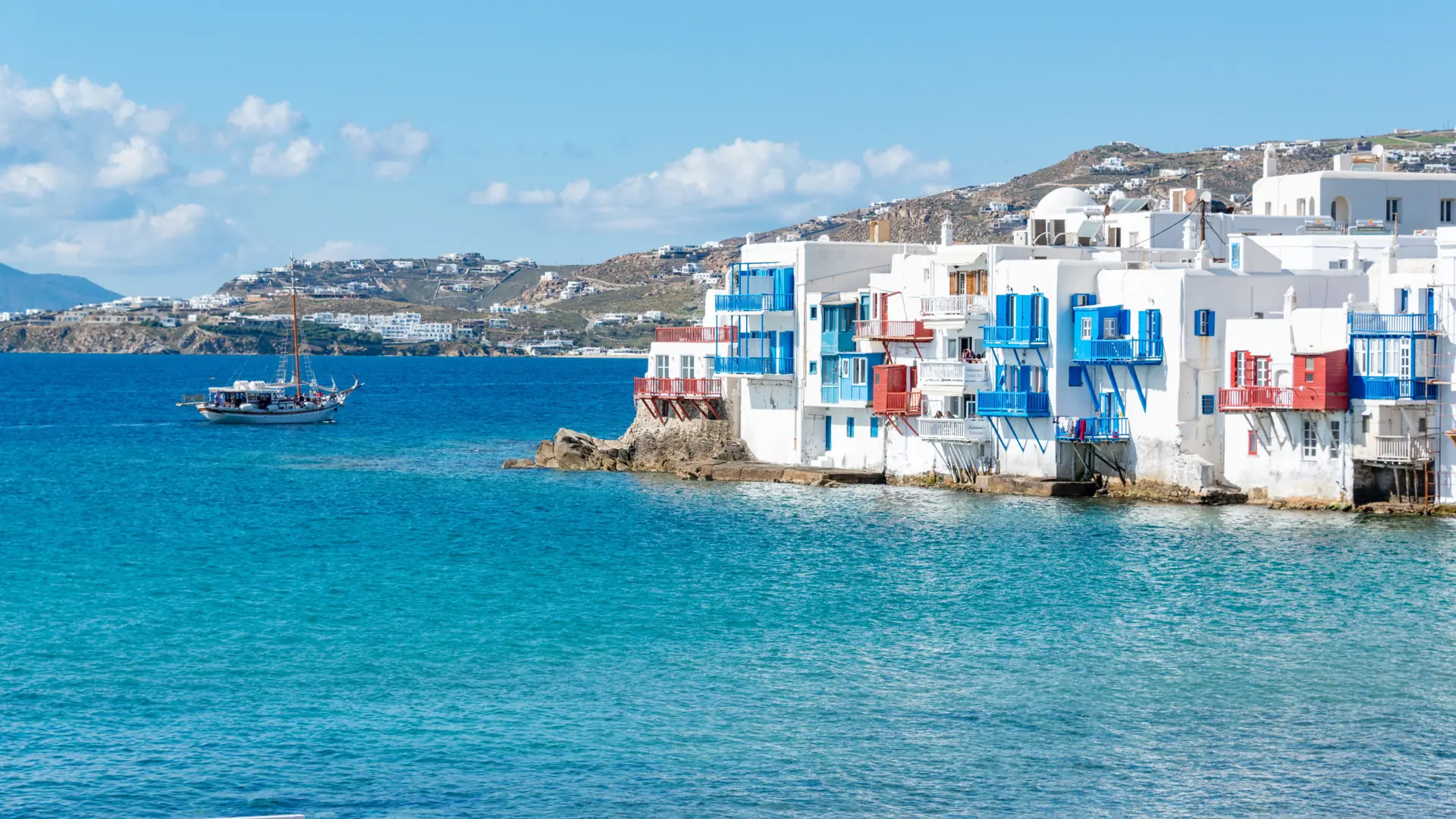
Waterfront cafes and 18th-century windmills above Mykonos' Little Venice at golden hour Mykonos
beach

Choose Mykonos for Little Venice's waterfront bars beneath the windmills, beach clubs along the sheltered south coast and an airport that connects directly to Athens and several European capitals.

Visit the windmills and Little Venice before 10am; cruise-ship groups fill both spots by mid-morning in peak season.

Colourful waterfront buildings and the Venetian lighthouse around Chania's old harbour Chania, Crete
food

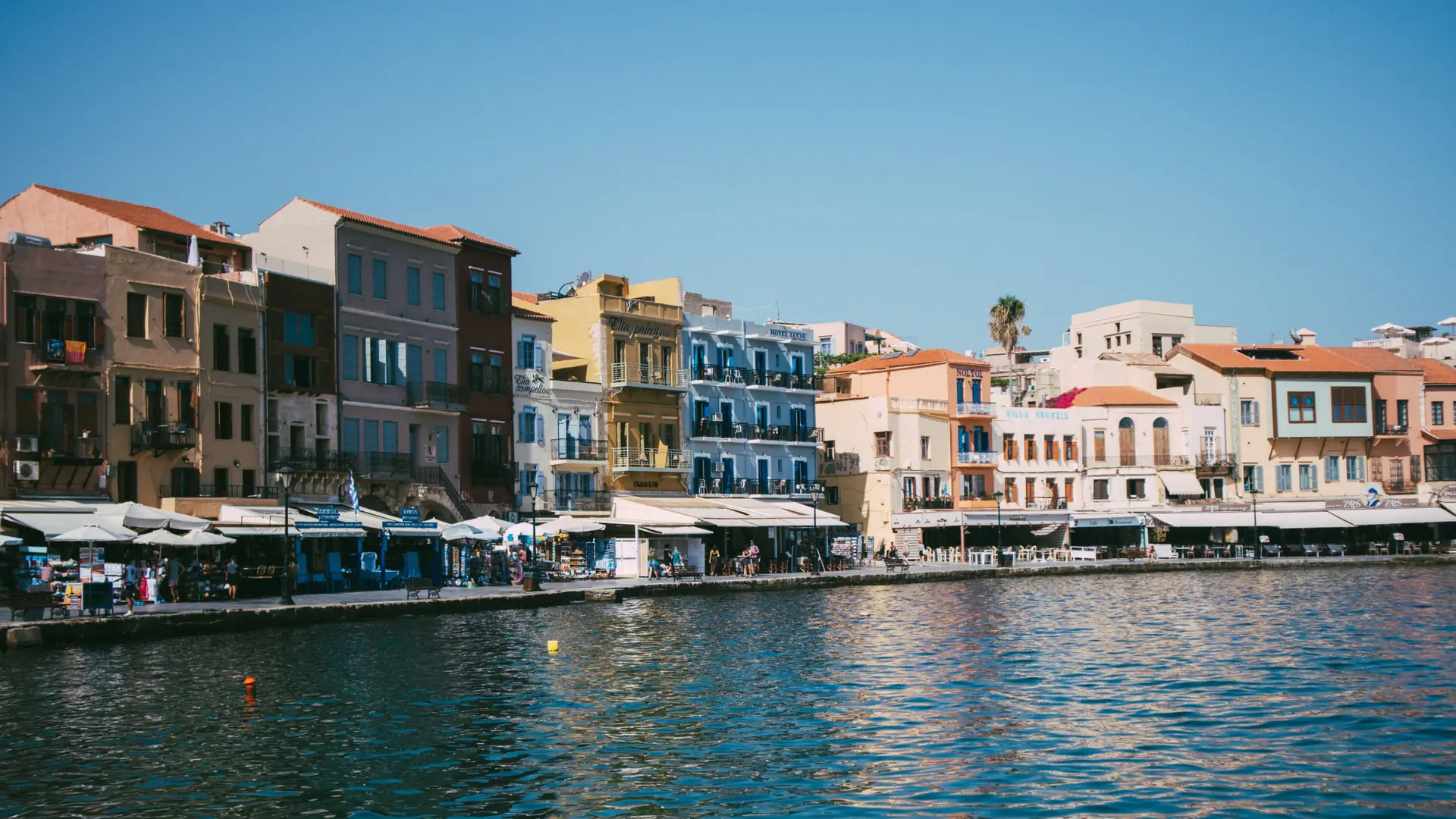
Choose Chania for a genuine Venetian harbour town on Greece's largest island, with a 16th-century lighthouse, a covered market and the Samaria Gorge day trip within reach.

Crete is large; a Chania base does not put Heraklion's Knossos palace within a comfortable day trip, so pick one end of the island per stay.

Medieval stone walls and the Palace of the Grand Master in Rhodes' old town Rhodes
culture

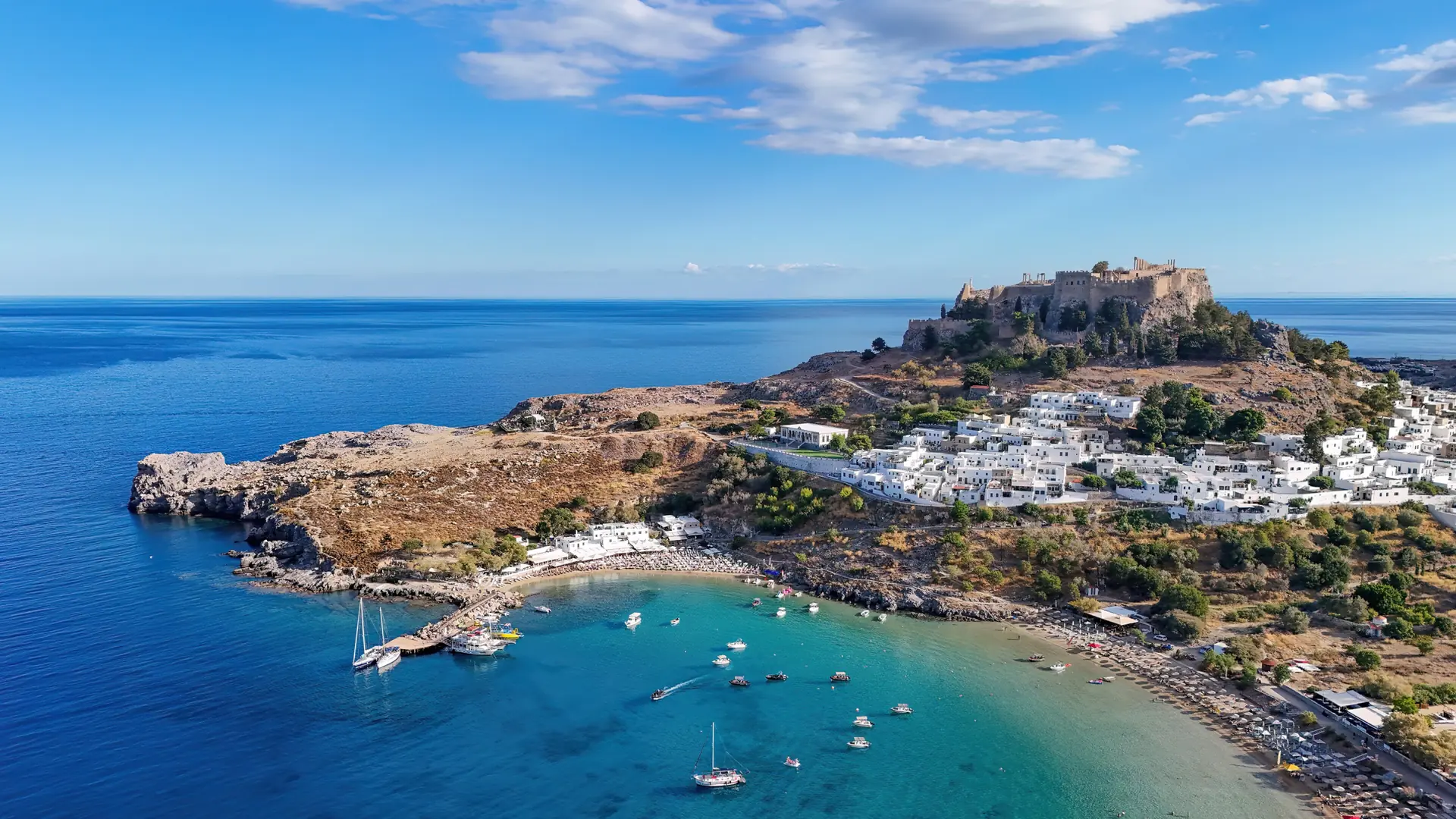
Choose Rhodes for a UNESCO-listed medieval fortress town built by the Knights of St John, often described as the oldest continuously inhabited medieval town in Europe, plus Lindos' hilltop acropolis about 50 minutes' drive south.

The Old Town's cobbled Street of the Knights is genuinely uneven; leave the wheeled suitcase at the hotel for a full day of walking.

Sunlit turquoise water and green cliffs at Paleokastritsa on Corfu's west coast Corfu
beach

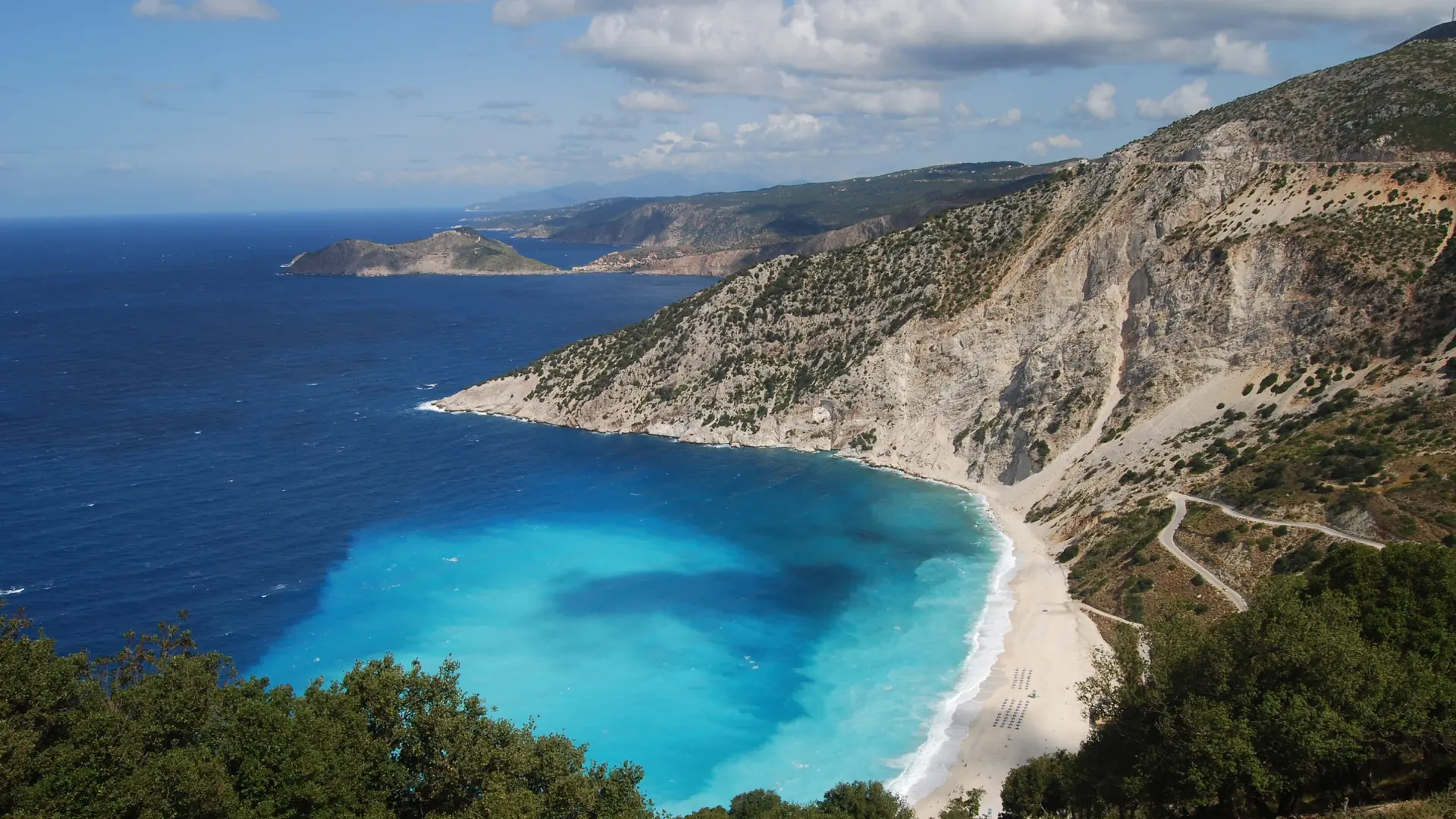
Choose Corfu for a UNESCO-listed old town blending Venetian, French and British architecture, the Achilleion Palace's gardens, and turquoise coves like Paleokastritsa on the west coast.

Corfu sits in the Ionian Sea, a separate ferry network from the Cyclades; it pairs with Athens by flight, not with Santorini by boat.

Bourtzi's fortress island and the harbour promenade of Nafplio at sunset Nafplio
romantic

Choose Nafplio for a genuinely romantic Peloponnese base: the Venetian-built Palamidi fortress above town, Bourtzi's tiny island castle in the bay, and Mycenae and Epidaurus within a short drive.

Nafplio has no train station and no direct bus route to Mycenae or Epidaurus; a rental car is the practical way to combine all three in one trip.

Monasteries perched on towering rock pillars above Meteora at sunrise Meteora (Kastraki)
nature

Choose Kastraki, the village at the base of Meteora's rock pillars, for the six working monasteries built directly onto sheer sandstone towers, a landscape found nowhere else in Greece.

Each monastery charges a small cash-only entry fee and enforces a strict dress code; shorts are refused for men with no wrap provided, unlike the skirts offered to women.

The White Tower and waterfront promenade of Thessaloniki at golden hour Thessaloniki
food

Choose Thessaloniki for Greece's food capital: UNESCO-recognised Byzantine monuments, the Modiano and Kapani markets, and a waterfront that faces Mount Olympus across the Thermaic Gulf.

Thessaloniki has no direct ferry link to the Cyclades; reaching Mykonos or Santorini from here means routing back through Athens first.

Compare Greece destinations

Athens
01
Best for

The Acropolis, museums and the international gateway

Vibe
Ancient, energetic and walkable
Stay
2-3 nights
Transport
No car needed
Also fits
Culture First trip Food

Santorini

02
Best for

The caldera view and a genuine honeymoon base

Vibe
Dramatic, polished and crowd-sensitive
Stay
3-4 nights
Transport
Car useful
Also fits
Romantic Islands Beach

Mykonos

03
Best for

Beach clubs, nightlife and a direct airport

Vibe
Glamorous, social and sun-drenched
Stay
3 nights
Transport
Car useful
Also fits
Beach Romantic Islands

Chania

04
Best for

A Venetian harbour and Crete's food scene

Vibe
Historic, coastal and unhurried
Stay
3-4 nights
Transport
Car useful
Also fits
Food Culture Islands

Rhodes

05
Best for

A medieval fortress town and Lindos day trips

Vibe
Fortified, family-friendly and sun-baked
Stay
3-4 nights
Transport
Car useful
Also fits
Culture Islands Family

Corfu

06
Best for

Ionian coves and a Venetian-British old town

Vibe
Green, elegant and Mediterranean
Stay
3-4 nights
Transport
Car useful
Also fits
Beach Culture Family

Nafplio

07
Best for

A Peloponnese base near Mycenae and Epidaurus

Vibe
Romantic, low-key and history-dense
Stay
2 nights
Transport
No car needed
Also fits
Romantic Culture Road trip

Meteora

08
Best for

Cliff-top monasteries unlike anywhere else in Greece

Vibe
Dramatic, spiritual and scenic
Stay
1-2 nights
Transport
No car needed
Also fits
Nature Culture Road trip

Thessaloniki

09
Best for

Byzantine sites and Greece's best food scene

Vibe
Lively, unpretentious and gastronomic
Stay
2-3 nights
Transport
No car needed
Also fits
Food Culture Local Vibe

Stay in Athens before heading to the islands

These hotel cards link to partner-supplied accommodation options. Prices, availability and ratings can change, so confirm details in the booking window before paying.

Search more hotels in Athens →
Search stays
Trip styles

Choose the Greece trip that fits your time

Sunlit view of the Acropolis and Athens rooftops from a nearby hill

First trip

Use Athens as a two-to-three-night start for the Acropolis, then add Santorini and Mykonos as your first islands, saving Crete or the Peloponnese for a return trip.

Turquoise Aegean water lapping a sunlit sandy beach lined with sun loungers

Beach

Choose Mykonos for beach clubs and nightlife along its sheltered south coast, or Corfu and Rhodes for gentler, family-friendly coves with calmer water.

Ancient marble columns of a Greek temple glowing in warm afternoon sunlight

Culture

Pair the Acropolis and its museum with Rhodes' medieval Old Town or Meteora's cliff-top monasteries for a history-led route that goes well beyond the beach.

The sun setting over the sea behind Santorini's whitewashed cliffside village

Nightlife

Mykonos' Little Venice bars beneath the windmills and Santorini's cliffside sunset lounges both turn the evening into the main event, not an afterthought to the beach.

Fresh Greek seafood, olives and salad served at a sunlit waterfront taverna table

Food

Base in Thessaloniki for Greece's UNESCO City of Gastronomy status, or Chania for Crete's olive-oil-and-seafood cooking away from tourist-menu tavernas.

Season guide

When to visit Greece

April-May

Weather
Warm, sunny days with cooler evenings; sea temperatures still rising.
Crowds
Growing but still manageable outside major holidays.
Prices
Often well below the July-August island peak.
Best For
Athens sightseeing and early island trips before peak crowds.

June

Weather
Reliably warm and sunny across the mainland and islands.
Crowds
Busy around headline sites but not yet at peak.
Prices
Rising toward peak for sought-after islands and caldera-view rooms.
Best For
A first island trip with warm, swimmable water and thinner crowds than midsummer.

July-August

Weather
Hot and dry, often exceeding 30°C on the islands and mainland alike.
Crowds
Peak pressure on Santorini, Mykonos and headline archaeological sites.
Prices
Highest of the year for islands, especially Santorini and Mykonos.
Best For
Beach time and full ferry schedules when accommodation and ferries are booked well ahead.

September-October

Weather
Still warm enough to swim in September, cooling through October.
Crowds
Easing noticeably after the last week of August.
Prices
Softening from peak, especially by mid-October.
Best For
A calmer island trip, mainland road routes and Meteora without the summer heat.

November-March

Weather
Cooler and wetter on the mainland; many island hotels and ferry routes close for the season.
Crowds
Low outside Christmas, New Year and Orthodox Easter.
Prices
Often the year's best rates in Athens and Thessaloniki.
Best For
Athens and Thessaloniki as city breaks, with most island hotels and ferries scaled back.

How to build a Greece route that respects its geography

Last updated July 2026

Greece is not one trip but several, loosely connected by Athens and the ferry network. The Cyclades islands, Santorini and Mykonos among them, sit in the Aegean and connect to each other and to Piraeus by dated seasonal ferry routes. Crete and Rhodes are larger islands with their own internal distances. The Ionian islands, Corfu chief among them, face Italy across a different sea and rarely connect directly to the Cyclades at all. The Peloponnese and central mainland, home to Nafplio, Delphi and Meteora, are reached by road rather than water. A map that shows Greece as one compact country hides just how differently each of these regions actually behaves.

For a first trip, resist the urge to see five islands in ten days. Athens earns two nights on its own: the Acropolis and its museum need a real morning, and the ancient Agora, Plaka and a rooftop dinner facing the illuminated rock deserve an evening that is not a rushed layover. Book the timed Acropolis ticket directly through hhticket.gr, the Hellenic Ministry of Culture's own platform, rather than a resale site charging a markup for the same time slot.

Santorini and Mykonos anchor most first-time island itineraries, and both deserve at least three nights rather than a one-night stopover squeezed between flights. Santorini's real subject is the caldera itself, the collapsed volcanic crater that gives Oia and Fira their cliff-edge views; the sunset crowd in Oia is famous for a reason, but arriving at sunrise instead shows the same view to almost nobody. Mykonos trades the caldera for beach clubs and windmill-lined waterfronts, and its airport takes direct flights from several European capitals, not only Athens.

Crete is genuinely large, closer to a small country than a single island stop. Chania, on the west end, gives a Venetian harbour town, a covered market and access to the Samaria Gorge, one of Europe's longest canyons; Heraklion, with the Palace of Knossos, sits far enough east that combining both in one short stay means constant driving rather than time actually spent anywhere. Pick one end of Crete per visit and treat the other as a separate future trip.

Rhodes and Corfu each carry real medieval weight rather than being purely beach islands. Rhodes' Old Town, a UNESCO World Heritage Site since 1988, is often described as the oldest continuously inhabited medieval town in Europe, still home to more than six thousand residents inside walls built by the Knights of St John; Lindos, about 50 minutes' drive south, adds a hilltop acropolis directly above the sea. Corfu's old town mixes Venetian, French and British influences into one UNESCO-listed centre, with the Achilleion Palace and the turquoise cove at Paleokastritsa both a short drive from town.

The Peloponnese and central mainland reward a rental car more than any island does. Nafplio, once called the Naples of the East by the Venetians who fortified it, makes a genuinely romantic base within reach of the ancient theatre at Epidaurus and the Lion Gate at Mycenae. Meteora, further north near Kalambaka and Kastraki, has six working Orthodox monasteries built directly onto sandstone pillars; each charges a small cash entry fee and enforces a real dress code, so plan the wardrobe as carefully as the drive.

Thessaloniki, Greece's second city, deserves consideration even on a first trip if food and a less tourist-saturated pace matter more than another beach. Voted Greece's first UNESCO City of Gastronomy, its Modiano and Kapani markets and Byzantine monuments including the Rotunda and the Arch of Galerius give a genuinely different Greek city experience than Athens, without the crowds pressing around the Acropolis.

Getting between all of this depends on matching the transport to the actual geography rather than assuming Greece connects the way its map suggests. Blue Star Ferries and partner operators publish seasonal, dated schedules from Piraeus to the Cyclades, Crete and the Dodecanese; a route that runs daily in August can run twice a week in April. Domestic flights on Aegean Airlines or Sky Express often beat a long ferry connection for a tight schedule, typically €40 to €150 one-way to the main islands depending on how far ahead you book. Treat every inter-island hop as a checked, dated booking, never an assumption.

Stay in Santorini for the caldera view

These hotel cards link to partner-supplied accommodation options. Prices, availability and ratings can change, so confirm details in the booking window before paying.

Search more hotels in Santorini →
Search stays

Budget Snapshot

Moderate overall, rising to genuinely high on Santorini and Mykonos in peak season.
May, June and September keep warm weather with noticeably lower island accommodation rates than the July-August peak.
Thessaloniki, Nafplio, mainland Peloponnese towns and less-famous islands like Naxos or Paros typically cost less than Santorini or Mykonos for a comparable room.
Mid-July through late August, plus the week around Orthodox Easter, when island ferries and headline hotels sell out weeks ahead.
Budget by island, not by country average. A Santorini caldera-view room can cost triple the same category on Naxos in the same week; price the specific island and dates before fixing an itinerary.

Mistakes To Avoid

  1. Trying to fit Athens, three islands and the Peloponnese into one rushed week.

  2. Booking a one-night island stop that spends half its value on arrival and departure logistics alone.

  3. Assuming every island connects directly to every other island by ferry; some pairs need a hub change or a flight instead.

Explore Greece city guides

Compare hotel bases across other published city guides in Greece.

Explore routes through Greece

Choose a complete route with the stops, transport and overnight plan already mapped out.

Sources

Reviewed by StartBooker editorial team (researched and reviewed September 2026)

12 references reviewed

Key sources
  • Greek National Tourism Organisation (GNTO)
  • Hellenic Ministry of Culture and Sports
  • UNESCO World Heritage Centre
  • Blue Star Ferries
  • Marketing Greece (Discover Greece)
  • Santorini Dave
Photo credits

Photos provided by Pexels.

How long should a first Greece itinerary run?

Ten days suits Athens plus two islands, for example three nights in Santorini and three in Mykonos with the Athens nights either side. Two weeks lets you add Crete or a Peloponnese loop through Nafplio without turning every stop into a one-night stand.
Is it easy to island-hop, or do you need to fly between islands?

Ferries connect the Cyclades to each other and to Piraeus on published seasonal schedules, but routes thin out sharply outside June to September, and Corfu's Ionian network rarely links directly to the Cyclades at all. Domestic flights on Aegean Airlines or Sky Express are often faster and not much more expensive than a long ferry leg, especially between islands with no direct sailing.

Which Greek island suits a honeymoon versus a family trip?

Santorini and Mykonos suit a honeymoon or an adults-focused trip built around caldera views, beach clubs and boutique hotels. Corfu and Rhodes work better with children: gentler beaches, family-sized rooms and historic sites that hold a child's attention without an all-day hike.

Do you need a visa to visit Greece?

Most visitors from the US, UK, Canada, Australia and other visa-exempt countries can stay up to 90 days without a visa, provided the passport has at least three months' validity left after the planned departure date and was issued within the last ten years. The EU's Entry/Exit System now records biometric data at the border, so build in extra time at first arrival.

Which months avoid Greece's worst crowds and summer heat?

May, June and September keep warm, swimmable weather with noticeably fewer crowds and lower prices than July and August, when island accommodation and ferries sell out weeks ahead. Winter suits Athens and Thessaloniki as city breaks, but most island hotels and many ferry routes close down entirely.
Is Athens worth more than a night before heading to the islands?
Give it at least two full days. The Acropolis and its museum alone need a real morning, and Plaka's lanes, the ancient Agora and a proper Athenian dinner deserve an evening that isn't a rushed layover before an early ferry.

Been here? Share your experience