Reconstructed red columns and a bull fresco at the Palace of Knossos, Crete, Greece

Heraklion: Minoan collections, Venetian walls and Cretan food

Loading Heraklion hotel search

Read the palace through its objects, then explore the city

At Knossos, the rooms around the central courtyard belonged to a Bronze Age centre of administration, storage, ritual and production. The first palace dates to around 2000–1900 BC; what visitors see today also includes substantial restorations from Arthur Evans’s twentieth-century excavations. That mixture of ancient remains and later interpretation is a reason to pair the site with Heraklion’s Archaeological Museum, in the city centre rather than beside the palace. Its collections include Knossos frescoes and the enigmatic clay Phaistos Disc, with signs impressed in spirals. The disc was discovered at Phaistos, a different palace.

Heraklion’s later history is visible at street level. Lions Square’s Morosini Fountain was part of a Venetian scheme bringing spring water from Archanes into the city; Koules guarded the old harbour. A meal adds another introduction to Crete. Try dakos, a rusk topped with tomato, cheese and olive oil, or marathopita, a thin fennel pie. A central base keeps those city experiences nearby; Knossos remains a separate outing.

City base Old Town near Lions Square

The fountain and surrounding streets make a central reference point. Compare the actual property with the museum, the harbour and the bus stop you will use.

Palace and objects Two separate locations

Knossos is outside the centre; the Archaeological Museum is near Eleftherias Square. Build in a transfer rather than expecting adjoining attractions.

City transport Route 2 towards Knossos

The urban operator publishes separate weekday and weekend programmes. Check the stop, direction and return for your date instead of relying on a fixed interval.

World Heritage Minoan Palatial Centres

Knossos belongs to the six-site UNESCO property inscribed in 2025, alongside Phaistos, Malia, Zakros, Zominthos and Kydonia.

Literary heritage Kazantzakis at Martinengo

The author’s simple grave lies on a bastion of the Venetian walls, overlooking the city. It adds a literary reason to visit the fortifications.

Local food Dakos and fennel pie

Tomato, cheese, rusks and olive oil form dakos; marathopita is filled with fennel. Ask what is being prepared that day rather than expecting one standard menu.

StartBooker answer

Where should I stay in Heraklion for Knossos, the museum and city evenings?

Choose the Old Town for a central stay near Lions Square and the Archaeological Museum, or the old harbour if Koules and waterfront views matter most. The Venetian walls suit a stay oriented towards the fortifications and Kazantzakis’s grave, with the exact approach worth checking. A property near Knossos can shorten the palace connection, but it does not put the city museum next door. Compare the room’s actual location, bus stop and arrival route before treating any of these areas as equally convenient.

Central museum
Near Eleftherias Square
Palace connection
Urban bus route 2
Old harbour landmark
Koules / Rocca a Mare

Things to do in Heraklio, Greece

Explore tours, attractions and local experiences in Heraklio, Greece.

Loading activities…

Activities provided by GetYourGuide. We may earn a commission on bookings.

AI-powered

Fit Knossos and the museum around the rest of Crete

Start with the number of days available for Heraklion and how you will arrive. Ask for time at the palace and museum, or a comparison of central and harbour rooms before adding another Cretan base.

Four Heraklion bases, from Lions Square to the palace gates

A central museum visit, a room facing the old harbour and a stay near the palace create different daily journeys. Use the landmark to orient yourself, then check where the property actually stands.

Morosini Fountain with carved lion statues in Lions Square, Heraklion, Crete, Greece

Heraklion Old Town

Lions Square, Venetian streets and the city museum

Morosini Fountain anchors Lions Square with four carved lions and an eight-lobed basin. Built in 1628, it brought spring water from Archanes into Venetian Candia. Staying around these central streets makes the fountain part of everyday navigation, with the Archaeological Museum near Eleftherias Square.

Neighbourhood stay Walkable
Koules Fortress walls beside moored fishing boats at Heraklion harbour, Crete, Greece

Koules Harbour

Koules Fortress and time around the old harbour

Koules, also called Rocca a Mare, stands at the entrance to the Venetian harbour. The present fortress was built in 1523–1540, with winged lions marking Venetian rule. A harbour stay suits time around this maritime landmark, with central streets as a separate walk.

Neighbourhood stay Walkable
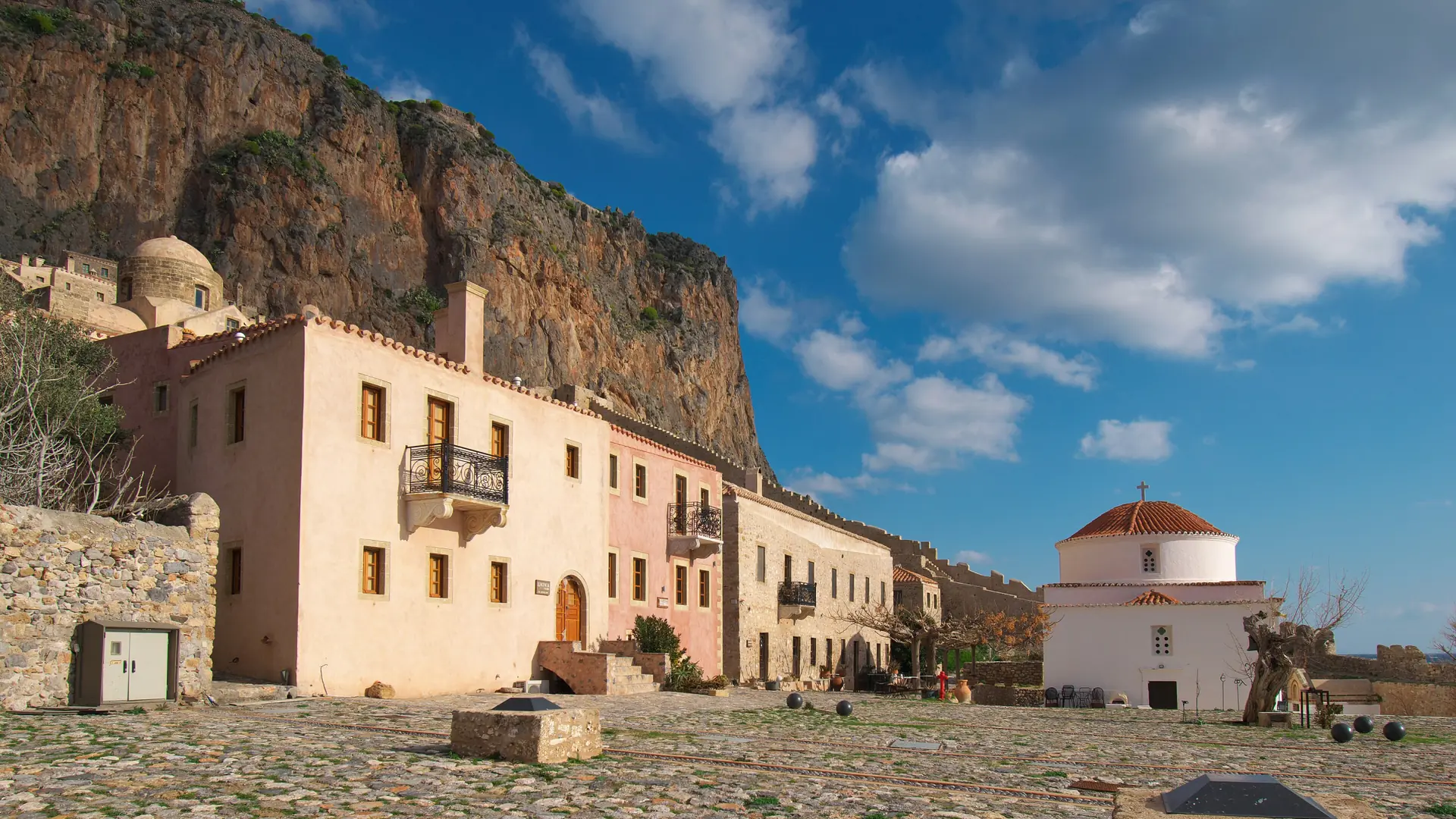
Excavated stone ruins at the Palace of Knossos archaeological site, Crete, Greece

Near Knossos

making the Palace of Knossos the main local outing

A stay near Knossos puts the archaeological site at the centre of the plan. Compare the property’s actual entrance with the palace gate and the urban bus stop: the area name alone does not establish a short walk. The central museum, Lions Square and old harbour remain separate journeys.

Palace visit Archaeology
Grass-covered Venetian walls seen from Saint Andrew Bastion in Heraklion, Crete, Greece

The Venetian Walls

Venetian fortifications and Kazantzakis’s grave

The Venetian walls give Heraklion a different historical setting from the harbour. On Martinengo Bastion lies the grave of Nikos Kazantzakis, the Heraklion-born author of Zorba the Greek. Its plain cross and city outlook make this a focused literary visit rather than simply another defensive structure.

City walls Literary heritage
Compare the landmark with the journeys it creates
Area Best for Features Mobility
Heraklion Old Town

Central streets, fountain and museum

The palace is outside the centre.

Walk within the centre; check the urban bus to Knossos.
Koules Harbour

Koules and the Venetian waterfront

A harbour view does not place you at the ferry terminal.

Check the walking route to the centre and your actual berth.
Near Knossos

A stay focused on the palace

Museum and harbour visits need a transfer.

Compare the property with the palace gate and route 2 stop.
The Venetian Walls

Fortifications and literary heritage

The walls cover a broad area with varied approaches.

Check the route to the particular bastion and central streets.

Match the base to the visits you want

Choose a setting for the things you will actually spend time on: Minoan objects, the palace, the old harbour or the city’s food and literary history. The bus journey and museum location matter more than a general promise of centrality.

A central stay without a rental car

Use the Old Town for the museum and city streets, with a planned urban-bus outing to Knossos. Check where the stop sits relative to the property.

Time around the Venetian harbour

Choose a room for its actual waterfront position, then visit Koules on an opening day. Look for the winged lions that connect the fortress with Venetian rule.

A stay centred on the palace

Compare a property near Knossos with the archaeological gate and your chosen admission time. Give the site room in the day, then plan the separate journey into Heraklion.

Kazantzakis and the Venetian fortifications

Visit the author’s grave on Martinengo Bastion for its simple monument and city outlook. Choose accommodation by the actual approach to this bastion, not just a broad walls label.

A museum visit with a clear focus

Start with a few objects: the Phaistos Disc and Knossos frescoes reveal different kinds of Minoan evidence. Leave time to look closely rather than treating the museum as a ticket add-on.

Cretan flavours between city visits

Use a central stay for meals as well as monuments. Dakos, fennel-filled marathopita and snails prepared with rosemary and vinegar give you specific dishes to look for.

Search Heraklion hotels

Search Heraklion hotels →
Loading Heraklion hotel results

Connect the airport or port with your actual base

Heraklion has separate airport, ferry and urban-bus arrivals. Check the exact arrival point and the property’s entrance, then use the appropriate operator for a palace outing or a longer Cretan journey.

An airport east of the centre, or a ferry into the port

HER airport is about 5km from the centre

The aviation authority places Nikos Kazantzakis Airport about 5km from central Heraklion. Choose the onward bus, taxi or arranged transfer for your arrival time and property; a short distance does not guarantee a fixed travel time through city traffic.

Choose the specific Piraeus sailing

Published Piraeus–Heraklion crossings currently span roughly eight to eleven and a half hours, depending on the vessel. Check the sailing’s actual arrival time and any cabin or seat arrangement, with the port-to-property journey included.

Separate urban buses from intercity coaches

Use urban route 2 for Knossos

Heraklion Urban Bus lists line 2 for Knossos–Skalani, with separate weekday, Saturday and Sunday tables. Check the boarding stop, destination and return for your date. Other lines and notices can change the useful connection; do not assume a fixed 15-minute interval.

Check the KTEL departure station

KTEL Heraklion–Lasithi publishes dated programmes for destinations including Rethymno, Chania and Agios Nikolaos. Some routes use the central station, others Chanioporta. Use the timetable’s station and dates rather than treating every coach as leaving the same stop.

Use landmarks to judge a central walking route

The museum is near Eleftherias Square, while Morosini Fountain is in Lions Square and Koules stands at the old harbour. Compare these places with the property and your walking pace. A central location does not make every approach flat or step-free.

Keep the palace, museum and fortress admissions separate

Book the site you intend to visit

Hellenic Heritage lists Knossos as its own archaeological-site visit with an online ticket link. Check the selected site, date, admission arrangements and eligibility before paying. Compare any guided product’s inclusions with entry alone; an audio guide or transfer is a separate service.

The city museum is a different destination

Heraklion Archaeological Museum stands at Xanthoudidou and Hatzidaki streets, near Eleftherias Square. Buy for that museum separately from the palace and check its opening hours. The collections deserve time in the plan rather than being treated as rooms adjoining Knossos.

Check Koules before a harbour visit

Koules has its own ticket and lists Tuesday closure in both summer and winter. A walk beside the old harbour does not include entry to the fortress. Check its seasonal hours before making the interior the main purpose of an outing.

Ask about the specific route and facilities

Use access information for each site

Knossos includes archaeological surfaces and changes of level, so confirm the available visitor route for your needs. Hellenic Heritage lists accessibility facilities at Knossos and lifts at the museum and Koules. Ask about the current usable entrances and routes; a facility icon does not establish access to every room, terrace or excavated area.

Plan admission, transport and time inside the collections

The palace, central museum and harbour fortress have separate arrangements. Price the visits for your party, check transport in both directions and give the museum time beyond a quick stop between outdoor sights.

Use the seasonal opening hours to shape the day

Give a summer palace visit room in the schedule
  • The official Knossos listing publishes longer summer opening hours, with progressively earlier closing through September and October. Choose an admission time that suits the weather and your party, then allow for the return into town. An early visit can be useful, but it does not guarantee an empty site or remove the need for water, sun protection and suitable footwear.

  • Check winter hours for each monument

    From November through March, the Knossos listing gives 08:00–17:00, with last admission twenty minutes before closing and specified holiday closures. Koules has a shorter winter day and remains closed Tuesdays. Check the museum’s own programme too; the palace’s timetable cannot establish access to the other two attractions. Keep enough daylight for the outdoor part of the plan.

  • Build a city alternative to an outdoor outing

    The museum’s Minoan collections give a specific indoor focus when conditions change: frescoes, ritual objects and the Phaistos Disc each invite a different kind of looking. A meal can introduce another part of Cretan culture through local dishes. Check actual opening and availability rather than assuming all visitor businesses follow the same summer or winter calendar.

Count admissions and the journeys created by your base

Use standard admission as the comparison
  • Official listings give Knossos €20 (≈ US$22.43) and the Archaeological Museum €20 (≈ US$22.43): €40 (≈ US$44.86) per person for both, or €80 (≈ US$89.72) for two standard-paying adults. Koules adds €10 (≈ US$11.22) per person. Reductions and free-entry dates have eligibility rules; check them separately. Approximate dollars above reflect the ECB’s 20 October 2026 rate, EUR/USD 1.1215. Your payment provider sets the amount actually charged.

  • Compare entry with the services in a package

    For a guided visit, separate the admission component from the guide, audio, pickup and transport. A more expensive product may include services you want; the difference is not a universal reseller surcharge. For independent visits, use the official site’s ticket link and include the city-bus journeys for every traveller when comparing the total.

  • Compare a vehicle day with the actual party’s journeys

    A central museum-and-Knossos stay can use walking and urban buses; a hire car adds rental terms, fuel and parking to the calculation. Intercity coaches have their own routes and charging basis. Compare the trips you will take, the number of travellers and any luggage transfer rather than assuming one transport mode always costs less.

How long does a first Heraklion visit need?

Two nights can give you a day for Knossos and the museum plus time around the centre. Add another night if you want slower museum visits, the harbour fortress and literary heritage without concentrating them into one day. Choose the actual admission times and arrival connection before fixing the sequence.

Does a Knossos ticket include the city museum?

Treat them as separate visits and purchases. The official listings provide separate ticket links for the palace and Heraklion Archaeological Museum. A guided product may bundle services, so read its inclusions instead of assuming that the palace entry itself provides museum admission.

How does Knossos belong to UNESCO World Heritage?

Knossos is one of the six components of the Minoan Palatial Centres property, inscribed in 2025. The other components are Phaistos, Malia, Zakros, Zominthos and Kydonia. The shared listing recognises these centres of Minoan administration, economy and ritual across Crete.

Should I choose Heraklion or Chania for a Knossos visit?

Heraklion gives you the local urban-bus connection to Knossos and the Archaeological Museum in its own centre. Chania serves a different part of Crete, so staying there adds an intercity journey before these visits. Choose the base for the places you want to spend time in rather than treating the cities as interchangeable.

Where is Nikos Kazantzakis’s grave?

It lies on Martinengo Bastion, part of Heraklion’s Venetian walls. The municipality describes the author’s wish to be buried there, with a simple cross and a view over the city. His epitaph reads: “I hope for nothing. I fear nothing. I am free.” Check the approach to the bastion for your walking and access needs.

What Cretan dishes can I look for in Heraklion?

Dakos combines a rusk with tomato, cheese and olive oil. Marathopita is a thin fennel-filled pie; chochlioi boubouristi are snails cooked with olive oil, rosemary and vinegar. These give a bakery or taverna visit a local focus. Ask about the day’s dishes and ingredients, particularly if you have dietary requirements.

How this guide was researched

Reviewed by StartBooker editorial team Travel editorial research and update

Last reviewed 2026-10-21

Updated

Editorial method: Researched from UNESCO’s inscription decision, Hellenic Heritage monument and museum listings, the municipal tourism pages and responsible urban-bus, intercity-coach and airport sources. The museum’s own object record distinguishes the Phaistos Disc’s findspot from Knossos. Ferry information was checked with the linked specialist publisher. Photographic subjects and licences were checked against their original records. Recheck hours, tickets and dated transport programmes for your travel date.

14 sources reviewed

Primary sources
  • UNESCO World Heritage Centre
  • Hellenic Heritage / ODAP
  • Heraklion Archaeological Museum
  • Municipality of Heraklion
  • Visit Heraklion / Municipality of Heraklion
  • Heraklion Urban Bus
References
Photo credits

Share one Heraklion lesson: Knossos, the museum, and getting around