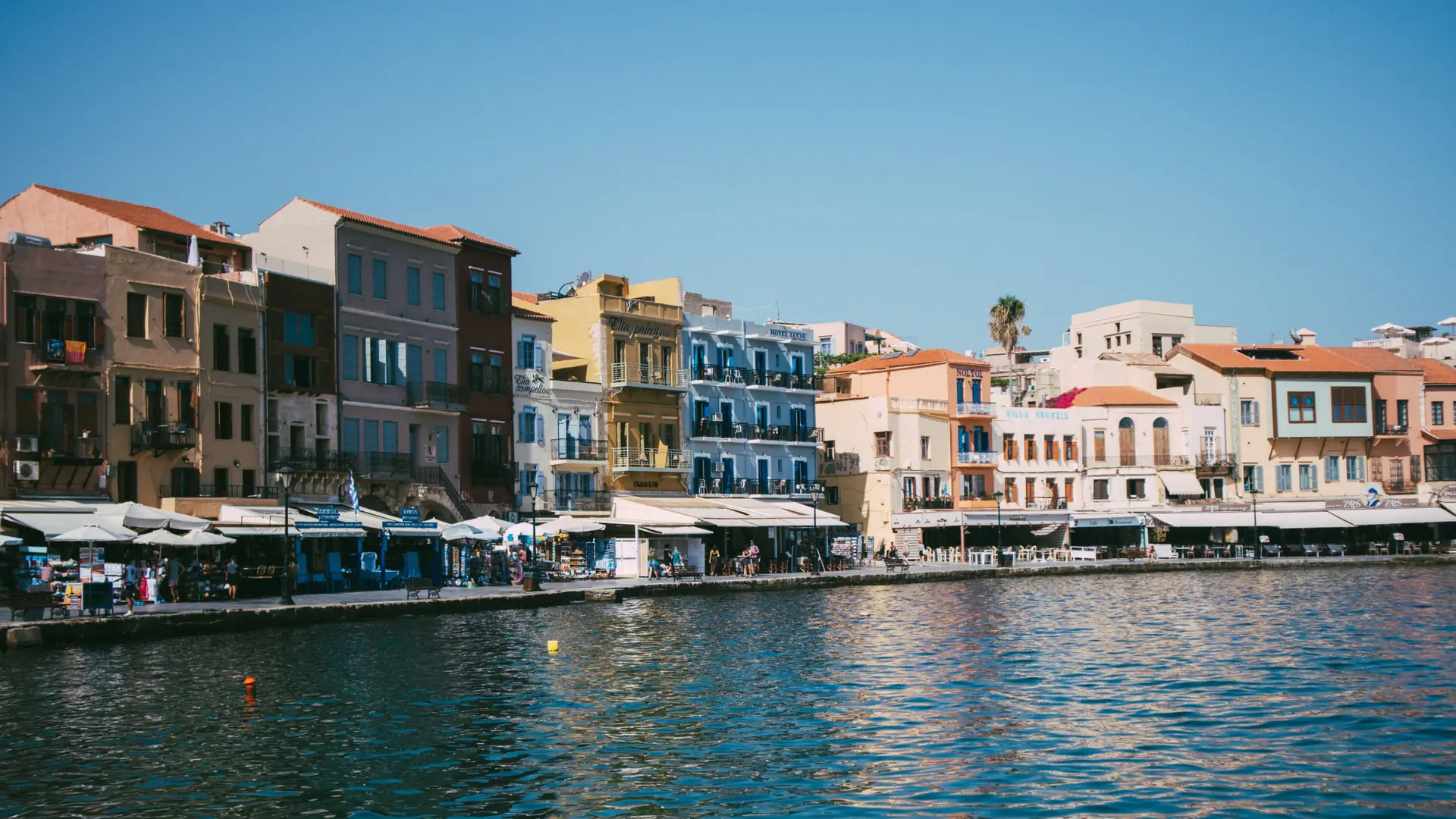
The Parthenon and Acropolis glowing gold above Athens at sunset with the city sprawling below

Where to stay in Athens, from Plaka's lanes to Kolonaki

Loading Athens hotel search

Fix the Acropolis slot and the transport before choosing a room

Athens' sights cluster tightly around the Acropolis, but a flat €30 timed ticket, a separate museum fee and a weekday driving restriction all shape which quarter actually suits your trip.

Best first base Plaka

The Acropolis, Agora and Monastiraki all sit within a 10-to-15-minute walk of each other, removing the need for a bus or taxi during a short stay.

Acropolis ticket €30 per adult

The price is fixed year-round since April 2025; book directly through hhticket.gr rather than a resale markup.

Acropolis Museum €20 per adult, separate ticket

The museum sits in Koukaki, a separate building from the Acropolis site itself, and always needs its own ticket.

Airport to centre Metro Line 3, about 40 minutes for €9

Line 3 runs directly to Syntagma; the X95 express bus covers the same route for less, at the cost of daytime traffic time.

Driving restriction The Daktylios traffic ring

A weekday odd/even plate rule covers the historic centre outside its summer suspension, relevant only if renting a car.

Best visit time Opening hour, before the crowds arrive

The site has almost no shade, so the earliest available slot avoids both the heat and the mid-morning tour groups.

StartBooker answer

Where should I stay in Athens, and how close does it need to be to the Acropolis?

Plaka, the oldest quarter, sits directly under the Acropolis and puts most first-time sightseeing inside a 5-to-10-minute walk, though its restaurants are priced for tourists who won't return. Koukaki, home to the Acropolis Museum, trades a few extra minutes of walking for a genuinely residential feel and easy access to Metro Line 2. Monastiraki brings flea-market energy and rooftop bars but stays loud well into the evening, while Kolonaki's upscale streets sit a real 20-to-25-minute walk from the rock itself. The Acropolis now charges a flat €30 year-round for a timed entry slot, and the airport connects to the centre by a €9 metro ride or a €5.50 express bus rather than a train.

Best first base
Plaka, directly beneath the Acropolis
Acropolis ticket
€30 flat year-round, timed entry, booked through hhticket.gr
Airport to centre
Metro Line 3, about 40 minutes for €9, or the X95 express bus for €5.50
Driving in
A weekday odd/even plate restriction covers the historic centre on weekdays outside summer
AI-powered

Shape your Athens stay around the Acropolis and the metro

Tell the planner your flight time, how many nights you have before an island ferry, and whether the Acropolis or Athens' street life matters more. It can match your base to the metro line you'll actually ride.

Four Athens quarters, four different walks to the Acropolis

Athens' historic sights cluster tightly around the Acropolis, but the four quarters around it trade walking distance for very different streets, prices and evenings.

Sunlit neoclassical houses and bougainvillea along a stepped Plaka street below the Acropolis

Plaka

a short stay built entirely around the Acropolis and Plaka's lanes

Book Plaka when your whole Athens visit is one or two nights and the Acropolis is the reason you're here at all.

Sleep: Busy with visitors until evening, quieter after dinner service ends.

Neighbourhood stay Walkable

Check the exact street; a hotel listed as "in Plaka" can still mean the steeper upper lanes near Anafiotika rather than the flat centre.

Sunlit modern apartment buildings and cafes on a quiet Koukaki street near the Acropolis Museum

Koukaki

the Acropolis Museum, a residential feel and Metro Line 2

Choose Koukaki when you want the museum on your doorstep and streets that still function as a real neighbourhood after dark.

Sleep: Calmer than Plaka after dark; main avenues carry daytime traffic noise.

Neighbourhood stay Walkable

Confirm which Metro Line 2 stop is closest; Akropoli and Syngrou-Fix sit at opposite edges of the neighbourhood, several minutes apart on foot.

Sunlit Monastiraki Square with flea-market stalls and the Acropolis visible on the hill above

Monastiraki

the flea market, ancient ruins underfoot and rooftop bars

Pick Monastiraki when the Sunday antique market and nightlife matter as much as the Acropolis itself.

Sleep: Loud under the square and market streets until late; quieter one block back.

Neighbourhood stay Walkable

The Sunday antique market at Avissinias Square draws the biggest crowds of the week; book a room set back from the square itself if a quiet Sunday morning matters.

Sunlit upscale Kolonaki street with cafe tables and boutique shopfronts at the foot of Lycabettus Hill

Kolonaki

upscale shopping, café society and a break from tourist crowds

Stay in Kolonaki when boutique streets and a genuinely local café scene matter more than the shortest possible walk to the Acropolis.

Sleep: Quiet residential streets, with café terraces busy into the evening.

Neighbourhood stay Walkable

Budget a metro ride or taxi for evening trips back from the historic centre; the walk is manageable by day but long after a late dinner.

Choose an area by the trip you want
Area Best for Trade-off Getting around
Plaka a short stay built entirely around the Acropolis and Plaka's lanes Restaurants on the main tourist lanes charge day-tripper prices. Plaka is a pure walking base; the Acropolis, Agora and Monastiraki sit inside a 10-minute radius.
Koukaki the Acropolis Museum, a residential feel and Metro Line 2 The extra distance is minor by day but noticeable on a late return. Koukaki adds about ten extra minutes of walking to the Acropolis compared with Plaka.
Monastiraki the flea market, ancient ruins underfoot and rooftop bars Rooftop bars and market streets stay audible well into the evening. Monastiraki keeps the same short walk to the Acropolis as Plaka, with more evening noise.
Kolonaki upscale shopping, café society and a break from tourist crowds The distance to the historic centre means budgeting transit time each day. Kolonaki requires a metro ride or a 20-to-25-minute walk to reach the Acropolis.

Match the base to the reason you're actually in Athens

These scenarios start from a specific reason to be in Athens at all, rather than repeating the neighbourhood cards with different wording.

A first visit built entirely around the Acropolis

This suits a first Athens visit where the Acropolis is the whole point and every extra walking minute matters.

Skip Plaka if quiet evenings matter more than a five-minute walk to the rock.

Basing near the Acropolis Museum

Choose Koukaki when the Acropolis Museum is a priority and you want streets that still feel residential after dark.

Skip Koukaki if you'd rather be inside Plaka's lanes than a short walk from them.

Flea-market energy and rooftop nights

Pick this route when the Sunday flea market, rooftop bars over the Acropolis and Athens' nightlife matter as much as the ruins themselves.

Skip Monastiraki if an early night matters more than rooftop views.

Upscale streets away from the tourist core

Choose Kolonaki when boutique shopping, gallery streets and café culture matter as much as the ruins, and a metro ride or taxi each evening is an acceptable trade.

Skip this if the Acropolis' proximity is genuinely your top priority.

Renting a car without a Daktylios fine

This matters only if a rental car is part of the trip, typically for a Peloponnese day trip or onward drive after Athens.

Skip a rental car entirely if your stay is confined to central Athens; the metro and walking cover it.

Search Athens hotels

Once you know which quarter fits your trip, compare live availability, exact hotel locations and room details. Editorial advice here is separate from provider prices and availability.

Search Athens hotels →
Loading Athens hotel results

One metro line, one express bus, and a fixed taxi fare

Most visitors choose between the direct metro line and a cheaper express bus; the suburban Proastiakos rail also reaches the airport but suits a traveller already headed further out of the city more than a first trip into central Athens.

From Athens International Airport

Metro Line 3 is the direct route into the centre

Metro Line 3 is the direct route into the centre

Metro Line 3 (blue) runs directly from the airport to Syntagma in the heart of Plaka and Monastiraki, taking roughly 33 to 40 minutes for a flat €9 adult fare; since January 2025 a contactless bank card or phone taps directly at the gate without needing a paper ticket first.

The X95 bus undercuts the metro fare, at the cost of time

The X95 express bus runs 24 hours a day to Syntagma for €5.50, cheaper than the metro but slower in daytime traffic; X93 and X96 cover the intercity bus terminal and Piraeus port respectively, which matters if an island ferry is the very next step of the trip.

Taxis run a fixed rate, not a meter, to the centre

A taxi to central Athens runs a regulated flat rate of €40 between 5am and midnight, rising to €55 overnight; it is the practical choice with heavy luggage, a late landing, or a hotel in Kolonaki, which sits furthest from both the metro line and the historic core.

A walkable core with one card for everything else

The historic centre rewards walking over transit

The historic centre rewards walking over transit

Plaka, Monastiraki and Koukaki all sit within a 10-to-20-minute walk of the Acropolis and of each other, so a central base makes the metro genuinely optional for daytime sightseeing and necessary mainly for reaching Piraeus or further-out neighbourhoods like Kolonaki after dark.

Line 2 serves the museum quarter, Line 1 serves the port

Metro Line 2 (red) stops at Akropoli, on the edge of Koukaki, and at Syntagma; Line 1 (green) is the old ISAP line linking Piraeus port to the centre and Kifissia, useful the day an island ferry is on the schedule.

Price the tourist ticket against single fares first

The ath.ena card is the reloadable smart card behind every fare: a single 90-minute ticket costs €1.20, a 24-hour ticket €4.10, and a 3-Day Tourist Ticket €20 that also covers a round trip to and from the airport, worth pricing against two separate €9 metro fares if the stay is short.

Two passes cover very different things

The 3-Day Tourist Ticket pays for itself quickly

The 3-Day Tourist Ticket pays for itself quickly

The 3-Day Tourist Ticket bundles unlimited transport for three days with a round trip to and from the airport for €20, which beats paying the €9 airport fare twice plus separate city tickets on almost any stay longer than a single day trip.

The old six-site combo pass no longer exists

The multi-site pass that used to bundle the Acropolis with the Ancient Agora, Roman Agora, Kerameikos, the Temple of Olympian Zeus and Hadrian's Library for one combined price was discontinued in the April 2025 pricing reform. Each site now sells its own standalone ticket year-round, and none of them includes the separate Acropolis Museum, which always needs its own €20 ticket.

The rock has one accessible route, and it isn't the main path

The Acropolis lift bypasses the marble climb

The Acropolis lift bypasses the marble climb

A dedicated lift on the north slope of the Acropolis rock carries wheelchair users and visitors with limited mobility up to the plateau, a route separate from the uneven marble paths most visitors climb; it must be booked or requested with staff on arrival, since it runs on a schedule rather than continuously.

Fix the Acropolis slot and the Daktylios before anything else

The Acropolis has almost no shade and a mandatory timed slot; plan the visit around the edges of the day, price every archaeological site as its own separate ticket, and treat Athens' weekday driving restriction as reason enough to skip a rental car in the centre.

Heat, rain and the Daktylios calendar

Move the Acropolis slot to the earliest morning hour
  • Move the Acropolis slot to the earliest morning hour

    The Acropolis has no shade of its own; a July or August midday visit means direct sun on white marble for the full timed slot. Book the earliest available morning entry and use the museum's air-conditioned galleries to wait out the hottest hours.

  • Shift to Athens' museums on a wet day

    A rainy day pushes the plan indoors: the Acropolis Museum, the Benaki Museum and the National Archaeological Museum all offer sheltered options that outdoor sightseeing would have used instead.

  • Check whether the Daktylios is active for your dates

    The Daktylios traffic restriction typically suspends over summer, so a rental car faces fewer weekday limits from roughly late July through August than it does the rest of the year.

Fix the Acropolis ticket cost, then the rest follows

Budget €30 for the Acropolis before anything else
  • Budget €30 for the Acropolis before anything else

    The Acropolis ticket is a fixed €30 for every visitor regardless of season, a change made in April 2025 that abolished the old winter discount; children under 5 enter free but still need a timed slot reserved.

  • Price the museum separately, and expect no multi-site discount

    The Acropolis Museum costs €20 for an adult, separate from and in addition to the Acropolis ticket itself. The old pass that once bundled the Acropolis with several other ruins at a discount was discontinued in April 2025, so every archaeological site now sells its own standalone, year-round ticket.

  • The tourist transport ticket pays for itself past one night

    The 3-Day Tourist Ticket bundles unlimited city transport plus one journey from and one journey to the airport for €20, which beats paying two separate €9 metro fares alongside city tickets on most short stays.

Where Athens visitors most often waste a morning or a booking

Assuming a winter discount still applies
  • Assuming a winter discount still applies

    The winter discount that once cut the Acropolis ticket to €10 ended in April 2025; every visitor now pays the same €30 year-round, so budgeting for an off-season discount that no longer exists leaves a gap in the trip's cost.

  • Looking for a multi-site discount pass that no longer exists

    Older travel advice still mentions a discounted multi-site pass covering the Acropolis and several other ruins; that pass was discontinued in April 2025, and each site, plus the separate Acropolis Museum in Koukaki, now charges its own standalone ticket.

  • Driving into the centre without checking the Daktylios

    A weekday odd/even licence-plate restriction, the Daktylios, covers the historic centre outside the summer suspension; a rental car driven in on the wrong day risks a fine that arrives well after the car has been returned.

  • Booking a taxi for a trip the metro or a walk covers just as well

    Plaka, Monastiraki and Koukaki all sit within a 20-minute walk of each other, yet many visitors book a taxi for trips a metro ride, or simply a short walk, would have covered just as fast during daytime traffic.

Is two days in Athens enough before heading to the islands?

Two full days covers the Acropolis, its museum and a walk through Plaka and Monastiraki without rushing; a third day leaves room for the Ancient Agora, Kerameikos or a half-day trip to Piraeus before an island ferry.

Which Athens neighbourhood sits closest to the Acropolis?

Plaka sits closest, directly beneath the rock with most sights inside a 5-to-10-minute walk, which suits a short first-time stay built around the Acropolis and its museum.

Do Acropolis tickets still cost less in winter?

No. A change made in April 2025 abolished the old winter discount, so every visitor now pays a flat €30 regardless of season; entry is timed to a specific hour, so book through hhticket.gr, the government's own platform, rather than a resale site.

What's the cheapest way from the airport into central Athens?

Take Metro Line 3 directly to Syntagma for a flat €9, or the 24-hour X95 express bus to the same stop for €5.50; a regulated taxi runs €40 in the day and €55 overnight, the practical option with heavy luggage or a late landing.

Does the Acropolis ticket include the Acropolis Museum?

No. The Acropolis Museum, a separate modern building in Koukaki, always needs its own €20 ticket. The discounted pass that once bundled the Acropolis with several other ancient sites was discontinued in April 2025, and it never covered the museum even before that.

Is the Acropolis accessible for visitors who can't manage the marble paths?

A dedicated lift on the rock's north slope carries wheelchair users and visitors with limited mobility to the plateau; it runs on request rather than continuously, so ask staff at the entrance rather than assuming it is always available.

How this guide was researched

Reviewed by StartBooker editorial team Travel editorial research and rewrite

Last reviewed 2026-09-09

Editorial method: Original editorial guidance based on the listed government ticketing, museum, transport authority and municipal sources, cross-checked against independent Athens-focused travel writers for neighbourhood character and common visitor questions. Time-sensitive prices, timetables and traffic-restriction dates are left to the linked operators.

13 sources reviewed

Primary sources
  • Hellenic Ministry of Culture and Sports
  • Acropolis Museum
  • OASA (Athens Urban Transport Organisation)
  • Municipality of Athens
  • UNESCO World Heritage Centre
  • This Is Athens (Athens Development and Destination Management Agency)
Photo credits

Photos provided by Pexels.

Share one Athens lesson: historic centre versus Kolonaki

Did staying in Plaka change how early you reached the Acropolis before the tour groups?