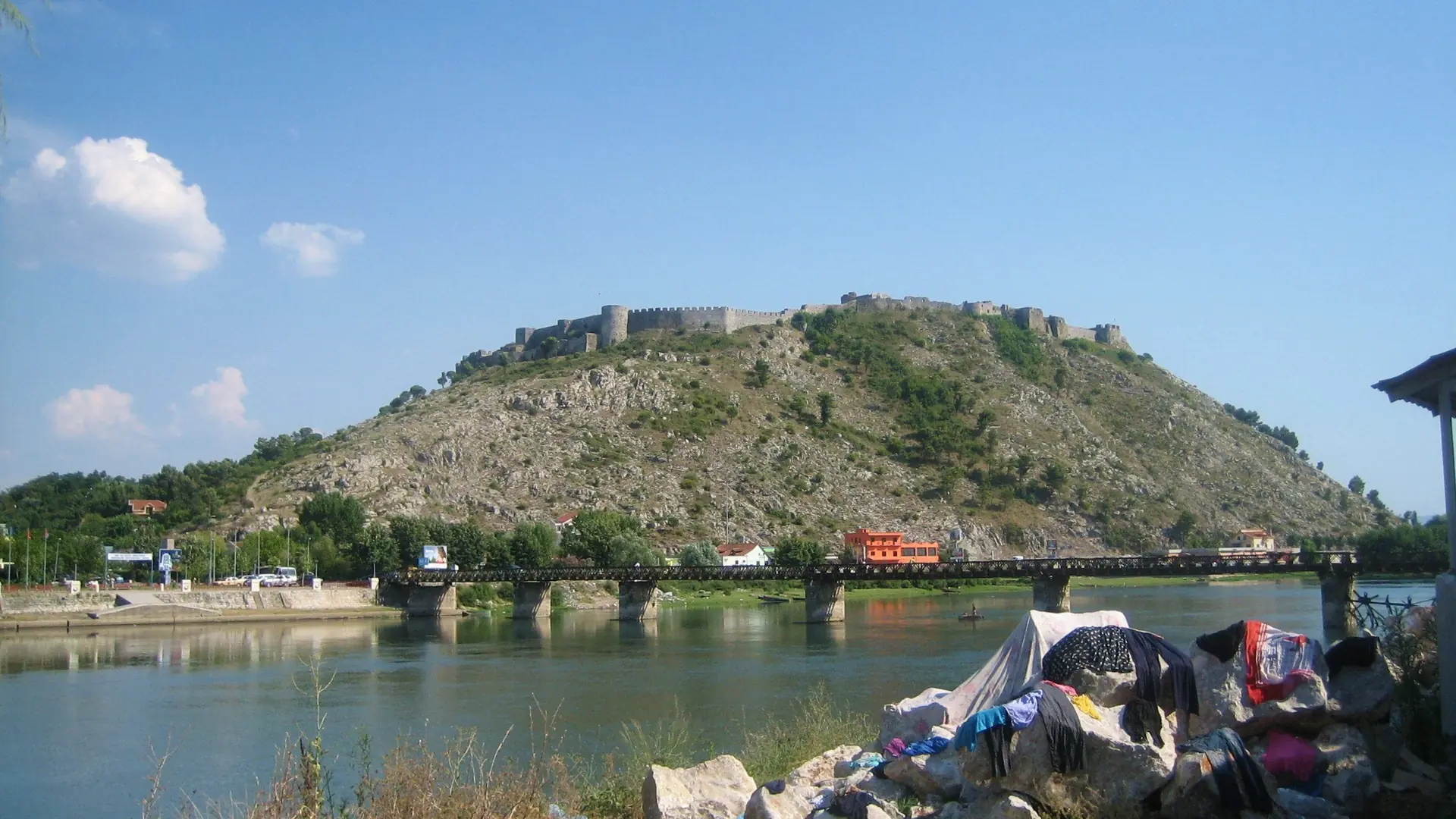
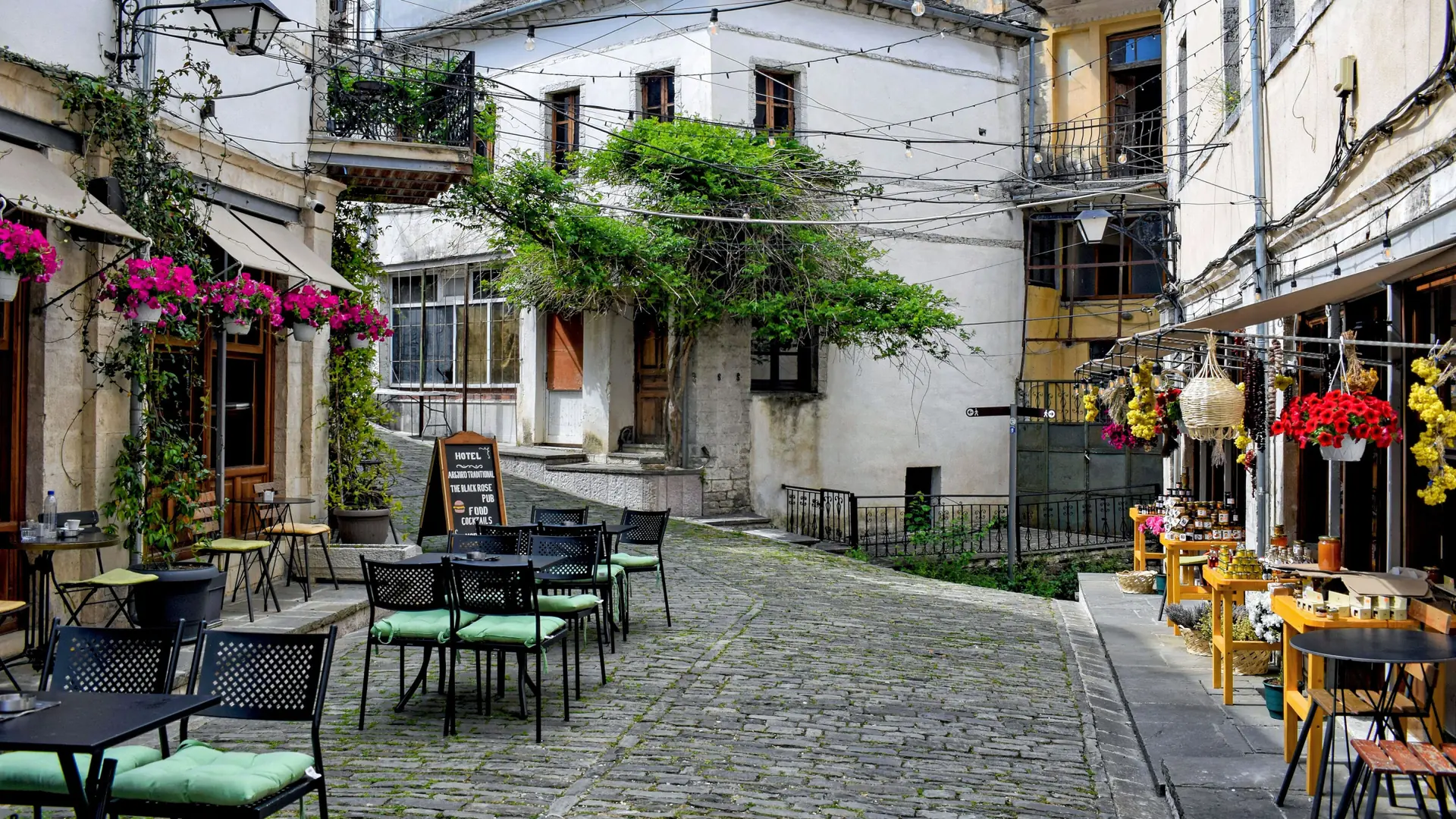
Old Bazaar
First visits, food, short stays
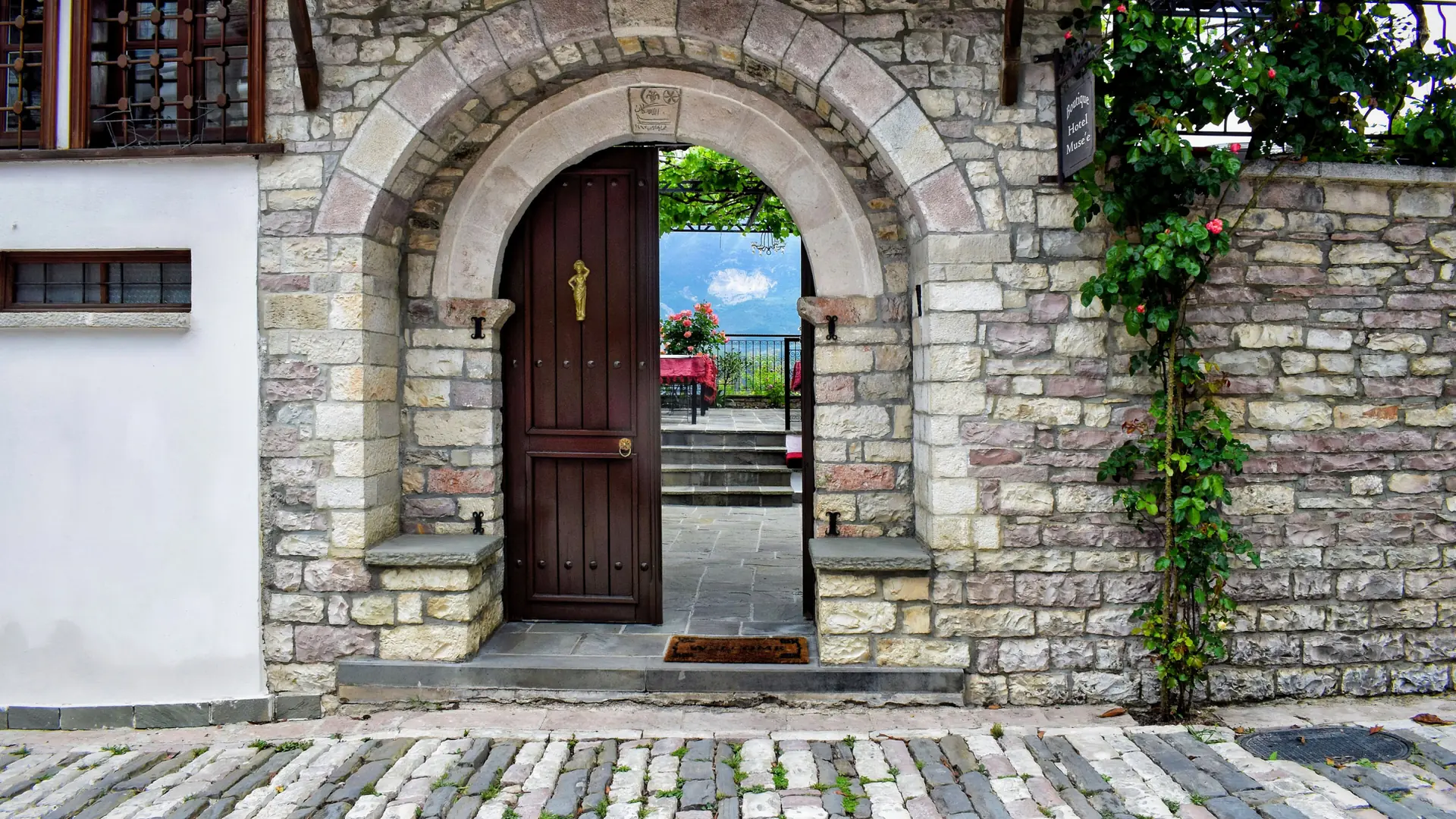
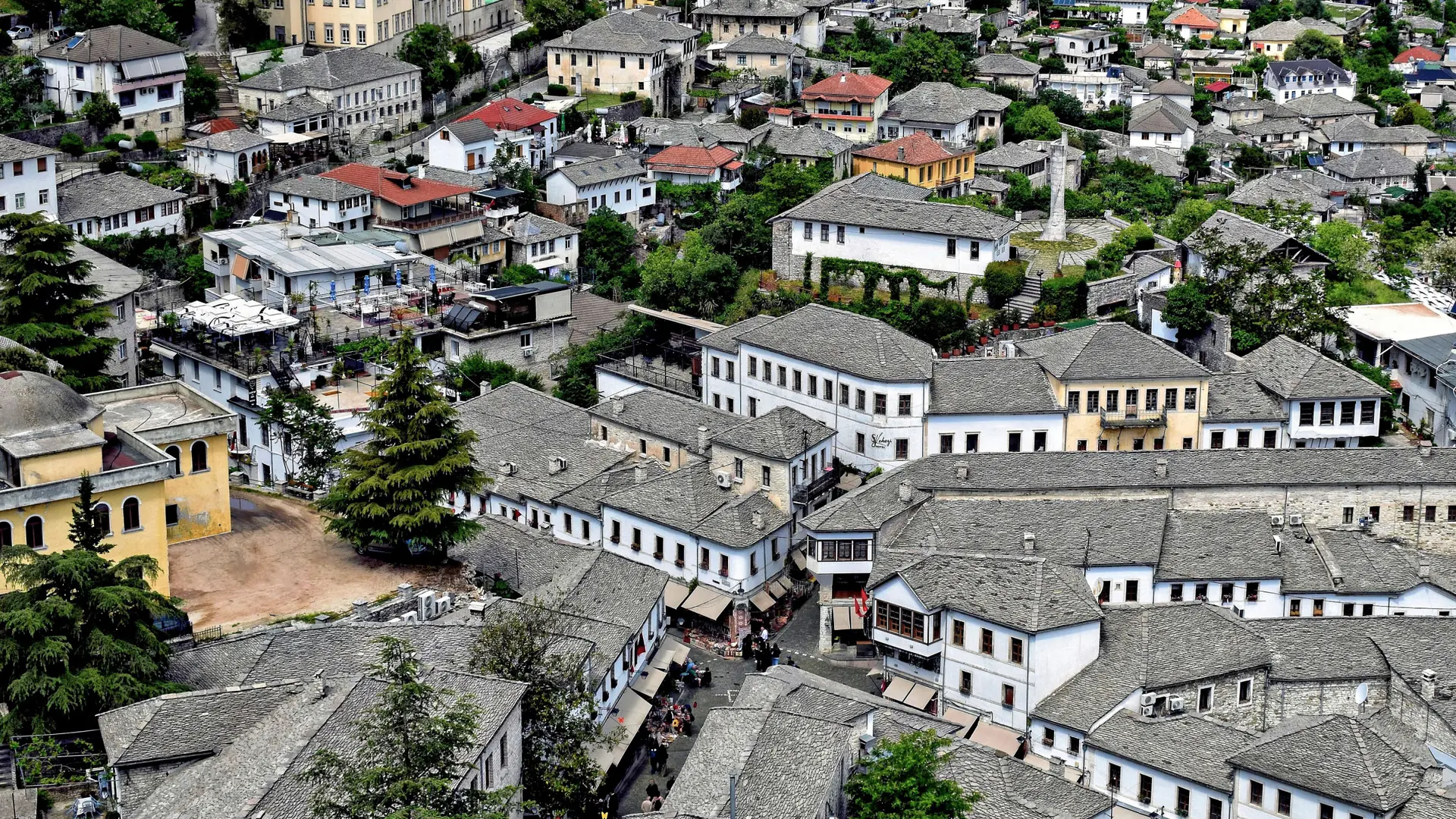
The historic commercial heart around a cobbled crossroads, with workshops, souvenir shops, taverns, a hostel and small hotels.
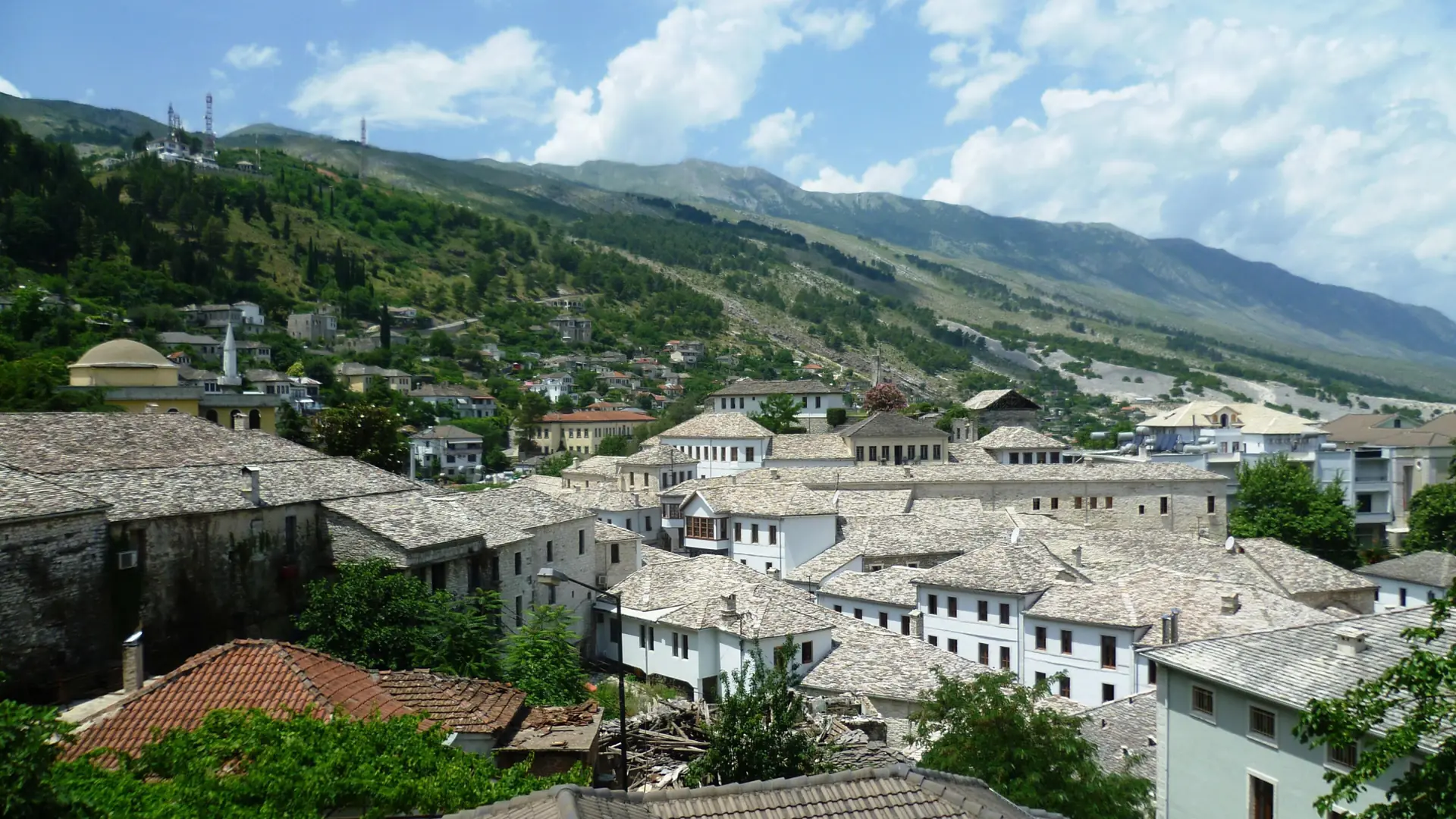
Gjirokastër has a modern lower town along the valley road and a UNESCO-listed stone city climbing towards the castle. Choose the upper town for a first heritage visit: the Old Bazaar puts taverns and the castle path near your room, while Palorto suits a quieter stay among restored tower houses. Cfaka can offer better value below the centre; the lower town makes more sense when bus access or fewer steep lanes matters most. Stay one night to see the bazaar after the day tours leave, or two for the house museums and a slower meal. The castle and the houses have separate admissions, so choose the interiors you want rather than expecting one ticket to cover everything. In a tavern, try qifqi, small savoury balls cooked in a pan, or ask about a local cooking class. A coast-bound bus does not automatically include the Blue Eye spring: arrange that stop separately. With luggage, ask your host where a taxi can actually drop you off; the last few cobbled lanes may still be on foot. April–June and September–October generally make the climbs more comfortable than a summer afternoon.
A night lets you see the old town after the day tours leave; a second covers the house museums, the Cold War tunnel and a slow tavern dinner, or a day trip to Përmet.
Buses and furgons stop in the lower town among modern flats. The old town is uphill: take a short taxi if you are carrying luggage.
The fortress combines museums, a former prison, a clock tower and a folklore-festival stage. A US military training aircraft on the ramparts adds a Cold War story; museum admission is separate.
Skenduli offers a family-guided house visit; Zekate has a decorated upper reception room. Kadare's reconstructed family home adds a literary stop. Check each house's separate admission and opening arrangements.
The stone lanes are comfortable to walk in April–June and September–October; summer afternoons are hot in the valleys.
Gjirokastër works well as a history stop before the southern coast. Keep time for the descent from your old-town hotel to the bus departure point; Blue Eye visits need their own transport arrangement.
StartBooker answer
Stay in the upper, UNESCO-listed old town rather than the modern town by the bus station. The Old Bazaar is the best first base: taverns, shops and the steep lane to the castle all start at its cobbled crossroads. Rruga Palorto, just west, has restored Ottoman tower houses for a quieter, more historic night. Cfaka, below the bazaar, is cheaper and still walkable, and the Rruga Studenti area near the university suits longer, livelier stays. Stay at least one night; the town is at its best in the evening.
Explore tours, attractions and local experiences in Gjirokastër, Albania.
Loading activities…
Activities provided by GetYourGuide. We may earn a commission on bookings.
Say where you are coming from and where you head next, and whether you have a car. The planner fits the castle, the house museums and the Blue Eye around the buses.
Use your email security code to continue planning.
The crossroads where the stone city meets
Old Bazaar
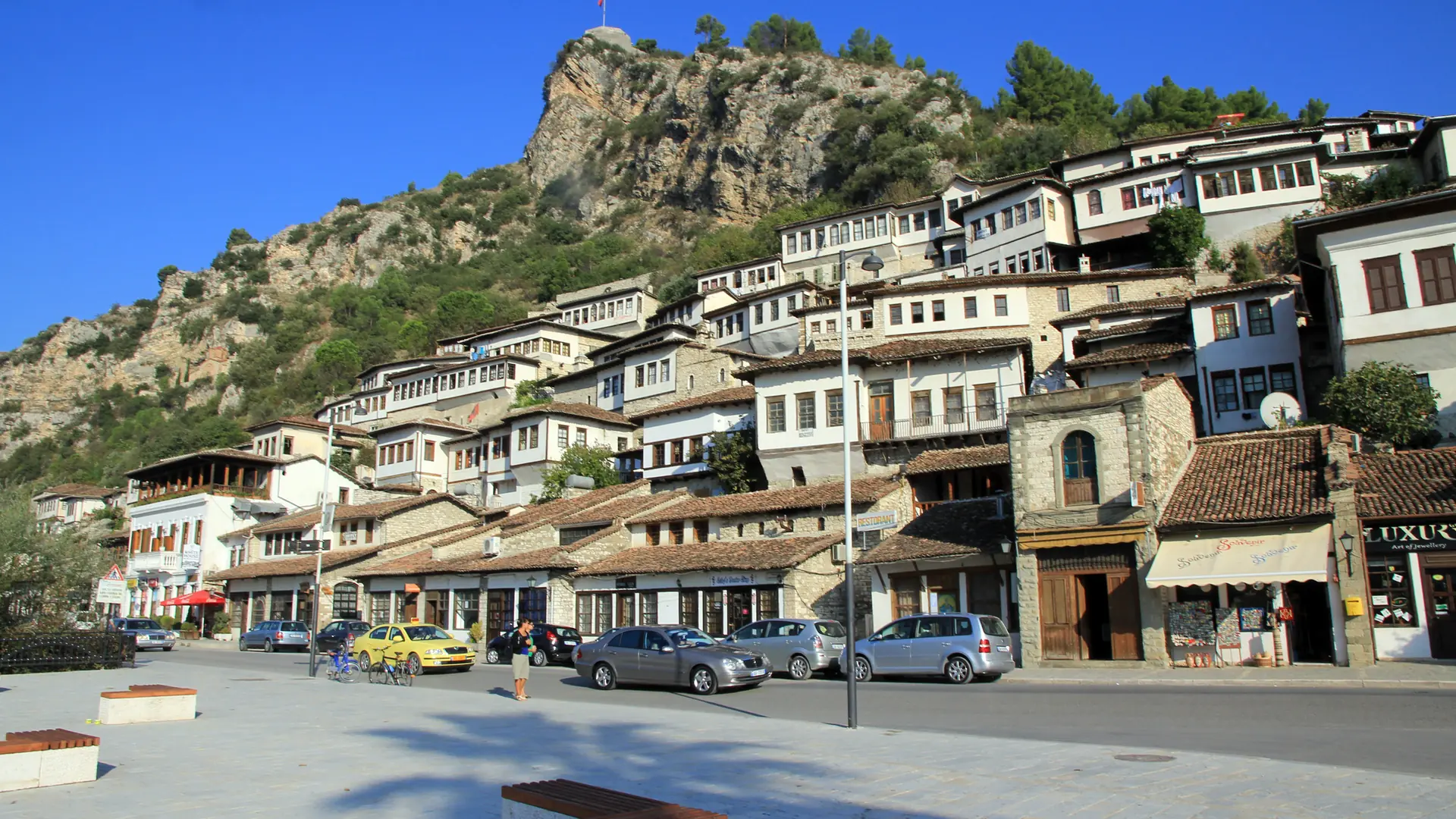
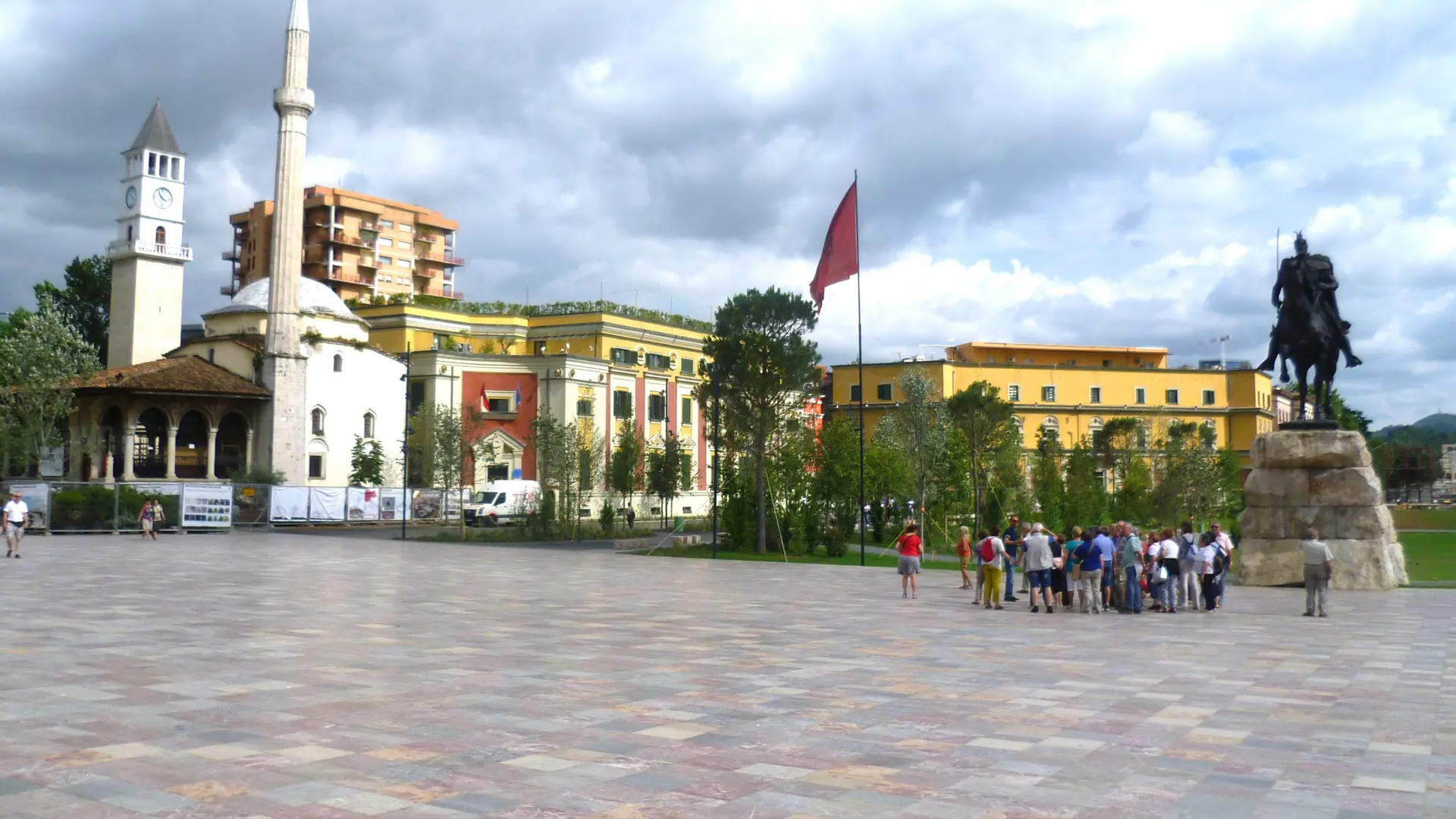
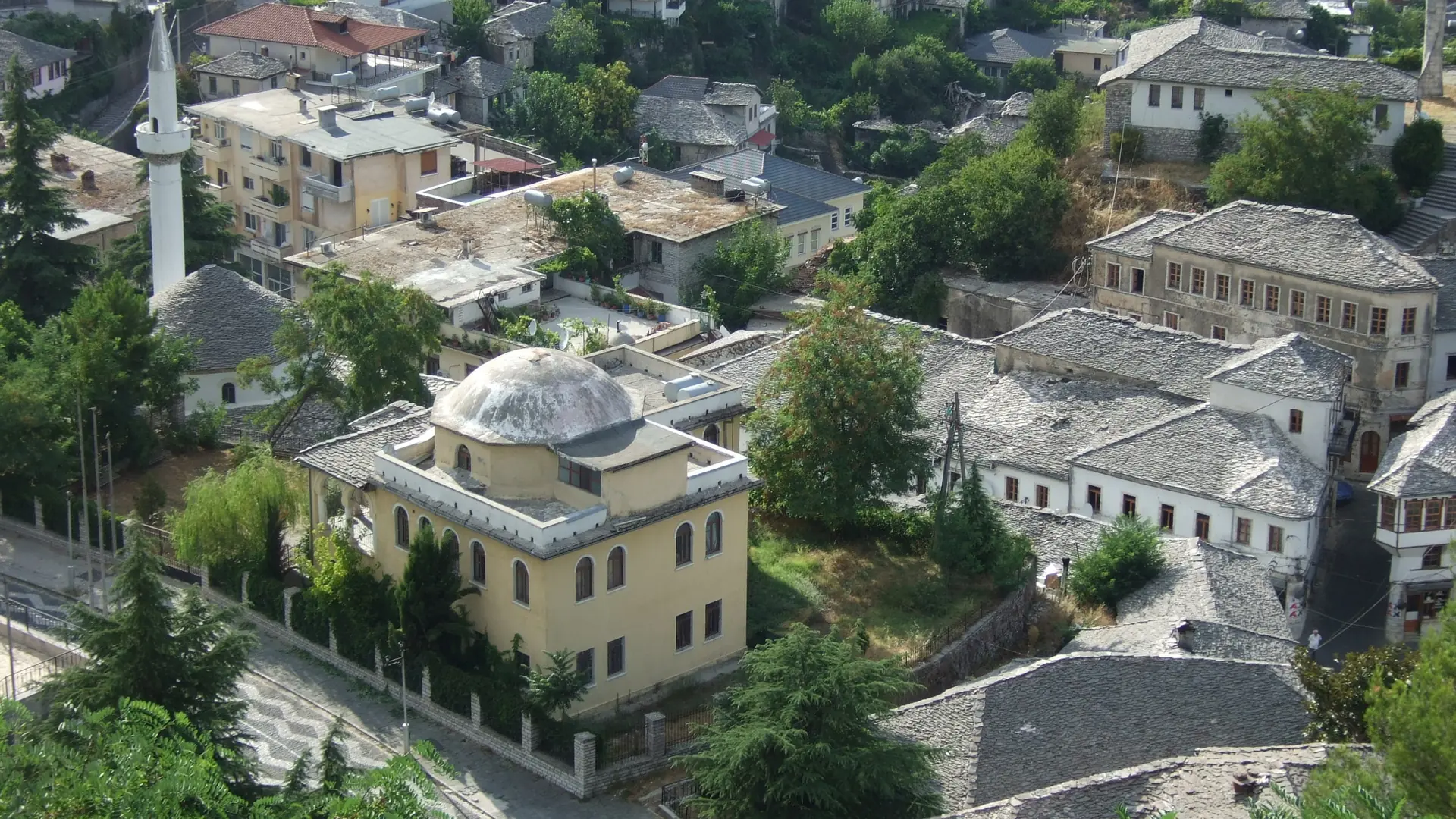
The old town's life centres on a five-way junction of cobbled streets in the bazaar, where artisans' workshops, taverns and guesthouses sit side by side. Staying here puts the castle a short, steep climb above you, the house museums a few minutes away and dinner at the door, and you see the lanes after the day tours from Sarandë have gone.
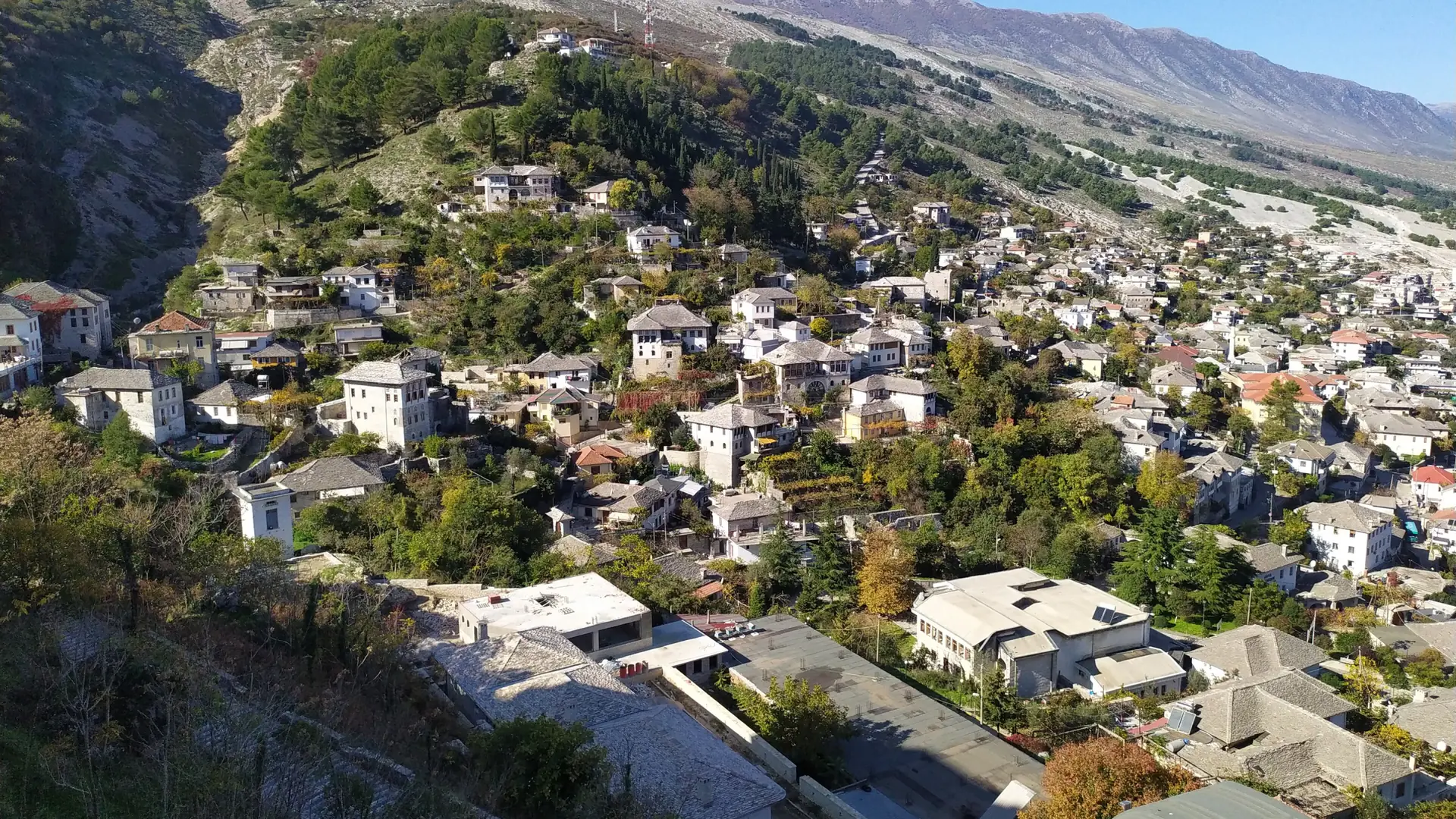
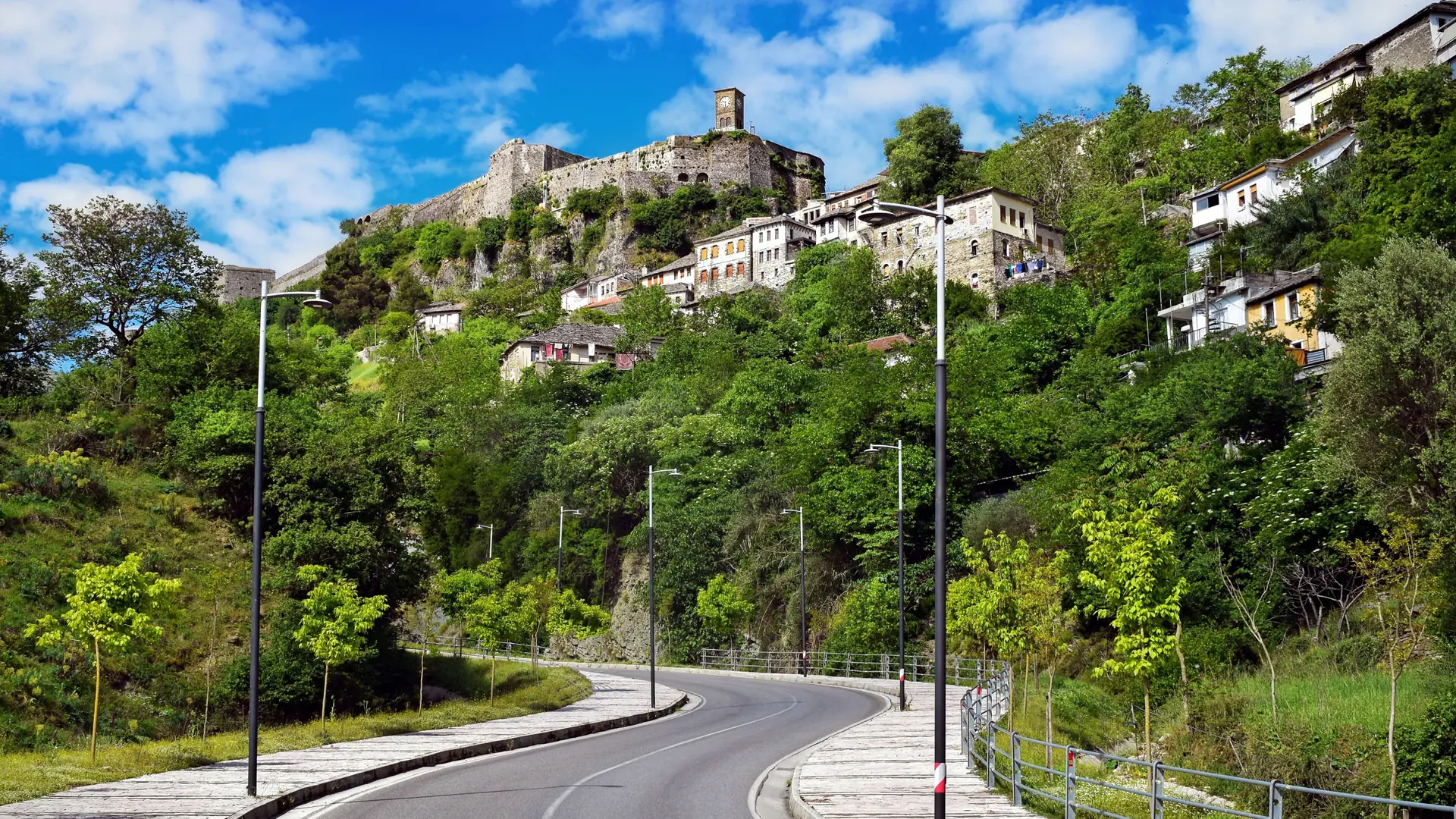
The historic town spreads over the slopes below the castle. The bazaar is its centre; Palorto lies to the west, Cfaka below and the university streets to the north.
First visits, food, short stays
The historic commercial heart around a cobbled crossroads, with workshops, souvenir shops, taverns, a hostel and small hotels.
History lovers, couples, character stays
The quarter west of the bazaar along Rruga Palorto, lined with well-preserved Ottoman-era houses, several converted into guesthouses and apartments.
Budgets, walkers
The lower part of the historic centre, south of the Old Bazaar: residential, relaxed and cheaper, but close enough to walk to the main sights.
Longer stays, digital nomads, students
A small area north of the Old Bazaar around the university campus, with a younger crowd and cafés.
| Area | Best for | Features | Walk to the castle |
|---|---|---|---|
| Old Bazaar |
Everything on foot Taverns and museums |
Daytime crowds |
Short, steep climb |
| Palorto |
Historic houses Restored tower houses |
Uphill to restaurants |
Short walk |
| Cfaka |
Better-value guesthouses Cheaper rooms |
Less atmosphere |
Longer climb |
| Rruga Studenti |
Longer stays Everyday cafés |
Away from the castle side |
Walk via the bazaar |
Most visitors give the stone city a single night on the way between Berat or Tirana and the coast. A few stay longer for the house museums and the mountains around.
The Old Bazaar.
AlternativeFor an early journey south, ask your host to arrange the ride down from the bazaar to the bus departure point.
Palorto and its restored tower houses.
AlternativeJoin the free walking tour to hear the stories behind the houses.
A hostel by the bazaar or a Cfaka guesthouse.
AlternativeUse a furgon rather than a taxi for onward trips to save money.
Palorto or a terrace room above the bazaar.
AlternativeBook the room with the terrace, not just the building.
Rruga Studenti.
AlternativeAdd a day trip to Përmet for rafting and hiking.
Cfaka or the edge of the bazaar with parking.
AlternativeStop at the Blue Eye on the drive to Sarandë.
Check how steep the walk is from the drop-off point and whether the room has a view of the castle or the valley.
Gjirokastër sits on the main road from Tirana to the Greek border, in the Drino valley, an hour inland from Sarandë.
GjirafaTravel lists eleven departures daily from Tirana, from 05:00 to 20:30, with a typical journey of about four hours and a fare around €13.50 (≈ US$15) per person, one way. Check your date and departure terminal before booking; reaching Tirana's terminal and climbing to your Gjirokastër hotel take additional time.
GjirafaTravel currently lists a direct bus from Berat at 14:00 with a scheduled three-hour journey. Confirm the day's service before leaving your accommodation; if it does not work, check a connecting route at the terminal or arrange a transfer.
GjirafaTravel currently lists three daily departures from Sarandë for the 50 km journey, taking about an hour, at around €6 (≈ US$7) per person, one way. Confirm your date and boarding point. Do not assume a regular bus includes the Blue Eye spring or waits while you visit.
Buses arrive in the modern lower town on the valley road; the historic centre is uphill. With luggage, agree a taxi fare before leaving and send the driver your host's drop-off instructions. A bazaar address can still involve a short walk where cars cannot reach the door.
The historic centre is compact, but routes to the castle and the tower houses involve steep cobbles and steps. Wear shoes with a good grip and carry water in warm weather. Choose two nearby house visits together rather than repeatedly climbing from the lower town.
Tip-based walking tours of about two hours start at Çerçiz Topulli Square, wind through the Old Bazaar and finish up at the castle. They are the easiest way to understand how the tower houses worked, and guides are paid only in tips, so pay fairly.
The southern Blue Eye spring is roughly an hour away by road; arrange transport and allow time to walk inside the site. Përmet is a different outing further east, suited to river activities and hiking. Ask an operator about conditions and return transport before planning rafting around an onward bus.
A January 2026 castle guide quotes 400 lek (≈ US$5) per person for entry, with the Gjirokastër Museum and Arms Museum around 200 lek (≈ US$2) each in the supporting travel guide. Summer hours are listed as 09:00–19:00; winter closes earlier. Confirm current hours and separate museum tickets at the entrance.
The current travel guide gives about 300 lek (≈ US$4) per person for Skenduli House, usually with a family member showing you around. Its decorated rooms and defensive details make it distinct from the castle visit. Opening arrangements can depend on the family; ask before building a tight schedule around it.
Below the town, a huge communist-era bunker beside the town hall can be walked through; it makes a cool refuge on a hot afternoon and a sobering counterpoint to the Ottoman houses above.
The old town is built on a mountainside, with cobbled, stepped lanes and a steep climb to the castle. Travellers with limited mobility should book accommodation with vehicle access and take a taxi to the castle entrance.
Gjirokastër is a year-round town, but the coach tours from the coast shape its busiest hours in summer.
April–June suits a stay built around the stone lanes, castle and house museums, with greener mountain scenery than high summer. Keep a light layer and shoes that grip the cobbles. Plan the castle for a clear part of the day, then use a house interior or a tavern stop if the weather turns. Snow visible on distant peaks is scenery, not evidence that an onward mountain hiking route is open.
Day tours from the coast make the bazaar busier around the middle of the day, while exposed castle paths can be hot. Stay overnight to use the quieter early and late hours, and choose a room with cooling if that matters to you. Reserve the afternoon for a house museum or a longer meal; a terrace photograph does not tell you whether the room itself has air conditioning.
September–October generally offers comfortable sightseeing weather, making a two-night heritage stop easier to combine with the coast. Beyond October, expect shorter daylight and check individual museum hours rather than relying on summer schedules. Confirm heating in a stone guesthouse for a colder visit, and keep the castle and a Blue Eye excursion on separate days if weather or transport makes the connection uncertain.
Allow about 400 lek (≈ US$5) per person for the castle, around 200 lek (≈ US$2) for each castle museum and about 300 lek (≈ US$4) for Skenduli House. These are separate visits, with fees to confirm locally. Pick the interiors that interest you before adding them up. USD equivalents use Bank of Albania reference rates dated 16 October 2026; exchange fees are extra.
Published bus fares are around €13.50 (≈ US$15) from Tirana, €6 (≈ US$7) from Sarandë and €11.50 (≈ US$13) on the direct service from Berat, per person, one way. Add transport to the departure terminal and from the lower-town stop to your guesthouse. A private Blue Eye stop needs its own quote; a cheap intercity ticket does not pay for sightseeing time or a return transfer.
Compare hostels and simple Cfaka guesthouses with restored Palorto houses for the same dates and occupancy. Ask whether breakfast, heating or cooling and vehicle access are included. Around the bazaar, try qifqi, small savoury pan-cooked balls, and compare a tavern meal with a cooking class if local food is a priority. Confirm ingredients with the cook and ask what any class price includes.
Yes. The castle and bazaar fit into a day, but the town is at its best after the tours leave, and a night lets you see the house museums without rushing.
Both are UNESCO-listed Ottoman towns. Berat has white houses above a river; Gjirokastër has grey stone roofs, a bigger castle and is closer to Sarandë. Many routes include both.
The published castle fee is about 400 lek (≈ US$5) per person, with separate charges for museums inside. The supporting travel guide lists around 200 lek (≈ US$2) for each museum. Confirm current tickets at the gate rather than treating castle admission as an all-inclusive pass.
Museums, a former prison, a clock tower and the stage used for the National Folklore Festival, plus a US Air Force training aircraft displayed on the ramparts. Check which museum areas your ticket includes.
GjirafaTravel lists four daily departures, with reservable trips taking around one to one and a quarter hours for the 50 km route. Check departures for your date. A private drive lets you arrange a separate Blue Eye stop; do not assume a regular bus visits the spring.
One to two hours for the ramparts, towers and views, plus extra time if you go into the Gjirokastër Museum and the Arms Museum. Go early or late in summer; the climb up is steep and exposed.
Local folklore tells of Princess Argjiro, who is said to have leapt from the castle walls with her child rather than be captured by the Ottomans. Ismail Kadare wrote a poem about her in the 1960s, and some link her to the town's name.
In Gjirokastër. His family house in the old town is described in Chronicle in Stone and has been reconstructed after a fire. It offers a literary visit alongside the city's tower-house architecture; check opening arrangements separately from the castle.
Reviewed by StartBooker AI-assisted editorial self-review Travel research and editing
Last reviewed 2026-10-18
Updated
Method: Main-agent self-review using UNESCO and Gjirokastra Foundation for heritage, current GjirafaTravel listings for intercity journeys, and travel publishers for areas and indicative admissions. Historical foundation prices are not treated as current tariffs. Bank of Albania reference rates dated 16 October 2026 explain USD equivalents; desktop/mobile output and accommodation integrations are checked separately.
20 sources reviewed