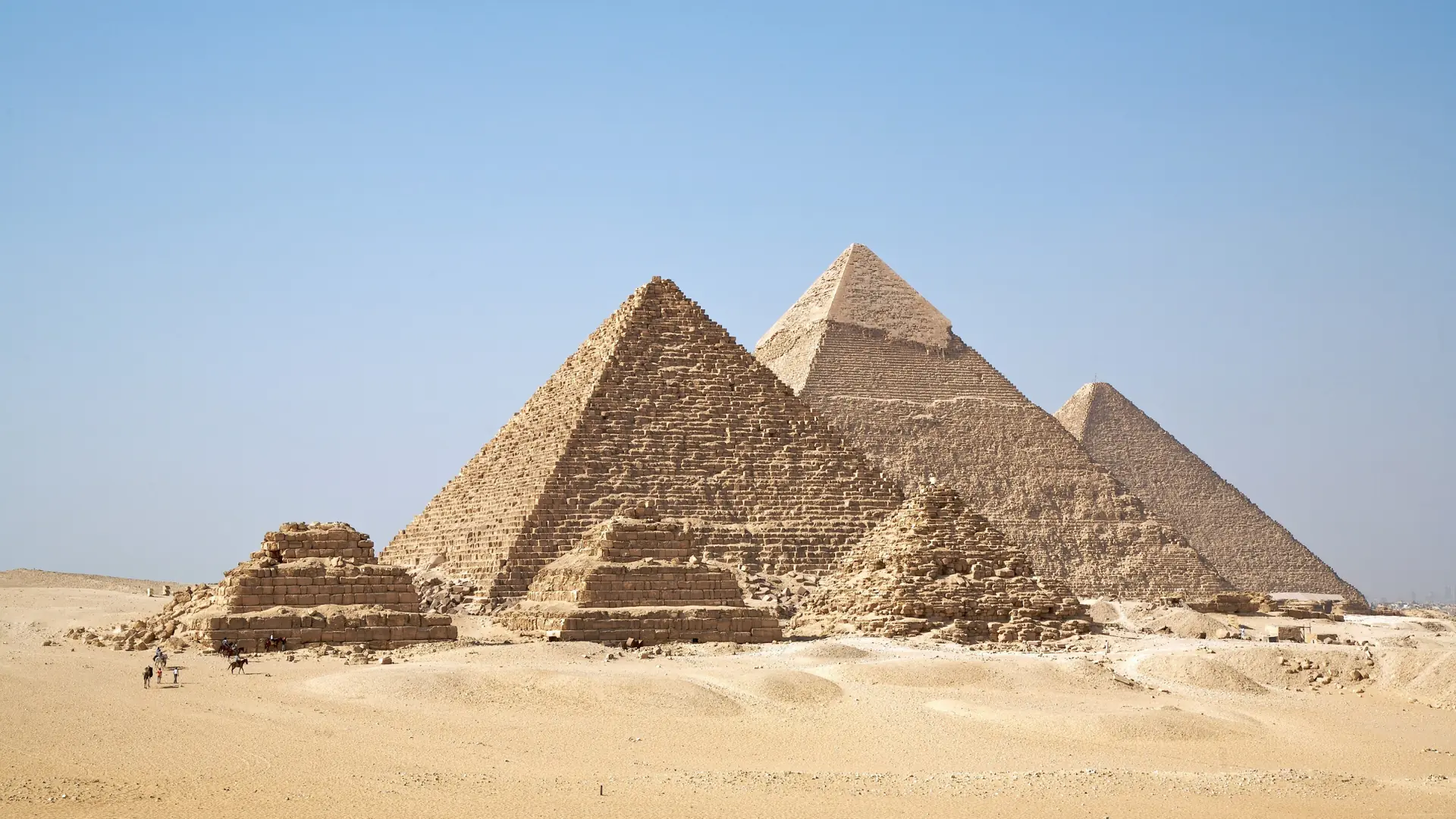
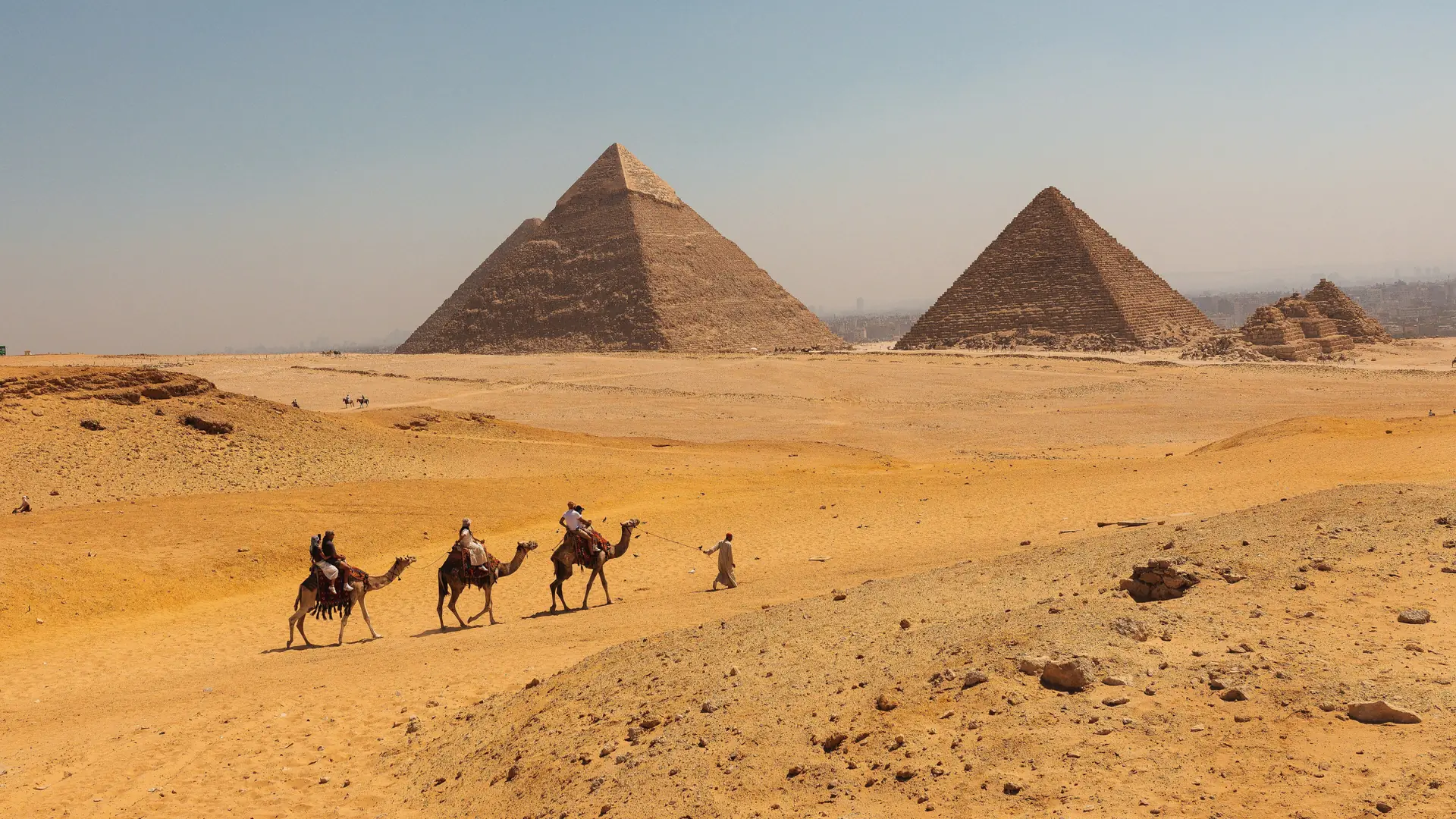
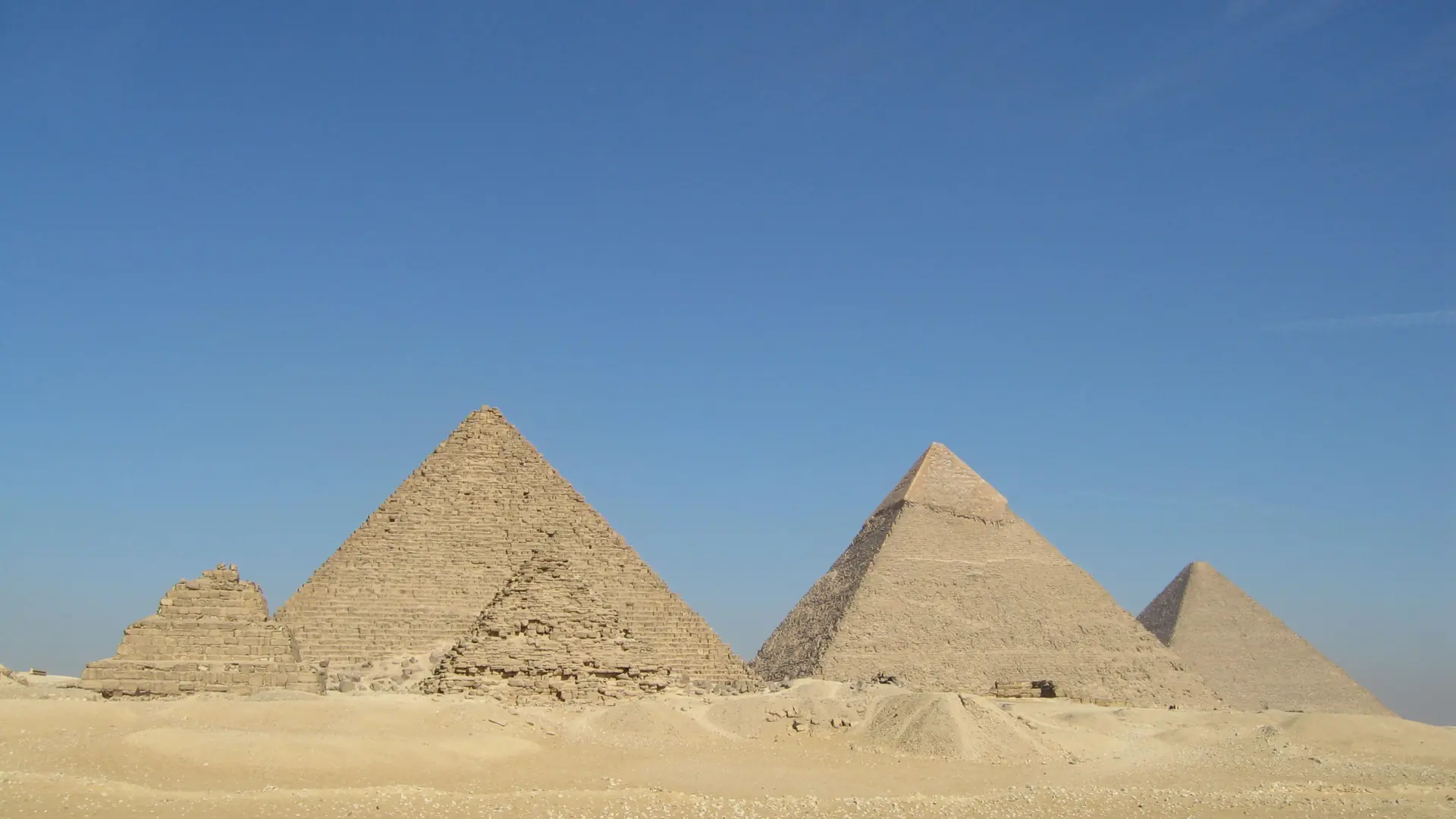
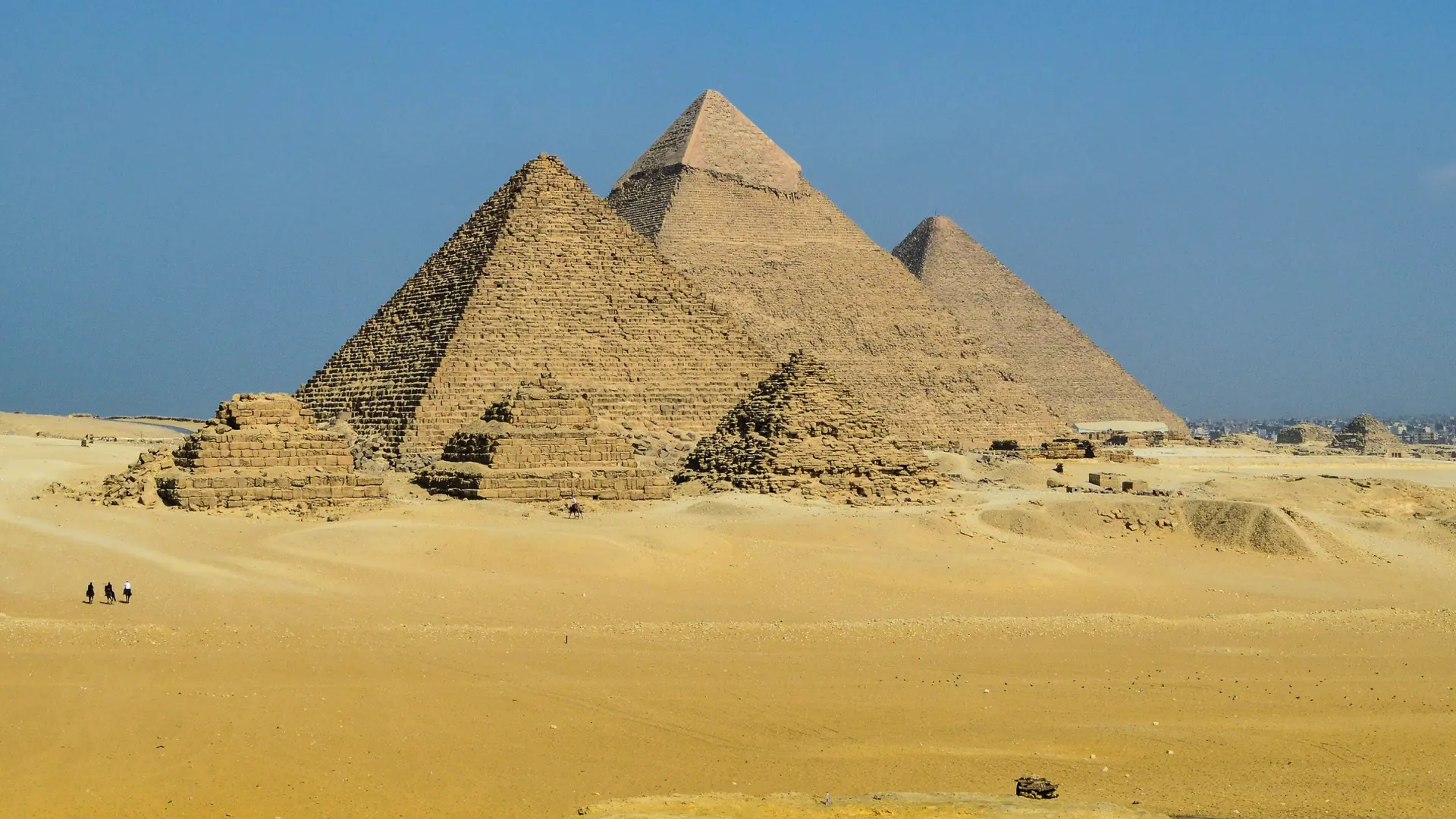
Three pyramids rise from the sunlit Giza Plateau under a clear blue sky.

Seven days from Cairo to Aswan

Pyramids, painted tombs and island temples, with two nights in each city. Fly to Luxor, then take the train to Aswan.

Length
7 days, 6 nights
Bases
Cairo → Luxor → Aswan
Between cities
Flight, then rail
Best outdoor period
Nov–Mar
Search stays

A short Egypt trip that leaves Aswan a full day

Egypt’s best-known monuments belong to different landscapes. At Giza, the pyramids rise from a desert plateau above the metropolis. Luxor puts enormous temples on one bank of the Nile and painted royal tombs in the hills across it. Aswan brings the river closer: islands, boats and a sanctuary rescued from rising water. This week follows those changes south, using three hotels rather than a cruise.

The sequence keeps travel out of the main monument mornings. Arrive in Cairo, visit Giza the following day, fly to Luxor on day three, then travel to Aswan on day five. Each base gets two nights. Book a morning Cairo–Luxor flight that leaves time for Karnak; a late landing means a smaller East Bank visit. The seventh day is departure from Aswan, with any onward Cairo connection still to arrange.

This is a selective introduction for travellers who like history but also want lunch and a quiet evening. Saqqara, Edfu, Kom Ombo and Abu Simbel are outside the main programme. A longer trip can include them without sacrificing the one full day in each base.

Read Giza as a royal landscape

Khufu, Khafre and Menkaure built much more than three pyramids. Temples, causeways and smaller burials surrounded their monuments, while the Sphinx anchors the lower part of the plateau. Seeing those relationships adds meaning to the familiar skyline. A guide is most useful here for explanation, rather than simply moving you between photo points.

Choose what matters inside GEM

The Grand Egyptian Museum now includes the Tutankhamun galleries and Khufu’s Boats Museum. That makes it a substantial visit rather than a quick lobby stop. Pick one collection you especially want to understand and leave the rest for another trip; a combined pyramid-and-museum day works better with a selective afternoon.

Look beyond Karnak’s column hall

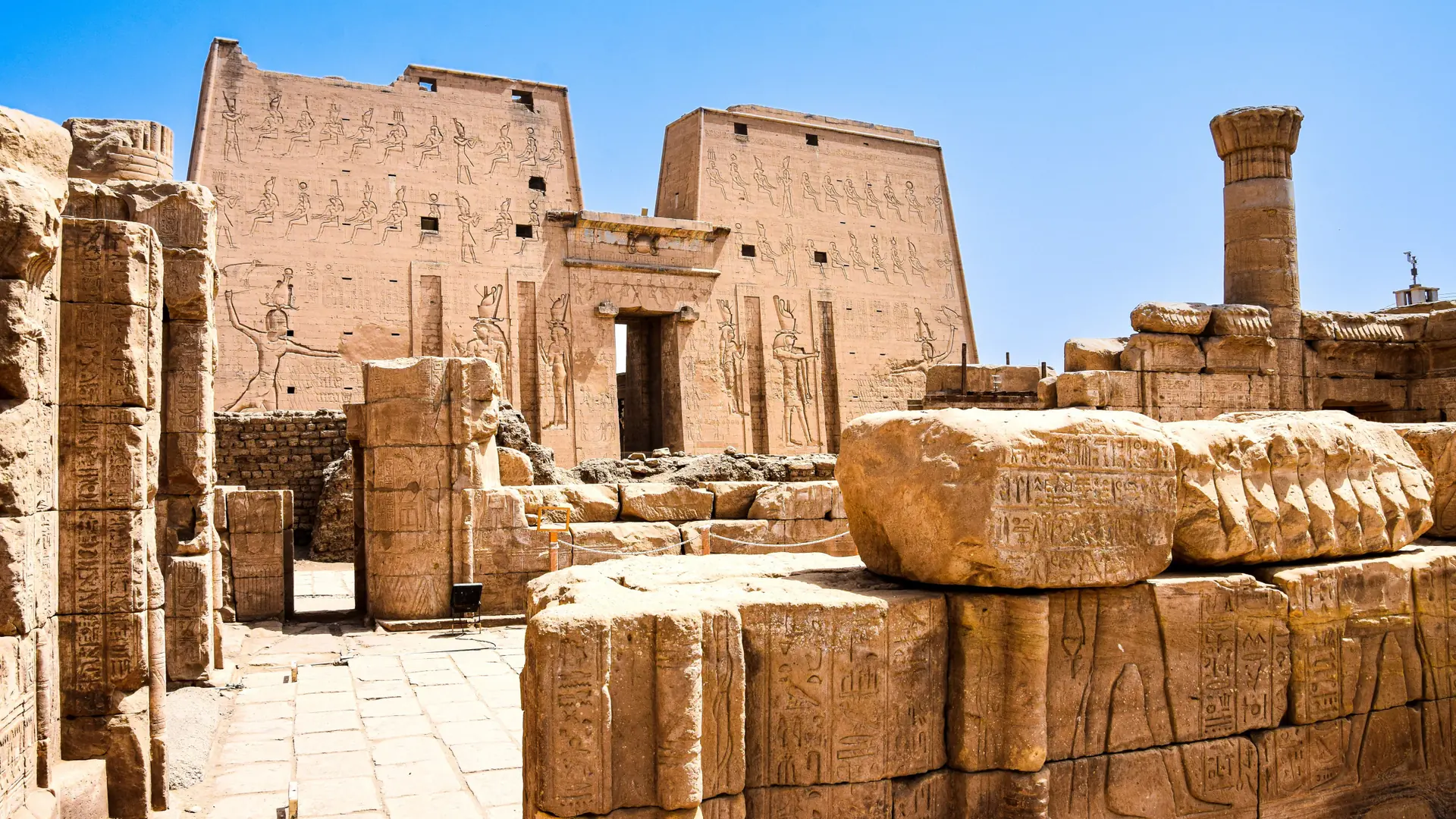
The great hall is the obvious draw, but Karnak grew over many reigns. Obelisks, shrines and the sacred lake help explain how a major religious centre accumulated power and buildings. Follow a short route through the precinct instead of treating every structure as compulsory. Luxor Temple offers a more compact second visit.

Use colour to understand the tombs

The Valley of the Kings rewards looking closely at the walls, not collecting entrances. The decoration describes the royal journey after death; an Egyptologist can make unfamiliar scenes readable. Choose a few accessible open tombs, then contrast their enclosed passages with the broad terraces of Hatshepsut’s temple.

Connect Philae with Nubian history

Philae’s island setting is inseparable from the rescue of monuments threatened by the High Dam. The Nubia Museum adds the communities and traditions that a temple visit alone cannot explain. Together they give the Aswan day a different emphasis from Luxor’s royal monuments, with lunch and river time between visits.

Give the open-air days a cool season

November through March is the easiest choice for this outdoor-heavy week. Bring a layer for early starts and river evenings. October and April can suit travellers comfortable with warmer afternoons; summer requires shorter outdoor visits and substantial midday rest, especially in Luxor and Aswan. Choose the season for your walking tolerance.

Best for

  • First-time Egypt visitors who want both pyramids and the southern Nile
  • Independent travellers happy to use hotels, one flight and a seated train
  • History enthusiasts who prefer a few substantial visits to a long checklist

StartBooker answer

How should a first-time visitor split seven days between Cairo, Luxor and Aswan?

Give Giza a full morning from Cairo, then fly south to Luxor and finish beside the islands at Aswan. With two hotel nights at every base, the main sightseeing falls on days two, four and six; day three brings the Luxor flight and day five the daytime Aswan train. Add GEM selectively after Giza and use Luxor’s arrival afternoon for an East Bank temple before the next morning’s West Bank circuit. Departure is from Aswan on day seven, with any Cairo connection booked separately. Abu Simbel and a multi-night cruise require a longer holiday.

Night split
Cairo nights 1–2, Luxor nights 3–4, Aswan nights 5–6
First long leg
Fly Cairo to Luxor; verify current timetable
Second long leg
Use a checked daytime Luxor–Aswan train
Train purchase
Arrange a foreign-passenger ticket before the travel day
Luxor structure
Give East Bank and West Bank separate visits
Aswan priority
Philae plus Nubia Museum before an optional Abu Simbel extension

Things to do in Cairo, Luxor, Aswan, Egypt

Explore tours, attractions and local experiences in Cairo, Luxor, Aswan along this route through Egypt.

Loading activities…

Activities provided by GetYourGuide. We may earn a commission on bookings.

Where the six nights belong

These are the three overnight bases. The map uses city-centre coordinates; it does not pinpoint a booked hotel or an attraction entrance.

3 stops · swipe

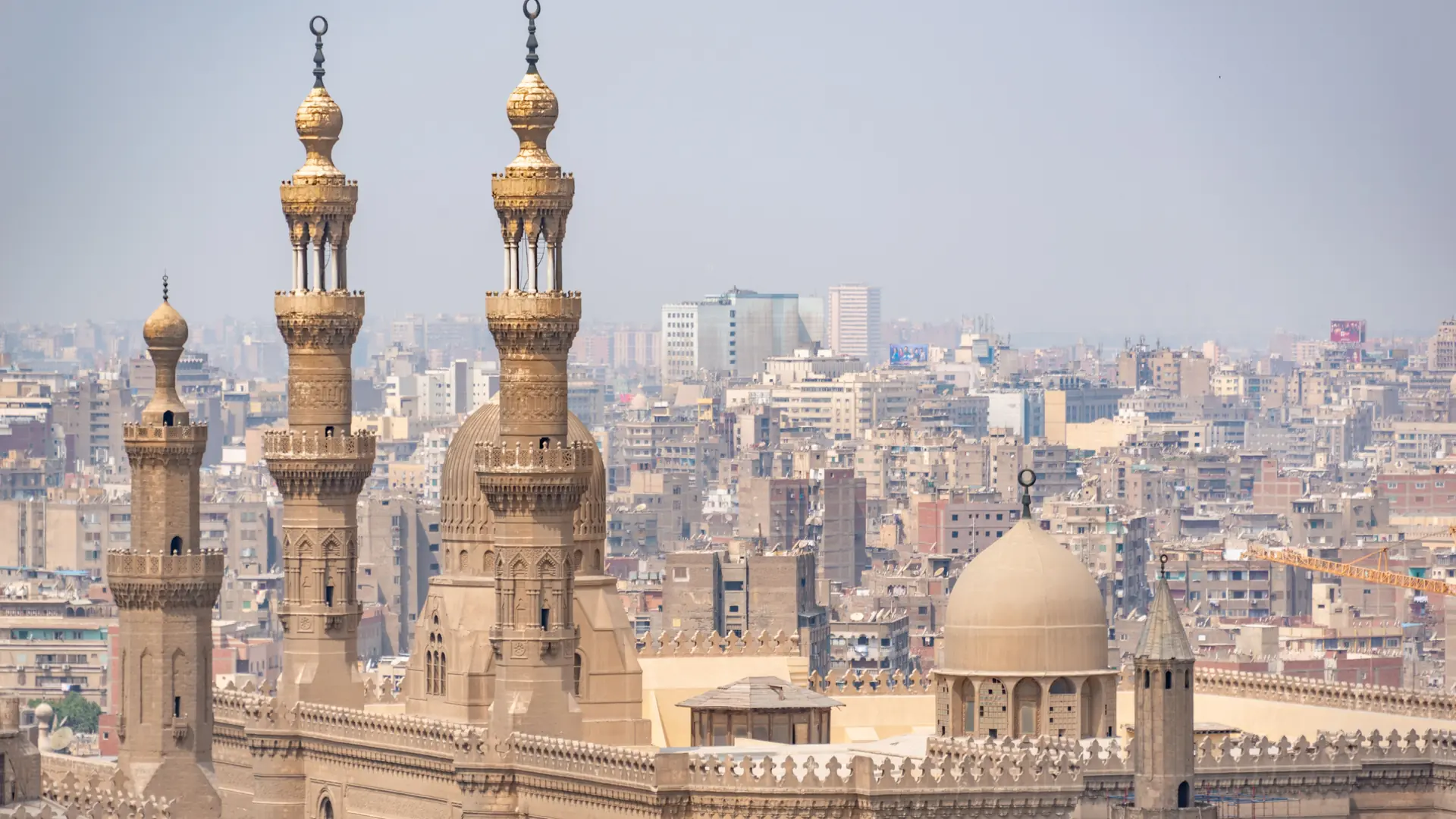
  1. Sunlit mosque minarets and domes above dense Cairo rooftops. 1

    Cairo

    2 nights

    Giza Plateau and one substantial museum visit

    Downtown around Tahrir suits a short first visit: evening food and central Cairo are close, but Giza needs a road trip. Stay on the Giza side instead if a pyramid view and a shorter day-two start matter more than central-city evenings.

    Read the Cairo guide →
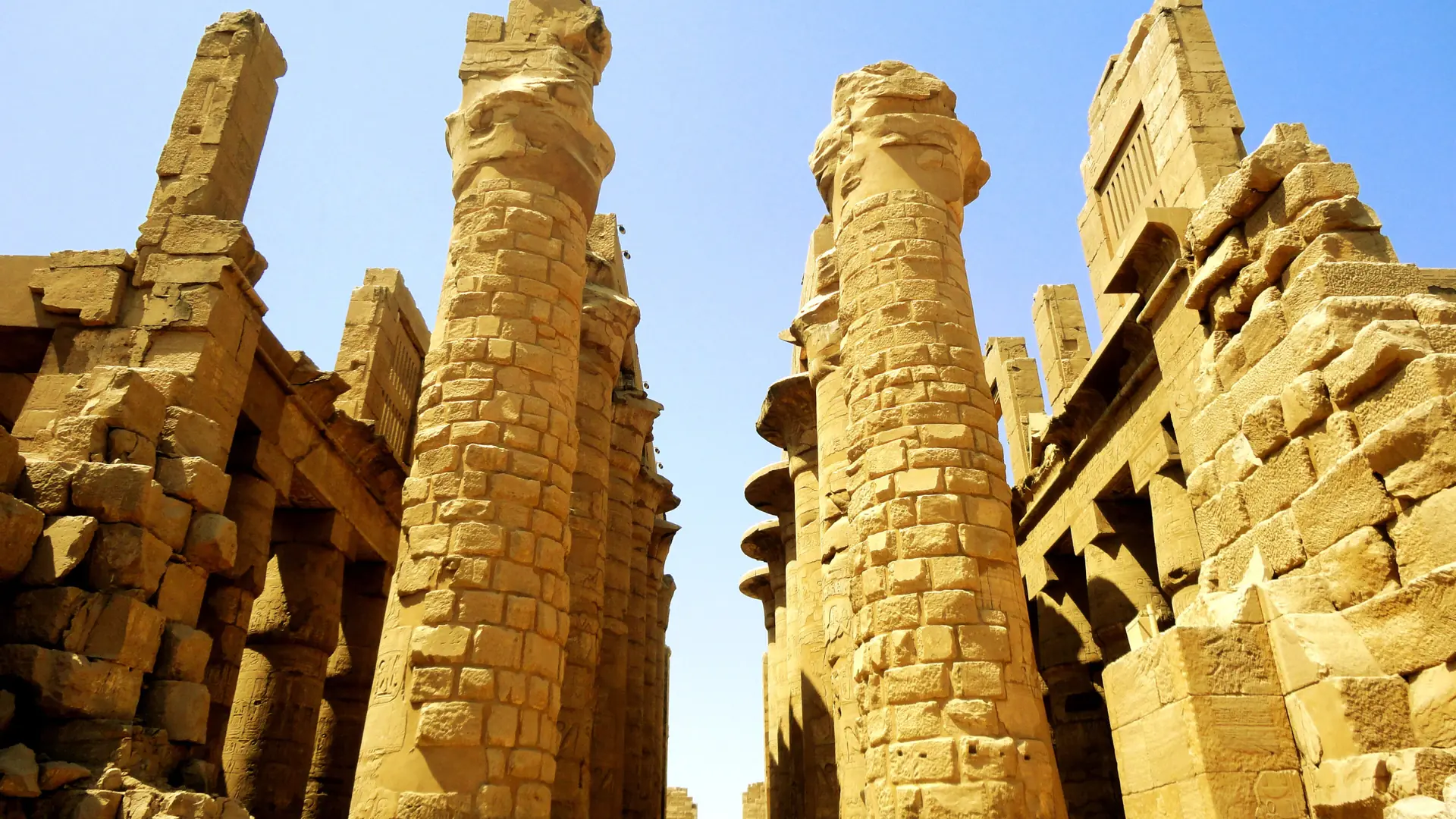
  2. Golden stone columns at Karnak Temple in Luxor under a blue sky. 2

    Luxor

    2 nights

    Karnak, Luxor Temple and West Bank tombs

    Choose the East Bank near Luxor Temple and Karnak Temple Street for these two nights. You can reach town restaurants and the station without a river crossing; the West Bank is quieter but adds a crossing to your arrival and train departure.

    Read the Luxor guide →
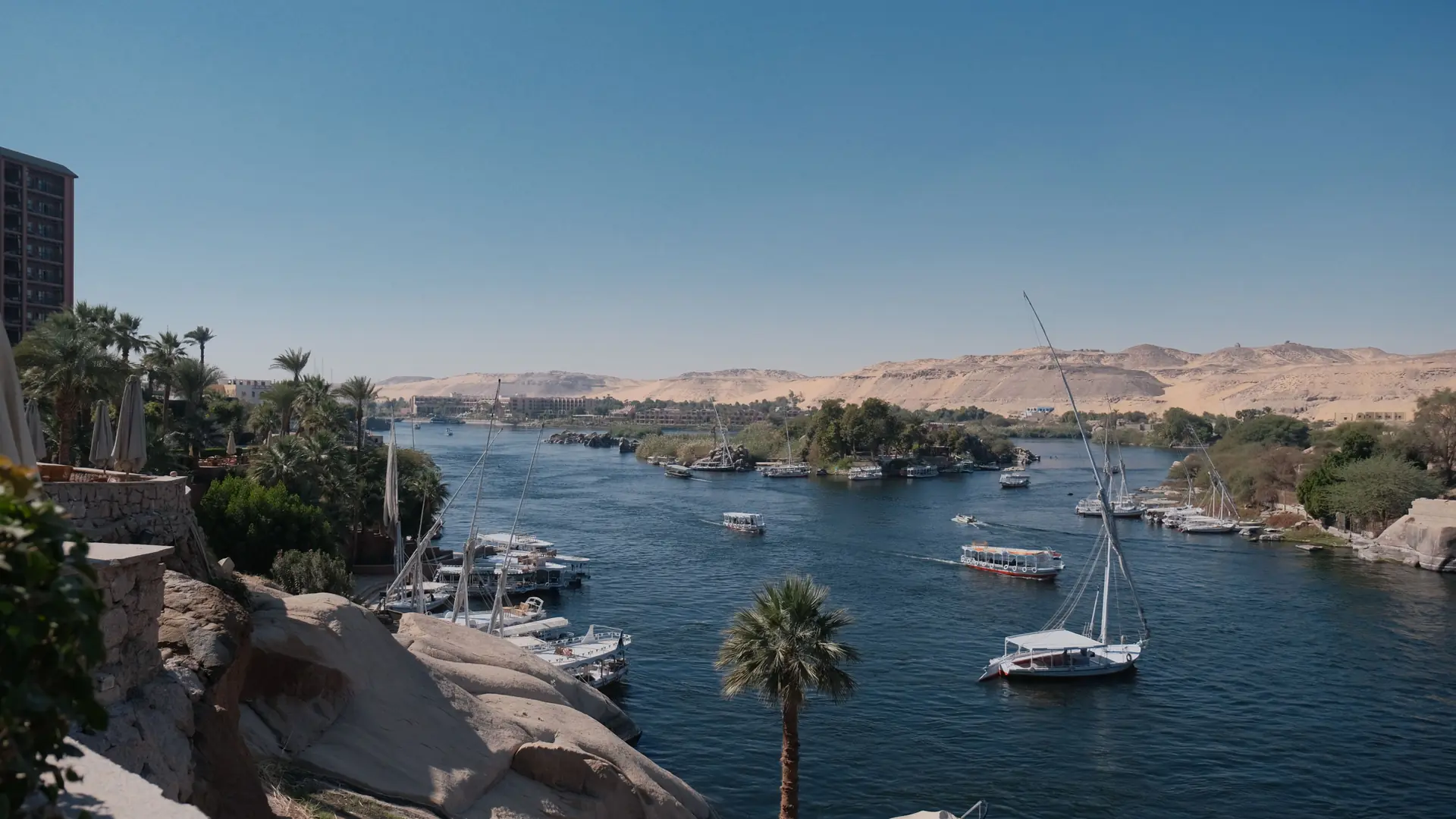
  3. Boats on the Nile beside Aswan islands and desert hills in bright daylight. 3

    Aswan

    2 nights

    Philae, Nubia Museum and island river setting

    A mainland Corniche base keeps the railway arrival, restaurants and road pickups simple. Elephantine offers a more secluded island stay; choose it for river time if you are happy to add a boat connection to mainland outings.

    Read the Aswan guide →

Seven days with room for the real journey

Days two, four and six are the full sightseeing days. Days three and five include intercity travel; arrival and departure stay light. Optional visits can be skipped without changing the six hotel nights.

1 Day 1 Arrive, eat nearby and settle into Cairo

Make the first afternoon depend on your landing, rather than promising a museum after an international flight. Travel to your hotel, have a meal and leave the evening loose. A Downtown stay puts you among the streets around Tahrir and Talaat Harb; a Giza stay offers a different introduction, with the plateau close and central Cairo farther away. Use this as the first of two Cairo nights. With daylight and energy, take a short neighbourhood walk. There is no need to cross the whole city for dinner. Cairo’s historic mosques and markets could fill several days themselves; this route gives its main Cairo sightseeing time to ancient Giza. An early arrival can justify more exploring, but a late one does not break tomorrow’s plan. Arrange the day-two plateau pickup before bed, then stop planning. The city will still be there in the morning.

  • Meal and a short local walk
  • First Cairo hotel night

Base: Cairo

2 Day 2 Giza’s pyramids and a selective museum afternoon

Spend the morning at Giza, allowing roughly three hours for the plateau rather than a brief photo stop. Walk between viewpoints, the Sphinx and the great pyramid exteriors. An interior visit is optional: the steep, enclosed passage offers a very different experience from the open landscape. The general plateau admission excludes named pyramid interiors. Stop for lunch before moving by road to GEM. Reserve around two to three hours for a chosen gallery route, with time for entry security. Tutankhamun’s objects and the Boats Museum are now included in the official admission, so decide which matters most rather than trying to absorb every gallery. If a long plateau visit has used your energy, omit GEM and return to the hotel; tomorrow’s flight does not leave a spare museum morning. A dedicated Egyptology trip should add a Cairo night for the collection. Dinner near your base and a second Cairo night finish the day.

  • Giza Plateau and Sphinx
  • Optional GEM galleries after lunch

Base: Cairo

3 Day 3 Fly to Luxor, then choose one East Bank temple

Take an early Cairo–Luxor flight, treating the whole morning as travel. The flight is roughly an hour to an hour and a half, but airport roads, check-in and the hotel transfer add considerably more. After lunch and a rest, make Karnak the main visit if you arrive in time for about two hours there. The columned hall, obelisks and lake make a satisfying first encounter with ancient Thebes. Luxor Temple is a smaller alternative for a later arrival and sits close to the central East Bank base. Its alignment toward Karnak recalls the ceremonial processions between the two sanctuaries. See it in the softer late light if that suits your arrival; the Ministry currently lists later closing there than at Karnak. Both temples are optional as a pair, never an obligation after a flight. Have dinner in town and sleep in Luxor. If your only flight lands after temple hours, accept a riverside evening and leave Karnak for a longer trip.

  • Morning domestic flight
  • Karnak, or Luxor Temple for a later arrival

Base: Luxor

4 Day 4 Painted tombs, Hatshepsut and a free evening

Use a prearranged vehicle for a West Bank circuit, starting with the Valley of the Kings. A ferry only crosses the river; it does not take you into the tomb hills. Allow the morning for a small selection of open chambers and time to look at their painted scenes. The general admission and separately sold special tombs are different purchases, so choose at the ticket office from the current open list. Hatshepsut’s temple at Deir al-Bahari is the second main stop. Its terraces face the cliffs and contrast with the enclosed burial spaces; look for the reliefs of her expedition to Punt rather than adding another monument simply to fill the car journey. Lunch and a return to the hotel are enough afterwards. In cooler weather, Luxor Temple can be an optional evening visit if you skipped it yesterday. Keep the second Luxor night. Travellers who prefer cycling should treat a guided village ride as a separate choice, not assume the exposed tomb circuit is a casual town bike ride.

  • Valley of the Kings
  • Hatshepsut’s terraces
  • Lunch and time off

Base: Luxor

5 Day 5 Ride south and arrive by the Aswan riverfront

After breakfast, travel from Luxor station to Aswan on the daytime train you have arranged. Allow roughly three to four hours in transit and extra time for station access or delays; the exact service may take longer. Reserve this day for the journey instead of a temple excursion at either end. The scenery gives a sense of the fertile Nile strip and the desert beyond, without requiring a sightseeing detour. Eat before boarding or carry a simple lunch and water. On arrival, transfer to the hotel, take a break and explore a short section of the Corniche if you feel like walking. This is a first Aswan night, not the start of an overnight river voyage. Edfu and Kom Ombo are outside the direct train plan: visiting their temples requires local transfers and extra time. Travellers who specifically want those two stops should use a researched full-day road route or add days. Leave Philae for tomorrow so a delayed train cannot take away the temple visit.

  • Daytime Luxor–Aswan train
  • Corniche stroll if arrival allows

Base: Aswan

6 Day 6 Philae in the morning, Nubia after lunch

Travel by car to Philae’s mainland landing and then by motorboat to the sanctuary on Agilkia. Agree a round trip with the boat operator; the archaeological ticket does not settle the launch arrangement. Spend about two hours exploring the Isis temple and the smaller structures, including Trajan’s columned kiosk. Much of the complex belongs to the Ptolemaic and Roman periods, a useful contrast with Luxor’s New Kingdom sites. Return to town for lunch and shade, then visit the Nubia Museum while its galleries are open. The Ministry lists daytime hours with a late-afternoon ticket cutoff, so do not leave entry until the end of the day. Exhibits on regional history, crafts and village life put people back into a trip dominated by royal stone monuments. An hour or two is a useful introduction. If you prefer the river to another museum, make a short local boat outing the alternative, subject to weather. Sleep in Aswan for the second night; tomorrow is departure, not another full sightseeing day.

  • Philae sanctuary by boat
  • Nubia Museum or a local river outing

Base: Aswan

7 Day 7 Depart from Aswan with the onward journey booked

Leave this morning free for the departure you actually purchased. A late flight may permit breakfast by the Nile and a final short walk; an early one needs only the transfer. The six hotel nights are already accounted for, and there is no seventh overnight in the advertised week. If your international flight leaves Cairo, the domestic connection is an additional flight, not part of the two intercity legs shown here. A through-ticket is the simpler arrangement when the airline offers it. Separate tickets can require baggage collection, a terminal move and another check-in, so allow the connection the airline and ticket conditions require. An overnight Cairo buffer adds a night and makes this a longer trip. Returning north by ground transport also needs a separate travel day. Do not use an Abu Simbel excursion as a final-morning filler: those monuments are far beyond the city and deserve their own Aswan extension. Finish with the journey settled, rather than depending on a last-minute road dash.

  • Aswan airport or onward station transfer
  • End of the six-night itinerary

Base: Aswan

The two intercity moves

The first move is a domestic flight; the second is a seated daytime train. Door-to-door estimates include local transfers and breathing room, not just time aboard.

2 transfers

  1. Cairo Luxor

    Flight Travel time: About 4–6 hours door to door; flight about 1–1½ hours

    Cairo hotel → Cairo International Airport → Luxor Airport → East Bank hotel. Choose a morning flight for an afternoon temple visit. Sphinx International is a different airport; it is not an interchangeable departure point.

  2. Luxor Aswan

    Train Travel time: About 3–4 hours aboard; allow half a day overall

    Luxor railway station → Aswan railway station, with a reserved daytime seat. Both city stations serve the mainland bases. A licensed direct road transfer is the fallback when no suitable ticket is available.

Room examples, site admissions and the travel costs to add

Observed 9 October 2026. Site rates are per foreign adult; room examples are advertised tariffs, not confirmed dates or a city average. The worksheet separates known components from flight, rail and local-transfer quotes. It does not promise an inclusive trip price.

Cairo room example Osiris lists two occupants at USD 40. Travel dates, taxes, breakfast and cancellation terms are unstated; two nights would be USD 80 before additions.
USD 40 per advertised double-room night
Luxor room example Nefertiti’s limited-time tariff includes breakfast and taxes: USD 80 for two nights. The page has no travel-date validity or cancellation details.
USD 40 per double/twin room night
Aswan room example Go Inn’s Rooms page lists a private-bathroom twin from USD 30. Dates, occupancy charges and taxes need confirmation; this is not a guaranteed Corniche rate.
From USD 30 per private twin-room night
Food and drinking water Allocate USD 105–175 per person over seven days for simple meals and drinks. This is a spending allowance, not a measured menu-price range; alcohol is additional.
Chosen allowance: USD 15–25 per person per day
Cairo–Luxor flight Include the fare’s taxes and baggage, plus separate airport roads. An Aswan–Cairo onward flight is another ticket; it is outside the main two-leg route.
Add the selected one-way airfare per person
Luxor–Aswan train Class and service determine the price. Cairo Governorate’s local fare table is not a foreign-passenger Luxor–Aswan quote; use the actual ticket total.
Add the foreign-passenger fare and sales fee
Giza and Grand Egyptian Museum Ministry-listed plateau rate, checked 9 Oct 2026, excludes pyramid interiors. Add the official dated GEM category and any optional interior ticket.
EGP 700 plateau entry; GEM charged separately
Luxor’s core admissions Karnak EGP 600 + Valley of Kings EGP 750 + Hatshepsut EGP 440, per foreign adult. Special tombs, guides and site transport are additional.
EGP 1,790; optional Luxor Temple EGP 500 more
Aswan’s two visits Philae EGP 550 + Nubia Museum EGP 400, checked 9 Oct 2026. Add the launch, mainland taxi and any optional river outing; museum omission subtracts EGP 400.
EGP 950 per foreign adult, plus Philae boat

Booking tips

  • For two adults sharing one room, the six-night examples start at USD 220: two Cairo nights at USD 40, two Luxor nights at USD 40 and two Aswan nights from USD 30. Solo travellers usually pay for the whole private room; this calculation cannot simply be halved by shortening the guest list.
  • The core listed admissions total EGP 3,440 per foreign adult before GEM: Giza 700, Karnak 600, Valley of the Kings 750, Hatshepsut 440, Philae 550 and Nubia Museum 400. For two adults that is EGP 6,880. Add Luxor Temple only if you visit it, and any optional tomb or pyramid interior separately. Keep these EGP amounts separate from USD hotel tariffs until applying your payment exchange rate.
  • Build one local-transport quote covering Cairo arrival and flight departure, the day-two Giza/GEM circuit, Luxor airport arrival and West Bank vehicle, station transfers, Philae car and boat, and Aswan departure. Include waiting and return legs. A guide is a separate service unless named in the quote; an island hotel adds its own launch.
  • Foreign visitors can arrange rail purchase at a station ticket counter or through a reputable booking agent. Ask for the correct passenger category, train, class and final price, including any sales fee. An agent may initially issue a voucher, so settle how the actual seat ticket reaches you. Do not substitute a resident fare or assume a general online reservation page accepts every nationality.
  • Buy GEM entry only once you can leave room for lunch and a worthwhile visit after Giza. Tickets are dated, timed, single-entry and normally non-refundable. Galleries currently close at 18:00 on ordinary days and 21:00 on Wednesday and Saturday, with last entry one hour earlier; the complex’s later closing is not extra gallery time.
  • International flights, visa, insurance, tips and optional activities are additional. Festive-period rooms, premium Nile views and private guiding can change the scale of spending. A solo traveller pays vehicle and room costs alone unless sharing an excursion, while attraction admissions remain per person.

Compare stays for the Cairo start

This search covers wider Cairo. For the first two nights, compare Downtown around Tahrir with the Giza side described above; the list does not guarantee either area.

Search Cairo stays →
Search stays

Cairo to Aswan on the map

Three city-centre markers show the southbound route. They are not booked hotels, railway platforms or monument entrances; the accommodation map starts around Cairo.

Egypt Nile Valley

The questions that change this seven-day route

Can I reverse the journey and start in Aswan?

Yes, if flights work better in that direction. Keep two nights at each base, travel Aswan–Luxor by daytime train and fly Luxor–Cairo, then give Giza its own full day before departure. Rebook the directional tickets and rewrite the daily order rather than treating the southbound train as a return fare. The advantage is ending in Cairo for an international flight; the disadvantage is beginning with a southern domestic connection.

Would a sleeper train fit the Cairo–Luxor leg?

It can, but it creates a different six-night trip. If you leave Cairo after day two, the sleeper replaces the second Cairo hotel night, and you reach Luxor in the morning with different rest and luggage needs. Count the berth night explicitly and choose whether to retain two Luxor nights or lengthen the stay. This itinerary keeps both Cairo hotel nights and uses a morning flight; compare the full transport cost, not a seat fare with a sleeper berth.

What would adding Abu Simbel change?

Add at least one Aswan night and a separate excursion day. The two great temples belong to the UNESCO Nubian monuments, but they are far south of Aswan and involve their own road or air arrangements. Keep the existing Philae and museum day, place Abu Simbel before departure, and obtain current transport and admission details. If you have only seven days, replacing Aswan’s local day is a conscious alternative, not an extra visit that fits around it.

Can this week include a proper Nile cruise?

A multi-night cruise replaces part of the hotel itinerary, with its own sailing days and embarkation schedule. Choose the vessel first and rebuild Luxor and Aswan around the actual docking times. A short felucca or motorboat outing in Aswan is simply a local activity: it does not carry your luggage and accommodation south from Luxor. Readers who mainly want temples between the cities should allow a longer route or a dedicated cruise plan.

How suitable are the monuments for limited mobility?

There is no single access standard across these sites. Sand and uneven ground at Giza, slopes or steps into tombs, Hatshepsut’s exposed terraces and boarding the Philae launch create different barriers. Ask a specialist operator about the specific entrances and vehicle approach, then choose accessible visits individually. A private car reduces travel effort but cannot remove every site barrier. GEM can provide a substantial indoor alternative; do not book a strenuous tomb programme on that basis alone.

Where do the royal mummies fit into this route?

The royal mummies are at the National Museum of Egyptian Civilization in Fustat, a different institution from GEM. GEM’s Tutankhamun galleries answer a separate collection interest. If the mummies are a priority, add a Cairo day or replace the optional GEM afternoon with NMEC and a longer cross-city drive. Do not expect the same ticket or collection at both museums. For a broad first trip, one museum visited with attention is more useful than rushing between all of them.

Should I hire a guide for the whole week?

You can reserve guiding only for the visits where interpretation matters most: Giza’s burial landscape, Karnak’s layers of construction and the painted tombs. Transport and interpretation are different services, so establish which the operator supplies. Keeping a guide for all seven days may simplify arrangements, but you pay for transfer and rest time as well as explanations. Independent travellers can retain the same hotels and transport while booking a few focused guided visits.

Sources and review

Reviewed by StartBooker editorial Route planning and destination research

Last reviewed 2026-10-09

Updated

How this route was checked: Checked monument and museum records, tourism geography, room tariffs and transport guidance. Costs distinguish foreign-adult admissions, undated hotel advertisements and chosen allowances. Current route/editorial coverage informs reader questions; it does not establish keyword volumes.

29 references reviewed

Key sources
  • Egyptian Ministry of Tourism and Antiquities
  • Grand Egyptian Museum
  • Egyptian Tourism Authority
  • Osiris Hotel Cairo
  • Nefertiti Hotel
  • Go Inn Backpackers
References
Photo credits

Some photos provided by Pexels.

How did the Cairo-to-Aswan week work for you?