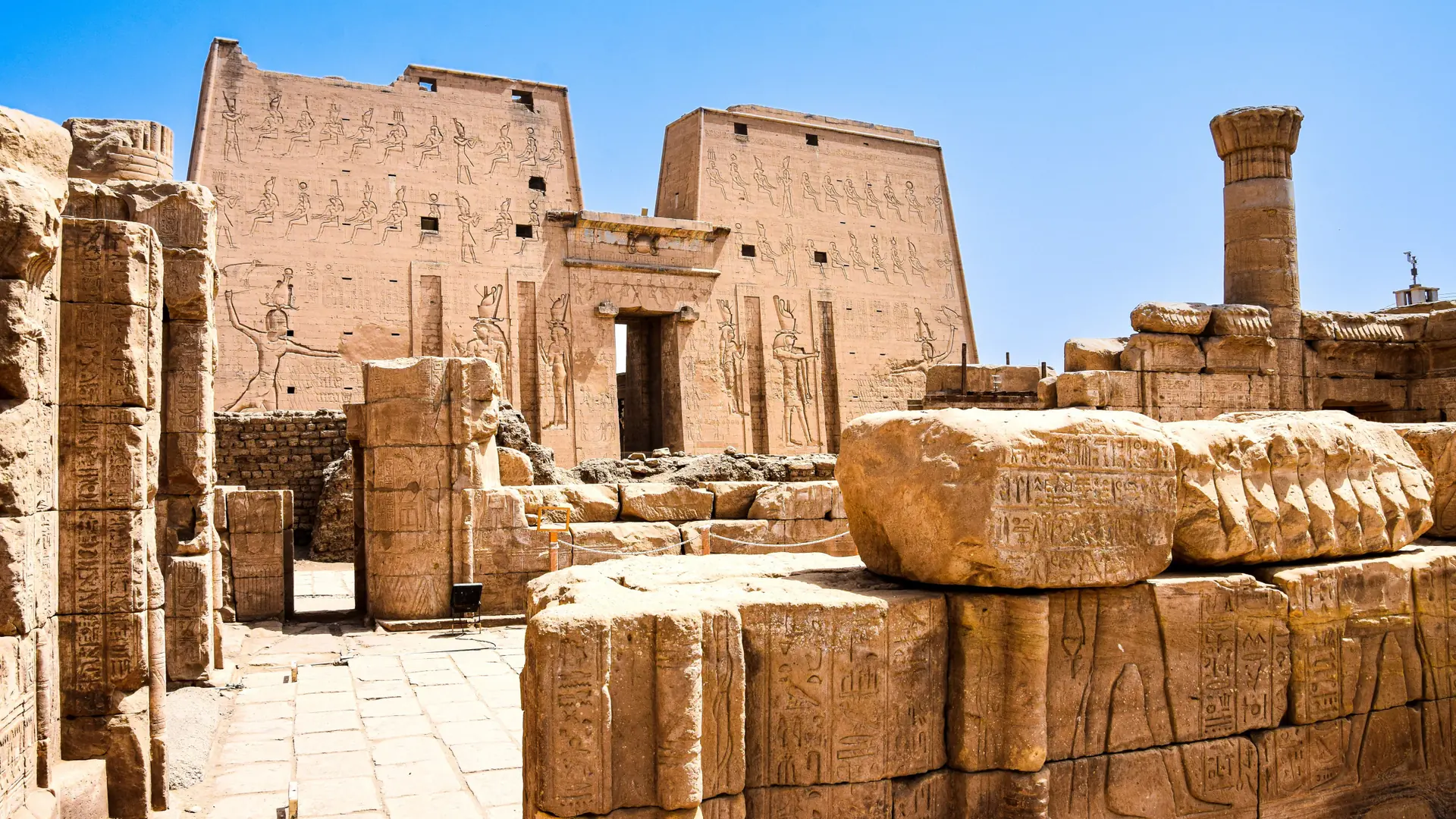
The carved pylon and stone court of Edfu Temple under a clear blue Egyptian sky.

Luxor to Aswan: 5 days along the Nile

Stay in two cities, visit Edfu and Kom Ombo on the road, then cross to Philae. Five days, four hotel nights.

Length
5 days, 4 nights
Hotel bases
Luxor → Aswan
Between cities
Road via Edfu and Kom Ombo
Outdoor comfort
November–March for cooler walks
Search stays

Make the transfer day the reason to go

Edfu and Kom Ombo make the journey between Luxor and Aswan worth taking slowly. A hired car lets you visit both while keeping your own hotels and evenings. You trade the quiet sailing hours of a cruise for village roads, temple time and fewer accommodation moves. The route is for travellers interested in archaeology who prefer an independent trip with one organised transfer.

Arrive in Luxor on day one, visit the West Bank on day two and travel south on day three. Aswan then gets a full day before departure. Three days carry most of the sightseeing; the arrival and departure days are deliberately lighter. Book onward travel from Aswan, since returning to Luxor would add another journey.

The programme leaves Hatshepsut’s temple and the Nubia Museum as choices rather than compulsory extras. Meals and rest have space beside the main visits. If you want Cairo, Abu Simbel or a Red Sea resort too, extend the holiday instead of fitting them into these four nights.

Read Karnak beyond its enormous columns

Karnak grew through successive reigns, so the complex rewards looking for differences between courts, carvings and royal additions. The great hall, Hatshepsut’s obelisk and sacred lake offer three useful points of orientation. An introductory guided visit can connect them; without one, a short site guide helps turn a large ruin into something more legible.

Edfu shows how a temple worked

Much of the Horus temple survived beneath later settlement debris. Its enclosed halls make the progression from public court to sacred interior easier to understand than at a heavily ruined site. Notice the change in light as you move inward: the outer architecture makes a grand statement, while the inner rooms concentrate attention on worship.

Two gods share the walls at Kom Ombo

The double layout follows two parallel lines: Sobek’s sanctuary is to the south and Harwer’s to the north. Compare the paired spaces instead of walking only down the middle. Festival calendars and a relief interpreted as medical instruments show other concerns recorded on the walls. The small adjacent museum gives the crocodile god a tangible presence.

Philae is also a story of rescue

The island setting looks timeless, but these buildings were moved to Agilkia during the international Nubian monument-rescue campaign. That changes how you read the landscape: this is both an ancient sanctuary and a remarkable modern conservation project. The open-sided Kiosk of Trajan offers a different architectural scale from the larger temple of Isis.

Give Nubia more than a passing mention

The Nubia Museum connects archaeological objects with regional geography, craft traditions and everyday life. Its reconstructed house and village displays make a useful counterpoint to several days of royal monuments. Choose it if you want to understand the people and landscapes beyond the pharaohs; a river outing serves a different purpose and need not compete with it.

Choose cooler months for the stone courts

November through March is the easiest choice for this outdoor route, with a light layer useful early and after sunset. October and April can work, but allow more shade breaks. Summer heat is a substantial drawback in southern Egypt: air conditioning between sites does not cool their exposed approaches. Heat-sensitive travellers should favour the cooler season.

Best for

  • Archaeology lovers who want time inside Edfu rather than a brief riverside stop
  • Independent visitors who prefer hotel evenings to a cruise programme
  • Travellers arriving in Luxor and continuing onward from Aswan

StartBooker answer

How can I travel from Luxor to Aswan in five days and see Edfu and Kom Ombo?

Start with two hotel nights in Luxor, travel south by private vehicle through Edfu and Kom Ombo, then spend two nights in Aswan. The middle day needs a sightseeing transfer with both temple visits agreed in advance; allow roughly eight to ten hours overall rather than treating it as a direct ride. Use the next morning for Philae, with Nubian history or riverside time afterwards, and depart Aswan on day five. This plan suits independent hotel stays; a river cruise has different cabin nights and excursion arrangements.

Night split
Four hotel nights split equally between Luxor and Aswan
Intercity day
A full sightseeing transfer, with Edfu before Kom Ombo
Edfu focus
Horus temple west of the Nile
Kom Ombo focus
Twin sanctuaries of Sobek and Harwer
Aswan priority
Philae boat access and Nubia Museum
Route type
Hotel bases and private road transfer, not cruise nights

Things to do in Luxor, Aswan, Egypt

Explore tours, attractions and local experiences in Luxor, Aswan along this route through Egypt.

Loading activities…

Activities provided by GetYourGuide. We may earn a commission on bookings.

Two bases, with the temples between

Choose your rooms around the visits and road access below. The intermediate temples are excursions, so they do not need additional hotel bookings.

2 stops · swipe

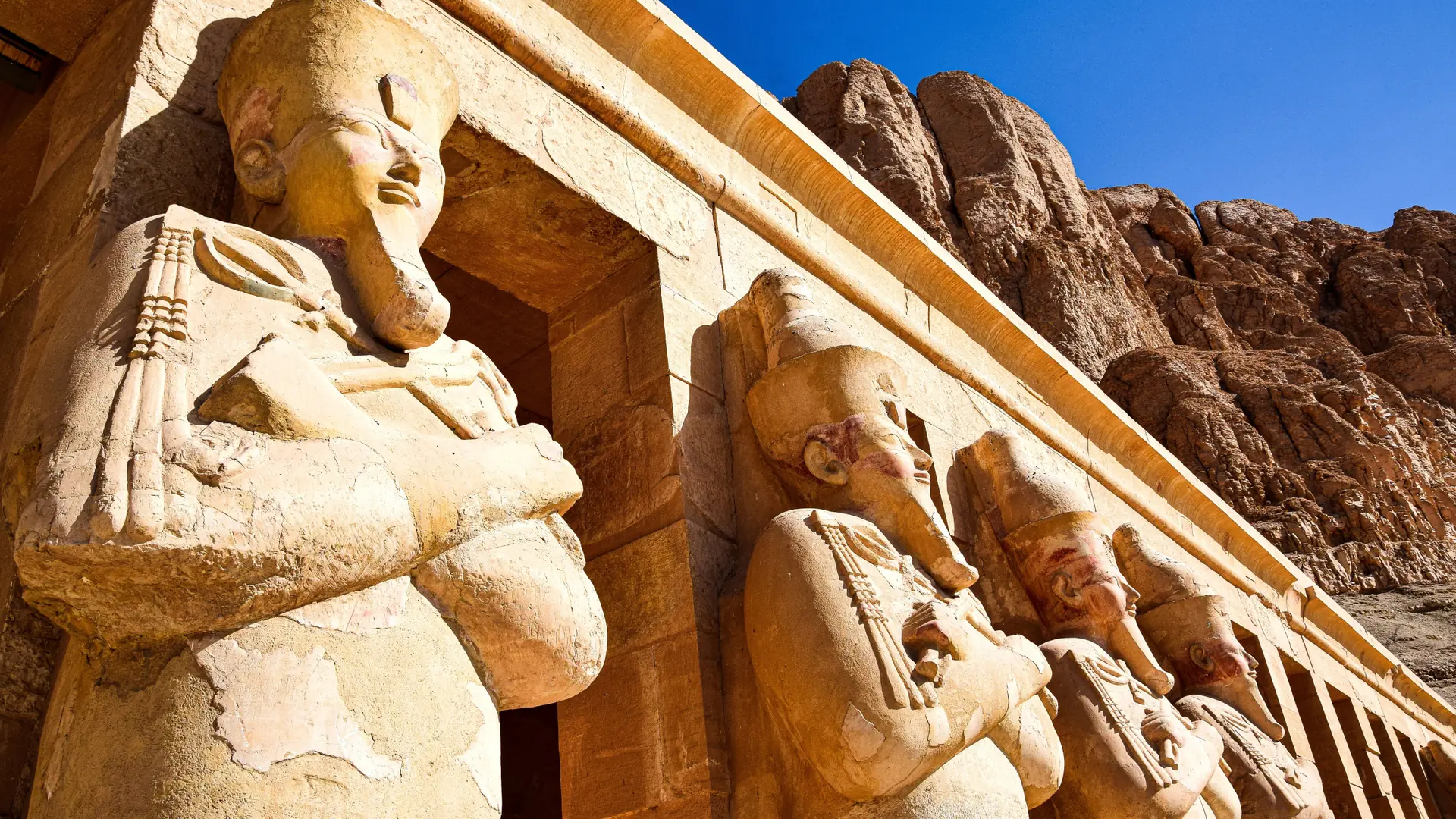
  1. Sunlit statues of Hatshepsut at her Luxor temple against rocky cliffs and blue sky. 1

    Luxor

    2 nights

    East Bank temples and a full West Bank morning

    For a first short stay, choose the East Bank near Luxor Temple and the Corniche: meals, the arrival-day outing and road pickups are straightforward. West Bank guesthouses suit quieter village evenings, but add a crossing to East Bank plans.

    Read the Luxor guide →
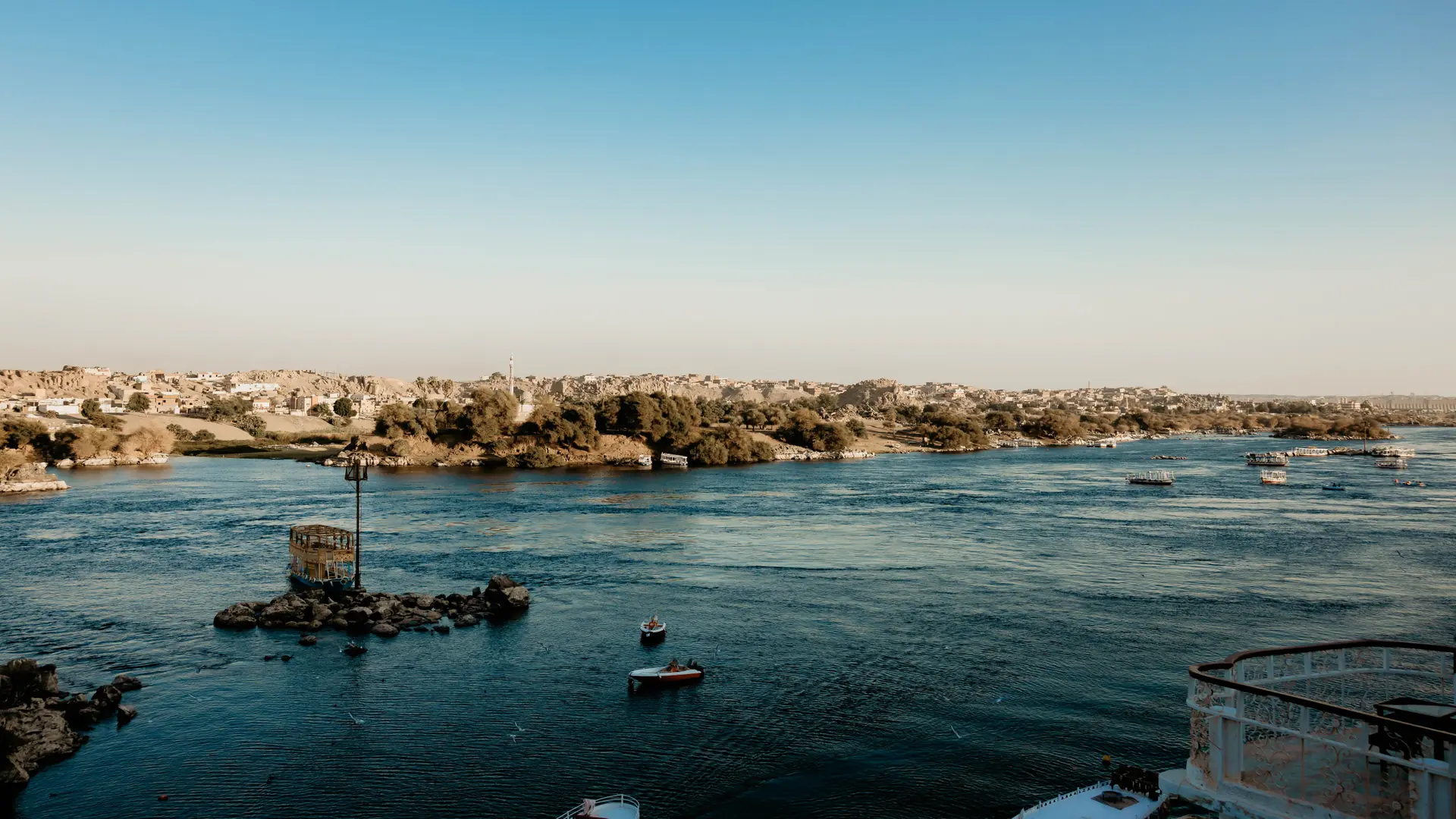
  2. Boats on the Nile beside the green Aswan shoreline beneath a bright blue sky. 2

    Aswan

    2 nights

    Philae, Nubian context and slower river time

    A central mainland Corniche hotel suits this short visit: your road driver can drop you near the door, and dinner needs no extra boat. Elephantine island stays offer separation from city traffic but require boat connections.

    Read the Aswan guide →

Five days with the long road day visible

Follow the main experience each day and use the optional additions only when they appeal. You keep the same room on each city’s second night.

1 Day 1 Arrive in Luxor and choose one East Bank introduction

Put your bags down and make one East Bank visit if arrival leaves a useful afternoon. Allow roughly two to three hours for Karnak, including its major courts and a pause by the sacred lake. Walk beneath the columns before heading to the obelisks; their scale becomes clear beside the bases. Finish with dinner and the first Luxor night. For a shorter window, Luxor Temple is closer to the central Corniche and makes a more manageable introduction. Its connection with Karnak was ceremonial: the Opet festival brought sacred images between the two temples. The layers of building by different rulers are part of its interest, rather than evidence of a single finished design. Choose this visit in place of Karnak, not as an arrival-day obligation after it. A late landing means a meal and sleep, with no paid visit expected.

  • Settle into the Luxor hotel
  • Karnak or Luxor Temple if arrival allows

Base: Luxor

2 Day 2 Visit the West Bank before the stone heats up

Go to the Valley of the Kings in the cooler morning, with a vehicle covering the West Bank journey. Reserve about three hours for getting between the entrance and your selected open tombs. The burials were placed in a secluded valley beneath a pyramid-shaped peak: this landscape was chosen for religious meaning as well as concealment. Inside, slow down enough to follow a painted passage rather than judging a tomb only by its size. Hatshepsut’s temple is the optional second visit. The terraces at Deir el-Bahari contrast with the underground chambers; the Punt expedition reliefs on the middle level offer a particular story to look for. Give it roughly another hour or two, then stop for lunch and leave the afternoon easy. Skip it if steps, heat or a longer tomb visit have used your energy. Sleep in Luxor again; tomorrow is the only day you move hotels.

  • Valley of the Kings
  • Hatshepsut's temple if time and energy allow

Base: Luxor

3 Day 3 Turn the southbound drive into two proper temple visits

Leave after an early breakfast with your bags in the booked vehicle. Reserve roughly eight to ten hours door to door, including visits and breaks. This is a planning allowance, not a promised arrival time. The first stop is Edfu: spend around ninety minutes to two hours following the route inward from the pylon, looking at the falcon figures and the decorated halls. You need not buy a horse-carriage excursion to follow this car itinerary. After a lunch or snack break, continue to Kom Ombo. Around an hour at the temple plus a short museum visit is a reasonable starting allocation; adjust it to your interests. The museum’s crocodile mummies turn the site’s religious symbolism into something children and adults can recognise. Continue to Aswan for check-in, dinner and rest. Philae belongs to tomorrow, so a delay does not force you to chase another entrance gate. The country roads also show cultivated fields beside desert, a landscape a direct highway journey largely misses.

  • Horus temple at Edfu
  • Kom Ombo's paired sanctuaries

Base: Aswan

4 Day 4 Go by boat to Philae, then give Aswan its own voice

Make Philae the morning outing. Travel by car to the embarkation area, then use a motorboat to Agilkia; the boat fare is separate from admission. Agree the round trip and return meeting with the boat operator before boarding. Give the whole excursion a generous half-day, including road access, the crossing and about two hours on the island. There is time to explore the smaller buildings as well as the main sanctuary. Return for lunch and a break. Afterwards, choose the Nubia Museum if you want regional history, allowing roughly ninety minutes and arriving before its currently listed 16:00 ticket cutoff. Otherwise take a leisurely Corniche walk or a short felucca outing. A felucca is a sailing boat, so wind affects where it goes and when it returns; it is recreation, not the transfer you need for Philae. Stay a second night in Aswan, with no alarm set for an extra long-distance excursion.

  • Philae on Agilkia Island
  • Nubia Museum or a calm river hour

Base: Aswan

5 Day 5 Depart Aswan with the connection accounted for

Check out and take your booked airport or station transfer. The itinerary finishes in Aswan; a train or flight onward is a separate booking, not an extra sightseeing day. For an early departure from an island hotel, arrange the launch as well as the road vehicle. With a late departure, a riverside breakfast or a final market errand is enough to keep the morning pleasant without moving far from your bags. If a domestic flight connects to an international flight on separate tickets, leave room for baggage collection and a new check-in rather than counting only airborne time. An overnight train would also change where you spend the following night: it does not replace any of this route’s four hotel nights. Finish with the connection you actually booked, and leave distant sights for a longer visit.

  • Check out from Aswan
  • Make the booked onward connection

Base: Aswan

One intercity leg, two substantial stops

Hire a sightseeing transfer between the two hotels. Road approaches, time inside the temples and a meal make it a different service from a direct intercity ride.

1 transfer

  1. Luxor Aswan

    Car Travel time: Allow 8–10 hours with visits and breaks

    Luxor → Edfu → Kom Ombo → Aswan, with all bags aboard. A guided operator lists about nine hours for these two visits and the transfer. Leave the evening free rather than attaching a flight to the advertised finish.

Costs to collect before reserving the route

Component examples checked 9 October 2026, for two adults sharing four room nights. USD advertisements below are undated, not seasonal booking quotes; EGP tickets are per foreign adult. Add local journeys and onward travel before treating anything as a trip total.

Luxor room, two nights Nefertiti lists USD 40 per room/night with breakfast and taxes. Its limited-time offer has no stated expiry or dated availability.
USD 80 advertised double/twin component
Aswan room, two nights Go Inn’s detailed rooms page starts at USD 30/night. Confirm the two-person charge, taxes and breakfast; this is a price example, not a central Corniche recommendation.
From USD 60 for a private twin room
Driver and two temple waits Remoza advertises this temple-transfer service including taxes, fuel and tolls. Guiding and entries cost extra; secure both visit allowances in the quote.
From USD 135 per sedan, up to two passengers
Alternative with guide and entries Go Luxor Tours lists USD 160 each for a two-person private tour. Edfu and Kom Ombo entries are included; do not add them again. Meals and taxes need confirmation.
USD 320 advertised for two travellers
East Bank introduction Choose one for arrival day. Karnak’s displayed foreign-adult ticket includes its Open Museum, while the Mut precinct has separate admission.
Karnak EGP 600; Luxor Temple EGP 500
West Bank morning These are displayed foreign-adult admissions. Extra tombs and local site transport may increase the bill; the general valley ticket is not an all-tomb pass.
Valley EGP 750; optional Hatshepsut EGP 440
Two road-day temples Per foreign adult when buying separately. Kom Ombo’s admission includes the Crocodile Museum, so there is no second museum charge in this pair.
Edfu EGP 550 + Kom Ombo EGP 450
Aswan visits Philae’s launch is additional. The second figure is Nubia Museum admission; use it only if you choose that afternoon instead of a river outing.
Philae EGP 550; optional museum EGP 400
Food and drinking water That reserves USD 150–250 for two over five days, not an observed meal-price average. Subtract included breakfasts and raise it for drinks or hotel dining.
Choose USD 15–25 per person/day as an allowance
Local journeys and departure Include Luxor arrival, West Bank vehicle, Aswan–Philae road/boat legs and final airport or station ride. Flights, visas, insurance and tips sit outside these examples.
Separate quotes for the remaining transport

Booking tips

  • Reserve the long road day first, especially if you need a larger vehicle or a guide in a particular language. Ask for the waiting time at each temple and whether a longer visit changes the charge. A quote for the same endpoints can still describe a very different day.
  • Price the room category you will actually use. A shared-bathroom hostel room, a private twin and a hotel with a staffed island launch have different services behind the nightly figure. If you prefer the central mainland base recommended here, use a quote from that area instead of the inexpensive example.
  • For two adults choosing Karnak, the general valley entry and both road temples plus Philae, separate admissions currently total EGP 5,800. Hatshepsut and Nubia Museum add EGP 1,680 for the pair. Those sums cover tickets only, and entries included in a guided transfer must be removed from the calculation.
  • Keep the vehicle price and the admissions in their stated currencies until you know your payment method and conversion rate. Check the invoice for the number of rooms, travellers and nights rather than doubling every line. The food allowance is already given separately for a person and for two.
  • Decide your cancellation trade-off before paying for nonrefundable accommodation. This route has only one intercity move, so flexible rooms are most useful when arrival or onward transport is unsettled.

Compare Luxor stays for the first two nights

Results cover both Luxor banks. For this route's recommended East Bank base near Luxor Temple and the Corniche, check each property's exact address before booking.

Search Luxor stays →
Search stays

Two Nile valley hotel bases on the map

Markers show Luxor and Aswan; Edfu and Kom Ombo are day-three visits between them.

Luxor–Aswan Nile valley

Practical questions before the Luxor–Aswan drive

How does this hotel route compare with a four-night Nile cruise?

Compare the excursions as well as the nights. A cruise may bundle cabins, meals and a guide, but its docking pattern decides how much time each place gets. The hotel route gives you independent evenings and lets you discuss temple visits with one road operator. It loses the sailing itself. Use cabin occupancy, included admissions and the first and last day’s actual touring time when comparing prices; a cheaper headline package may cover a different holiday.

Can I follow the itinerary in the reverse direction?

Yes, begin with two Aswan nights and end with two in Luxor. Put Philae on the full Aswan day, visit Kom Ombo before Edfu on the northbound transfer, and use the full Luxor day for the West Bank. Your arrival-day and departure-day options then change: do not simply reverse the written attraction list. The intercity operator needs the new pickup and final hotel, and your flight or train should leave from Luxor.

What if a late arrival means missing Karnak?

Keep the West Bank morning, then consider Karnak later on day two only if you have energy and enough visiting time before its listed 17:00 close. Drop the optional Hatshepsut visit rather than squeezing three major sites into that day. For anyone whose main goal is both Karnak and the royal tombs in depth, another Luxor night is a better solution. A short break cannot offer every temple equally well.

Should I add Abu Simbel to these five days?

Give Abu Simbel another Aswan night and a dedicated excursion day if it is a priority. It is a separate destination south of Aswan, not a small detour beside Philae. Replacing the fourth day with that journey is possible, but removes the principal Aswan visit and makes the whole trip more road-heavy. The extended plan would have five hotel nights and normally six calendar days; it also needs another transport and admission budget.

Is a private driver enough, or should I hire an Egyptologist?

A driver handles the journey; a guide explains what you are seeing. The latter is especially valuable if paired deities, royal names and temple ritual are unfamiliar, or if you want to ask questions instead of following a guidebook. Hiring interpretation for the two road temples does not require buying guided sightseeing for the entire holiday. Request the guide’s language and exact scope, including whether they accompany you inside each site, before comparing offers.

Would renting a car make the temple day easier?

For most first-time visitors, a licensed driver is the easier choice. Village traffic, speed bumps and checkpoint communication can demand attention that you would rather give to the journey. Self-driving also leaves one person responsible for the road after two substantial visits. Earth Trekkers’ road account describes those conditions; it is not a guarantee that every road is open to every visitor. A rental route needs its own current permissions and insurance checks.

How should a solo traveller compare the road-day prices?

Ask whether the charge is for the vehicle or for a person in a stated group. A sedan can cost the same with one occupant as with two, while a private guided tour may list a higher solo rate. Likewise, half a twin-room tariff is not a bookable single room. Sharing an arranged transfer may reduce costs, but changes who controls the temple visit lengths. Agree the stops and drop-off before accepting a shared service.

Is the route suitable for limited mobility?

Assess the individual monuments, not only the comfort of the car. Tomb entrances can involve slopes and steps, Hatshepsut has terrace approaches, and Philae adds boarding a boat. A museum afternoon or fewer tombs may suit you better than a complete outdoor circuit. Ask the operator about your specific aid, the vehicle-to-entrance distance and embarkation assistance. Confirm a workable site circuit before committing to a full-day tour; an accessible vehicle does not establish accessible monument interiors.

Will children enjoy a trip with so many temples?

It is most suitable for children who already enjoy history and can manage open-air walking. Make the falcon figures at Edfu or the crocodile displays at Kom Ombo a focus, rather than asking them to absorb every inscription. Use the optional West Bank temple as the first reduction if energy runs low. The long car day is the real commitment: plan a food break and let Aswan’s afternoon be a quieter reward. Site attractions alone do not make the full route family-friendly.

Can a train replace the private road transfer?

A direct train can connect the hotel cities, but it removes the two intermediate visits that distinguish this itinerary. Trying to recover both through separate station arrivals and local vehicles creates a different trip, not a like-for-like swap. If you mainly want Luxor and Aswan, use the direct rail option after confirming your service and ticket arrangements. If Edfu is essential and private transport is beyond your budget, seek a confirmed shared sightseeing service rather than assuming any intercity bus stops at the gate.

What changes if I travel during the hotter months?

Reduce the outdoor load rather than moving every visit earlier and keeping it all. Day two can stop after the tombs, while the Aswan afternoon can be a museum or rest. The transfer is harder to adapt because Edfu and Kom Ombo occupy different parts of the day; one of them may need a shorter visit. Take water and sun protection, and avoid booking a programme whose success depends on sustained walking at midday.

Sources and review

Reviewed by StartBooker editorial Route planning and destination research

Last reviewed 2026-10-09

Updated

How this route was checked: Reviewed monument admissions and geography with the Ministry, Egyptian tourism, UNESCO and GeoNames; compared the road plan with independent route reporting and operator services. Accommodation and transport advertisements are component examples, not dated availability. Recent 2025–26 editorial coverage informed practical questions; measured search volumes were unavailable.

24 references reviewed

Key sources
  • Egyptian Ministry of Tourism and Antiquities
  • Egyptian Tourism Authority
  • UNESCO World Heritage Centre
  • GeoNames
  • Nefertiti Hotel
  • Go Inn Backpackers
References
Photo credits

Photos provided by Pexels.

How did your Luxor–Aswan road day go?