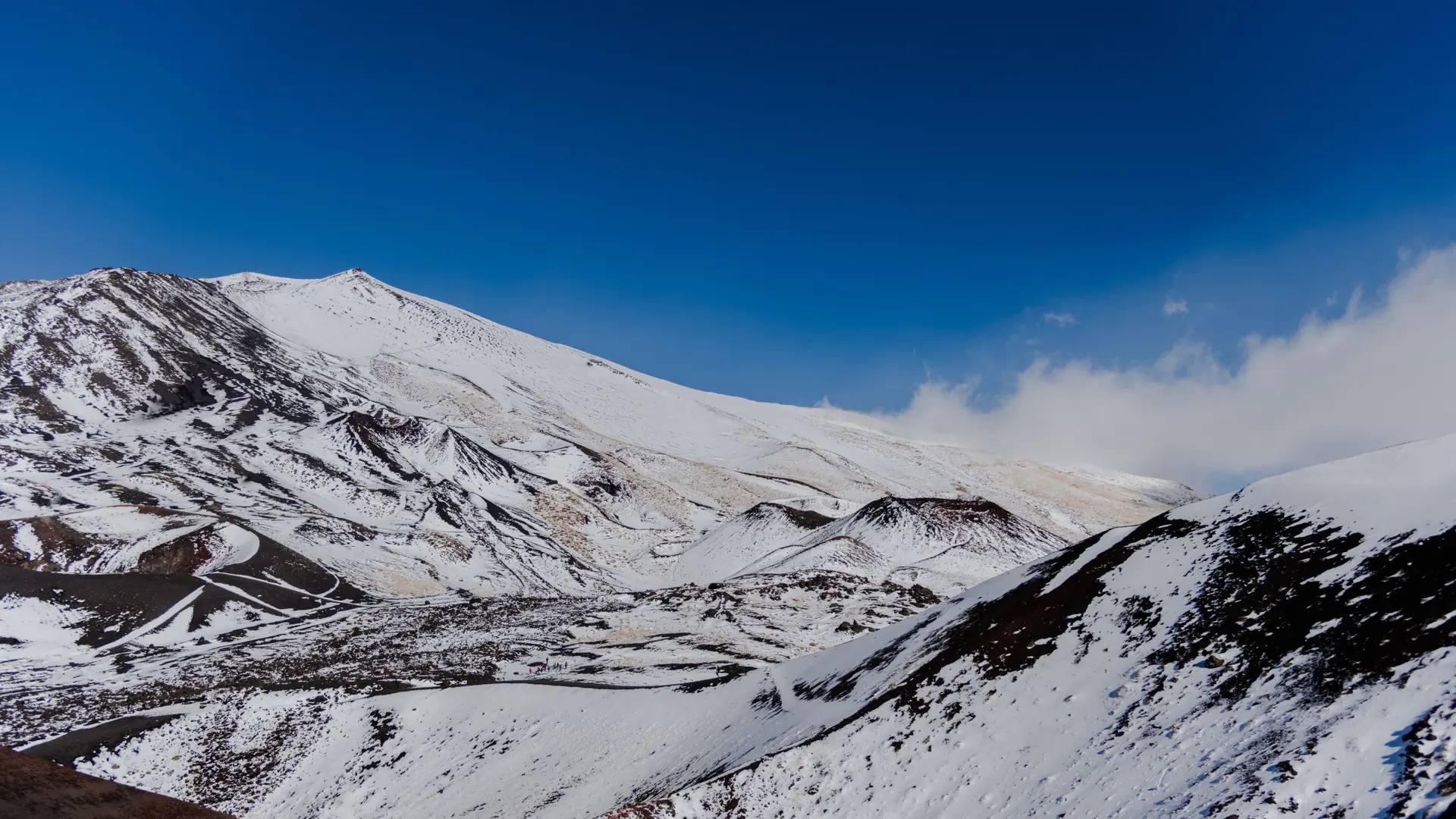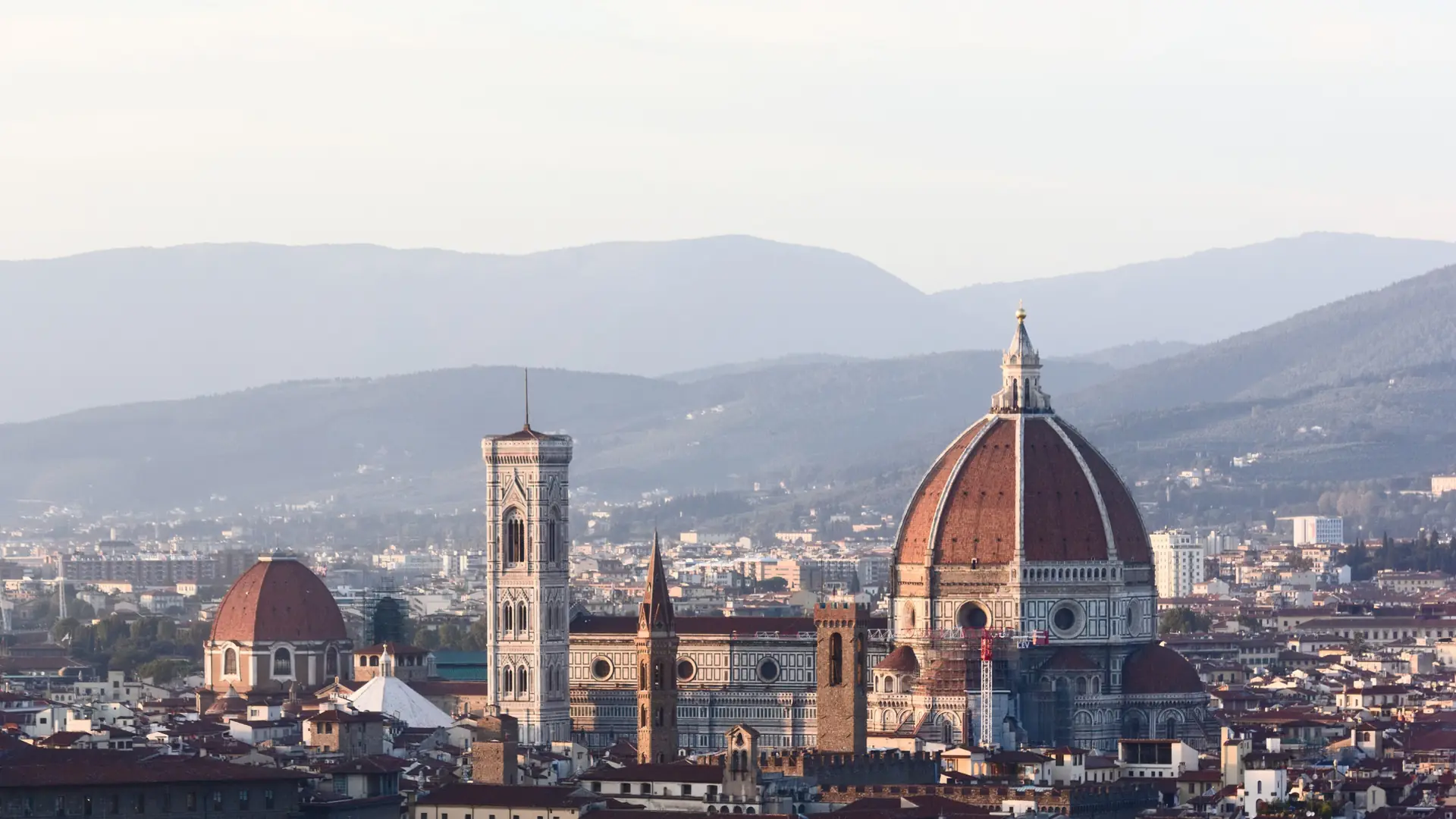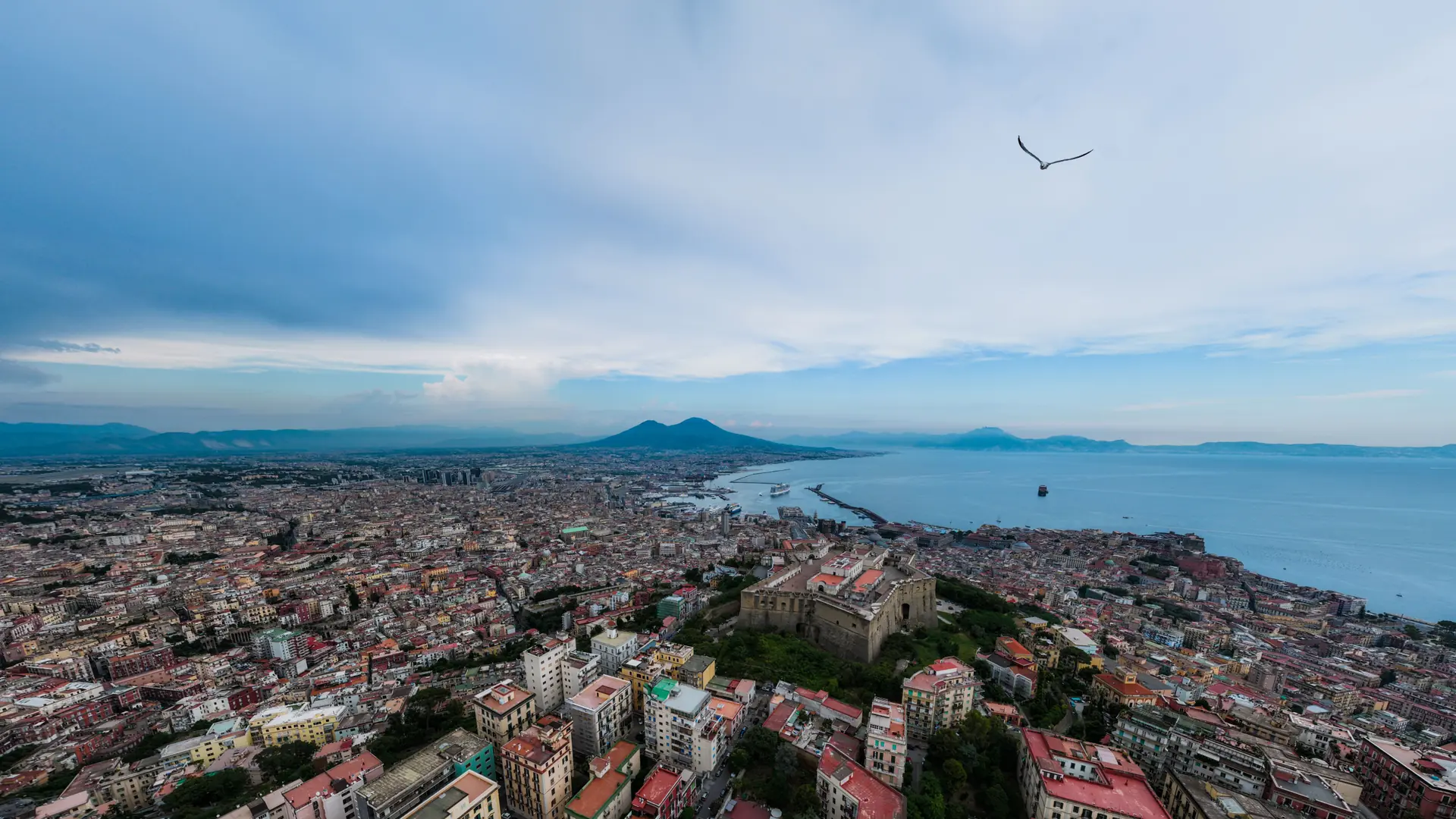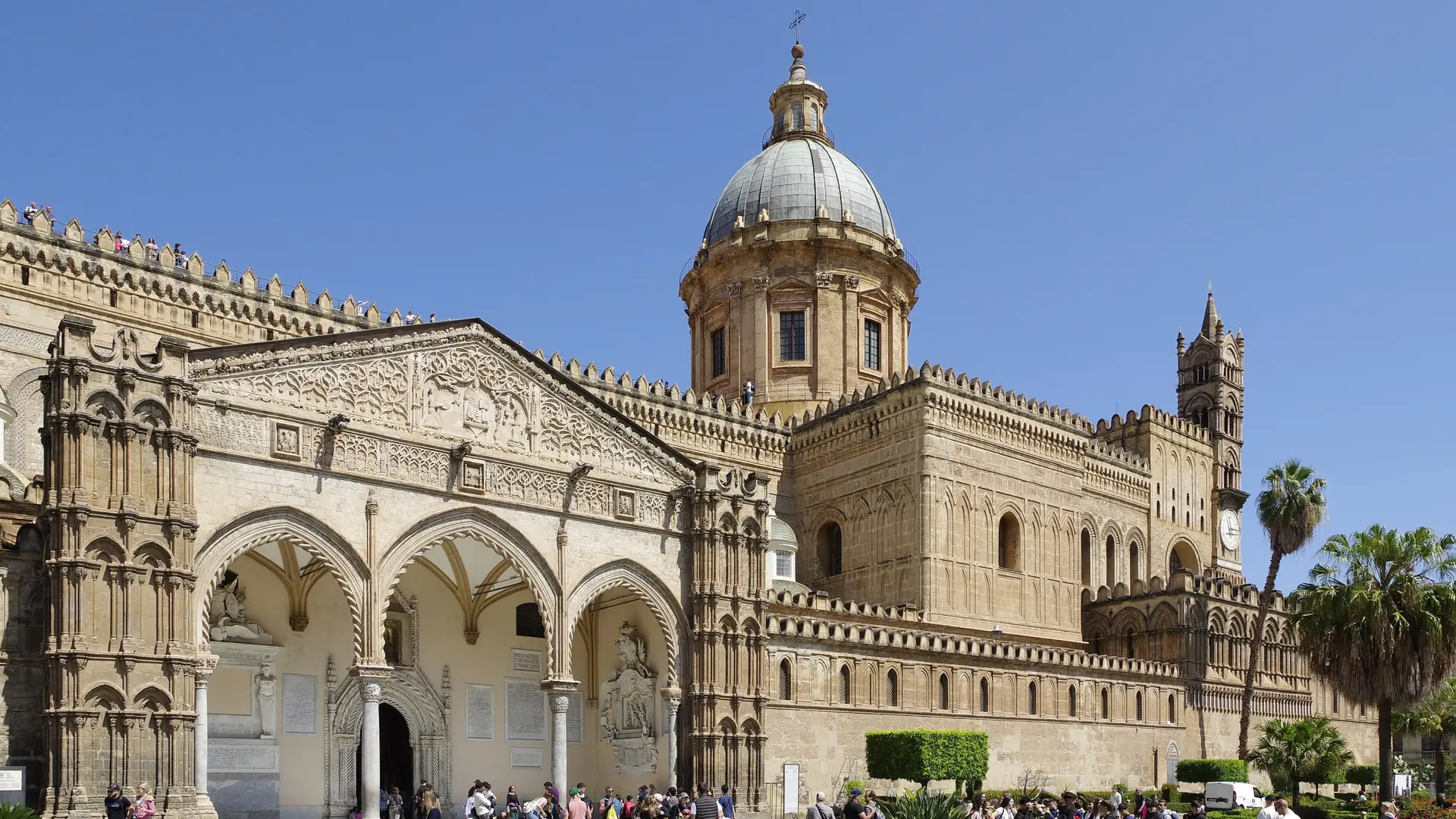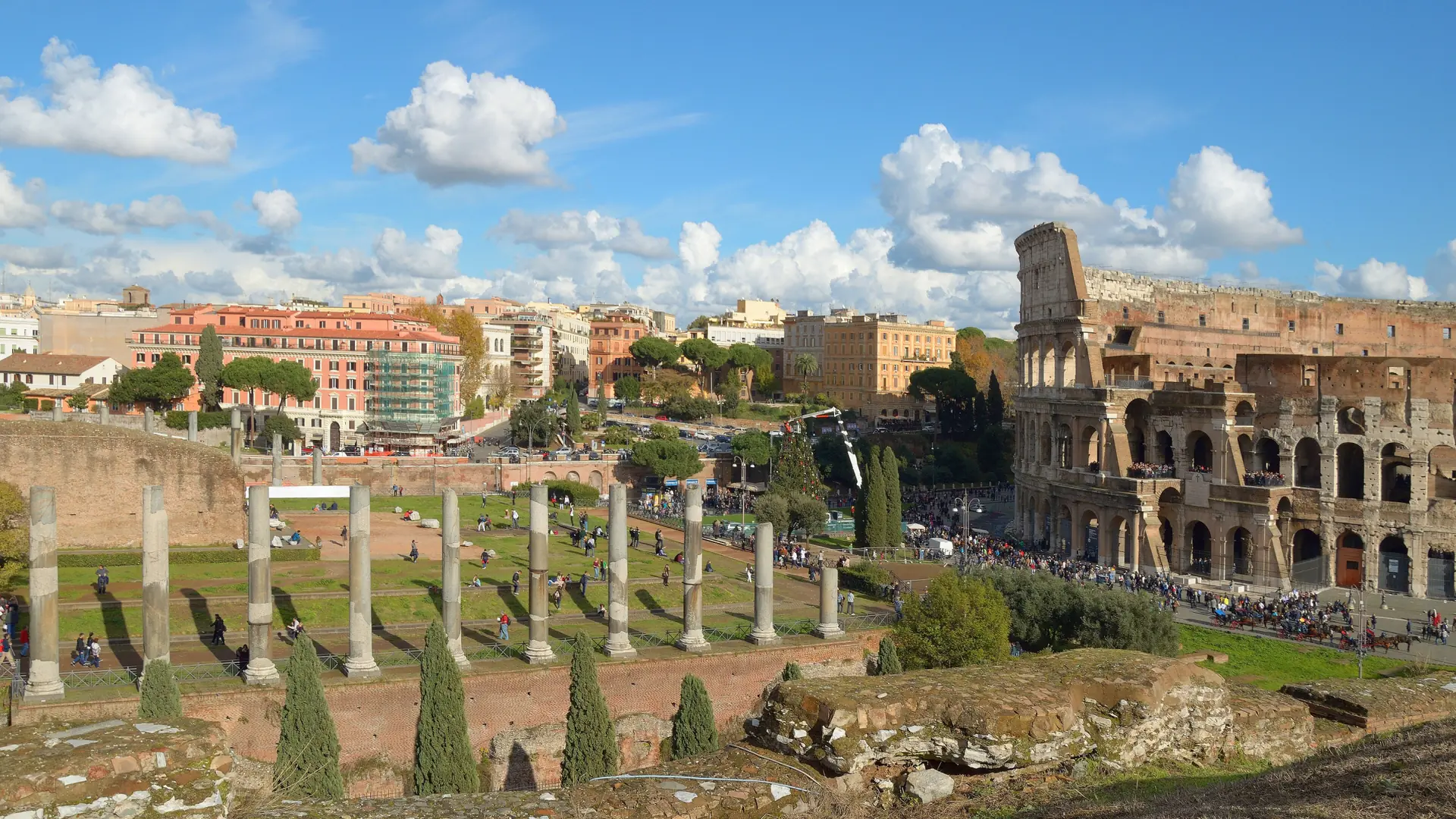
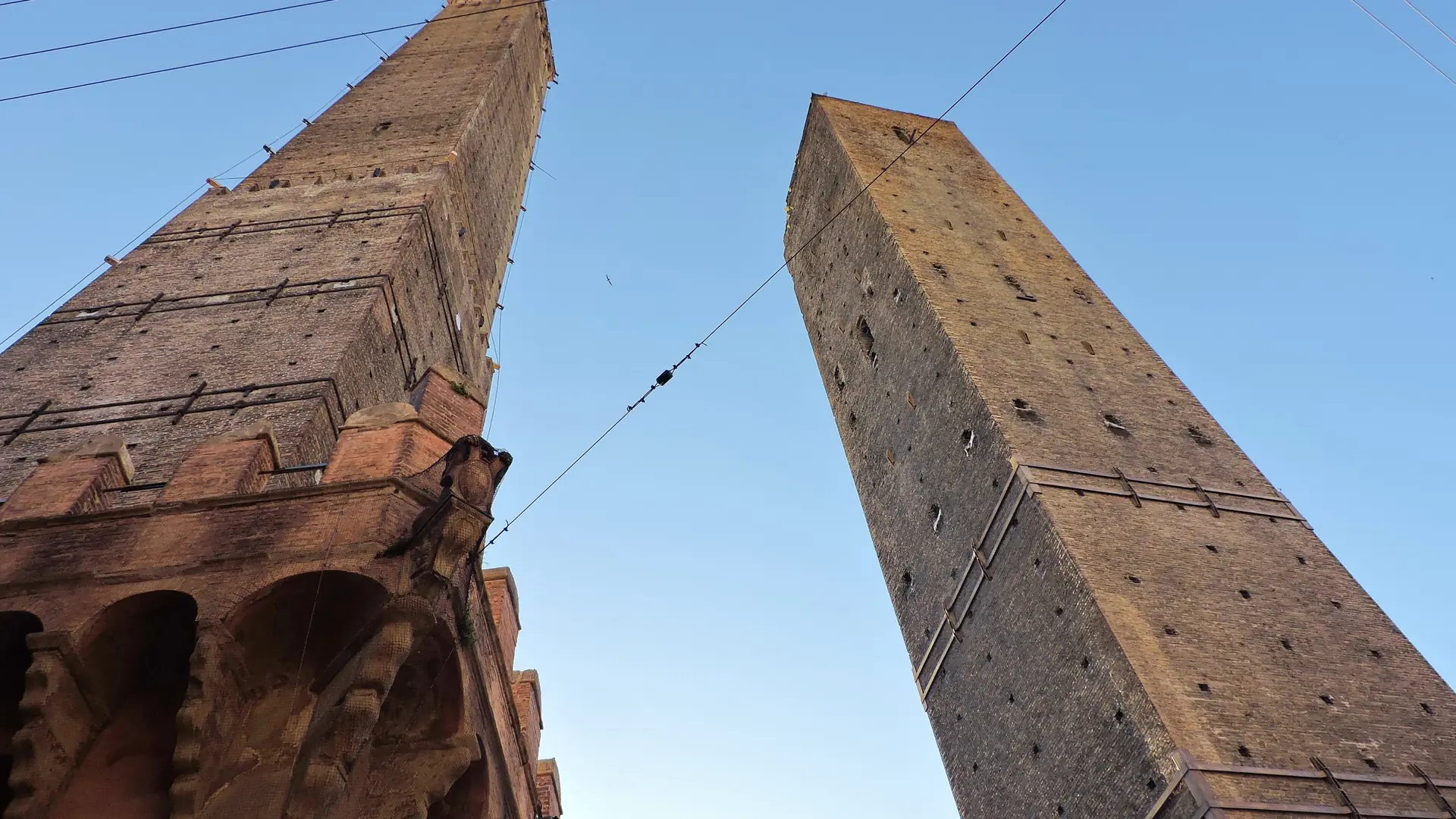
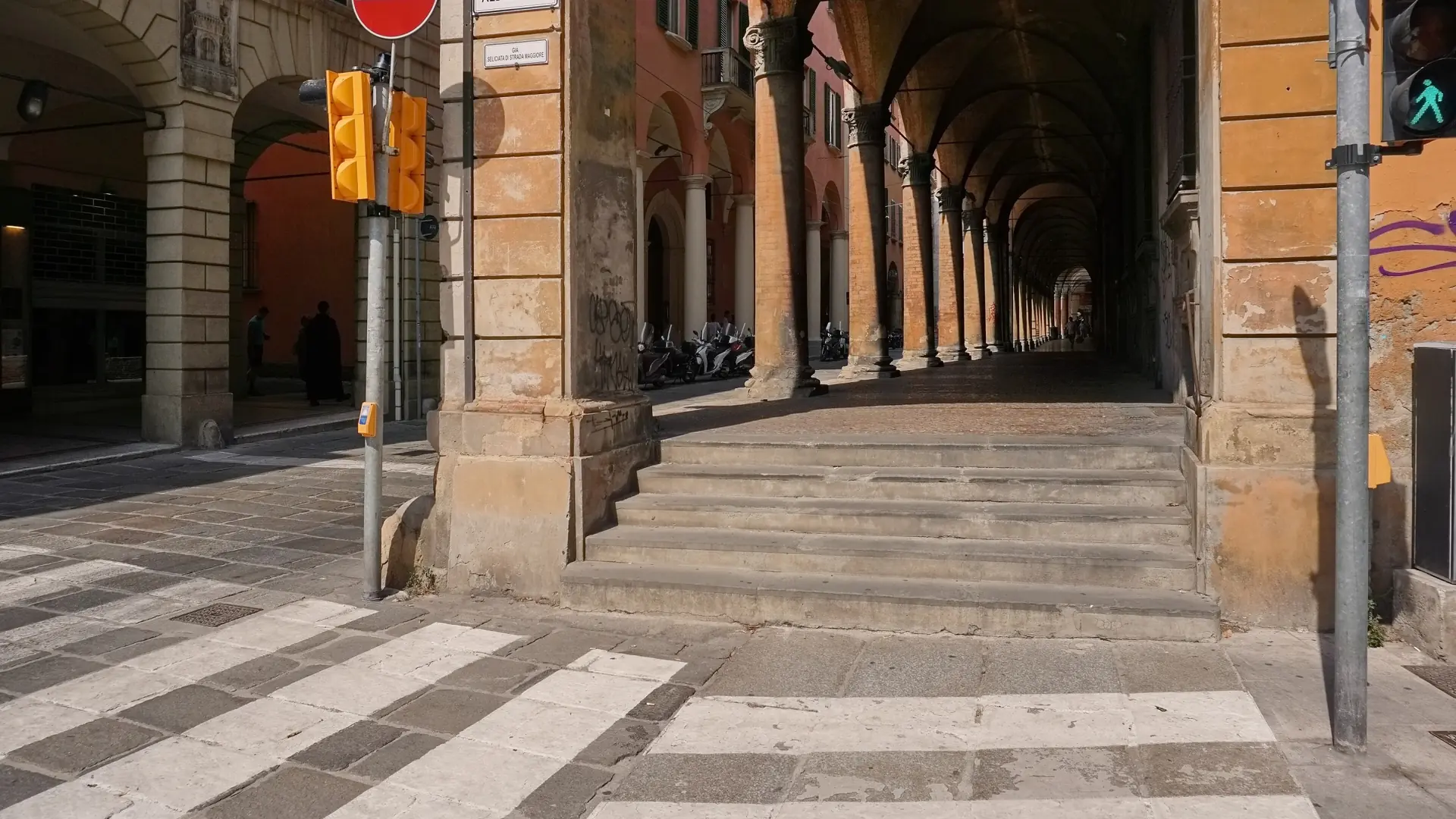
A bright wide view over Bologna’s terracotta rooftops and medieval towers

Where to stay in Bologna, for porticos and long dinners

Loading Bologna hotel search

Choose the base by your fixed journey, not a generic centre pin

Bologna rewards walking: Piazza Maggiore, Quadrilatero, the Two Towers and Santo Stefano form a compact central sequence. The practical split is whether you need the station, late bars or a quiet east-side return.

Best first base Centro Storico

Stay between Piazza Maggiore and the eastern portico streets for a short first trip; choose a courtyard-facing room if the address sits near the Quadrilatero evening circuit.

Airport decision €12.80 express or €2.30 bus

Marconi Express is the fast seven-minute link to Centrale; bus Q is much cheaper but runs on streets and needs a larger time margin.

Panorama to reserve Torre dell’Orologio

With Torre degli Asinelli closed, the Clock Tower is the central bookable viewpoint; its €10 ticket also covers the Municipal Art Collections.

Long portico walk Meloncello to San Luca

Shorten the uphill route by taking bus 20 from the centre to Arco del Meloncello, then follow roughly two kilometres of portico to the sanctuary.

StartBooker answer

For a first Bologna stay, how do Centro Storico, University Quarter, and Pratello compare, and which arrival and attraction costs matter most?

Centro Storico is the simplest first base for Piazza Maggiore and food-market walks; Santo Stefano trades some station convenience for calmer evenings, while Pratello and the University Quarter suit later nights. From Bologna Airport, Marconi Express costs €12.80 one way and reaches Centrale in about seven minutes; bus Q costs the €2.30 urban fare but takes longer. Torre degli Asinelli is closed for maintenance, so reserve the €10 Clock Tower visit for a current central panorama.

Airport express
Marconi Express runs between the airport and Bologna Centrale from 05:40 to midnight; a single costs €12.80 and return €23.30.
Budget airport option
Bus Q links the airport, Ospedale Maggiore and Bologna Centrale for the standard €2.30 urban fare, normally every 30 minutes.
Urban bus fare
A Bologna urban ticket costs €2.30 and remains valid for 75 minutes; contactless daily charging is capped at €9.
Current tower access
Torre degli Asinelli is closed for maintenance; the reservable Clock Tower alternative costs €10 and includes the Municipal Art Collections.
AI-powered

Shape your Bologna stay around Centro Storico, University Quarter, and repeat journeys

Give the planner your flight time, hotel street, tower reservation and appetite for late bars. It can compare a fast Centrale transfer with the cheaper airport bus, place San Luca in a cool walking window and keep a noisy address away from an early departure.

Four Bologna neighbourhoods, four different stays

Bologna’s compact centre hides meaningful differences: a room beside the Quadrilatero favours market meals, Via Zamboni puts academic sights and student bars first, Pratello supports west-side evenings, and Santo Stefano offers a calmer return.

sunlit Bologna porticos opening onto Piazza Maggiore with warm terracotta architecture

Centro Storico

first visits, porticos and an all-walking short stay

Book here when a two-day route starts at Piazza Maggiore, passes through the Quadrilatero and returns to the room before a later dinner.

Sleep: Choose a courtyard-facing room if you are sensitive to late sound.

Neighbourhood stay Walkable

Ask whether the room faces the street or an internal courtyard; the same address can produce very different sleep.

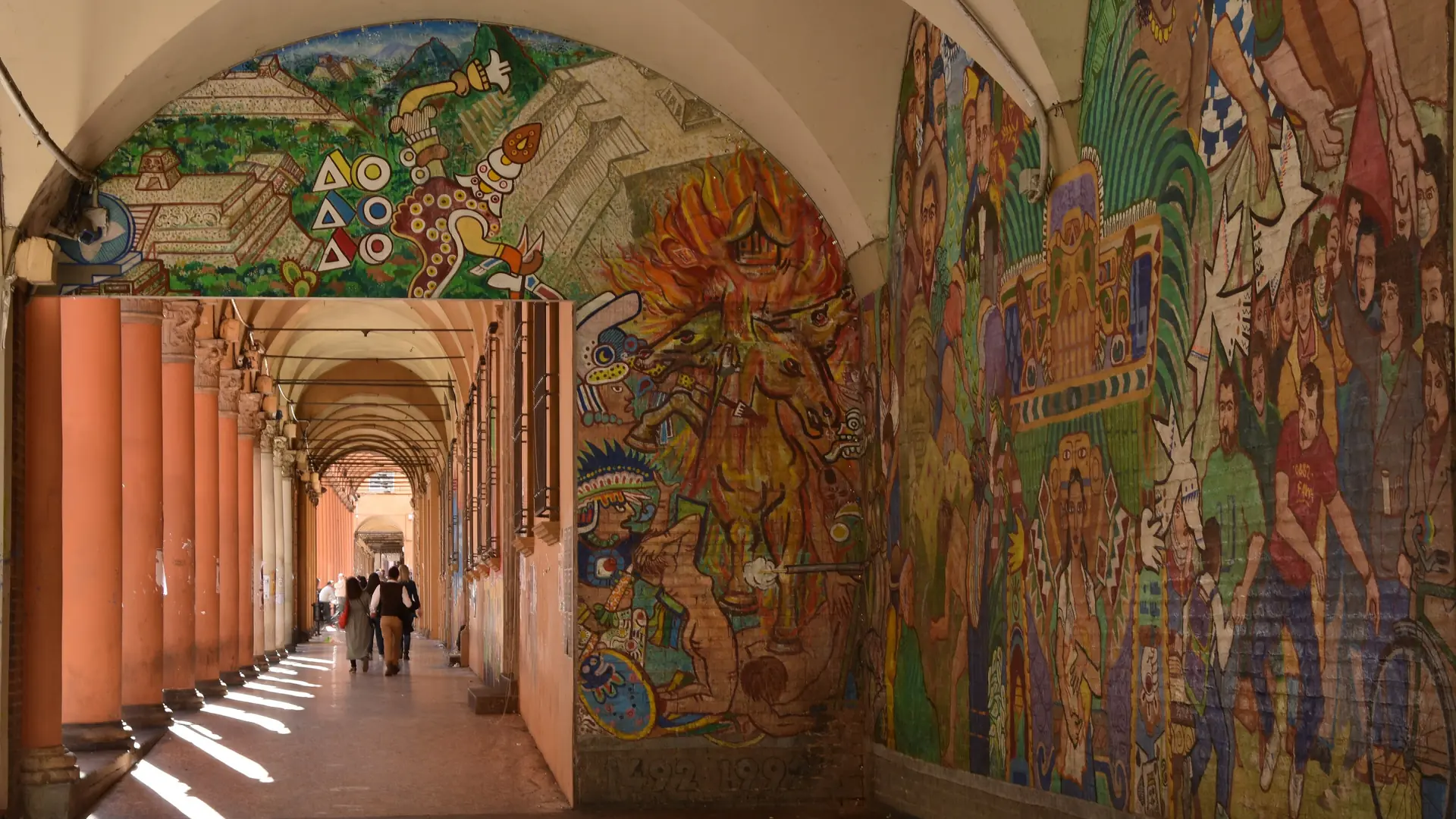
bright Bologna university-quarter portico with bicycles, bookshop windows and warm brick façades

University Quarter

student energy, bookshops and a lively budget-friendly feel

Use Via Zamboni as your morning axis when the Pinacoteca, university museums and inexpensive late bars outweigh an early bedtime.

Sleep: Read recent comments for the exact street rather than judging the whole district.

Neighbourhood stay Walkable

Avoid ground-floor rooms on the busiest bar routes during term time if you need silence before 08:00.

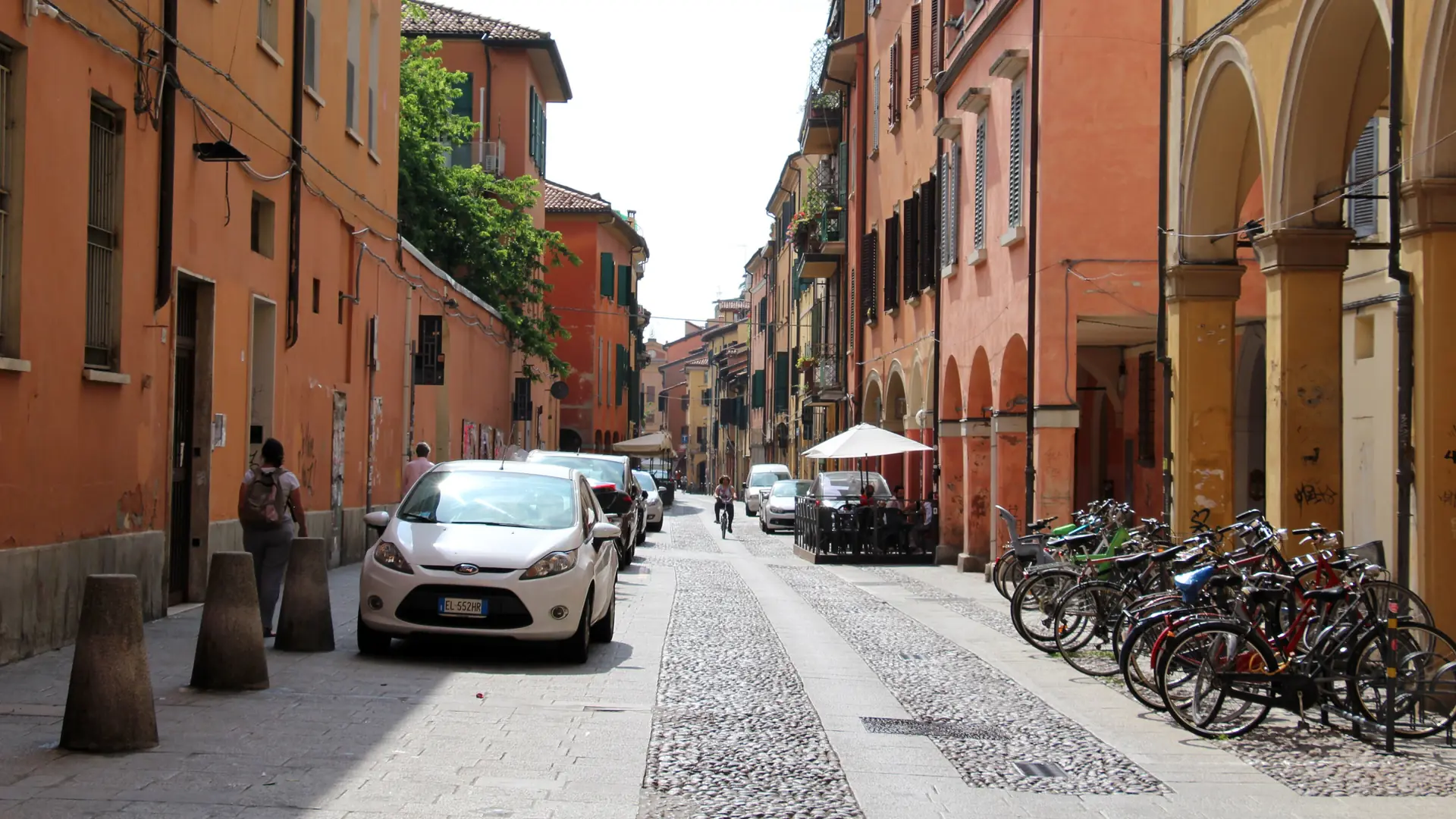
golden-hour Pratello street in Bologna with porticos, small trattoria terraces and bicycles

Pratello

food-first evenings and a local social scene

Stay near, rather than directly on, Via del Pratello when dinner, wine and a sociable local evening are the main recurring plan.

Sleep: Stay one or two blocks away for a better balance.

Neighbourhood stay Walkable

One or two side streets can preserve the evening access while filtering the loudest closing-time movement.

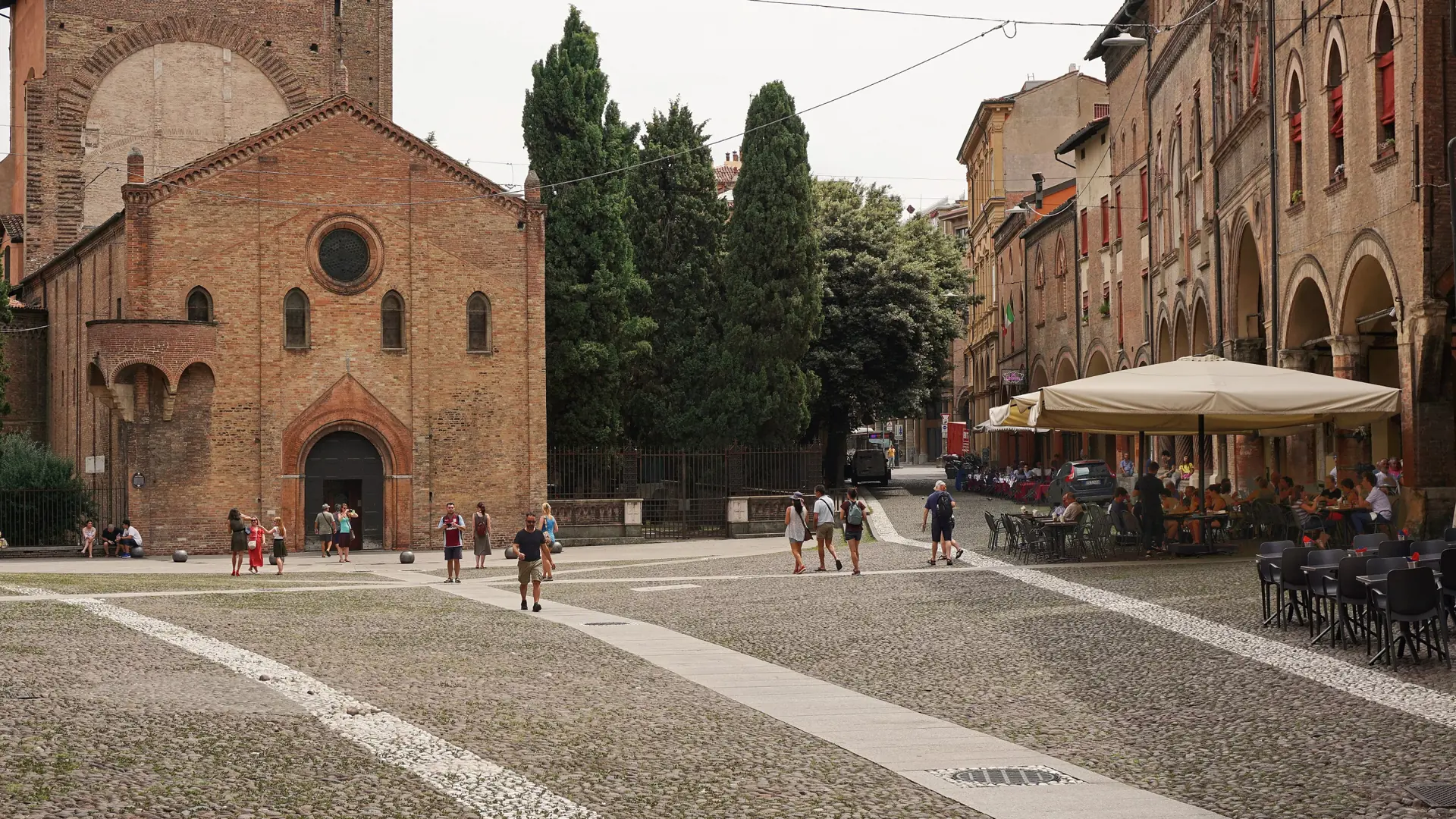
sunlit Piazza Santo Stefano with arcades, historic brick façades and café tables in Bologna

Santo Stefano

elegant streets, galleries and calmer central nights

Choose the east side for Piazza Santo Stefano at dawn, elegant porticos and a calmer walk home after central sightseeing.

Sleep: One of the better central choices for a quieter return.

Neighbourhood stay Walkable

Check the route to the exact property: some attractive addresses sit farther beyond the ring than the neighbourhood name suggests.

Choose an area by the trip you want
Area Best for Trade-off Getting around
Centro Storico first visits, porticos and an all-walking short stay The food and bar streets are part of the appeal but can be loud into the evening. Most historic-centre journeys work on foot beneath the porticoes; use a city bus for the station when luggage makes the walk awkward.
University Quarter student energy, bookshops and a lively budget-friendly feel It is not the first choice for a quiet early night, especially during term time. The university quarter is walkable from the Two Towers, while buses shorten trips toward Bologna Centrale and outer districts.
Pratello food-first evenings and a local social scene The headline street itself can be noisy and is a poor match for very early sleepers. Via del Pratello is reached most naturally on foot from the centre; check the late service before relying on a bus home.
Santo Stefano elegant streets, galleries and calmer central nights It may feel less immediate for the station or a nightlife-led trip. Santo Stefano keeps central sights within walking range, but the station is far enough away to justify a bus or taxi with bags.

Match the hotel to Bologna’s immovable part of the day

These scenarios start with an airport, rail, museum or evening constraint and add decisions beyond the neighbourhood cards.

Clock Tower slot, Quadrilatero lunch

This suits a first visit built around one bookable panorama and a largely pedestrian day.

Avoid the busiest market-facing streets when uninterrupted early sleep matters more than being steps from dinner.

Pinacoteca morning, university evening

Choose it when academic museums and student energy occupy more than a token hour.

It is a weak match for a romantic, hushed weekend or a departure that requires an early night.

San Luca walk, Pratello dinner

This gives the San Luca half-day and a food-led evening one coherent west-side geography.

Skip it when every morning begins at Santo Stefano or the University Quarter across town.

Quiet east-side night after the main squares

It fits couples and light sleepers who still want the centre reachable without a daily bus.

Look north or west when Centrale transfers or late Pratello nights define the schedule.

Search Bologna hotels

Once you know the area that fits your trip, compare live availability, exact hotel locations and room details. Editorial advice is separate from provider prices and availability.

Search Bologna hotels →
Loading Bologna hotel results

Choose speed or price before leaving Bologna Airport

The airport has one very fast rail link and one low-cost urban bus. Both finish at Bologna Centrale, so the decisive detail is the final walk or bus to the hotel.

From Bologna Guglielmo Marconi Airport

Use Marconi Express when time and luggage dominate

Use Marconi Express when time and luggage dominate

The people mover runs roughly 05:40–00:00, takes about seven minutes to Bologna Centrale and costs €12.80 one way or €23.30 return. From its station exit, allow extra time to navigate Centrale and reach a Centro Storico hotel rather than treating the rail time as door-to-door.

Use bus Q when €2.30 matters more than speed

Route Q links the airport with Ospedale Maggiore and Bologna Centrale at the ordinary urban fare, with a listed 30-minute frequency. It is a strong solo budget choice, but traffic and a longer ride make it unsuitable for a tight train connection.

Walk the core, ride the long spoke

Make Piazza Maggiore the central hinge

Make Piazza Maggiore the central hinge

Walk Piazza Maggiore–Quadrilatero–Two Towers–Santo Stefano as one continuous circuit. Returning to the hotel between every stop wastes the compact advantage and repeats the most crowded lanes.

Take bus 20 to shorten San Luca

For the famous portico climb without the full city-centre approach, ride bus 20 to Arco del Meloncello and walk roughly two kilometres uphill beneath the arches. Save energy and daylight for the descent.

Protect the final Centrale transfer

Bologna Centrale has surface and underground high-speed areas; a nominally short hotel walk does not include platform navigation. Add a buffer before an AV train, especially with luggage or after a late dinner.

Pay by the number of actual bus days

Compare singles with contactless caps

Compare singles with contactless caps

A Bologna urban ticket is €2.30 for 75 minutes. Contactless payment caps eligible urban travel at €9 per day and €25 across seven days, while the ten-ride CityPass costs €19; a mostly walking weekend rarely needs the maximum product.

Check the last metres and the tower stairs

Separate level porticos from vertical access

Separate level porticos from vertical access

Central porticos reduce exposure to rain but do not guarantee smooth paving or a step-free hotel entrance. Torre dell’Orologio has no lift to its terraces; request the accessible free ticket arrangement in advance and confirm whether the Municipal Art Collections portion meets your route needs.

Build Bologna around one reservation and one long walk

Reserve the current panorama first, put San Luca into the best weather window, and leave the food streets enough unscheduled time to work as neighbourhoods rather than checkpoints.

Use porticos intelligently in heat and rain

Climb toward San Luca outside peak heat
  • Climb toward San Luca outside peak heat

    The final two-kilometre portico from Meloncello still gains height despite the shade. Carry water, start early or late, and take bus 20 to remove the exposed city approach when temperatures rise.

  • Turn heavy rain into a palace-and-market route

    Use Palazzo d’Accursio and the Municipal Art Collections as the indoor anchor, then connect through nearby porticos. The Clock Tower terrace is the flexible element because views and steps deteriorate in poor conditions.

  • Check dated maintenance before a time-sensitive ride

    Marconi Express can substitute buses during planned work, and urban routes change around events. Read the operator notice on the travel day and protect any flight or AV-train margin.

Spend on time saved, not a generic city pass

Choose €12.80 speed or €2.30 value at the airport
  • Choose €12.80 speed or €2.30 value at the airport

    For one traveller, bus Q saves €10.50 against a Marconi Express single but takes longer and is exposed to traffic. The €25.60 family single covers up to two adults and three children aged 5–16; compare it with ordinary tickets before pricing a taxi for bags or a late arrival.

  • Use the €10 Clock Tower as a combined visit

    The ticket includes Torre dell’Orologio and the Municipal Art Collections, which can be used within seven days under their separate opening schedules. It earns its place when both appeal; otherwise the courtyards and Piazza Maggiore remain free.

  • Buy transit only for separated journeys

    Four ordinary €2.30 rides reach the €9 contactless daily cap. A day spent entirely between Piazza Maggiore, Santo Stefano and the University Quarter is usually cheaper on foot; use paid rides for Centrale, San Luca or a distant hotel.

Common Bologna planning mistakes

Planning an Asinelli climb from an old itinerary
  • Planning an Asinelli climb from an old itinerary

    Torre degli Asinelli is currently closed for maintenance. Do not buy a reseller’s generic tower tour assuming access; reserve Torre dell’Orologio or choose a ground-level Two Towers stop.

  • Reading seven minutes as airport-to-hotel time

    Marconi Express quotes the airport-to-Centrale ride, not the walk through the station, the porticoed approach or a bus connection to Santo Stefano. Add those segments before promising a check-in time.

  • Sleeping directly above the evening you want to visit

    Via del Pratello, the University Quarter and the Quadrilatero are easy to enjoy from a nearby side street. Check recent room-specific noise comments and courtyard orientation instead of paying to be directly over closing-time movement.

Where should I stay in Bologna for one night?

Choose Centro Storico when the priority is an evening in the Quadrilatero and an early Piazza Maggiore walk. For a dawn train, the northern edge toward Via Indipendenza shortens the trip to Bologna Centrale; for quieter sleep, look east toward Santo Stefano and verify the exact room orientation.

What is the best way from Bologna Airport to a city hotel?

Marconi Express is fastest for a hotel reached cleanly from Bologna Centrale: it costs €12.80 one way and takes about seven minutes. Bus Q costs the €2.30 urban fare and serves Centrale via Ospedale Maggiore, but road traffic makes it the slower choice. With heavy bags, count the final walk under the porticos before choosing.

Can I climb Torre degli Asinelli?

No: Bologna Welcome currently lists Torre degli Asinelli as closed for maintenance. Reserve Torre dell’Orologio instead for a central panorama; the €10 ticket includes the Municipal Art Collections, and the upper terrace has stairs with no lift.

Is Bologna manageable without a car?

Yes. The historic centre is best covered on foot, while TPER buses handle Bologna Centrale, Arco del Meloncello and longer crossings. An urban ticket costs €2.30 for 75 minutes. Driving adds ZTL and parking constraints without helping on the pedestrian core itinerary.

How should I plan Bologna in summer or rain?

In hot weather, walk Piazza Maggiore and Santo Stefano early, use the porticos for shade and move the San Luca climb to morning or late afternoon. In steady rain, link Palazzo d’Accursio and the Municipal Art Collections with the covered market streets; keep the exposed panoramic terrace flexible.

Where should I stay for two or three nights?

Use Santo Stefano for calmer central evenings, the University Quarter for student bars and museums, or Pratello when dinner and wine bars should end close to the room. Centro Storico remains the easiest all-rounder, but its busiest food streets can be the poorest sleep choice.

How this guide was researched

Reviewed by StartBooker editorial team Travel editorial research and rewrite

Last reviewed 2026-09-01

Editorial method: Original editorial guidance based on the listed official tourism, transport, airport, landmark and climate sources. Time-sensitive operations, fares, timetables and availability are left to the linked providers.

11 sources reviewed

Primary sources
  • Bologna tourism authority
  • Bologna Welcome
  • Bologna Guglielmo Marconi Airport
  • Marconi Express
  • TPER
  • Italian Air Force Meteorological Service

Share one Bologna stay lesson: Centro Storico versus University Quarter

Did Centro Storico, University Quarter, or Pratello give your Bologna days the right rhythm?