The rail legs protect the week
Both intercity moves use the main high-speed network. Choose a direct service, then treat the short station-to-hotel transfer as real time rather than a blank space in the itinerary.
A first Italy route by train, paced around the Colosseum, the Uffizi and Venice's island logistics.
This is the first-Italy route for travellers who want the big art cities without spending the week in airports, car parks or a new hotel each night. It works because the long-distance legs are simple and the cities ask for different things. Rome needs time, not a longer checklist: three nights give an arrival evening, two full days and a last morning, without pretending ancient Rome, the Vatican and every neighbourhood fit fairly. Florence is compact, but its main museums are not spontaneous visits in busy periods; two nights make a reservation and an unhurried second morning compatible. Venice is the deliberate compromise: one night buys early and late hours after day visitors leave, but it is not restful with heavy luggage, an early flight or a tight budget.
The route goes north, with Rome Termini, Firenze Santa Maria Novella and Venezia Santa Lucia close enough to useful districts that the station is part of the plan, not an anonymous edge-of-town transfer. That does not mean every hotel is equal. In Rome, a room near Termini saves a train morning but changes your evenings. In Florence, staying near Santa Maria Novella is practical without sacrificing the centre. In Venice, the real question is not island or mainland, but whether arrival and departure involve bridges, a vaporetto or a water taxi — and whether that cost is worth the after-hours city.
Keep the route as a sequence, not a competition. Time the Colosseum or Vatican before you build a Roman day around it. Time the Uffizi before deciding whether Florence's second afternoon goes to the Arno or another museum. Check Venice's current access and museum rules for your date rather than repeating an old blog post. Train frequencies and fares move, but the structural choice does not: book the sights that constrain the day, then choose direct trains with margin on each side.
Both intercity moves use the main high-speed network. Choose a direct service, then treat the short station-to-hotel transfer as real time rather than a blank space in the itinerary.
Rome is the only stop with two separate planning clusters: ancient-centre reservations and the Vatican-side day. A third night gives the route a buffer when one of them is sold out or your arrival is delayed.
The final night is justified by the quietest practical hours: arrive before dinner, walk after the day groups leave, and start the next morning before joining the departure flow. It is not justified by claiming that one night covers every island.
Best for
Think twice if
A beach holiday, a slow Tuscany week, or anyone who wants to see Pompeii and the Amalfi Coast as well. Adding them turns Rome into a transit stop and makes the route less useful, not more complete.
StartBooker answer
Use Rome as the three-night opening base, give Florence two nights for the Uffizi and a walkable centre, then finish with one night in Venice only when you accept its hotel premium and early departure logistics. Rome–Florence and Florence–Venice are direct high-speed corridors, so the route needs no car. Book the Colosseum, Uffizi and any Venice access requirement before locking the rail times; the last city is memorable, but it is not the place to recover a lost morning.
The night split is uneven because the route is built around the decision each place asks you to make, not around a tidy numerical pattern.
3 stops · swipe
1
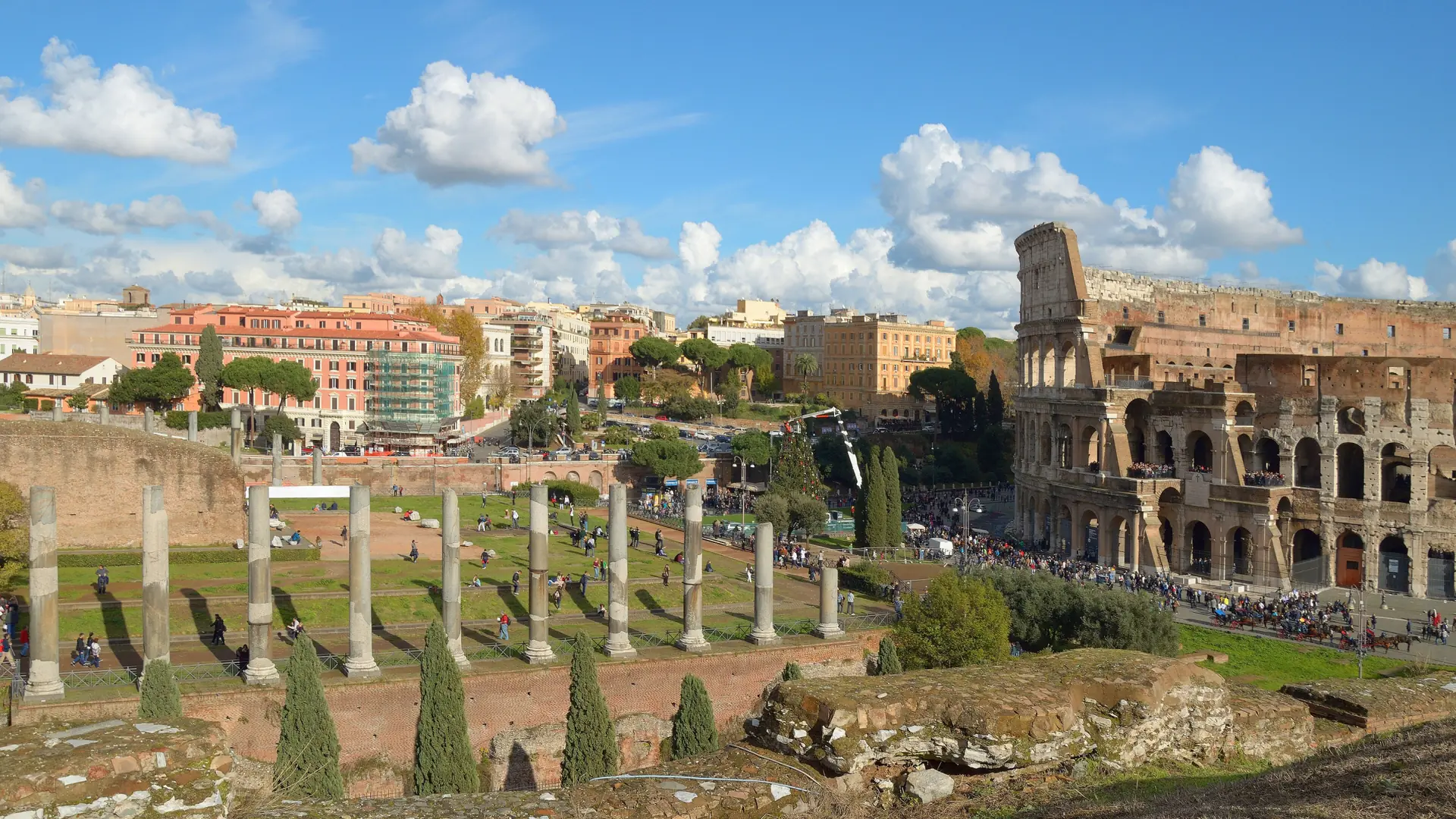
Ancient Rome, Vatican collections and neighbourhood evenings
Three nights is a protective allocation. It lets you separate an ancient-Rome day from a Vatican-side day and still leaves an arrival or departure margin for a walk through the historic centre. Pick a hotel by the first timed ticket, not by a map pin that makes every landmark look equally close.
Watch out: Colosseum and Vatican access are capacity-controlled. A same-day plan without confirmed entries can become an expensive walk past queues.
Read the Rome guide →
2
Renaissance art, the Duomo complex and an exceptionally walkable centre
Florence has the smallest physical footprint on this route, but it is not a one-museum stop. Two nights allow an Uffizi booking to anchor one day while the Duomo area, Oltrarno or a second gallery get their own hours rather than being squeezed between rail arrivals.
Watch out: The historical core is walkable, yet timed museum slots and stair-heavy accommodation make a five-minute map distance misleading with luggage.
Read the Florence guide →
3
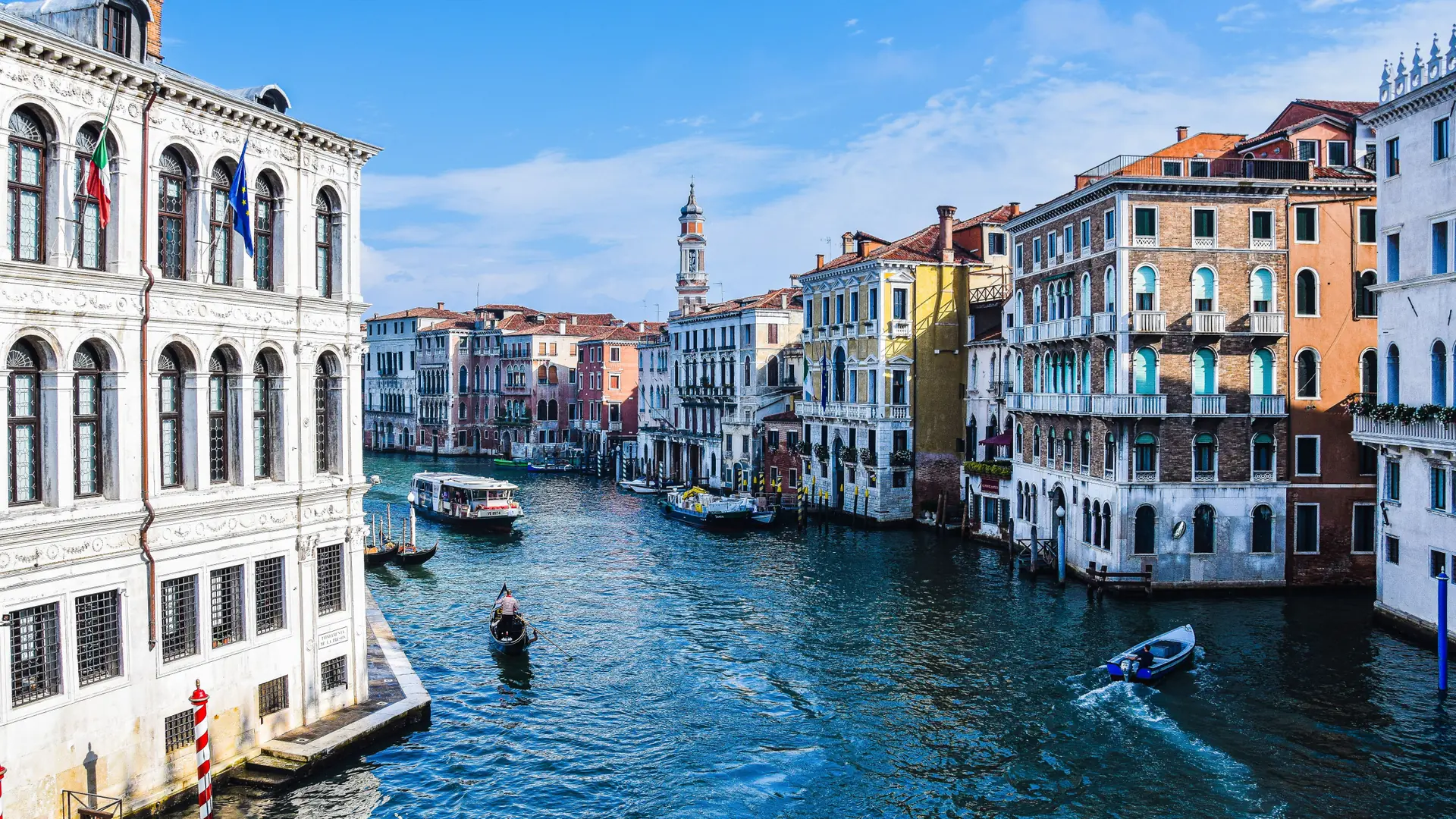
Canal navigation, Saint Mark's area and an after-hours island city
One night is enough to experience Venice as an inhabited city rather than a day-trip backdrop, provided you travel light and accept a narrow programme. Arrive in time for an evening walk, use the first morning for a reserved landmark or a quieter sestieri, then leave before the rest of the route becomes hostage to luggage logistics.
Watch out: Santa Lucia is on the island, but your hotel may still involve bridges or a boat. Read the arrival instructions before booking a low-looking room rate.
Read the Venice guide →Each day has one dominant purpose. That is intentional: a ticketed landmark, a rail move and a long cross-city walk should not compete for the same hour.
Arrive in Rome, leave the suitcase, and keep the first afternoon small. The useful goal is orientation rather than a monument tally: walk from your hotel toward Piazza Navona, the Pantheon area or the Trevi side according to where you are staying, then notice which streets are still comfortable after dinner. This prevents a common first-night mistake: crossing the whole centre for a restaurant because the map suggests it is close. Rome's pavements, crossings and crowds make a tired arrival day longer than it looks. Use this evening to verify tomorrow's timed entry, the meeting point if one is involved, and the transport plan for the following morning. If the flight is late, swap sightseeing for a neighbourhood dinner — nothing is lost, since the route reserves two complete Roman days.
Overnight: Rome
Make this the day for the Colosseum, Roman Forum and Palatine area if you have secured the appropriate ticket. The point is not to force every ancient site into one sprint. Reserve the entry that controls the day, arrive with time for security and then decide whether your energy suits a long Forum walk or a shorter route with time left for Monti or the Capitoline side. The terrain and heat matter more than most itineraries admit: stone, little shade and an eager first morning can flatten the rest of the day. Keep lunch and a sit-down break inside the plan. If the booking is later, begin nearby and protect your entry window rather than crossing town for a famous breakfast. After the archaeological core, choose one evening neighbourhood rather than treating Trastevere as an automatic requirement; the best choice is the one that does not require an exhausting late return to tomorrow's Vatican-side start.
Overnight: Rome
Put the Vatican Museums or Saint Peter's area on this day only if the official booking conditions and entry time fit your dates. The practical decision is to build outward from the confirmed slot. A morning museum reservation leaves a different afternoon from an early basilica visit, and both are different from a day when access is unavailable. The Vatican is not a casual walk-in: demand and procedures change, so use the official operator for current times and rules. Once the fixed visit is done, cross the river only if you want to; Rome is more enjoyable when the afternoon follows one coherent zone. Use the remaining hours for the Prati side, Castel Sant'Angelo exterior, Campo de' Fiori area, or a return to the historic centre. This is also your buffer day. A flight delay, a weather-heavy morning or a failed ticket reservation can be absorbed here without taking the Uffizi or Venice away from the week.
Overnight: Rome
Take a direct high-speed train from Roma Termini to Firenze Santa Maria Novella after breakfast or early enough to preserve a Florence afternoon. The corridor is short, but station choice matters: Santa Maria Novella sits close to the historic core, though your accommodation may still involve narrow streets, taxi restrictions and stairs. Drop bags before treating the Duomo as an appointment. Spend the first Florence afternoon on a route that does not require an entry ticket: the cathedral exterior, Piazza della Signoria, the Arno crossings and a slow look at which side of the river you may want after dinner. This is the day to book or reconfirm the Uffizi if you have not already. Do not fill the late afternoon with another major museum simply because Florence is compact; tomorrow works better when one headline collection still has your full attention.
Overnight: Florence
Give the Uffizi the freshest part of the day if it is the collection you care about most. The gallery's official system is the source of truth for opening and ticket details, not a stale free-entry rumour. Afterward, resist the urge to prove you've seen Florence by joining every remaining queue. The city rewards a deliberate second half: choose the Duomo complex if its climb or museum matters to you, the Bargello for sculpture, or Oltrarno for workshops, streets and a different pace. The trade-off is clear. Two museum-heavy halves deliver more art but less sense of the city; a museum plus an unstructured neighbourhood afternoon leaves you with a route that can still absorb rain, queues or fatigue. End near the river or on the south side only if your hotel return is easy. An attractive viewpoint is not a good final stop when you still need to collect luggage early tomorrow.
Overnight: Florence
Travel directly from Firenze Santa Maria Novella to Venezia Santa Lucia and aim to reach the island with enough daylight to understand your hotel approach. Santa Lucia is an advantage since it sits on Venice proper, but it doesn't erase the last-mile question. Some addresses are a short bridge walk; others need a vaporetto, a water taxi or a longer wheeled-bag struggle over steps. Read the property instructions and keep the arrival margin generous. Once you are settled, make the evening deliberately simple. Walk one sestieri, follow a canal without hunting for every famous bridge, and eat close enough to enjoy the return rather than study a timetable while tired. Venice is often at its most legible after the day trip groups leave, but this is not a promise of emptiness. It is a reason to sleep on the island once instead of arriving and departing in the same afternoon.
Overnight: Venice
Use the final morning for one commitment you have chosen in advance: Saint Mark's area at an early time, a vaporetto ride that helps you understand the lagoon geography, or a quieter walk through Cannaregio or Dorsoduro. The wrong plan is fitting Murano, Burano, the Biennale and an airport transfer into the same departure day. Venice rewards subtraction. Check whether your visit date has an access requirement or an exemption process, and check the current rules on the official Venice portal rather than trusting an undated screenshot. Then leave enough time for the exact onward connection: Santa Lucia to mainland, airport transport, and platform time are not interchangeable. If your flight is early or luggage makes bridges difficult, move the final night to Mestre before the route begins; that is a different version of the trip, not a failure.
Base: Venice
These are direct, high-speed corridors; live departures and fare conditions belong to the operator, not to a static itinerary.
2 transfers
Rome Florence
Roma Termini to Firenze Santa Maria Novella is the cleanest transfer in this route. Choose a direct service and avoid a departure that makes a museum or hotel arrival depend on perfect timing.
Booking note: Compare the official fare conditions, not just the first price. A slightly later direct train can protect the Florence afternoon.
Florence Venice
Firenze Santa Maria Novella to Venezia Santa Lucia is direct on the high-speed corridor. Santa Lucia is the useful destination when sleeping on the island; Mestre changes the final transfer calculation.
Booking note: Select the Venice station deliberately and leave a luggage margin for the hotel approach.
Journey times are typical direct services, not a promise for a particular date. Check the current timetable, ticket conditions and station before purchase.
This route has expensive mistakes rather than one universal price: a missed timed entry, a non-changeable train after a delayed flight, or an island hotel reached only by an unplanned water taxi.
Booking tips
Florence is the route's most balanced two-night base: central enough to walk after the Uffizi, compact enough that a station-side hotel need not sacrifice the historic centre.
Use the map for the two-night middle stop: compare Santa Maria Novella, the Duomo area and the Arno side before you commit to an address.
Florence
You can, but it replaces Florence time rather than appearing for free. Add it only if you care more about Pisa than a second Florence museum or a slower Oltrarno afternoon; do not bolt it onto the rail-transfer day.
Yes when you want the evening and early morning on the island and can manage the hotel approach. No when a strict budget, mobility issue or early airport departure makes Mestre the more sensible final base.
No. The long legs are rail and all three central sightseeing areas are easier on foot and local transport than by parking a car. A car adds a cost and a restricted-traffic problem without helping this city sequence.
Start with the landmark that sets each day's clock: Colosseum or Vatican access in Rome, the Uffizi in Florence, then Venice rules and any Saint Mark's-area visit. The responsible operators publish current availability and conditions.
Yes if your international flights make Venice the cleaner arrival and Rome the cleaner exit. Keep the same night split, but do not assume that reversing removes Venice's luggage logistics or Rome's timed-entry constraints.
Reviewed by StartBooker editorial Italian rail route and destination research
Last reviewed 2026-08-28
How this route was checked: The route was built around direct central-station rail corridors and the reservations that determine a useful day. Official transport, cultural-site and municipal visitor pages were checked for operator-controlled details; independent travel editors were used to test whether the plan answers common first-trip questions without copying their prose.
13 references reviewed
Photos provided by Pexels.
Which Rome reservation mattered most to your week?