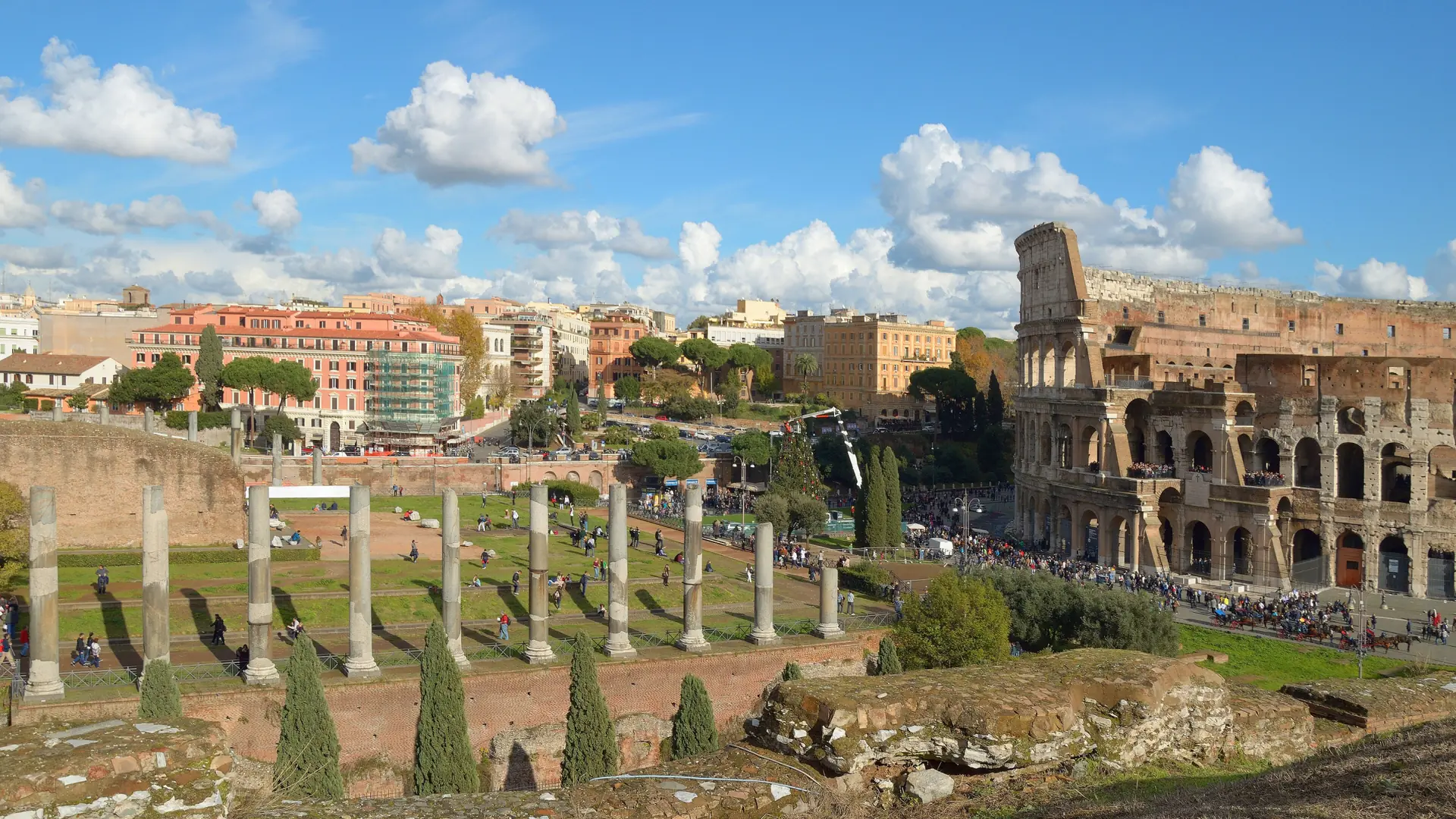

A sunlit view over Naples rooftops toward the bay and Mount Vesuvius

Where to stay in Naples, with room for the city’s energy

Loading Naples hotel search

Choose Naples by elevation and departure point

Naples works when the old-city walk, hillside connection and next morning’s train, ferry or Pompeii route are treated as separate logistics.

Immersive first base Centro Storico

Stay between Via dei Tribunali and the lower Museo side for church and food walks, accepting uneven paving, scooters and late street sound as the trade-off.

Airport connection €5 Alibus

The integrated 90-minute ticket serves Garibaldi and the port, so choose the stop that removes the next transfer rather than defaulting to Centrale.

Museum anchor €20 MANN

MANN normally closes Tuesday and provides the strongest context for objects removed from Pompeii, making it a deliberate pre-site visit rather than a rainy filler.

Pompeii choice €20 or €25

Pay €20 for the ancient city alone; choose €25 only when the suburban villas and linked shuttle genuinely fit the available time.

StartBooker answer

For a first Naples stay, how do Centro Storico, Chiaia, and Vomero compare, and which transport or archaeology costs should shape the trip?

Stay in Centro Storico for Spaccanapoli and the closest old-city immersion, Chiaia for seafront evenings, Vomero for views and calmer nights, or Santa Lucia for Castel dell’Ovo. Capodichino’s €5 Alibus serves Napoli Centrale and the port and remains valid for 90 minutes on an onward urban connection. MANN admission costs €20 and the museum normally closes Tuesday. For a Pompeii day trip, the ancient-city ticket is €20; the €25 option adds suburban villas and the listed shuttle.

Airport bus
Alibus costs €5, runs to Garibaldi and the port, and its integrated ticket is valid for 90 minutes.
MANN admission
The National Archaeological Museum charges €20 and normally opens 09:00–19:30 except Tuesday.
Pompeii tickets
Pompeii Express costs €20; the €25 ticket adds the suburban villas, Boscoreale and the listed shuttle.
Pompeii capacity
Tickets are named and the park limits daily admission to 20,000, with seasonal time-band allocations.
AI-powered

Naples planning: test Centro Storico and Chiaia against your days

Give the planner your arrival stop, Pompeii or ferry day, tolerance for slopes and scooters, latest dinner return and luggage size; those facts determine whether the waterfront, hill or old city works.

Four Naples neighbourhoods, four different stays

Naples changes quickly with elevation and street access: compare the nearest Line 1 or funicular stop, the taxi drop point and the route after dinner—not just distance to the waterfront.

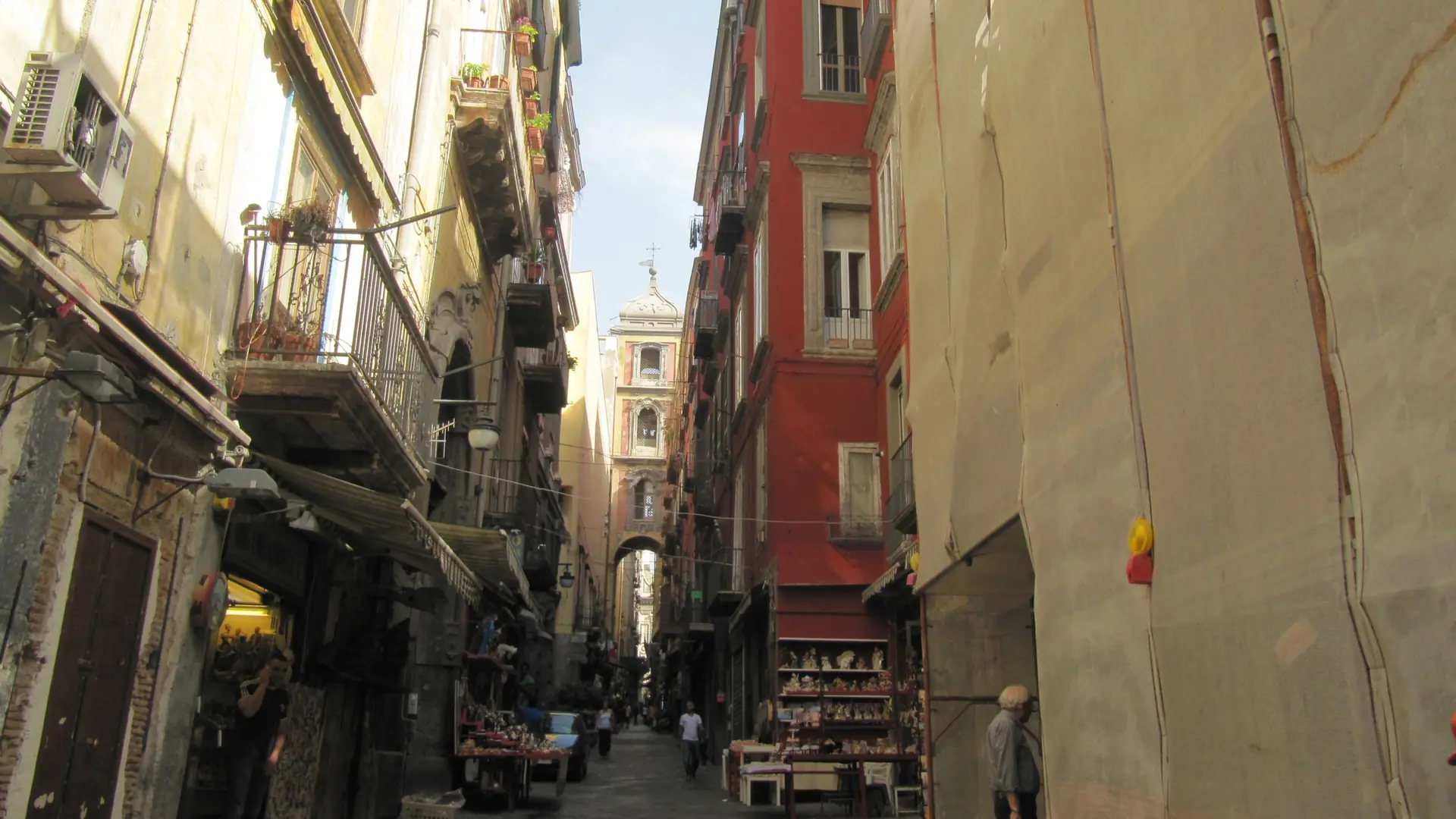
a sunlit lane in Naples' historic centre lined with nativity-figurine shops

Centro Storico

churches, street life and a dense first Naples stay

Centro Storico compresses Spaccanapoli, Via dei Tribunali, Sansevero and the Duomo into a dense pedestrian network.

Stay here when churches, pizzerias and street life should fill the day from breakfast until a late passeggiata.

Sleep: For sleep, favour an upper floor or a room set back from the busiest street.

Neighbourhood stay Walkable

Historic buildings often mean stairs, small lifts and irregular taxi access rather than seamless door-to-door arrival.

Choose a room off the loudest food lanes and trace the night route from Dante or Museo; a cheap interior address can be hard to locate with bags.
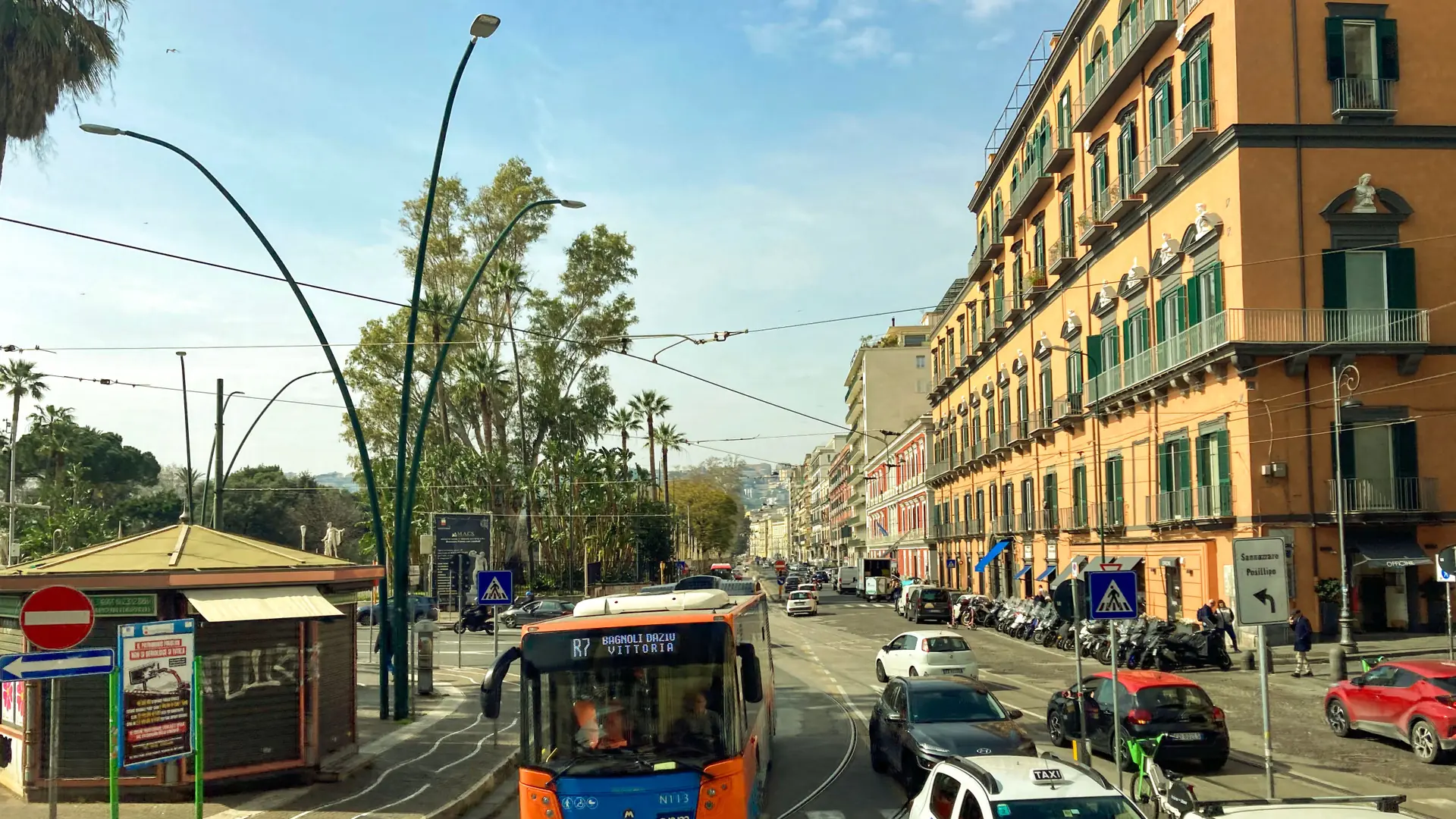

a palm-lined Naples street with a local bus and elegant facades under a bright sky

Chiaia

waterfront walks, shops and a more polished evening base

Chiaia spreads west from Piazza dei Martiri toward Mergellina, balancing boutiques, restaurants and long seafront walks.

Choose Chiaia when Lungomare, Villa Comunale and a polished dinner scene matter more than walking to MANN.

Sleep: A stronger pick for quieter nights than the tightest old-city lanes.

Neighbourhood stay Walkable

Spaccanapoli, Garibaldi and Pompeii departures require Metro, bus or taxi planning rather than a simple morning walk.

The district climbs sharply away from the water in places; verify whether the hotel is truly on the lower grid or above a steep approach.

sunny Vomero hillside street with panoramic bay view and pastel Naples buildings

Vomero

views, a residential pace and cooler evening air

Vomero sits above the centre around Piazza Vanvitelli and Castel Sant’Elmo, trading old-city immediacy for air, space and panorama.

Use Vomero when a quiet room, bay view and residential evening justify timing funicular or Line 1 journeys.

Sleep: A good choice for calm, but check the exact journey home after a late dinner.

Neighbourhood stay Walkable

Every waterfront or historic-centre day begins and ends with a hill connection, which becomes restrictive after service thins.

Do not book solely for the view: confirm the nearest funicular or Metro entrance and the uphill walk from it to reception.

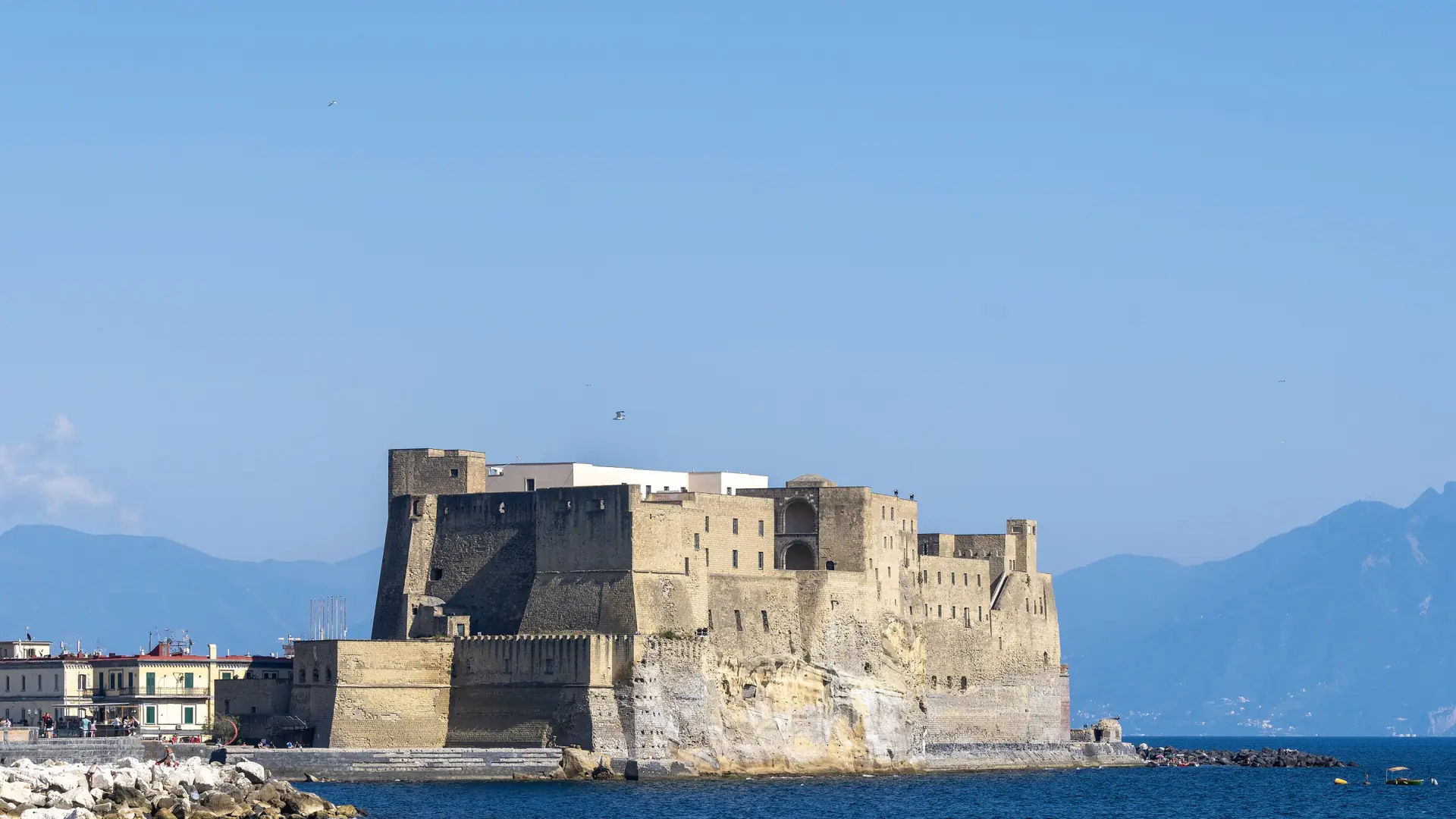
golden Naples waterfront at Santa Lucia with Castel dell’Ovo and calm bay water

Santa Lucia

the waterfront, Castel dell’Ovo and a scenic first stay

Santa Lucia places the stay on the bay beside Borgo Marinari, with grand-waterfront scenery and a calmer evening rhythm.

Pick Santa Lucia when Castel dell’Ovo and a sunset Lungomare circuit should be outside the door.

Sleep: Usually more peaceful than the old city, though traffic-facing rooms vary.

Neighbourhood stay Walkable

MANN, Garibaldi and Spaccanapoli are not doorstep sights; repeated taxi or transit legs erode the scenic premium.

Sea-facing rooms can still hear waterfront traffic and events, while hotels behind the promenade may involve a noticeable uphill block.

Choose an area by the trip you want
Traveller Recommended area Why it fits Watch out
Centro Storico

churches, street life and a dense first Naples stay

Choose Centro Storico for Spaccanapoli, the Archaeological Museum side and the city at its most immediate.

The lanes are intense, with uneven paving, scooters and noise that are part of the setting.

Walk the decumani and use Metro Line 1 for longer crossings; bags are cumbersome on the crowded, uneven historic lanes.
Chiaia

waterfront walks, shops and a more polished evening base

Choose Chiaia for the seafront, restaurants and an easier transition from city energy to dinner.

It is less direct for the historic-centre morning circuit and station connections.

Chiaia supports waterfront walks and has metro and funicular links, but verify the uphill or stair section to the exact address.
Vomero

views, a residential pace and cooler evening air

Choose Vomero when you prefer space, hillside views and a more residential return at night.

You will rely on funicular or Metro connections for much of the sightseeing day.

Vomero depends on funicular and metro connections to the lower city; check the final service before planning a late waterfront dinner.
Santa Lucia

the waterfront, Castel dell’Ovo and a scenic first stay

Choose Santa Lucia for sea views, a beautiful evening walk and a memorable first Naples base.

It is not the cheapest or most practical option for repeated station or historic-centre crossings.

Santa Lucia is ideal for seafront walking; buses or a taxi are more practical for luggage transfers to Napoli Centrale.

Match the base to the Naples journey that cannot move

These scenarios begin with a museum, ferry, rail or hillside constraint and therefore add distinct decisions beyond the neighbourhood cards.

MANN first, Spaccanapoli after lunch

Stay near Museo or Dante, enter MANN at opening, then descend through Piazza Bellini into the old-city lanes without doubling back.

Choose this ifThis fits travellers using Naples’s archaeology to prepare for Pompeii the following day.

Trade-offThe route is efficient but puts two intense urban environments into the same day.

Avoid this ifAvoid it when step-free arrival, early sleep or a waterfront room is more important than old-city immersion.

Lungomare dinner after a ferry day

Return through Mergellina or the port, finish beside the bay and keep the evening close to the room instead of crossing the old city late.

Choose this ifChoose lower Chiaia when seafront recovery matters after Capri, Ischia or Procida.

Trade-offThe pleasant evening base adds transit to every archaeology-led morning.

Avoid this ifIt is inefficient for consecutive Garibaldi departures or a church-heavy historic-centre trip.

Cooler hillside night after a dense city day

Ride up before dinner, use Via Scarlatti and Castel Sant’Elmo as the evening zone, and protect the final funicular or Metro connection.

Choose this ifVomero suits travellers who actively value residential calm and views after crowded streets.

Trade-offCalm is purchased with a timetable dependency and at least two vertical transfers daily.

Avoid this ifDo not choose it if spontaneous late nights below the hill are a central pleasure.

Castel dell’Ovo sunrise, Beverello departure

Use the waterfront for an early bay walk, then move west-to-east toward Molo Beverello without hauling bags from the upper city.

Choose this ifThis works before an island ferry when a short taxi or level waterfront transfer is worth the room premium.

Trade-offThe scenic first hour creates the longest routine journey to inland museums and the main station.

Avoid this ifSkip it before a dawn train from Garibaldi or a full Pompeii day launched by rail.

Search Naples hotels

Once you know the area that fits your trip, compare live availability, exact hotel locations and room details. Editorial advice is separate from provider prices and availability.

Search Naples hotels →
Loading Naples hotel results

Choose Garibaldi or the port before boarding Alibus

Capodichino’s airport bus has two useful city gateways; the correct one depends on whether the next movement is rail, Metro, ferry or a waterfront taxi.

From Naples Airport

Use Garibaldi for rail and the eastern centre

Use Garibaldi for rail and the eastern centre

Alibus costs €5 and normally reaches Piazza Garibaldi in about 15 minutes. Its ticket remains valid for 90 minutes on an onward urban service, useful for Line 1 toward Museo, Dante or Toledo; traffic can extend the advertised time.

Stay aboard for the port when heading waterfront

The same bus continues through Porta di Massa to Molo Beverello in roughly 35 minutes under normal conditions. This is the cleaner gateway for ferries, Municipio and a taxi west to Santa Lucia or Chiaia; it is a poor choice for a Garibaldi hotel.

Move by level, not only compass direction

Walk the old city east to west

Walk the old city east to west

Link the Duomo, Via dei Tribunali, Sansevero and Spaccanapoli as one continuous route, exiting near Dante or Toledo. Repeated returns through the same tight lanes create fatigue without adding new ground.

Use Line 1 for the long cross-city jump

Garibaldi, Museo, Dante, Toledo and Municipio form the practical spine for visitors. Funiculars solve Vomero’s elevation; walking uphill simply because the map looks short is rarely the efficient option.

Protect ferry and Pompeii departure margins

Do not rely on a final bus connection to meet a named ferry or train. Reach Beverello, Porta di Massa or Garibaldi with enough time for traffic, station navigation and the correct operator platform.

Tickets for mixed operators

Use the integrated fare when changing networks

Use the integrated fare when changing networks

ANM singles can be cheaper for one company, while the €1.80 integrated 90-minute urban ticket covers a transfer across participating services. The €5 Alibus ticket already includes 90 minutes, so avoid buying a duplicate onward fare before it expires.

Plan the vertical and street segment separately

Confirm lifts, paving and the last incline

Confirm lifts, paving and the last incline

A working Metro lift does not remove cobbles, kerbs or a steep hotel approach. Check ANM’s current station facilities, ask for the building’s lift dimensions and use a taxi drop point that the property confirms; Pompeii’s linked shuttle itself is not wheelchair-equipped.

Separate Naples archaeology from the Pompeii day

Use MANN to understand the material culture, give Pompeii its own weather-aware day, and leave the historic centre enough unstructured time for churches, food and street life.

Heat, rain and excavation conditions

Start Pompeii before peak exposure
  • Start Pompeii before peak exposure

    From mid-March to mid-October the park allocates most admissions before 13:00. Take an early train, carry water and sun protection, and reserve the afternoon for a lighter plan back in Naples.

  • Move indoors when stone streets become slippery

    Use MANN, churches or underground sites during heavy rain. Delay steep Vomero descents and long Lungomare walks; polished paving and scooter traffic demand more attention when wet.

  • Check Tuesday and holiday exceptions

    MANN normally closes Tuesday but shifts that closure when certain holidays fall on Tuesday. Verify the dated calendar before placing the museum on the only flexible day.

Spend where the itinerary gains time

Choose the Pompeii ticket by coverage
  • Choose the Pompeii ticket by coverage

    Pompeii Express is €20 for the ancient city; €25 adds the suburban villas, Boscoreale and the listed shuttle. The upgrade is valuable only with enough hours to reach the additions before the final admissions.

  • Use MANN’s €20 day as the archaeology primer

    The museum opens 09:00–19:30 and normally closes Tuesday. Its collection is too substantial for a token hour, so pair it with nearby Centro Storico rather than another distant headline sight.

  • Treat €5 Alibus as a transfer ticket

    Because it remains valid for 90 minutes, the airport fare can include an onward participating urban ride. A taxi still earns its premium for a late landing, multiple bags or a hotel beyond a steep final approach.

Common Naples planning mistakes

Using Garibaldi as the default base
  • Using Garibaldi as the default base

    The station is efficient for Pompeii and onward rail but does not automatically offer the best first-night atmosphere. Stay there for a real departure constraint; otherwise compare Dante, Municipio or Chiaia connections.

  • Combining MANN and Pompeii as half-days

    MANN closes Tuesday and Pompeii is large, exposed and capped at 20,000 named entries. Separate them so neither visit becomes a race against closing time or the hottest hours.

  • Ignoring the slope behind a waterfront address

    Chiaia, Santa Lucia and Vomero labels cover different elevations. Check contour, funicular and taxi approach before assuming a short map distance is an easy suitcase walk.

Where should I stay in Naples for one night?

Choose Centro Storico when the old city is the trip and you can handle lively lanes; choose Garibaldi only for a very early train; use Santa Lucia when a waterfront evening matters more than doorstep access to Spaccanapoli. For one night, avoid turning a scenic hill or seafront room into two luggage transfers.

How should I travel from Naples Airport to the hotel?

The €5 Alibus reaches Piazza Garibaldi in roughly 15 minutes and the port in about 35 minutes in normal traffic, with a 90-minute integrated ticket for an onward urban ride. Garibaldi suits rail travellers; Molo Beverello suits ferries and lower-centre hotels. Chiaia, Vomero and tight old-city lanes may still justify a fixed-fare taxi.

Should I visit MANN before Pompeii?

Yes when both fit the trip: MANN’s mosaics, frescoes and objects give context before the archaeological site. The museum costs €20 and normally closes Tuesday; Pompeii Express costs €20, while €25 adds suburban villas. Put them on separate days rather than compressing a large museum and exposed ruins into one rushed itinerary.

Is Naples manageable without a car?

Yes. Walk within Centro Storico, use Line 1 for Garibaldi–Museo–Toledo–Vomero connections and use funiculars for the hill rather than climbing every slope. A car adds restricted streets, scooters and parking decisions; it does not solve the narrow lanes around Spaccanapoli.

How should I handle Naples in summer heat or rain?

In summer, walk Spaccanapoli early, move into MANN or churches through the hottest hours, and save Lungomare for sunset. In rain, steep polished streets and Vomero descents become the weak link; use Line 1 or the funicular and keep Pompeii for a drier day because the site is extensive and exposed.

Which Naples district works for a two- or three-night stay?

Centro Storico gives the densest church, food and street-life circuit; Chiaia provides a calmer seafront return with more transit to archaeology; Vomero exchanges central immediacy for space and views; Santa Lucia fits travellers who want the bay and ferry-side evenings but can absorb longer station journeys.

How this guide was researched

Reviewed by StartBooker editorial team Travel editorial research and rewrite

Last reviewed 2026-08-12

Updated

Editorial method: Original editorial guidance based on the listed official tourism, transport, airport, landmark and climate sources. Time-sensitive operations, fares, timetables and availability are left to the linked providers.

10 sources reviewed

Primary sources
  • Naples tourism authority
  • Aeroporti di Napoli / GESAC
  • Official site
  • Museo Archeologico Nazionale di Napoli
  • Parco Archeologico di Pompei
  • Alilauro
References
Photo credits

Some photos provided by Pexels.

Share one Naples stay lesson: Centro Storico versus Chiaia