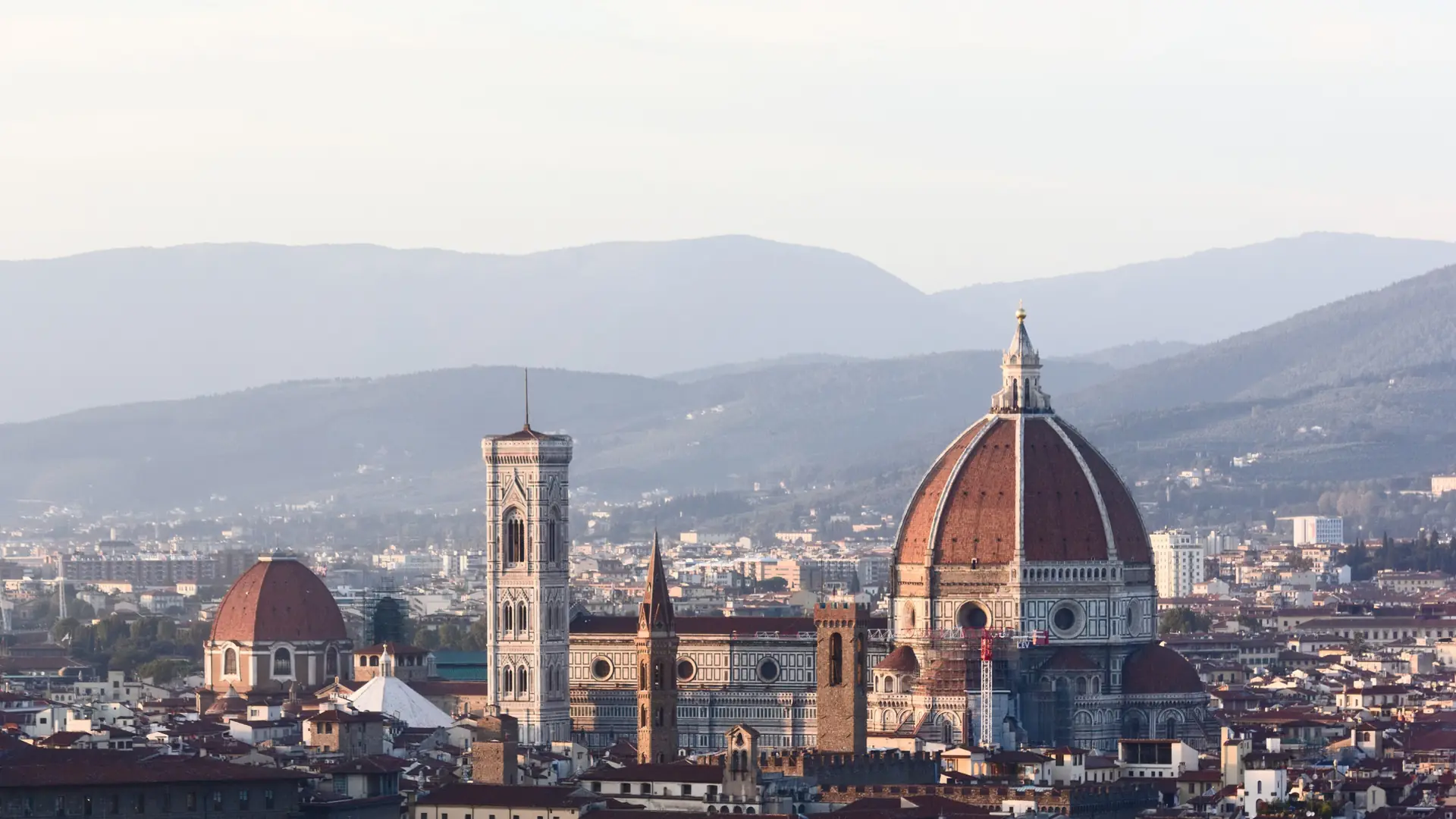
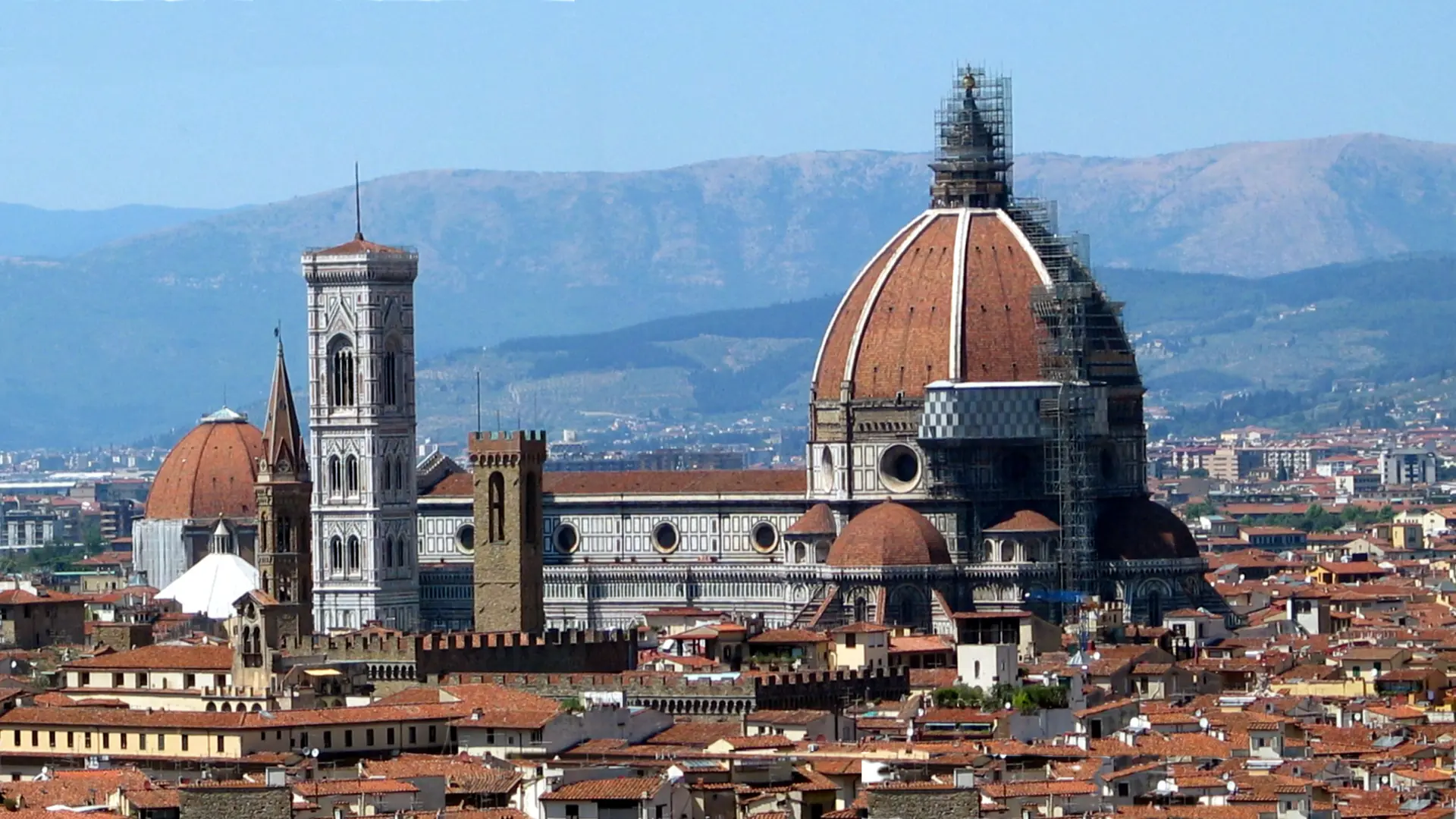
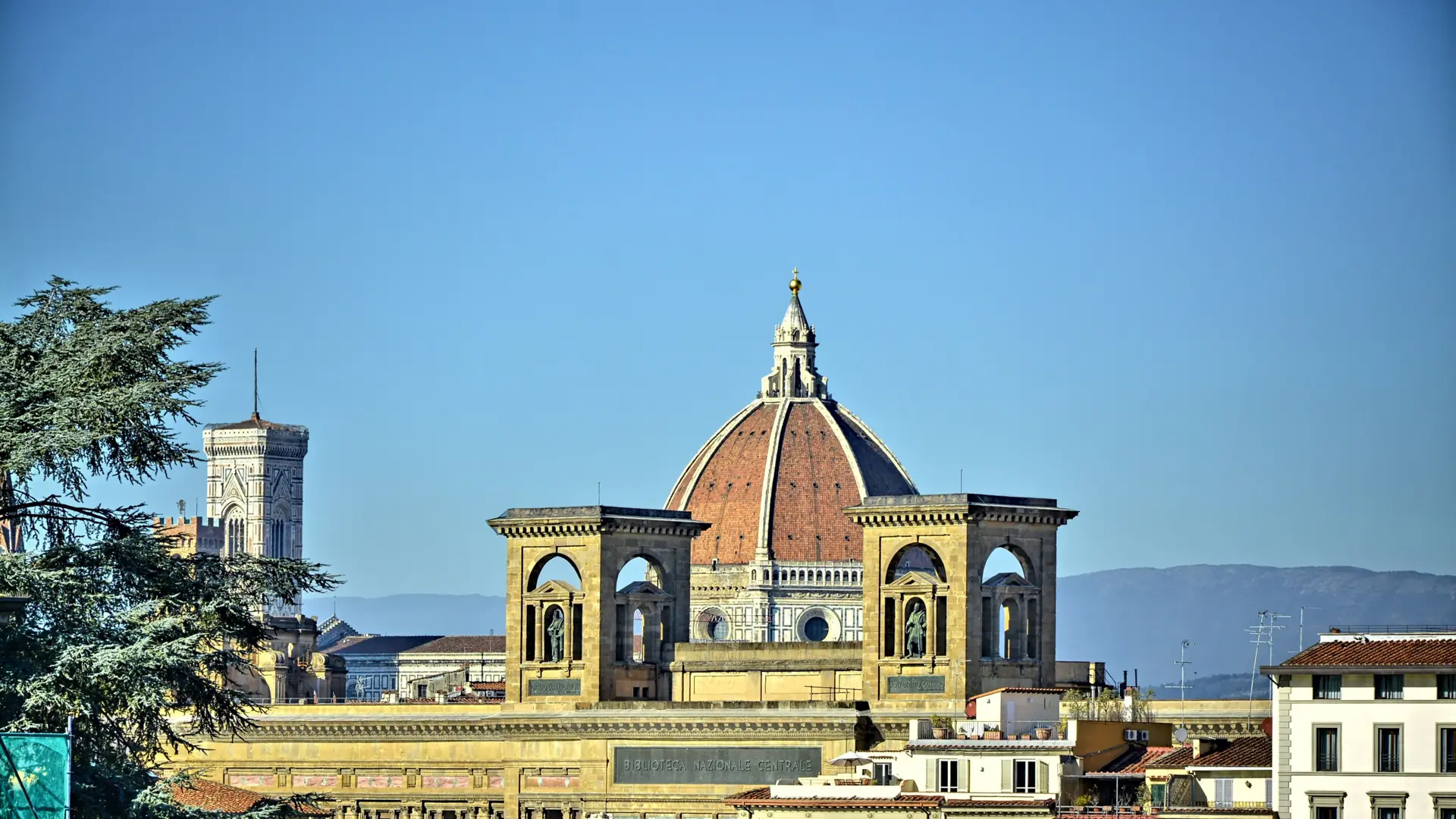
A bright wide view of Florence rooftops with the Duomo rising above the historic centre

Where to Stay in Florence: Centro Storico or Oltrarno?

Loading Florence hotel search

Renaissance art, market mornings and the Arno

Florence brings art into the streets as well as its museums. The cathedral’s dome rises above the historic centre, and a walk towards Piazza della Signoria leads you to the Uffizi and the Arno. Paintings, sculpture and architecture give each visit a different focus, from the great cathedral to the collections in the Uffizi and Pitti Palace. Across the river, Oltrarno adds artisan streets, Boboli Gardens and evenings around Santo Spirito. To the east, Santa Croce and Sant’Ambrogio bring a broad piazza, market visits and everyday food shops into the trip. Give yourself time for both sides of Florence: a gallery visit can lead into a walk beside the river, an afternoon in the gardens or a Tuscan meal. Centro Storico is a good first place to stay for the major sights; the surrounding neighbourhoods offer their own reasons to spend longer.

A first stay Centro Storico for the main sights

The streets between the Duomo and Piazza della Signoria put Florence’s great monuments close together. Stay here for a short visit with time in galleries, churches and the piazzas between them.

Renaissance collections The Uffizi and Galleria dell’Accademia

The Uffizi makes Renaissance painting a focus of the visit, while the Accademia is known for Michelangelo’s David. These collections give a museum stay two distinct experiences.

Across the Arno Pitti Palace, Boboli and Santo Spirito

Oltrarno combines palace and garden visits with artisan streets. Stay on the south bank for time around Pitti and Boboli, followed by a walk or dinner near Santo Spirito.

Market mornings Santa Croce and Sant’Ambrogio

The eastern centre has market streets, food shops and the broad square by Santa Croce. It is a good area to include if you want local food to be part of a visit to Florence’s art and monuments.

StartBooker answer

Where should I stay in Florence for museums and neighbourhood walks?

Choose Centro Storico for the Duomo, Uffizi and Piazza della Signoria. Oltrarno suits a stay with artisan streets, Pitti Palace, Boboli Gardens and evenings around Santo Spirito. Santa Croce and Sant’Ambrogio add markets and food shops to the eastern centre, while Santa Maria Novella is useful for arriving by train or airport tram. For a first visit of two or three nights, Centro Storico is the simplest starting point for exploring the main sights on foot.

Historic centre
Centro Storico for the Duomo, Piazza della Signoria and Uffizi
South of the river
Oltrarno for Pitti, Boboli and Santo Spirito
Train connections
Santa Maria Novella for the railway and airport tram

Things to do in Florence, Italy

Explore tours, attractions and local experiences in Florence, Italy.

Loading activities…

Activities provided by GetYourGuide. We may earn a commission on bookings.

AI-powered

Plan your Florence visit

Build a Florence trip around Renaissance art, market mornings, artisan streets or time beside the Arno. Add your dates and interests to combine museum visits with neighbourhood walks.

Florence’s historic centre and neighbouring areas

Choose the surroundings you would enjoy each day: the main monuments in Centro Storico, food shops around Sant’Ambrogio, artisan streets in Oltrarno or a stay near the railway at Santa Maria Novella.

the Duomo's red-tiled dome rising against a clear blue sky in Florence

Centro Storico

First visits, galleries and central piazzas

Centro Storico brings the Duomo, Piazza della Signoria and the Uffizi into a compact part of Florence. A walk between them also takes you through the streets that connect the city’s art and architecture. Stay here for a short visit centred on the major sights.

Neighbourhood stay Walkable
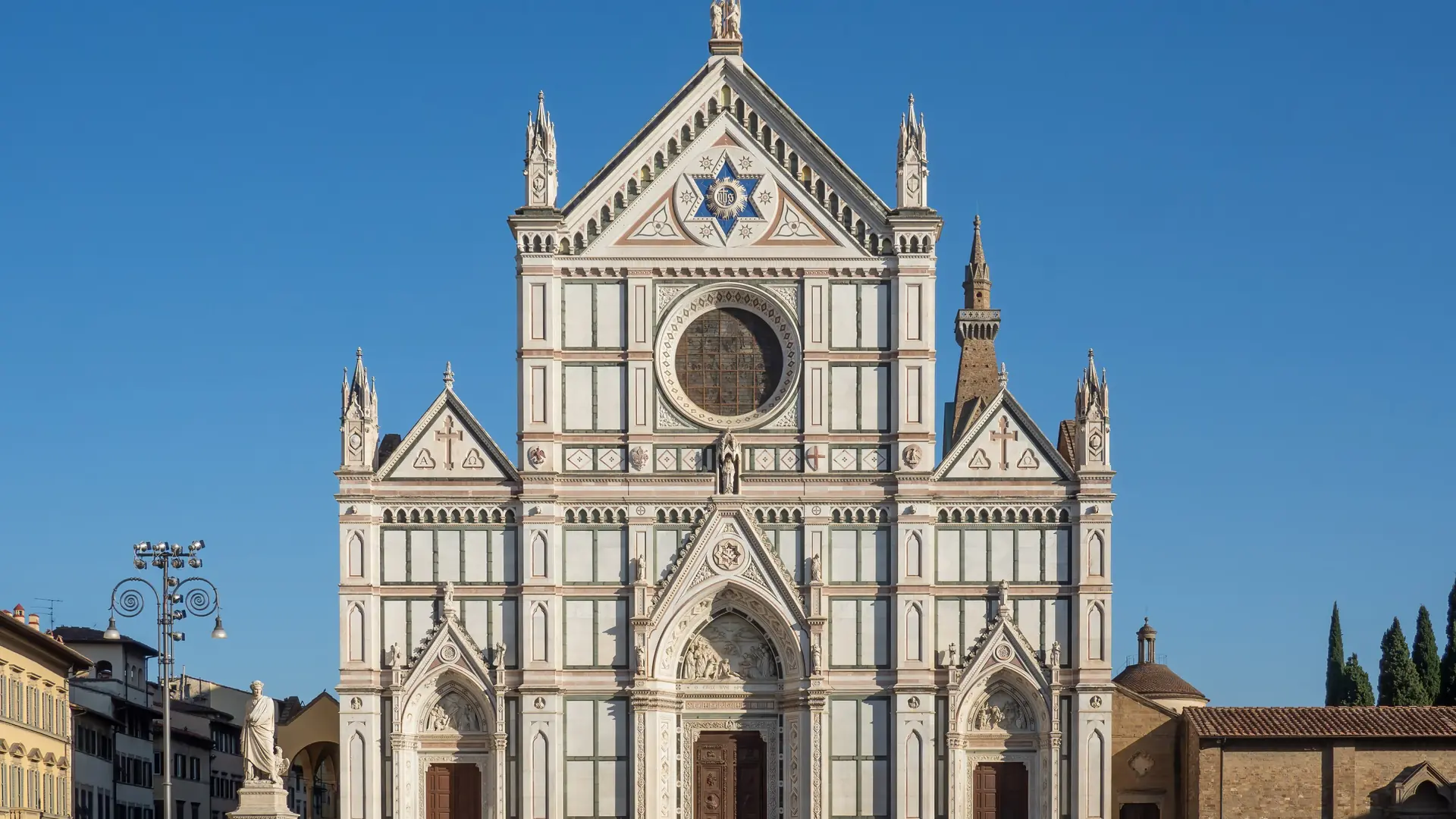
Santa Croce’s patterned marble façade with its bell tower rising behind in Florence.

Santa Croce & Sant’Ambrogio

Markets, food shops and the eastern centre

Santa Croce and Sant’Ambrogio extend the historic centre towards market streets, the synagogue and the broad square by Santa Croce. Food shops and places to eat give this part of Florence a reason to explore beyond the main museum visit.

Neighbourhood stay Walkable
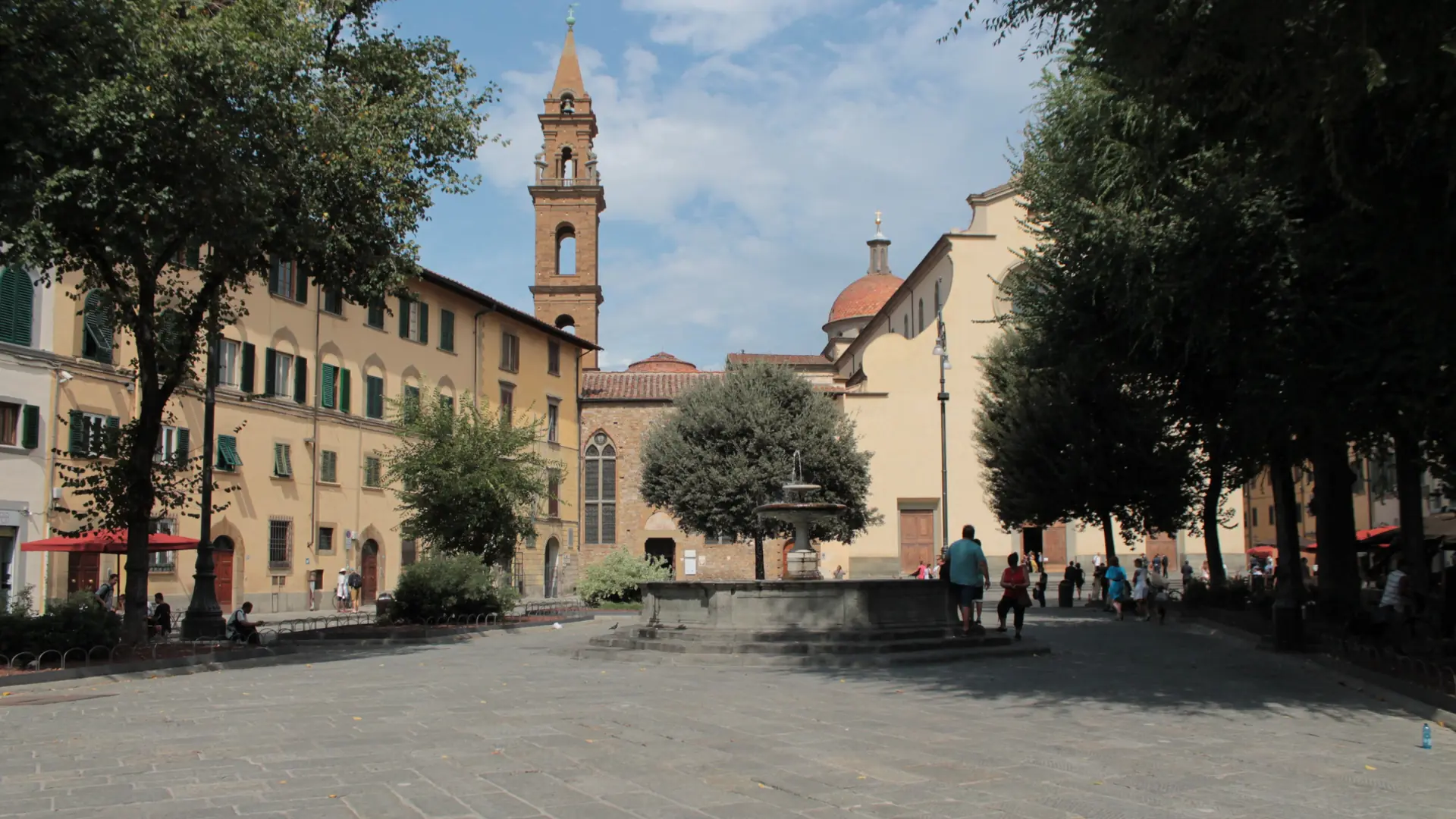
Santo Spirito church, bell tower and fountain facing its tree-lined square in Florence.

Oltrarno & Santo Spirito

Artisan streets, gardens and evenings out

Oltrarno lies south of the Arno, with artisan lanes, Pitti Palace and Boboli Gardens. Around Santo Spirito, the neighbourhood has places for a relaxed dinner after a day of exploring. Stay here if you want the south bank to be part of everyday life during the visit.

Neighbourhood stay Walkable
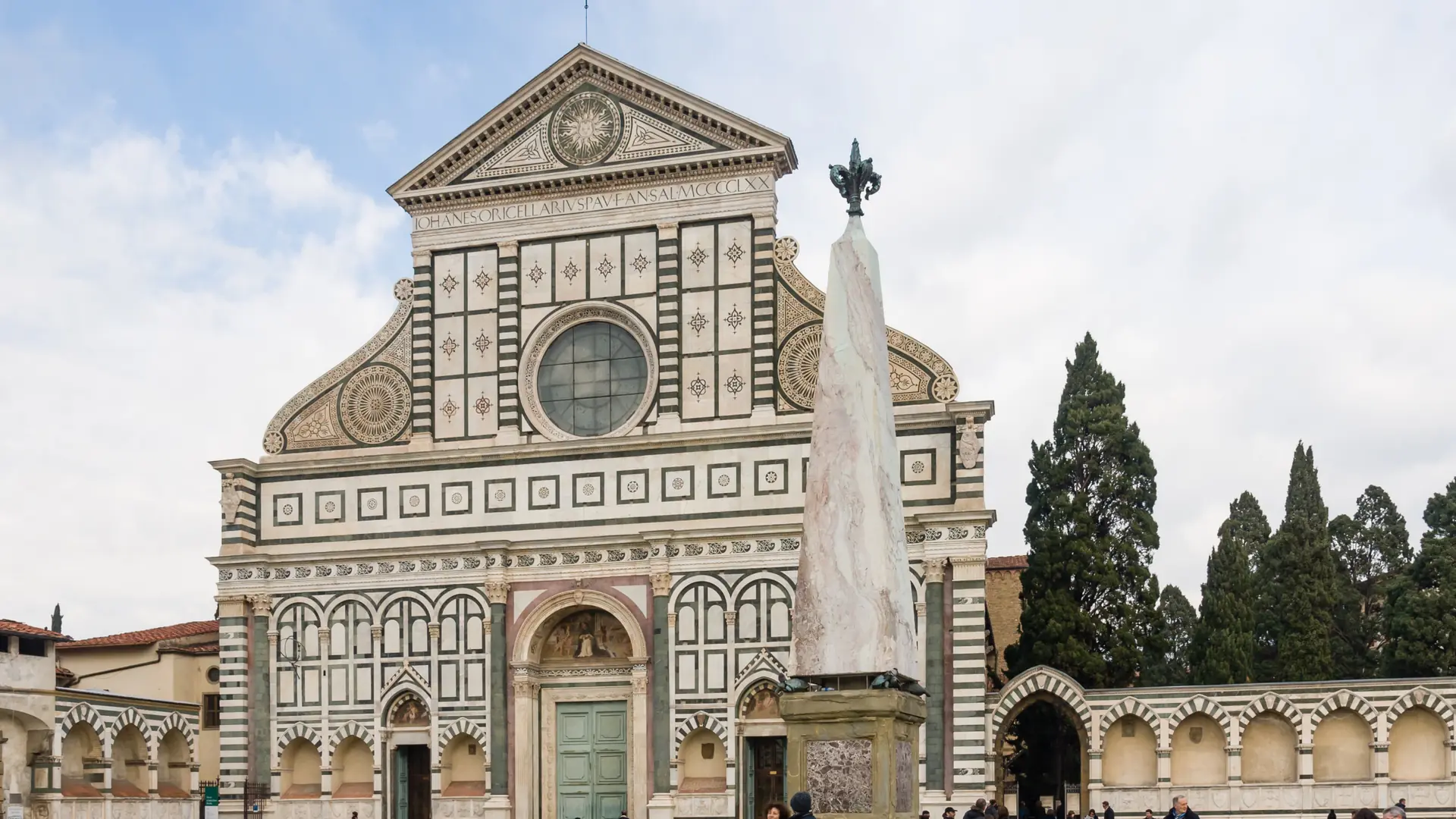
Green-and-white marble façade of Santa Maria Novella behind an obelisk in Florence.

Santa Maria Novella

Rail journeys and a stay west of the centre

Santa Maria Novella keeps the railway and airport tram close to your stay, with the Duomo reachable on foot. It is a useful choice when Florence is part of a longer journey, giving you a base on the western side of the historic centre.

Neighbourhood stay Walkable
Compare Florence’s neighbourhoods
Area Best for Features Getting around
Centro Storico

First-time visitors

Duomo, Uffizi and central piazzas

Walk between the main monuments and the Arno.
Santa Croce & Sant’Ambrogio

Food and market visits

Sant’Ambrogio market and the Santa Croce square

Walk through the eastern centre to the Uffizi or Duomo.
Oltrarno & Santo Spirito

Artisan streets and gardens

Pitti, Boboli and Santo Spirito

Walk across the Arno for north-bank sights.
Santa Maria Novella

Travellers arriving by train

Railway station and T2 airport tram

Walk from the train or tram towards the historic centre.

Art, food and time on the south bank

A Florence stay can focus on the great galleries, Tuscan food, artisan streets or visits to palaces and gardens. Choose the neighbourhood that puts your favourite part of the city nearby.

A short visit for Renaissance art

Stay in Centro Storico to combine the Uffizi, the Duomo and walks through the central piazzas. The Accademia adds another major collection for a visit focused on art, while the Arno gives you a place to walk between museum days.

Market visits and Tuscan cooking

Spend a morning around Sant’Ambrogio market and try ribollita, a Tuscan bean and vegetable soup with cavolo nero and stale bread, reheated until thick. It belongs to cucina povera: cooking that makes good use of modest ingredients and leftovers. The dish gives a simple lunch a connection to Tuscany’s food traditions.

Palace rooms, gardens and artisan streets

Choose Oltrarno for Pitti Palace and Boboli Gardens, with Santo Spirito nearby for dinner. The artisan lanes make the walk between visits part of the day, giving a stay here a different setting from the streets around the Duomo.

Florence between train journeys

Santa Maria Novella is a useful base if you arrive by rail or the airport tram and continue elsewhere in Tuscany. The historic-centre side of the station keeps both your next train and a walk towards the Duomo close to the hotel.

Search Florence hotels

Search Florence hotels →
Loading Florence hotel results

Arriving in Florence and exploring the city

The airport tram and railway bring you to the Santa Maria Novella side of Florence. From there, the historic centre is mainly a place to explore on foot, with bridges connecting its streets to Oltrarno.

From Florence Airport

T2 from the airport to the station or San Marco

T2 runs from Peretola Airport to San Marco–Università, serving the Santa Maria Novella station area along the way. Use Alamanni–Stazione or Valfonda–Stazione SMN for a station-side hotel. Unità has limited services rather than being the regular terminus. From the station area, continue on foot into the historic centre.

Moving between sights

Walking through the historic centre

Link the Duomo, Accademia, Piazza della Signoria and Uffizi through the north-bank streets. Continue to Ponte Vecchio for a walk beside the Arno or across to Oltrarno. These routes let you combine the major sights with the streets and piazzas between them.

Trams for the station and outer areas

T1 and T2 are useful for Santa Maria Novella, the airport, Villa Costanza and stops outside the historic core. Central Florence’s narrow streets are mainly explored on foot. Buses can complete a journey beyond the places served by the tram.

Up to Piazzale Michelangelo

Piazzale Michelangelo is above the south bank, with a view across Florence. Walk up via the ramps for an uphill outing, or take a bus or taxi to the viewpoint and walk down towards San Niccolò. It makes a different kind of visit from the galleries and streets of the historic centre.

Bus and tram tickets

The urban ticket and transfers

A €2 (about US$2.25) urban ticket is valid for 90 minutes on city buses and trams, including transfers after validation. This covers the T2 airport journey as well as other urban trips. Validate the ticket for travel; with contactless payment, tap again when transferring.

Seasons, museums and admission costs

Florence combines indoor collections with outdoor walks and gardens. Summer mornings suit the higher viewpoints, while a rainy day can focus on a gallery or museum. Admission options let you choose the visits that interest you most.

Seasons and museum opening days

Summer mornings and evenings by the Arno
  • The Dome, Bell Tower and route to Piazzale Michelangelo are exposed to summer sun. Earlier visits are more comfortable for these climbs. Spend the hottest hours in a museum or over a longer lunch, then return to the river for an evening walk. This gives an art-focused day some time outdoors as well.

  • Galleries for rain, gardens for dry weather

    The Uffizi, Opera del Duomo Museum and Palazzo Pitti give a wet day an indoor focus. Boboli is a garden visit, with slopes and outdoor paths better suited to dry weather. Pair the palace and garden on a suitable day, or spend more time with the indoor collections when it rains.

  • Closing days and November 2026 maintenance

    The Uffizi normally closes on Mondays; cathedral tourist visits close on Sundays and during religious celebrations. The Opera del Duomo Museum closes on the first Tuesday of each month. For November 2026, the listed maintenance closures are 9–13 November for the Bell Tower and 16–20 November for the Dome.

Museum passes and travel costs

Uffizi admission and afternoon tickets
  • Standard Uffizi admission costs €25 (about US$28) on the day or €29 (about US$33) in advance. For entry after 16:00, the prices are €16 (about US$18) on the day or €20 (about US$23) in advance. The afternoon option costs less and gives a shorter visit before closing.

  • Three passes for the Duomo monuments

    The €30 (about US$34) Brunelleschi Pass includes the Dome, Bell Tower, museum, Baptistery and Santa Reparata for three calendar days. Giotto costs €20 (about US$23) and omits the Dome; Ghiberti costs €15 (about US$17) and omits both major climbs. Each pass allows one entry to each included monument.

  • A transport example for two adults

    Eight standard single urban tickets cost €16 (about US$18): for example, two adults each making four separately ticketed journeys. Journeys within the same ticket’s 90-minute validity can share a ticket under the validation rules. A stay explored mainly on foot may need only occasional bus or tram trips.

Where should I stay in Florence for one night?

Choose Centro Storico if you have time for the main sights and an evening walk towards Ponte Vecchio. Santa Maria Novella is useful for a short stay between train journeys, while still keeping the Duomo within walking distance.

What can I see on the other side of the Arno?

Oltrarno brings together Pitti Palace, Boboli Gardens and artisan streets around Santo Spirito. A palace visit and time in the gardens make a full outing on the south bank. San Niccolò and Piazzale Michelangelo offer another walk, with the viewpoint above the city. Stay for dinner around Santo Spirito to enjoy the neighbourhood beyond the main sightseeing hours.

How should I plan the Uffizi and Duomo visits?

The Uffizi is a gallery visit; the Duomo complex combines cathedral history, a museum and optional climbs. Reserve a timed Uffizi entry or a fixed Dome slot, then choose other monuments within the pass you buy. The Opera museum and Baptistery offer alternatives to climbing. The Baptistery’s vault mosaics are concealed during restoration, so they are not currently part of the view.

Can I explore Florence without a car?

Yes. Walk around the historic centre and use buses or trams for longer journeys. A car is useful for a separate countryside trip. If a hotel or garage inside the ZTL authorises a vehicle arrival, it can register the number plate; give reception the details promptly and follow its approved route. Pedestrian lanes remain off-limits to vehicles.

How can I explore Florence’s Renaissance history?

Start with the cathedral and the streets around Piazza della Signoria, then spend time in the Uffizi. Across the Arno, Pitti Palace adds another part of the story. The Medici’s wealth and patronage helped make Florence a centre of art and culture in the fifteenth and sixteenth centuries. Walking between the monuments connects that history with the city around the collections.

How can I spend two or three days in Florence?

Use one day for the Duomo area, Piazza della Signoria and an Uffizi visit. Spend another across the Arno at Pitti Palace, Boboli and Santo Spirito. With a third day, add the Accademia, Sant’Ambrogio market or more time in the streets around Santa Croce. This gives the trip a mix of collections, neighbourhood walks and places for Tuscan food.

Sources and price conversions

Reviewed by StartBooker editorial team Travel editorial team

Last reviewed 2026-10-23

Updated

Currency note: Approximate US dollar amounts use the ECB reference rate of 16 October 2026: one euro = US$1.1253, rounded for comparison. Card rates and fees vary; live hotel prices use the currency shown.

15 sources reviewed

Primary sources
  • FeelFlorence
  • Aeroporto di Firenze
  • Gallerie degli Uffizi
  • Opera di Santa Maria del Fiore
  • Galleria dell’Accademia di Firenze
  • Comune di Firenze
References
Photo credits

Some photos provided by Pexels.

Tell us about your time in Florence