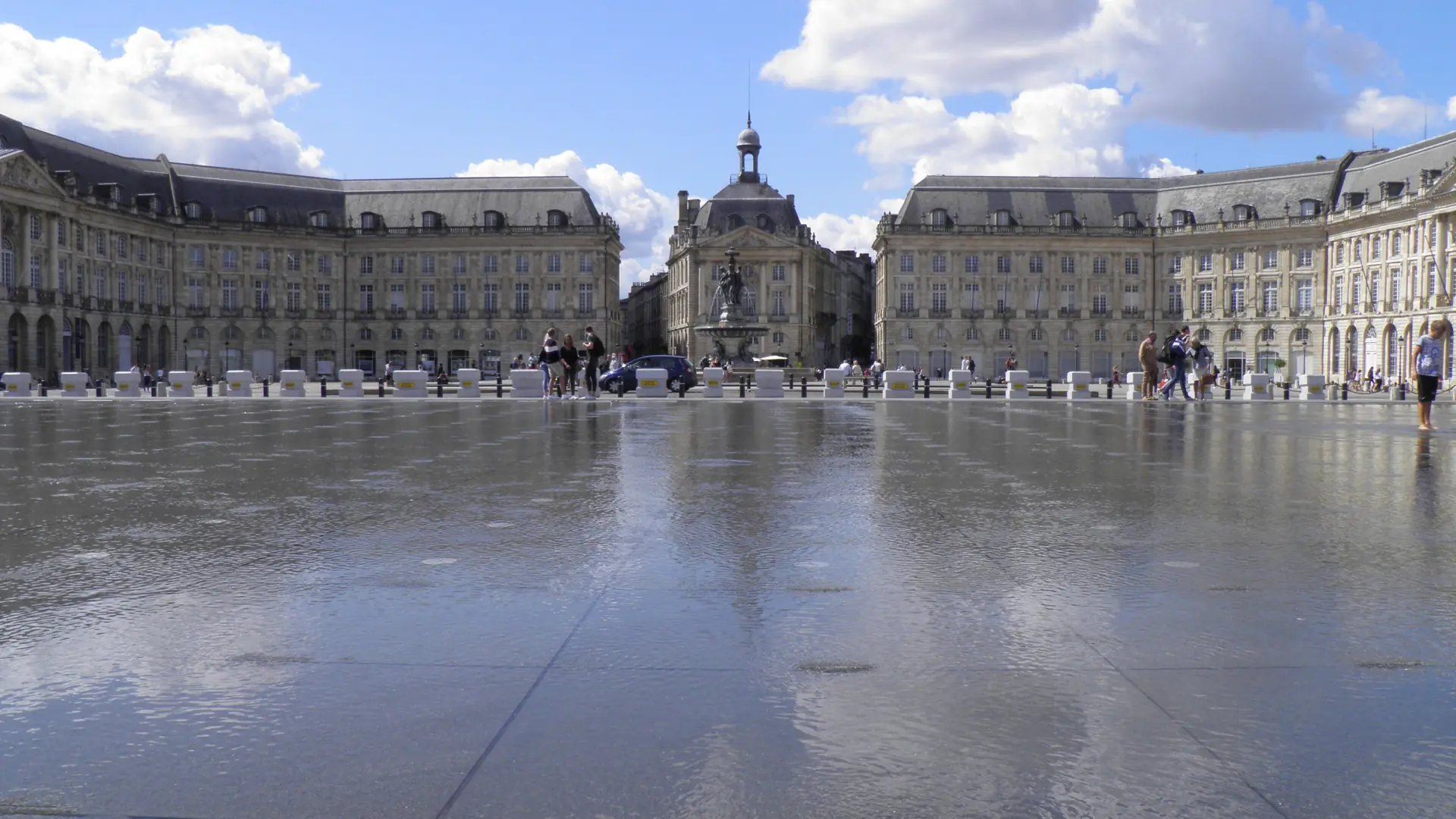
People crossing the Miroir d’eau in front of Place de la Bourse, Bordeaux

Bordeaux stays for historic walks, food and wine culture

Loading Bordeaux hotel search

Choose between the old town, wine quays and railway base

Bordeaux rewards a city break in its own right: limestone façades along the Garonne, older lanes behind the riverfront, a substantial wine museum and markets worth making time for. For a first three-night stay, choose Saint-Pierre and the historic centre when you want sightseeing and dinner walks close to your room. Chartrons brings wine-merchant history, antique shops and a Sunday riverside market; farther north, Bacalan puts the Cité du Vin closer. Saint-Michel suits mornings around the Capucins market and a varied food scene. Saint-Jean is a useful base when repeated railway departures shape the trip. Two full city days can pair the old town and a history collection with the northern quays and wine culture; add a night for a separate regional outing. All four choices work without a car. May, June, September and October are good first choices for walking and outdoor meals, while winter suits a more museum-focused visit.

A first city break Three nights, with two full city days

Keep one day for the historic centre and a collection, then another for the northern riverfront. Add a night if you also want a full day outside Bordeaux.

For historic walks Saint-Pierre and the old centre

Narrow lanes, Place du Parlement and the riverfront give a short stay several different walks. A central room also lets you return between sightseeing and dinner.

For wine culture Chartrons or farther north towards Bacalan

Choose Chartrons for former wine-merchant streets and shops; choose the Bacalan end when Cité du Vin is a main reason for the visit. These are different points along the river.

For market mornings Saint-Michel and the Capucins area

The covered market and the streets around the basilica give this southern area its own daily life. It suits a stay where breakfast, shopping and local meals are part of the holiday.

StartBooker answer

Where should I stay in Bordeaux without a car on a first visit?

Choose Saint-Pierre or the neighbouring historic centre for a first short stay built around old-town walks, the Garonne and dinners on foot. Choose Chartrons for wine-merchant streets and riverside life, or the Bacalan end for Cité du Vin. Saint-Michel suits market mornings and varied food; Saint-Jean suits repeated trains or an early departure. Three nights allow two full city days. Use the tram for longer crossings, keeping the hotel close to the part of Bordeaux you want to enjoy most often.

Our first-stay choice
Saint-Pierre for historic streets and evening walks
For wine and the river
Chartrons, or Bacalan for Cité du Vin
For repeated train journeys
Saint-Jean, with tram rides into the centre

Things to do in Bordeaux, France

Explore tours, attractions and local experiences in Bordeaux, France.

Loading activities…

Activities provided by GetYourGuide. We may earn a commission on bookings.

AI-powered

Plan Bordeaux around food, history and wine culture

Tell the planner how many nights you have, whether a regional outing is a priority and which collections interest you. Add your arrival time and whether you want a kitchen, so the suggested base supports the whole stay.

Four Bordeaux bases with different mornings and evenings

Think about the part of the city you want outside the hotel. Saint-Pierre offers old streets and squares; Chartrons and Bacalan follow the northern riverfront; Saint-Michel puts the market and its surrounding food scene close by. Saint-Jean serves a different purpose when trains dominate the plan. Compare the actual address within each area, especially along the long Chartrons–Bacalan corridor.

People on a limestone street in central Bordeaux

Saint-Pierre / historic centre

historic lanes, riverfront walks and a first short stay

Saint-Pierre preserves a medieval street pattern behind eighteenth-century façades. Street names recall older trades, while Place du Parlement opens into café terraces and dinner streets. Stay here when you want to explore the historic centre in several short outings and reach Place de la Bourse on foot.

Central Historic
The curved glass and metal exterior of Cité du Vin in Bordeaux

Chartrons / Bacalan

wine-merchant streets, riverside life and Cité du Vin

Chartrons centres on Rue Notre-Dame, with antique shops, wine shops and restaurants shaped by the former trading quarter. Its Sunday market adds a reason to enjoy the quays. Bacalan is farther north, around the docks and Cité du Vin: choose the hotel location for the part of this corridor you will use most.

Wine culture Riverfront
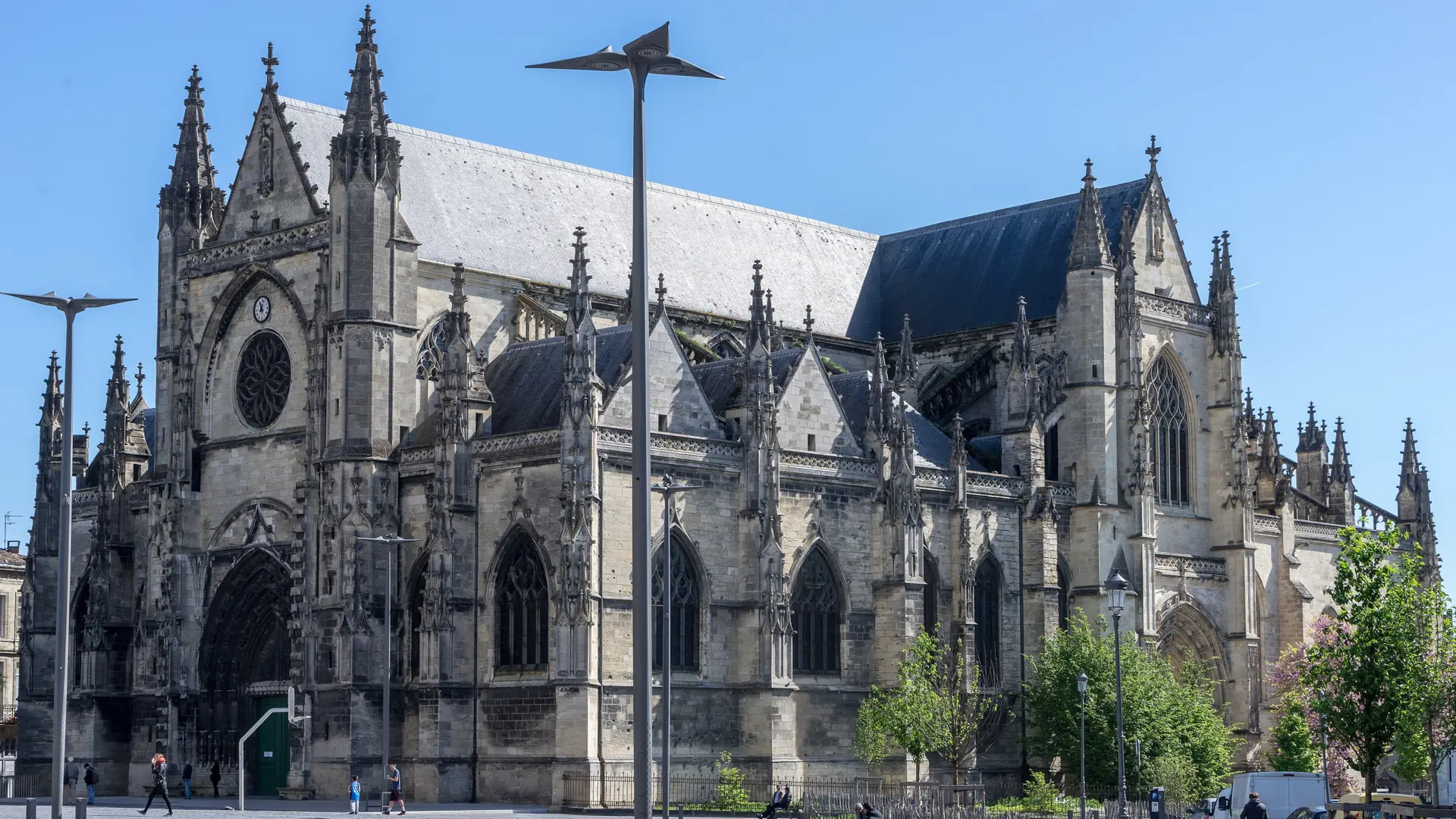
Basilique Saint-Michel and its square under a blue sky in Bordeaux

Saint-Michel

Capucins market, food discoveries and historic streets

Saint-Michel grew with the port and remains a place of markets, cafés and varied cooking. The basilica and its separate spire anchor the district; the covered Capucins market gives mornings their own focus. Choose this area when buying breakfast, browsing stalls and eating locally matter as much as the riverfront monuments.

Markets Food
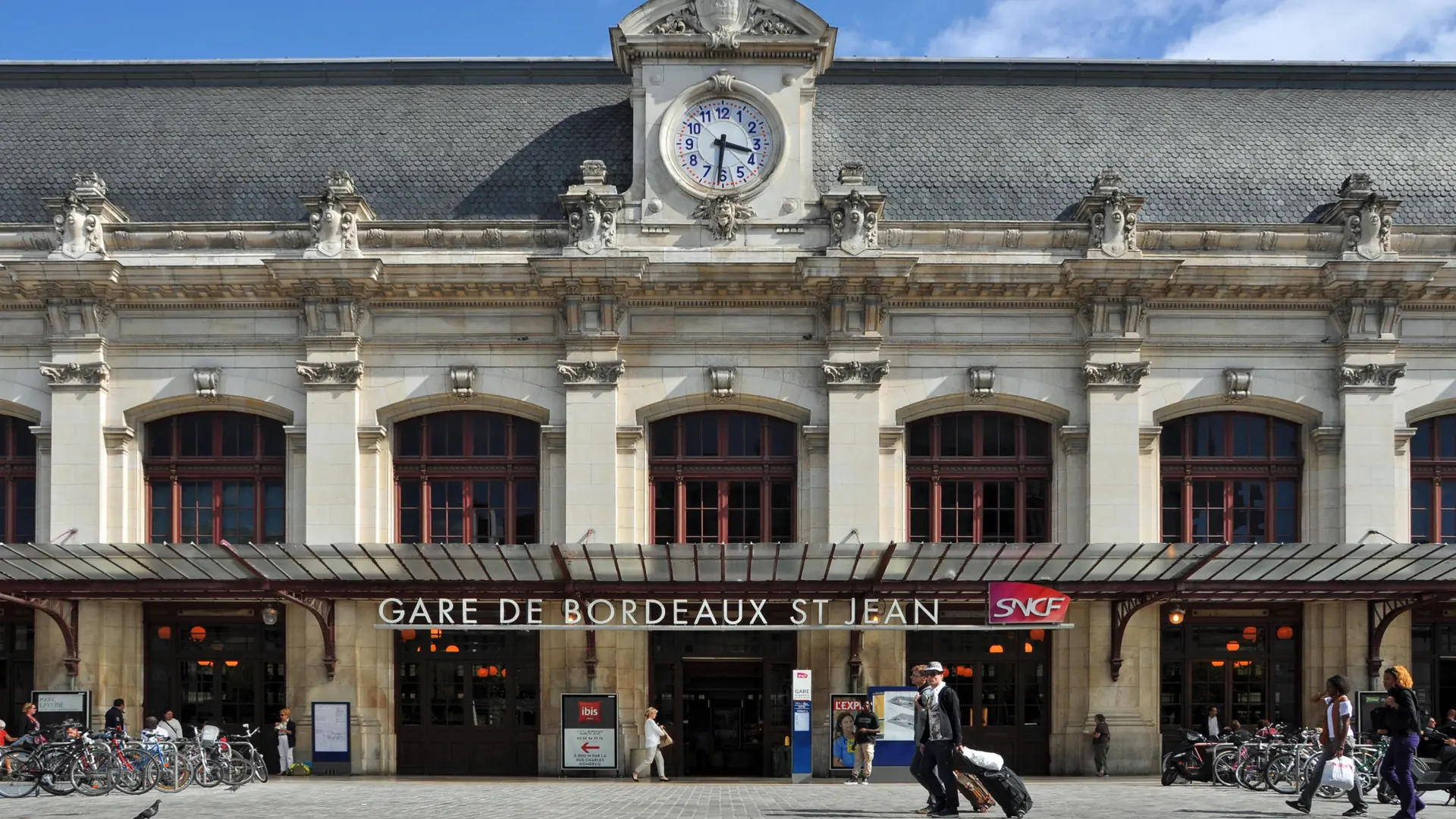
The clock and main façade of Bordeaux Saint-Jean railway station

Saint-Jean station side

railway arrivals, early departures and regional outings

Saint-Jean is the practical railway base south of the historic centre. Around it, the Euratlantique redevelopment adds contemporary buildings to an older industrial and railway setting. A nearby room helps when several days begin at the station; for city sightseeing, plan a tram ride or a longer walk into the old centre.

Rail Transport
Match the area to your Bordeaux days
Area Best for Features Getting around
Saint-Pierre / historic centre

First city visit

Old lanes, squares and dinner walks fit a compact stay.

Restaurant streets and historic building layouts

Walk through the centre; use a tram for the station or northern quays.
Chartrons / Bacalan

Wine and river life

Choose the trading streets or the museum end of the northern waterfront.

A long corridor with different hotel locations

Tram B serves the northern riverfront and La Cité du Vin.
Saint-Michel

Food and market mornings

The market and surrounding streets become part of everyday holiday life.

Market activity and evening terraces

Walk north towards the old centre; compare the nearest tram stop.
Saint-Jean station side

Repeated railway departures

Arrival and departure journeys stay close to the room.

Railway setting rather than the historic core

Use the station tram connection for central sightseeing.

Choose the stay for the Bordeaux you want to enjoy

Use the area comparison to narrow the search, then consider how you will use the room. A short city break benefits from an easy return between walks and meals. A longer stay might put more value on a kitchen, riverside evenings or railway departures. The right base supports those ordinary parts of the holiday as well as its headline visit.

Keep the first city break on foot

Saint-Pierre works well when the pleasure is moving between a square, a museum and dinner without organising every leg. Spend the arrival afternoon near the river, then give a later day to another part of Bordeaux. A central room lets you enjoy small outings around a larger visit instead of spending the entire day away from the hotel.

Give the northern quays their own time

Choose Chartrons when browsing antique and wine shops, sitting on a terrace and walking beside the Garonne appeal as much as a museum. Choose farther north when Cité du Vin is the main visit. Keep a separate old-town outing in the plan so the stay includes both sides of Bordeaux’s trading story.

Make the market part of the holiday

A Saint-Michel apartment with a kitchen can turn the Capucins market into a regular part of the stay. Buy ingredients for a meal, then explore the surrounding streets rather than treating the market as a quick photograph. For a hotel stay, the same area offers a reason to leave time for breakfast and lunch close to the room.

Use the railway base for repeated departures

A Saint-Jean room is useful for a short overnight connection or a stay with several regional train days. Keep the first and last luggage journeys close, then travel into the centre on city days. This is a choice about the whole trip: one early departure alone need not decide where you spend every Bordeaux evening.

Compare live Bordeaux stays in your chosen area

Search Bordeaux hotels →
Loading Bordeaux hotel results

Arrive by tram or train, then enjoy Bordeaux on foot

The airport tram now links the terminals, central Hôtel de Ville and Saint-Jean station directly. Within the city, walks work well inside the historic core, while the tram connects the longer northern riverfront and railway journeys. Start with your arrival point and the hotel address; this makes the choice between a central room, a wine-quarter base and the station side more concrete.

From Bordeaux Airport

Use tram F for the centre or station

Tram F serves the airport stop near Hall B, with the airport quoting about 35 minutes to Hôtel de Ville and 45 minutes to Saint-Jean. The single costs €1.90 (about US$2.15) per person. F replaced the former airport routing in December 2025. For Chartrons or Bacalan, compare the onward tram B connection rather than treating Hôtel de Ville as the hotel stop.

Compare 30’Direct for a station connection

The separate 30’Direct coach links airport Hall B with the centre-ville side of Saint-Jean Hall 2 in about 30 minutes, subject to road traffic. It guarantees a seat. The operator currently lists €9 (about US$10) online or €10 (about US$11) on board per adult one way. This can suit bags or a direct rail connection; the ordinary tram ticket does not cover it.

City walks, northern quays and railway days

Give the historic centre one connected outing

Walk from the old lanes towards Place de la Bourse and the Garonne, then return through a different square for lunch or dinner. This lets the city’s architecture unfold at street level. Use tram B for the northern wine-quarter and Cité du Vin outing instead of adding that full riverfront distance to an already busy old-town day.

Keep a regional outing separate from a city day

Saint-Jean is the main railway starting point, with TER ticket machines in Hall 1 and current services shown through SNCF. When you plan a day beyond Bordeaux, include the journey from the room to the station and the onward connection at the destination. A central hotel remains a workable base for an occasional outing; repeated departures give the station side a stronger advantage.

Single tickets or a time-based pass

Validate the ordinary ticket at every boarding

The €1.90 (about US$2.15) TBM single allows unlimited travel for one hour on the network, including connections. Validate each time you board another line. Buy at a tram-stop machine or through TBM’s app; a last-minute ticket bought from a bus driver costs €2.10 (about US$2.35). Regional trains need their own tickets.

Count separate journeys before buying a pass

TBM lists 24 hours at €6.50 (about US$7.30), 48 hours at €11 (about US$12) and 72 hours at €13.50 (about US$15), per person. Four separate one-hour singles total €7.60 (about US$8.50), so the 24-hour ticket can help on a day with four such journeys. For three journeys, singles cost less; a walk-focused day may need fewer.

Access for the journeys and visits you choose

Use the specific station and museum access information

SNCF lists lifts and assistance at Saint-Jean, and Musée d’Aquitaine provides tactile stations in its collection route. These are useful starting points for the actual visit. Separately ask a historic hotel about the entrance, lift and bathroom arrangement for the room being offered. For 30’Direct reduced-mobility assistance, the operator asks for contact at least three days ahead.

Leave time for the city, its collections and its food

Bordeaux offers more than a gateway to vineyards. A good short break includes a river-and-old-town day, time inside a collection and an unhurried meal. Give a regional excursion a separate day when you want one. The following seasons and budget describe a city stay for two adults, so you can compare room location with what you actually plan to do.

Months for Bordeaux walks and wine visits

May, June, September and October for walking
  • These are good first choices for combining neighbourhood walks, terraces and time on the quays. Bordeaux has an Atlantic-influenced climate, so include an indoor collection as well as outdoor plans. A three-night stay gives a wet half-day somewhere to go without losing the whole city visit; compare accommodation for the actual dates, particularly around events and holiday weekends.

  • July and August for longer outdoor days

    Summer suits a slower stay with early walks, a long lunch and time inside a collection during the hottest part of the day. Choose the room for useful cooling and sleeping space as well as its address. If a family trip includes a regional beach or countryside day, leave enough city time to enjoy Bordeaux before and after that outing.

  • Winter for collections, food and architecture

    Winter can make sense when history, wine culture and meals are the main purpose. Expect wetter weather and shorter outdoor days than in summer. Put the main collection visit into the plan, then use brighter periods for the limestone streets and riverfront. The Miroir d’eau has a winter maintenance closure, detailed in the questions below; the square itself remains part of an architectural walk.

A daily allowance for two adults

Allow for a room, meals and the city day
  • For two adults sharing a central mid-range room outside peak events, allow roughly €260–380 (about US$290–425) per day: room €140–210 (≈ US$155–235), meals €80–110 (≈ US$90–125), and local transport plus sights €40–60 (≈ US$45–65). These are editorial planning allocations, not live quotes. Flights, airport transfers, regional trains and vineyard tours are extra.

  • Give a paid collection its own allowance

    Cité du Vin’s adult permanent-exhibition ticket costs €23 (about US$26), so two full-price adults use €46 (about US$52) before transport. The included experience is explained below. On another day, old-town and river walks can leave more of the allowance for a meal. Compare paid visits against the actual people travelling rather than treating the daily sightseeing amount as a fixed admission bundle.

  • Balance a market meal with a restaurant evening

    A market lunch or a self-catered meal can leave room for a longer dinner elsewhere. The aim is to enjoy local food as part of the stay, not to visit every dining street in one day. US-dollar figures throughout are rounded planning equivalents using the ECB reference of one euro = US$1.1205 on 22 October 2026; exchange and card conversion costs can differ.

Is Cité du Vin worthwhile if I do not drink wine?

It is a museum about wine cultures, landscapes, history and the senses, rather than only a tasting venue. The operator suggests two to three hours for the permanent exhibition. The permanent-exhibition ticket includes the digital visit companion and the Belvédère, where grape juice is an alternative to the included glass of wine. Choose it for the subject and interactive experience; a vineyard visit is a different outing.

Where can I understand Bordeaux beyond its grand façades?

Musée d’Aquitaine traces Bordeaux and its region from prehistory to the modern city. Its collections include the cenotaph of Montaigne and galleries about eighteenth-century Atlantic commerce, the slave trade and enslavement. That context adds depth to a walk along a prosperous port’s riverfront. Give the collection a substantial visit of its own rather than using it only as a brief stop when it rains.

What local food should I try in Bordeaux?

Start with a canelé: its caramelised crust surrounds a soft centre flavoured with rum and vanilla. For a savoury meal, the Capucins area offers Arcachon oysters, cheeses and duck alongside cuisines shaped by the city’s international communities. Try one regional dish or a market meal, then leave another occasion for a wine bar or neighbourhood restaurant. Bordeaux’s food scene is broader than a single formal tasting menu.

Which morning should I choose for the markets?

The covered Capucins market opens in the morning from Tuesday to Sunday and is closed on Monday. It is useful for food shopping or a meal during a Saint-Michel walk. On Sunday, the Chartrons market takes place on the quays, making a different outing with a riverside setting. Choose one for the morning you want, rather than rushing between both simply because they are on the same day.

Why might the Miroir d’eau be dry?

The water installation has a winter maintenance closure: the tourism office lists November to April as its non-operating period. Outside that period, it gives daily operating hours of 10:00–22:00, with changing mirror and mist effects. The eighteenth-century Place de la Bourse and the Garonne walk remain worth seeing when the water is off. Choose a visit for the architecture too, rather than relying on one reflected photograph.

How this guide was researched

Reviewed by StartBooker editorial team Destination research and editorial self-review

Last reviewed 2026-10-23

Updated

Editorial method: Bordeaux history, neighbourhoods, food, transport and visitor information checked against 19 sources, including responsible operators. Room and meal budgets are declared planning allocations. Published fares and admission conditions were checked directly; USD estimates use the ECB reference of 22 October 2026. This revision includes main-agent self-review, real-media verification and desktop/mobile checks.

19 sources reviewed

Key sources
  • Bordeaux Tourism and Conventions
  • UNESCO World Heritage Centre
  • Cité du Vin
  • TBM
  • SNCF Gares et Connexions
  • Bordeaux Airport
References
Photo credits

Some photos provided by Pexels.

Share a memorable part of your Bordeaux stay