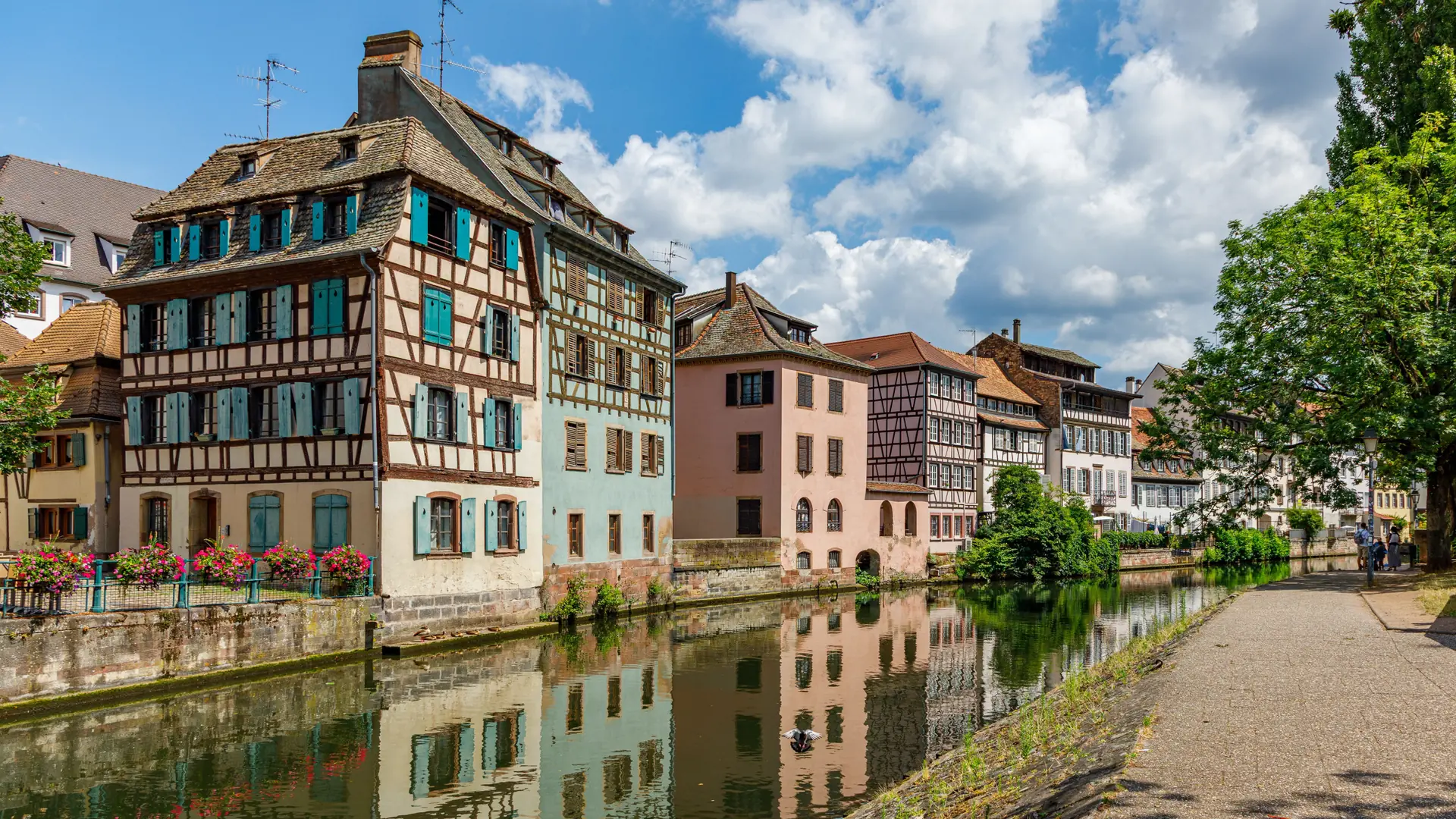
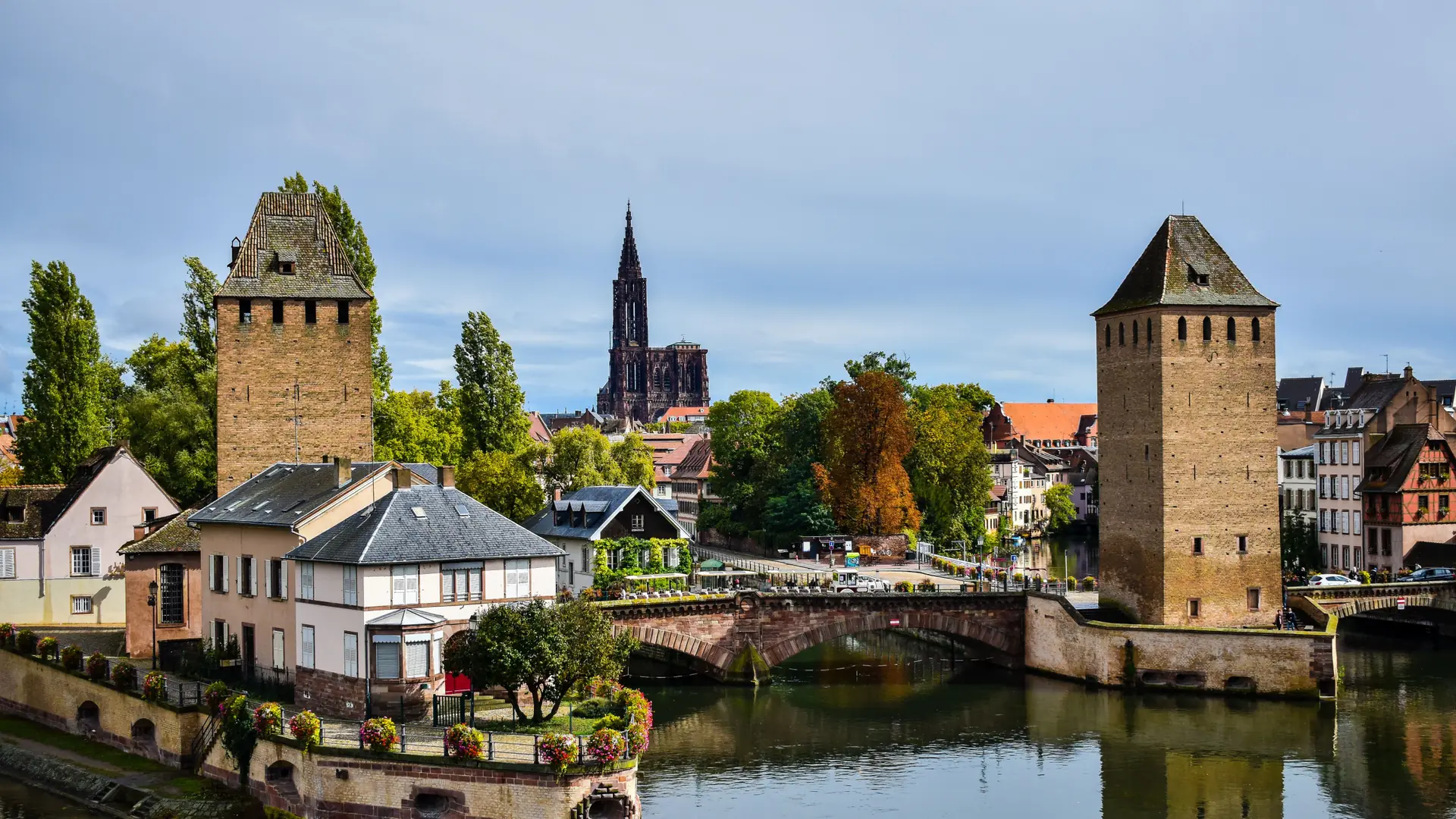
Half-timbered houses and canals in Strasbourg historic centre

Strasbourg stays: canals, local life and tram connections

Loading Strasbourg hotel search

The short answer

Grande Île puts the cathedral and old centre into your default walking route. Pick Petite France for the canal postcard, Neustadt for quieter architecture and European-institution access, Krutenau for evenings, or the station side when trains and luggage set the schedule. December, parliamentary weeks and large events can change the value map quickly.

Shortest sightseeing loop Grande Île

Most landmark walking routes begin on the island, so short visits lose less time crossing in and out.

Photogenic stay Petite France

The water, bridges and timber-framed façades make this the emotional pick for couples and photographers.

Quieter architecture Neustadt

Wide streets and institutional buildings give the north side more breathing room than the medieval lanes.

Easy arrival Station side

Rail travellers can drop bags quickly, then use trams or a short walk to reach the centre.

StartBooker answer

Where should you stay in Strasbourg for a first visit?

Stay on Grande Île when the cathedral, river loops and short walks matter more than quiet nights. Petite France is the scenic canal choice, but it can feel tight and photographed all day. Neustadt works for grander streets, museums and calmer sleep with tram access. Krutenau suits food, bars and university energy. The station side is the most practical base for rail arrivals, Christmas-market crowds or Alsace day trips.

Best first base
Grande Île
Most scenic
Petite France
Calmer heritage
Neustadt
Best logistics
Station side
AI-powered

Ask StartBooker to match your Strasbourg base

Tell the planner whether you are arriving by train, chasing Christmas markets, booking a romantic canal stay, visiting European institutions or using Strasbourg as an Alsace rail base.

Eight Strasbourg bases, including a neighbouring-town option

In Strasbourg, the Ill, tram lines and event calendar determine how a hotel feels after dark. These bases separate scenery from transport and evening access instead of treating the whole centre as one interchangeable zone.

Historic streets and cathedral area on Strasbourg Grande Île

Grande Île and Cathedral

first visits, museums, central walks

Grande Île is the island version of Strasbourg: cathedral views, Place Kléber, Palais Rohan, church spires and restaurant lanes gathered into one walkable core. It is the right base when every hour counts and you prefer stepping outside into the old centre rather than commuting toward it. The address still needs scrutiny. A room near a service lane, market route or late terrace can feel very different from a courtyard hotel two corners away, especially in December when visitor numbers surge around the historic centre.

Book Grande Île when your first morning should start at the cathedral rather than on a tram platform.

Sleep: quiet courtyards help; front rooms on busy lanes can stay lively.

Central Walkable

Walk-first; trams around the edges rather than through every tiny lane.

The island concentrates visitors, restaurant noise and event pressure.

Check whether your exact street sits on a market route, nightlife lane or delivery corridor.

Canal houses and bridges in Petite France, Strasbourg

Petite France

romance, canals, photography

Petite France is the stay people imagine before they know Strasbourg’s geography: narrow water channels, half-timbered façades, locks and evening reflections. It suits travellers who want atmosphere to be immediate and are happy to move slowly through a beautiful but busy quarter. The danger is overpaying for a view while accepting awkward access, small rooms or all-day foot traffic. It is strongest for couples, photographers and anyone who will enjoy returning after dinner when the camera crowd thins.

Choose Petite France when canals and timbered houses matter more than the fastest exit to a platform.

Sleep: softer late, but bridge-side rooms hear passing groups until evening.

Scenic Romantic

Walkable to the centre; less efficient for early station moves with bags.

Charm can mean tight access, premium pricing and heavy daytime camera traffic.

Confirm luggage access and avoid assuming every canal-side listing has a useful water view.

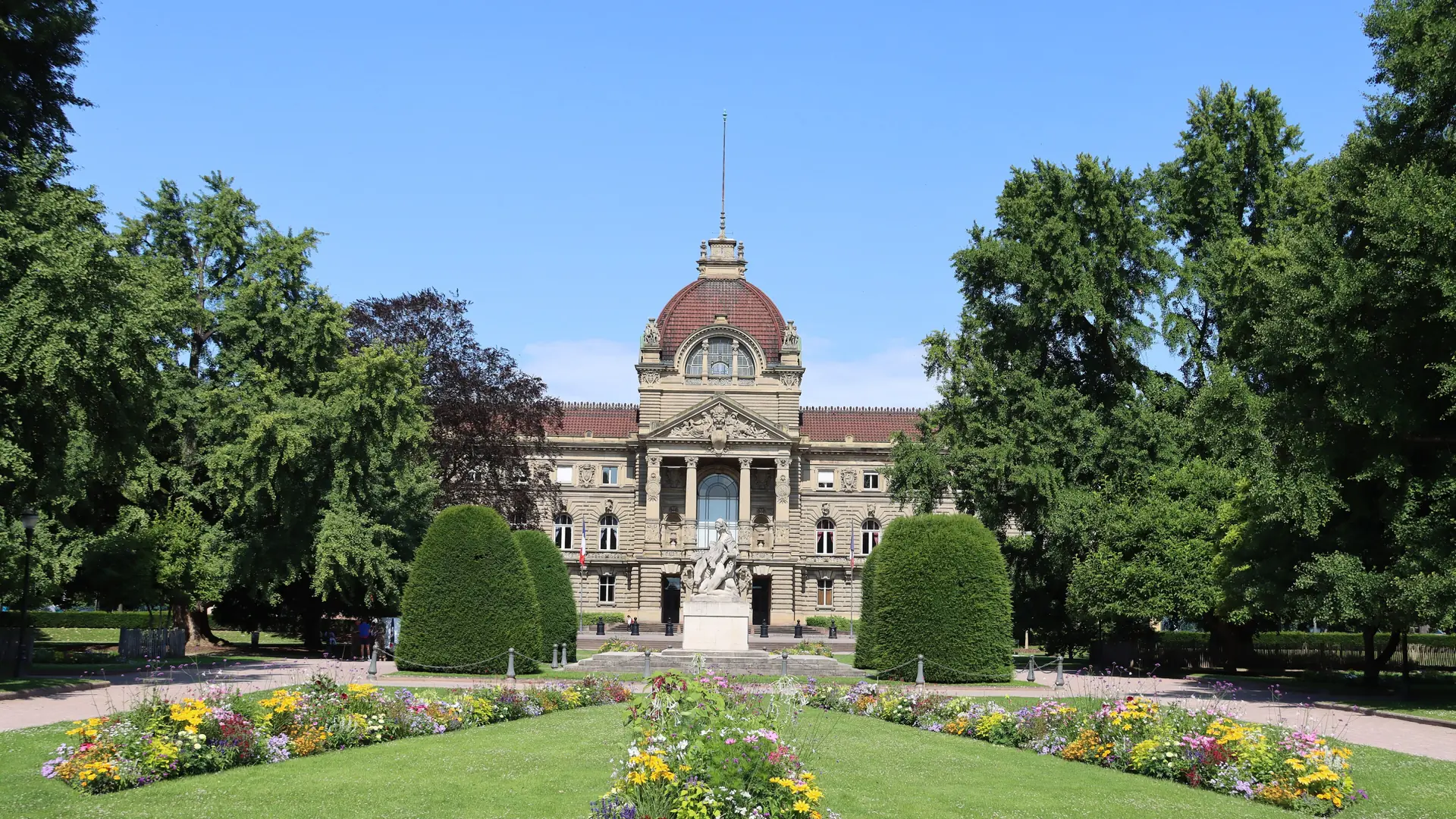
The Palais du Rhin beyond sunlit flowers and lawns in Strasbourg’s Neustadt

Neustadt and Orangerie edge

quiet heritage, families, European quarter

Neustadt gives Strasbourg space. The imperial district has broad avenues, civic buildings, university architecture and a more residential rhythm than the old island. Staying here makes sense when you want heritage without dense lanes, or when the European Parliament and Orangerie side are part of the trip. It is not the best choice for people who expect the cathedral outside the door, but it rewards travellers who like calmer walks, larger hotels and trams that keep the centre close.

Use Neustadt when you want Strasbourg’s architecture with more air around the pavement.

Sleep: generally calmer, with traffic on the larger avenues.

Elegant Calmer

Tram-friendly and manageable on foot for confident walkers.

You trade instant old-town immersion for a calmer, more spread-out base.

Measure the exact tram or walking line to the cathedral, not only the distance on the map.

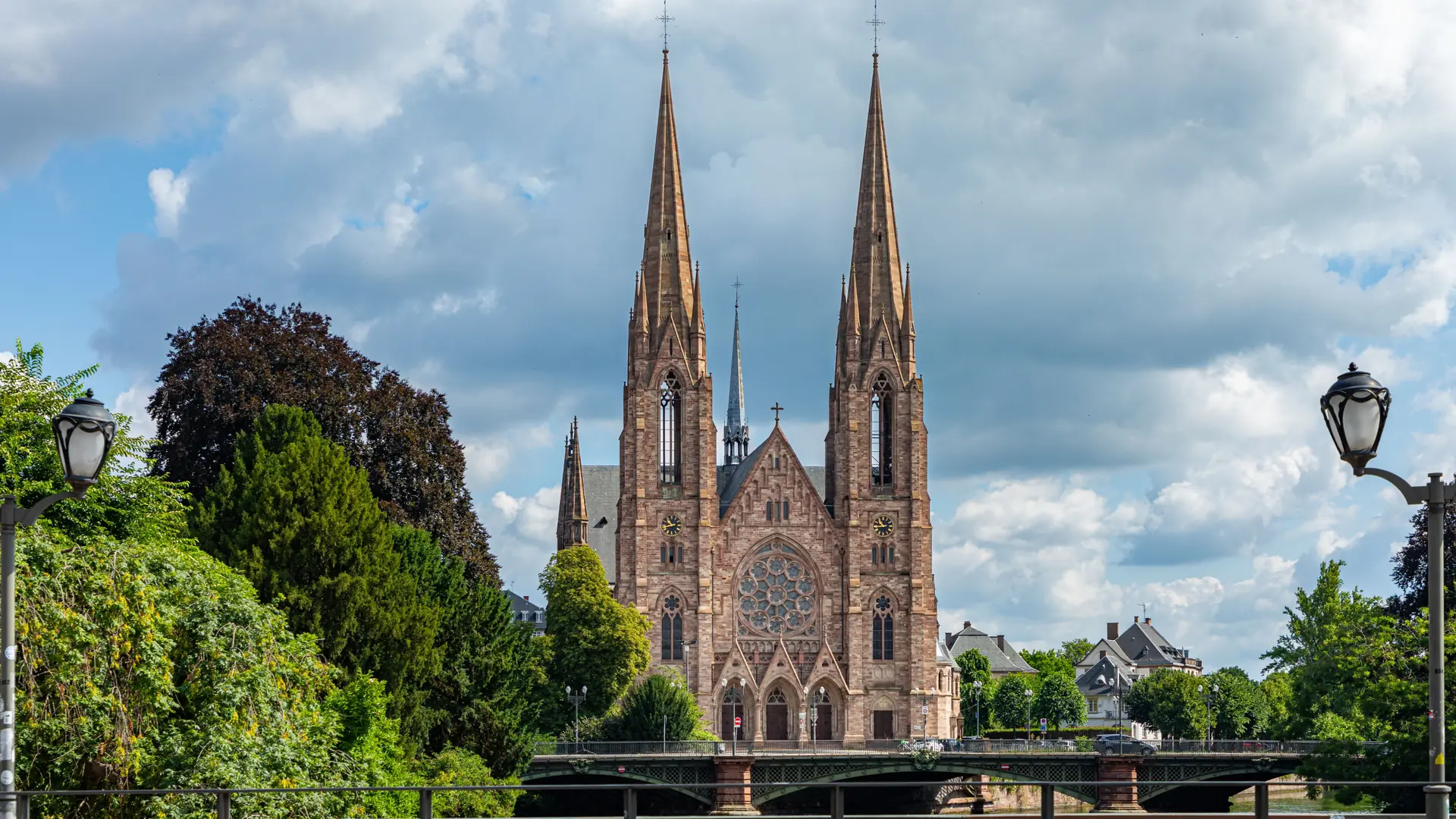
Saint Paul’s church and riverside greenery in Strasbourg, shown as a wider city scene

Krutenau and Esplanade

food, bars, students, better value

Krutenau is the centre-adjacent choice for people who want Strasbourg to feel lived-in after the cathedral closes. The former working quarter sits near canals, university life and a denser evening scene, so it is useful for restaurants and bars without paying island premiums. Esplanade pushes the stay further into student and tram territory. This area is best when you will enjoy a local evening texture; it is less ideal for travellers who want polished postcard calm at every turn.

Pick Krutenau when dinner, bars and a less museum-like evening are part of the reason to stay.

Sleep: lively pockets exist; quieter side streets make a real difference.

Food Local

Good tram and walking access from the south-east side of the centre.

The neighbourhood has more nightlife texture and fewer postcard views from the room.

Look closely at bar streets and tram stops before choosing a cheap weekend room.

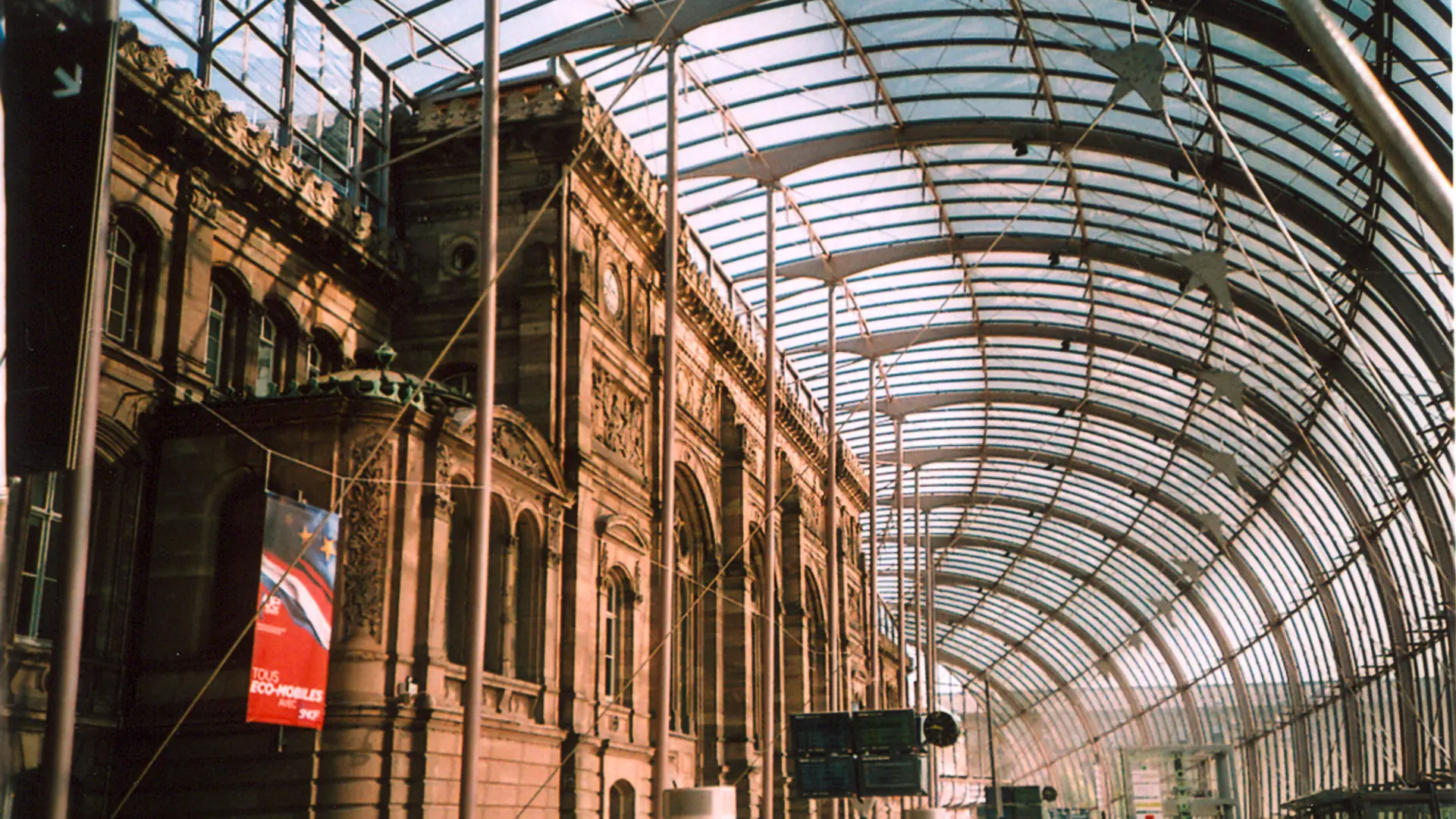
Daylight through Strasbourg station’s glass canopy beside its historic facade

Station and Les Halles

rail arrivals, day trips, value

The station side is not the romantic headline, but it often wins the practical stay. If you arrive late, leave early, plan Colmar or Alsace wine-route day trips, or visit during Christmas-market pressure, a hotel near the station can remove more friction than a prettier address. Les Halles and the western edge also keep shopping and trams nearby. The weakness is atmosphere: some blocks feel transitional, so a slightly better-reviewed hotel on a well-lit route is worth more than saving a few euros.

Choose the station side when trains, luggage or day trips are more important than sleeping inside the postcard.

Sleep: traffic and tram noise vary block by block; rear rooms are safer.

Rail Value

Best for rail; trams and short walks connect the centre.

The setting is useful rather than magical, and some blocks feel purely functional.

Check the walking route at night and avoid judging the whole district by station proximity alone.

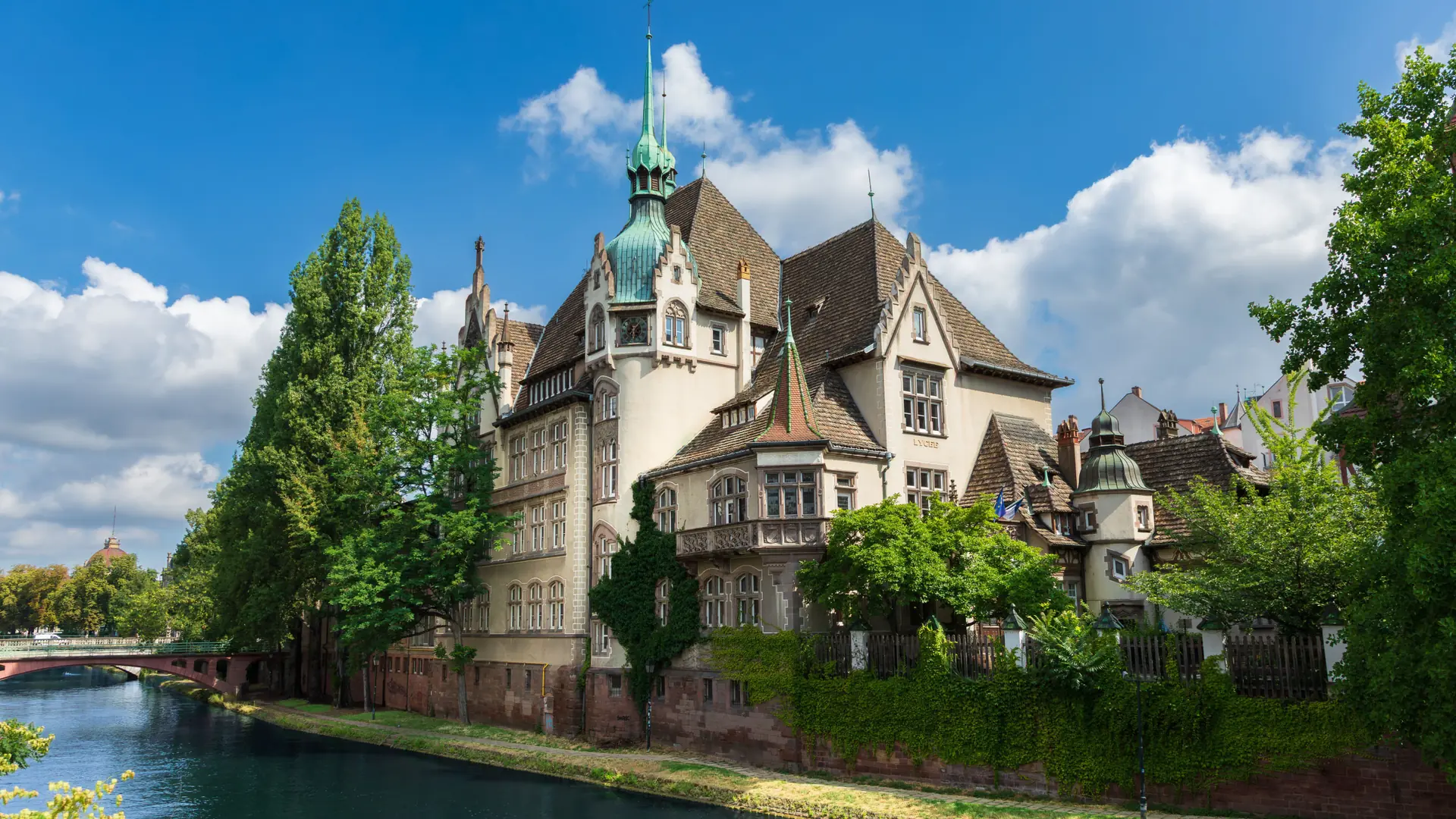
The riverside Lycée des Pontonniers in sunny Strasbourg, shown as a wider city scene

Robertsau

residential surroundings with forest and Pourtalès outings

The northern residential quarter puts greenery into the daily routine and separates the stay from the medieval island’s busiest lanes.

You want outings around Robertsau Forest or Pourtalès Park. Choose the property by its route to the greenery you intend to visit; a broad northern address does not mean the forest begins at reception.

A residential setting still needs a check for traffic or nearby building work.

Forest outings Residential north

Regular cathedral and Petite France visits need more deliberate journeys from the northern edge.

Robertsau and Wacken serve different purposes. Match a meeting or convention booking to its named venue, then check the dated public-transport return to your hotel.

Sunny half-timbered canal houses in Strasbourg’s Petite France, shown as a wider city view

Neudorf

longer stays with neighbourhood errands and family routines

South of the main historic sights, a lived-in quarter can make a kitchen and everyday errands more valuable than a cathedral-facing window.

Several nights call for a kitchen, groceries and neighbourhood walks. Neudorf has its own varied local streets and the Scala Cinema; shortlist a real apartment address rather than a vague “Strasbourg centre” label.

Request details of street traffic and shared-building quiet hours.

Longer stays Neighbourhood errands

This is a domestic routine rather than an old-town hotel experience at the doorstep.

Check where you will shop, how you will reach the tram and whether the rental has a usable lift. Family-friendly district descriptions cannot establish step-free access to a particular flat.

The towers of Strasbourg’s Ponts Couverts with the cathedral beyond, illustrating the wider destination

Schiltigheim

a neighbouring-town stay with its own covered-market centre

Schiltigheim is a separate municipality in the Strasbourg metropolitan area; treat it as a different accommodation address, not a cathedral-side neighbourhood.

You would enjoy local shopping around Halles du Scilt at 15b rue Principale. Compare a Schiltigheim room with Strasbourg after adding the daily journeys your sightseeing programme will require.

Ask about road exposure on the booked block rather than relying on a suburban label.

Neighbouring municipality Covered market

A lower room quote can lose its appeal once repeated metropolitan transfers are included.

The historic centre and Espace Européen de l’Entreprise are different hotel settings. Verify the named stop, last return and pickup address instead of assuming every Schiltigheim listing works alike.

Compare Strasbourg bases by trip style
Best for Trade-off Mobility Traveller fit
Grande Île and Cathedral

first visits, museums, central walks

The oldest sights and many river crossings are clustered here.

The island concentrates visitors, restaurant noise and event pressure.

Check whether your exact street sits on a market route, nightlife lane or delivery corridor.

Walk-first; trams around the edges rather than through every tiny lane.
Petite France

romance, canals, photography

The district turns ordinary returns to the hotel into scenic walks.

Charm can mean tight access, premium pricing and heavy daytime camera traffic.

Confirm luggage access and avoid assuming every canal-side listing has a useful water view.

Walkable to the centre; less efficient for early station moves with bags.
Neustadt and Orangerie edge

quiet heritage, families, European quarter

The district balances heritage with more generous street space.

You trade instant old-town immersion for a calmer, more spread-out base.

Measure the exact tram or walking line to the cathedral, not only the distance on the map.

Tram-friendly and manageable on foot for confident walkers.
Krutenau and Esplanade

food, bars, students, better value

It keeps old-town access while adding a more everyday Strasbourg rhythm.

The neighbourhood has more nightlife texture and fewer postcard views from the room.

Look closely at bar streets and tram stops before choosing a cheap weekend room.

Good tram and walking access from the south-east side of the centre.
Station and Les Halles

rail arrivals, day trips, value

It turns arrival and departure days into simple logistics instead of luggage puzzles.

The setting is useful rather than magical, and some blocks feel purely functional.

Check the walking route at night and avoid judging the whole district by station proximity alone.

Best for rail; trams and short walks connect the centre.
Robertsau

Forest and Pourtalès excursions

Northern residential surroundings

Historic sights require separate journeys

Robertsau location versus Wacken convention venue

Hotel-to-greenery route
Neudorf

Kitchen stays and neighbourhood errands

Local streets and Scala Cinema

Domestic surroundings beyond the cathedral core

Lift access within the booked building

Apartment-to-shopping and tram walks
Schiltigheim

Covered-market shopping in a neighbouring town

Halles du Scilt on rue Principale

Repeated metropolitan transfers

Historic town centre versus business district

Dated connection into Strasbourg

Choose a Strasbourg area by intent, not by map zoom

In Strasbourg, the best base changes when the trip changes: Christmas markets, EU meetings, museum days and Alsace rail hops each pull you toward a different edge of the centre.

Christmas markets without daily baggage stress

During market season, pick Grande Île only if you accept crowds as part of the experience. Station-side hotels can be smarter for luggage and departures, while Neustadt gives calmer nights with tram access into the decorated core.

Choose this ifChoose this plan when December atmosphere matters but you still want an exit strategy.

Trade-offThe most atmospheric streets become the least forgiving when crowds and security routes build.

Avoid this ifAvoid it if you need silent streets directly below the room every night.

A canal-led weekend

Petite France is the obvious romantic base, but Grande Île can work better if you want more restaurant range around the cathedral. Book for the exact walk back after dinner, not just for a water-view promise.

Choose this ifChoose this if the return walk should feel like part of the date.

Trade-offBeautiful canal addresses often cost more and may be less convenient with bags.

Avoid this ifAvoid it if you will be annoyed by photographers outside popular bridge angles.

Architecture and European institutions

Neustadt and Orangerie edge suit travellers who want monumental boulevards, university buildings, museums and easier access toward the European quarter. The old centre remains close, but the stay breathes differently.

Choose this ifChoose this if wide streets and institutional Strasbourg are part of your plan.

Trade-offYou give up the instant cathedral doorstep for a roomier city pattern.

Avoid this ifAvoid it for a single-night trip focused only on the old island.

Colmar or wine-route day trips

Stay near the station when the itinerary depends on morning trains or regional connections. It is less pretty, but it protects the trip from repeated cross-town luggage and platform timing.

Choose this ifChoose this if you will leave Strasbourg for at least one full day by rail.

Trade-offEvenings require a short walk or tram back from the prettier restaurant zones.

Avoid this ifAvoid it if every night should end on a canal or cathedral square.

Find stays in Strasbourg

Use the hotel search after choosing your Strasbourg base; a central-looking room can mean canal romance, market noise, station convenience or Neustadt calm depending on the street.

Search Strasbourg hotels →
Loading Strasbourg stay options

From Strasbourg station or airport to a workable hotel base

Strasbourg is kind to rail travellers, but the final kilometre changes with luggage, markets and tram works. Treat the station, tram stop and pedestrian zone as separate checks before you book.

Arriving from airports or mainline rail

Rail is the main long-distance arrival

Rail is the main long-distance arrival

Strasbourg station anchors most visitor logistics, so the easiest hotel is often the one that lets you drop bags before entering the old centre. This matters for short Alsace trips where check-in time and platform access shape the first day.

Airport access should be checked against your exact flight

Strasbourg Airport links into the regional network, but late arrivals and weekend schedules deserve a fresh operator check. If the last connection looks tight, a station-side first night may be calmer than dragging bags to a canal lane.

Moving around after check-in

Trams solve many neighbourhood trade-offs

Trams solve many neighbourhood trade-offs

CTS trams make Neustadt, Krutenau and station-side stays realistic for visitors who still want the old centre. The key is not distance alone but whether your hotel sits on a clean line for your daily plans.

The old core rewards walking

Grande Île and Petite France are best experienced on foot, which is wonderful until cobbles, crowds or winter weather meet heavy bags. Keep luggage movement separate from sightseeing movement.

Cycling culture is real but not required

Strasbourg’s bike reputation helps active travellers, yet first-timers can still see the main districts by walking and tram. Do not overvalue a hotel’s bike pitch if your actual plan is museums and dinner.

Tickets and day-trip rhythm

Buy for the day you actually move

Buy for the day you actually move

If you stay on Grande Île and walk everywhere, a multi-ride plan may be unnecessary. If you stay Neustadt, Krutenau or station side, tram tickets become part of the hotel value calculation.

Step-free and luggage reality

Cobbles and bridges change central access

Cobbles and bridges change central access

A central address can still be hard with rolling luggage or mobility limits. Before booking an old-town room, inspect arrival instructions, lift access and the walking route from the nearest tram edge.

Practical planning before you book Strasbourg

Strasbourg’s practical risks are seasonal rather than mysterious: December crowds, summer terrace noise, rail-day timing and the difference between a scenic address and a usable one.

Season and weather

December is a different city
  • December is a different city

    Christmas-market season can make the best-looking central addresses expensive and crowded. Book earlier, check access rules and consider station or Neustadt if you want easier movement after arrival.

  • Summer favours water and evening walks

    Warm months make Petite France and river edges appealing, but street-facing rooms above terraces may be noisy. A courtyard room can matter more than an extra star category.

  • Shoulder season is ideal for Neustadt walks

    Spring and autumn give the imperial district, museums and river walks more comfort without the heaviest event pressure. This is when a slightly outer base can feel especially good value.

Budget and value signals

Station value can be genuine
  • Station value can be genuine

    A cheaper station-side room is useful when it saves two taxi or tram-with-luggage moments. Spend the savings on better meals rather than forcing a central address with a weak room.

  • Canal premiums need proof

    Petite France rates often reflect the image of the district, not necessarily a view from your window. Read room-specific notes before paying for scenery you might only see outside.

  • Neustadt may buy space

    Hotels around Neustadt can offer calmer streets and larger-feeling buildings while keeping the centre reachable. For families, that practical comfort can beat a tiny old-town room.

Mistakes to avoid

Do not treat all central streets as equal
  • Do not treat all central streets as equal

    Two hotels both listed as central can produce opposite nights: one quiet behind a courtyard, one loud above a late terrace. The street and room orientation deserve inspection.

  • Do not ignore event weeks

    Christmas markets, parliamentary sessions and major events can change prices and movement. If dates are fixed, book the base around constraints rather than around a generic neighbourhood ranking.

  • Do not overpack a one-night stay

    For a short visit, the room should reduce friction. A station or Grande Île base usually beats a picturesque but awkward location when you have only one evening and one morning.

Is Grande Île the best place to stay in Strasbourg?

Grande Île is usually the best first base when sightseeing time is short because the cathedral, central squares and river walks are close together. It is not automatically the best sleeping choice in December or on loud restaurant streets, so room orientation still matters.

Should I stay in Petite France or near the Cathedral?

Choose Petite France for canals and romance, and choose the cathedral side of Grande Île for a denser sightseeing loop and more restaurant range. Both are central; the better option depends on whether scenery or repeated convenience matters more.

Is the station area safe and useful for visitors?

The station side is useful for rail arrivals and Alsace day trips, but it feels more functional than the old centre. Pick a well-reviewed hotel on a clear walking route, especially if you will return late.

Where should families stay in Strasbourg?

Families often do well in Neustadt or on quieter Grande Île streets. Neustadt gives more breathing room and tram access, while central streets shorten sightseeing walks for children who tire quickly.

Do I need a car in Strasbourg?

Most visitors should avoid relying on a car inside central Strasbourg. Walking and trams handle the main city stay better, while rail is easier for many regional day trips.

When should I book Strasbourg hotels?

Book much earlier for Christmas-market dates and major event periods. Outside those peaks, compare the station, Neustadt and Krutenau against Grande Île before paying a central premium.

Sources

Reviewed by StartBooker editorial Route planning and destination research

Reviewed 2026-09-01

Updated

Review method: Official tourism, UNESCO, transport, airport and climate sources were checked against independent editorial guides. Neighbourhood recommendations prioritise repeat walking routes, tram access, luggage friction, event pressure and the difference between scenic views and practical sleep.

13 11 references reviewed

Key sources
  • Visit Strasbourg
  • France.fr
  • Ville de Schiltigheim
  • CTS
  • SNCF Connect
  • Strasbourg Airport
References
Photo credits

Some photos provided by Pexels.

Share one Strasbourg stay lesson: Grande Île and Cathedral versus Petite France