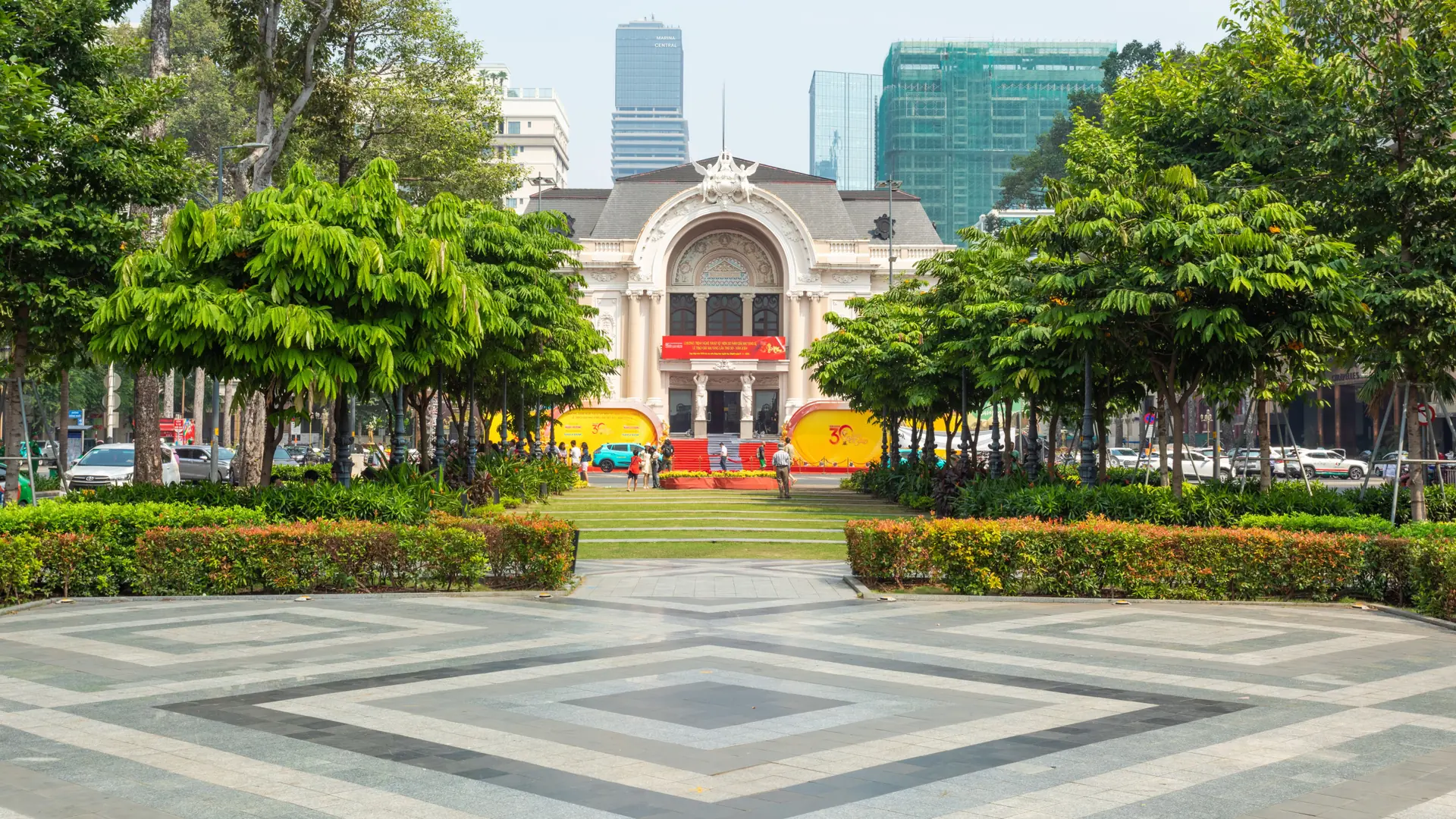
Nguyen Thai Hoc and the east-bank centre
Meals and a walkable tour meeting
Central dining and tour offices on the east bank.
For a city visit, take a morning road service from Hanoi on day one, check in and leave the afternoon for the central square and river. On day two, have breakfast and browse the city market, then take a taxi to Thon Tha for a prearranged village visit and lunch with a host. Return to the same city room that evening. Day three is the road journey back. These are two accommodation nights over three days. If you prefer a city-based afternoon, swap the village visit for Nui Cam in dry daylight; you do not need to add both outings. The Loop takes its own mountain days, described below.
Start at Quang Truong Thanh Pho Ha Giang, the central square, in the late afternoon when the exposed space is cooler. Continue to the nearby Lo River for a short waterside walk, then head to Nguyen Thai Hoc for dinner. This gives a tired arrival a small, repeatable outing with a clear finish. Stay near the square if you would rather sit with a drink than keep walking. Save the climbing and the long scenic roads for a day when you have rested.
Using Bong’s published three-day trip, arrive in Ha Giang on day one and sleep in the city. Day two starts at 10:00 and runs through Quan Ba to Yen Minh for night two. Day three goes through Dong Van and Ma Pi Leng to Meo Vac for night three. Day four returns to Bong around 17:30; reserve a city room for night four. Leave by coach on day five. Bong includes an arrival dorm and the two mountain nights, but no room after the return. Adding a full city sightseeing day before this trip adds another day and night; overnight buses are travel nights, not hotel nights.
Look for banh cuon, steamed savoury rice rolls, around the central square in the morning; pho is another easy breakfast choice along Nguyen Trai. For dinner, Nguyen Thai Hoc has city eating options, while Silk River’s dining page lists regional dishes such as smoked buffalo and buckwheat cakes. Ask what is being served that day. A city meal is also a chance to try regional flavours before committing to several meals at mountain homestays.
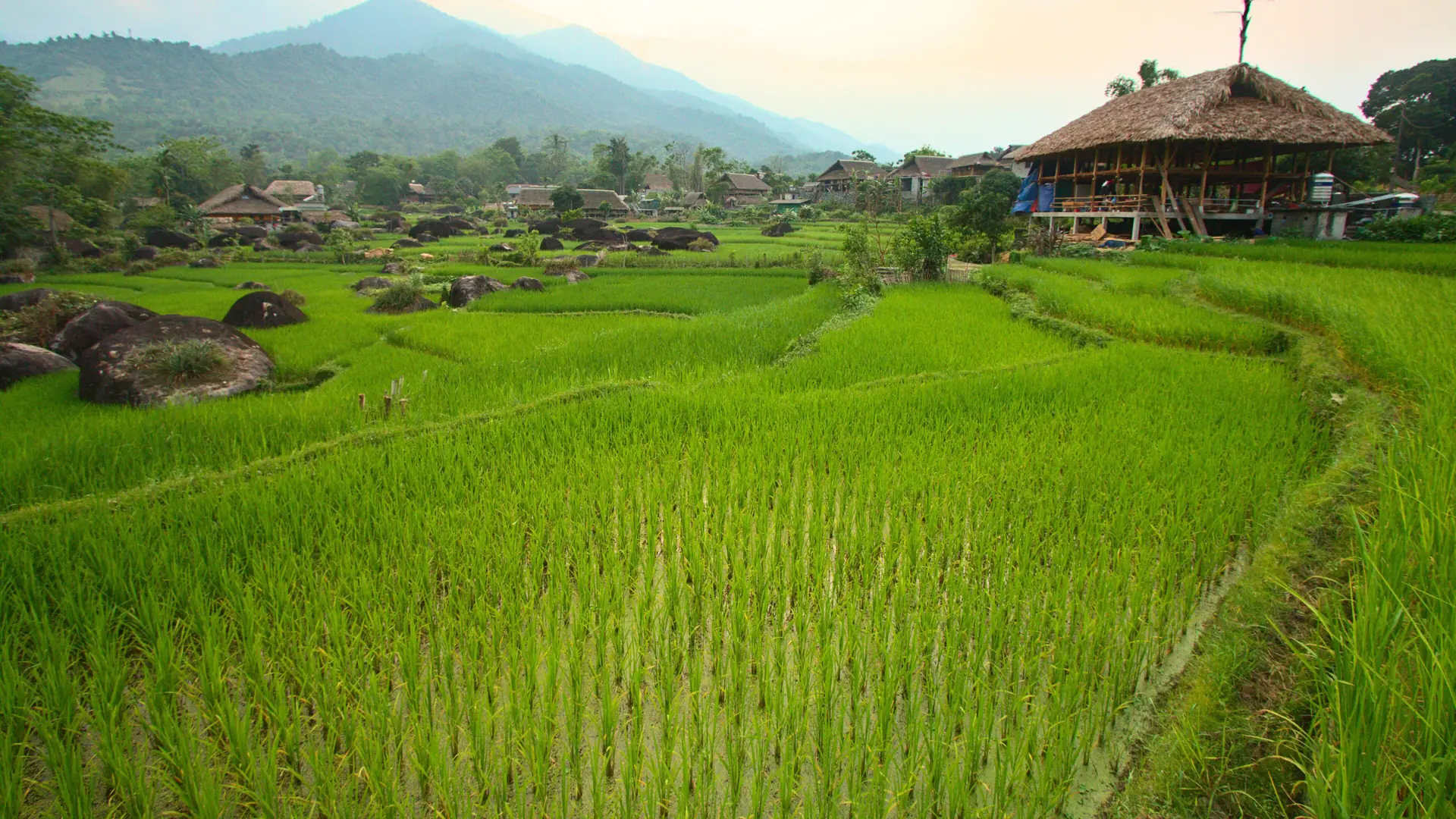
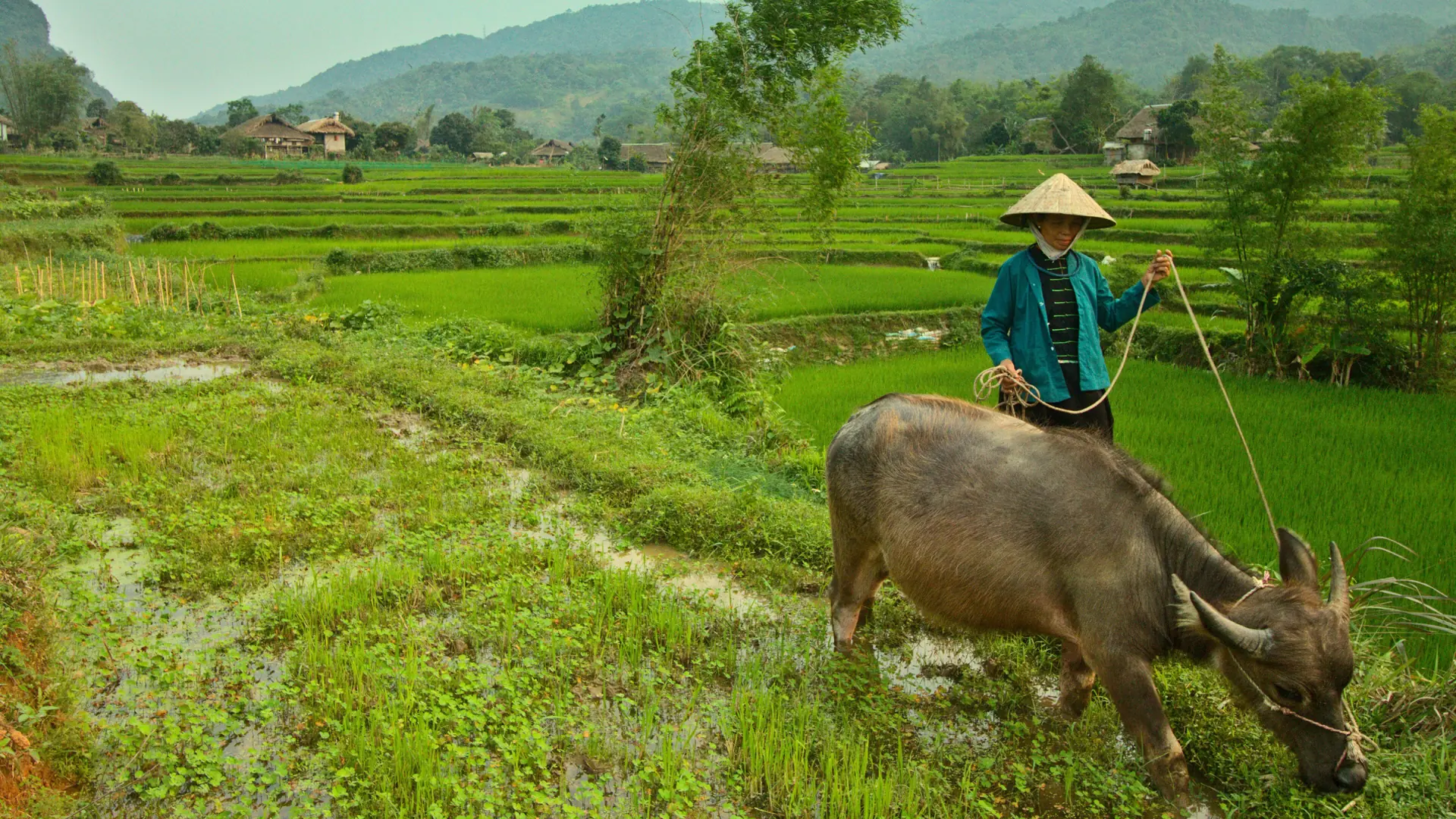
Thon Tha is a Tay village of palm-roofed stilt houses, fields and fishponds, about five kilometres from the city toward Thanh Thuy. Arrange a visit and lunch with a household before travelling out. A host can introduce the village lanes and, when it fits the household’s work, activities such as cooking or farming. Allow time to sit and talk rather than treating homes as photo stops. Book the taxi return with the outward ride so the day ends back at your city room.
For Nui Cam, take a taxi to Cafe Nui Cam and continue uphill on foot. The remaining path has stone steps and muddy sections; it is a walking outing even after driving up the steep approach road. Wear shoes with grip and keep the climb for dry daylight. The viewpoint looks back over the city and its surrounding hills. Choose it instead of the village afternoon if you want a more active local day, and arrange the taxi to collect you after the walk.
The Vuong Palace at Sa Phin offers a different reason to stop in the highlands: woodwork, green stone and terracotta decoration, rather than another distant mountain view. UNESCO identifies it among the geopark’s cultural sites. It is beyond the gateway city and needs a place in your mountain itinerary. Ask for time there when arranging a private route; a trip that names Dong Van does not automatically include every nearby heritage visit.
StartBooker answer
Allow three days and two nights for a short Ha Giang city visit: travel from Hanoi, spend a full day around the city and nearby Thon Tha, then return by road. For a three-day mountain Loop, a comfortable plan uses five days and four nights: one city arrival night, two mountain nights and a city night after the tour returns. Central riverbank accommodation suits meals and walking; Thon Tha offers a Tay household stay. Choose a local motorbike driver or a private car if you do not want to ride yourself.
Explore tours, attractions and local experiences in Ha Giang, Vietnam.
Loading activities…
Activities provided by GetYourGuide. We may earn a commission on bookings.
Nguyen Thai Hoc centre
The east-bank centre is a useful first base if you want to eat out and join a city-based tour. Bong’s address is 59a Nguyen Thai Hoc, so staying on this street makes its departure easy to locate. You can meet the team the evening before and keep your luggage close to the trip’s return point. Travelers visiting only the city can use the same area for meals and walks without joining a group. A room on the opposite bank can still work, but plan the crossing or taxi before the morning meeting.
Compare central riverbanks, the southern coach gateway and a nearby village. These bases serve the city visit and the start or end of a mountain trip.
Meals and a walkable tour meeting
Central dining and tour offices on the east bank.
A hotel evening beside the Lo River
West-bank hotels and eating places along Nguyen Trai.
A short last leg from the bus station
Southern accommodation close to the coach gateway.
A night with a Tay household
A village base about five kilometres toward Thanh Thuy.
| Base | Purpose | Features | Connection |
|---|---|---|---|
| Nguyen Thai Hoc and the east-bank centre |
Meals and tour offices Dinner near the departure street |
Shared hostel atmosphere |
Walk locally; taxi to the southern station |
| Nguyen Trai and the west-bank riverfront |
Hotel comfort Independent city evenings |
Windowless categories also sold |
Walk locally; bridge or taxi to the east bank |
| Southern bus-station area |
Bus-station access An easier arrival or departure |
Farther from central dining |
Short station leg; taxi into the centre |
| Thon Tha village |
Household stay An evening with a host |
Away from city meeting points |
Taxi between village and city, then village walks |

A shared trip, a family room and a hosted village stay solve different needs. Start with the people travelling and how you want to spend the evening.
Bong’s trip brings travellers together over shared meals and dorm nights. This suits someone arriving alone who wants company as well as a guided route. A private bedroom upgrade can give you a quieter place to sleep while leaving the shared activities intact. Decide whether you enjoy group dinners before choosing this format; buying a bedroom upgrade does not give you control of the whole itinerary.
Silk River’s Superior Family has 29 square metres, a 1.6-metre bed and a 1.2-metre bed, with a maximum of three guests. It has no window. That can work for a short sleeping stop with a small family, but it is a poor fit for someone who needs daylight or expects space for four. Compare the hotel’s windowed family categories if you will spend a longer afternoon in the room. The bed sizes matter more than the family label.
YESD’s private journeys let you spend longer at a village, make photography stops or choose heritage visits. They suit a group whose interests do not match a fixed departure, including families who need more frequent breaks. Send the places you care about when asking for a route, and tell the team how much walking each person wants. This is especially useful when some travellers want an uphill viewpoint while others prefer to wait nearby.
The Thon Tha cooperative describes several host families. Mr Cay’s accommodation offers dorm sleeping and a private bungalow, giving you a choice within the same village setting. A hosted night leaves more time for dinner and conversation than a lunch visit. Decide whether you want shared sleeping or your own space, then ask the household about bathroom access. This is a lived-in home environment; household routines continue around guests.
QT’s guesthouse offers private rooms and dorms, reception around the clock, laundry and an elevator. It can be useful when your coach arrives before normal check-in and you want a base close to the station. A short rest gives you somewhere to recover before deciding what to do with the day. If you need uninterrupted private sleep rather than a shared rest space, book a bedroom that will be ready at your arrival time.
Silk River’s Suite River View Double lists 32 square metres, one 1.8-metre bed, a balcony and a maximum of two guests. It is a useful return-night choice for a couple who wants a shower, a private evening and somewhere to sit after the mountain roads. The balcony makes the room itself part of the stay. If you are bringing a third person, choose another category rather than assuming an extra bed can be fitted.
Compare the city base with the sleeping space and road connections above.
The long Hanoi connection is a road journey. Make the city drop-off part of the booking so the final hotel leg is clear.
Bang Phan lists Hanoi services from its office at 156 Tran Quang Khai and from My Dinh and Gia Lam bus stations, with Old Quarter collection also offered. Plan roughly six to seven hours on the Hanoi–Ha Giang road, plus pickup and the hotel leg. In Ha Giang, its fixed office is 100 Tran Phu, and city hotel drops are offered. Give the operator your hotel name when booking and choose a morning departure if you want the first afternoon for the city.
Bang Phan lists Noi Bai airport and the separate Noi Bai junction at Hai Yen restaurant. Ask for the airport service and its assigned joining point when arriving by air; the junction is not an airport terminal. Send your flight arrival details and allow time to collect bags before the road departure. YESD can also arrange a private airport pickup with a driver and guide. After a long international flight, sleeping in Hanoi first may be more comfortable than continuing straight into a second long journey.
Bong’s package includes a pre-tour dorm night. QT has a shorter 03:00–08:00 dorm-rest offer for its own rental or tour guests, arranged in advance and subject to space. Neither is automatically a private hotel room. For a bedroom ready at an early coach arrival, reserve the previous night or agree early access with the hotel. Save the reception entrance before travelling; QT asks arriving guests to ring the doorbell. Tell the host the coach’s expected arrival so you are not searching for an open door in the dark.
Nguyen Thai Hoc and Nguyen Trai give you eating and lodging options on opposite banks of the Lo. Walk within your chosen central area and use a bridge to change banks; a taxi is useful with luggage or for the southern bus station. For Thon Tha or the uphill Nui Cam approach, ask your accommodation to arrange the car and its return. Keep the hotel pin on your phone so you can show the driver where you want to finish.
On an Easy Rider trip, the local driver operates the motorbike and you ride as a passenger. You still spend long days on a seat exposed to the weather. An enclosed private car offers shelter and more space. QT’s open-air Jeep tours carry up to four passengers per Jeep and up to eight in a group. Choose the vehicle for the people travelling, then discuss road breaks and the walks at each stop.
For a motorbike Loop returning to Bong or QT, leave the large suitcase at that base and take a small overnight bag. Bong offers storage; QT lists free luggage storage at its guesthouse. Carry medication, documents and valuables with you and collect the suitcase after returning. A private car trip can take larger luggage throughout, including on a route that starts or ends in Hanoi. In that case, check vehicle space rather than leaving a bag in a city you will not return to.
If you want to self-ride, settle the licence requirements and insurance before renting. FCDO tells British drivers to carry their UK licence and a 1968 international driving permit, with third-party insurance; other licence holders need guidance for their own documents. Your entitlement must cover the vehicle you plan to ride. Inexperienced riders should choose a local driver or car. Some visits near the border may need local permission: ask the operator to check your proposed stops. YESD requests a passport image for border paperwork, and Bong asks guests to bring their passport. Do not leave your passport as a rental deposit.
QT lists an elevator at its guesthouse, but ask about the entrance and your room’s bathroom as well. For a mountain journey, describe whether you can manage steps, uneven paths and getting in and out of the chosen vehicle. A private route can focus on roadside stops and shorter walks, with more time for breaks. Send those needs before the operator chooses the accommodation; a car seat alone does not solve access to every viewpoint or village path.
Plan the weather for the highlands as well as the city. Budget examples below are published product prices checked on 6 October 2026.
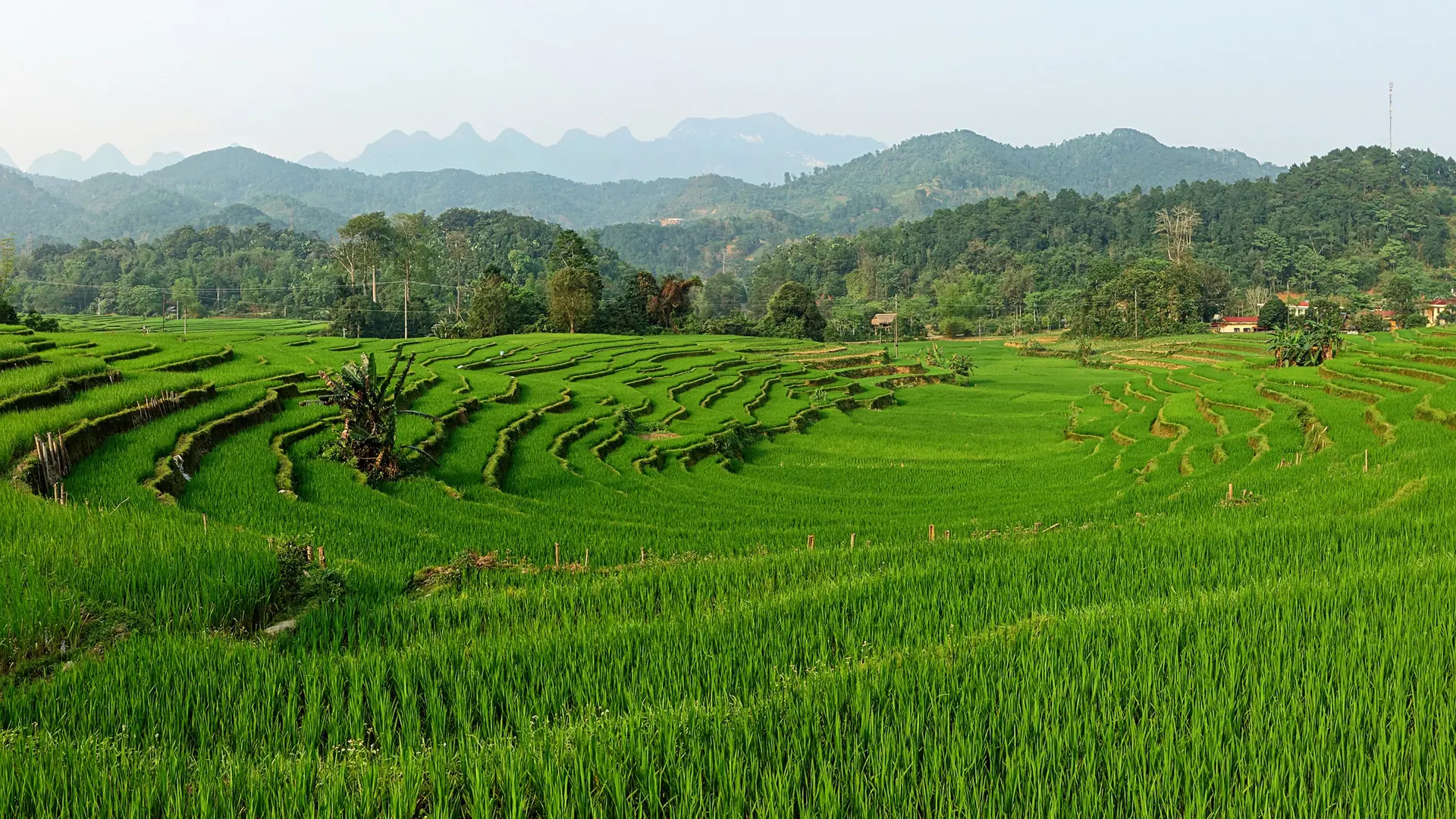
September to November is a useful starting point for cooler mountain travel, and national tourism coverage links November with buckwheat flowers. Rice terraces are a different interest: Hoang Su Phi lies in the wider western region, away from the usual eastern Loop. If terraces lead your trip, build a route for that area rather than expecting every mountain stage to pass the fields in the photographs. Crop timing varies, so ask about the fields your host or guide plans to visit.
March to May generally suits a mix of city walking and mountain visits. National tourism also highlights April to June, with June marking the start of summer rain in its regional guide. Choose spring if you want mild conditions without organising the whole trip around a particular crop. Pack a layer for the higher stops even when the city feels warm. A palace or village visit can give the day interest when a distant viewpoint is hidden by cloud.
July and August are wet months in the national destination guide. Northern rain can bring flooding and landslides, so check the route with your departure team and leave a spare night before a fixed onward booking. In winter, the mountain districts can be much colder than Ha Giang city. Bring warm layers as well as rain protection, particularly for a motorbike or open Jeep. Choose clothing for the time spent outside the vehicle, not just the temperature at your city hotel.
Bong lists a private two-person-room upgrade at VND400,000 per room per night. For its two mountain nights, that adds VND800,000 per room. A three-person room is VND600,000 per room per night. Decide with your travel companions who will share, and ask which private rooms and bathrooms are available at the overnight stops. An arrival-night bedroom upgrade or a room after the return needs its own price.
Bong’s named three-day Easy Rider option is VND4,550,000 per person, with a local motorbike driver, the two mountain nights and the included pre-tour dorm. The trip’s shared lodging and meals are part of the package; private-bedroom supplements and the Hanoi road connection add to it. Use that clearly named driver-included option when comparing your budget, then price any change in room or transport before paying.
Bong lists road transfers from VND300,000 for a sleeper or VND400,000 for a cabin, per person each way. Bang Phan advertises Hanoi fares from VND350,000; compare the seat type, departure and pickup you will actually use. Add city hotel nights to those fares. For Silk River, ask whether breakfast is included in your chosen rate so a morning meal does not become an unexpected extra.
Yes. QT notes that ATMs are in Ha Giang and some larger towns, while smaller places have fewer options. Withdraw enough dong in the city for drinks, souvenirs and anything outside your tour inclusions. Keep some small notes for local purchases instead of depending on cards or an ATM at every overnight village.
YESD collects dietary needs before departure and passes them to guides and hosts; its examples include vegetables, tofu, beans and rice. Tell the team about allergies and restrictions when arranging the trip, rather than waiting until dinner. Bong also lists vegetarian meals. Expect local ingredients and a smaller choice than a city restaurant menu.
YESD can arrange hotel accommodation when requested, although its usual trips use locally run homestays. Ask for the accommodation preference when choosing the route so each night fits. A private trip also offers homestay rooms with en-suite facilities depending on the itinerary; name the bathroom and room needs that matter to you.
Bang Phan lists both routes from Ha Giang. Its Sapa endpoint is the office at 599 Dien Bien Phu. For Ninh Binh it lists GO! Ninh Binh shopping centre on Tran Nhan Tong and Dong Gung bus station in the Tam Coc area, so choose the drop that matches your next stay. Reserve an onward departure after your mountain tour has returned and you have collected your luggage.
On YESD’s car trips, a guide accompanies the driver: one concentrates on the road while the other looks after the visit and explains the places. Its motorbike driver also acts as the guide. If you want detailed cultural interpretation or a particular language, discuss that when arranging the trip so the guide fits your interests.
Reviewed by StartBooker
Last reviewed 2026-10-06
Updated
Editorial method: We read national tourism and UNESCO records, current government travel advice, named coach and tour services, hotel room pages and independent travel guides. Route examples count city and mountain nights separately. Prices describe the named published offers; the operator confirms the chosen departure. We have not inspected the hotels or measured keyword search volumes.
18 Source records checked
Some photos provided by Pexels.