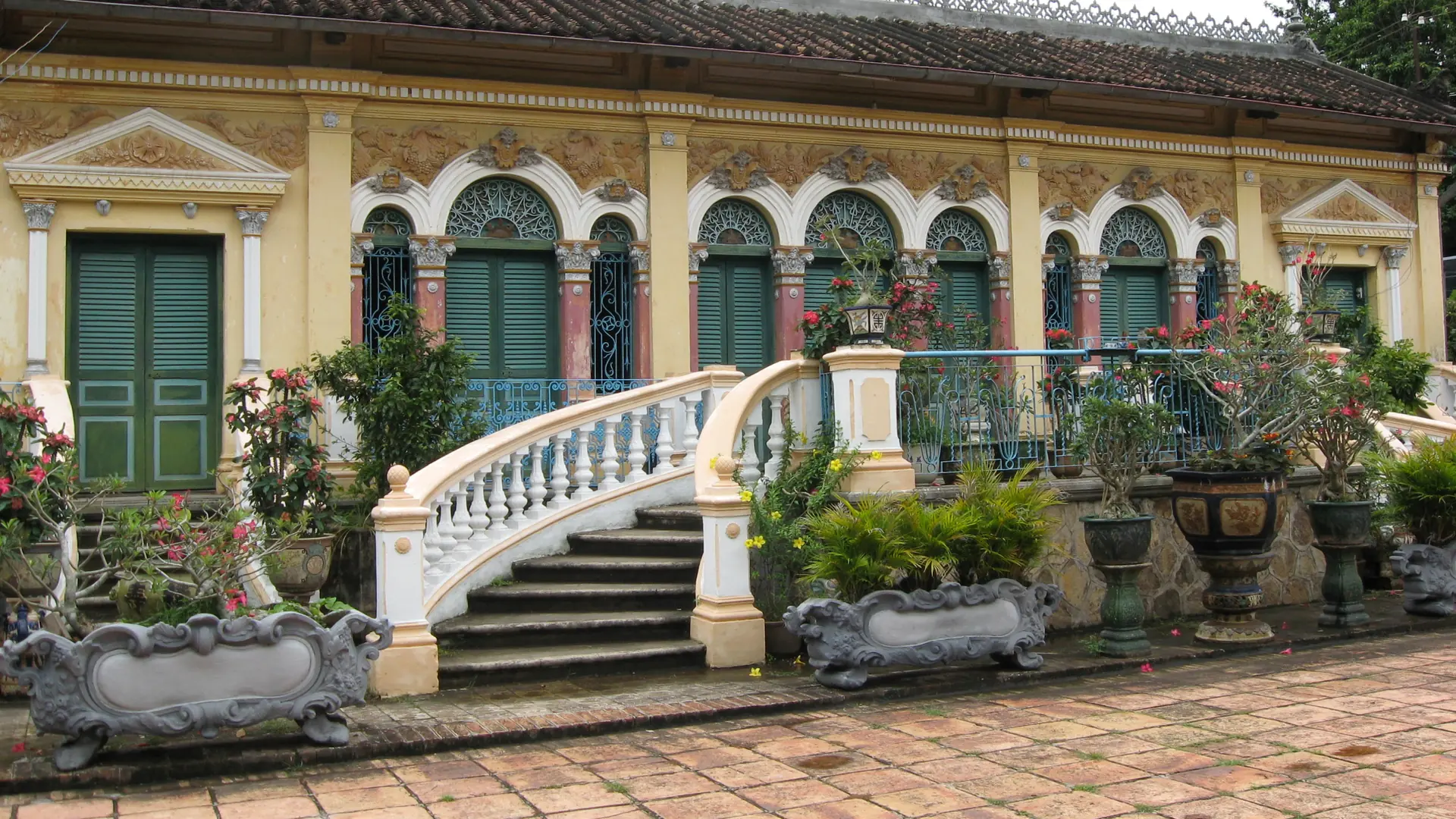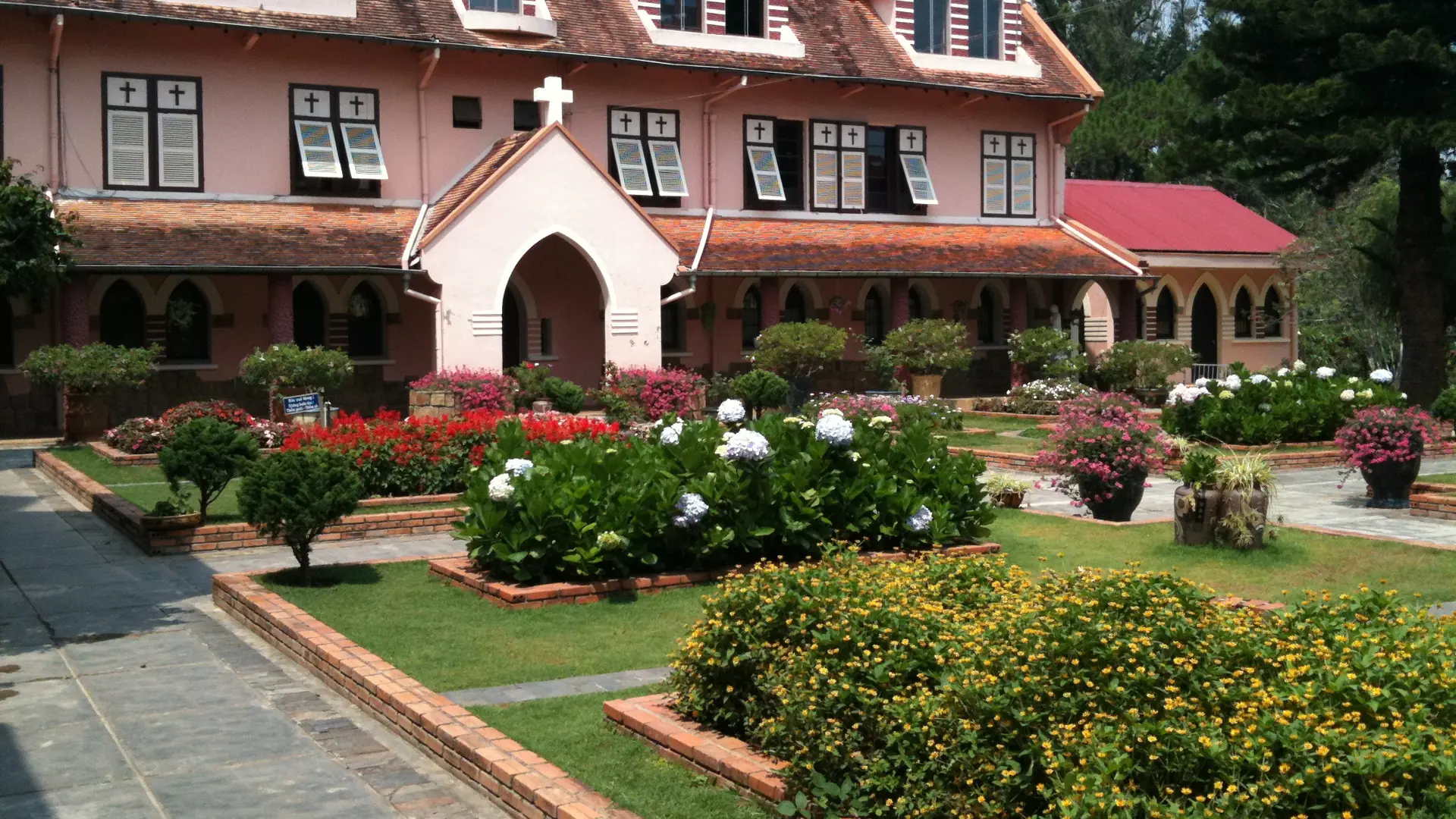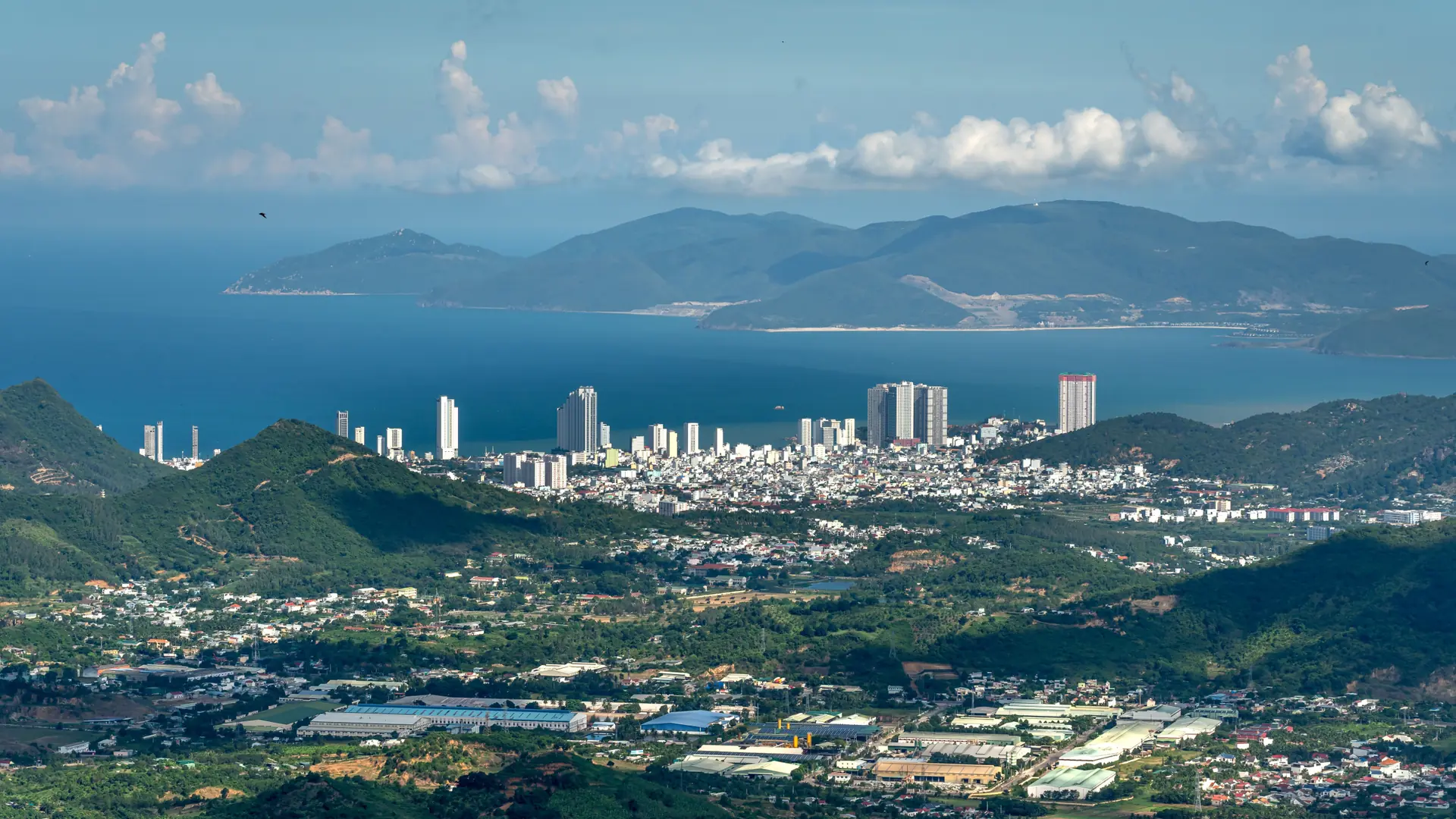
Dong Khoi and Ben Nghe
Opera House, Dong Khoi cafés and Nguyen Hue walks
The old commercial centre suits a short visit spent outside the hotel, with architecture, shops and evening meals close to your daily route.
For three hotel nights and four days, arrive on day one and take the short Dong Khoi–Nguyen Hue walk below after settling in. Use day two for the Independence Palace, lunch and the War Remnants Museum, shortening the day if the exhibits feel demanding. On day three, choose Cholon’s markets and temples or a Cu Chi excursion; return to the same hotel for the last night. Collect your bags and depart on day four. To include both Cholon and Cu Chi, add a fourth hotel night: central sights on day two, Cholon on day three, Cu Chi on day four and departure on day five. A night spent on an arriving or onward sleeper train is additional to these hotel nights.
Older apartment and office buildings have become homes for small cafés, shops and creative businesses. At 42 Nguyen Hue, choosing a café also gives you a pause above the walking street; 22 Ly Tu Trong offers another building to explore near the central streets. Look at the businesses’ signs and menus before heading upstairs. One coffee stop is enough to enjoy the building without turning it into a floor-by-floor tour. Ask about the approach if stairs are difficult, and keep residential corridors clear while finding the shop you want.
Banh mi is a filled baguette, often with pâté, meat, herbs and pickled vegetables. Com tam is broken rice served with toppings such as grilled pork and a sweet fish sauce: a fuller sit-down meal. Banh xeo is a savoury crisp pancake; the larger southern version commonly contains shrimp, pork, bean sprouts and beans. Those ingredients matter if someone avoids pork or shellfish. Ask the seller about that particular filling rather than assume the dish is vegetarian because vegetables come alongside it.
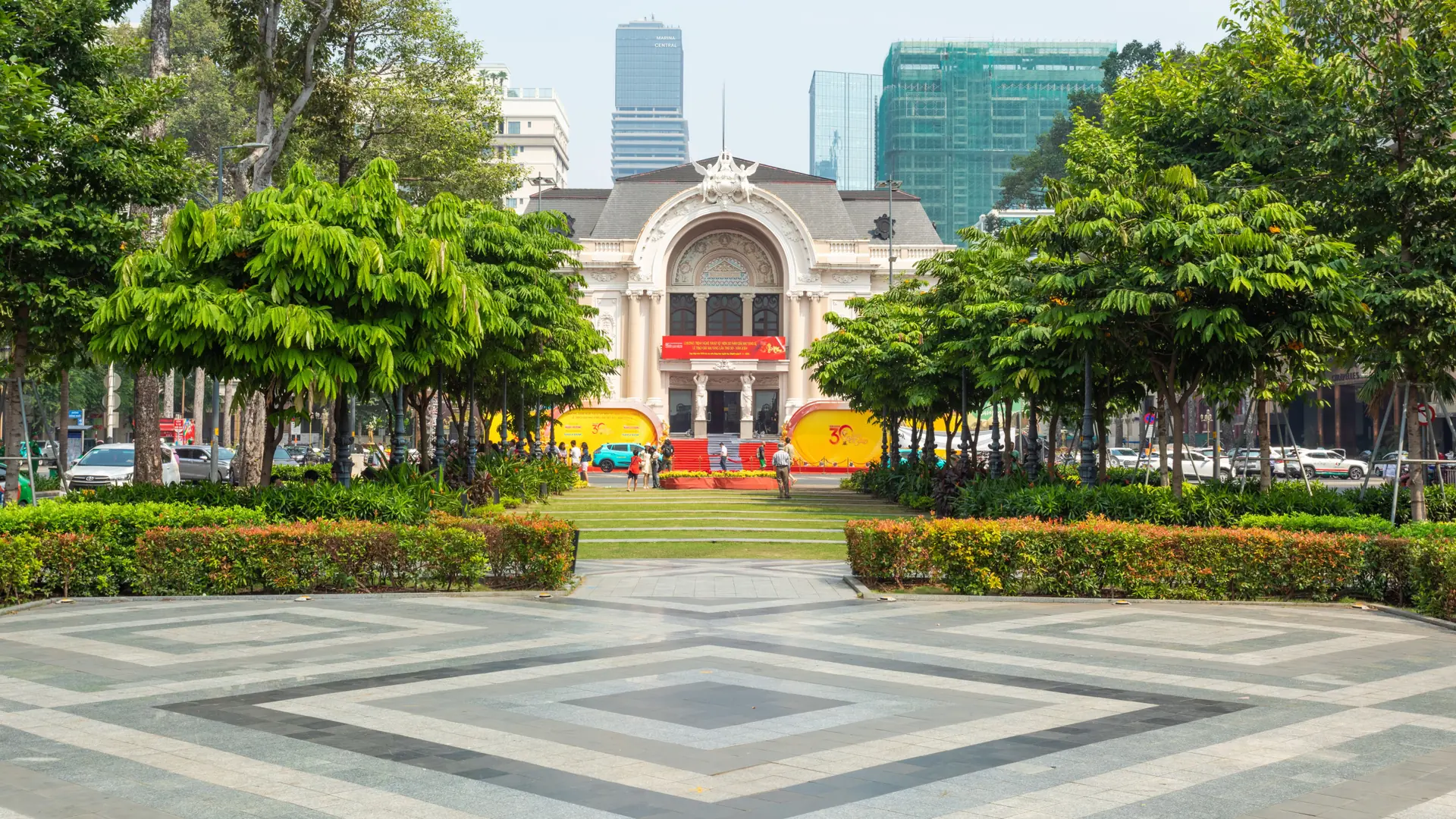
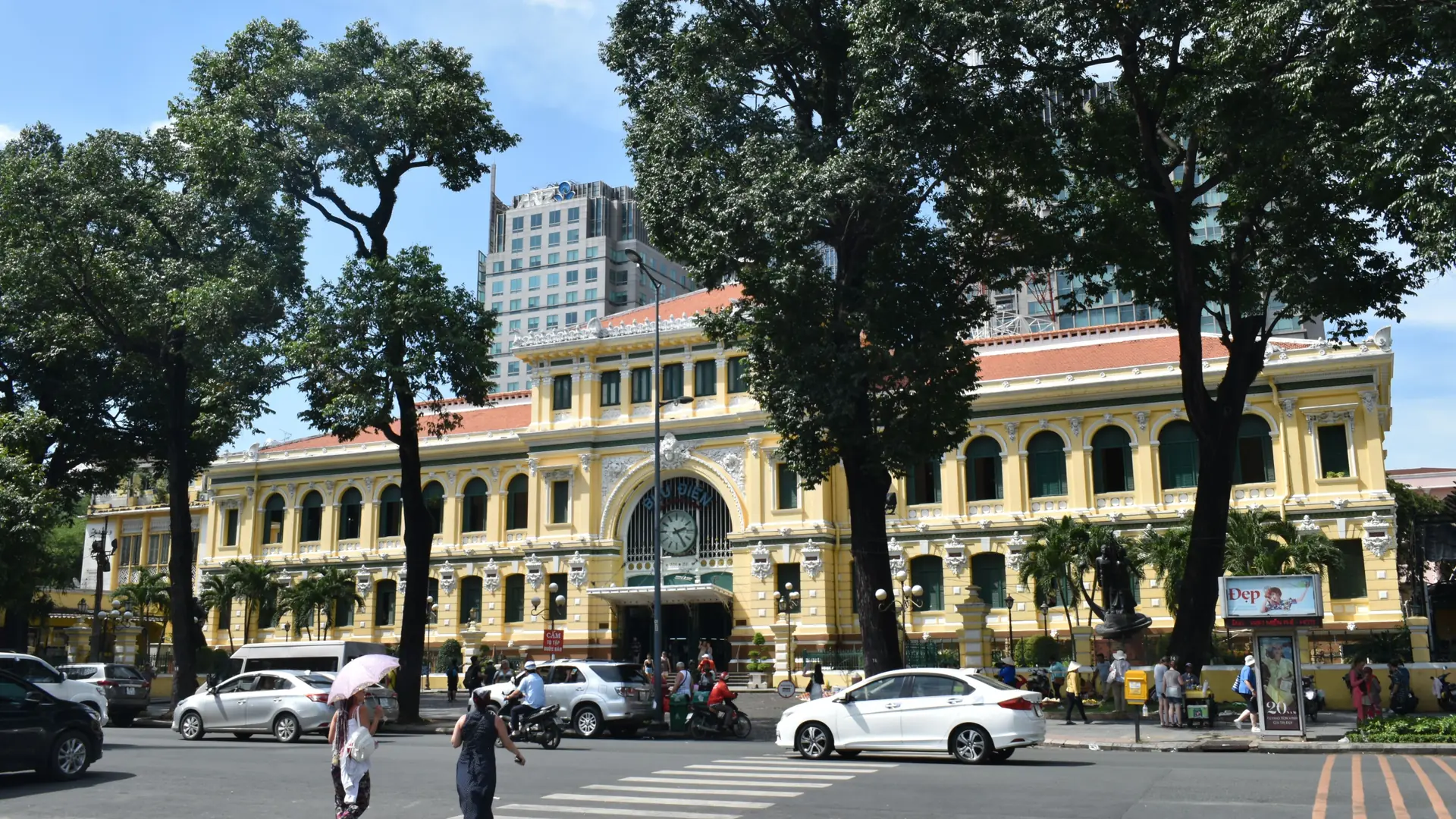
The Opera House, Notre Dame Cathedral and Central Post Office belong to the same central architectural outing. Starting at the theatre, follow Dong Khoi north towards the cathedral area, with the post office opposite at 2 Cong Xa Paris. The post office’s interior maps and old telephone booths add something beyond a façade photograph when public access is available. Treat the cathedral as an exterior stop unless its current visitor arrangements allow more. This walk can also replace an indoor visit for companions who want a lighter day.
Binh Tay is a wholesale trading market, so watching deliveries and the organisation of goods can be more interesting than looking for the same souvenirs sold near Ben Thanh. Thien Hau Temple is dedicated to the goddess of the sea and belongs to Cholon’s Chinese-Vietnamese cultural life. These places have different purposes: make space for market traders to work, then visit the temple quietly around worshippers. A meal between them gives you time to enjoy this side of Saigon before returning to the centre.
The museum at 28 Vo Van Tan combines courtyard military equipment with indoor exhibitions about war and its consequences. Some photographs are graphic, including material about civilian injuries and chemical warfare. With children or a mixed-interest group, discuss that content before entering and allow anyone to take a break. Seeing fewer galleries carefully can be more useful than pushing through the whole building. Afterwards, choose a meal or a quiet coffee rather than immediately adding another emotionally demanding historical visit.
Les Rives’ standard speedboat tour visits Ben Dinh, with a river journey, historical exhibits and lunch. Entering a tunnel is a small, optional part of the visit; tell the guide if enclosed spaces worry you. There is still walking around the site, and boarding the boat is a separate physical task. The operator’s boat-and-bicycle trip visits Ben Duoc instead, so choose by the actual itinerary if one site matters to you. A tour described simply as “Cu Chi” does not identify every stop or activity.
StartBooker answer
Dong Khoi and Ben Nghe is the easiest starting point for an architecture-focused visit around the Opera House and Nguyen Hue. Ben Thanh and Pham Ngu Lao surroundings put the market and evening streets closer, while Cholon suits a stay focused on Chinese-Vietnamese markets and temples. Thao Dien and An Phu apartment stays offer more household space east of the centre. Allow three hotel nights and four days for arrival, a central sightseeing day, one Cholon or Cu Chi outing and departure. With four hotel nights and five days, you can do both outings without losing the central day.
Explore tours, attractions and local experiences in Ho Chi Minh City, Vietnam.
Loading activities…
Activities provided by GetYourGuide. We may earn a commission on bookings.
Include your arrival time, hotel area, party ages and whether the extra day is for Cholon or Cu Chi. Mention shorter walks or steps that need an alternative.
Use your email security code to continue planning.
Dong Khoi and Ben Nghe
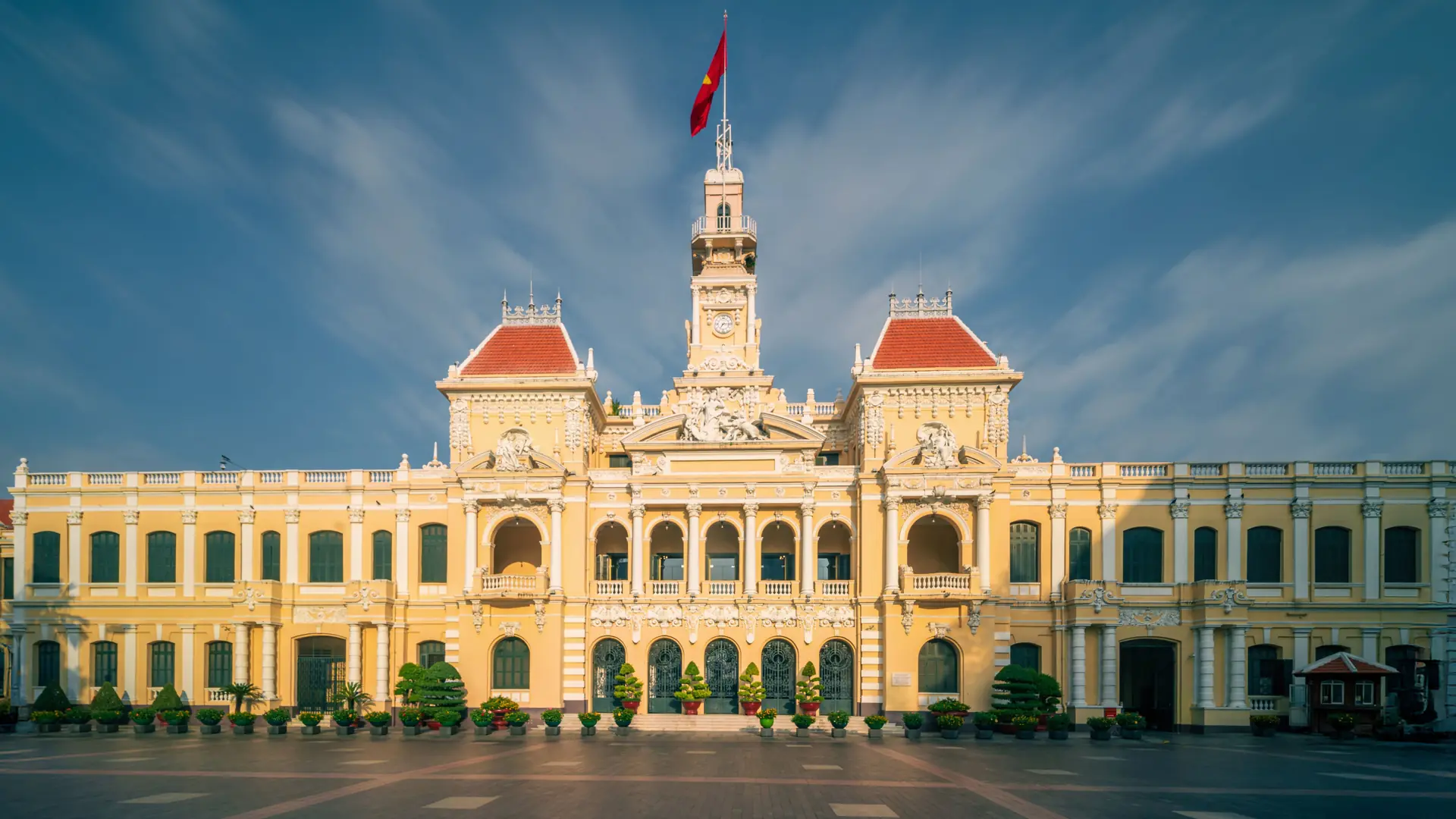
After checking in or arranging bag storage, start outside the Opera House on Lam Son Square. Follow Dong Khoi south, then use Nguyen Thiep to reach Nguyen Hue. Turn north for the City Hall exterior, then stroll back down the broad central pedestrian space towards 42 Nguyen Hue. Choose a café or dinner nearby and return to your hotel; the river end can wait for another evening if you are tired. This gives you a small, repeatable introduction to the commercial centre without needing a museum ticket or a long taxi circuit. If your flight arrives late, keep just the meal and save the walk for the following day.
Dong Khoi and Ben Thanh are central choices. Cholon lies farther west; Thao Dien and An Phu are east of the historic centre. A central base makes the first walk simpler, while the outer areas suit a longer stay or a visit focused on their own streets.
Opera House, Dong Khoi cafés and Nguyen Hue walks
The old commercial centre suits a short visit spent outside the hotel, with architecture, shops and evening meals close to your daily route.
Ben Thanh shopping and Pham Ngu Lao evenings
The market area and the backpacker streets offer different versions of a central stay: daytime browsing around Ben Thanh, or bars and casual meals farther southwest.
Binh Tay, Thien Hau and hotels around An Dong
Choose this western base when Cholon is a substantial part of your visit. An Dong hotels, Binh Tay Market and Thien Hau Temple need separate stops.
An eastern base for longer stays and metro outings
Thao Dien and An Phu offer an eastern residential base for groups spending ordinary evenings at home as well as sightseeing in the centre.
| Area | Purpose | Features | Daily movement |
|---|---|---|---|
| Dong Khoi and Ben Nghe |
Central architecture and cafés Near the Opera House and central buildings |
Higher-priced central hotels |
Walk Dong Khoi and Nguyen Hue; taxi to Cholon |
| Ben Thanh and Pham Ngu Lao surroundings |
Market shopping and evening meals Market and bar streets offer different frontages |
Nightlife noise on some streets |
Walk the market area; ride to farther sights |
| Cholon and the An Dong side of the city |
Chinese-Vietnamese markets and temples Time for local trading and worship |
Farther from Dong Khoi |
Taxi to Binh Tay, then walk or ride to Thien Hau |
| Thao Dien and An Phu apartment stays |
An eastern residential base More time in a residential setting |
A journey before central sightseeing |
Taxi or Line 1 to Opera House/Ben Thanh |
A view, separate beds, household equipment and bathroom access solve different problems. These examples refer to the named room, so compare the total for your dates and every guest before reserving.
At Park Hyatt on Lam Son Square, the 34-square-metre City View King and Twin rooms look towards the square and Opera House. The ordinary King and Twin rooms have a varying outlook. Book the named City View category if watching this corner of Saigon from the room is part of the pleasure; choose the simpler category if you expect to be out most of the day. Cribs are available on request. Include the baby or other additional guest in the enquiry so the confirmed arrangement matches the room you reserve.
Fusion Suites on Suong Nguyet Anh lists a 42-square-metre Family Suite with two bedrooms: one with a Queen bed and another with bunks. The published party is three adults and one child under six, or two adults and two children under six. That can suit parents who want younger children nearby but behind a bedroom door. Send the children’s ages before reserving; a family with older children needs a separately accepted arrangement. The suite also has a kitchenette and sofa, useful for a short rest between outings.
Windsor’s 32-square-metre Club Twin and King rooms include Executive Club Lounge access. After a market outing, the lounge can give the group a place to sit away from the bedroom; decide whether you would use it before paying the difference from a simpler room. The hotel’s guest entrance is 1 Su Van Hanh, near An Dong in Cholon. Use that entrance when arranging your arrival car. Keep the lounge inclusions and the party’s breakfast arrangements in the room quote, since a category name alone does not tell you what every guest receives.
Somerset Vista’s three-bedroom Executive apartment is 120 square metres for six guests, with a seventh chargeable. A hob, oven, microwave and fridge make shared meals possible; an in-suite washing machine and dryer help between longer Vietnam journeys. It suits a group using the apartment for more than sleeping, particularly when some companions want an evening at home. Agree the bedroom and extra-guest arrangement in the reservation. Decide who needs a room alone and who can share before comparing this apartment with several hotel rooms.
Windsor’s Premier Deluxe Accessible room is 38 square metres, with King or Twin beds, a stated two-adult-and-one-child capacity and a charged rollaway option. Its bathroom has a bathtub-and-shower combination. If you need a level shower entrance, ask for photographs and the relevant measurements before booking this category. Also describe the wheelchair or walking aid and ask about the route from the vehicle through the lift to the room. This room may solve some access needs, but its name does not settle the bathroom requirement that matters to you.
Park Hyatt lists a 68-square-metre connected arrangement combining one King room and a room with two Twin beds. Each room has its own marble bath and walk-in rain shower, giving companions separate sleeping and washing space while keeping an internal connection. The City View version describes outlooks towards Lam Son Square and the Opera House. Contact the hotel to reserve the actual connected pair for your dates and party. It is a useful central alternative for a group needing separate beds without moving to an eastern apartment.
Compare a central hotel with the apartment arrangement your party needs.
Saigon’s airport terminals, national railway station and metro stations serve different journeys. Save the hotel’s street address and travel with the ticket or pickup instruction for the exact service you booked.
International arrivals use T2. After entry formalities and baggage collection, follow the pickup instructions for your taxi, booked transfer or ride-hailing car and give the driver the hotel entrance address. For GrabCar, choose the correct terminal in the app and meet at its assigned pickup area; T3 pickups are on the ground floor of the PNA parking building, separate from its departures drop-off. The road journey ends at your hotel, not at a metro station. Ask the hotel about bag storage if the room will not be available when you arrive, then have a meal before deciding how much walking to do.
All Vietnam Airlines Group domestic flights use T3. This includes Pacific Airlines, VASCO and Vietnam Airlines’ services to Con Dao, Ca Mau and Rach Gia. Vietjet’s notice from 13 January 2026 places its domestic check-in desks in Hall A of T1. Use your airline’s flight instruction for the actual departure, including an onward flight that differs from your arrival. The free landside shuttle connects T1, T2 and T3; an airside transit service is a separate arrangement. If you must collect bags or enter Vietnam before connecting, plan the landside steps and the airline’s check-in deadline.
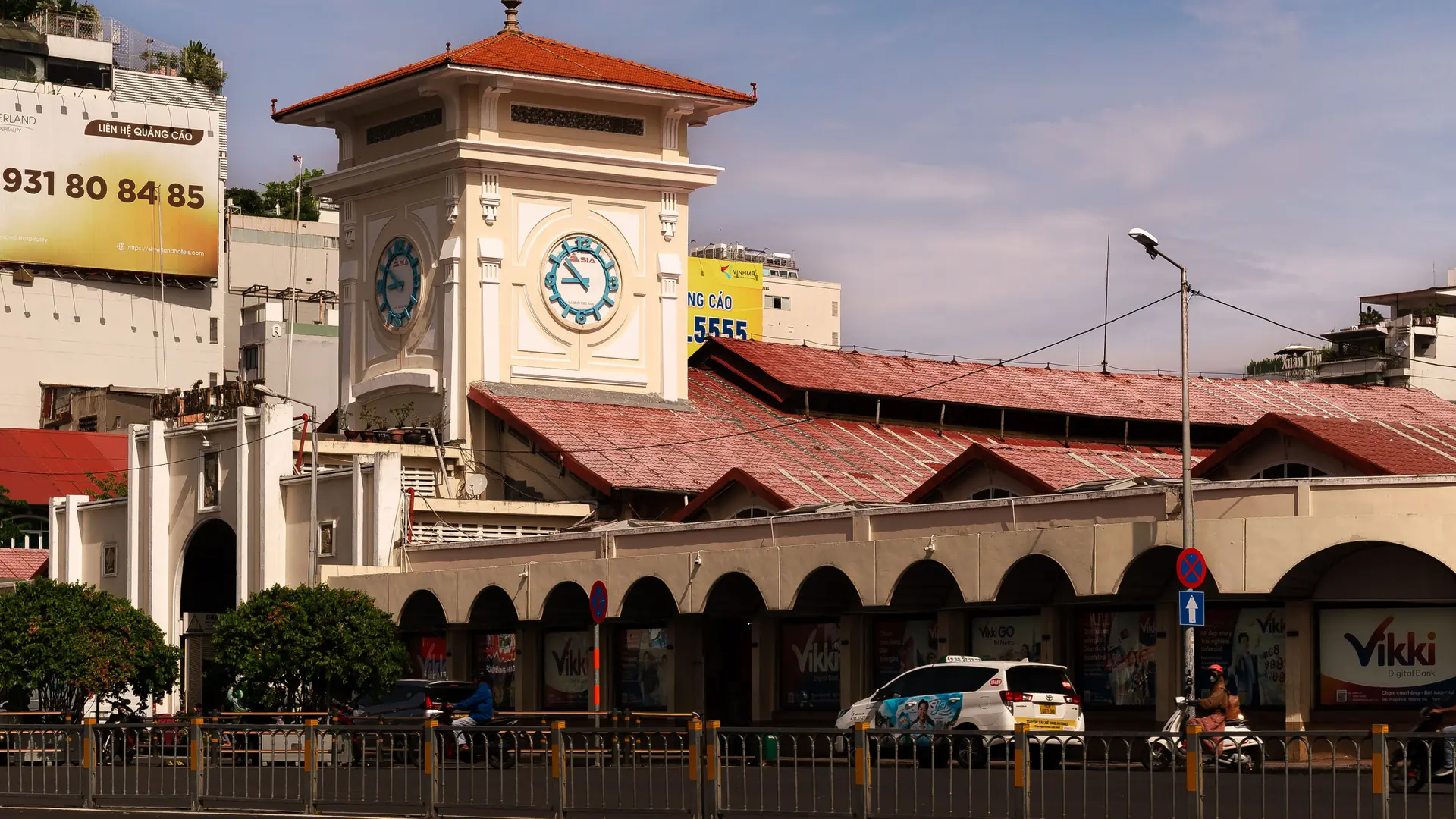
North–south trains use Saigon railway station, which is separate from the Ben Thanh metro station. Book the national train for the destination shown on your ticket, then take a taxi or arranged car from Saigon station to the hotel with your bags. If an overnight train brings you in early, organise storage or an early room before the journey. For onward travel to Nha Trang, Vietnam Railways offers services from Saigon; choose your dated departure, seat or sleeper berth and arrival time before arranging the station ride. A sleeper night belongs in your trip total alongside the hotel nights.
For a central outing from an eastern base, use Thao Dien or An Phu station when the approach from your building is practical. Travel towards Ben Thanh and alight at Opera House for the Dong Khoi area, or continue to Ben Thanh for the market. Reverse the journey afterwards and allow for the walk or car ride home from the station. Line 1 does not deliver you to Cholon or the Cu Chi tunnels. Machines, kiosks, bank cards, supported wallets and the HURC app provide ticket options; station staff can help you use a method available there.
Start your central history day at the palace’s main ticket entrance, 135 Nam Ky Khoi Nghia. Visit the rooms and, if you chose it, the separate historical exhibition, then stop for lunch before continuing to the War Remnants Museum at 28 Vo Van Tan. Walk between the central stops if conditions suit you or use a short ride. The museum opens daily from 07:30 to 17:30; reach the ticket counter before 17:00, with enough afternoon left for the galleries. Return to the hotel afterwards; if you chose only one admission, use the remaining time for the cathedral and Post Office exterior area or a café.
Take a taxi or arranged car to Binh Tay Market for the first stop. After exploring the trading halls and nearby streets, have a meal and continue to Thien Hau Temple by a walk you are comfortable with or another taxi. Set the temple itself as the destination, rather than asking the driver for “Cholon,” which covers a much larger area. Finish by returning to your hotel or the centre. From a Windsor base at An Dong, you still need the outward journey to Binh Tay; the hotel is not at the market entrance.
Windsor offers a complimentary 16-seat city shuttle on a first-come basis. Get the current departure and stop list at reception before going out, and note the pickup point for the return: it is the same as the drop-off point. Nguyen Hue stops are unavailable on Saturday and Sunday evenings, so choose another listed stop or a taxi then. If all seats are taken, use a separate ride rather than miss a timed reservation. Keep the hotel entrance at 1 Su Van Hanh saved for the final return.
The palace’s schedule effective 1 May 2026 gives daily visiting hours of 07:00–18:00. The main ticket gate at 135 Nam Ky Khoi Nghia follows those hours; the gate at 106 Nguyen Du sells tickets from 08:00–16:00. Use the main gate if you arrive later in the afternoon, and leave time to visit before closing. Palace-only admission covers the palace, while general admission adds the exhibition “From Norodom Palace to Independence Palace 1868–1966.” Choose that fuller ticket when you want the earlier history as well as the building. Check the operator for special-event changes.
The published morning itinerary starts with hotel pickup at 07:00, boat departure from Bach Dang at 07:20, a Ben Dinh visit and riverside lunch, then arrival back at the pier around 13:00. Hotel pickup and return cover its named central wards. Outside that zone, join at Saigon Water Bus Station using the operator’s booking-specific time and meeting pin; arrange your own journey there from Cholon or An Phu. The later departure runs 11:00–17:00.
Central sightseeing can mix a walk with short taxi rides: reach the palace gate by car, pause for lunch and ride onward to the museum if another pavement walk is too much. For a café in an older converted building, ask about stairs before choosing an upstairs table. A Cu Chi booking needs a separate discussion with Les Rives about boarding the speedboat and moving around the site. Avoiding the tunnels does not remove those parts of the journey. Describe your mobility needs before paying so the operator can explain what help or alternative is possible.
Price the historical admissions, metro journeys and chosen excursion separately from accommodation. Room rates still depend on your dates and party, while the examples below show the units behind the total.
National tourism identifies April and May as particularly hot. Start an outdoor architecture outing earlier, then have lunch indoors and use a taxi for the next stop if the pavements feel tiring. An apartment café or hotel rest can replace the longest walking section. For a family, keep one shared meeting point so companions who stop early can rejoin for dinner. The riverside is another outdoor stretch, rather than a substitute for a cool indoor break.
During the rainy season, put the museum or palace visit on the wetter city day and move a longer walk to a better interval when possible. For the speedboat excursion, Les Rives makes the operating decision: it says light rain can be accommodated but unsafe conditions can mean rescheduling or cancellation. Keep the operator’s messages available before departure. A café-and-museum city alternative is more useful than spending the day waiting at a pier for a trip that the operator has changed.
The national tourism account describes somewhat cooler conditions in December and January, within the broader December–April dry period described by Travelfish. Use that opportunity for the market streets in Cholon or the longer Dong Khoi walk, with a meal break rather than another taxi loop. December and January can also suit the southern part of a longer Vietnam journey; compare conditions at your next stop before booking the whole route.
At the tariffs checked on 5 October 2026, palace-only admission is VND40,000 per adult and the palace-plus-exhibition ticket is VND80,000. Ordinary War Remnants Museum admission is VND60,000 per person. Two adults therefore pay VND200,000 for palace-only tickets plus the museum, or VND280,000 with the palace exhibition. Those totals exclude meals and transport. They are a useful comparison for the central history day; choose the exhibition because you want its earlier story, and leave enough time to read it.
The published Line 1 fare decision lists cash single fares of VND7,000–20,000 and cashless single fares of VND6,000–19,000, depending on distance. A one-day ticket is VND40,000 per person for unlimited rides that day. For two rides at the lowest cashless fare, VND12,000 is less than the pass; your actual eastern-to-central station pair may cost more, so compare the displayed single fare before buying. The pass is useful when you will make enough additional rail journeys, and covers metro travel rather than admission to attractions.
Les Rives lists its six-hour speedboat excursion from VND2,399,000 per adult, including its stated government tax and service charge. Two adult places start at VND4,798,000. The advertised package includes a guide, site admission, breakfast, lunch and refreshments, with hotel transfers in its pickup zone. The optional shooting range is extra. Compare the full package with the experience you want: here the river travel is part of the outing, not merely a ride to buy a separate tunnel ticket. Use the dated checkout total before paying.
Yes. Saigon remains common in conversation, hotel names and travel writing; Ho Chi Minh City is the official city name. The national railway stop uses Saigon, so that is the name to look for when choosing a train to or from the city. Ben Thanh is a central metro station rather than the national railway departure point. Keep those two bookings separate when planning an onward journey.
The morning programme is scheduled back at Bach Dang around 13:00, followed by the hotel return where included. You still need to collect bags, reach the correct Tan Son Nhat terminal and meet your airline’s check-in deadline. A late flight may allow that sequence, but the tour’s scheduled pier return is not an airport-arrival guarantee. Give the operator your flight details before booking and leave a substantial road and check-in margin. If the connection is tight, put Cu Chi on the previous day and depart after another hotel night.
The 25-square-metre Double is a separate Queen-bed room without a window. Fusion’s ordinary one-bedroom suites are 32 square metres with a Queen or two single beds and a stated city outlook. Someone who only needs a central place to sleep may accept the windowless room; someone spending afternoons indoors may prefer the light and larger suite. Check the exact category in the reservation instead of using a suite photograph to judge the Double.
The property explicitly says it does not participate in the ASR programme, so those loyalty benefits do not apply. Choose the apartment for its facilities and your quoted rate, and ask about any separate promotion offered with that reservation. Its published check-in is from 14:00 and checkout before noon; a loyalty membership does not itself change those times or promise late access. If you need the apartment beyond checkout, arrange that directly before making your departure plan.
Arrange storage with your hotel or apartment reception before leaving for the last outing, including when and where you will collect the bags. A boat day calls for a small daypack, while your suitcase can stay only where that storage has been agreed. Return to collect it before the airport or national station ride; if you change accommodation, organise the transfer rather than assume the tour will deliver it to a new address. Keep travel documents and anything needed during the day with you.
Editorial team StartBooker
Checked on 2026-10-05
Updated
Research approach: Room specifications, palace and museum tickets, airport notices, metro rules and river-tour itineraries were checked against responsible sources. National tourism and independent city reporting informed the walking routes and area choices. Historical article dates and photo provenance are preserved; selected travel dates still determine room rates and departures.
25 Reviewed source records
Some photos provided by Pexels.