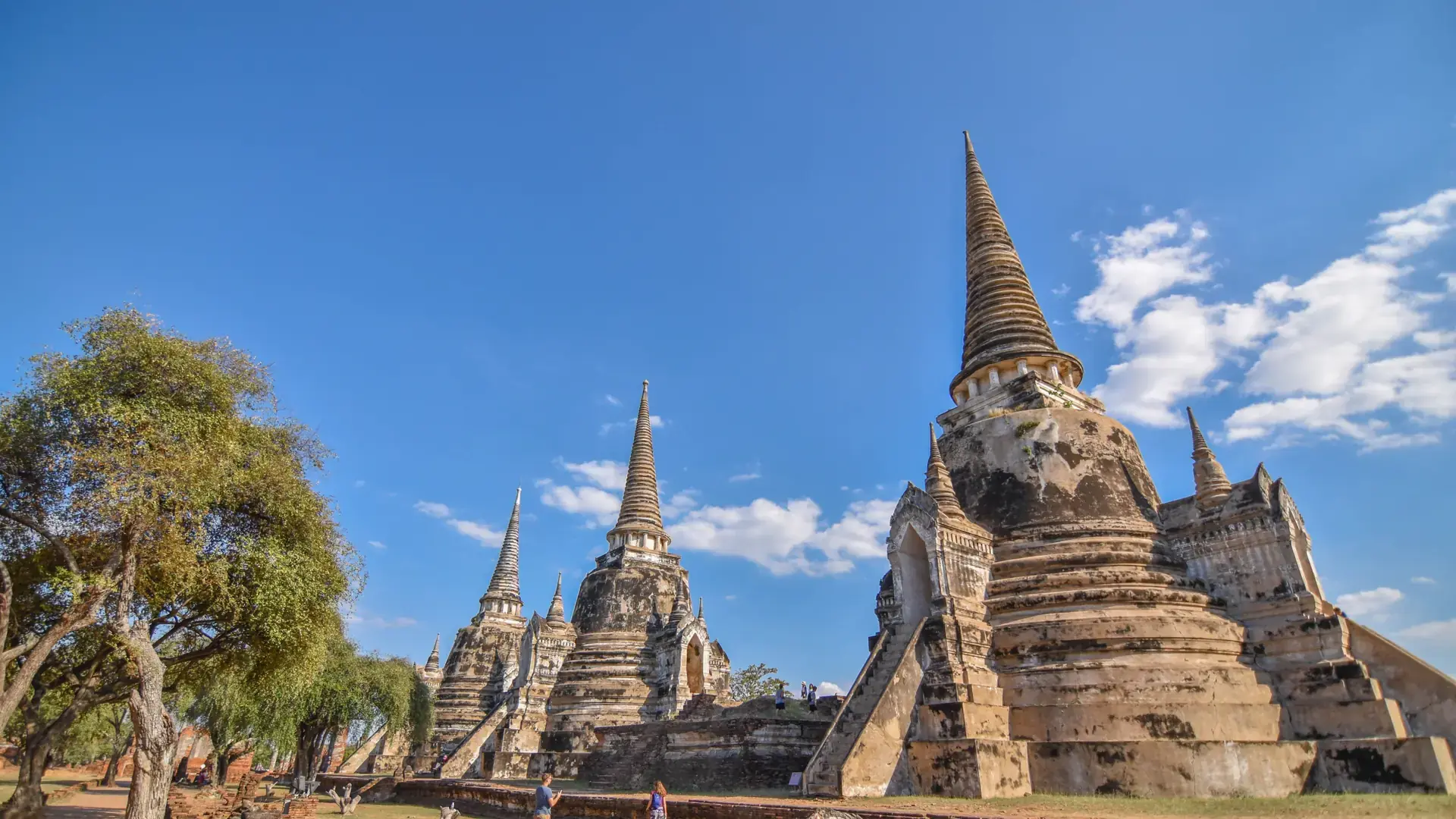
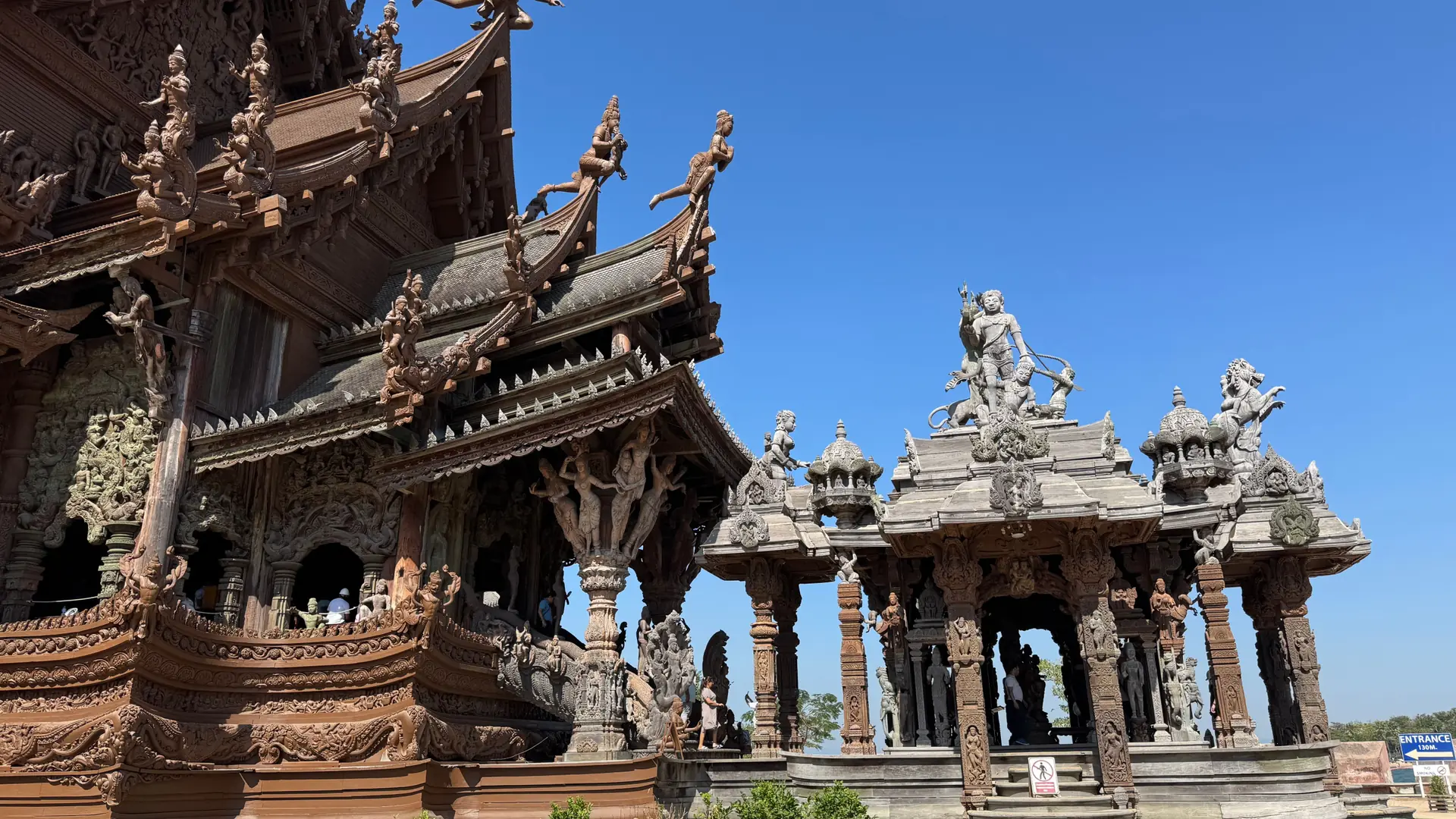
Ancient brick pagodas in Ayutthaya Historical Park beneath a clear blue sky

Bangkok to Chiang Mai by Train

Stay overnight in Ayutthaya before the long train journey north.

Length
7 days, 6 nights
Route
Bangkok → Ayutthaya → Chiang Mai
Rail
Day trains
Season
Nov–Jan
Loading stays for Chiang Mai

One heritage night, followed by a full railway day

Follow Thailand’s former and modern capitals north to the Lanna temples of Chiang Mai. Bangkok supplies the palace-and-river day, Ayutthaya adds an afternoon among brick ruins, and the final city gives you time for an Old City walk and one separate outing.

The railway is part of the holiday: day four belongs to the long seated journey, with dinner near your Chiang Mai hotel afterwards. This plan ends in the north and works best with an onward flight from Chiang Mai. Returning to Bangkok needs its own connection.

Choose this route for culture and a change of landscape rather than beaches or a packed attraction list. The central ruins and northern temples involve exposed walking, uneven ground and steps; anyone needing boarding assistance should discuss the actual carriage with State Railway before reserving.

Read Bangkok through its riverside temples

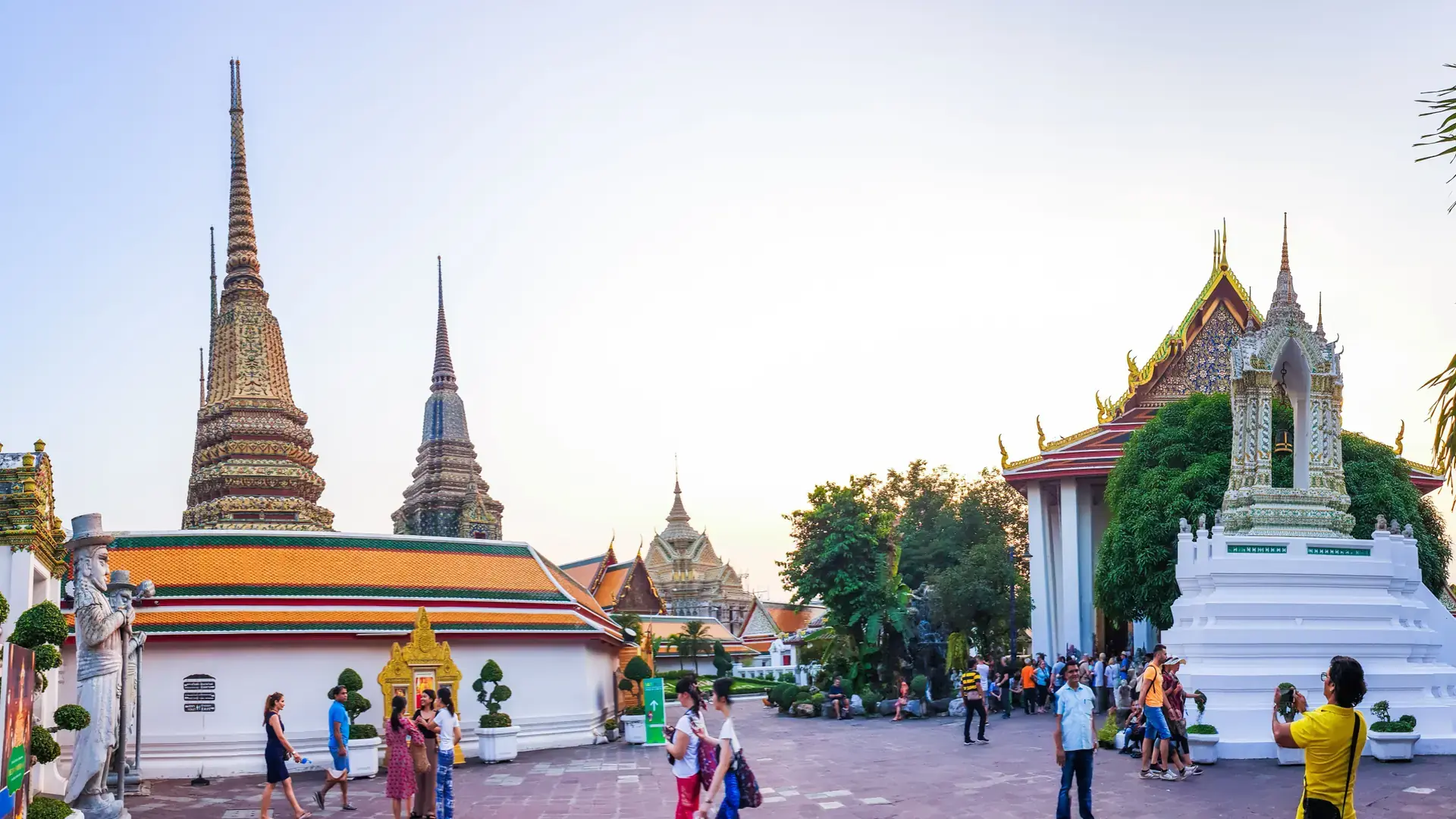
The Grand Palace and Wat Pho make a useful pair: royal ceremony on one side, an active temple with a reclining Buddha and teaching traditions on the other. Leave the second afternoon open for a river crossing or Chinatown rather than adding another distant district.

See what remains of the earlier capital

Ayutthaya’s ruined towers and monastery foundations show a different stage of Thai history from Bangkok’s maintained royal compound. The former capital occupied a river island; pick one cluster of monuments so the afternoon is spent looking at the remains rather than crossing the city.

Watch the route change through a train window

The northbound daytime service turns the longest transfer into a view of the journey itself. It offers a different experience from flying over the central plains, but asks you to accept most of a day in a seat. Keep food, water and a light layer close enough to use without unpacking.

Taste a northern cooking tradition

Chiang Mai is a good place to try khao soi, the northern curry noodle soup, or spend half a day learning to cook. A class gives food a larger role than a market snack, but its pickup and lesson consume time: use it in place of another outing rather than stacking both.

Match the season to the walking

November to January is the simplest starting window for cooler central and northern sightseeing. Rainy-season hills can be appealing, but exposed ruins and wet paths need a slower pace. Seasonal smoke is a separate concern: consult current air-quality advice, especially before a mountain outing.

Spend your spare time in the final city

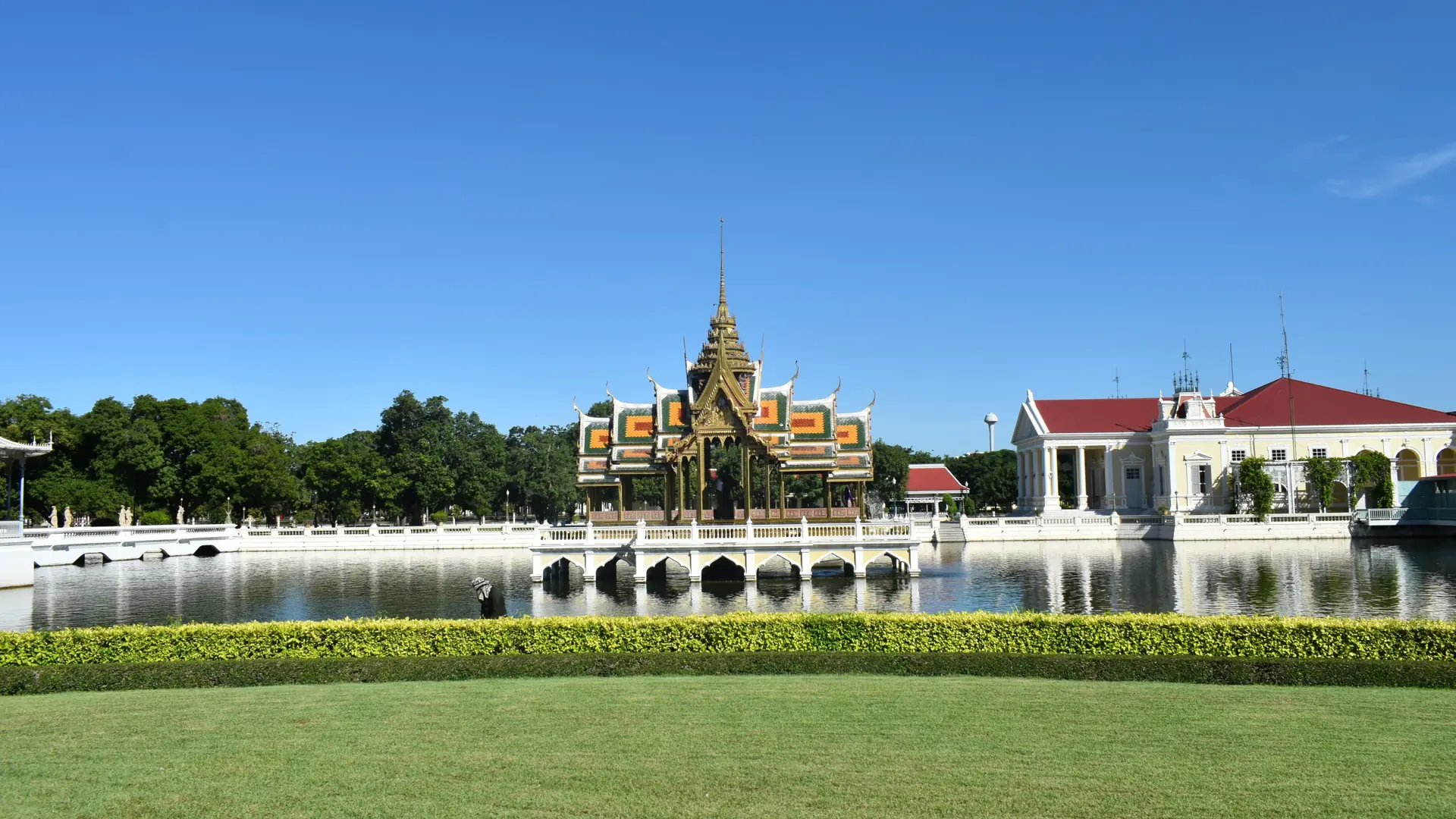
An extra night helps most in Chiang Mai, where the Old City, Doi Suthep and cooking or craft sessions compete for only two complete days. Bang Pa-In, pictured on the Ayutthaya card, is a separate palace-garden excursion; add time for it rather than squeezing it into the archaeological afternoon.

Best for

  • Travellers who enjoy a long daytime railway journey and want an overnight beside Ayutthaya’s heritage island.
  • A culture-focused week ending in Chiang Mai rather than returning south.

Think twice if

A beach-first holiday, a schedule built around sleeper travel, or travellers for whom a long seated journey and boarding with luggage are unsuitable.

StartBooker answer

How can Bangkok, Ayutthaya and Chiang Mai fit into one week by train?

Allow two Bangkok nights for arrival and the historic centre, break the journey with one night in Ayutthaya, then spend three nights in Chiang Mai. Day three is for the ruins; day four is a full daytime train journey, leaving two complete northern sightseeing days before departure on day seven. All six nights are in hotels. A sleeper can fit the same week only by replacing a hotel night and changing the daily plan. Book the Ayutthaya–Chiang Mai seat first.

Night split
Bangkok 2, Ayutthaya 1, Chiang Mai 3
Sightseeing time
Use the afternoon of day three for the ruins; keep day four clear for the long train journey.
Booking order
Reserve a daytime Ayutthaya–Chiang Mai service before committing to the hotel dates.

Three overnight stops on the way north

The three bases follow the railway north, ending with time in Chiang Mai before departure.

3 stops · swipe

  1. Visitors walking among the gilded roofs and chedis of Wat Pho in Bangkok 1

    Bangkok

    2 nights

    the Chao Phraya historic core, Wat Pho and an evening food district

    For this palace-and-river visit, stay around Rattanakosin or Banglamphu, with a useful river pier nearby. Chinatown suits travellers who put dinner first; a rail-linked hotel farther east means a longer journey to the historic sights.

    Watch out: River access helps sightseeing, but the day-three boarding station still depends on the train you choose.

    Read the Bangkok guide →
  2. Lake and palace grounds at Bang Pa-In, an optional outing near Ayutthaya 2

    Ayutthaya

    1 night

    World Heritage ruins, island waterways and a working rail station

    An island address along Naresuan Road towards Wat Mahathat suits the short ruins visit. Farther-west park stays favour the former palace circuit. Both need a ride to the railway station across the river; a provincial resort adds more travel.

    Watch out: Temple compounds are exposed and spread out; midday heat and road crossings can make a visually short circuit physically demanding.

    Read the Ayutthaya guide →
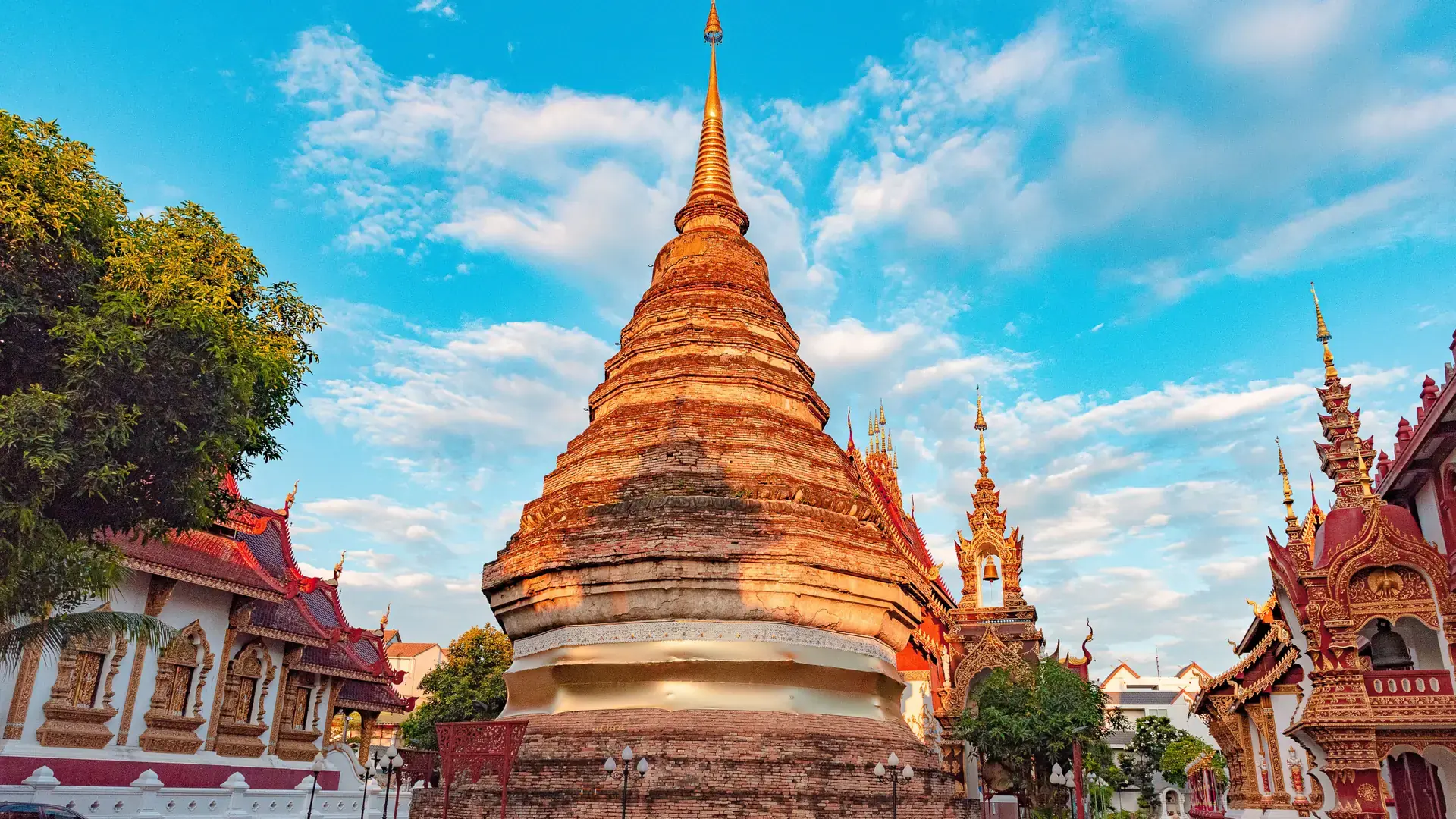
  3. Brick chedi and red-roofed temple buildings at Wat Saen Muang Ma Luang in Chiang Mai 3

    Chiang Mai

    3 nights

    Old City temples, northern cooking and the Doi Suthep road

    Stay within the moat for short walks to Wat Chedi Luang and nearby temples. Riverside hotels suit a setting-led stay with more rides. The three nights start on day four; days five and six are your complete sightseeing days.

    Watch out: The station is outside the Old City: allow an arrival ride rather than expecting to walk straight into the temple quarter.

    Read the Chiang Mai guide →

A seven-day route with two daytime trains

Take trains on days three and four. Arrive in Chiang Mai on the fourth evening for three nights and two full sightseeing days.

1 Day 1 Settle beside Bangkok’s historic river

After landing, distinguish Suvarnabhumi from Don Mueang before starting the transfer to your booked Bangkok district. Keep the first outing close to the hotel: a neighbourhood meal and a short orientation are enough after a long flight. If you are staying near the river, locate the pier you will use tomorrow rather than trying to see the palace before settling in. Banglamphu makes sense for the historic core, while Chinatown puts the evening food streets closer. Neither requires you to spend the arrival afternoon travelling across Bangkok. Arriving late simply means dinner nearby and sleep; the first full sightseeing day is still intact.

  • Airport-to-base transfer
  • A meal close to the hotel
  • Find tomorrow’s river approach

Base: Bangkok

2 Day 2 Explore Rattanakosin, then eat in Yaowarat

Begin with the Grand Palace and Wat Pho beside the river. Look for the contrast between the royal compound’s elaborate roofs and courtyards and Wat Pho’s reclining Buddha and rows of chedis, rather than rushing through both for photographs. The Palace’s foreign-visitor ticket is THB 500 (≈ US$15) and Wat Pho’s admission is THB 300 (≈ US$9), checked on 15 October 2026; each has its own entrance and dress rules. A shaded lunch separates the two visits if the morning feels crowded or hot. Choose one river crossing for the afternoon only if you still want another temple; otherwise leave space for Yaowarat’s food streets in the evening. Modest clothing that covers shoulders and knees belongs in the day bag, and shoes come off where required inside religious buildings.

  • Grand Palace courtyards
  • Wat Pho’s reclining Buddha
  • Yaowarat as the evening option

Base: Bangkok

3 Day 3 Ride north and see Ayutthaya after the heat

Take a morning train to Ayutthaya, then cross from the east-bank station to your island accommodation by an arranged road ride. A local train from Hua Lamphong is a straightforward alternative to a reserved express from Krung Thep Aphiwat; the booking section explains the distinction. Leave bags and have lunch before starting the archaeological circuit. Pair Wat Mahathat, known for the Buddha head held in tree roots, with nearby Wat Ratchaburana. If the former royal capital interests you more, choose Wat Phra Si Sanphet and its palace setting farther west instead. Two nearby sites leave time to pause among the brick foundations without a race across the island. Dinner finishes the sightseeing day, while an agreed early pickup protects tomorrow’s train.

  • Morning rail journey
  • One compact ruins circuit
  • Dinner on the heritage island

Base: Ayutthaya

4 Day 4 Take the daytime train north to Chiang Mai

Leave the hotel for Ayutthaya station early enough to board without rushing. SRT’s northbound table, checked on 15 October 2026, lists train 7 from Ayutthaya at 08:23 to Chiang Mai at 17:50. This is a nine-and-a-half-hour planning reference; your dated ticket and operator instructions govern the journey. No temple visit belongs before this departure. Bring food and water for a day when stopping at a restaurant is not an option. Spend the ride reading, resting and watching the change from the central plains towards the north. Arrival is across the Ping River from the Old City, so take a road transfer to your accommodation. Eat nearby and leave the evening free of prepaid activities; a late train should cost you rest time, not another booking.

  • Early Ayutthaya boarding
  • Full daytime rail journey
  • Chiang Mai hotel that evening

Base: Chiang Mai

5 Day 5 Walk the Old City on the first complete northern day

Use Wat Chedi Luang and smaller nearby compounds to anchor an Old City walk rather than counting temples across the entire city. Its substantial ruined chedi gives the morning a focal point; Wat Phra Singh is an optional second temple if you want to compare the architecture. The moat gives useful orientation, but crossings and heat still interrupt a short-looking route. Take a midday break and respect worshippers using the compounds. For the evening, choose a market that operates on your actual weekday: a weekend walking street is not a daily fixture. Northern food can be the main event, with khao soi followed by browsing rather than another paid attraction. A cooking lesson is an alternative with its own venue or pickup, leaving tomorrow available for the mountain.

  • Wat Chedi Luang and nearby temples
  • A midday pause inside the moat
  • Northern food or a dated market

Base: Chiang Mai

6 Day 6 Choose the mountain or a booked indoor activity

Doi Suthep works as a separate outing when road conditions and air quality are suitable. The temple above the city offers a different setting from the Old City’s compounds, with the journey up the mountain as much a part of the day as the visit itself. Arrange a return ride and discuss stairs or other access needs with the operator. Leave the afternoon for a meal and a slower return, not a distant second excursion. In poor air, a cooking or craft session is a useful alternative only in a space with suitable ventilation or filtration; being indoors alone does not guarantee cleaner air. This is the second complete northern day, so choose the experience you most want rather than trying to fit both the mountain and a countryside tour.

  • Excursion chosen for the weather and air quality
  • Return transport arranged
  • Suitable indoor alternative

Base: Chiang Mai

7 Day 7 Leave Chiang Mai with an unhurried final morning

Have breakfast near the hotel, collect bags and leave for the airport or railway station with the margin required by your carrier. A short neighbourhood errand is reasonable if departure is late; a mountain road or provincial excursion is not a reliable checkout-day extra. An onward flight from Chiang Mai makes this northbound route simplest. If your international ticket leaves from Bangkok, the domestic return and any change between its two airports need to be planned as a separate connection. A southbound sleeper reaches Bangkok the following day, extending the trip beyond this seven-day plan. The final morning is useful breathing space after two sightseeing days, not an unused slot that needs another attraction.

  • Local breakfast
  • Correct departure gateway
  • Bags collected once

Base: Chiang Mai

A short central leg and a long northern rail day

Use the dated State Railway service for each journey; the northern connection determines the fourth day’s schedule.

2 transfers

  1. Bangkok Ayutthaya

    Train Travel time: About 1–2 hours on the train

    Allow roughly one to two hours on the train, depending on service. Local trains use Hua Lamphong; reserved express services use Krung Thep Aphiwat. Arrive before lunch if possible, leaving the afternoon for the ruins after the hotel transfer.

    Booking note: Buy local-train tickets at the station. If D-ticket does not offer the short express segment, ask SRT on 1690 or choose a local service; keep train 7 for the long northern journey.

  2. Ayutthaya Chiang Mai

    Train Travel time: About 9½ hours on train 7

    SRT’s northbound table, checked on 15 October 2026, gives 08:23–17:50 from Ayutthaya to Chiang Mai. Confirm against your dated ticket. Allow hotel–station transfers at both ends; keep the rest of day four free.

    Booking note: Reserve the Ayutthaya boarding segment through SRT D-ticket or its ticket offices. Keep the seat confirmation before making your day-four hotel non-refundable.

State Railway times, stations, rolling stock and fares can change; confirm the train number and boarding point for the exact travel date.

An October cost example for two adults

Allow THB 29,000–35,000 (≈ US$870–1,040) for two adults sharing one room: seven days and six nights in October 2026. The room benchmarks and allowances below cover the route; availability is unconfirmed. Flights, insurance, premium tours, alcohol, cooking classes and shopping cost extra.

Bangkok: two room nights Private hostel rooms: THB 1,200–2,500 (≈ US$36–75) nightly in Nomadic Matt’s 2026 guide. Confirm two-person occupancy and taxes.
THB 2,400–5,000 (≈ US$70–150) for two nights
Ayutthaya: one room night Kantary’s 2026 net room tariff includes breakfast, service and VAT. Its east-side address needs rides to the island; availability is unconfirmed.
THB 2,800 (≈ US$85) for a twin Studio
Chiang Mai: three room nights Kantary Hills’ twin Studio Suite, maximum two guests, includes breakfast, service and VAT through 31 October 2026. The Nimman example needs Old City rides.
THB 9,300 (≈ US$280) for three nights
Two one-way rail journeys Planning allowance for two local-train tickets and two reserved northbound seats, including a fee reserve. Check the dated carriage and final fare with SRT.
THB 2,000 (≈ US$60) for both adults
Food and non-alcoholic drinks For both adults across seven days, with four hotel breakfasts included in the room tariffs. Extra snacks or more expensive restaurants can exceed this allowance.
THB 7,000–9,000 (≈ US$210–270) for two
Arrival, station and local rides Covers Bangkok airport arrival, station approaches, an Ayutthaya circuit, Doi Suthep and Chiang Mai airport departure. Allowance only; agree ride prices.
THB 3,000–4,500 (≈ US$90–135) for two
Admissions on the main plan Palace and Wat Pho admission for both adults costs THB 1,600 (≈ US$50). The remaining allowance covers selected Ayutthaya and Chiang Mai sites; extra visits need more.
THB 2,200 (≈ US$65) for two
Six-night room subtotal The three room examples total six nights. These are benchmarks, not a reserved package; island and Old City addresses may cost differently.
THB 14,500–17,100 (≈ US$430–510) for two
Chiang Mai: cool-season price The November–December 2026 twin tariff adds THB 2,700 (≈ US$80) for three nights before holiday surcharges. Rebuild the trip total.
THB 4,000 (≈ US$120) per room per night

Booking tips

  • Buy the long northern seat first. SRT’s D-ticket service and station offices are the booking routes; passenger names, train number, travel date and Ayutthaya boarding point must match. If online choices are unclear, use SRT’s 1690 information line.
  • Choose the Bangkok–Ayutthaya train separately. Local services are useful if your short express segment is unavailable; buy local tickets at the station and expect basic seating. The Ayutthaya hotel night avoids a tight connection to the next train.
  • Keep room geography separate from the tariff example. Kantary Ayutthaya is outside the heritage-island base, and Kantary Hills is in the Nimman area rather than inside Chiang Mai’s moat. A quieter or cheaper room can add road journeys that matter during this short stay.
  • Keep one evening free after the long train. Reserve a cooking class or guided outing for day five or six, with its pickup area and cancellation policy visible, rather than tying it to a punctual day-four arrival.
  • Reprice November or festival dates, confirming occupancy, taxes and cancellation terms. USD figures use 15 October 2026 ECB reference rates: USD 0.0298 per baht. They are rounded comparisons; card and exchange fees are extra.
  • Carry a usable ticket copy and the address for each overnight base. If boarding steps, toilets or uneven archaeological ground create an access barrier, discuss the specific service and visit with the operator before buying non-refundable bookings.

Chiang Mai and surrounding districts

Results include surrounding districts such as Hang Dong. For this walking-centred stay, prefer an address inside the Old City moat; Hang Dong and other outlying stays require road transfers to the temple circuit.

Find Chiang Mai stays →
Loading Chiang Mai accommodation

Follow the railway north to Chiang Mai

The markers locate the three overnight cities; the accommodation search centres on Chiang Mai. Use them for orientation, then check the exact hotel pin for station transfers and Old City access.

Bangkok → Ayutthaya → Chiang Mai route

Questions about the Bangkok–Chiang Mai train route

Is Bangkok → Ayutthaya → Chiang Mai realistic in 7 days?

Yes. Ayutthaya needs one focused afternoon, and the long northern train needs a whole day. This route leaves two full days in Chiang Mai after that transfer. It suits a first cultural visit more than a trip trying to include beaches, several provinces or daily guided excursions.

Can I return to Bangkok within this same week?

The hotel allocation ends in Chiang Mai. A flight back to Bangkok on day seven can remain within the week if its timing leaves an appropriate margin before your onward flight. Separate tickets need room for delays and any airport change. Adding a final Bangkok hotel night or taking an overnight rail return requires shortening the northern stay or extending the trip.

Can the Bangkok to Chiang Mai order be reversed?

A southbound trip is possible. Use the southbound timetable and recalculate which calendar day reaches Ayutthaya; northbound times cannot be read backwards. Keep the final Bangkok night if that is your international departure city, then assign the remaining hotel nights around the actual services.

How do I check the northbound train if online information conflicts?

Use SRT’s dated ticket service for the service you can book, with its timetable as the planning reference. If a seller or an old PDF disagrees about a boarding time, ask the station or call SRT on 1690. Train number and departure station matter more than a generic Bangkok–Ayutthaya duration.

Is a bicycle necessary for the Ayutthaya stop?

No. A small circuit with a driver is a reasonable alternative when cycling in traffic, heat or across river approaches is unsuitable. The monuments are not one enclosed pedestrian complex. Agree the stops and return point before setting out; a tuk-tuk or car does not remove the exposed walking inside the archaeological sites.

What changes if I prefer a sleeper to a daytime train?

A sleeper replaces a hotel night if seven days is fixed. For example, keep two Bangkok nights and one Ayutthaya night, travel overnight on night four, then spend two nights in Chiang Mai. Arrival moves to day five, leaving only one complete northern sightseeing day. Keeping all six hotel nights as well extends the route to eight days.

Which season works best for the whole rail route?

Start with November to January for cooler walking in both central Thailand and Chiang Mai. February into April brings more heat and can bring northern smoke; rain is a greater consideration in the summer monsoon months. A rail ticket does not make a mountain outing weatherproof, so choose the season for the activities as well as the journey.

Evidence behind Bangkok to Chiang Mai Rail Itinerary via Ayutthaya

Research editor StartBooker editorial Thailand itinerary research

Checked on 2026-10-15

Updated

How the route was verified: Editorial self-review of the seven-day route, hotel nights, daytime trains, photographs and complete October budget. Timetable times are planning references, not a promise for every travel date. Source dates distinguish rechecked records from earlier research.

24 source records

Key official and independent sources
  • UNESCO World Heritage Centre
  • Tourism Authority of Thailand Japan
  • UK Foreign, Commonwealth & Development Office
  • Bureau of the Royal Household
  • Wat Pho
  • Kantary Hotel Ayutthaya
References
Photo credits

Photos provided by Pexels.

How did this Bangkok–Chiang Mai route work?