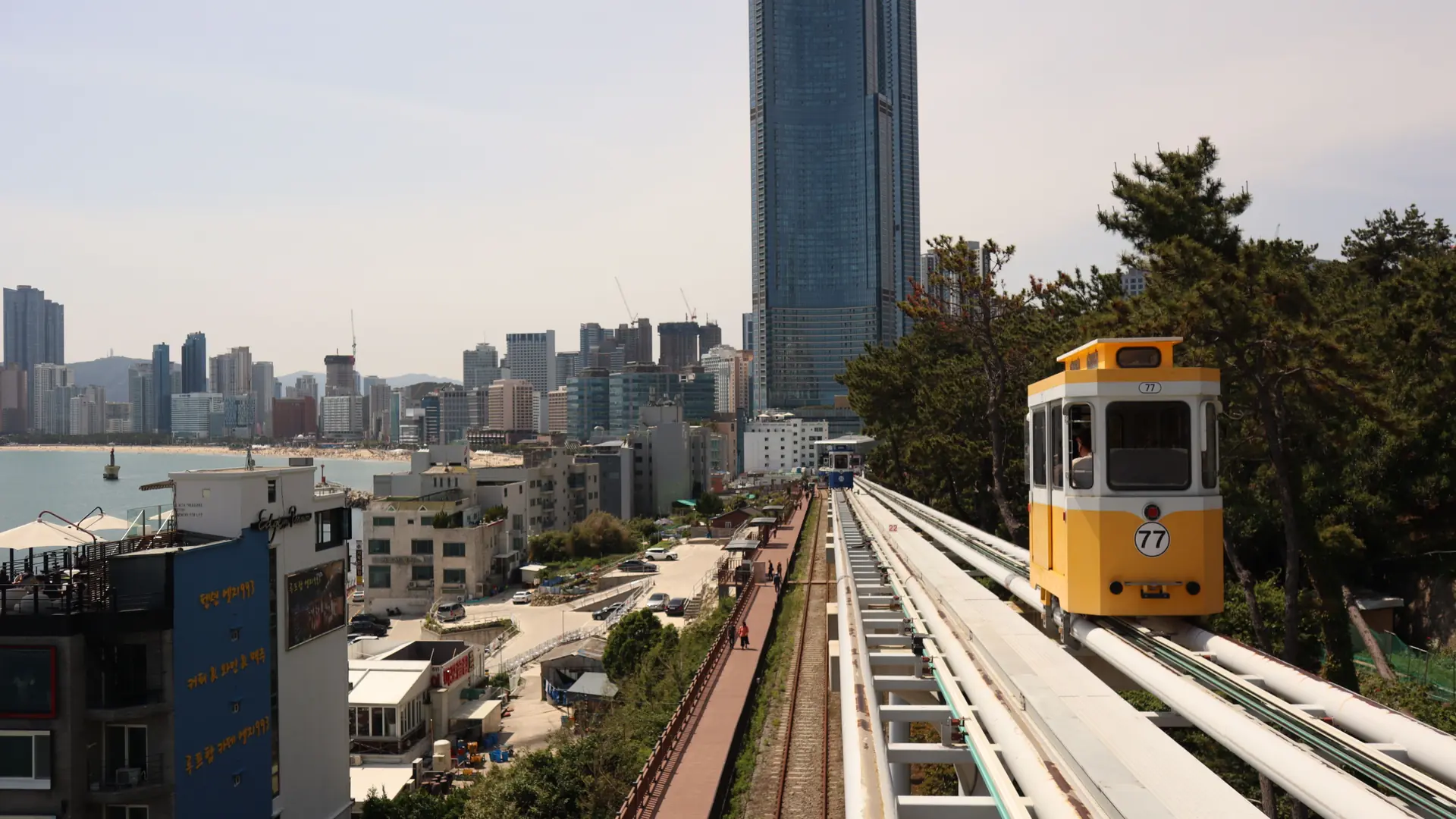
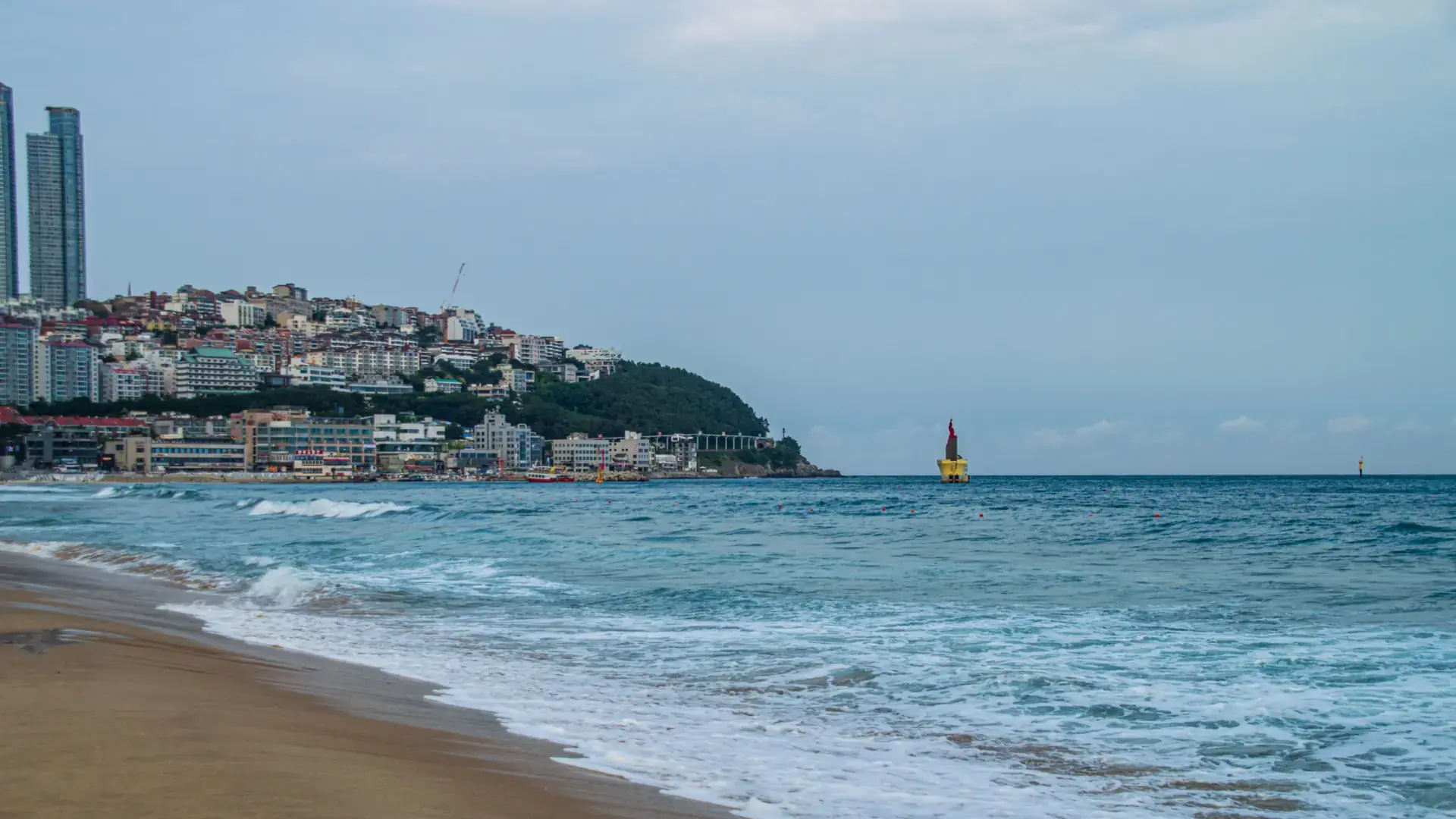
Waves on a sandy Busan shore with coastal buildings and a lighthouse under a cloudy sky

Busan: Beach, Bridge Views or the Old Port?

Loading Busan hotel search

Busan at a glance

Busan is a coastal port city with several distinct beach and downtown districts. Haeundae offers a long sandy waterfront, walks towards Dongbaekseom and the Sky Capsule at Mipo. Gwangalli centres evenings on cafés and views of Gwangan Bridge. Inland, Seomyeon joins the two main subway lines, shopping streets and the cafés of nearby Jeonpo. Nampo belongs to a different Busan: fish stalls at Jagalchi, market lanes and the old port. These places work well as separate outings, with the subway carrying you between them. Three nights give you two complete sightseeing days between arrival and departure; four or five nights allow more time for the coast or a Gyeongju excursion. Choose a beach base if a waterfront walk matters every morning, or an inland interchange if each day heads in a different direction. Group the old-port sights together and leave Haeundae its own day; repeatedly crossing the city cuts into the time you came to spend outdoors.

BEACH BASE Haeundae for sand and coastal outings

Haeundae Station is on Line 2, inland from the beach. Mipo and Dongbaekseom sit at opposite ends of the waterfront, so the room address shapes your walks.

EVENING VIEWS Gwangalli for Gwangan Bridge

Waterfront cafés and restaurants face the illuminated bridge. Gwangan Station on Line 2 serves the area, with a further walk down to the beach.

TRANSIT BASE Seomyeon: Lines 1 and 2

The interchange connects old-port outings on Line 1 with the eastern beach districts on Line 2. Jeonpo adds a nearby café and bakery outing.

AIRPORT ARRIVAL Light rail to Sasang, then Line 2

Gimhae Airport is on a separate light-rail network. Seomyeon and Haeundae require onward travel; Nampo adds a Line 1 transfer at Seomyeon.

METRO FARE Adult card: ₩1,600–1,800 (≈ US$1.20–1.40)

These are the two Busan Metro fare zones, reviewed October 17, 2026. Airport light rail and tourist trains use separate fares or ticket products.

TRIP LENGTH Three nights for two full days

A four-day visit can leave arrival and departure light, with one full day around the old port and another on the eastern coast. Add nights for side trips.

StartBooker answer

Which Busan neighborhood should a first-time visitor book?

Choose Haeundae when the beach is the focus, Gwangalli for bridge-view evenings, Seomyeon for the Lines 1 and 2 interchange, or Nampo for Jagalchi and the old port. A first visit with three nights has two full days between arrival and departure. The airport journey and cross-city outings add transfers and walks, so match the base to the places you will use most.

Beach mornings
Haeundae, with Line 2 inland from the shore
Bridge evenings
Gwangalli, reached from Gwangan Station
Citywide outings
Seomyeon, where Lines 1 and 2 meet
Old-port markets
Nampo and Jagalchi on Line 1
Airport bus to Haeundae
₩9,500 (≈ US$7.10), credit card only
Four-day example for two
₩848,000 (≈ US$637), three room nights

Things to do in Busan, South Korea

Explore tours, attractions and local experiences in Busan, South Korea.

Loading activities…

Activities provided by GetYourGuide. We may earn a commission on bookings.

AI-powered

Ask the Busan planner

Get a neighborhood match based on whether beach access, nightlife, budget or the fish market matters most to your trip.

Busan's four first-visit bases compared

The four bases offer different starting points: a sandy waterfront, a bridge-view beach, an inland interchange or the old-port markets. Line 2 links Haeundae, Gwangan and Seomyeon; Line 1 continues from Seomyeon to Nampo and Jagalchi. Allow for the walk between a station and your room as well as the train ride.

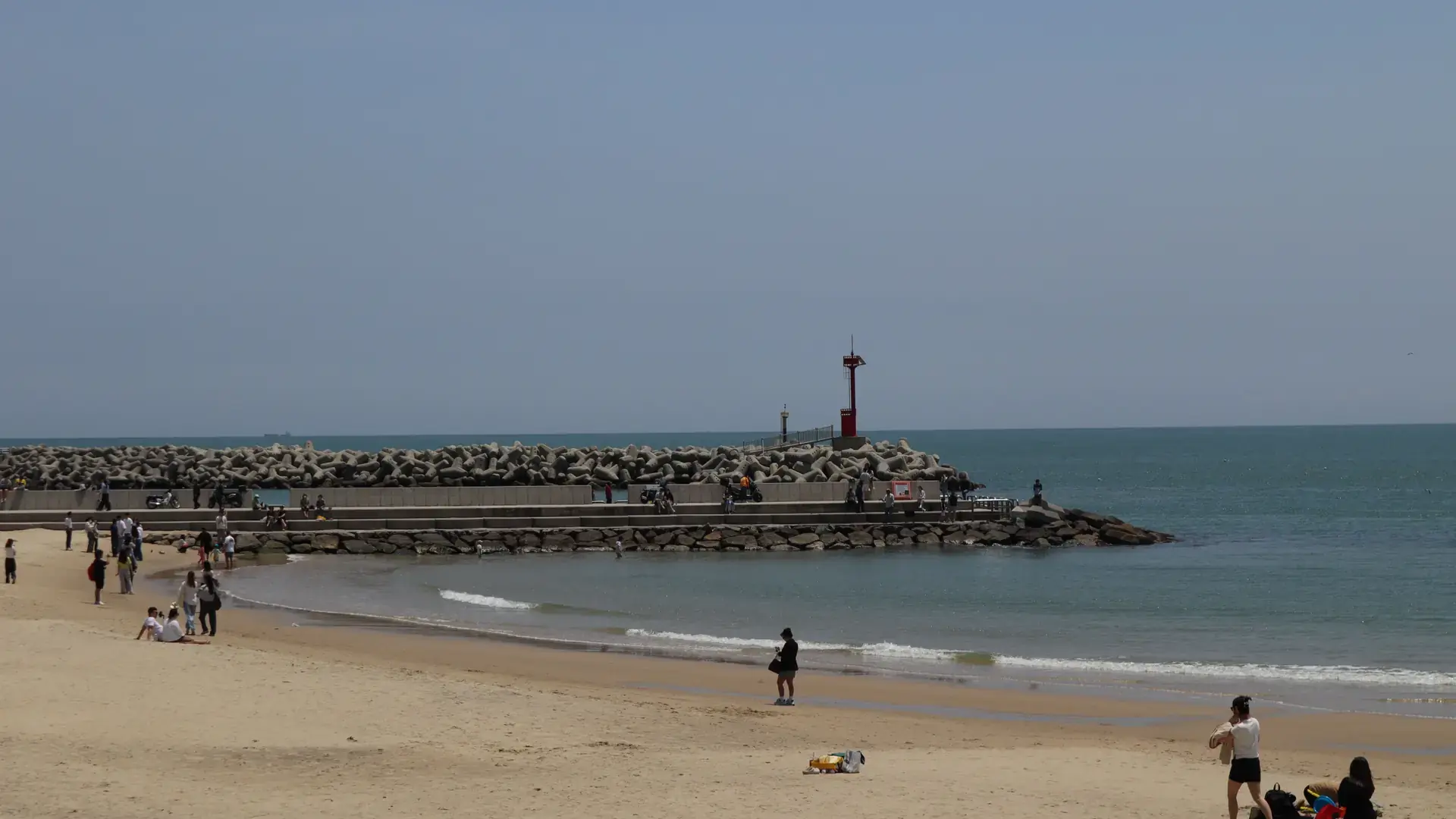
People on a sandy Busan beach beside a breakwater and red lighthouse in daylight

Haeundae

Beach walks and the eastern coast

Haeundae combines its sandy beach with restaurants and coastal outings. The sand is roughly a five-minute walk from Haeundae Station exits 3 or 5 on Line 2. Mipo is the eastern starting point for the Sky Capsule, while Dongbaekseom gives a waterfront walk to the west.

first-trip beach food near-transport
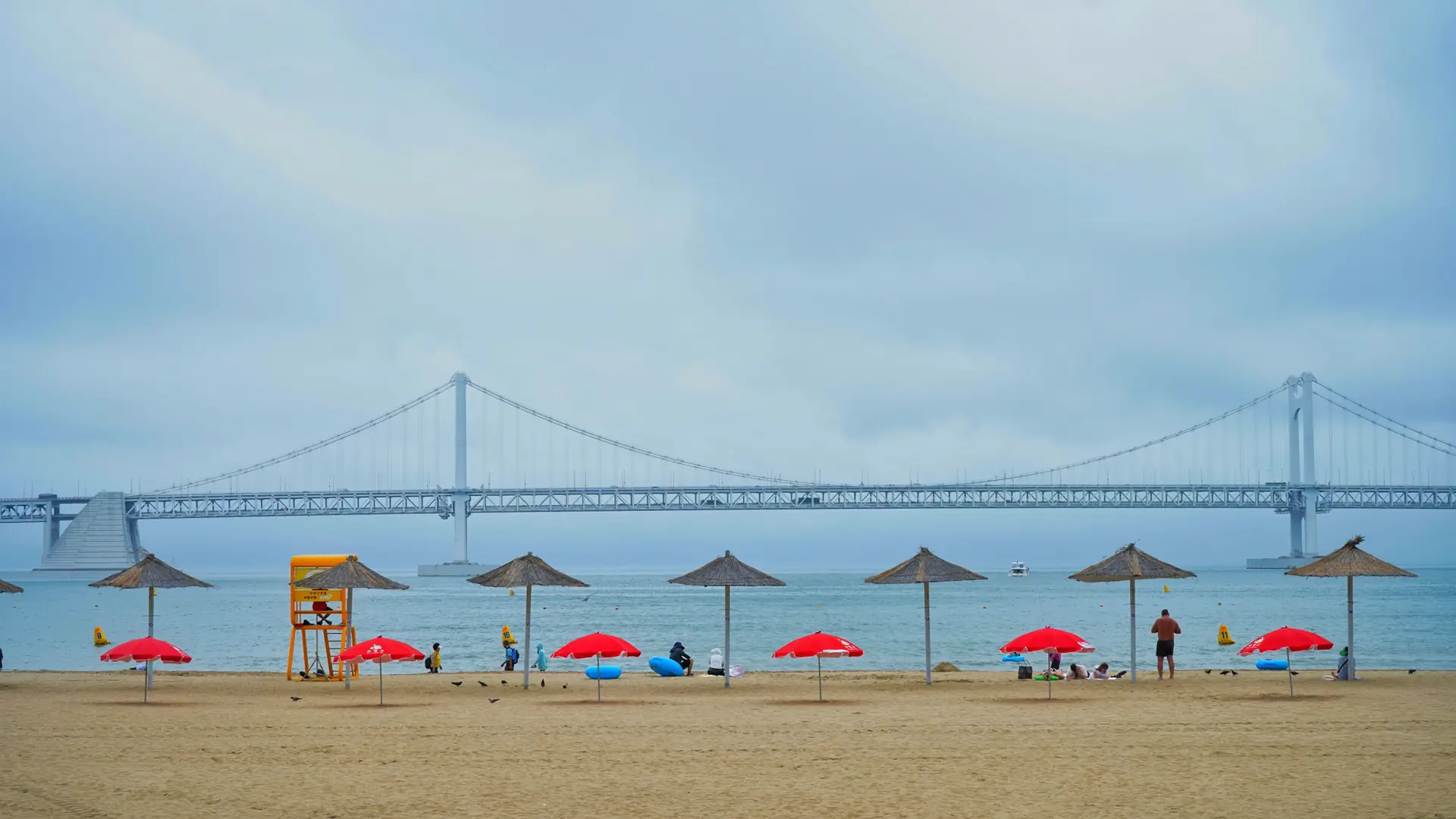
Gwangalli Beach with straw umbrellas and a lifeguard stand, the Gwangan Bridge spanning the water behind, in bright daylight

Gwangalli

Bridge views, cafés and evening walks

Gwangalli faces Gwangan Bridge, with cafés and restaurants along the shore. Its promenade is a lively evening meeting place. Gwangan Station serves the area on Line 2; a waterfront address adds a walk beyond the station, and sea-view rooms face different parts of the bay.

romantic beach food
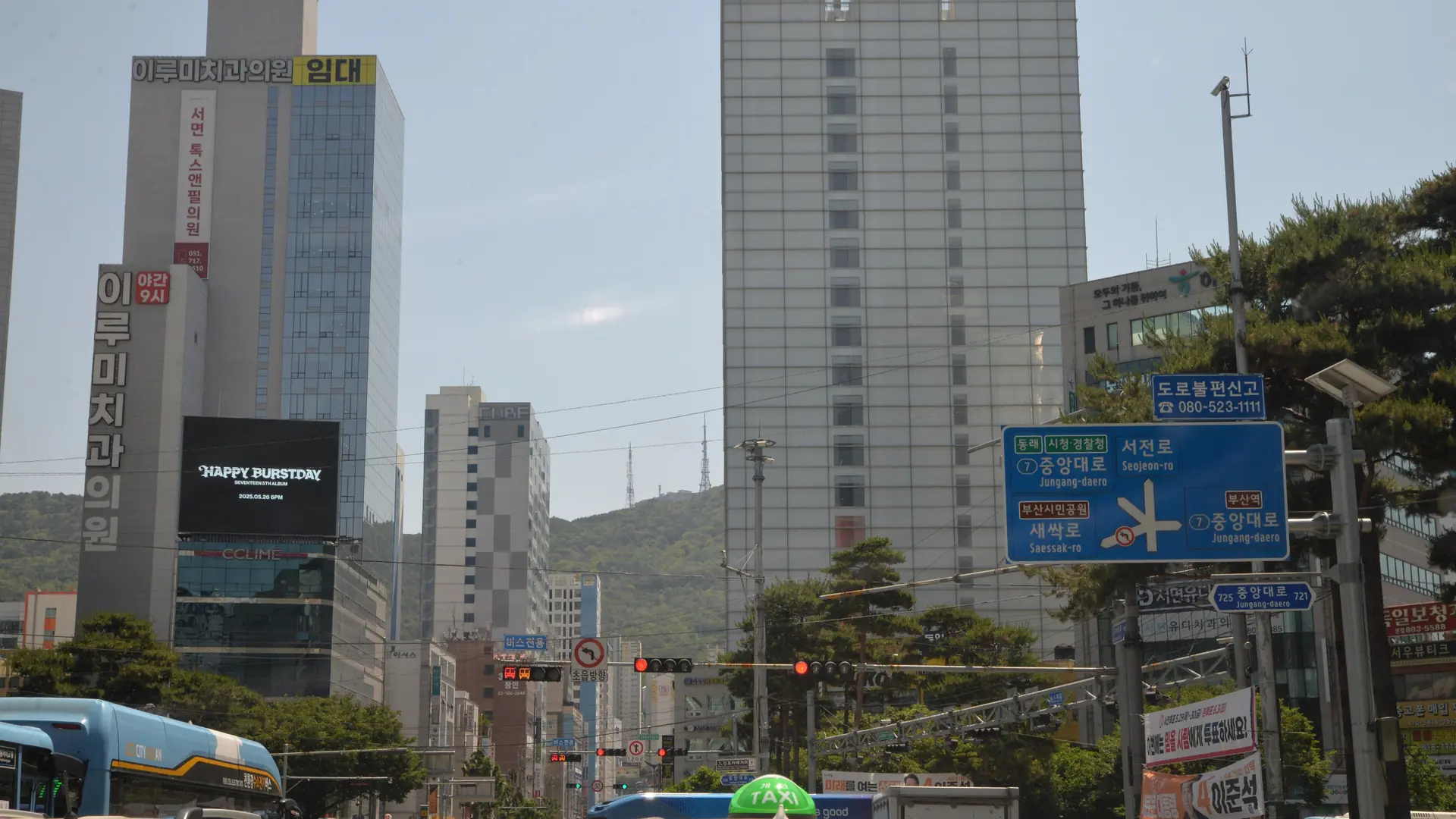
The Seomyeon intersection in Busan, with the Jungang-daero street sign visible amid dense high-rises, in bright daylight

Seomyeon

An interchange, shopping and Jeonpo cafés

Seomyeon is Busan’s inland shopping and transit hub, where Lines 1 and 2 cross. It works for a stay that alternates old-port sights with the eastern coast. Nearby Jeonpo Café Street adds bakeries, brunch spots and cafés in converted houses and workshop buildings, giving you a local outing without a beach journey.

budget near-transport without-car
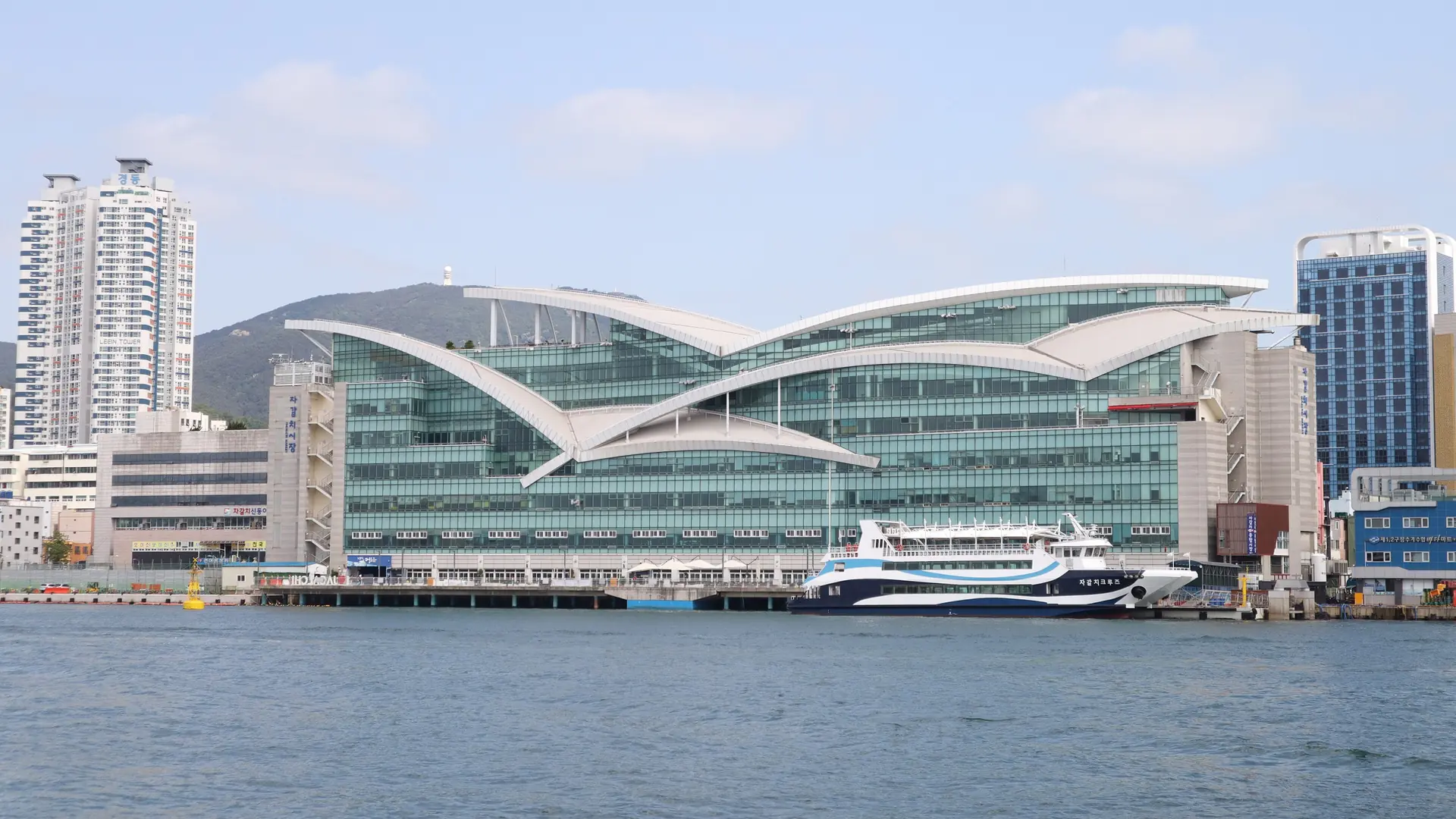
Jagalchi Market’s glass waterfront facade and white gull-shaped roof in Busan

Nampo

Jagalchi seafood and old-port streets

Nampo puts Jagalchi’s fish stalls, market streets and the old-port atmosphere within the same outing. Nampo and Jagalchi stations both use Line 1. The indoor seafood market and the surrounding outdoor stalls offer different scenes; a meal here can be a destination in its own right rather than a quick snack between beach visits.

food local-vibe budget without-car
Compare Busan's four bases
Area Best for Features Getting around
Haeundae

Beach walks and the eastern coast

A longer trip to old-port sights

Line 2 from Haeundae; change at Seomyeon for Nampo
Gwangalli

Bridge views and waterfront evenings

A walk from the inland metro to the shore

Line 2 from Gwangan; walking access varies along the bay
Seomyeon

Several directions of sightseeing

An inland commercial base with no beach

Lines 1 and 2 interchange; Jeonpo is nearby
Nampo

Jagalchi and the old port

Eastern beaches require a cross-city outing

Line 1 from Nampo or Jagalchi; change for Line 2

Choose Busan by what your trip needs most

Start with the outing you want close to your room each day. A short visit usually works well from one base; changing hotels costs packing, luggage storage and check-in time. With a longer stay and separate coastal and old-port plans, a move between the two sides of Busan can have a clear purpose.

Beach on your doorstep

Haeundae makes the beach a daily habit: a short morning walk, a break back at the hotel and another outing towards Mipo or Dongbaekseom. Use it when the coast is the main reason for choosing Busan.

Waterfront dinners and bridge views

Gwangalli suits evenings built around a café, a meal and the illuminated bridge. A waterfront room lets you return on foot after dinner, while a hotel nearer Gwangan Station shortens the final walk after daytime sightseeing.

A different part of Busan each day

Seomyeon gives you both main metro lines at one interchange. It is practical for alternating Nampo’s markets with Haeundae or Gwangalli, and nearby Jeonpo provides a café-focused afternoon between larger outings.

Markets and a seafood meal

Nampo is the useful base for lingering around Jagalchi and the older commercial streets. Make the market meal part of the day, with time to explore the stalls and waterfront rather than fitting it into a rushed beach transfer.

Busan stays across the city

Live results may include the beach districts, Seomyeon and the Busan Station area. The address on each card identifies the actual base.

See Busan stays →
Loading Busan hotels

Getting to and around Busan

Gimhae Airport and Busan Station are different gateways. The airport needs light rail, a bus or a road transfer; KTX arrivals start beside Line 1, closer to the old port. Haeundae lies on the eastern side of the city, so leave room for the onward journey after the train or flight.

From Gimhae Airport to your base

Light rail via Sasang

Take the Busan-Gimhae Light Rail to Sasang, then Line 2 for Seomyeon, Gwangan or Haeundae. For Nampo, change again at Seomyeon to Line 1. The light-rail leg alone is not the hotel journey: walking between platforms, train waits and the final walk all add time.

Two different rail fares

BGLRT’s adult transport-card fare for the airport–Sasang first-zone leg is ₩1,600 (≈ US$1.20); a single ticket is ₩1,700 (≈ US$1.30). Metro travel is additional, with card-transfer rules determining the combined charge. These rates were reviewed October 17, 2026.

Limousine buses with luggage

The airport lists buses from platform 3, first floor, at both terminals: Seomyeon/Bujeon costs ₩6,000 (≈ US$4.50), Haeundae/Gijang ₩9,500 (≈ US$7.10), credit card only. The coastal route serves specific hotel and beach stops; only some departures continue to Gijang. Fares reviewed October 17, 2026.

Getting around once you're here

KTX arrivals and the old port

KTX trains from Seoul arrive at Busan Station. Line 1 continues towards Nampo and Jagalchi; Haeundae requires Line 1 to Seomyeon, then Line 2. Train duration varies with the departure and stops, and the onward city journey belongs in your arrival-day plan.

Metro fares and realistic outings

Adult Busan Metro transport-card fares are ₩1,600 or ₩1,800 (≈ US$1.20 or US$1.40) by zone; QR single tickets cost ₩100 more. As a planning allowance, give a Haeundae–Nampo outing roughly an hour or more from room to destination, including the Seomyeon transfer and walks. Fares reviewed October 17, 2026.

Taxi costs after an evening out

A standard Busan taxi starts at ₩4,800 (≈ US$3.60) for 2 km, with distance and slow-traffic charges after that. The late-night surcharge is 20% from 23:00–00:00 and 02:00–04:00, and 30% from 00:00–02:00. A cross-city ride costs more than the starting amount. Rates reviewed October 17, 2026.

Coastal walks and tourist trains

Group Mipo and Haeundae together. The Sky Capsule runs between Mipo and Cheongsapo on a separate elevated track; it is an attraction with its own ticket, rather than a metro shortcut. Naver Map provides walking and public-transport directions for the onward coastal route.

Tickets and passes worth comparing

A metro day pass has limits

The operator lists an adult mobile-app day pass at ₩6,000 (≈ US$4.50), valid on its metro for the day of purchase. It excludes buses, the Donghae Line and airport light rail. Four first-zone card rides cost ₩6,400 (≈ US$4.80); a day with only two rides does not justify the pass on fare savings alone.

Station lifts and the final walk

Street access differs from stair exits

The metro’s facility list records indoor and outdoor lifts at Haeundae, Gwangan, Seomyeon and Nampo. Lift entrances and stair exits can be on different sides of a road, so the shortest advertised station walk may use stairs. A room near a suitable lift can be more useful than one nearer a stair-only exit.

Planning a Busan stay

A three-night stay leaves two complete days between arrival and departure. One can focus on Jagalchi and the old port, the other on Haeundae and the eastern coast; evenings at Gwangalli or Seomyeon fit according to your base. The example below covers four calendar days and three shared room nights.

Weather and the shape of the day

Spring for walks between districts
  • April and May are useful for beach promenades and city walks without building the whole trip around swimming. A day can combine an outdoor coast section with markets or cafés. Rain still occurs, and wind beside the water can make an evening feel cooler than the temperature suggests.

  • Summer beaches and wet-weather plans

    Summer brings heat, humidity and Korea’s main rainy period; conditions vary by year. Haeundae’s accommodation demand rises during the beach season. Keep an indoor shopping or café outing available for a wet afternoon, and distinguish a promenade visit from swimming under seasonal beach supervision.

  • Autumn walks and event weekends

    September and October can suit coastal walks, with cooler water and evenings as the season progresses. Holidays, conventions and festivals bring demand to individual weekends. An autumn plan can pair a daytime beach walk with dinner by the illuminated bridge, leaving another day for markets or cafés.

  • Winter for shorter coastal outings

    Winter works better with a shorter beach walk followed by a market meal or café than with a full day exposed to sea wind. Seomyeon’s indoor shopping and Jeonpo’s cafés give a different kind of outing. Longer nights make the bridge lights part of the evening, with warm indoor breaks between walks.

Four-day stay costs for two

Three shared room nights
  • For two adults on ordinary October–November 2026 dates outside holidays and major events, allow ₩130,000 (≈ US$98) per double-room night: three nights total ₩390,000 (≈ US$293). This is a planning estimate, not a live quote or city average. Beach views, weekends and premium hotels can raise the room cost.

  • Food and paid visits

    Use ₩35,000 (≈ US$26) per adult per day for meals and café stops: ₩280,000 (≈ US$210) together over four days. Add a shared ₩60,000 (≈ US$45) allowance for selected paid visits. The beaches themselves are free; several tourist-train, cable-car or premium-attraction tickets may exceed that visit allowance.

  • Local travel and airport buses

    Set aside ₩80,000 (≈ US$60) for two adults’ local metro and bus travel over four days, plus ₩38,000 (≈ US$29) for four Haeundae airport-bus tickets. This example assumes arrival and departure through Gimhae. Late-night taxis, transport-card purchase and extra attraction transport can increase the allowance.

  • The complete four-day example

    The total is ₩848,000 (≈ US$637) for two, or about US$80 per adult per calendar day, including rooms, food, local travel, airport buses and the visit allowance. Flights, intercity rail, shopping, alcohol, insurance and guided tours are excluded. USD figures use the ECB October 16, 2026 cross-rate of about ₩1,332 per US$1, rounded before exchange or card fees.

Where should a first-time visitor stay in Busan?

Haeundae suits a beach-focused visit, while Seomyeon gives you the Lines 1 and 2 interchange for varied sightseeing. Choose Gwangalli for bridge-view evenings or Nampo for Jagalchi and the old port. Three nights usually work well from one base, leaving arrival and departure days light.

Is Haeundae or Gwangalli the better beach base?

Haeundae suits a stay that combines the sand, Dongbaekseom and Mipo’s coastal attractions. Gwangalli centres evenings on waterfront cafés and Gwangan Bridge. Both can be lively; Gwangan and Haeundae stations are inland from their beaches, so the final walk depends on the room address.

How do I get from Seoul to Busan?

Book a KTX journey to Busan Station for the central port side of the city. The trip length depends on the train and its stops. From the station, Line 1 serves Nampo and Jagalchi; for Haeundae, transfer from Line 1 to Line 2 at Seomyeon and add the final walk to your hotel.

How do I get from Gimhae Airport to central Busan?

Take light rail to Sasang and change to Line 2 for Seomyeon or the eastern beaches. Nampo requires a further change to Line 1 at Seomyeon. Airport buses offer separate Seomyeon/Bujeon and Haeundae/Gijang routes, with specific stops and credit-card-only fares; the Haeundae route costs ₩9,500 (≈ US$7.10).

Where is the best base for Jagalchi Fish Market?

Nampo is the useful base for combining Jagalchi with nearby commercial streets and the waterfront. Both Nampo and Jagalchi stations use Line 1. The market’s indoor building is at 52 Jagalchihaean-ro; outdoor stalls and individual restaurants have their own rhythms, so a daytime outing gives more than a rushed late stop.

How much should two adults budget for Busan?

The four-day, three-night example totals ₩848,000 (≈ US$637) for two: a shared double, meals, local transport, return Haeundae airport buses and selected paid visits. It assumes ordinary autumn 2026 dates outside holidays and major events. Flights, intercity rail and the other listed extras are additional; the room allowance is not a live rate.

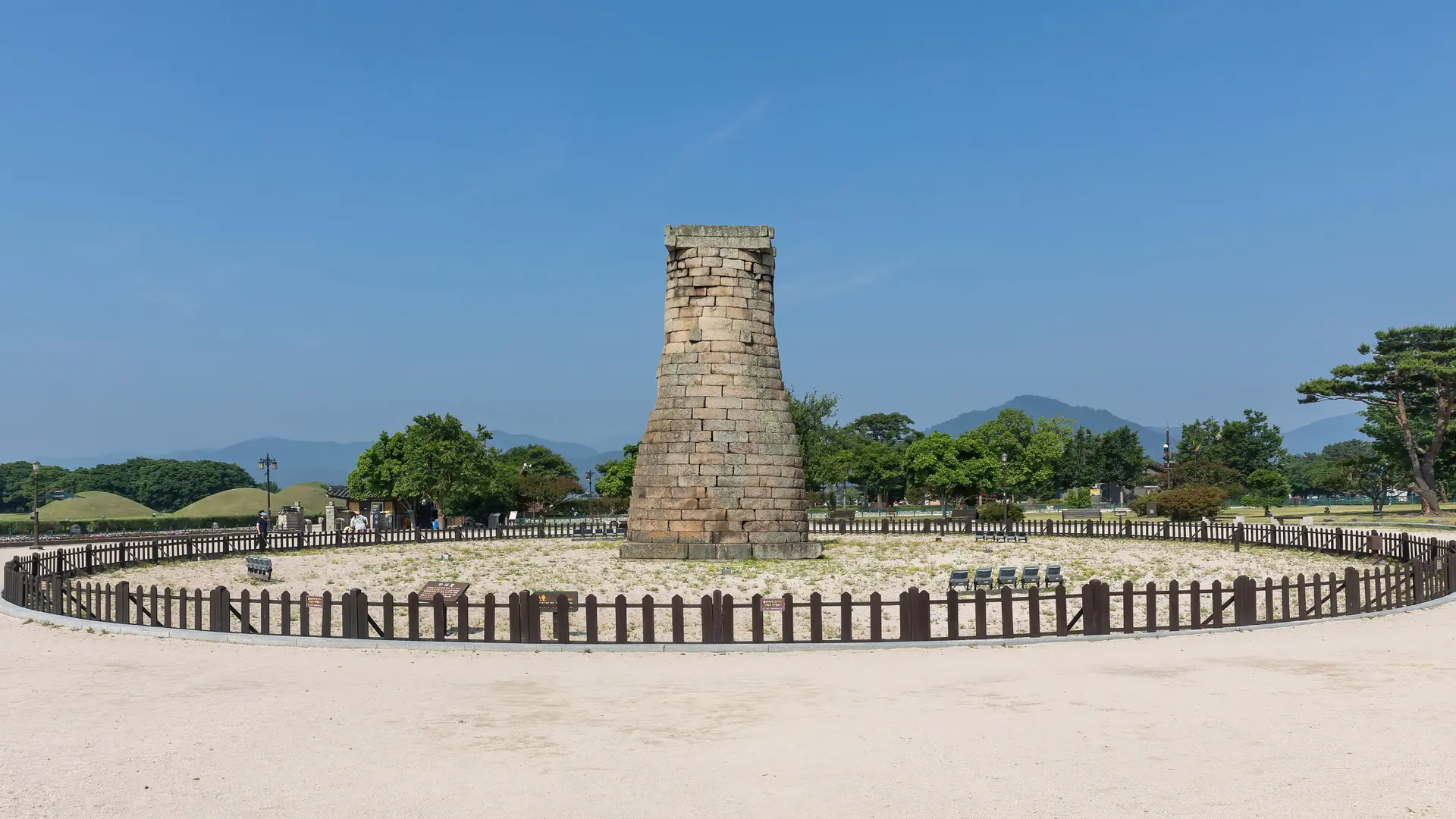
Can I day-trip to Gyeongju from Busan?

Yes, but the arrival point matters. Gyeongju’s KTX station is outside the historic centre, so add a bus or taxi after the train. A day trip should group a few central sights rather than treating the station arrival as the start of sightseeing. An overnight stay gives the evening in town and reduces the return-day rush.

Is Busan walkable, or do I need the subway constantly?

Walk within a chosen area, then use transit between districts. Nampo’s market outing and Haeundae’s beach walk belong to different parts of the city. Line 2 connects the eastern coast with Seomyeon, and Line 1 continues to the old port; changes, station exits and walks make a difference to the full journey.

Can I combine Busan and Jeju in one trip?

Yes. Air Busan lists a direct Busan–Jeju route, so a flight from Gimhae can link the two without returning through Seoul. Add time to reach the airport, check in and collect baggage, as well as the onward journey on Jeju. The separate flight and any island rental car sit outside this Busan stay budget.

Where should I spend an evening in Busan?

Choose one area for the evening: Gwangalli for bridge views and waterfront dining, Seomyeon for its central drinking streets, or Haeundae after a coast-focused day. Returning across the city after the metro finishes can add a substantial taxi trip; Busan’s standard taxi surcharge applies from 23:00 to 04:00.

Sources

Reviewed by StartBooker editorial team Destination research and editorial self-review

Reviewed 2026-10-17

Updated

Review method: Editorial self-review of the complete desktop and mobile page, with airport and metro fares, transfer geography, photographs, hotel addresses and the full sample budget assessed against the listed sources.

21 references reviewed

Key sources
  • Rough Guides
  • Korea Airports Corporation
  • Busan-Gimhae Light Rail
  • Busan Transportation Corporation
  • Busan Metropolitan City
  • Korea Tourism Organization
References
Photo credits

Some photos provided by Pexels.

Share your Busan base