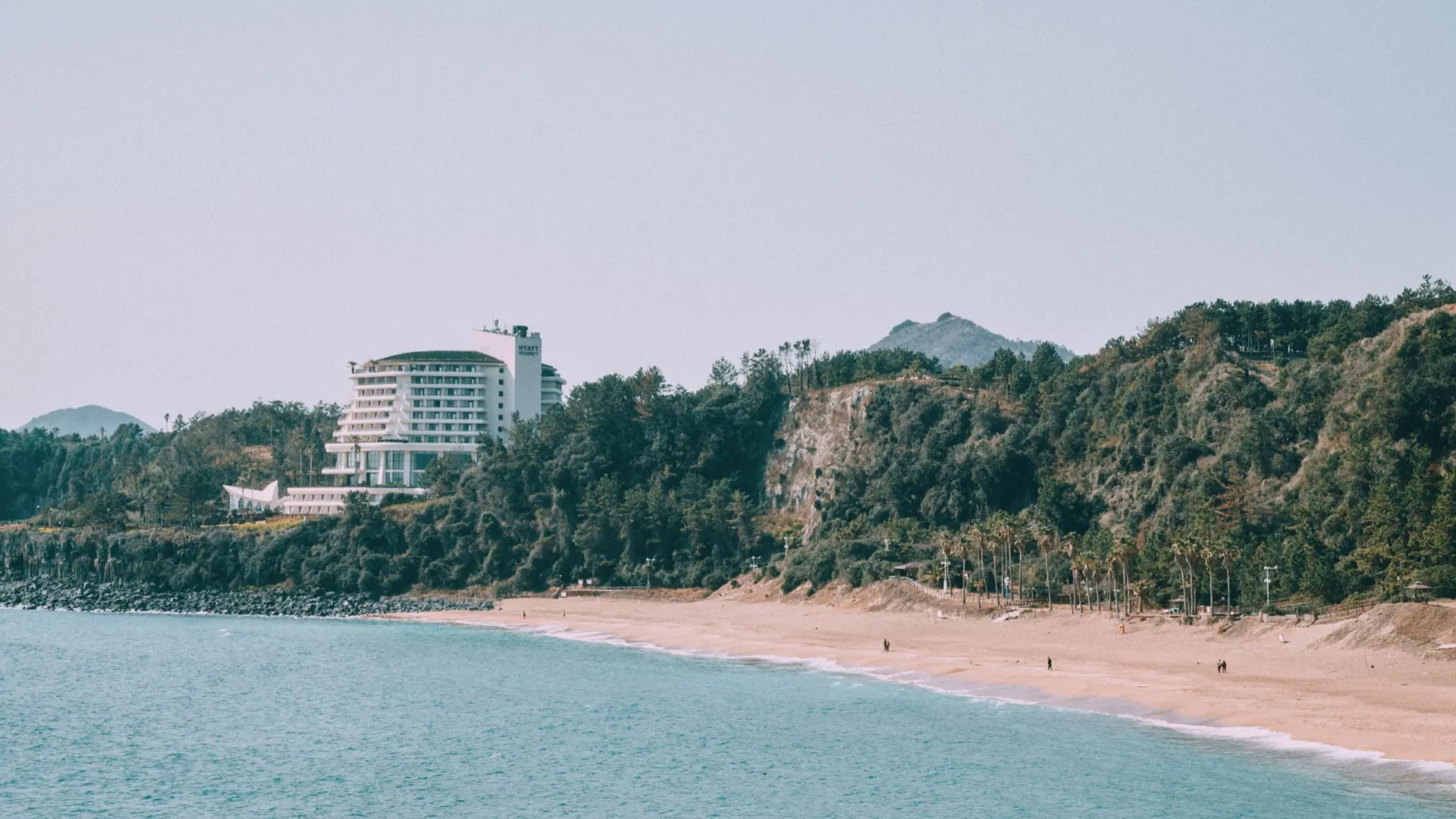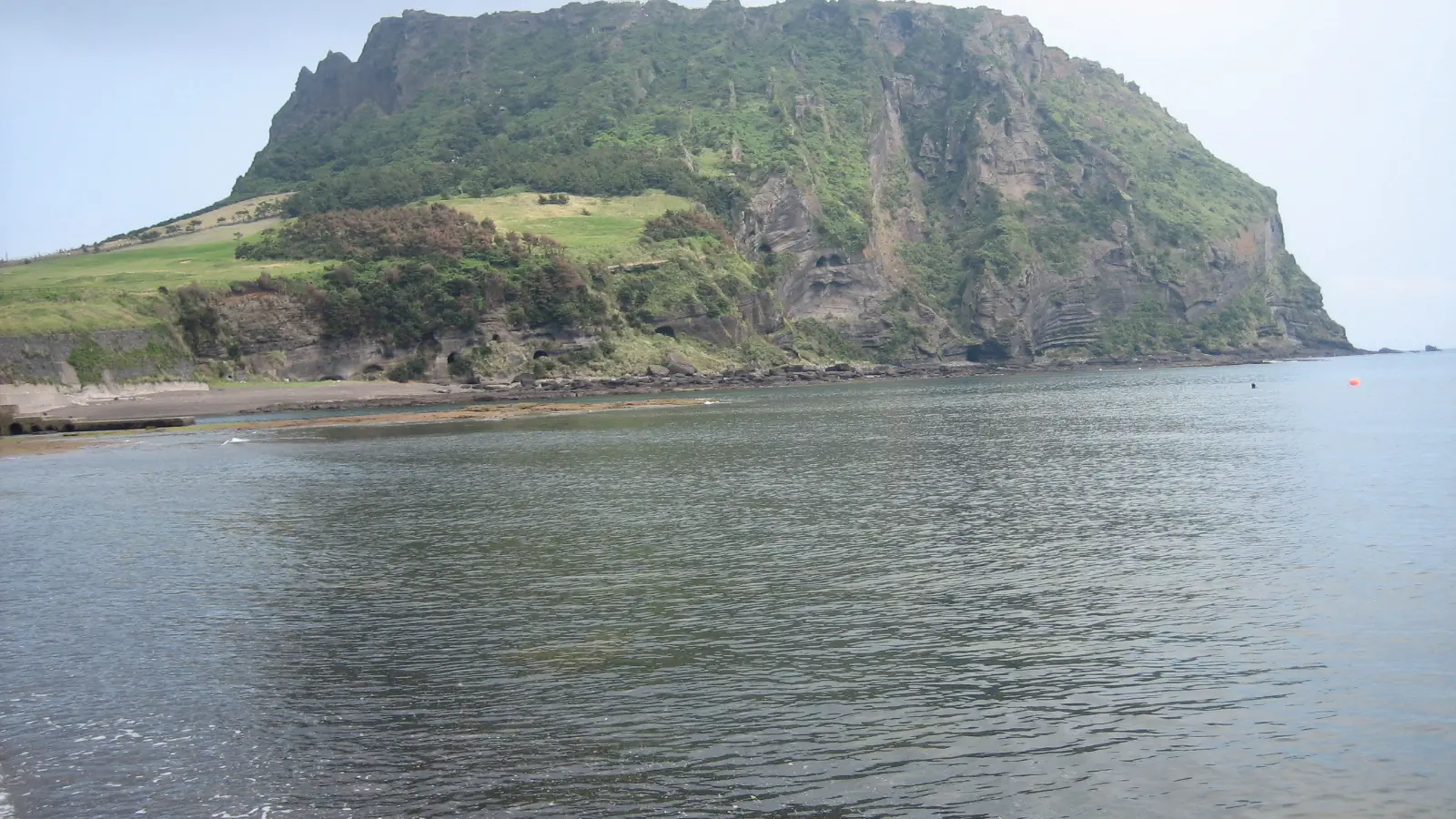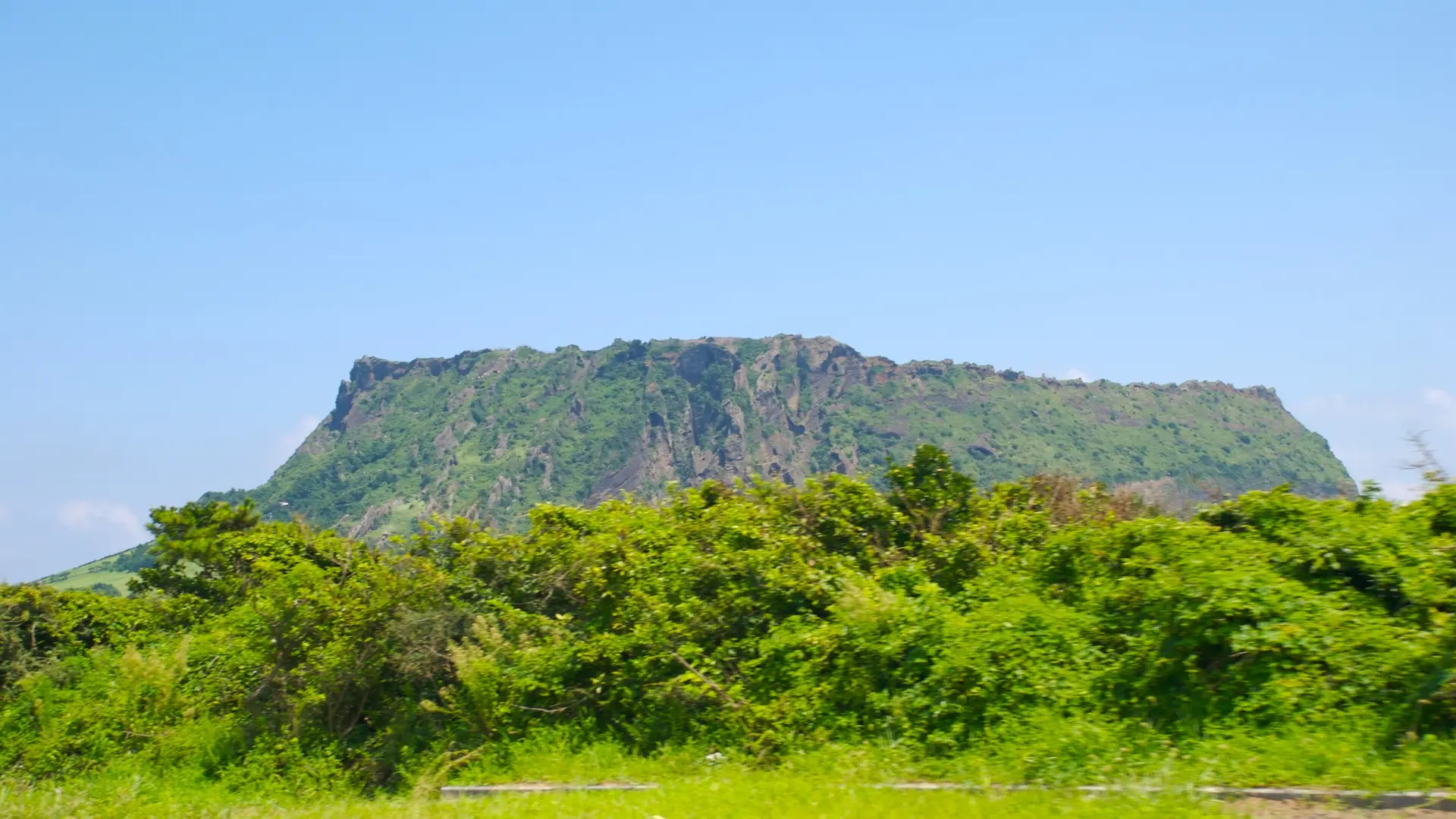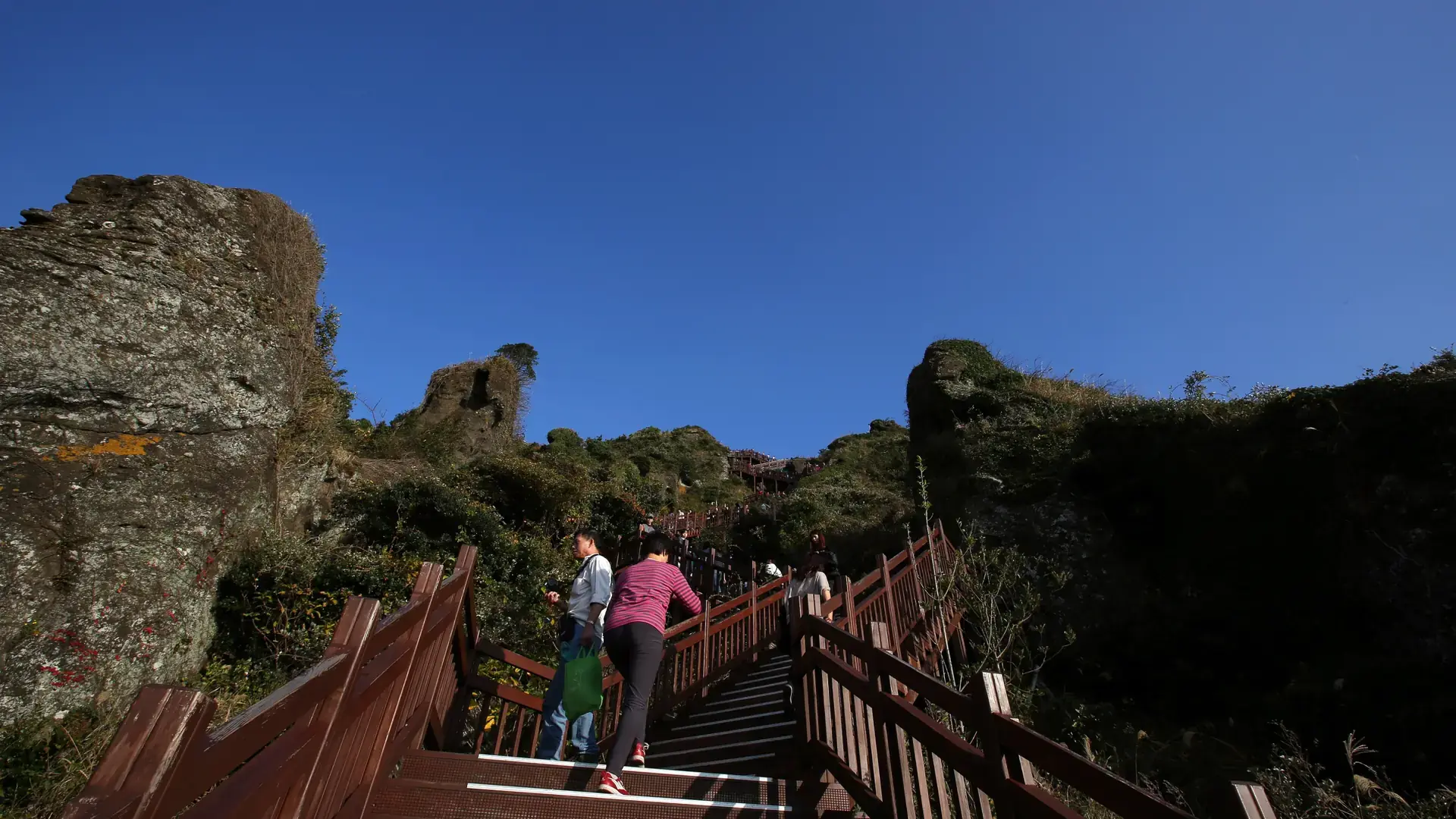
Visitors climb wooden steps between the volcanic rocks of Seongsan Ilchulbong on Jeju

Jeju Island: Choose Your Base Around the Coast

Loading Jeju hotel search

Jeju Island at a glance

Jeju rewards a base chosen around a few nearby places. The airport and urban hotel districts are on the north coast; Seogwipo's waterfalls and Jungmun's resorts are across the island on the south. Handam brings sea-facing cafes and a short walk beside black volcanic rocks to the northwest coast. Jeju City suits a short stay or an early flight, central Seogwipo makes waterfall walks easier, and Jungmun works for a holiday centred on a resort. Buses make a trip without driving possible when each day stays within one part of the island. A car adds flexibility for scattered rural stops, with collection by shuttle from the airport. For three nights, one base usually saves more time than moving hotels; five or six nights can justify a north/south split. Hallasan makes a mountain day between the coastal outings, while a market lunch and harbour walk leave room for a slower afternoon near your hotel.

Short first stay Jeju City urban hotels

Old downtown groups Dongmun Market and harbour walks; Yeondong is a separate hotel district nearer the airport.

Southern base Central Seogwipo for walks

Cheonjiyeon and Jeongbang are near the old centre. Jungmun's beach resorts are a separate district farther west.

Airport transfer Bus 600 to the south coast

Bus 600 serves Jungmun resort stops before Seogwipo. Airport boarding is outside Gate 5; the last walk depends on the hotel.

Local bus fares Adult card: ₩1,150 (≈ US$0.90)

Trunk and branch buses use this flat fare. Express buses and airport limousines charge differently, so the route type matters.

Hallasan summit Summit sections need a reservation

Seongpanak and Gwaneumsa reach Baengnokdam. The park reserves their upper sections; Eorimok and Yeongsil do not reach the crater.

Trip budget Two adults: ₩802,000 (≈ US$602)

Three shared-room nights across four days in central Seogwipo, including food, island transport and visits. Flights are extra.

StartBooker answer

Which part of Jeju Island should a first-time visitor book?

Jeju City is the practical first base for a short stay or early flight. Old downtown suits Dongmun Market and harbour walks; Yeondong places you closer to the airport hotel cluster. Central Seogwipo is better for Cheonjiyeon and Jeongbang waterfalls, Jungmun for resort time and Saekdal Beach, and Aewol's Handam coast for cafes and a short seaside walk. These bases occupy different parts of the island. A bus-based trip works best with one geographic focus per day; a car helps with scattered rural stops.

Airport access
Jeju City: old downtown and Yeondong are separate bases
Waterfall walks
Central Seogwipo, across the island from the airport
Bus or rental car
Bus for focused days; car for scattered rural stops

Things to do in Jeju, South Korea

Explore tours, attractions and local experiences in Jeju, South Korea.

Loading activities…

Activities provided by GetYourGuide. We may earn a commission on bookings.

AI-powered

Ask the Jeju planner

Get an area match based on whether you're renting a car, chasing waterfalls, booking a resort, or after cafes and sunsets.

Jeju's four first-visit bases compared

Old Jeju City pairs its market with the harbour; central Seogwipo pairs market meals with waterfall walks. Jungmun is the southern resort choice, and Handam in Aewol suits coffee and the basalt coast. Each gives the day a different starting point.

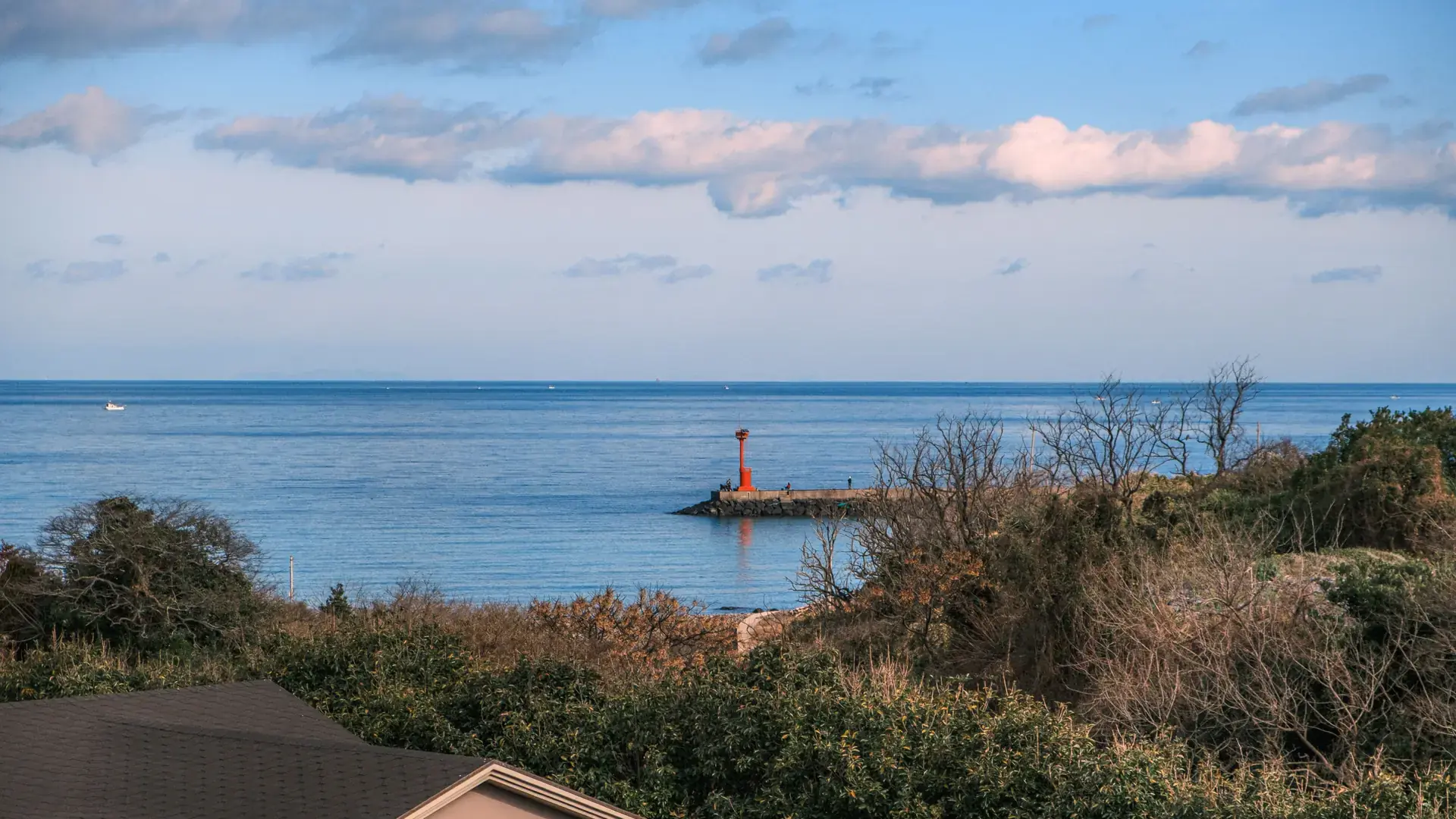
A coastal lighthouse and breakwater on Jeju's coastline in bright daylight

Jeju City

airport access, markets, short stays

The main airport gateway offers two distinct urban choices: old downtown around Dongmun Market and the harbour, or Yeondong nearer the airport. Dongmun is useful for local produce and casual food, while the old harbour gives an evening walk without a cross-island drive.

first-trip food near-transport budget
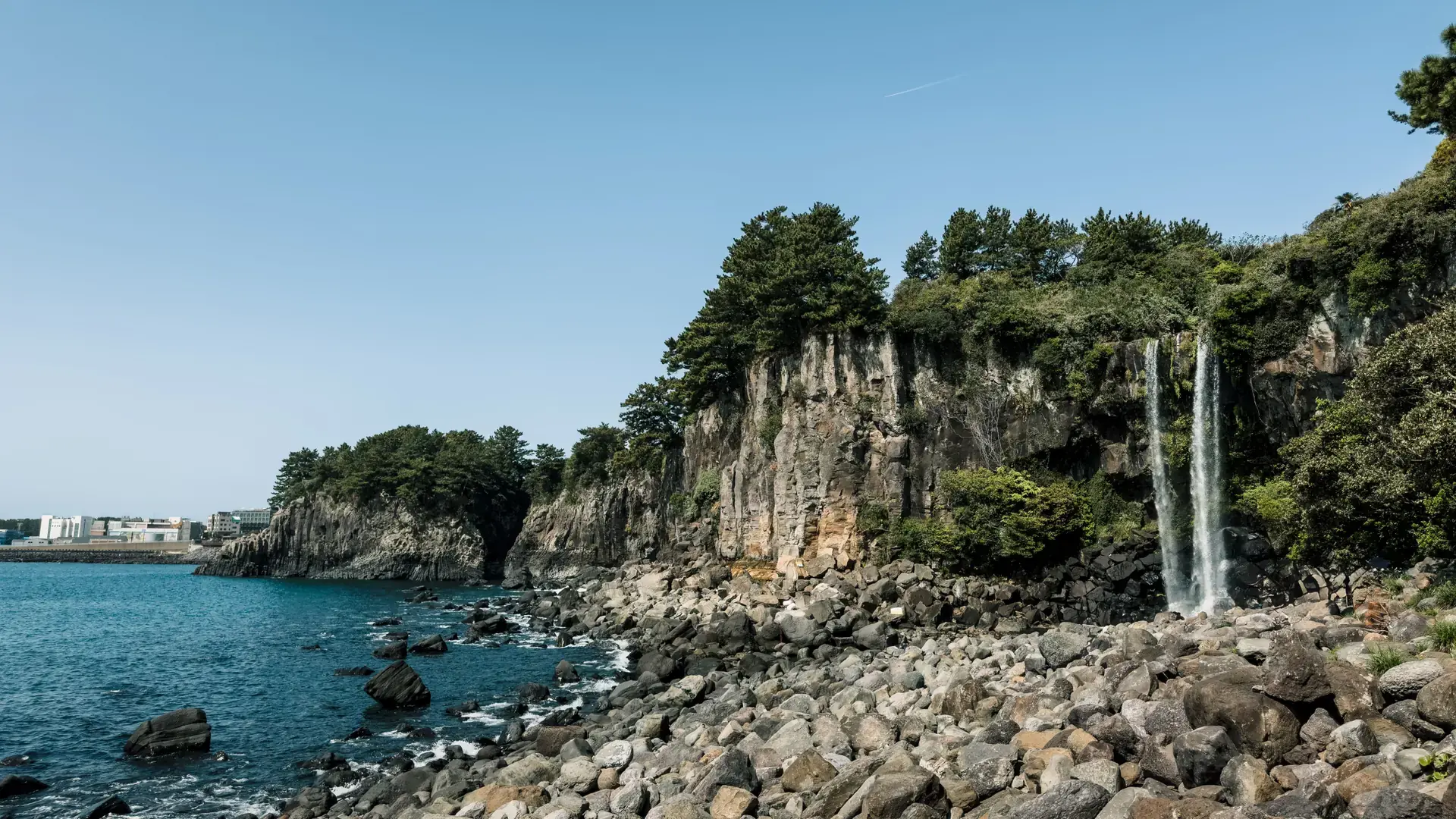
Jeongbang Waterfall drops from a wooded cliff onto the rocky shore at Seogwipo

Seogwipo

waterfalls, market meals, coastal walks

Central Seogwipo brings Maeil Olle Market, Cheonjiyeon Falls and the stairway down to Jeongbang Falls into the same town outing. A room around the old centre suits evenings on foot, with market food and the waterfront close by.

romantic nature food
Jungmun Saekdal Beach beneath the resort cliffs on Jeju’s south coast

Jungmun

resort stays, Saekdal Beach, families

Jungmun's resort cluster surrounds Saekdal Beach on the south coast. Cheonjeyeon Falls and the columnar cliffs provide nearby outings between time at the hotel. This works well when the resort itself is part of the holiday, with less need to return to old Seogwipo each evening.

family beach luxury
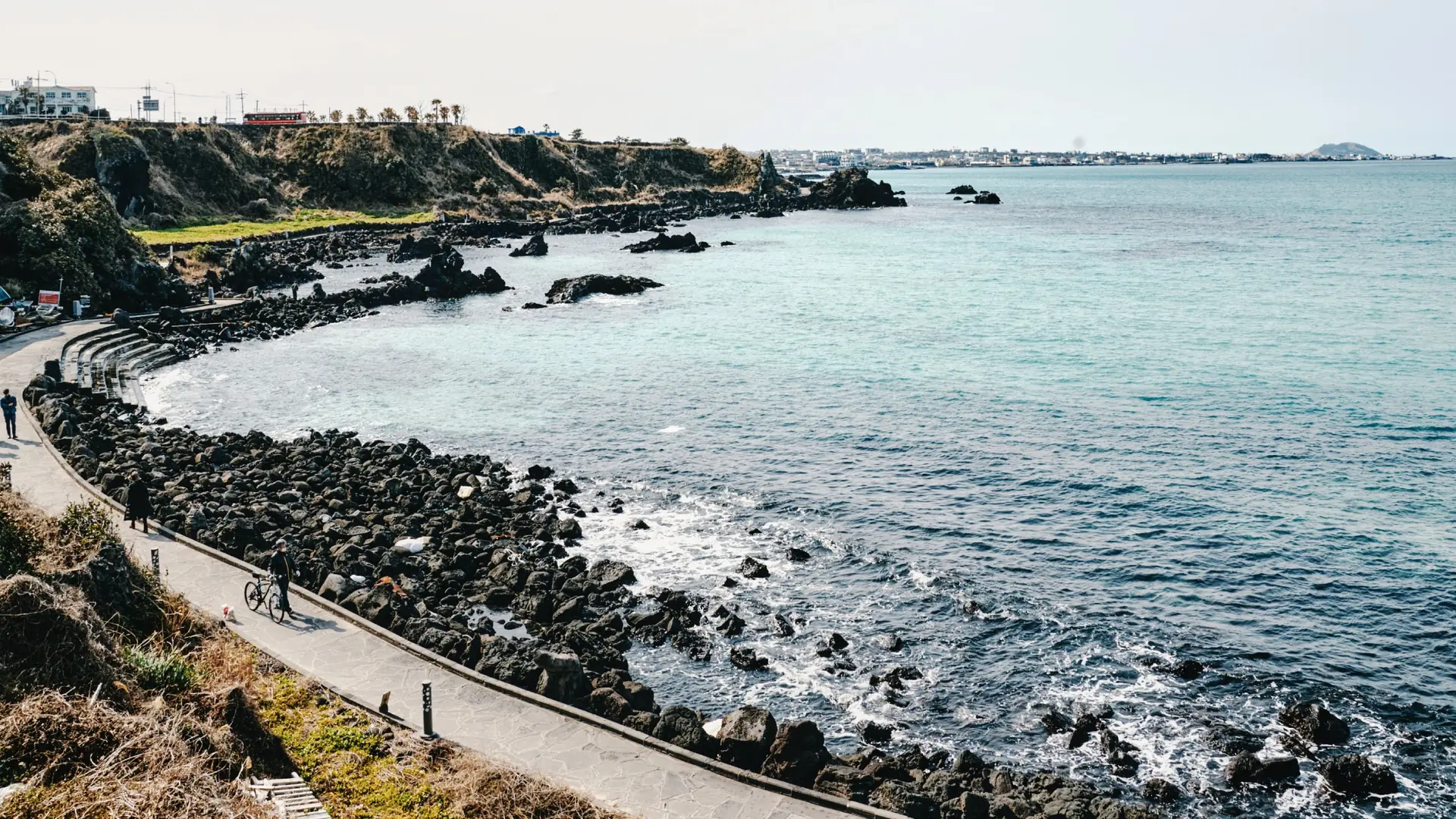
The Handam coastal path curves beside black volcanic rocks and blue water in Aewol

Aewol

Handam cafes, basalt coast, sunsets

The Handam coastal walk links the Aewol coast toward Gwakji beside black volcanic rocks and sea-facing cafes. Its roughly 1.2 km path makes a compact outing on foot, with plenty of reason to linger over a drink and the view.

local-vibe romantic food
Compare Jeju's four bases
Area Best for Features Getting around
Jeju City

Airport access and market meals

Old downtown and Yeondong are separate

Urban buses; taxi for luggage or late arrivals
Seogwipo

Waterfalls and an evening on foot

Longer airport transfer; wide municipality

Walk in old town; bus or taxi farther afield
Jungmun

A beach resort with nearby outings

Resort grounds add walking distance

Bus 600 serves resort stops; walks vary by hotel
Aewol

Handam cafes and coastal walking

Coastal and inland stays are spread out

Walk near Handam; bus or car beyond the coast

Choose Jeju by what your trip needs most

The useful distinction is what happens after breakfast: an urban bus ride, a waterfall walk, resort time or a coastal stroll. A car changes which rural addresses work. For five nights, two in the north and three in central Seogwipo are one possible split; an early departing flight may make the reverse order more convenient.

A short stay without driving

Old Jeju City's market and harbour give a day on foot between arrival and departure. Urban bus links then support one focused outing, rather than a string of remote stops.

Waterfalls and evenings on foot

A hotel in central Seogwipo lets you pair the market with Cheonjiyeon and Jeongbang. The two waterfalls have different approaches: a riverside path and a coastal stairway.

A family holiday centred on a resort

Jungmun places beach scenery and nearby natural sights around a resort stay. Days can alternate between hotel time and a single outing to Cheonjeyeon or the columnar cliffs.

Cafes and the Handam coast

A room near the Handam walk puts basalt scenery and sea-facing cafes close together. It suits a day built around the waterfront, with time for a coastal stroll and a long coffee stop.

Stays across Jeju Island

Live stays across the island, including urban hotels, coastal guesthouses and inland villas. The address beneath each property locates it within Jeju's wider geography.

See Jeju stays →
Loading Jeju hotels

Getting to and around Jeju

Jeju International Airport is on the north coast, with mainland flights from Seoul Gimpo and Busan Gimhae. Bus 600 continues to Jungmun and Seogwipo, while rental-car shuttles connect the terminal with collection depots. Buses and roads carry island journeys; Jeju has no railway or subway.

Arriving at Jeju International Airport

Mainland flights use different airports

Seoul's domestic Jeju flights normally use Gimpo, while Busan flights use Gimhae. An international arrival at Incheon can involve an airport transfer before flying south. On Jeju, the northern airport is the starting point for the bus or car journey to your chosen coast.

Jeju City, Jungmun or central Seogwipo

Jeju City's old downtown and Yeondong have different airport bus stops. Bus 600 boards outside Gate 5 and serves Jungmun resort hotels before Seogwipo. Allow roughly 60–90 minutes aboard for Jungmun and 90–120 for central Seogwipo, with the hotel walk at the end.

Getting around the island

Trunk buses and express services

As of 17 October 2026, the bus authority lists an adult trunk/branch fare of ₩1,150 (≈ US$0.90) by card or ₩1,200 (≈ US$0.90) cash. Express buses charge ₩2,000 (≈ US$1.50) by card for the first 20 km, rising to ₩3,000 (≈ US$2.30) beyond 40 km; cash passengers pay the ₩3,000 (≈ US$2.30) maximum. Airport limousines use separate endpoint-based tables.

Rental-car shuttles and collection

The airport directs renters across from Gates 3 and 5 toward the Rental Car House and each firm's shuttle. LOTTE has a desk near Gate 2 and a shuttle bay at zone 1, number 4. Its Auto House handles collection and return, with the shuttle linking the depot and terminal.

The driver’s collection documents

For LOTTE, collection requires the driver's passport, original recognised International Driving Permit and payment card. Its published age range for vehicles with up to nine seats is 21–79. These are the operator's stated rental terms, alongside the booked vehicle and coverage.

One part of the island per bus day

Central Seogwipo combines waterfall walks with a market meal and a short local journey. Handam and Gwakji make a western coastal day; Seongsan belongs to an eastern outing. Grouping nearby places gives each stop more time, with a taxi useful for the final stretch to a rural hotel.

Tickets and transport cards

A card gives transfer discounts

The bus authority allows up to two transfer discounts within 40 minutes of tapping off, excluding a return to the same numbered route. Each traveller uses their own card for these transfers. Express buses and airport limousines can add the difference between the relevant fares.

Bus 600 fares depend on the stop

The downloaded fare matrix lists an adult one-way airport ride at ₩4,500 (≈ US$3.40) to Jungmun resort hotels and ₩5,500 (≈ US$4.10) to Seogwipo Harbour or the KAL Hotel, retrieved 17 October 2026. The sample budget includes four Seogwipo airport-bus tickets for two adults.

Accessibility notes

Two waterfalls with different approaches

Jeju Tourism describes the Cheonjiyeon approach as barrier-free, without stairs or steep slopes. Jeongbang instead has a stairway descending from the ticket entrance to the rocky shore. For a traveller using wheels, Cheonjiyeon is the more suitable waterfall outing; staying in central Seogwipo also reduces the number of separate road journeys.

Planning a Jeju stay

Three nights in central Seogwipo leave two full days for waterfalls, market meals and a coastal outing. The sample budget uses buses and a small taxi allowance. A longer stay opens up another part of the island, with a mountain day or an eastern-coast stop between slower mornings near the hotel.

When to go

Spring coast and cafe stops
  • April and May suit a stay with coastal paths, cafe stops and time in town. Handam makes an easy western outing beside the black rocks, while central Seogwipo brings two waterfalls into a day with a market lunch. A room near either cluster leaves space to return for a rest before dinner. Hallasan adds a very different, longer outing above the coast.

  • A slower day during the summer rains

    Jeju's main rainy season averages roughly 19 June to 20 July in KMA's 1991–2020 normals, with the timing varying each year. A town-centre stay keeps market meals and cafes close together through a wet spell. Between showers, a harbour walk fits easily around lunch; on a brighter day, the Handam coast gives the afternoon a more open, sea-facing setting.

  • Autumn between the shore and mountain

    September and October suit a trip mixing coastal walks with time higher on Hallasan. Central Seogwipo works for a southern day, while old Jeju City gives the north coast a market-and-harbour beginning. Five or six nights allow both sides of the island to have their own base, so an evening meal can finish near the room after a day spent exploring.

A complete four-day cost example

Two adults, four days and three nights
  • For ordinary October–November 2026 dates outside holidays and major events, allow ₩802,000 (≈ US$602) for two adults sharing one central Seogwipo room for three nights across four calendar days. This is our planning estimate, not a hotel quote. It includes rooms, meals, island travel, return airport buses and admissions; the two middle days are the full sightseeing days.

  • Rooms, food, rides and admissions

    The breakdown is ₩360,000 (≈ US$270) for the shared room, ₩280,000 (≈ US$210) for food, ₩80,000 (≈ US$60) for local buses and occasional taxis, ₩60,000 (≈ US$45) for visits, and ₩22,000 (≈ US$17) for four airport-bus tickets. The room allowance is ₩120,000 (≈ US$90) per night. Market meals and a few restaurant dinners fit the food allowance.

  • Currency and costs outside the example

    USD comparisons use the ECB rates dated 16 October 2026. The ₩802,000 (≈ US$602) estimate works out at about US$75 per person per calendar day. Travel to Jeju, rental cars, tours, insurance, alcohol and shopping are additional. A driving trip would replace the bus allowance with the car, fuel and parking costs; the example keeps the stay focused on town walks and nearby outings.

Where should a first-time visitor stay on Jeju?

Jeju City's urban districts suit a short stay or an early flight. Old downtown places Dongmun Market and the harbour together, while Yeondong is a separate airport-side cluster. Central Seogwipo suits waterfall walks, Jungmun a resort stay, and the Handam coast in Aewol a cafe-and-walking holiday.

Can I visit Jeju without a rental car?

Yes. Urban Jeju City and central Seogwipo offer meals and walks near a hotel, with buses linking other areas for days out. Trunk and branch buses cost ₩1,150 (≈ US$0.90) by adult transport card; express services and airport limousines have their own fares.

How do I reach Jungmun or Seogwipo from the airport?

Bus 600 leaves from outside airport Gate 5 and serves Jungmun resort stops before Seogwipo. Its adult airport fares include ₩4,500 (≈ US$3.40) to the Jungmun hotel cluster and ₩5,500 (≈ US$4.10) to Seogwipo Harbour or KAL Hotel in the table retrieved on 17 October 2026.

Are Cheonjiyeon and Cheonjeyeon the same waterfall?

No. Cheonjiyeon is by central Seogwipo, with an easier approach described as barrier-free by Jeju Tourism. Cheonjeyeon is in Jungmun farther west. Jeongbang is another waterfall near central Seogwipo, with stairs leading to the rocky shore.

What is a stay in Jungmun like?

Jungmun is the resort choice around Saekdal Beach, with Cheonjeyeon Falls and the columnar cliffs for nearby outings. It suits a holiday split between the hotel and the surrounding coast, with spacious grounds and sloping paths down toward the beach.

What does staying in Aewol mean?

The Handam coast in Aewol suits sea-facing cafes and the roughly 1.2 km walk toward Gwakji. The wider Aewol-eup area includes inland villas too. Staying beside Handam makes the coast part of the day on foot; an inland base suits a trip with more driving.

How many nights are useful for a first Jeju trip?

Three nights leave two full days between arrival and departure, enough for an introduction from one base. Five or six nights give more room for a north/south split, with time for town walks, a mountain outing and the coast.

Which Hallasan walks require a summit reservation?

The upper summit sections of Seongpanak and Gwaneumsa require a reservation for Baengnokdam. Eorimok and Yeongsil offer other mountain walks that finish below the crater, giving a different Hallasan outing from the summit climb.

What does the sample Jeju budget include?

The ₩802,000 (≈ US$602) planning estimate covers two adults over four calendar days and three shared-room nights in central Seogwipo on ordinary October–November 2026 dates. Rooms, food, island travel, return airport buses and visits are included; travel to Jeju and a rental car are separate.

Sources

Reviewed by StartBooker editorial team Destination research and editorial self-review

Reviewed 2026-10-17

Updated

Review method: Editorial self-review of every desktop/mobile block, actual hotel addresses and the painted island map. Responsible transport operators and park guidance support the practical facts. The sample budget is an explicit planning estimate; retained photographs and the replacement Handam image were visually reviewed with their credits and licences.

20 references reviewed

Key sources
  • Jeju Tourism Organization
  • Hallasan National Park
  • Korea Tourism Organization
  • European Central Bank
  • Jeju Special Self-Governing Province
  • Korea Airports Corporation
References
Photo credits

Some photos provided by Pexels.

Share your Jeju base