Centro
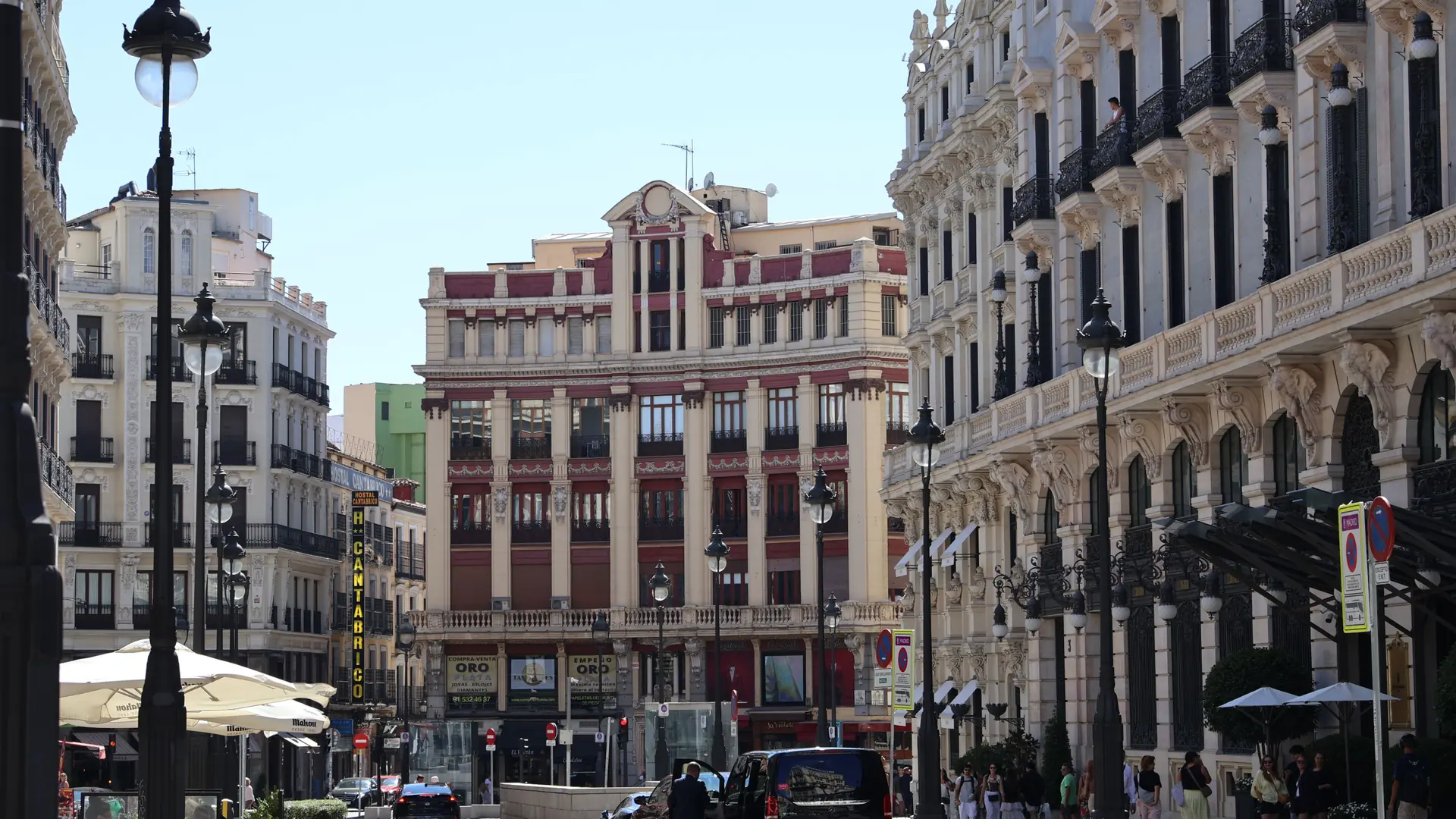
shops and flexible city days
Shops and flexible city days.
Neighbourhood stay
Walkable
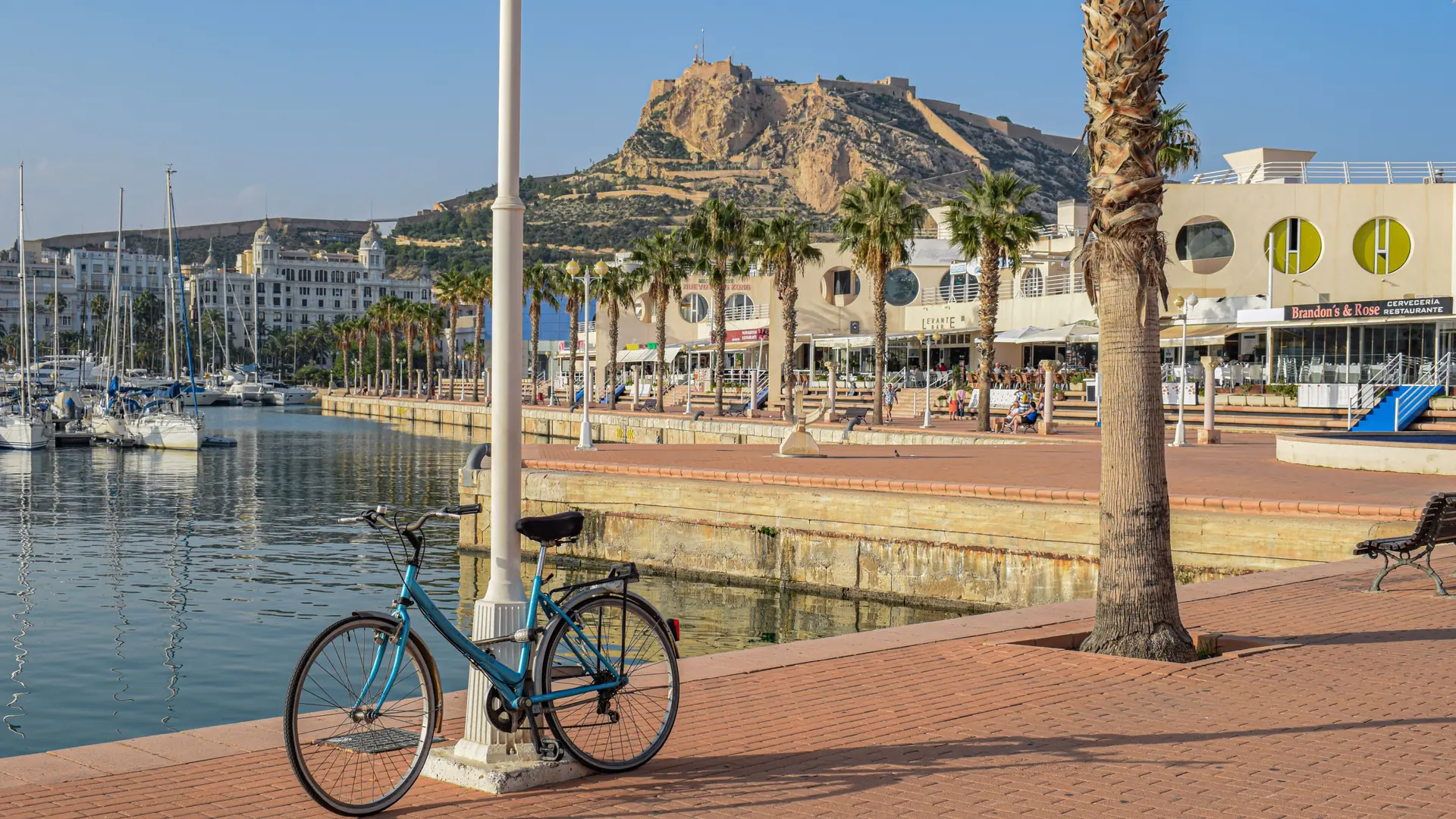
Alicante combines waterfront walks, time above the roofs at the castle and substantial museum visits. Benacantil explains the fortress location: its summit commands the bay and land approaches. Santa Bárbara began as a late ninth-century Muslim stronghold; Philip II’s works of 1562–1580 shaped much of today’s complex. Compare the upper medieval remains with the middle enclosure around the Patio de Armas, keeping to the areas open on your visit.
The old town adds smaller discoveries below the castle. The Town Hall, San Nicolás co-cathedral and the streets around Santa María belong to the same municipal walking route, with squares and church frontages between the lanes. You can give that part of Alicante attention without turning every building into a booked interior visit.
For a different outdoor setting, look towards Plaza Gabriel Miró and Parque de Canalejas on the western side of the central waterfront. On a longer Costa Blanca trip, decide whether you want this mix of city streets and shore each day or an outer-coast base built around beach time.
Give the first full day to the historic centre and Benacantil. A second full day makes space for archaeology, the market or a boat trip without squeezing everything around airport transfers.
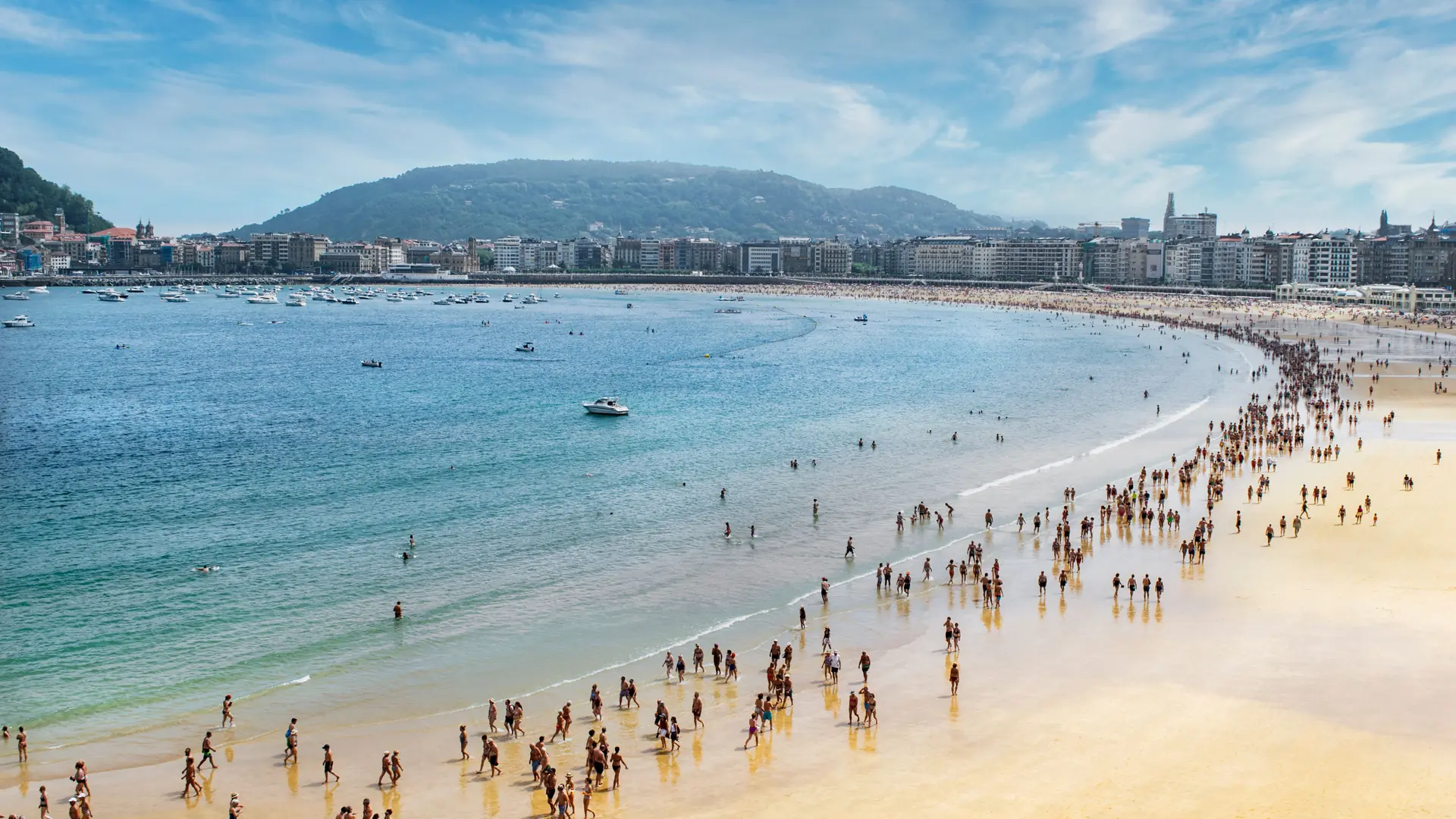
The 900-metre beach sits directly beneath the castle hill. It is convenient for a short swim between sightseeing and lunch; a wider beach holiday may suit an outer-coast base better.
MACA’s Sempere collection follows his 1950s Paris gouaches through geometric panel paintings and metal sculptures. Look for repeated lines and apparent movement; check the current display rather than expecting every collection work to be on show.
The provincial museum explains the region through several historical periods. It lies north of the castle at Plaza Doctor Gómez Ulla, so allow a separate visit rather than expecting to find it in the old-town lanes.
Choose the destination before choosing a ticket. Luceros is a useful starting point, but distant coastal journeys involve more than hopping between a couple of central stops; check the current journey planner.
This local stew combines lentils, beans, rice, vegetables and pork ribs. Look for it on a cooler-day restaurant lunch menu, asking about the day’s preparation and portion size. It gives a market morning a different ending from another seaside fish meal.
StartBooker answer
Lower Centro is a useful first base for a weekend that combines Alicante’s old town, Explanada promenade and Postiguet beach. Choose a hotel closer to the sand for frequent swims, or near Alicante Terminal for an early train. Upper Santa Cruz has attractive lanes but requires careful checks for steps and taxi access. A car is unnecessary for the central sights: the airport connects by C6 bus, while TRAM serves outings along the coast.
Explore tours, attractions and local experiences in Alicante, Spain.
Loading activities…
Activities provided by GetYourGuide. We may earn a commission on bookings.
Build a day around the times you actually have: a late airport arrival, a museum afternoon, a boat departure or a train to Madrid. Include the hotel address, luggage and any difficulty with steps so the plan can account for the final walk.
Use your email security code to continue planning.
Use your email security code to continue planning.
Start with the hotel’s actual block
Centro
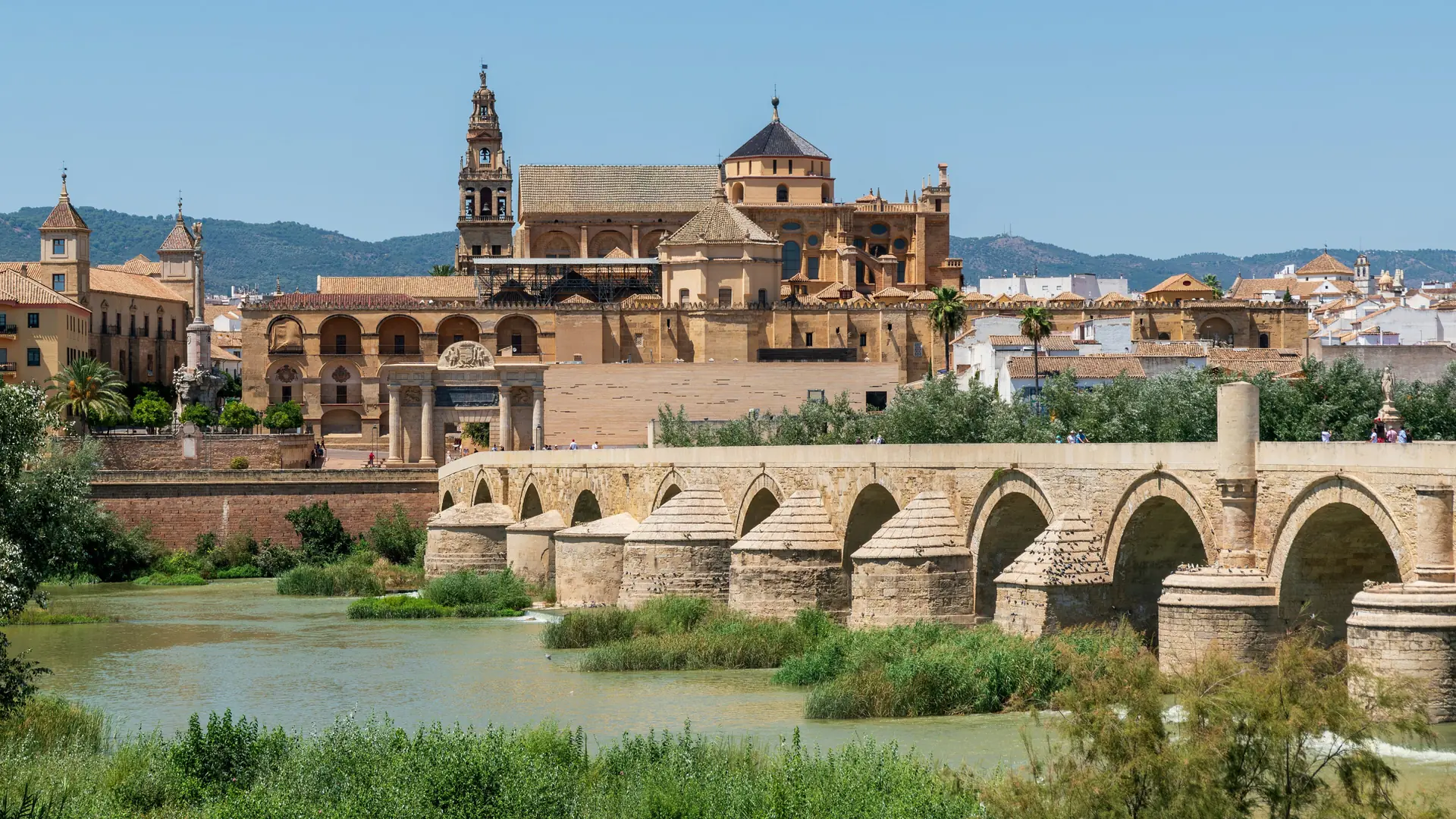
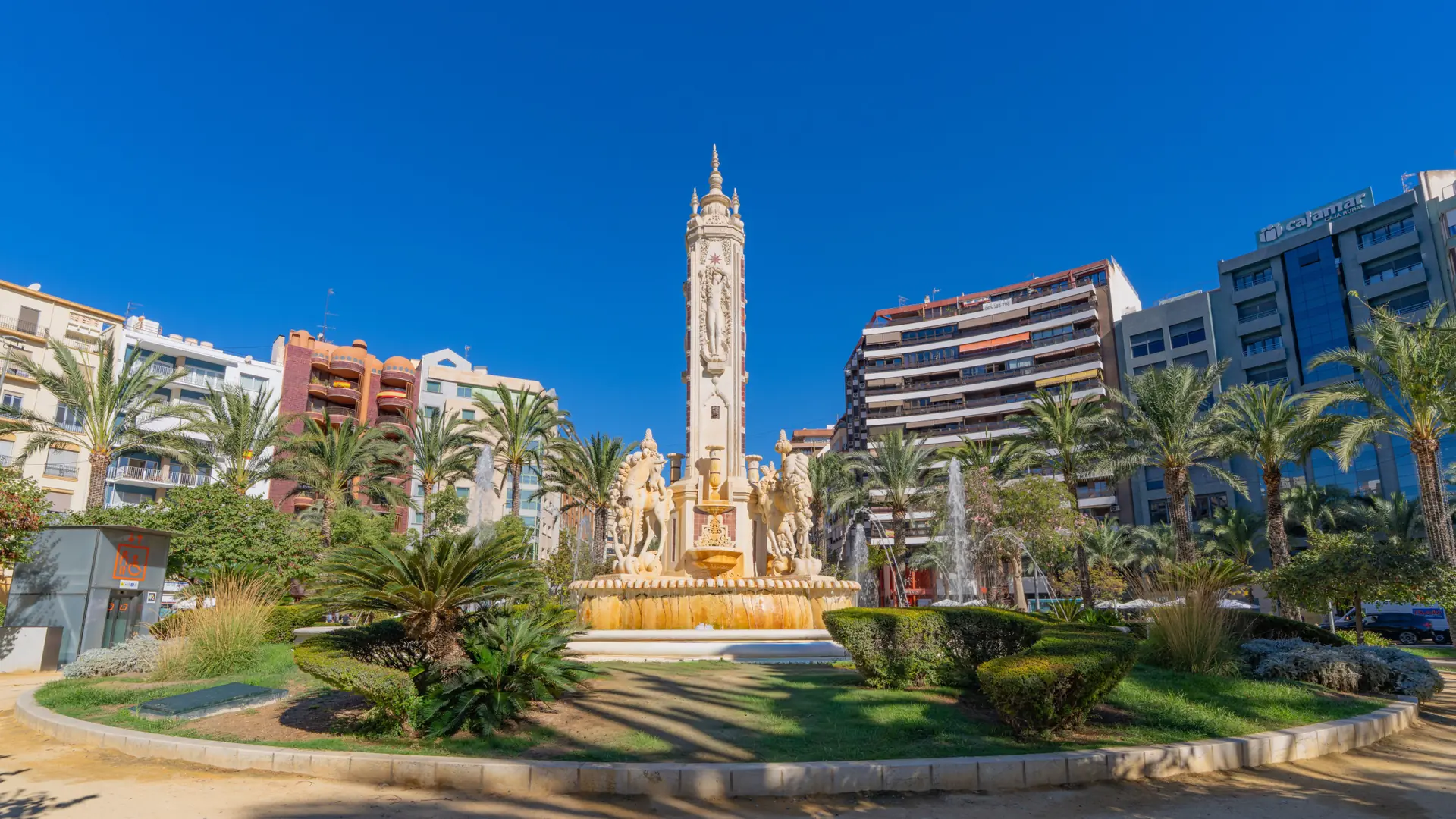
Lower Centro makes an easy starting point for a short visit. Look at the streets inland from the Explanada, then decide how far towards Luceros you want to move. The southern end suits an evening promenade followed by dinner; the inland end brings the commercial streets and transport interchange closer. Neither requires a beach-only itinerary. A room that lets you return for a rest is especially useful in summer, when an ambitious morning can feel very long by mid-afternoon.
These names describe useful search areas, rather than four sealed neighbourhoods with identical hotels inside them. The old town rises behind the Town Hall; the beach runs along the hill’s eastern side; the commercial grid reaches towards the railway station.
shops and flexible city days
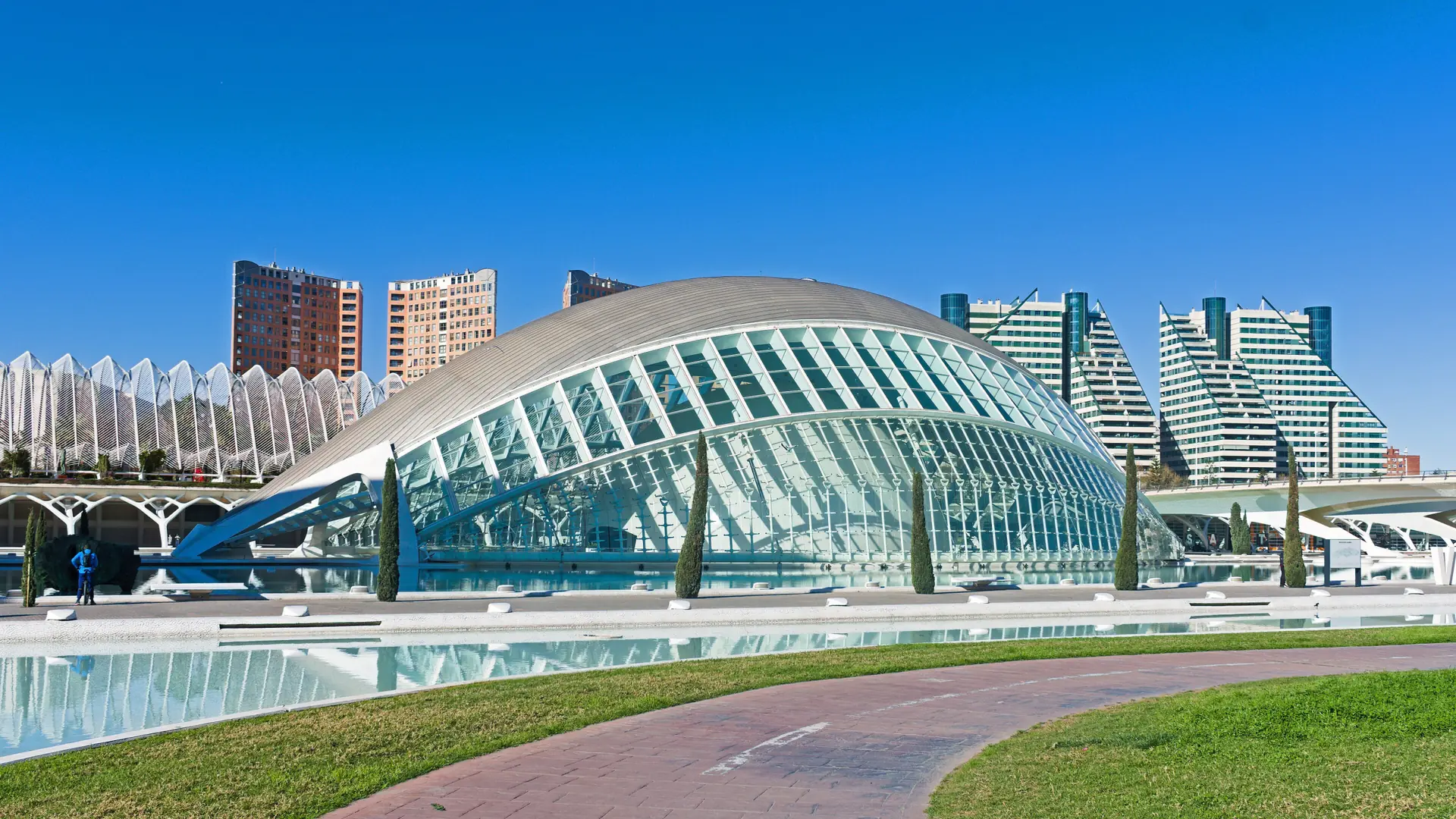
Shops and flexible city days.
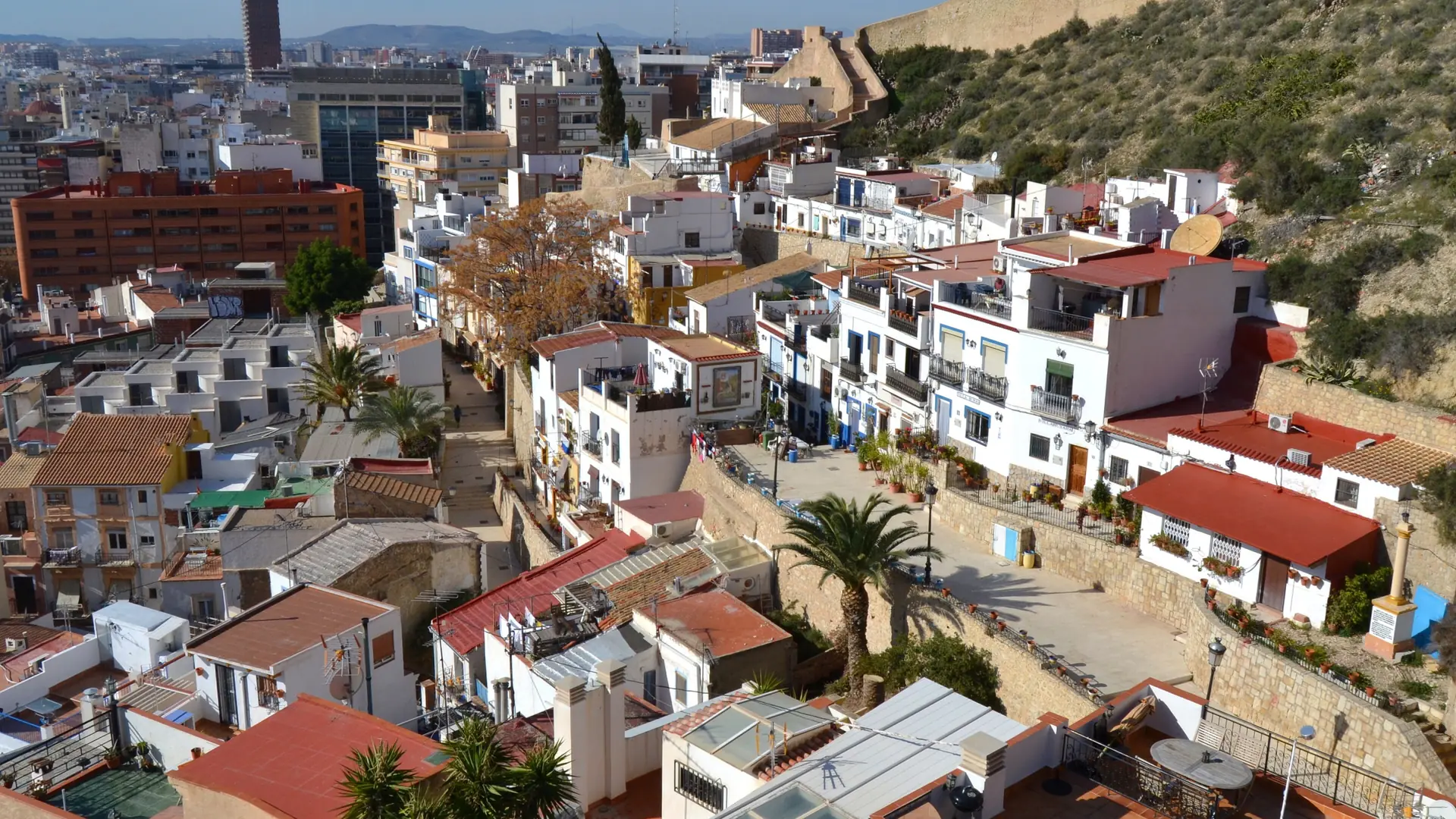
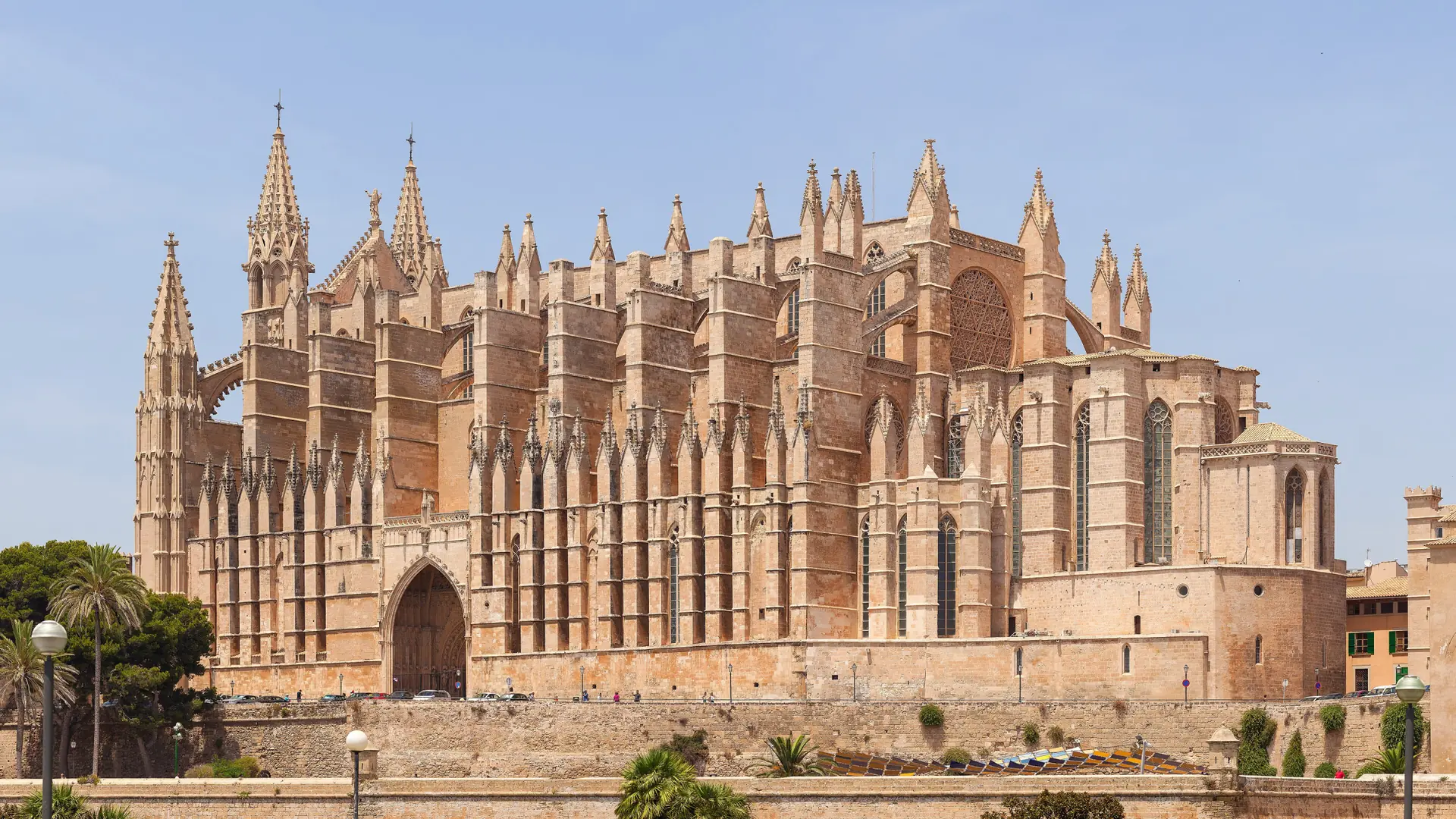
historic lanes and small squares
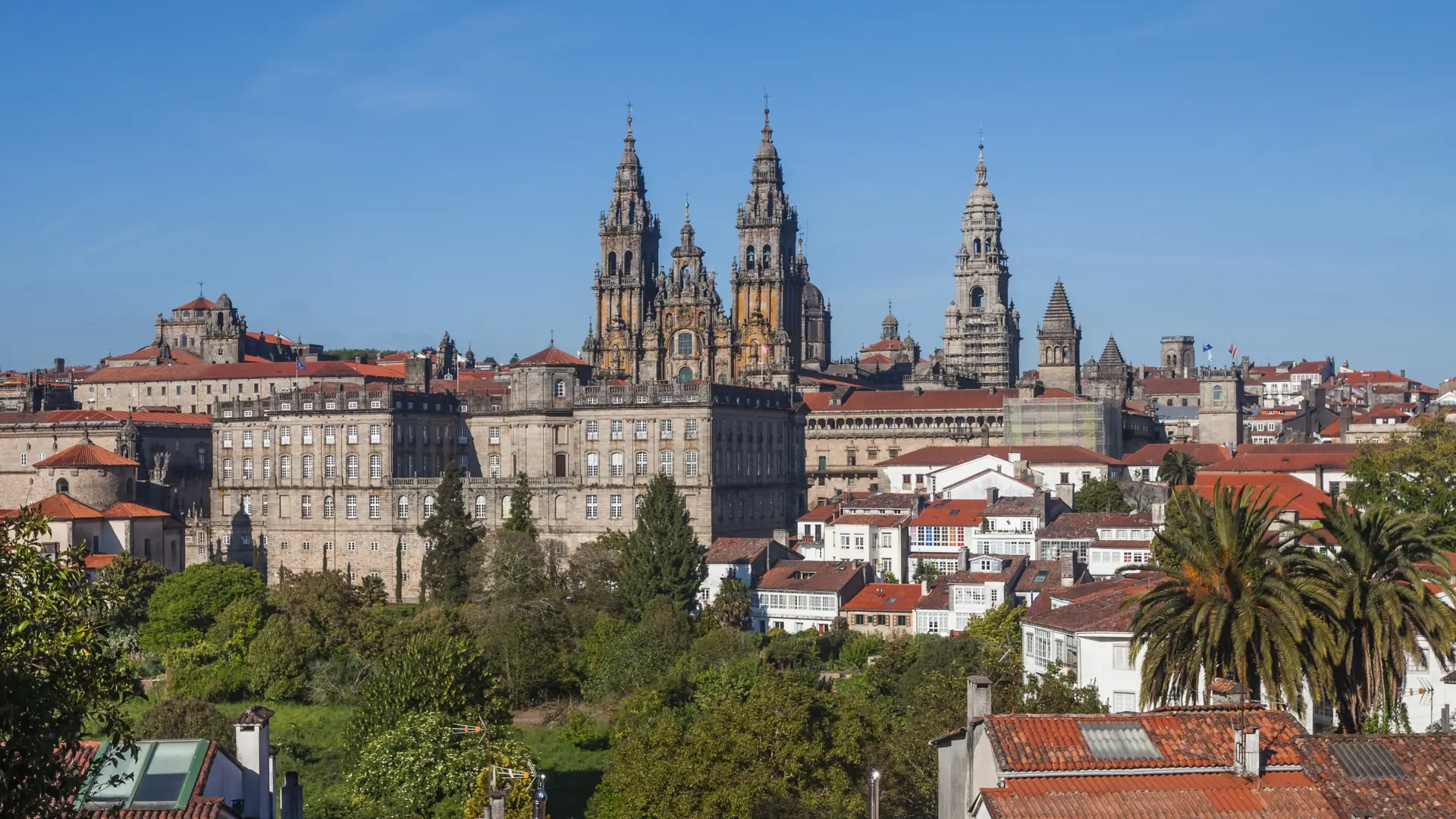
Historic lanes and small squares.
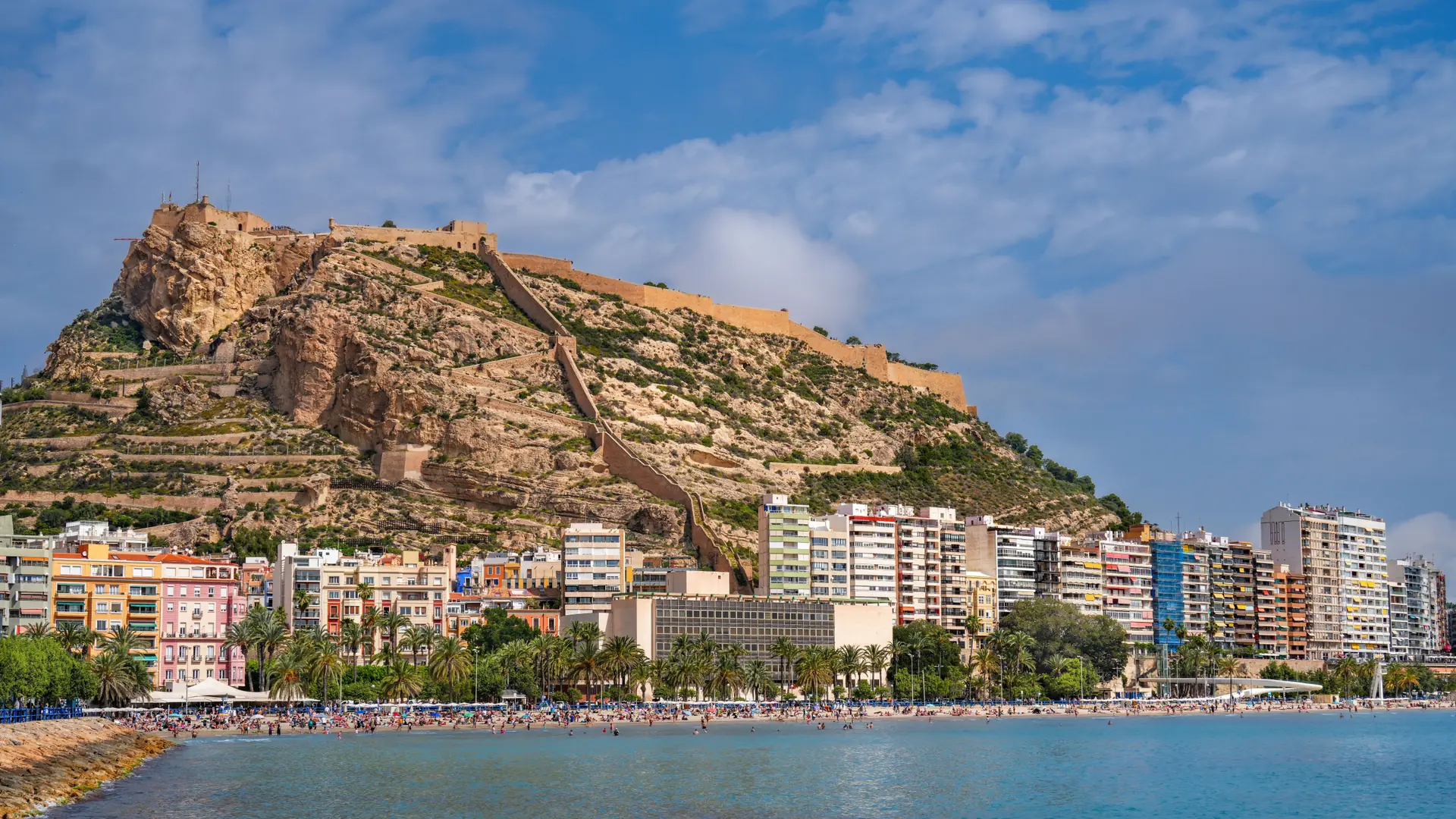
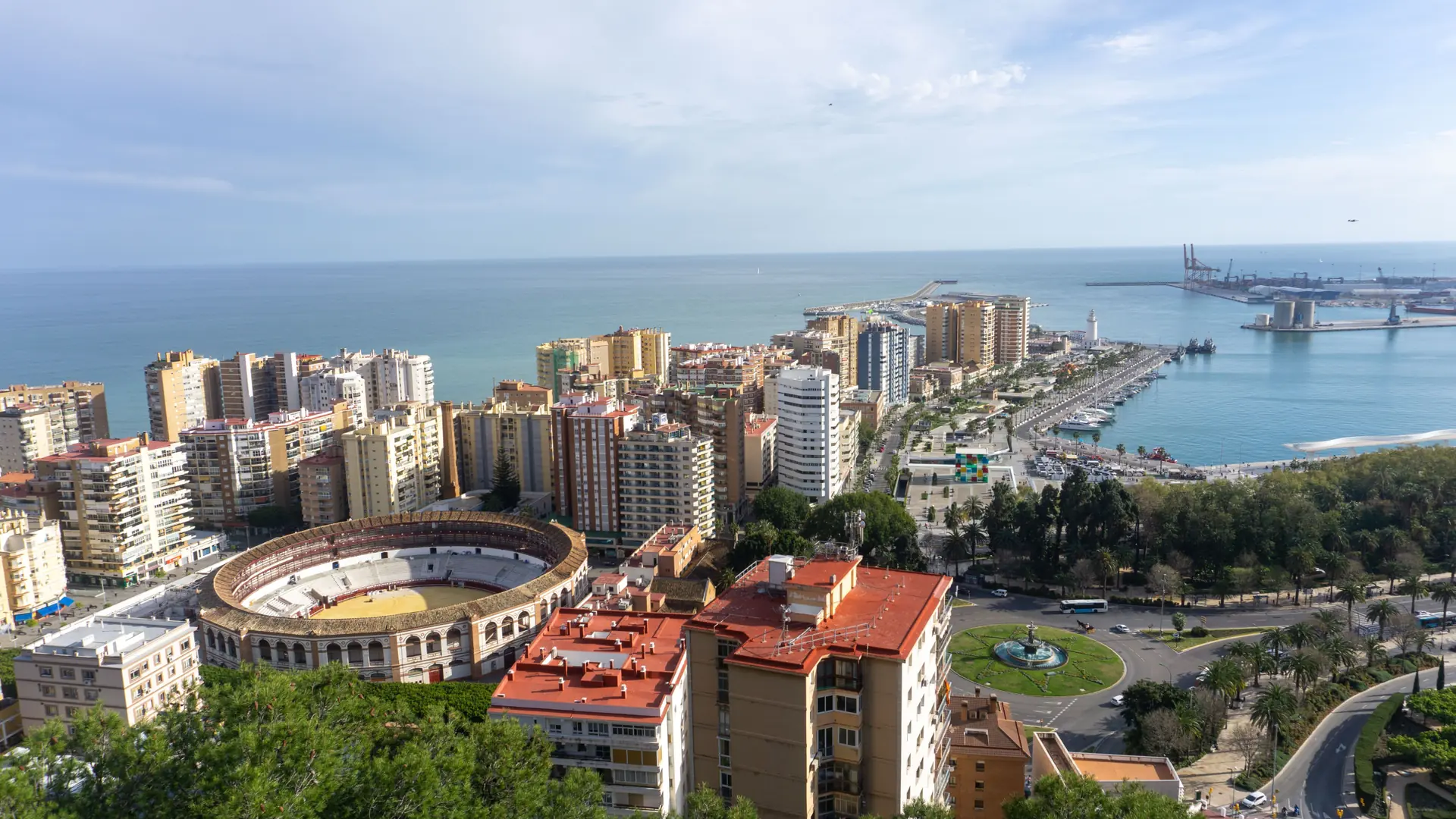
a beach routine without leaving town
A beach routine without leaving town.
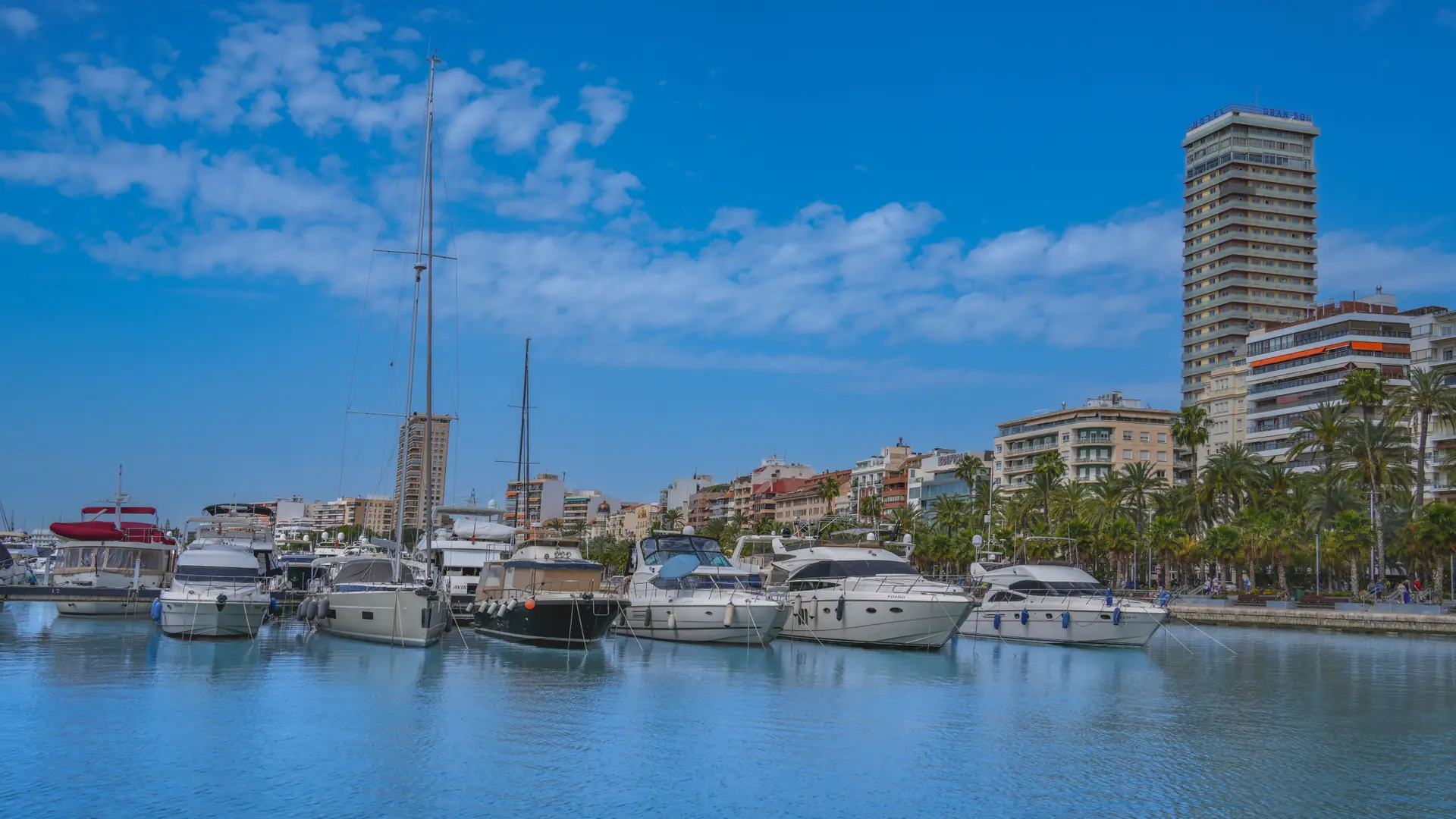
rail arrivals and shopping
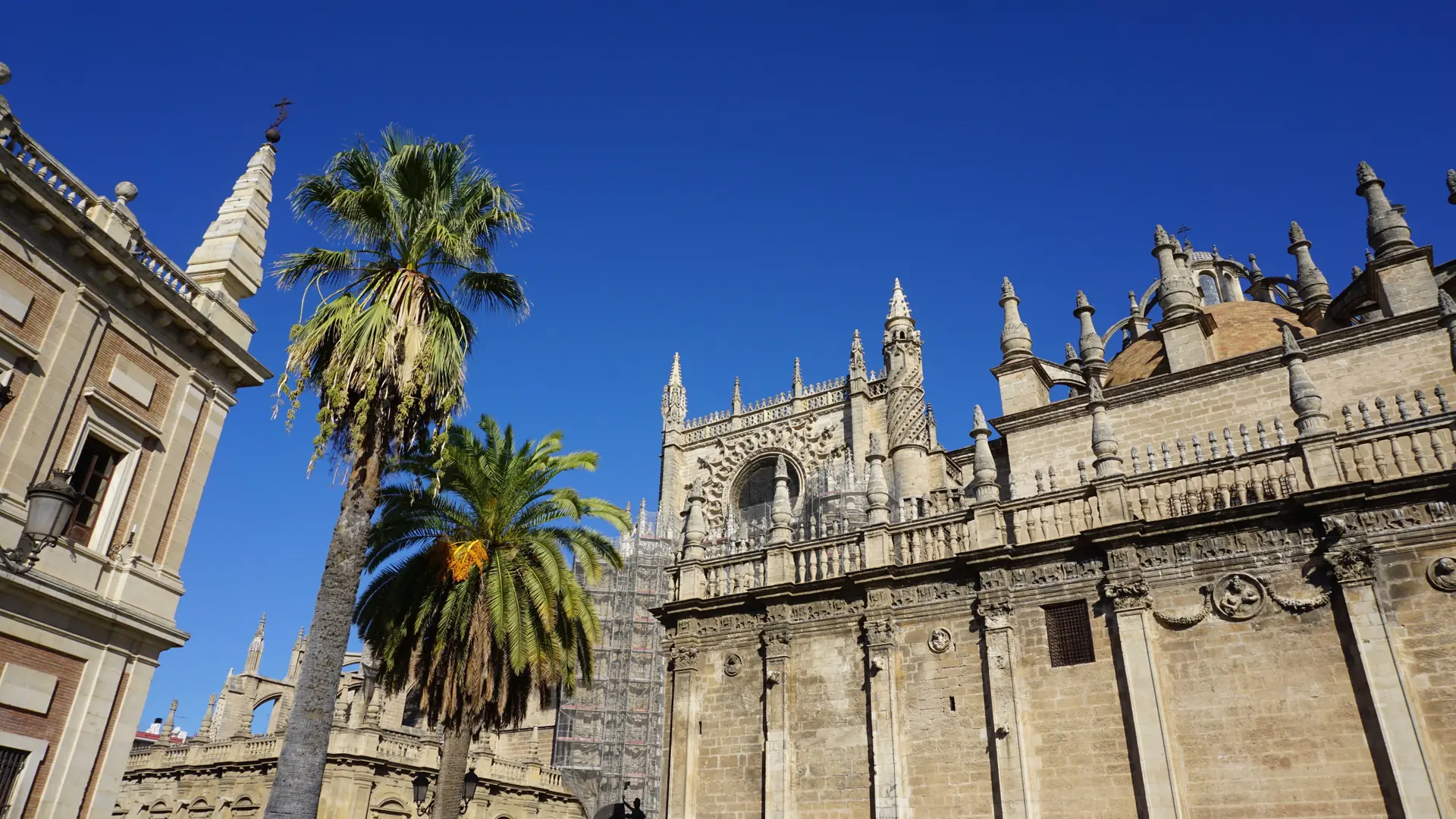
Rail arrivals and shopping.
| Area | Useful for | Features | Getting around |
|---|---|---|---|
| Centro |
City errands |
Less immediate sea access |
Luceros interchange; commercial-street walks |
| Casco Antiguo |
Historic setting |
Steps on upper streets |
Ask for the final taxi-to-door route |
| Postiguet |
Short beach visits |
Road and promenade exposure |
Check crossings; station lies inland |
| Ensanche-Diputación |
Rail stopovers |
Longer return from the sand |
Alicante Terminal and Maisonnave grid |
After choosing an area, check the features that change the stay itself. A balcony is of little help if the lift starts above a flight of stairs, and a late flight is easier when someone will actually be there to let you in. These are questions to send to the property before paying.
Ask for the latest staffed check-in or a written self-entry procedure, with a contact number that works after midnight. Send the flight number and agree what happens after a delay.
Request the full route from pavement to room: entrance steps, lift dimensions and any raised threshold. Ground-floor reception alone is not evidence of a step-free stay.
Check for a desk, reliable in-room internet and somewhere to keep luggage after checkout. A station-area room can make a short work-and-travel stop straightforward.
Ask about the actual family-room bed arrangement, bathroom and space for wet clothes. A short return for a nap is useful only if the room is ready when needed.
Check key collection, stairs, cleaning charges and whether luggage storage is available. Self-catering can suit a longer visit, but service arrangements differ from a staffed hotel.
Ask whether breakfast can be packed, whether reception can arrange a taxi and when luggage can be collected. Prepare the departure before the final evening.
Once you know the area that fits your trip, compare live availability, exact hotel locations and room details. Editorial advice is separate from provider prices and availability.
Start the arrival plan at the terminal exit, not at the hotel district. The C6 is the airport’s city bus; the airport has no direct TRAM service. Its stops give you several ways into Alicante, so save the hotel’s address offline and check which stop is served in your direction. Temporary diversions are listed by the local transport information service.
Aena lists C6 between the airport terminal and central Alicante, including the railway-station connection. For a hotel near Luceros, reserve at least an hour after collecting bags to find the stop, wait, ride and complete the last walk. This is a planning allowance, not a published journey time or guaranteed service interval. Add more space before a timed booking; traffic and diversions can change the arrival.
The municipal route information names the station area, Luceros, Alfonso X El Sabio and Puerta del Mar among the C6 stops. A lower-centre hotel may suit the waterfront end, whereas a station-side property needs a different exit. Check the live stop list before boarding, especially for the return to the airport: a stop name on a map does not prove that the same pavement serves both directions.
C6 operates daily throughout the year, but confirm the timetable for the date and hour of your arrival. If the next departure no longer fits check-in, use the airport’s official taxi service: Aena names Radio Taxi Elche and Servitaxi Elche, whose vehicles carry a green stripe and Elche’s shield. Ask about the total fare, including the airport supplement, before leaving. Keep the hotel’s contact details ready in case bags or immigration take longer.
Long-distance trains bring you into the inland side of the centre. Walk towards Luceros or Maisonnave for nearby hotels; use a taxi when the booking is on the hillside or the bags are awkward. Read the station printed on the ticket for onward travel. Different services and Madrid terminals are not interchangeable, and a city-to-city route page is no substitute for the actual reservation.
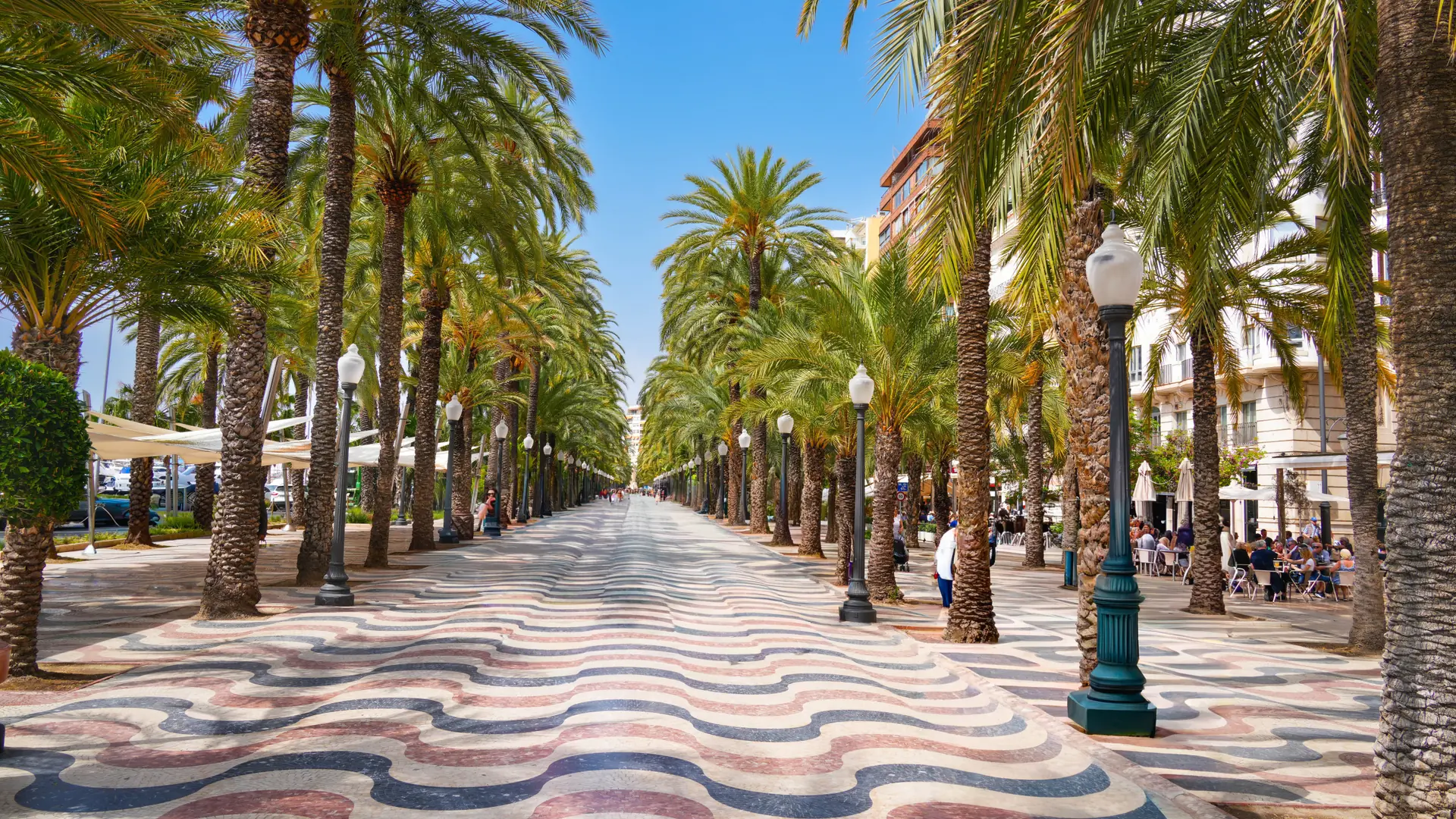
Follow the Explanada’s mosaic promenade towards the Town Hall, then visit Santa María and the surrounding streets. This gives you a clear sense of the lower city before committing to the climb. Leave time to sit down between sights. The Santa Cruz and Ereta ascent belongs in its own part of the day, especially with children or in warm weather.
Use FGV’s map and journey planner for the beach or town you want to visit. Luceros serves the central TRAM network; longer journeys can involve a connection, particularly farther along the Costa Blanca. Check the last return as well as the outward departure. A day trip is less appealing if you discover the slowest part only when it is time to come back.
The lift entrance is on Avenida Juan Bautista Lafora opposite Postiguet. The alternative walk rises through Parque de la Ereta; a shuttle also serves the castle. The owner’s published lift cut-offs are 40 minutes before closing for the last ascent and 20 minutes for descent. Check the seasonal closing time for your date and decide how you will leave before going up. Private cars cannot park inside the castle grounds.
Rates checked on 20 October 2026: the C6 single is €4.70 (≈ US$5.28), while an ordinary urban bus single is €1.45 (≈ US$1.63). TRAM uses separate zones and products. Count likely rides before buying a pass; a central day may need none. Check payment and validity with the operator, and read current diversion notices for your stop. A city bus product does not automatically cover an airport or coastal journey.
The castle lift avoids the principal climb, but that does not establish that every terrace, interior room or viewpoint is step-free. Ask the venue about the parts you want to visit and current lift operation. For hotel access, send the property a precise mobility question and request the taxi drop-off point. Leave room in the plan to change the route; a steep approach is difficult to solve after the luggage has already been unloaded.
Museum days, market hours and boat departures determine the order of a short stay. Keep an afternoon flexible for delays or unsuitable sea conditions. The example includes a shared room and meals as well as tickets. Dollar equivalents use the ECB reference for 19 October 2026: 1 EUR = US$1.1225, rounded; your payment provider may use a different rate.
AEMET’s historical station normals put average July and August daytime highs around 30°C. These are 1981–2010 averages, not a forecast or an upper limit. Plan exposed walking early, carry water and choose a room with confirmed air conditioning. An indoor museum visit or a proper afternoon break is a useful complement to the beach, rather than another outdoor stop squeezed into the hottest hours.
The city remains useful for a sightseeing break outside the peak beach season. Pack for the actual forecast and allow for rain, especially in autumn; the historical record shows a wetter September and October than midsummer. MACA and MARQ can anchor an indoor day when open. Do not buy a boat excursion solely on the assumption that a warm day will also mean suitable sea conditions.
A shorter day changes the order of a castle visit, museum and waterfront walk. The published castle season switches to its shorter winter window from 15 November to 27 February; check the exact date rather than carrying a summer schedule into a December trip. A winter city break can still be rewarding, but treat swimming and extended evening time on the hill as weather-dependent extras.
For an October 2026 plan, allow €260 (≈ US$292) for one shared double, €300 (≈ US$337) for meals, €36.20 (≈ US$41) for airport/lift/MARQ tickets and €30 (≈ US$34) for extra rides, fees and reserve: €626.20 (≈ US$703), rounded to €630 (≈ US$707). Meals allow €50 (≈ US$56) each daily, including breakfast and ordinary drinks. Excludes travel to/from Alicante except the airport bus, Tabarca, extra sights, insurance and shopping. Replace the room amount with your final quote.
INE’s October 2025 double-room average was €115.60 (≈ US$130) per night before tax/services. Two nights plus 10% VAT give €254.32 (≈ US$285), rounded to €260 (≈ US$292) here: a historical city benchmark across categories and sales channels, not a current Centro offer. Tickets are four C6 singles €18.80 (≈ US$21), two castle lifts €5.40 (≈ US$6.06) and two standard MARQ entries €12 (≈ US$13). Check room terms and compulsory charges; the reserve is an allowance, not a taxi fare.
MARQ’s permanent collection is €6 (≈ US$6.74) per adult, or €3 (≈ US$3.37) on Sundays/public holidays; exhibitions and concessions have separate conditions. MACA admission is free. A Kon Tiki adult Tabarca return is €24 (≈ US$27), adding €48 (≈ US$54) for two before island spending. Reconfirm the return at ticket collection. These checks on 20 October 2026 are planning inputs; consult current rates for a later trip and add any optional outing to the total.
If you arrive with only a few hours free, start with the Explanada and the lower streets around the Town Hall. Continue towards Santa María if there is time, then return along the waterfront for dinner. Leave the castle for a visit with enough time to explore and descend comfortably. This is an orientation walk, not an attempt to finish the city in one evening; it also helps you judge distances for the following day.
On a Tuesday-to-Saturday sightseeing day, put the castle in a cooler window and give the afternoon to one museum: MACA for modern art in the old town, or MARQ for regional archaeology farther north. On Sunday or a public holiday, visit the museum first, then the castle later if the weather allows; the museum opening windows are listed under planning. Leave Tabarca for a separate day. A short beach visit can fit around the city sights when conditions permit.
It is a poor choice before a fixed flight or train. Boat schedules can change seasonally, and the operator asks passengers to reconfirm departure times when collecting tickets. Reserve the island for a day without a tight onward connection, check the return before leaving Alicante and retain a mainland alternative if the sailing cannot proceed. A ticket does not remove the need to watch the weather or leave room for transport back to the hotel.
Choose the city when meals, museums and a walkable waterfront are central to the break. A resort or outer-coast beach address may suit longer days spent by the water, but check its public-transport journey into Alicante before booking. A property advertised as Costa Blanca can be well beyond the central sights. Decide whether visiting the city is your everyday routine or an occasional excursion; that distinction is more useful than a broad destination label.
MARQ lists free access for holders of qualifying individual, named Renfe tickets for certain AVE, long-distance and Avlo services. Read the museum’s current conditions and carry the qualifying ticket to the ticket desk; do not assume every suburban or third-party train booking is eligible. The offer may apply to a particular museum product, while temporary exhibitions can be priced separately. Check eligibility before subtracting admission from your plan.
Distinguish the grounds from ticketed activities. General castle access, the lift, a guided tour and a special event are different arrangements; read the conditions of the option you want. Confirm the published opening window and any dated access notice with the venue.
Save the actual reception entrance: a map pin may identify a building while check-in opens on another street. Ask for the nearest usable drop-off and the remaining luggage route. Around Calle Castaños and other restaurant streets, request your booked room’s orientation and ask about bars beneath it. Glazing and floor can matter as much as the area name when you need early sleep. Compare room size, air conditioning, cancellation terms and the final payable price for the specific category.
Reviewed by StartBooker
Last reviewed 2026-10-20
Updated
Editorial method: Editorial self-review checked October admissions, MACA’s revised Saturday opening and a complete two-adult example. INE room data provide a historical benchmark; meals and reserve are explicit allowances. Municipal heritage and museum records support the castle and Sempere details. Unchanged geography, rail, climate and market evidence keeps its earlier dates. All six existing photos remain, with the marina view identified in the station-area card.
28 sources reviewed
Some photos provided by Pexels.
Compare routes by length, stops and transport.