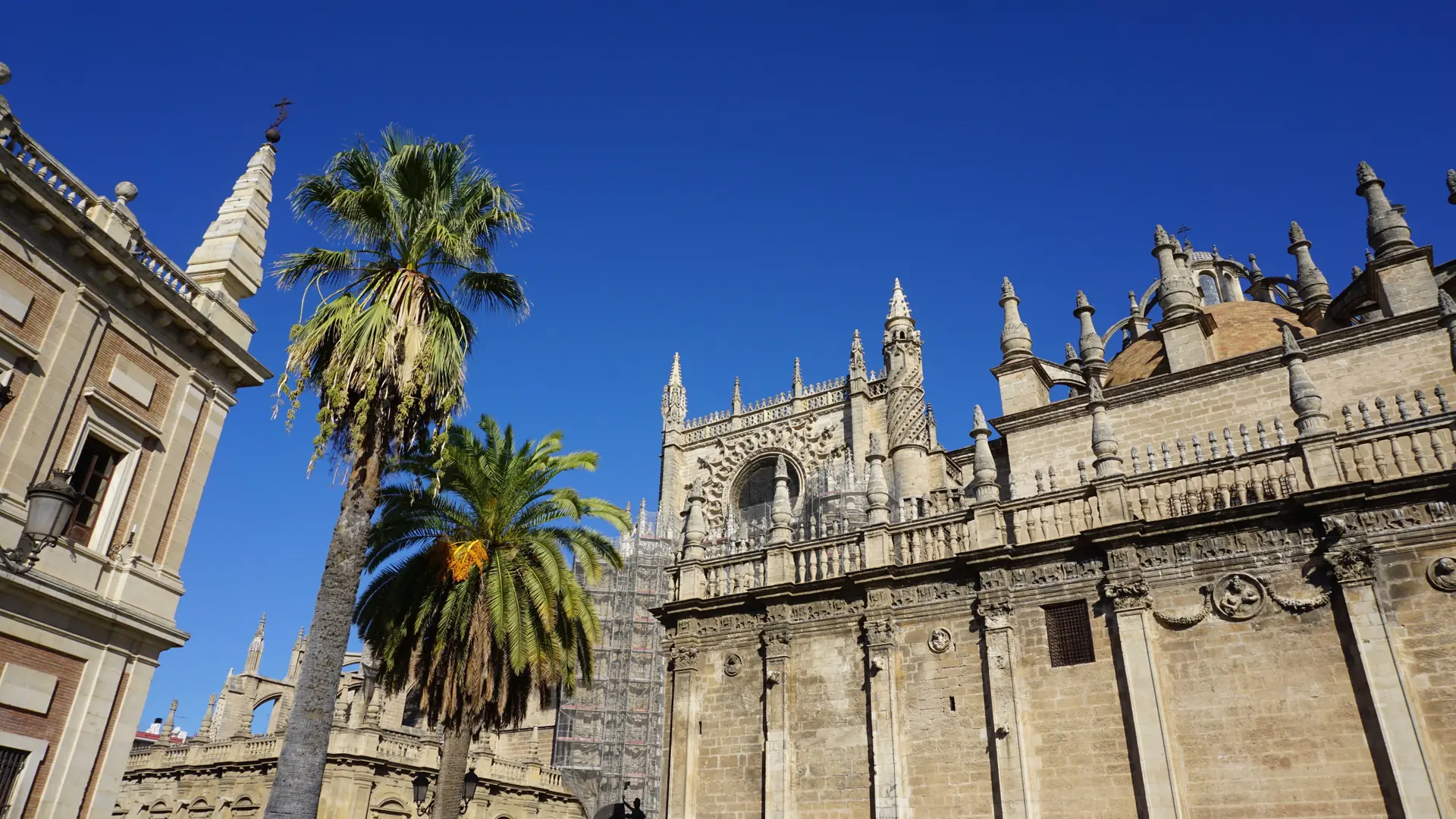
A palm tree beside carved Gothic stonework on the exterior of Seville Cathedral

Spain by train in 7 days

Four cities, six nights and three direct trains: a brisk first visit with room for the Mezquita and a carefully timed Seville departure.

Length
7 days, 6 nights
Stops
4 cities
Getting around
Direct trains + local transfers
Best months
Apr–May, late Sept–Oct
Search stays

A quick sample of four very different cities

Start with Barcelona’s coastal light and Modernista streets, cross to Madrid’s museums, then spend the last two nights in Andalusia. The four-city sequence follows direct rail links; Córdoba sits on the way to Seville, so its overnight introduces a different city without a backtracking excursion. You change hotels three times, however, and the short final stays demand more organisation than their train rides suggest.

The dated example runs Monday 19 to Sunday 25 October 2026. Use it when variety is your priority. Day 1 assumes an afternoon arrival in Barcelona. A late arrival leaves almost all that city to Day 2; an early morning arrival gives you a welcome bonus, rather than another promised full day. Likewise, Madrid has a transfer afternoon and one complete day. Seville offers an evening and a departure morning, not a leisurely exploration of the whole city. Book flights into Barcelona and out of Seville where practical. A compulsory return to Madrid needs a different final-night arrangement.

Three rides, three hotel changes

The three direct trains give the cities their own part of the week: Barcelona and Madrid each have a full sightseeing day, Córdoba has an arrival afternoon and a following morning, and Seville closes with palace gardens. A short final ride leaves time to settle in before the last evening.

An overnight gives Córdoba flexibility

A room in the historic centre lets you explore Córdoba’s lanes and return to the river after day visitors leave. Its overnight also offers two possible windows for the Mezquita: arrival afternoon or the following morning, chosen from the dated visitor calendar.

Choose walking weather, not a reversed route

April–May and late September–October are sensible starting points for a walking week. Historical airport normals put July’s average daily maximum at 36.0°C in Seville and 36.9°C in Córdoba; June can already be hot. Reversing the city order does not change that exposure. Autumn can bring rain, so keep an indoor alternative.

Best for

  • First visits that prioritise architecture, art and contrasting city centres
  • Two adults sharing a room and travelling with manageable luggage
  • Travellers happy to reserve the key visits before departure

Think twice if

A beach holiday, a restful single-base break or a trip with major mobility barriers left unplanned. Four hotel arrivals and three station departures are substantial work within a week.

StartBooker answer

How do you fit Barcelona, Madrid, Córdoba and Seville into seven days by train?

Travel south in that order, staying two nights in Barcelona, two in Madrid, one in Córdoba and one in Seville. This is a fast introduction: the first two cities each get one full sightseeing day, with arrival or transfer afternoons around it. The three dated direct services take five hours fifty-five minutes aboard in total; station time and hotel transfers are additional. The final morning works for a 09:30 Alcázar visit only with a sufficiently late departure; this plan assumes a flight from Seville after 17:00.

City sequence
Barcelona → Madrid → Córdoba → Seville
Hotel allocation
2 + 2 + 1 + 1 nights = 6 nights
Last-day condition
Seville flight after 17:00, subject to airline check-in requirements

Four bases along the railway

Choose a room for the time you actually have here. These bases favour useful sightseeing access over sleeping beside every departure platform.

4 stops · swipe

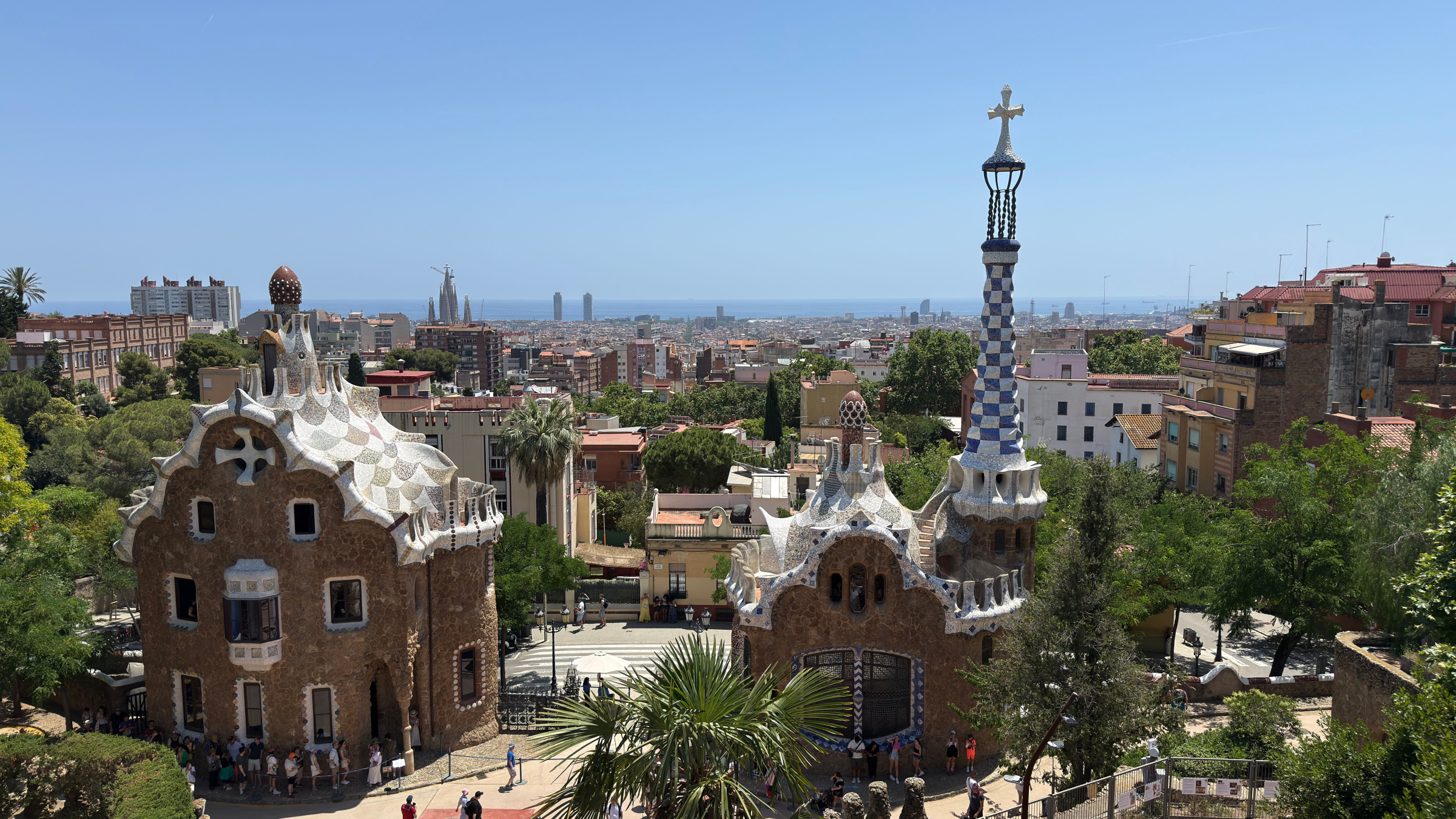
  1. Park Güell pavilions overlooking Barcelona in bright daylight 1

    Barcelona

    2 nights

    Modernista streets, Gaudí and the Mediterranean

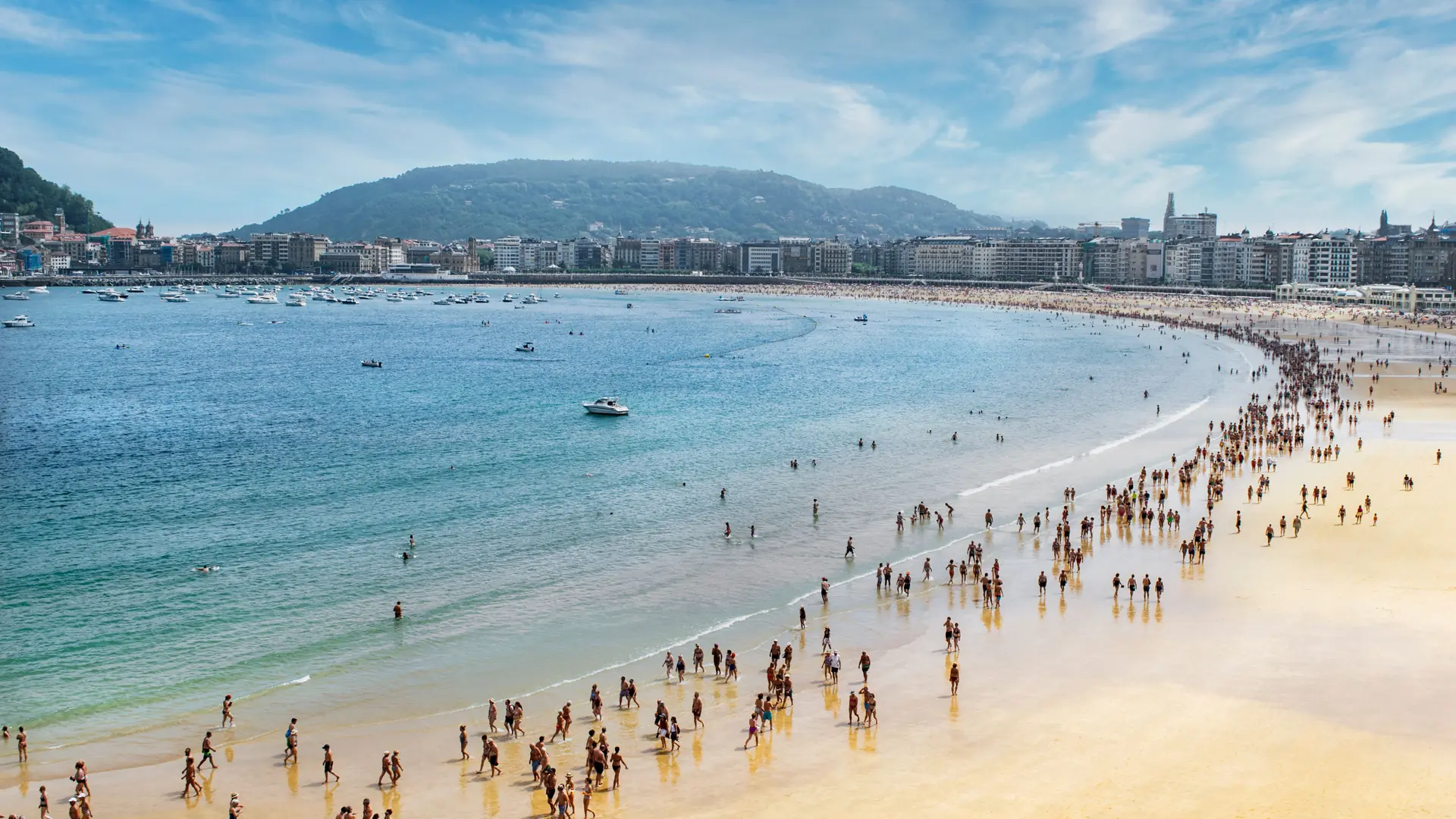
    Look first in central Eixample, around Passeig de Gràcia and nearby side streets. That base puts the architectural façades within an easy evening outing while leaving the old city reachable by metro or a longer walk.

    Watch out: Passeig de Gràcia has heavy traffic. El Born is the alternative for old-city evenings, with narrower streets and a longer journey to the façade walk.

    Read the Barcelona guide →
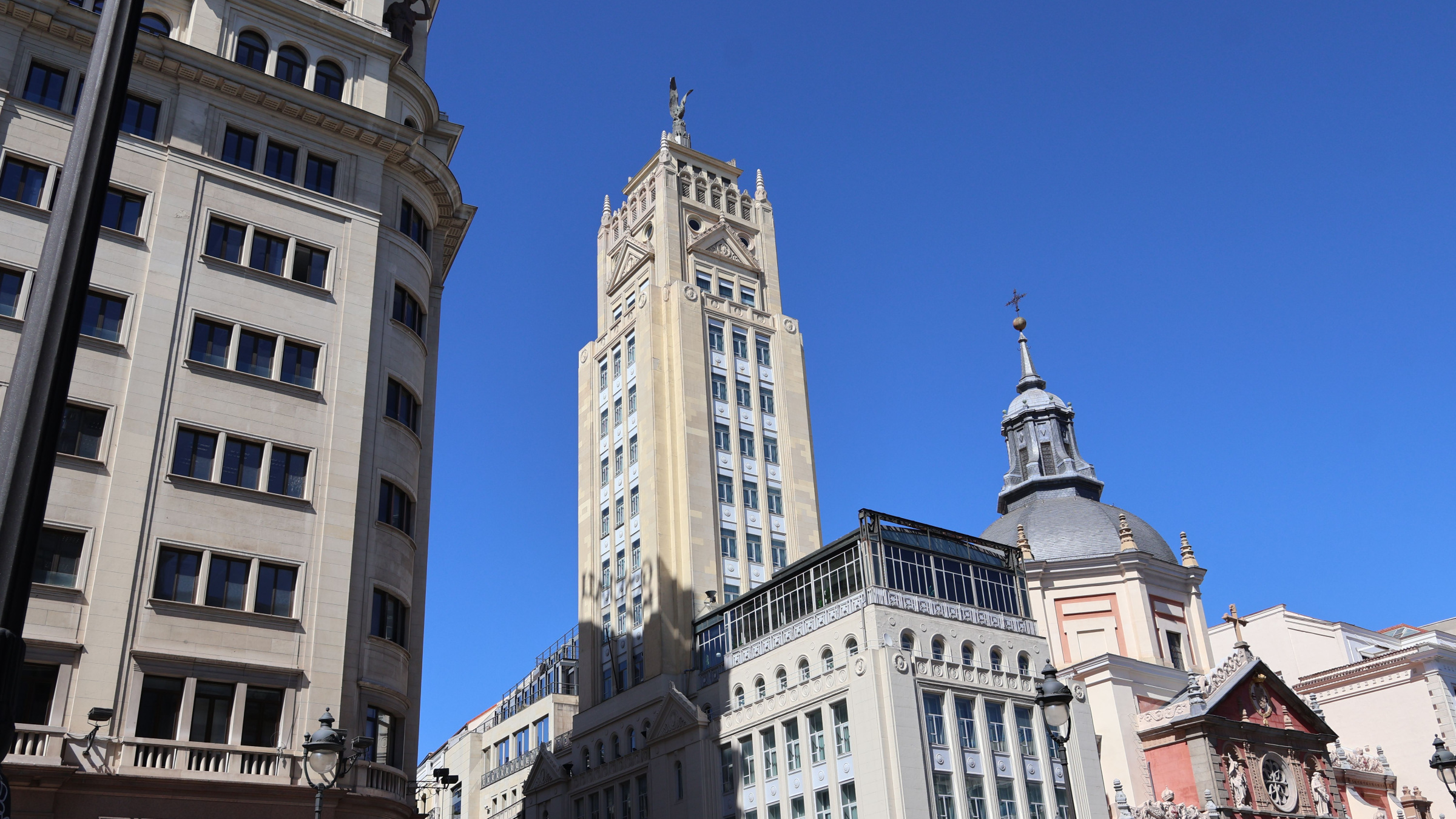
  2. Calatravas Church and a neighbouring tower on Calle de Alcalá in Madrid under a clear blue sky 2

    Madrid

    2 nights

    A concentrated art day and lively central streets

    The Prado–Atocha side of the centre is a practical first search area for this route. Calle de las Huertas and the streets towards Paseo del Prado put dinner and the museum close together, with the southbound station nearby.

    Watch out: Plaza de Santa Ana and Huertas are lively at night. Nearer the Prado or Atocha, the museum morning and southbound departure take priority.

    Read the Madrid guide →
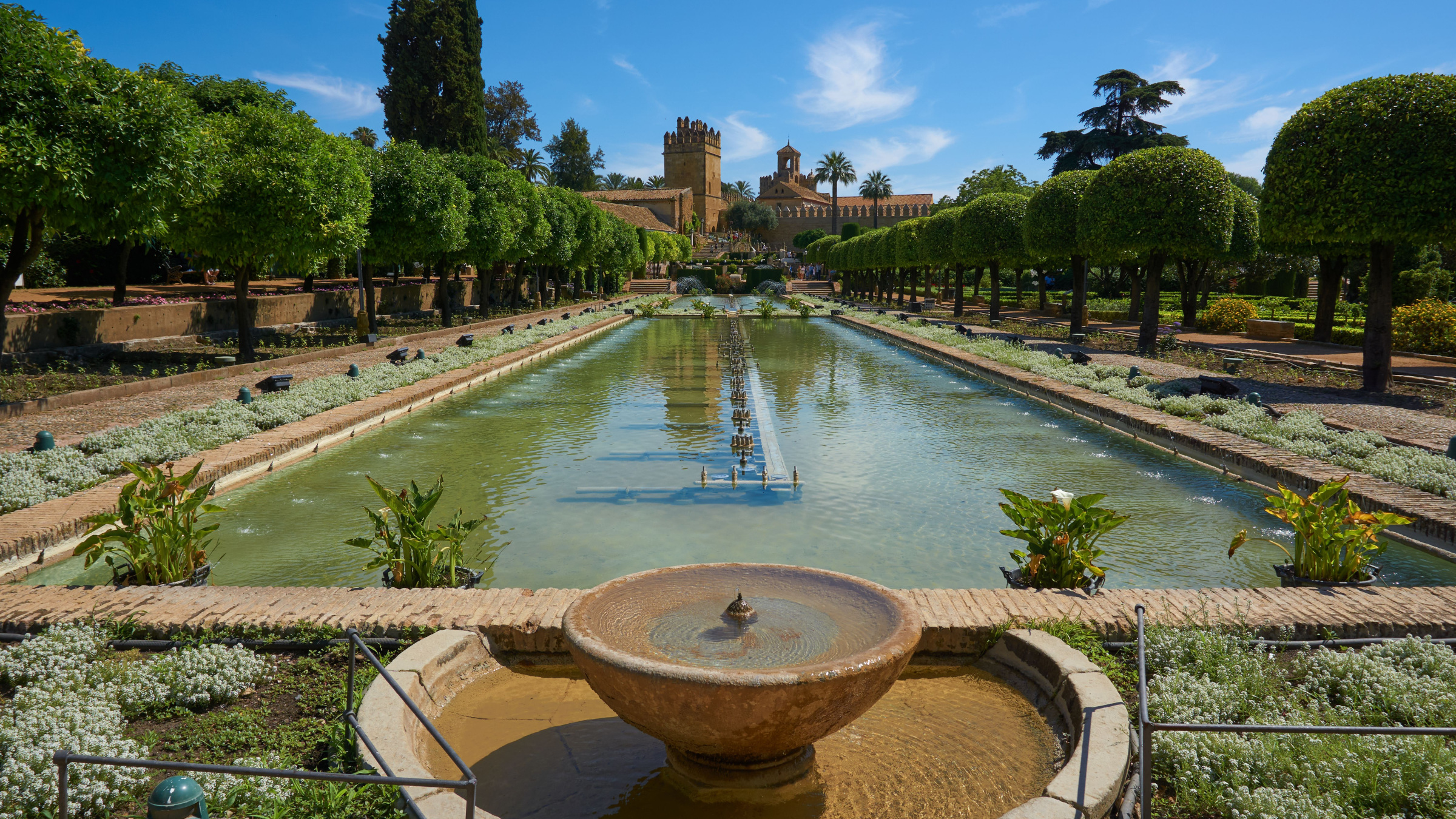
  3. Sunlit pools and cypress trees in the gardens of Córdoba’s Alcázar de los Reyes Cristianos 3

    Córdoba

    1 night

    The Mezquita, riverside views and intimate lanes

    Search in the Judería or near the Mezquita for the strongest use of one night. The lanes around Calle Deán and the walk to the Roman Bridge then belong to the same evening, after the day visitors have left.

    Watch out: The station district suits quick rail access; the Judería trades that convenience for the mosque-cathedral lanes and river close to your door.

    Read the Córdoba guide →
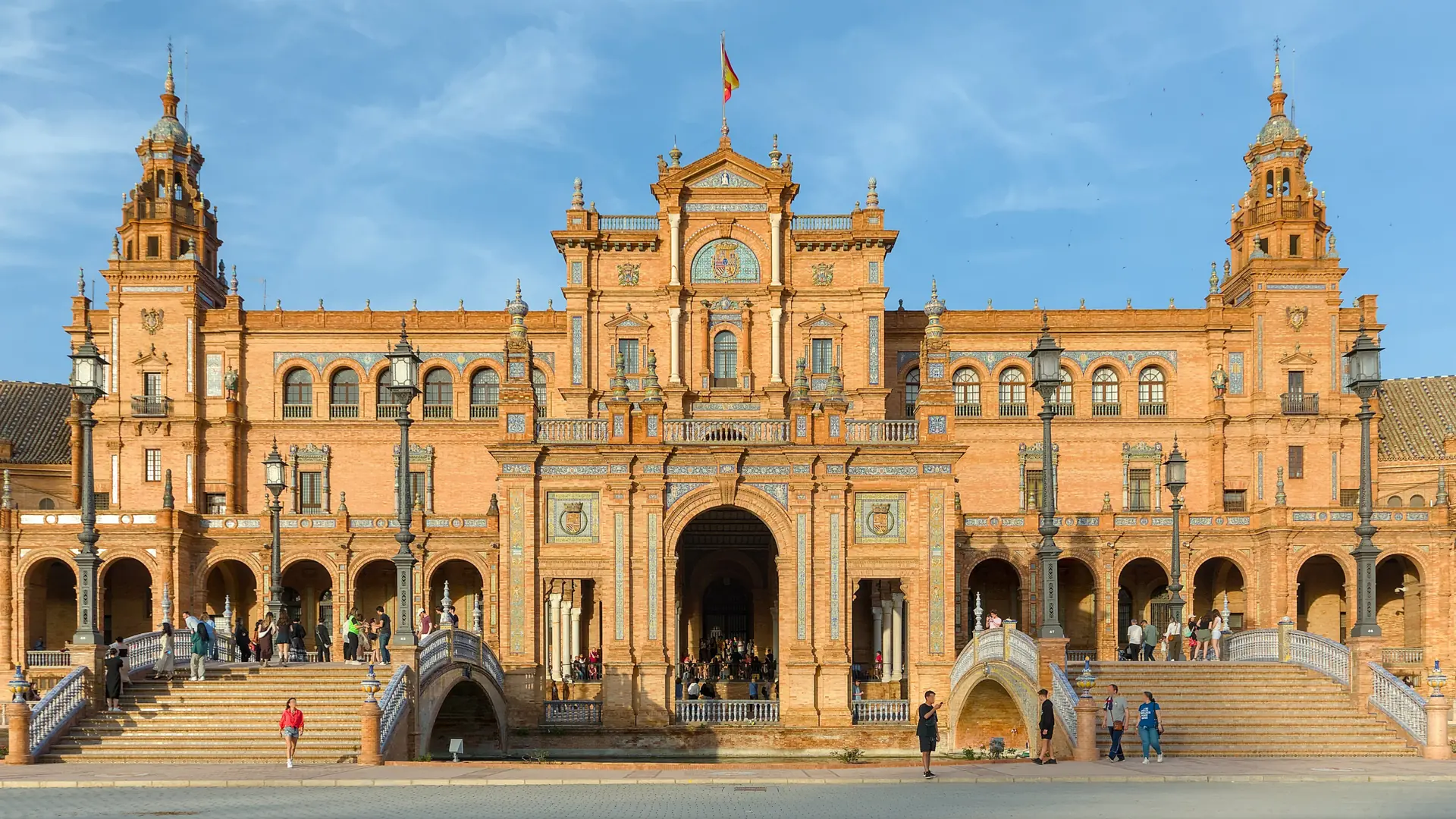
  4. Bright frontal view of Plaza de España's ornate central pavilion in Seville 4

    Seville

    1 night

    Palace gardens and a final Andalusian evening

    For this single night, start around Santa Cruz within walking reach of the Alcázar entrance. Callejón del Agua and Plaza de Doña Elvira provide an easy evening circuit; Prado de San Sebastián is a useful airport-bus stop on the southern side.

    Watch out: Triana suits evenings by the Guadalquivir, but the river crossing adds time to the palace morning. Santa Cruz is busier and closer to the sights.

    Read the Seville guide →

Seven days from Gaudí to palace gardens

There is one full sightseeing day in each of the first two cities. The remaining days combine arrival, a move or departure with a smaller outing; the last one depends on your flight time.

1 Day 1 Arrive, then find your Barcelona bearings

Use Aerobús A1 from Terminal 1 or A2 from Terminal 2 towards Plaça Catalunya if it suits your hotel. The operator quotes about 30–35 minutes for the bus ride; immigration, bags, waiting and the final walk come on top. A different hotel may favour airport rail or metro instead. Settle in before choosing the afternoon’s scale. With an afternoon arrival, make the Gothic Quarter and nearby El Born your first outing: cathedral surroundings, narrow streets and a café stop rather than a booked interior. If you arrive late, stay near the room and save your energy. Keep this day free of prepaid sightseeing.

  • Gothic Quarter and El Born
  • An easy first evening

Overnight: Barcelona

2 Day 2 A basilica visit and an afternoon by the sea

Build the morning around the Sagrada Família ticket you have secured. Its standard admission includes an audioguide and museum access; tower access is a different purchase. Carry the official photo ID matching the personal ticket. Allow time to listen and look up, rather than treating the entrance slot as the duration of the visit. After lunch, make a light architectural walk along Passeig de Gràcia: the exteriors of Casa Batlló and Casa Milà need no additional ticket. Then choose the waterfront for open space and a slower finish. Park Güell is an alternative afternoon, not another compulsory stop; reaching its hillside site and using a separate timed ticket changes the day’s geography.

  • Sagrada Família with photo ID and the booked entry
  • Modernista façades, followed by the waterfront or an optional park visit

Overnight: Barcelona

3 Day 3 Ride to Madrid and keep the afternoon loose

The example takes AVE 03092 on Wednesday 21 October: Barcelona Sants at 09:00, reaching Madrid Puerta de Atocha–Almudena Grandes at 12:17. Leave your room early enough for local travel and a planning margin of 45 minutes inside the high-speed station. That margin covers finding the departure area and screening; follow any longer operator requirement. Expect lunch to be a moving target. Carry water and something small to eat, then check in or leave bags when you reach Madrid. Start with Sol, Plaza de Oriente and the Royal Palace exterior if you still want a walk. A palace interior is an additional paid visit, absent from this budget.

  • Sants → Atocha on the exact service booked
  • Sol and palace surroundings without an extra timed commitment

Overnight: Madrid

4 Day 4 Give the Prado time, then change the scenery

Reserve the Prado for the main art visit and give it two or three hours. Choose a handful of paintings or a section that interests you. The museum opens Monday–Saturday at 10:00 and also opens on Sundays, with different closing hours. Its free late window may suit a different plan, but is not a dependable replacement for the morning reserved here. After lunch, use nearby Retiro for a quieter stretch before returning towards the old centre for dinner. A second museum is optional and separately priced; this route does not bundle the Prado, Reina Sofía and Thyssen into one admission.

  • One substantial Prado visit
  • Retiro and dinner towards the older centre

Overnight: Madrid

5 Day 5 Move to Córdoba and settle into the old quarter

Take the mid-morning train south after breakfast. The observed Friday 23 October example is AVE 02100 from Atocha at 10:00 to Córdoba Julio Anguita at 11:45. Allow roughly half an hour or more to reach an old-town hotel; a taxi is useful with a large case or when walking in the heat would be tiring. After dropping bags, explore the Judería and approach the Roman Bridge for a view back towards the monumental centre. Keep a lunch or café break indoors during hot weather. Your Mezquita ticket decides whether its interior belongs this afternoon or tomorrow: if Saturday’s calendar does not offer a suitable morning visit, reserve an available Friday afternoon entry and leave the next morning for an unhurried river walk.

  • Judería and the Roman Bridge
  • A Córdoba evening after check-in

Overnight: Córdoba

6 Day 6 Visit the Mezquita, then continue to Seville

Spend the morning among the Mezquita’s double arches and later cathedral spaces. When the dated calendar permits, choose a paid visitor slot around 10:00 and allow about ninety minutes inside. Religious use can alter access; the limited free morning period is a separate visit, explained below. If you went on Friday, enjoy breakfast and a final river walk instead. The Saturday 24 October example leaves Córdoba on AVE 02120 at 13:46 and reaches Sevilla Santa Justa at 14:39. A visit ending around 11:30 leaves more than two hours for lunch, bags and the station. Take a later train if your entry slot or walking pace needs more room. Santa Justa is outside the old centre, so go to the room and rest before choosing the evening. Santa Cruz’s squares make an easy first circuit; dinner across the river in Triana is an optional longer outing. The Alcázar belongs to the following morning in the main plan.

  • Mezquita, or a final river walk
  • A short train ride and a Seville evening

Overnight: Seville

7 Day 7 Palace gardens before leaving Seville

Spend the last morning in the Alcázar’s palaces and gardens. This version assumes a Seville flight after 17:00 and a 09:30 entry. Bring the physical passport or national identity document matching your named Alcázar ticket. Allow two or three hours for the palace and gardens, then collect bags and eat before leaving for the airport. The base admission excludes the separate upper royal-apartment visit. The cathedral exterior is easy to appreciate in passing; adding its interior would require another ticket and another block of time. The EA airport bus serves stops including Prado de San Sebastián and Santa Justa. Choose the stop from your hotel’s location, not by returning automatically to the railway station. Set aside 60–90 minutes from hotel to terminal for walking, waiting and traffic, then add the airline’s required airport margin. If those combined requirements do not fit, remove the palace from this morning or extend the trip.

  • Alcázar palaces and gardens
  • Departure from Seville after the visit

Base: Seville

The three trains

These are three observed direct services for the October example. Hotel journeys and time inside the departure station come on top of their combined five hours fifty-five minutes aboard.

3 transfers

  1. Barcelona Madrid

    Train Travel time: 3h 17m in the dated example

    Wednesday 21 October: AVE 03092 leaves Barcelona Sants at 09:00 and reaches Atocha at 12:17. The observed Básico price for two ordinary adults was €174.30.

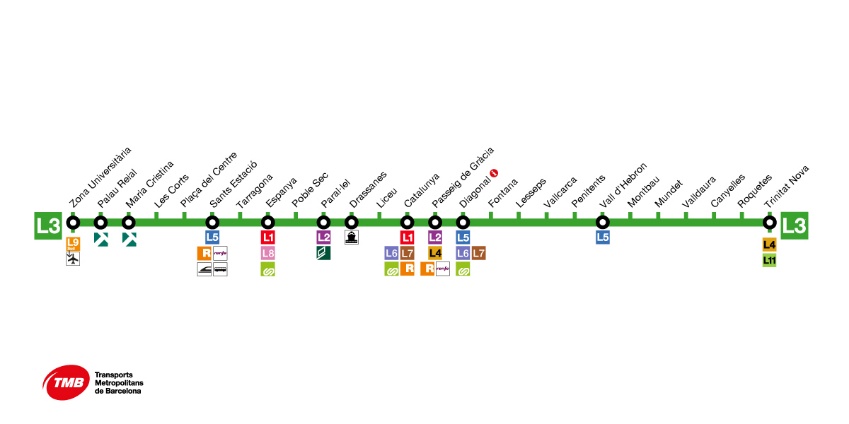
    Booking note: From Passeig de Gràcia, L3 runs to Sants Estació. Keep the hotel journey and the station margin separate from the time aboard.

  2. Madrid Córdoba

    Train Travel time: 1h 45m in the dated example

    Friday 23 October: AVE 02100 runs from Atocha at 10:00 to Córdoba Julio Anguita at 11:45. Two ordinary adults were quoted €98 in Básico.

  3. Córdoba Seville

    Train Travel time: 53 minutes in the dated example

    Saturday 24 October: AVE 02120 leaves Córdoba Julio Anguita at 13:46 and reaches Sevilla Santa Justa at 14:39. The observed Básico pair fare was €24.90.

The examples were observed on 7 October 2026. Departure times, fares and availability can change; choose the current operator ticket that gives your visit and transfer enough space.

About €2,550 for two adults over six nights

For 19–25 October 2026, the six cost rows total €2,474.16 for two adults sharing a double room. A chosen €40 reserve brings the estimate to €2,514.16, rounded to about €2,550. The room figure is a historical benchmark, the trains are observed examples, and food/local travel are allowances. Flights are separate.

Six shared hotel nights October 2025 city ADRs with 10% hotel VAT, rounded. All hotel categories and booking channels, room-only; not held rooms or an offer for these travel dates.
About €1,160 per room
Meals and ordinary drinks Chosen €50 per person per day for breakfasts, lunches, dinners and ordinary drinks. Tasting menus and upgraded restaurant choices need more.
€700 allowance for two
Three direct train journeys Observed Básico examples: Barcelona–Madrid €174.30, Madrid–Córdoba €98 and Córdoba–Seville €24.90 for the pair. Seat-choice and other paid extras are separate.
€297.20 for two adults
Airports and local journeys Aerobús €7.75 and Seville EA €6 per adult total €27.50 for the pair; the other €72.50 is a chosen allowance for station transfers and local rides.
€100 for two
Four sights and fee headroom Sagrada €26, Prado €15, Mezquita €15 and Alcázar €15.50 per adult total €143 for two. The additional €37 is chosen headroom for booking charges or extras.
€180 for two
Barcelona visitor levy example Conditional ordinary four-star stay, two nights: (€3.40 regional + €5 city) × 1.10 VAT × two adults × two nights. Other accommodation categories differ.
€36.96 for two adults

Booking tips

  • The room benchmark uses October 2025 ADRs of €190.29 in Barcelona and €202.87 in Madrid for two nights each, plus Córdoba €106.39 and Seville €161 for one apiece. That is €1,053.71 before taxes, or €1,159.08 with 10% hotel VAT, rounded to €1,160. These city-wide averages do not price a particular district, star category, breakfast or cancellation policy.
  • The three quoted fares are Básico tickets in Standard class for the Wednesday, Friday and Saturday journeys described above. Their total is €148.60 per person, before optional seat selection or other add-ons. Another departure or fare product will have its own price.
  • Renfe’s ordinary Básico cancellation has no refund, apart from its separate two-hour post-purchase cancellation window. The fare allows one change for €10 plus any fare increase, at least 24 hours before departure. More flexible products cost differently; the quoted total does not include paid seat selection.
  • Barcelona’s €36.96 levy illustrates an ordinary four-star property for the two nights and includes hotel VAT. It is separate from the all-category room benchmark. Extra Gaudí interiors, Park Güell, towers, upper Alcázar apartments and the Seville cathedral interior are outside the four-visit allowance.
  • Alcázar tickets are named and cannot ordinarily be changed or refunded after purchase. Settle the flight and your workable palace slot before paying. A solo traveller using the same room benchmark bears the full €1,160 rather than half of it.

Where to stay in Seville

Compare live rooms for the final night, then check the actual walk to the Alcázar and to a suitable airport-bus stop. Location, cooling and bag storage matter more here than a long facilities list.

Search more stays in Seville →
Search stays

The four-city route on the map

The stored markers show Barcelona, Madrid, Córdoba and Seville for route orientation, centred towards the final stop. They are city reference points, not hotel addresses or railway-station entrances. Check an individual property and its walking route before booking.

Seville

Questions that can change the plan

What if my flight home leaves from Madrid?

Do not treat Madrid as another quick airport transfer after the Seville palace visit. You need a separately booked intercity journey, arrival at its Madrid terminal and onward travel to the airport, none of which is included above. For an early or fixed Madrid flight, put the final hotel night in Madrid and redesign the Seville visit, or add a day. Allow the separate rail journey and airline check-in time when choosing the final base.

Can I still see the Alcázar with an early Day 7 flight?

Only if an available Day 6 afternoon slot fits your actual train arrival, hotel stop and walk to the entrance. Check those constraints before purchasing. Otherwise extend Seville, change the flight or accept that the palace is outside this trip.

Should I rely on the Mezquita’s free morning period?

The operator offers a limited 08:30–09:30 period Monday–Saturday, subject to religious exceptions and special conditions; entry ends before the period finishes. It is a different proposition from a paid tourist visit and does not guarantee a quiet interior. Use the current rules and the date-specific visitor calendar to judge suitability. For a once-only visit, paying for a workable slot can be a better trade than designing a tightly timed departure around free admission.

What should I do if a train schedule changes?

Read the operator’s notification before changing hotels or buying another ticket. Identify whether the change affects the station, departure, arrival or service itself, then assess the next fixed commitment. Keep reservation references and an offline copy of tickets accessible. Contact the selling operator for the options attached to your fare; do not assume a different operator’s train accepts it. Flexible accommodation is useful here because the last two stays leave little spare time.

Is this sensible with heavy bags or mobility assistance?

The examples use ordinary AVE baggage rules: up to three pieces, 25 kg and 290 cm in total, with a maximum individual size of 85 × 55 × 35 cm. Avlo has different limits. For boarding or station assistance, use Renfe’s Adif Acerca service and attend at the separately instructed time. It helps within the railway journey, while the Judería and Santa Cruz still require a suitable hotel approach. If four hotel arrivals are the tiring part, fewer bases are the more useful change.

Where should an eighth day go?

Keep a second night in Seville and move departure to Day 8, making seven hotel nights overall. That buys a full day between arrival and leaving, with room for the cathedral interior or a longer Triana outing after the palace. Those are additional tickets or activities, so recalculate food, accommodation and admission costs. If your strongest interest is art or architecture elsewhere, a longer Madrid or Barcelona stay may suit you better; the extra night should follow that interest.

Sources and review

Reviewed by StartBooker editorial Route planning and rail research

Last reviewed 2026-10-07

Updated

How this route was checked: The four-base route uses dated direct-train examples, attraction rules and local district geography. Room costs follow October 2025 city hotel averages; the budget distinguishes those historical figures from observed fares and chosen daily spending.

46 references reviewed

Key sources
  • Museo Nacional del Prado
  • Madrid Destino
  • Mezquita-Catedral de Córdoba
  • Real Alcázar de Sevilla
  • Aena
  • Visita Sevilla
References
Photo credits

Some photos provided by Pexels.

Have you ridden this route?