
A clear visual arc
Barcelona's modernism, Madrid's museum-and-neighbourhood rhythm and Seville's Mudéjar monuments genuinely feel different. That contrast is why the route lands even at seven days.

A fast but humane first taste of Spain: Gaudí by the sea, the capital in the middle, then a southern finale.
This is a purposeful first trip for travellers who prefer three distinct cities to five shallow check-ins. Barcelona starts with architecture and the sea; Madrid breaks the journey with art and a lived-in evening culture; Seville closes with tiled courtyards, river air and late dinners. Two nights in each city is the compromise. With arrival on Monday 19 October 2026 and departure on Sunday 25 October, you sleep in Barcelona on Monday and Tuesday, Madrid on Wednesday and Thursday, and Seville on Friday and Saturday. That leaves Tuesday, Thursday and Saturday as the three full days. A late Monday landing or early Sunday flight reduces sightseeing at the edges; neither changes the six-night count. Travellers who want a beach afternoon, several Madrid museums or an Andalusian side trip should extend the week or choose two of these bases.
Barcelona's modernism, Madrid's museum-and-neighbourhood rhythm and Seville's Mudéjar monuments genuinely feel different. That contrast is why the route lands even at seven days.
Two transfers divide the week without requiring flights between cities. The dated examples below reach Madrid shortly after noon and Seville before lunch ends. Checkout, reaching the station and finding your next hotel still take part of each day; an afternoon arrival is a good time for plazas and dinner, rather than a prepaid museum session.
Sagrada Família and the Real Alcázar should shape their city days. Madrid’s museum choice is more personal: one thoughtfully chosen visit is more rewarding than a forced triangle of galleries. Reserve the intended dates before committing to inflexible transport, especially when this route offers only one full day in each city.
Best for
StartBooker answer
Yes, with two nights in Barcelona, two in Madrid and two in Seville: seven days and six nights altogether. This is a brisk architecture-and-art trip, with one full sightseeing day in each city and two mornings spent travelling. Use consecutive trains from Barcelona Sants to Madrid Atocha, then Atocha to Sevilla Santa Justa. Arrive in Barcelona and fly home from Seville to avoid retracing the route. The Sagrada Família, a chosen Madrid museum and the Alcázar provide the main indoor visits; evenings stay available for neighbourhood walks and meals.
Explore tours, attractions and local experiences in Barcelona, Madrid, Seville along this route through Spain.
Loading activities…
Activities provided by GetYourGuide. We may earn a commission on bookings.
Each city is a two-night base. These locations put the planned visits and evening meals within reach without another hotel move.
3 stops · swipe
 1
1
Gaudí, medieval streets and the Mediterranean
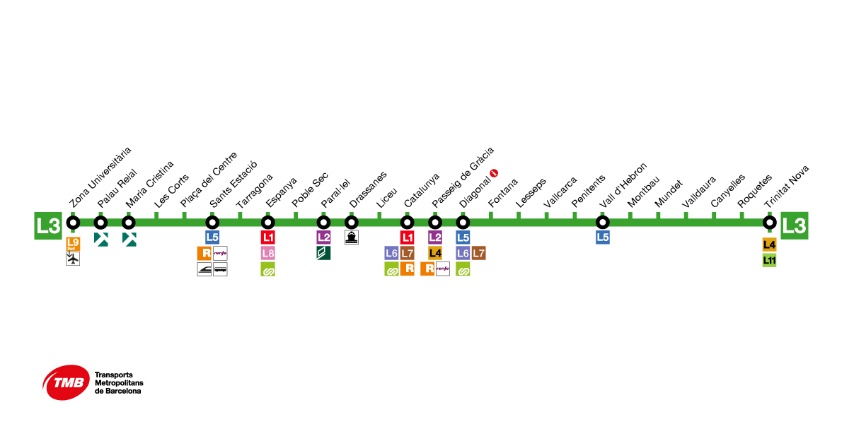
Central Eixample near Passeig de Gràcia or Rambla de Catalunya favours the architecture day and L3 to Sants. The Gothic Quarter suits old-city evenings around Sant Jaume and the cathedral, with narrow pedestrian approaches and a separate station transfer.
Read the Barcelona guide →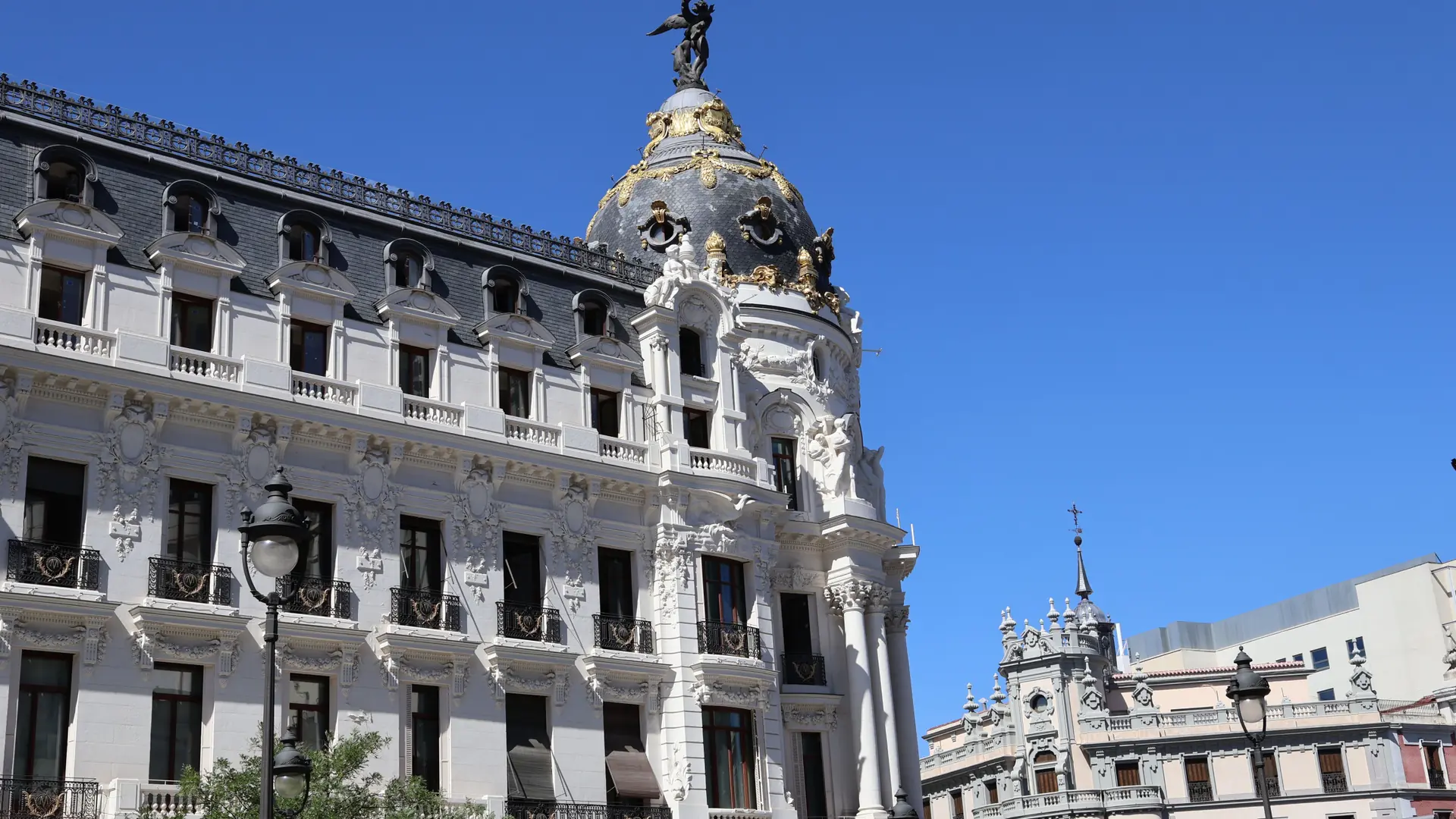 2
2
Museum masterpieces, parks and late evenings
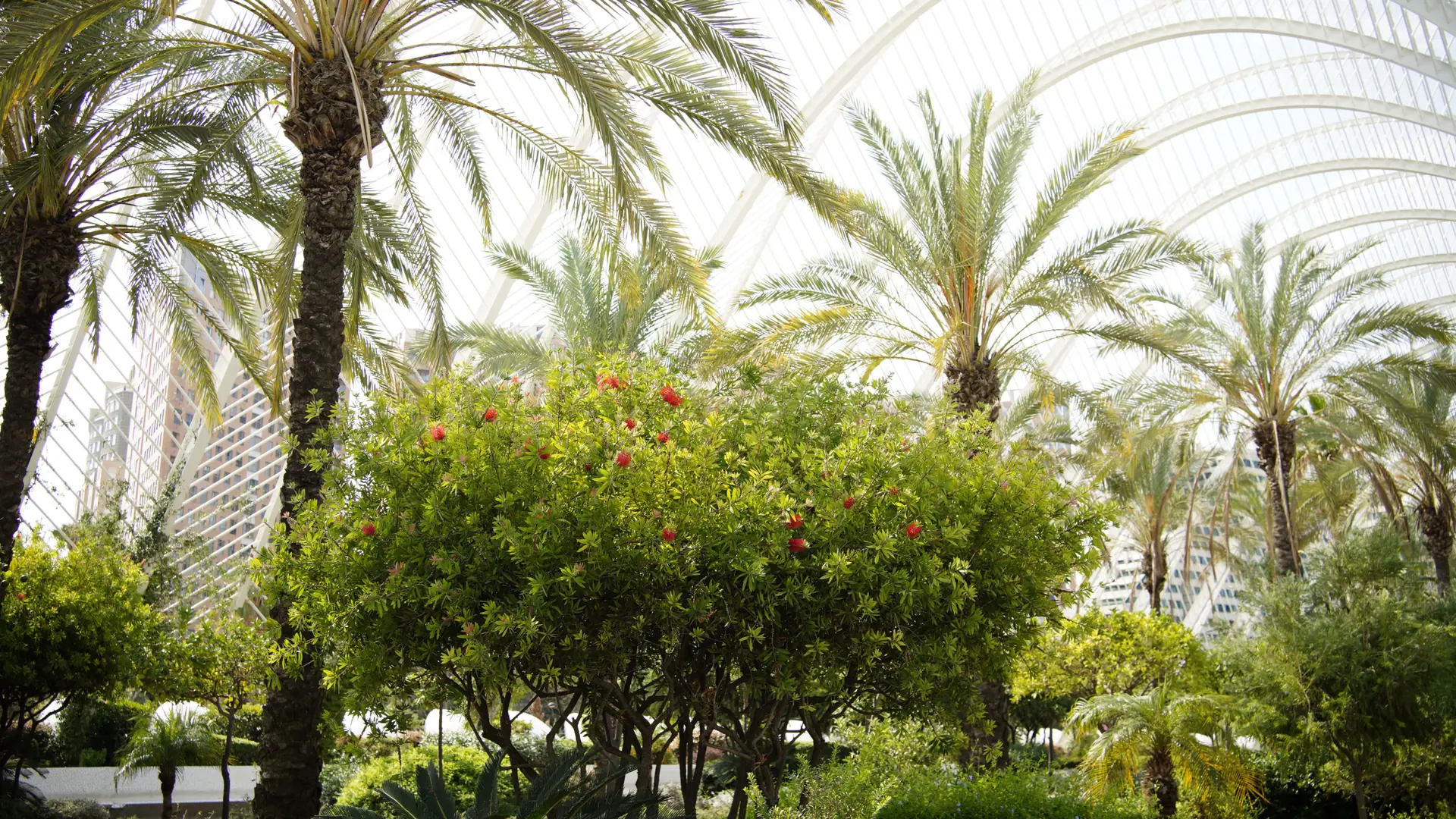
Las Letras between Santa Ana and the Prado puts museums and dinner close together; Huertas slopes uphill on the return. Austrias favours Plaza Mayor and the Royal Palace exterior, with a longer museum and Atocha approach. Choose the priority for these two nights.
Read the Madrid guide → 3
3
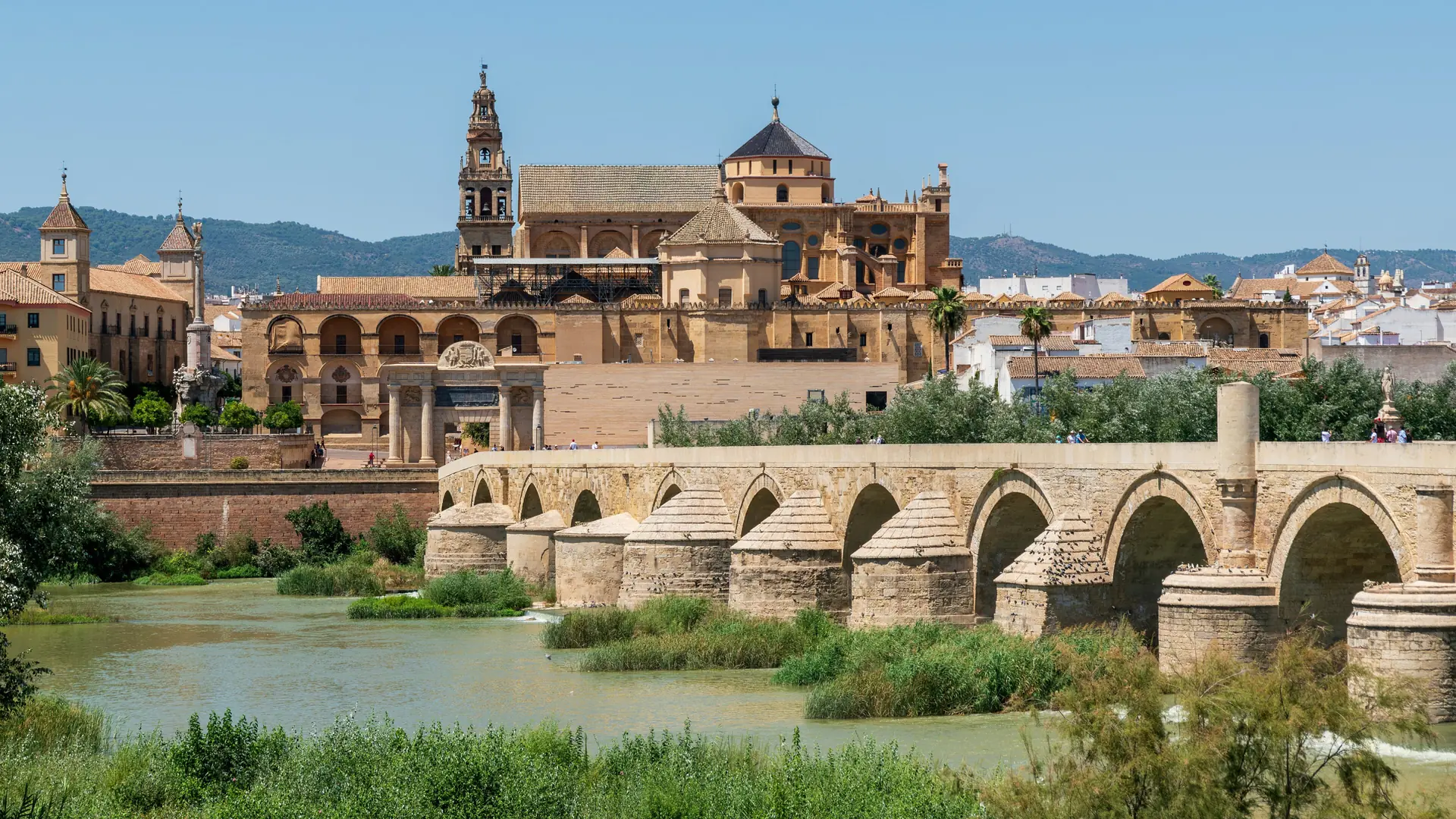
The Alcázar, cathedral, Giralda and twilight streets
Santa Cruz near Callejón del Agua and Patio de Banderas favours the early monument visit, with a winding pedestrian approach. Triana near Betis and Isabel II bridge puts river evenings first but adds a crossing to the monuments. Both need a Santa Justa transfer.
Read the Seville guide →The worked week runs Monday 19 to Sunday 25 October 2026. Use the same sequence on other dates, adjusting the actual venue sessions and trains.
Check in, make one simple walk through the Gothic Quarter, El Born or the seafront, and eat somewhere you would gladly return to. From the airport, Aerobús A1 serves Terminal 1 and A2 Terminal 2; both run to Plaça Catalunya. The operator’s usual journey estimate is 30–35 minutes, subject to traffic, with service around the clock. From Catalunya, an old-city introduction can follow the cathedral lanes to Carrer del Bisbe, Plaça Sant Jaume and Plaça del Rei. With a late landing, save that loop for another gap and have dinner near the hotel. For a Catalan start to the meal, try pa amb tomàquet: bread rubbed with tomato and dressed with olive oil, often served as an accompaniment in a local bar.
Base: Barcelona
Use the Sagrada Família as the morning’s main visit. Gaudí took over the project in 1883; its densely sculpted Nativity side and more austere Passion façade tell biblical stories in different artistic languages. Inside, coloured light changes the impression again. The ordinary €26 (≈ US$29) ticket includes the basilica, museum and app audioguide, excluding towers and crypt. Download the app, bring headphones and the ID required by your ticket. Arrive for your reserved time and keep suitcases at the hotel: the basilica has no storage for them. Afterwards, give Eixample a walk of its own. Passeig de Gràcia lets you compare Casa Amatller’s stepped gable with Casa Batlló’s curved, tiled façade—the buildings in this guide’s hero photo. Their exterior view needs no second timed ticket. Finish with a café break on Rambla de Catalunya; adding Park Güell would mean another reservation and journey.
Base: Barcelona
Travel on the service that genuinely suits checkout and check-in. The worked morning train reaches Madrid Puerta de Atocha-Almudena Grandes, which is the station used again for Seville. Leave the museum for tomorrow. After dropping bags, walk towards Plaza de Santa Ana through Las Letras, then follow Calle de las Huertas down towards the Prado if you want a sense of the next day’s geography. The pavement quotations and surrounding bookshops make the quarter more than a convenient dining address. A longer evening can continue west towards Puerta del Sol and Plaza Mayor, but that extension is optional. Staying east near the Prado makes a shorter return useful; choosing Austrias naturally puts the western squares first. If you continue to Plaza Mayor, a bocadillo de calamares—fried squid rings in a bread roll—is a characteristic Madrid bar meal along that western extension.
Base: Madrid
Choose a few Prado paintings to spend time with. Velázquez’s Las Meninas draws the viewer into the royal court, while Goya’s Third of May, 1808 depicts the brutality of war. Seeing both gives the morning a clear thread through Spanish painting, without needing to cover the whole museum. On the worked Thursday, ordinary opening is 10:00–20:00, and the €15 (≈ US$17) general ticket includes the collection and temporary exhibitions. Reserve a session, allow two or three hours and note that museum access ends thirty minutes before closing. After lunch, walk Retiro’s lake and paths. The Palacio de Cristal is closed for renovation until 2027, so its interior is not part of the outing. In poor weather, stay among Las Letras’ cafés and bookshops. The FAQ compares other museums for travellers with different interests.
Base: Madrid
Make the Madrid–Seville train the central event of the day and arrive without a timed monument hanging over you. From Santa Justa, take bags to the hotel before starting the river walk. Near the cathedral, the Guadalquivir is reached past the Torre del Oro; farther north, the Isabel II bridge leads to Triana. Calle Betis gives the riverfront view back towards the historic centre, while the neighbourhood’s ceramic identity lies in its workshops and the area around Calle San Jorge. Choose dinner on the side of the river where you want to spend the evening, to avoid repeated crossings. If arrival is delayed, keep the walk to the nearest river section and leave Triana for Sunday only when the flight allows. At a traditional bar, look for espinacas con garbanzos: spinach with chickpeas. This tapa is linked to Seville’s meat-free Lenten cooking, giving the evening a local food tradition as well as a river view.
Base: Seville
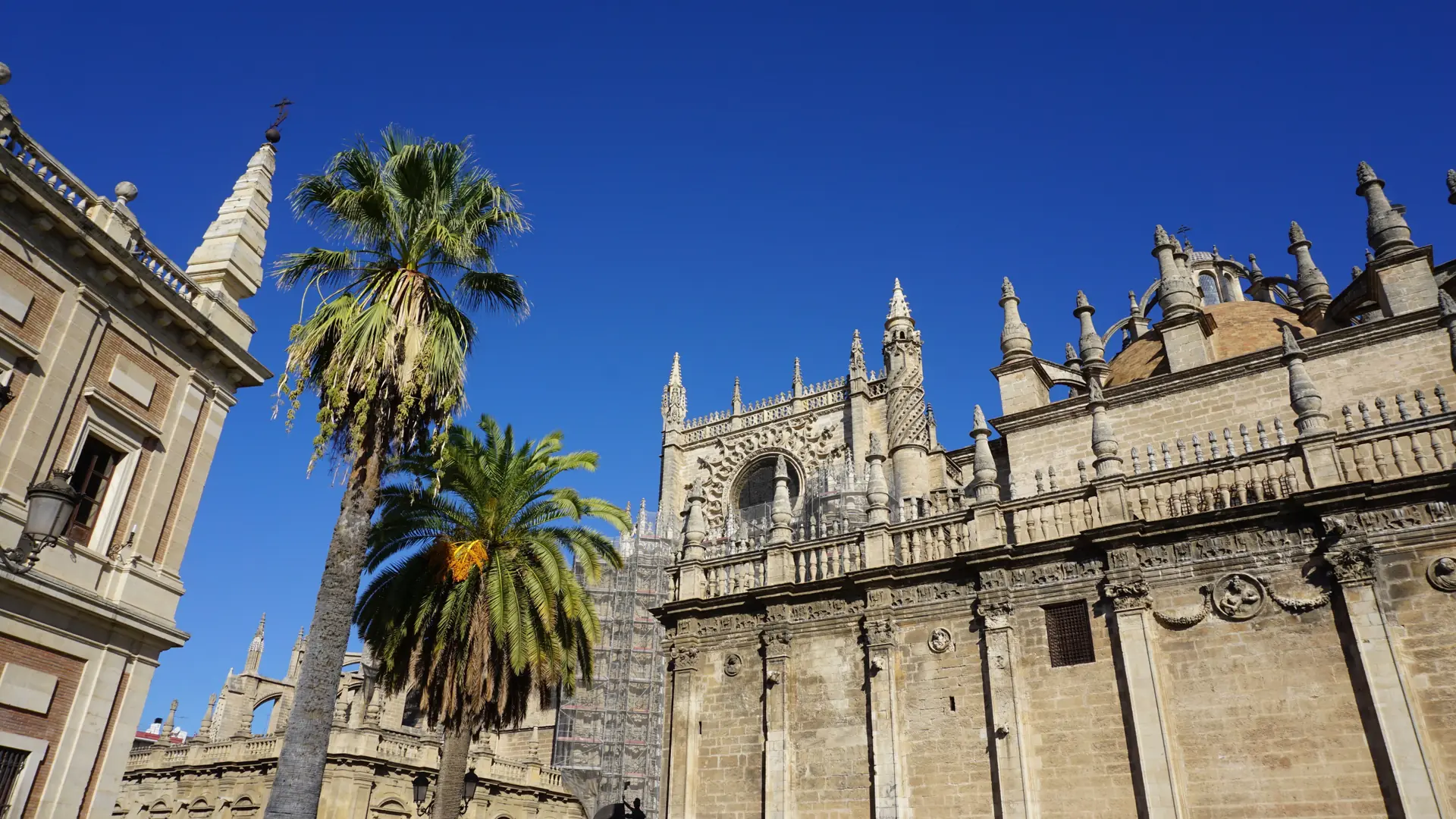
Start the day among the Alcázar’s courtyards, then leave time for its gardens. Pedro I’s fourteenth-century palace brings Islamic decorative traditions into a Christian royal setting: look at the tilework, carved ornament and courtyard arrangement. The cathedral and Giralda tell a different story, with an Almohad minaret adapted into a Renaissance belfry beside the Gothic church. For Saturday 24 October, book 09:30 at the Alcázar and 15:00 at the cathedral if both are available. General palace entry is €15.50 (≈ US$17); bring the physical ID matching your ticket and allow two or three hours, then take lunch and a break. The cathedral’s October calendar gives 10:45–19:00 for this Saturday. Its €13 (≈ US$15) online ticket includes the Giralda and Divino Salvador church. Reach Puerta del Lagarto ten minutes early and follow the ticket’s visit order; cultural admission does not allow re-entry. The Giralda’s 34 ramps end in 17 steps. Keep the cathedral interior and omit the climb if it does not suit your mobility or energy.
Base: Seville
Use the last hours for Santa Cruz, Triana or Plaza de España according to the weather and your flight, then depart. With an afternoon or evening departure, Plaza de España and the adjoining María Luisa Park offer a final outdoor outing: Aníbal González designed its brick arcades and tiled provincial panels for the Ibero-American Exposition of 1929. Look closely at one panel before continuing into the park. Confirm bag storage with your accommodation before relying on this after-checkout walk. Collect bags afterwards and leave an airport margin based on your airline’s requirements and road traffic. The EA airport bus costs €6 (≈ US$7) one way; TUSSAM’s published timetable lists departures from Plaza de Armas towards the airport from 04:30 to 00:09. That first time is not a guarantee for every city stop. For an early flight, abandon the sightseeing morning and arrange a suitable taxi or other transfer the previous evening. Its quoted cost is additional to this guide’s bus-based budget.
Base: Seville
These are dated, direct Renfe examples for the worked week, observed on 7 October 2026. The stations, service and fare belong to each example rather than every departure.
2 transfers
Barcelona Madrid
Observed 7 October: AVE 03092 on 21 October, Sants 09:00 → Madrid Atocha 12:17. Basic €87.15 (≈ US$98) per adult, €174.30 (≈ US$196) for two; no seats held. Allow 30 minutes at the station plus the hotel journey.
Madrid Seville
Observed 7 October: AVE 02100 on 23 October, Madrid Atocha 10:00 → Sevilla Santa Justa 12:40. Basic €67.50 (≈ US$76) per adult, €135 (≈ US$152) for two. Use the station on your actual ticket; this example does not leave from Chamartín.
The worked week totals €2,530.76 (≈ US$2,841) for two adults sharing a double over six nights; allow about €2,550 (≈ US$2,862), excluding flights. The rows combine an October 2025 room benchmark, unreserved train examples and standard entries with chosen food, local-travel and incidental allowances.
Booking tips
The three markers locate Barcelona, Madrid and Seville, with two nights in each. They identify cities, not your selected hotels. Zoom into the city you want to compare, then check each property’s address and station journey. Accommodation prices belong to the displayed map area; no railway path is drawn.
Madrid
It is brisk, not leisurely. The cost is depth: you get one main sightseeing day per city, not a survey of Barcelona’s beaches, Madrid’s galleries and southern Spain. If one destination is the main reason for travelling, a two-city week gives it more breathing room.
For these particular links, use rail unless an unusual fare or personal requirement changes the calculation. The worked services take you from Sants to Atocha and from Atocha to Santa Justa, with no airport transfer between stays. A flight’s airtime alone omits both airport journeys and its check-in requirements. An open-jaw international booking—into Barcelona and out of Seville—also avoids a final return to the starting city. Price that flight combination against the return journey’s transport cost and lost time.
Yes, but the Seville day needs a different rhythm. AEMET’s 1981–2010 Seville Airport normals give average daytime maxima of 32.2°C in June and 36°C in July; these are historical averages, not the forecast for your week. Put outdoor walking earlier or later and keep the middle of the day for lunch, the hotel or a suitable indoor visit. June and September can still be hot despite falling in the broad suggested travel season. October’s historical average maximum is 26°C, with substantially more rain than July, so the autumn example still needs a wet-weather option.
A hire car adds parking, centre access and a one-way return to a journey already connected by direct trains. None of the planned days visits countryside that would benefit from it. A trip with rural stops would make better use of a hire car.
Take the Prado for older European painting, including Velázquez and Goya; choose Reina Sofía for modern and contemporary art and Picasso’s Guernica. The latter’s general ticket is €12 (≈ US$13) and it closes on Tuesdays, which matters if you reverse or shift this week. Thyssen’s €14 (≈ US$16) visit offers a broad painting collection for travellers whose interests range across periods. The €32.80 (≈ US$37) Paseo del Arte pass covers a visit to each within a year, but this itinerary budgets one Prado admission. Choose the subject you want to spend hours looking at.
Renfe Basic permits one change at least 24 hours before departure for €10 (≈ US$11) plus any higher fare; a lower fare difference is not refunded. Ordinary cancellation returns nothing, apart from a separate two-hour cancellation window after purchase. Alcázar tickets cannot ordinarily be changed or refunded, and buyer details cannot be edited. For Sagrada Família, request an exchange or refund at least 48 hours ahead; a later request needs official supporting proof. Changing a train does not move a monument reservation. Check the conditions attached to each purchase.
Ordinary AVE allows up to three pieces, together no more than 25kg and 290cm, with a maximum individual size of 85 × 55 × 35cm; Avlo differs. Sagrada Família’s basilica is accessible, its towers are not, and it has no suitcase storage. Prado bags of 40cm or more require its limited cloakroom; an item too large for the security scanner cannot be stored. Confirm hotel storage for travel cases. Seville Cathedral offers wheelchair services but prohibits the Giralda climb for visitors with reduced mobility; the main cathedral interior remains included.
Reverse the overnight bases and reserve different train and venue dates; the displayed southbound fares are not northbound offers. Keep two nights in each and a departure from the finishing city. A reversed calendar may put the Madrid museum day on a Tuesday, when Reina Sofía is closed, or the Seville monument day on a Sunday, when the cathedral’s cultural visiting starts at 14:30. Build the reversed day around the new calendar and available sessions.
Reviewed by StartBooker
Last reviewed 2026-10-20
Updated
How this route was checked: The two-night city bases, dated train examples and real photographs are retained. This revision checks cultural context against the responsible institutions, adds local food traditions and distinguishes the historical room benchmark and chosen allowances from live hotel results. Admission calendars, accessibility conditions and approximate dollar comparisons are reviewed separately.
53 references reviewed
Some photos provided by Pexels.
Compare routes by length, stops and transport.



.jpg)