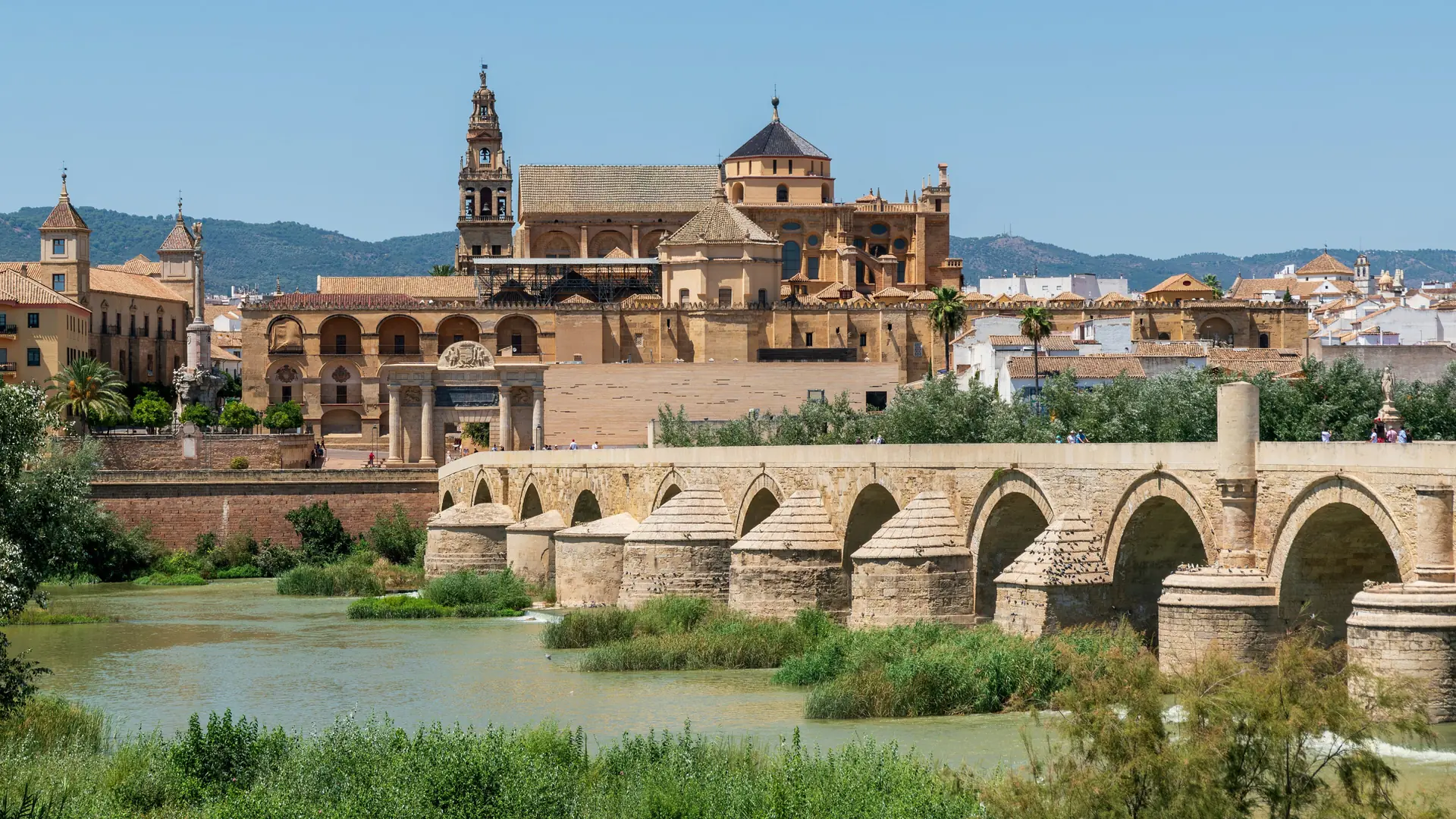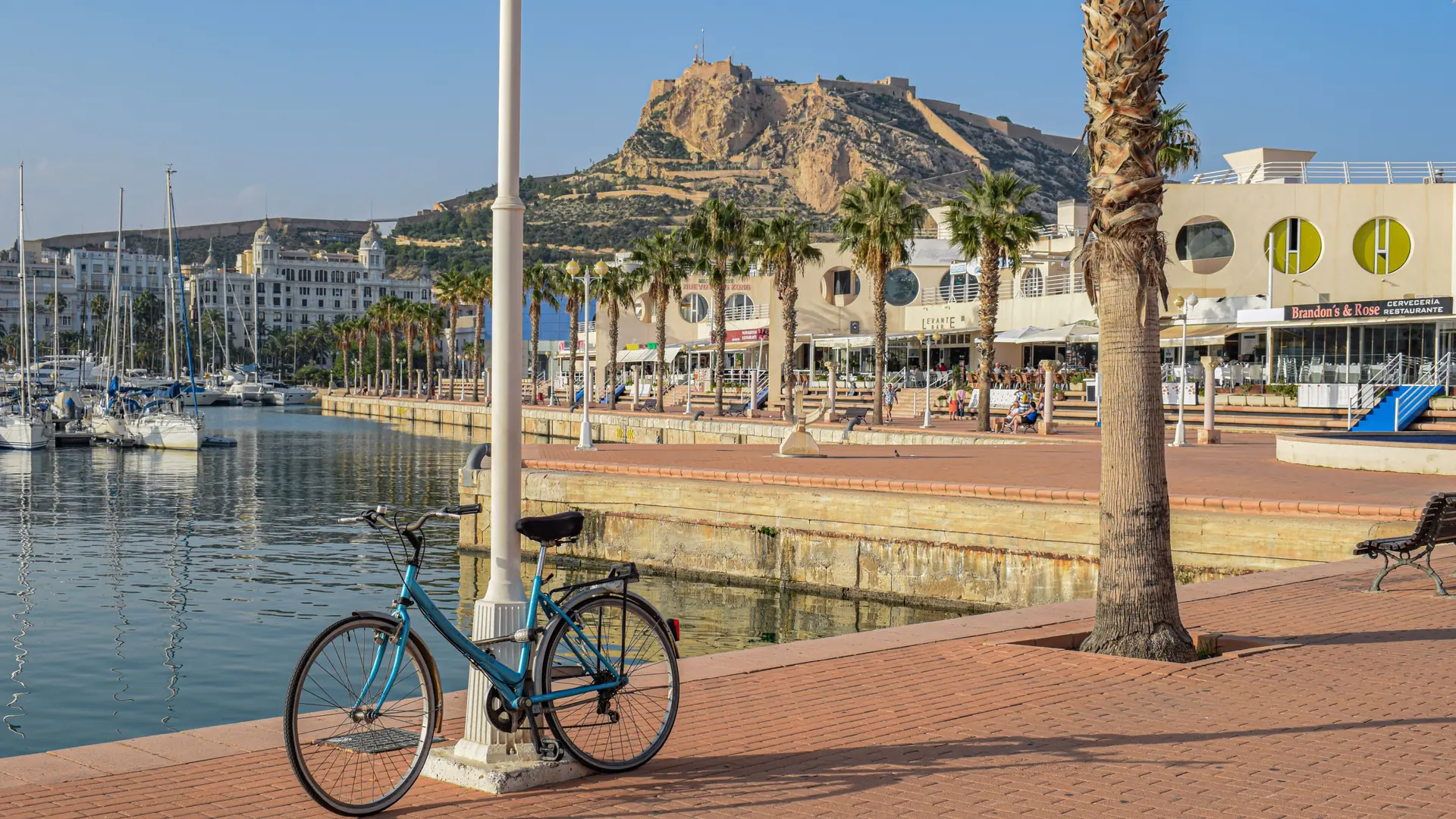
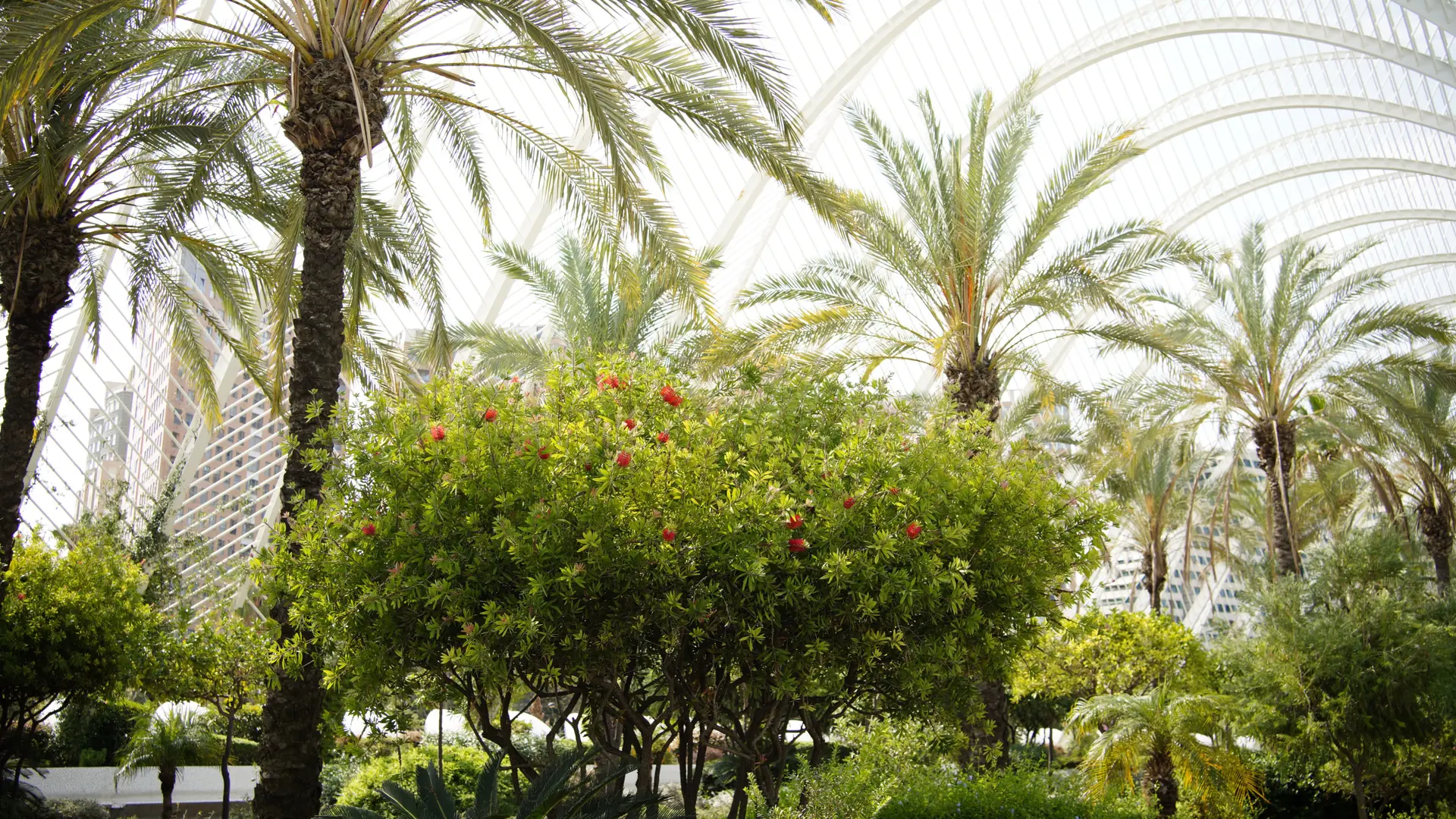
Palm trees and flowering shrubs beneath the white arches of Valencia’s Umbracle garden

Valencia: Market Mornings, Garden Walks and Days by the Sea

Loading Valencia hotel search

Six outings worth making space for

Valencia combines a substantial city centre with a separate Mediterranean waterfront. Its old streets are inland, so a beach afternoon belongs to a different part of the visit. The former Turia riverbed brings a green corridor through the city; bridges and paths help you understand how the neighbourhoods connect.

The centre tells its history through buildings of different ages: Roman and Muslim heritage sits alongside the Gothic Silk Exchange and later churches. Around the Eixample, modernist façades change the scale again. Those contrasts reward a walk with time to look, without turning every interesting exterior into another admission.

Food connects these settings with the surrounding countryside. La Huerta supplies vegetables for the markets, while the Albufera landscape is associated with rice. A slow rice lunch and an evening in a restaurant neighbourhood can be part of understanding Valencia. Give each outing its own part of the city, leaving a ride between distant places rather than making every meal or museum the next stop on one long walk.

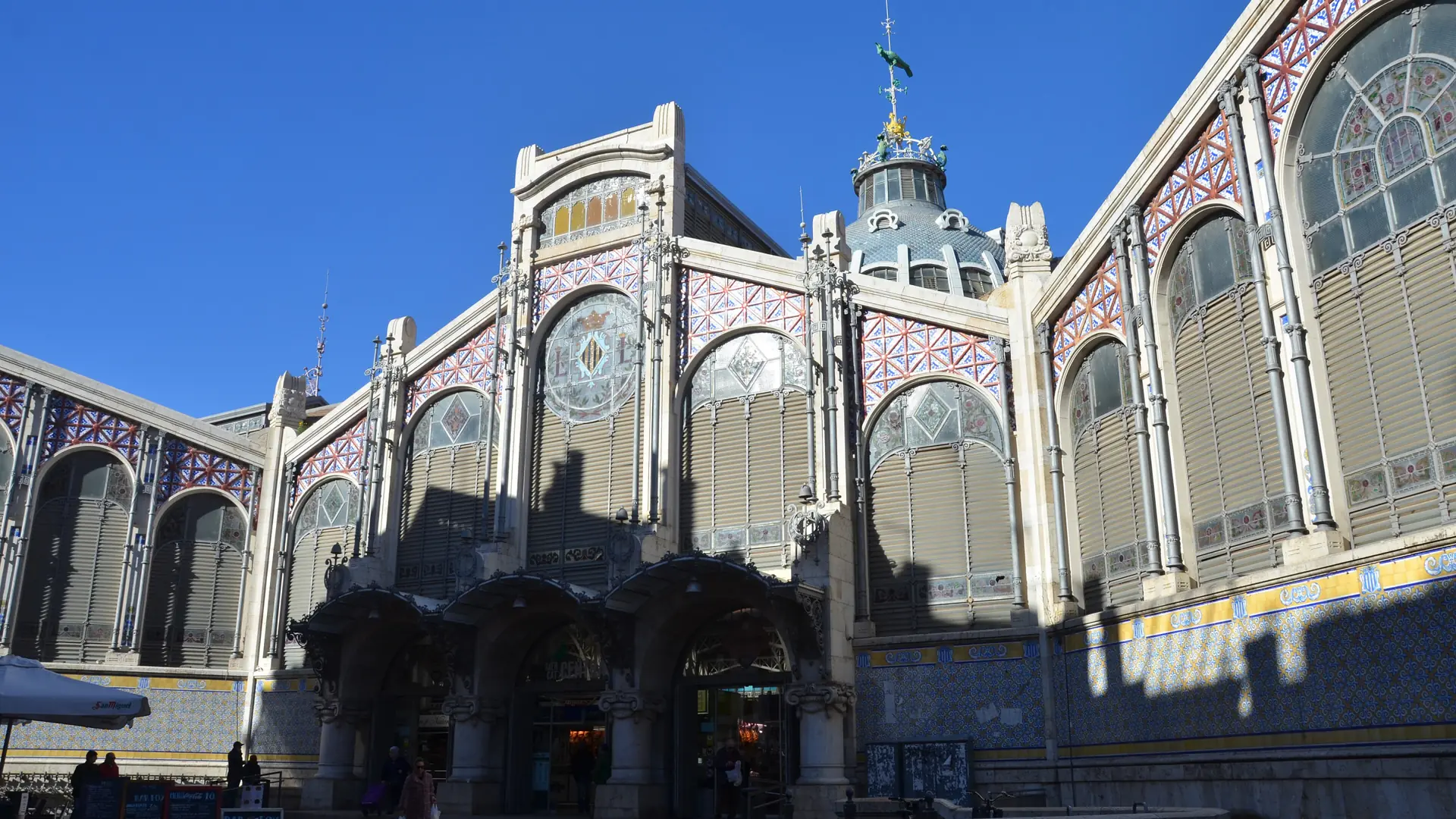
Modernist detail Mercado Central

Look above the produce stalls at the iron, glass and ceramic domes. Their decoration celebrates the surrounding agricultural landscape. The market’s entrances face several streets, so you can make a circuit rather than doubling back through the busiest doorway.

Paintings across the Turia Museo de Bellas Artes

The collection spans the fourteenth to twentieth centuries, with paintings, drawings, sculpture and decorative arts. Its catalogue includes Velázquez’s self-portrait, around 1650: notice the white collar against a dark background. Admission is free; check room and loan notices if one work is your reason to visit.

A garden inside the architecture Umbracle garden

Palms and flowering shrubs give the science complex a softer setting than its broad paved spaces and reflecting pools. The garden is a worthwhile outdoor companion to the buildings: you can appreciate the design without buying every venue’s admission.

A neighbourhood market Mercat de Russafa

The market’s coloured exterior is part of its appeal, but step inside to see the neighbourhood’s food shopping. Its building dates from 1962; the graded façade colours were added in 2010. Nearby cafés make a good continuation after shopping.

Maritime streets Tilework in El Cabanyal

Explore Sant Pere, La Reina and Escalante for the former fishing quarter’s low houses and tiled façades. Keep the walk separate from a beach session: the residential streets, sandy shore and marina have different characters, even when visited on the same afternoon.

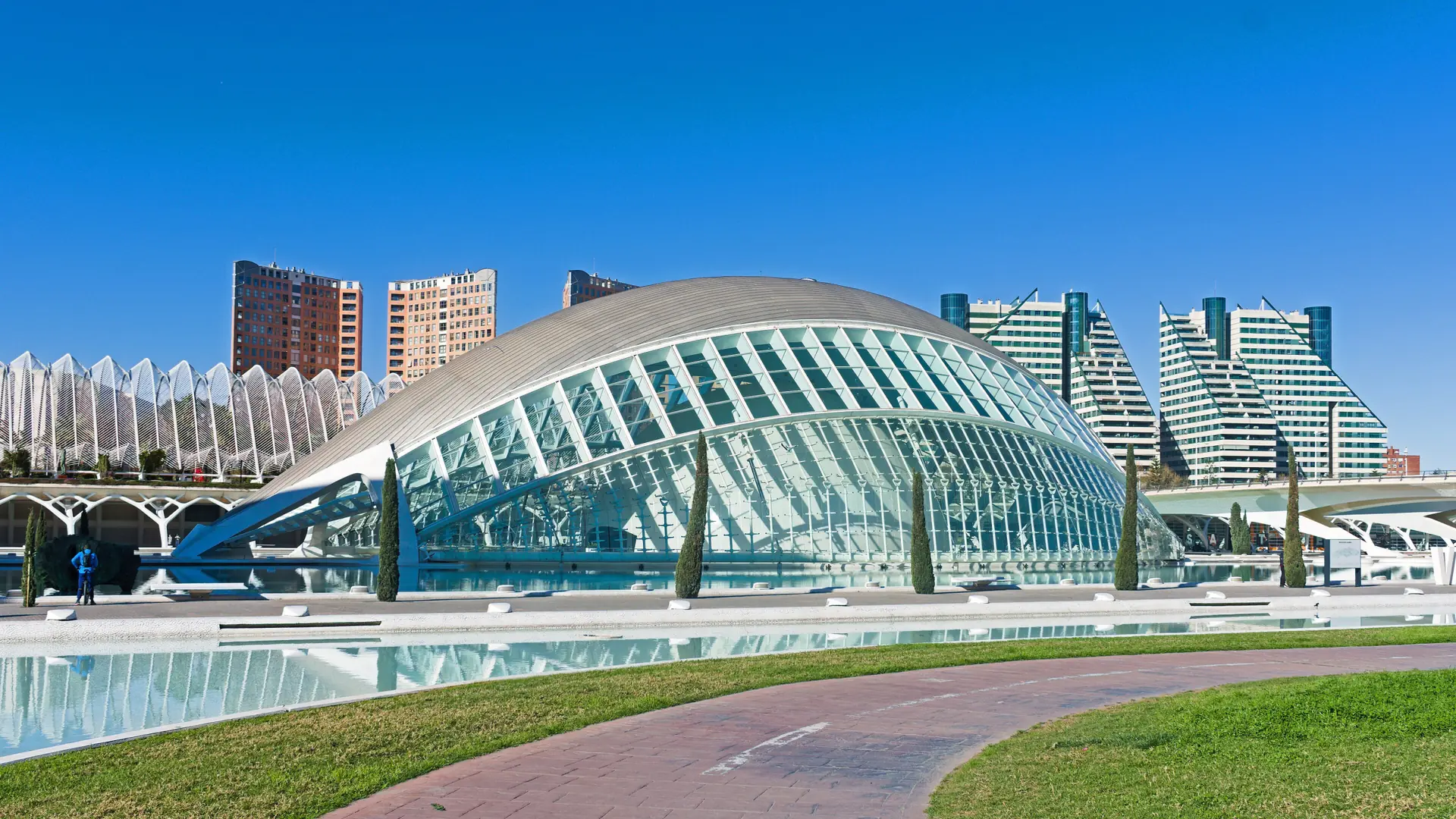
A film inside an eye Hemisfèric projections

Calatrava’s eye-shaped building was the first part of the complex to open, in 1998. The reflection in its surrounding water completes the form. Before your projection, step back beside the pool to see the building and its reflection together.

StartBooker answer

How should I plan a first Valencia weekend, and where should I stay?

Give Valencia two nights for a market morning, an afternoon at the science complex and time beside the Mediterranean. Ciutat Vella makes the historic sights easiest to reach; Ruzafa suits restaurant evenings, while El Cabanyal changes the focus towards maritime streets and the beach. A hotel by the City of Arts and Sciences works when its museums take up much of your visit. Start by choosing your base and one major outing, then fit the remaining stops around opening days and your airport journey.

A useful pace
Two nights, one full middle day
A city without a rental car
Walk locally, ride between areas
Where you spend the evening
Choose the room surroundings

Things to do in Valencia, Spain

Explore tours, attractions and local experiences in Valencia, Spain.

Loading activities…

Activities provided by GetYourGuide. We may earn a commission on bookings.

AI-powered

Make room for the Valencia you want to see

Tell the planner your arrival time, which science venues interest you and how much beach time you want. Include your departure day: a Sunday market visit and a morning Cathedral tour need a different plan.

Four room settings, from old lanes to the shore

Use these areas to narrow your search, then inspect the property itself. The useful address is the one that fits your walking range, luggage and preferred evening surroundings.

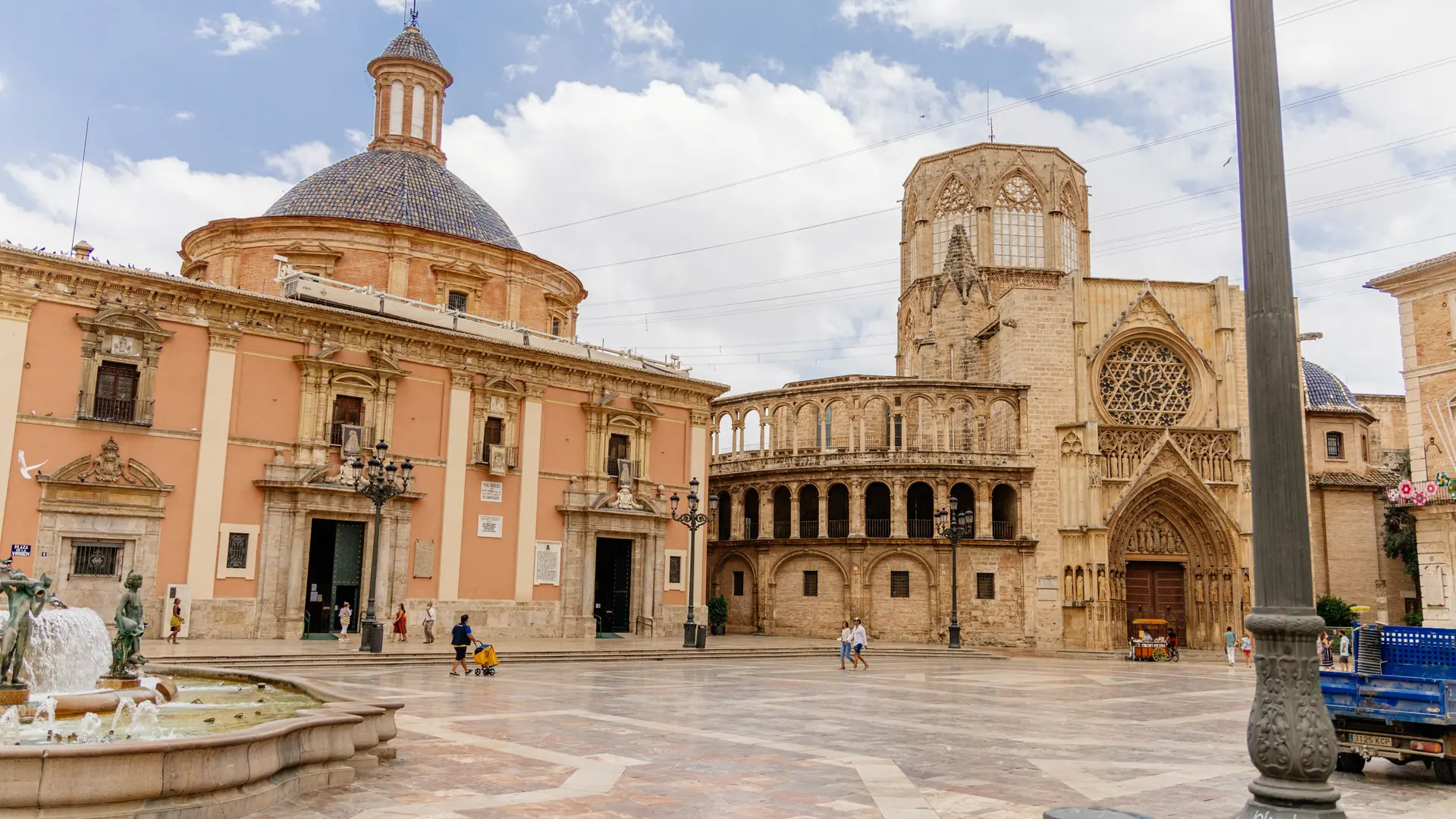
Basílica de los Desamparados and Valencia Cathedral on Plaza de la Virgen

Ciutat Vella

historic squares and short sightseeing walks

Ciutat Vella links the Cathedral quarter and Mercado Central’s Modernist architecture with La Lonja’s late Gothic trading hall. Its twisted stone columns and vaults reflect the wealth of Valencia’s fifteenth- and sixteenth-century merchants. Allow a separate interior visit if that architecture interests you.

Historic core Market nearby
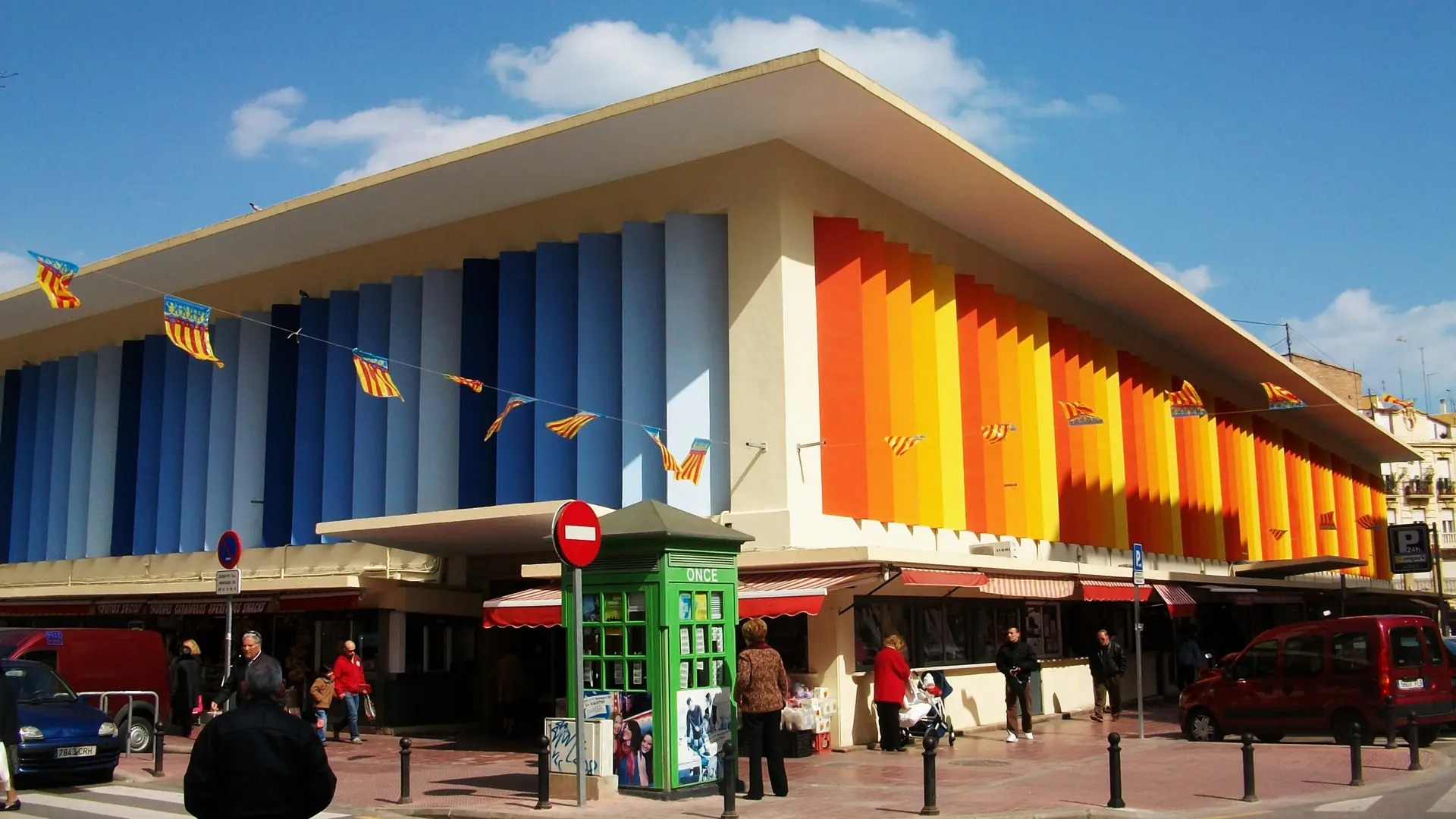
Colourful exterior of Mercat de Russafa

Ruzafa

cafés, shopping and restaurant evenings

Ruzafa’s market, creative venues and restaurant scene give this southern neighbourhood a reason to stay beyond the centre’s landmark checklist.

Cafés Local shopping
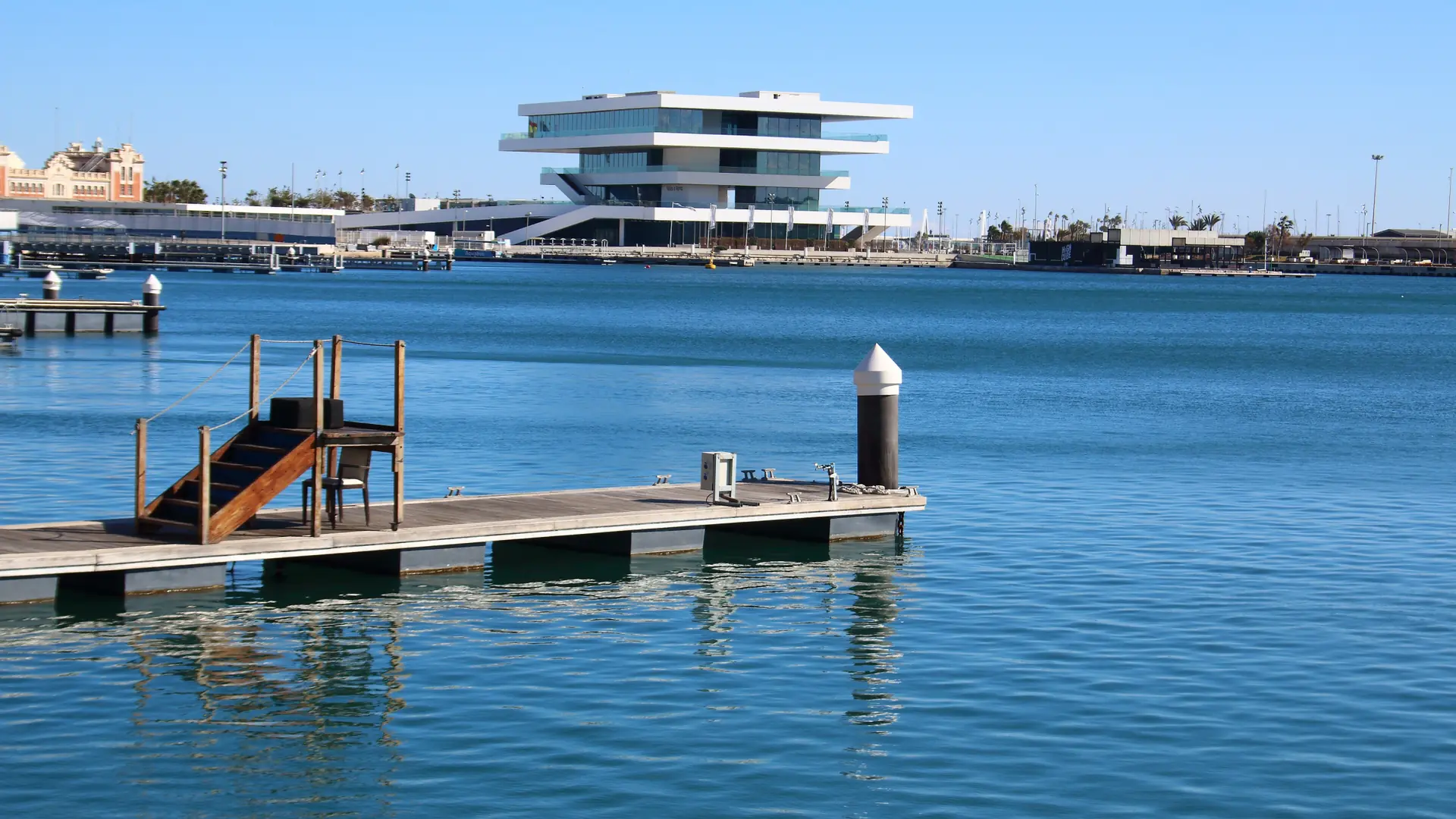
Veles e Vents at Valencia Marina, beside the maritime districts

El Cabanyal

maritime houses, produce shopping and the shore

The fishing quarter has a street grid and domestic tilework distinct from Valencia’s grand central squares, with cultural venues among residential streets.

Maritime quarter Shore access
Hemisfèric beside its reflecting pool at Valencia’s City of Arts and Sciences

City of Arts and Sciences

science venues and open modern architecture

The modern complex brings reflecting pools, gardens, an auditorium and separate science and marine-life venues into one spacious eastern-city setting.

Science venues Modern setting
How each area changes the journey
Area Useful for Features Getting around
Ciutat Vella

Seeing old-city architecture between nearby stops

Historic buildings can have narrow stairs or limited lift access.

Walk within the core; select a metro approach by the particular hotel address.
Ruzafa

Eating and shopping locally after sightseeing

Check the exact room’s exposure to nightlife.

Xàtiva and Alacant serve the wider central station area; allow the final walk.
El Cabanyal

Residential tilework and maritime outings

Repeated central visits take a cross-city journey.

Marítim is a useful approach to the maritime side; the shore is a separate walk.
City of Arts and Sciences

Spending longer inside the science venues

The grounds are spacious; nearby does not mean beside the entrance.

Line 10 connects the central Alacant side to the complex; inspect your venue stop.

Four ways to spend the visit

These outings make different demands on your time. Choose the combination that excites you; you do not need to collect every neighbourhood or buy admission to every building.

A Friday–Sunday historic weekend

Friday: settle in and explore central squares. Saturday: Mercado Central, the Cathedral and old streets. On Sunday, cross the Turia for paintings if departure allows; the main historic outing is already complete.

A slow meal and a Ruzafa evening

Reserve a seafront rice lunch and keep the following afternoon flexible. Return to Ruzafa for shops or a cultural programme; avoid a projection booking that forces you to hurry across town.

A maritime afternoon beyond the sand

Walk the fishing quarter’s tiled streets, then choose beach time or a dated programme at Teatre El Musical or La Fábrica de Hielo. The marina adds modern architecture and water views to the same outing.

Science with time to use the exhibits

Choose the Museu (about three hours) or Oceanogràfic (about four) as the main visit, with time for lunch and any film. If all three venues matter, spread the complex over two days rather than rush each ticket.

Search Valencia hotels

Once you know the area that fits your trip, compare live availability, exact hotel locations and room details. Editorial advice is separate from provider prices and availability.

Search Valencia hotels →
Loading Valencia hotel results

From the airport to the right part of Valencia

The airport connection is only the first part of arrival. Keep your hotel address and its check-in instructions available, including the entrance and any luggage storage arrangements if the room is not yet ready.

Airport arrival

Lines 3 and 5 leave from the terminal

Aena places the metro station on the ground floor of the regional-flight terminal. Line 3 runs towards Rafelbunyol through central Valencia; Line 5 runs towards Marítim on the maritime side. Match your destination to the train before boarding, particularly if you are continuing beyond the centre. The airport’s departures timetable describes trains leaving the airport, not the first service that can get you there for an early flight.

A late landing changes the comparison

For a daytime arrival, a suitable metro stop can make the journey straightforward. After a late flight, check whether a service remains once baggage collection is finished. The airport has an official taxi rank; use the published fare information rather than assuming a flat city price. With a group or cumbersome luggage, compare the whole journey and final walk, including whether a vehicle can reach the hotel door.

Three useful connections

Xàtiva now connects to Alacant on foot

The underground pedestrian link opened in December 2025. Generalitat describes it as roughly three minutes between Xàtiva and Alacant, providing an easier connection from Lines 3, 5 and 9 to the Line 10 side. Follow the station signs for the indoor connection if you want to avoid surfacing with bags. Line 10 is useful for the science complex, but choose the stop for your particular building.

Choose a section of the Turia

The former riverbed is a nine-kilometre garden, not a single short stroll between every attraction. Start near a place you already intend to visit and choose a manageable section. A short walk with time to sit can be more enjoyable than committing to its entire length; use a ride to join distant outings when walking that far would consume your day.

Keep the maritime stops in one outing

El Cabanyal’s residential streets, market, shore and marina can share an afternoon, but they are not interchangeable addresses. Save their locations before leaving the centre and plan the return from your final stop. If dinner takes you back inland, check the available connection at the time you expect to finish, as the available services can differ later in the day.

Visitor-card timing and collection

Price the benefits you will actually use

The adult Valencia Tourist Card currently costs €17 (≈ US$19) for 24 hours, €24 (≈ US$27) for 48 and €30 (≈ US$34) for 72; the official online prices are €15.30 (≈ US$17), €21.60 (≈ US$24) and €27 (≈ US$30). Validity starts with first use and runs in hours. The transport-inclusive card covers the airport connection and municipal museum admission, while the science venues and Cathedral offer discounts rather than general free entry. Compare those benefits with the separate SUMA example in the budget.

Collect the card before the journey it must pay for

The airport arrivals collection kiosk operates around the clock. Hotel delivery is different: the official shop gives a 10:00–11:00 delivery window on your selected day, so that card cannot cover the preceding ride from the airport. Order a collection arrangement that fits arrival and keep the confirmation accessible. For a discounted attraction bought with the card, follow the shop’s same-purchase procedure rather than expecting every discount to appear automatically later.

Plan the whole accessible visit

Ask for the service you need, at the venue you chose

The science complex reports lifts and adapted toilets. It lends wheelchairs on a first-come basis, with identification and a deposit: €20 (≈ US$22) at the Museu and €10 (≈ US$11) at the Oceanogràfic; these are loans within the venue, not transport to your hotel. Confirm availability and the entrance you will use. For accommodation, ask separately about the threshold, lift dimensions and bathroom layout. Flat city geography cannot settle any of those building-specific questions.

What the tickets and calendar mean for your visit

Transport, attraction and menu prices were checked on 19 October 2026. The room figure is a historical benchmark. Indicative USD uses the ECB rate of 1 EUR = US$1.1225 on that date, rounded; card and cash rates differ.

Weather and opening days

Use city climate normals for context
  • AEMET’s València station sits at 13 metres, and its published 1981–2010 normals show July average daily highs of 29.7°C, lows of 21.5°C and 8 mm of monthly rain. October’s corresponding figures are 24.3°C, 15.2°C and 77 mm. These historical observations describe the city station, not a forecast or a guarantee about swimming conditions. Choose your outdoor hours using the near-date weather and keep a changeable plan for the shore.

  • An art museum has its own weekly rhythm

    Museo de Bellas Artes normally opens Tuesday–Sunday, 10:00–20:00, and closes on Mondays, 1 January and 25 December. The Ministry’s listing also records adapted toilets, a cloakroom and wheelchair loans. It can make a rewarding art afternoon when outdoor plans change, but do not reserve it for a Monday merely because another museum opens that day. Ask about current notices before a visit built around a particular work or room.

  • Check the Cathedral’s cultural calendar

    Standard cultural admission is €12 (≈ US$13) and includes the Cathedral museum and an audioguide; Miguelete is a separate €3 (≈ US$3.37) entry. From October through June, weekday cultural visits run 10:30–18:30, Saturday to 17:30 and Sunday 14:00–17:30, with last entry an hour before closing. There is no cultural visit on 9 October and other specified religious or public holidays. Worship access has a different purpose and timetable; it should not appear as a free substitute for the full museum visit.

A budget with identifiable parts

A two-night autumn budget for two
  • Two adults sharing a double for three days/two nights: €290 (≈ US$326) rooms, €300 (≈ US$337) food, €13.70 (≈ US$15) SUMA travel/card, €28.20 (≈ US$32) for two Museu–Hemisfèric tickets, €24 (≈ US$27) for two Cathedral entries and €30 (≈ US$34) reserve: €685.90 (≈ US$770), rounded to €690 (≈ US$775). Food and reserve are allowances. Excludes Oceanogràfic, Miguelete, taxis, flights, intercity travel, insurance and shopping.

  • Room context and the shared transport card

    València’s October 2025 INE average of €131.26 (≈ US$147) per room-night gives €288.77 (≈ US$324) for two nights with 10% hotel VAT. This historical city-wide room-only benchmark implies no current offer, breakfast or cancellation terms; use your actual room total. SUMA costs €12.60 (≈ US$14) for ten AB+ journeys plus a €1.10 (≈ US$1.23) cardboard card: four airport and six city person-journeys within its zones. The discounted fare applies through 31 December 2026.

  • Rice portions, minimum spend and daily food allowance

    La Pepica’s September 2026 menu lists Valencian paella at €17.90 (≈ US$20) per portion, with at least two portions and €30 (≈ US$34) minimum consumption per diner. Two portions cost €35.80 (≈ US$40), but two diners must spend at least €60 (≈ US$67) overall; drinks and extra dishes affect the bill. The chosen €300 (≈ US$337) food allowance is €50 (≈ US$56) per adult daily for three days, including breakfasts and ordinary drinks. Menu checked 19 October 2026; compare the actual portions and final bill.

Does the seven-day Valencia Tourist Card include transport?

No. The seven-day version is a different product from the 24-, 48- and 72-hour transport-inclusive cards. It includes the Cathedral and IVAM as well as municipal venues, and its validity is seven calendar days from first use. That may suit a longer cultural stay, but it will not pay for the airport or city rides. Identify the product by its transport inclusion and duration before comparing prices.

Can two adults share one SUMA 10 package?

Yes, provided they travel together: the authority permits simultaneous group use by up to 15 people until they leave the operator’s premises. Each traveller uses a journey from the shared ten-journey balance. Within the valid zones, a journey includes one eligible transfer in the same direction; the two-zone allowance is 110 minutes from first validation. The personal monthly product has different rules and is not a substitute shared card.

Where can I leave a small bag at the science complex?

The Museu’s free lockers are on the first floor, with listed sizes of 36 × 40 × 50 cm or 72 × 40 × 50 cm. Oceanogràfic has paid lockers on the lower level of its entrance building: €3 (≈ US$3.37), €4 (≈ US$4.49) or €5 (≈ US$5.61) per day according to size, payable by card, with no advance reservation. Check your bag against the dimensions and available space; these facilities do not establish guaranteed storage for every suitcase before a hotel check-in.

Is there a smaller market outing by the maritime quarter?

Mercado del Cabanyal is at Carrer de Martí Grajales 4. Its vendors’ association publishes Monday–Saturday hours of 07:00–14:30; plan shopping before that cutoff, despite the later closing time in tourism listings. It is closed Sunday. Its Tira de Contar brings farmers’ direct sales to the exterior on Thursday–Saturday, 08:00–14:00. That creates a different reason to visit from seeing Central Market’s dome: look for local produce and the fishing quarter’s food shopping, then continue through the surrounding streets.

Can we order two different small paellas at La Pepica?

Valencian paella combines rice with chicken, rabbit and local beans. La Pepica’s menu also lists rosemary and green beans. It requires at least two portions of rice and one type per table of two to six diners; a solo diner cannot order a one-person paella. Preparation takes around 45 minutes and can exceed an hour during service, so allow time and ask about availability when reserving. These are this restaurant’s ordering rules; another kitchen may use different arrangements.

Is the Miguelete visit included in Cathedral admission?

No: it has its own ticket, separate from cultural Cathedral-and-museum admission. The tower’s published hours are 10:00–18:45, with last entry half an hour before closing, and a maximum of 50 people on the terrace. Check notices before planning the climb. You can see the church’s interior and museum without adding the viewpoint to your day.

When can I shop inside Mercado Central?

Mercado Central opens Monday–Saturday, 07:30–15:00; Sunday needs a different outing. The physical market does not share its online shop’s round-the-clock availability. Its fish hall is a distinct section and meat stalls sit around the perimeter. Leave space for vendors to serve customers, buy something you want to try and look at the dome between stops, rather than blocking a narrow aisle for photographs.

Which tickets cover the City of Arts and Sciences venues?

Ordinary 2026 adult admission is €9.90 (≈ US$11) for the Museu and €8.90 (≈ US$10) for Hemisfèric, or €14.10 (≈ US$16) combined. Oceanogràfic is separate, with published general rates of €37 (≈ US$42), €39.45 (≈ US$44) or €43.05 (≈ US$48) by season; select your date to identify the category. Promotions and tourist-card discounts have their own conditions. The weekend budget uses two standard Museu–Hemisfèric tickets without assuming a tourist card or aquarium admission.

How this guide was researched

Reviewed by StartBooker editorial review Travel guide research and self-review

Last reviewed 2026-10-19

Updated

Editorial method: Editorial self-review checked operator fares, attraction and restaurant rules, and the weekend budget. Heritage, museum and regional food sources support the added local context. The historical room benchmark and unchanged research keep their earlier source dates. Indicative USD uses a dated ECB rate. Existing photographs and credits are preserved.

36 sources reviewed

Primary sources
  • Visit València
  • Ciutat de les Arts i les Ciències
  • Mercat Central de València
  • Valencia Cathedral
  • Spanish Ministry of Culture
  • La Pepica
References
Photo credits

Some photos provided by Pexels.

Report the Valencia trade-off your booking revealed