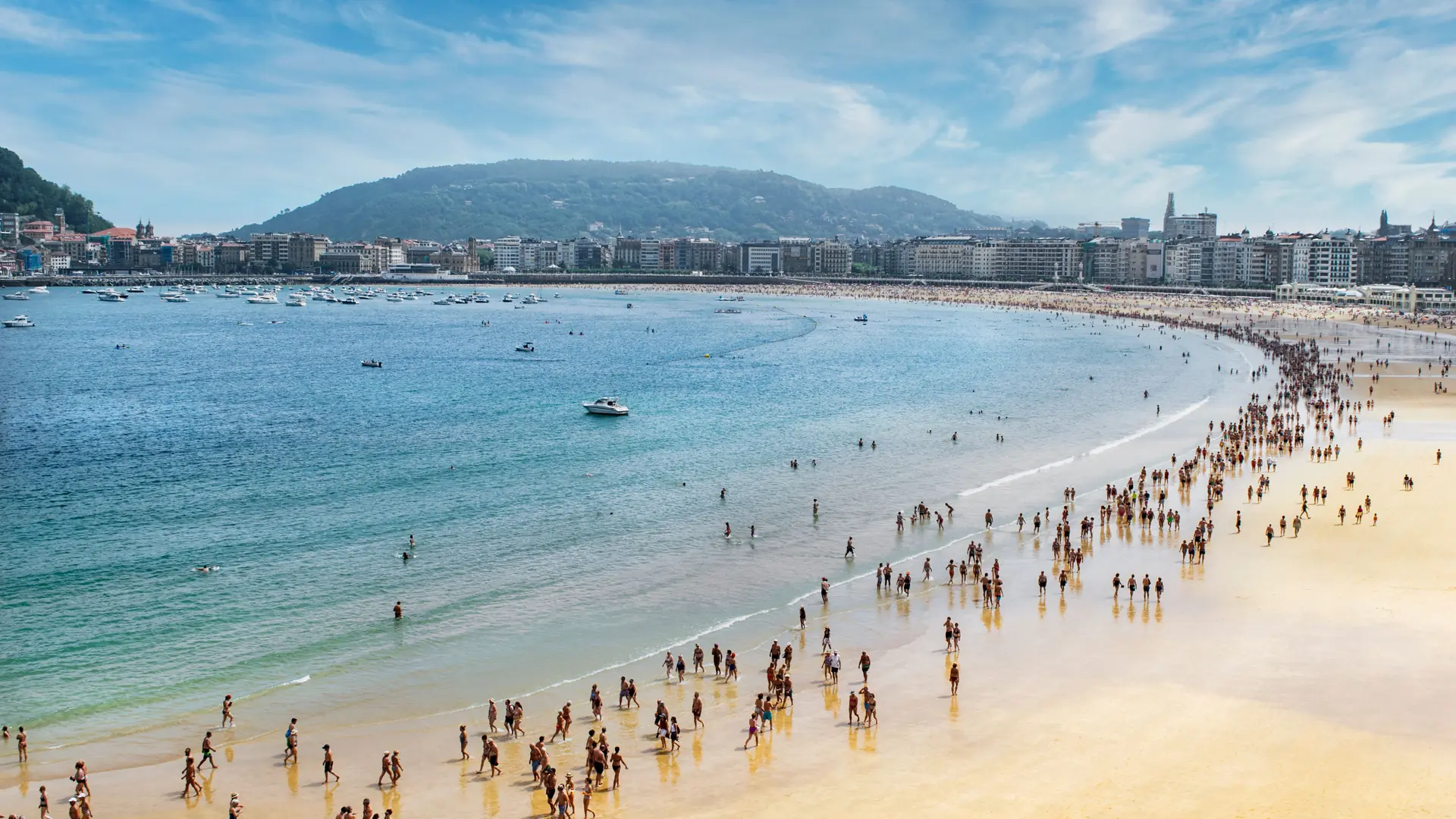
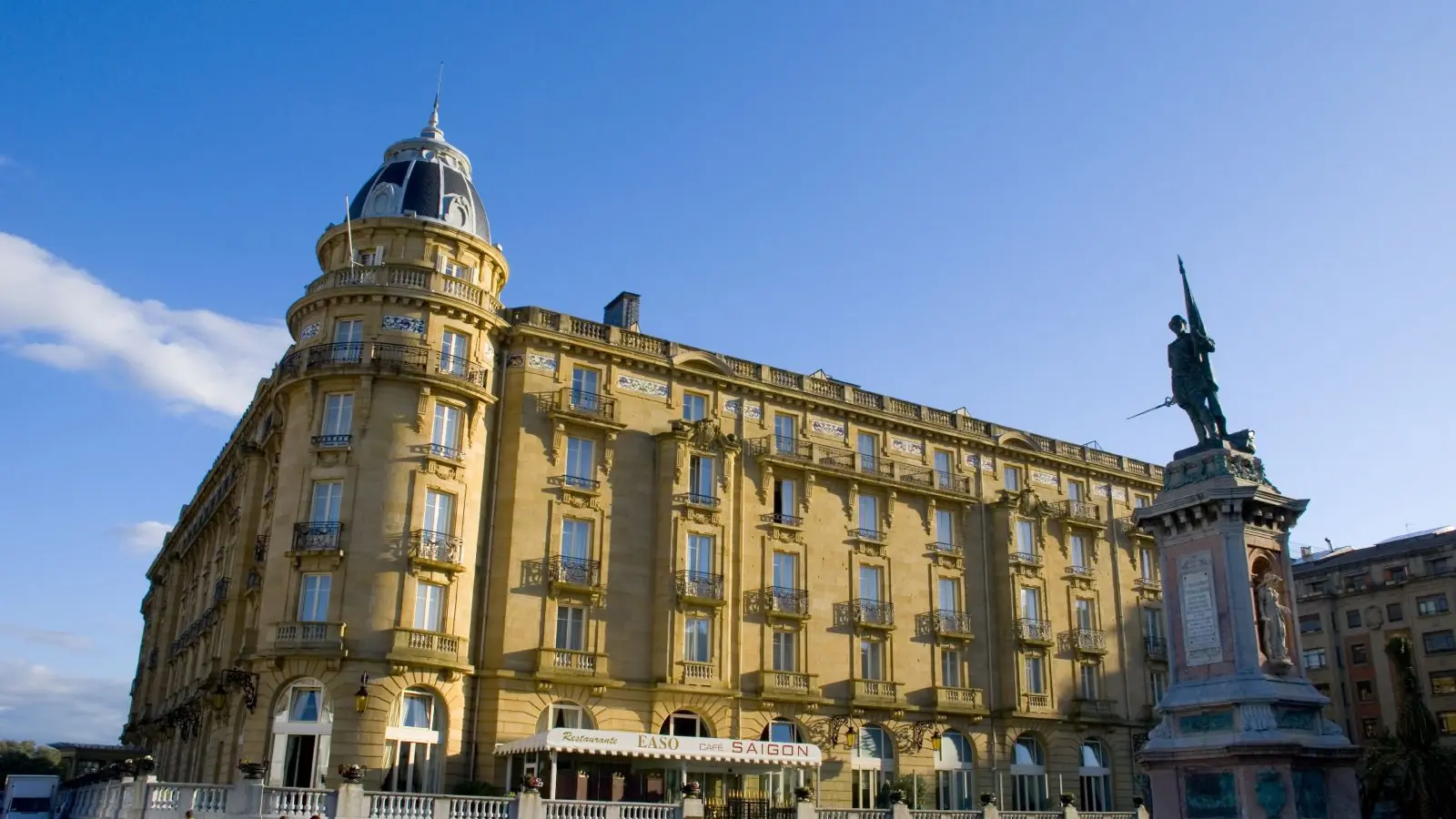
La Concha’s curving beach, blue bay and waterfront buildings in San Sebastián

San Sebastián: a walk around the bay, then pintxos

Loading San Sebastián hotel search

Make room for the city beyond its beach photograph

A walk through Donostia reveals two urban histories before you enter a museum. Parte Vieja occupies the old walled quarter at the foot of Urgull. Centro’s Romantic Area developed after the walls were removed, giving its larger buildings and shopping streets a different scale from the older lanes.

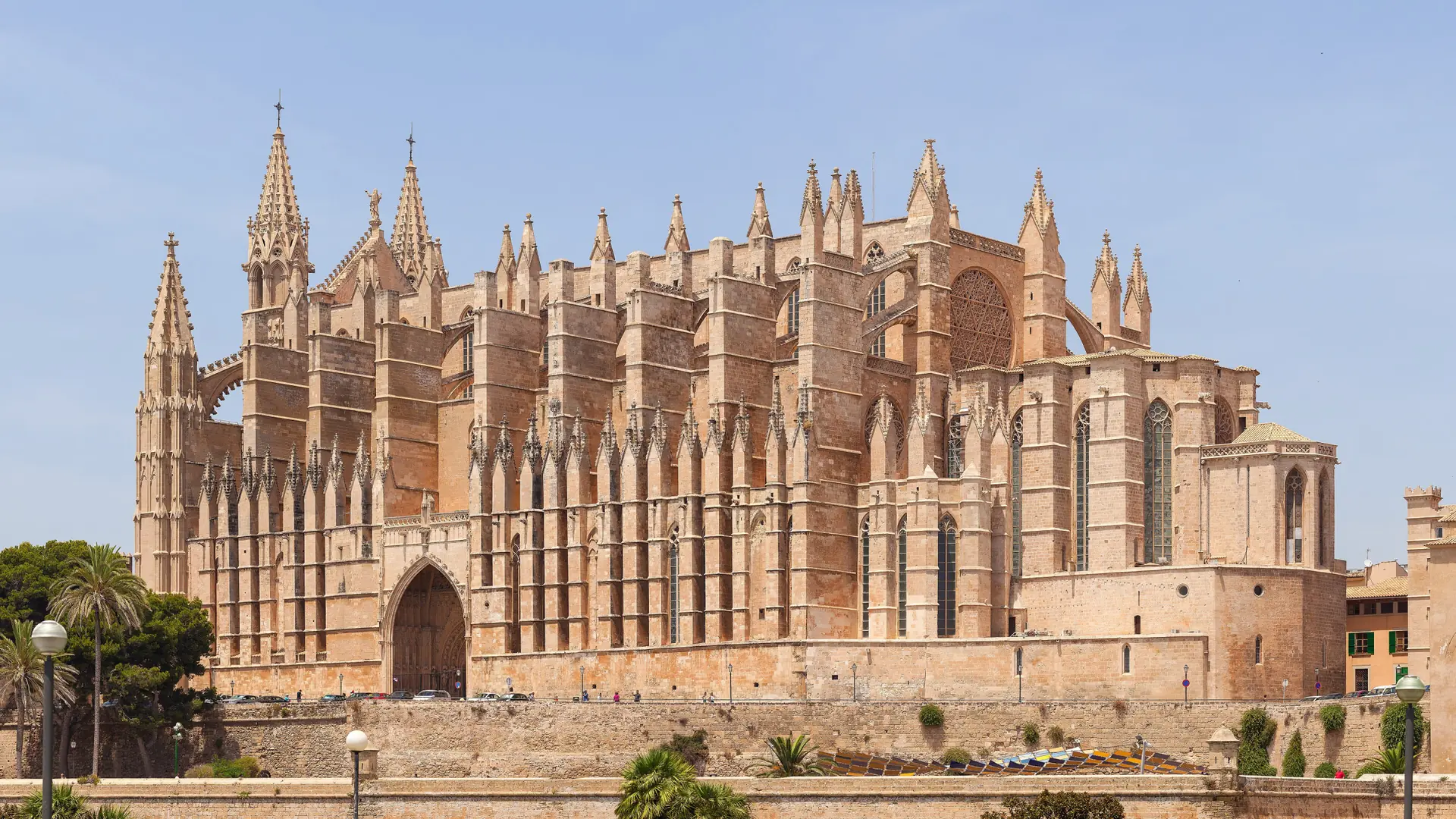
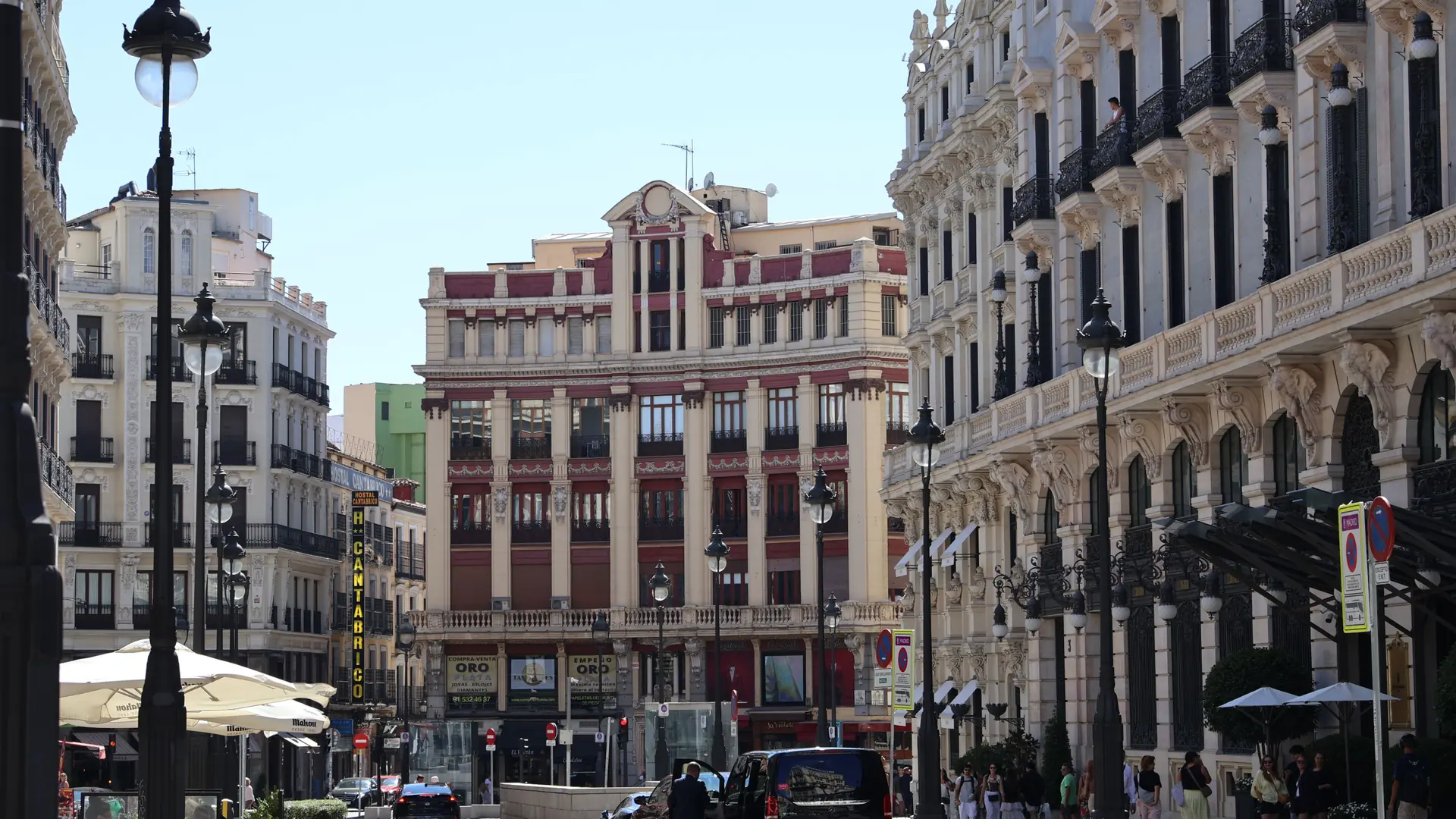
Look at the French-influenced façades around the City Hall, Victoria Eugenia Theatre and Hotel María Cristina, then compare the neo-Gothic Buen Pastor cathedral. These buildings offer a way to explore the city’s architectural character through an exterior walk, with a different focus from climbing to a bay viewpoint.

Urbieta, Getaria and Fuenterrabía give a shopping outing its own circuit, with local boutiques alongside international brands. Choose a few streets when browsing is part of the visit, instead of treating the shops as something to rush past between monuments. The Boulevard links this part of Centro with Parte Vieja, so you can change from a shopping walk to the older quarter without making every stop another beach crossing.

A BEACH INSIDE THE CITY La Concha city beach

Walk part of La Concha’s curving promenade to see how the city sits around the bay. You can enjoy the waterfront without swimming; at high tide, choose the land route rather than relying on the sand.

BASQUE HISTORY IN AN OLD CONVENT San Telmo Museoa

José María Sert’s A People of Fishermen shows a whale hauled up a ramp. Metallic backgrounds link his church canvases on Gipuzkoa’s history. Check the church’s separate closures before visiting.

SMALL ORDERS AND DIFFERENT COUNTERS Parte Vieja pintxos

A Gilda combines an olive, anchovy and pickled green pepper on a skewer. Try its salty, sharp flavours in one bite, then ask for a hot pintxo from the board to compare with the cold counter selection.

TWO CUBES AT THE RIVER MOUTH The Kursaal and Zurriola Bridge

Rafael Moneo’s two Kursaal cubes stand by the river mouth, beside Zurriola Bridge’s Art Deco lamps. Make an exterior architecture walk here before exploring Gros’s cafés and pedestrian streets.

A LAWN BETWEEN TWO BEACHES Miramar gardens

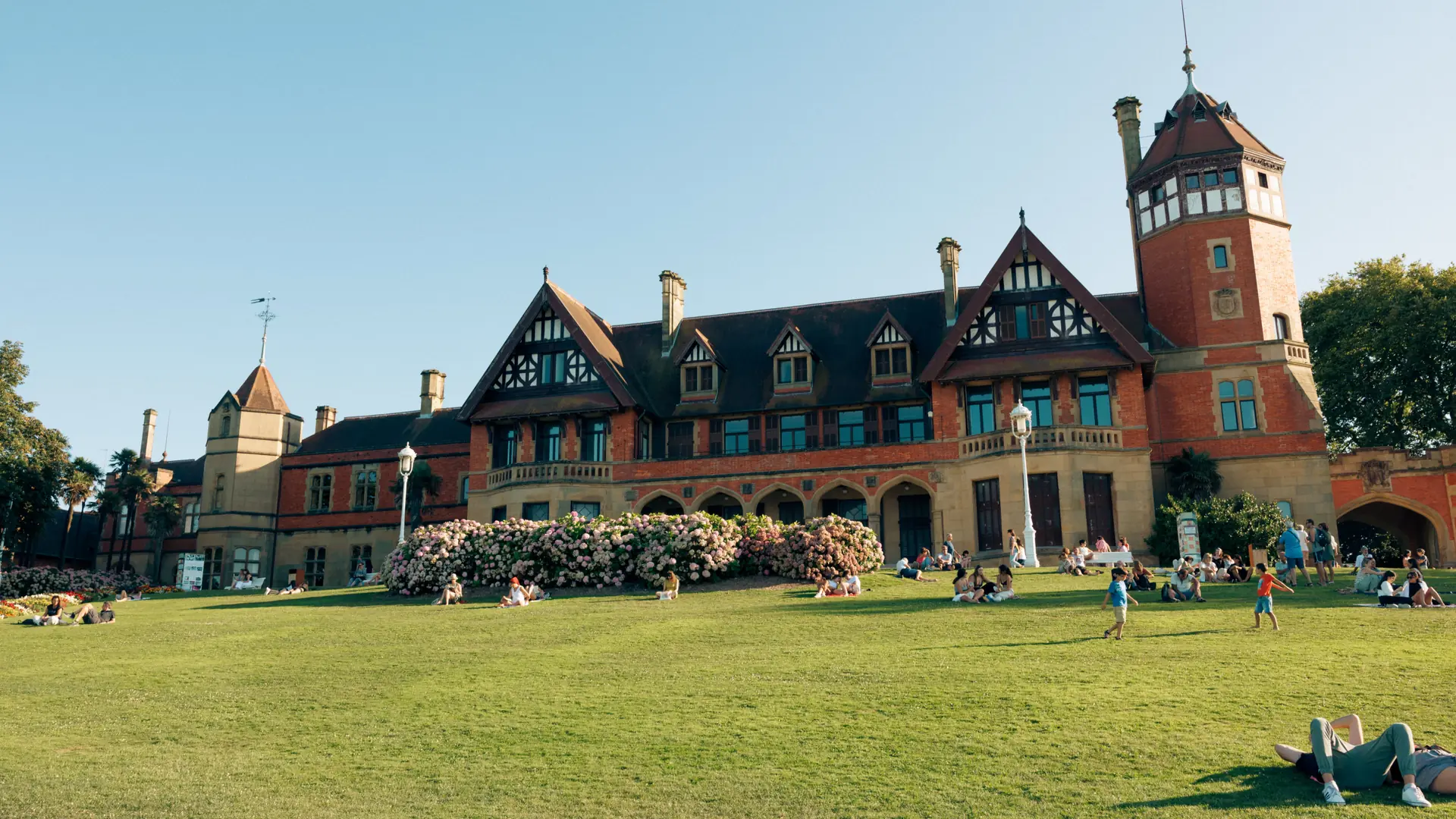
Miramar’s red palace and English-inspired forms overlook the meeting of La Concha and Ondarreta. Use the gardens for a bench pause during a western-shore outing, with the bay below.

AN OLD FUNICULAR AND A HIGHER VIEW Monte Igeldo funicular

The historic funicular makes the ascent part of an Igeldo outing. At the top, enjoy the shoreline view before choosing individual rides; a viewpoint visit and an afternoon of attractions need different time.

StartBooker answer

Where should I stay for a first San Sebastián weekend?

Start with Centro for a first weekend that combines La Concha with the old town and a visit across the river. Gros suits a trip organised around Zurriola, while Parte Vieja puts the food circuit closest to your room. Antiguo gives you a western base beside Ondarreta. Choose the address after deciding what each day contains: a museum morning, an evening of pintxos or time with a surfboard. Then compare the actual bedroom, its entrance and your arrival route, rather than buying a district name alone.

AIRPORT CONNECTION
BI01 links the airport with Donostia’s bus station from October 2026.
RAIL ARRIVAL
Renfe Donostia and Euskotren Amara are different stations.
CITY BEACHES
La Concha, Zurriola and Ondarreta offer distinct shore settings.

Things to do in San Sebastián, Spain

Explore tours, attractions and local experiences in San Sebastián, Spain.

Loading activities…

Activities provided by GetYourGuide. We may earn a commission on bookings.

AI-powered

Arrange your Donostia days around the time you have

Give the planner your arrival station or airport, the visits you want and your departure time. Add walking limits, children’s ages or a surfboard, then ask for a sequence that leaves room for meals and a change of weather.

The setting immediately outside your hotel

Use the cards for the local setting, then the table for journeys beyond it. District names are useful shorthand, but the actual entrance is the point from which your day begins. Check it against the shore, the river crossing or the street where you expect to eat.

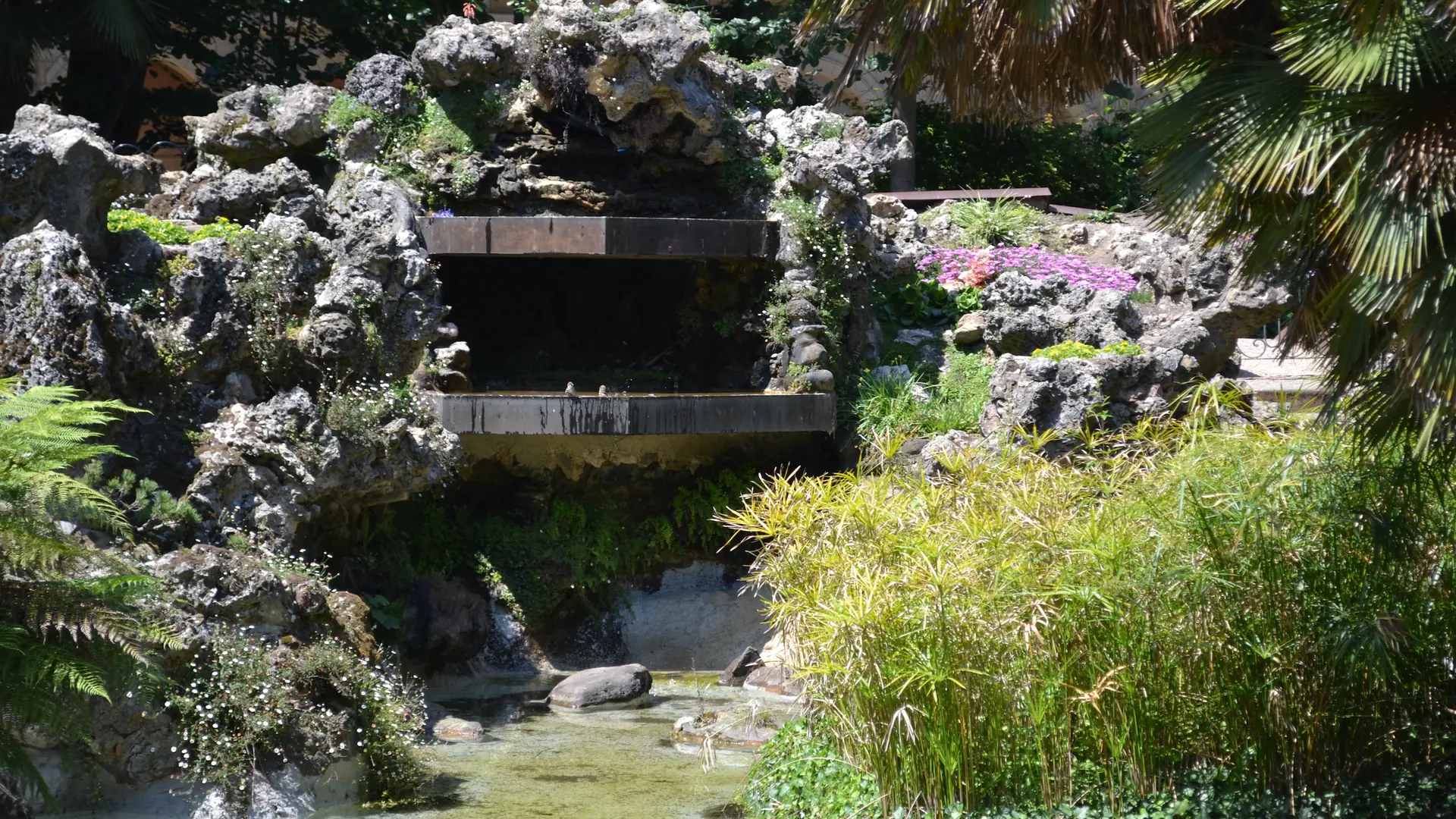
Sunlit plants, a stone cascade and the pond in Plaza Gipuzkoa gardens, Centro, San Sebastián

Centro

a city visit with shops and cultural stops

Plaza Gipuzkoa gives the centre a garden setting within a porticoed square. Its pond, planting and cascade offer a pause away from the shoreline, while the surrounding streets keep shopping and everyday errands close. Choose the part of Centro that places those small stops naturally into your day.

Neighbourhood stay Walkable
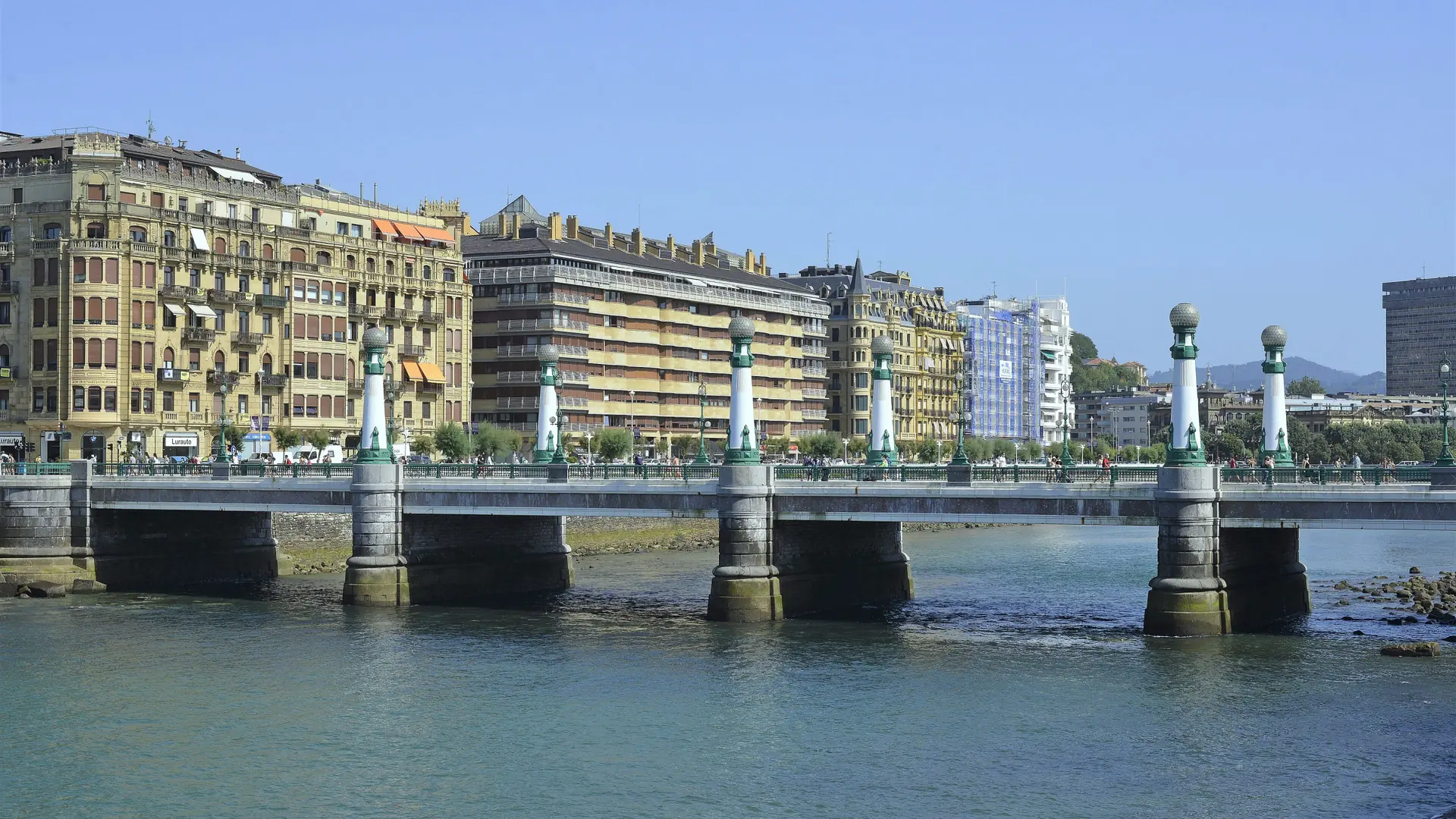
Zurriola Bridge’s green-and-white Art Deco lamps and stone piers across the Urumea in San Sebastián

Gros

Zurriola, pedestrian streets and a surf routine

Gros has useful differences within a compact area. Peña y Goñi and Zabaleta have pedestrian streets and food stops; Plaza Cataluña provides a tree-lined meeting point. At the eastern end, Sagüés sits below Mount Ulia. A room near the river and one near the far end of the beach create different journeys even though both are described as Gros.

Neighbourhood stay Walkable
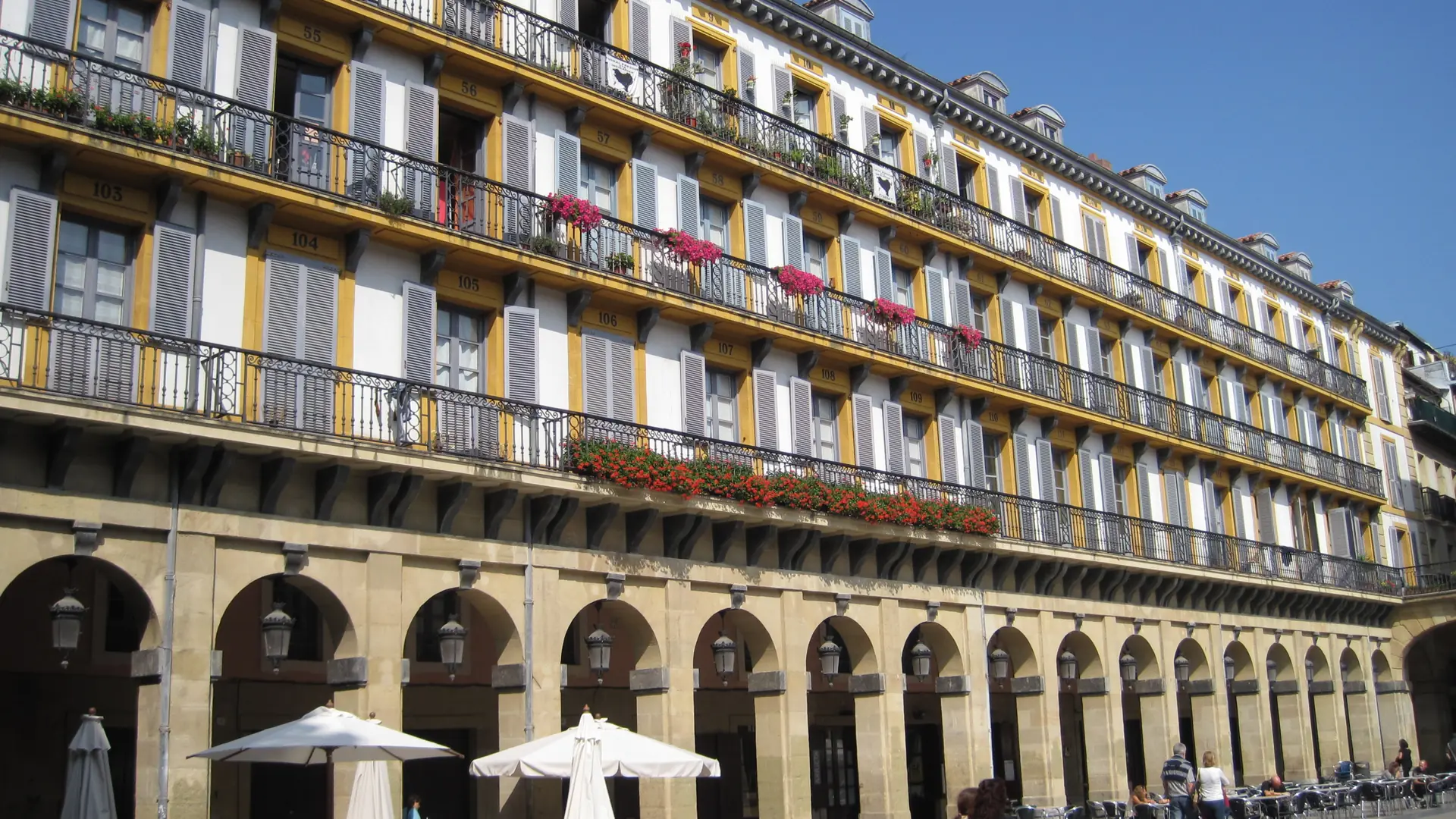
Numbered yellow balcony openings, grey shutters and stone arcades in Plaza de la Constitución

Parte Vieja

a short stay among historic streets and food stops

Plaza de la Constitución, San Vicente and Santa María give the old town a clear architectural structure beyond the bar circuit. You can make an afternoon around those places and return to a familiar set of streets for dinner. The numbered balconies around the main square are an especially useful detail to look for when exploring with children.

Neighbourhood stay Walkable
Miramar Palace’s red brick, timbered gables and tower above its sunlit lawn in San Sebastián

Antiguo

Ondarreta and outings on the western shore

Matia, Avenida de Tolosa and Benta Berri give Antiguo an everyday neighbourhood life alongside its beach setting. Ondarreta and the approach towards Peine del Viento make the west useful for a self-contained outing. Look closely at the property’s position on a map: a coastal district can include an address that is substantially uphill from the sand.

Neighbourhood stay Walkable
Read the map before choosing the address
Area Useful for Features Getting around
Centro

Plaza Gipuzkoa, shopping streets and mixed city visits

Bay frontage and river-side addresses place you at different edges.

Boulevard is the edge towards Parte Vieja; the Urumea crossings lead towards Gros.
Gros

Peña y Goñi, Plaza Cataluña and the Zurriola side

A far-eastern address adds ground before western shore outings.

The Zurriola/Kursaal bridge joins the river-mouth end with the centre and old-town side.
Parte Vieja

Historic squares, San Vicente and the port approach

A vehicle may leave you outside the pedestrian lanes.

Measure the final walk from the agreed drop point, including paving.
Antiguo

Matia and an Ondarreta-to-Igeldo outing

An inland or hillside address can change a beach-led plan.

Compare the walking gradient with a Dbus connection for your destination.

Four ways to use a short Donostia stay

Build a stay around an actual sequence, with one fixed visit and some time left open. These scenarios show how the same city can work for a weekend, a surf-led trip, a food evening or a slower western break. Adjust them to your transport and opening calendar.

Friday arrival, a museum Saturday and a port Sunday

Friday: check in and walk locally. Saturday: San Telmo, lunch and old-town architecture or food. On Sunday, choose the Aquarium only if departure allows time for the visit and luggage collection.

A Gros stay with separate plans for each adult

Arrange surf hire or instruction, meeting point and the operator’s weather decision. A companion can explore Gros or visit across the river; meet for lunch and keep the later outing shared.

One night for an afternoon and an evening of food

Leave bags, explore Constitución and church exteriors, then give a few bar stops time. Add a port walk before departure if transport allows. For a large group, anchor the evening with a seated meal.

Two nights with a slower day on the western shore

Start from Antiguo with Ondarreta and a Miramar pause; keep the other day for one city visit. A room return can help children or a shorter walking day. Assess Igeldo’s ascent and enclosure before adding it.

Search San Sebastián hotels

Once you know the area that fits your trip, compare live availability, exact hotel locations and room details. Editorial advice is separate from provider prices and availability.

Search San Sebastián hotels →
Loading San Sebastián hotel results

Get the right connection for the journey you are making

Identify the airport code or station printed on your booking before choosing the last leg. Donostia has more than one rail arrival point, and the airport operator has changed its line codes. A short scheduled ride still needs time for waiting, baggage and the walk to your accommodation.

From San Sebastián Airport

Use the October 2026 airport connection

The airport is beside Hondarribia. From October 1, 2026, Ekialdebus lists BI01 between airport stop A and Donostia’s bus station. Its published journeys take approximately twenty-one minutes, subject to traffic. This is vehicle time; add the wait after baggage collection and the final journey from the station. The previous E21 no longer served the airport stops from June 2026, so check the current operator page before relying on an old journey description.

Check the last service in the direction you need

The October BI01 timetable lists the last airport departure at 21:45 and the last departure from Donostia’s bus station at 20:00, for both the weekday/Saturday and Sunday/holiday patterns. Services are not uniformly spaced all day. Check the exact date and direction, and allow for a delayed arrival rather than assuming that a bus follows every flight. Aena confirms a permanent taxi rank; request a current price to your hotel when the bus sequence does not fit.

Three practical city journeys

Match the rail station to the booking

Renfe’s Donostia station is on Paseo de Francia, alongside the intercity bus-station connection. Euskotren’s Amara-Donostia station is at Plaza Easo. These names are useful when arranging a pickup or explaining an arrival to the hotel. Put the station from your actual ticket into the map, then follow the entrance route with luggage in mind. A general search for the city’s railway station can send you to the other network.

Group a walking outing around one side of the city

The old town and the river crossings form a different outing from Ondarreta and the west. Choose a small walking circuit around the places you intend to visit, with a meal stop inside it. That gives you a more useful distance to judge than the whole length of the waterfront. Someone who walks comfortably without luggage may still want a shorter route on arrival, so keep the check-in walk separate from the day’s sightseeing circuit.

Use Dbus for the connection that saves effort

Dbus’s official route tools show the current service and stops. Check a journey to the actual destination, especially when moving between a western room and an appointment in Gros. Allow time to reach the stop and wait; a bus trip is more than the time spent aboard. Read any operator notice affecting the route on your dates, and locate the return stop before heading into a museum or restaurant.

Dbus products have different conditions

Compare the single fare with the QR time products

Dbus day singles cost €1.95 (≈ US$2.19), night singles €2.65 (≈ US$2.97); cash gives no free transfer. The daytime QR single has the same price and permits transfers for thirty minutes from purchase. QR passes cost €6.40 (≈ US$7.18) for twenty-four hours or €10.60 (≈ US$11.90) for forty-eight, including day and night Dbus. Count your rides and buy a short-validity QR ticket close to boarding.

Check the visit and the approach separately

Choose an indoor visit with documented facilities

The Aquarium describes ramps, lifts, adapted toilets and seating on its floors. San Telmo lists wheelchair and walking-stick-seat loans. Those facilities can help you choose a visit that matches the group’s requirements, but confirm the arrangements you need directly. The official old-town route identifies the steep descent towards the port as its difficult section. Plan that approach separately from the accessible facilities inside the Aquarium, particularly if a companion will assist you.

A viewpoint outing needs a separate access decision

Igeldo’s operator states that the historic funicular is not adapted for wheelchairs. Road access and the arrangements at the viewpoint therefore need checking before you make the ascent part of a mobility-sensitive day. Ask your hotel about its own entrance, lift and bathroom as well. The relevant question is the route you will actually use, from drop point to room and from room to visit; a broad photograph or a district described as walkable gives you only part of that information.

Price the visit and keep the coastal day flexible

For an October 2026 break, the example below covers two adults aged twenty-five or older over three days and two nights. It combines a historical room benchmark with chosen food and transfer allowances, rather than promising a bookable package. Approximate US dollars use the ECB reference rate of 19 October 2026: 1.1225 US dollars per euro.

Sea, weather and opening calendars

Use the hill-station climate as background
  • Igeldo station, at 250 metres, has 1981–2010 AEMET average daily maxima of 21.8°C in July, 22.5°C in August and 18.5°C in October; monthly rainfall is 86 mm in July and 159 mm in October. Summer can still bring showers. This historical hill-station record is context, not a forecast at your hotel. Check the short-term forecast for the outdoor outing and bring a layer for a breezier shore.

  • Let the tide change the shore route

    High water can reduce La Concha’s usable sand. At low tide, the shore can connect towards Ondarreta through rocky Pico del Loro; the promenade and pedestrian tunnel offer a land route when the sea covers it. Check official tide information before a long sand outing. Use land when the connection is unavailable or unsuitable for your group, and follow restrictions around exposed waterfront areas. A smaller beach footprint still leaves the bay view.

  • Make a wet-weather visit fit its opening day

    San Telmo normally opens Tuesday–Sunday, 10:00–20:00 in April–October and 10:00–19:00 in November–March; holiday Mondays can differ. Checked on 20 October 2026, its notice closes the church after 14:00 on 23 October, and the church and choir all day on 24 October. Choose another time for Sert’s canvases, and confirm access before buying. For a Kursaal event, check its programme separately before fixing your dates.

A whole-stay budget, with the assumptions visible

€900 (≈ US$1,010) for two adults, two nights
  • Set aside €400 (≈ US$449) for one shared room over two nights. INE’s October 2025 city average was €180.05 (≈ US$202.11) per double room per night, before VAT and extra services, across hotel categories and sales channels. Two nights plus 10% hotel VAT give about €396 (≈ US$445), rounded to the room allowance. This is historical context, not a current Centro room quote; compare your dates, breakfast and cancellation terms.

  • Meals, the airport connection and a reserve

    Allow €360 (≈ US$404) for food: €60 (≈ US$67) per adult daily, including breakfast, pintxos or ordinary meals and drinks. Add €50 (≈ US$56) as a chosen allowance for four BI01 airport-bus singles; confirm the actual fare before travel, since this allowance is not an operator quote. Keep €30 (≈ US$34) for small extras. With the museum-and-city-bus subtotal, these amounts total €899.80 (≈ US$1,010), rounded to the headline budget.

  • The included museum and city-bus tickets

    Tickets add €59.80 (≈ US$67.13): two San Telmo entries at €10 (≈ US$11.23), two Aquarium entries at €16 (≈ US$17.96), and four daytime Dbus cash singles at €1.95 (≈ US$2.19). This assumes both museums and two city rides each, without eligibility discounts or an audio tour. Airfares, travel to the city beyond the airport-bus allowance, taxis, Igeldo, surf hire, other activities, insurance and shopping are excluded.

When is San Telmo admission free?

The museum gives free admission on Tuesdays and to visitors under twenty-five, with the relevant accreditation where required. It also lists other eligible groups, including people with disabilities and an accompanying person when needed. Look at the museum’s current conditions before selecting a paid ticket, and carry the evidence for your category. A free-admission day still follows the opening calendar and any particular holiday closure.

How late can I enter the Aquarium?

The Aquarium closes admission and its ticket office sixty minutes before the building closes. In October–March it normally opens Tuesday–Friday 10:00–19:00 and weekends, bank holidays and long weekends 10:00–20:00; Mondays are normally closed outside the stated long-weekend exception. July and August have a daily 10:00–20:00 schedule, while other months have their own pattern. Check your date and leave enough time for the visit itself, rather than aiming for the last possible entry.

Do I need to reserve Monte Igeldo, and does admission cover the rides?

No advance reservation is offered: buy on the visit. The adult funicular return costs €5.50 (≈ US$6.17), including the enclosure and viewpoints; two cost €11 (≈ US$12.35). Road or foot entry is €3 (≈ US$3.37) per person and excludes the funicular. Rides inside have separate charges, so do not buy another enclosure ticket after paying for the funicular. Leaving ends your admission; re-entry needs another payment. Check the separate calendars for the funicular, viewpoints and rides, which close on rainy days.

Can two visitors share an anonymous MUGI card?

For Dbus, yes: validate once per passenger with sufficient credit. A new anonymous card costs €5 (≈ US$5.61); the minimum top-up is another €5 (≈ US$5.61). Four daytime rides at €0.78 (≈ US$0.88) use €3.12 (≈ US$3.50), leaving €1.88 (≈ US$2.11) from that first top-up. The initial outlay is €10 (≈ US$11.23), against €7.80 (≈ US$8.76) for four cash singles. More rides can change the comparison. Shared validation is unavailable on trains; anonymous cards cannot be topped up through the MUGI app or website.

Can I smoke or use a speaker on the city beaches?

Smoking on the sand is prohibited, and sound devices require headphones while also avoiding disturbance to nearby people. The final amendment was published in Gipuzkoa’s official gazette on June 30, 2026, with entry into force the following day. It applies through the city’s beach ordinance, covering La Concha, Ondarreta, Zurriola and Santa Clara. Follow the signs and staff instructions on the beach; older articles describing proposed changes are less useful than the current municipal rules.

How can I find vegetarian or gluten-free food options?

The official tourism site’s food search has vegetarian and celiac-option filters. Use them to make a shortlist, then ask the establishment about the dish you intend to order and its preparation. Menus and what is on the counter can change, so contact a place ahead when a particular dietary requirement needs a detailed answer. Name the meal and day when you contact the place, so its answer applies to your visit.

Which bedroom details should I compare in Centro?

For a bay-facing category, establish whether the view is direct, sideways or available only from a shared terrace, and what is visible inside the bedroom. For an interior room, compare daylight, ventilation and space around the bed. Seating and light matter if one adult will work or read while the other rests. Ask about a lounge when you need space beyond a compact room. Check the actual window and floor rather than assuming the façade photograph describes every bedroom. The featured photograph shows Hotel María Cristina beside the Urumea as an example of riverfront architecture.

How this guide was researched

Reviewed by StartBooker editorial team Travel guide research and self-review

Last reviewed 2026-10-20

Updated

Editorial method: Editorial self-review of changed claims, natural English, real media and desktop/mobile output. Current operator prices and the San Telmo church calendar were checked directly; museum collection records and municipal recipes support the art and food details. The whole-stay example distinguishes a historical INE room benchmark from chosen meal, airport-transfer and contingency allowances. Earlier valid research dates remain attached to unchanged claims.

39 sources reviewed

Sources consulted
  • Donostia San Sebastián Turismoa
  • Donostia / San Sebastián City Council
  • Aena
  • Ekialdebus
  • Dbus
  • MUGI / Gipuzkoa Transport Authority
References
Photo credits

Some photos provided by Pexels.

Share one San Sebastián stay lesson: Centro versus Gros