Seville's Giralda and cathedral rising above sunlit whitewashed rooftops at golden hour.

Andalusia in 7 days

Four essential cities, three simple transfers, and enough time at the monuments that matter.

Length
7 days, 6 nights
Stops
4 cities
Getting around
Train + short transfer
Best months
Mar–May, Oct–Nov
Search stays

The Andalusia route that does not pretend a week is a month

This is a city-and-monument week, not a rushed sweep of every white village or beach. Seville gets two nights because its centre rewards an unhurried first evening and a full monument day. Córdoba is deliberately one night: it sits cleanly on the rail line and lets you see the Mezquita after the day-trippers leave. Granada gets two nights for the Alhambra and Albaicín, while Málaga is the light final stop with sea air and an easy airport departure. The trade-off is explicit: there is no Ronda, Cádiz or Sierra Nevada here.

The rail spine does the hard work

Seville, Córdoba and Granada are linked by rail, so the first two transfers do not need a car. Treat the precise departure as a live-timetable decision, not a promise copied from a blog.

Córdoba earns an overnight, not a pit stop

One night creates an early or late Mezquita visit and an evening in the old quarter. That is a much better use of the stop than trying to squeeze the city between two trains.

Book the two bottlenecks first

The Alhambra uses timed admission, and Seville's cathedral and Alcázar also have capacity-controlled visits. Fix those entries before you lock a non-refundable train or hotel.

Best for

  • First-time visitors who want Andalusia's major historic cities without a car
  • Travellers willing to reserve the Alhambra and Alcázar before choosing hotels
  • Couples or friends who prefer four focused bases to a different hotel every night

Think twice if

Choose a slower, car-based route if cliff villages, long beach days or hiking are the main purpose. Seven days cannot give Seville, Granada and the Costa del Sol all the time they deserve.

StartBooker answer

How can seven days cover Seville, Córdoba and Granada without rushing every transfer?

Base yourself in Seville, Córdoba, Granada and Málaga, travelling between the first three by train and finishing on the coast. This order gives each major monument a proper visit rather than turning the week into a transfer marathon. Reserve the Alhambra before fixing the middle of the route, keep Córdoba to one compact overnight, and use Málaga as a relaxed departure city rather than a rushed beach detour.

Route order
Seville → Córdoba → Granada → Málaga
Key advance booking
The Alhambra
Car needed
No, for this city-focused route

The four stops

South through the great Moorish and Christian cities, ending by the Mediterranean rather than backtracking to Seville.

4 stops · swipe

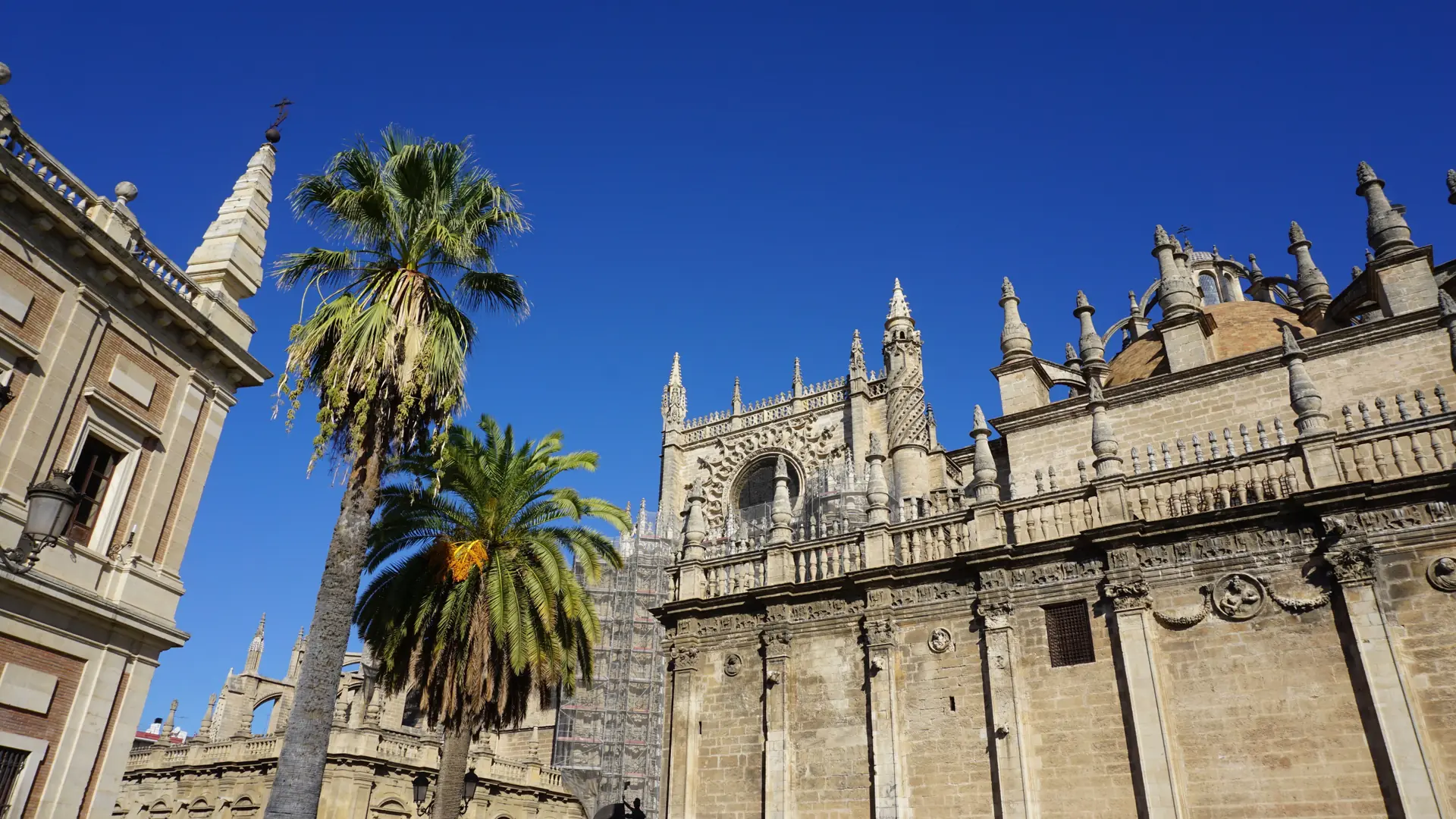
  1. Mudéjar arches and tiled walls framing an orange-tree courtyard inside Seville's Real Alcázar. 1

    Seville

    2 nights

    The Real Alcázar, cathedral, Giralda and late evenings by the river

    Start here, where a first evening in Santa Cruz or Triana makes the next day's timed entries feel less like a checklist. Two nights give you the Alcázar, cathedral and room to wander after dark.

    Watch out: Do not build a day around walk-up entry. Capacity and opening times can change for worship or events, so reserve key monuments on their official sites.

    Read the Seville guide →
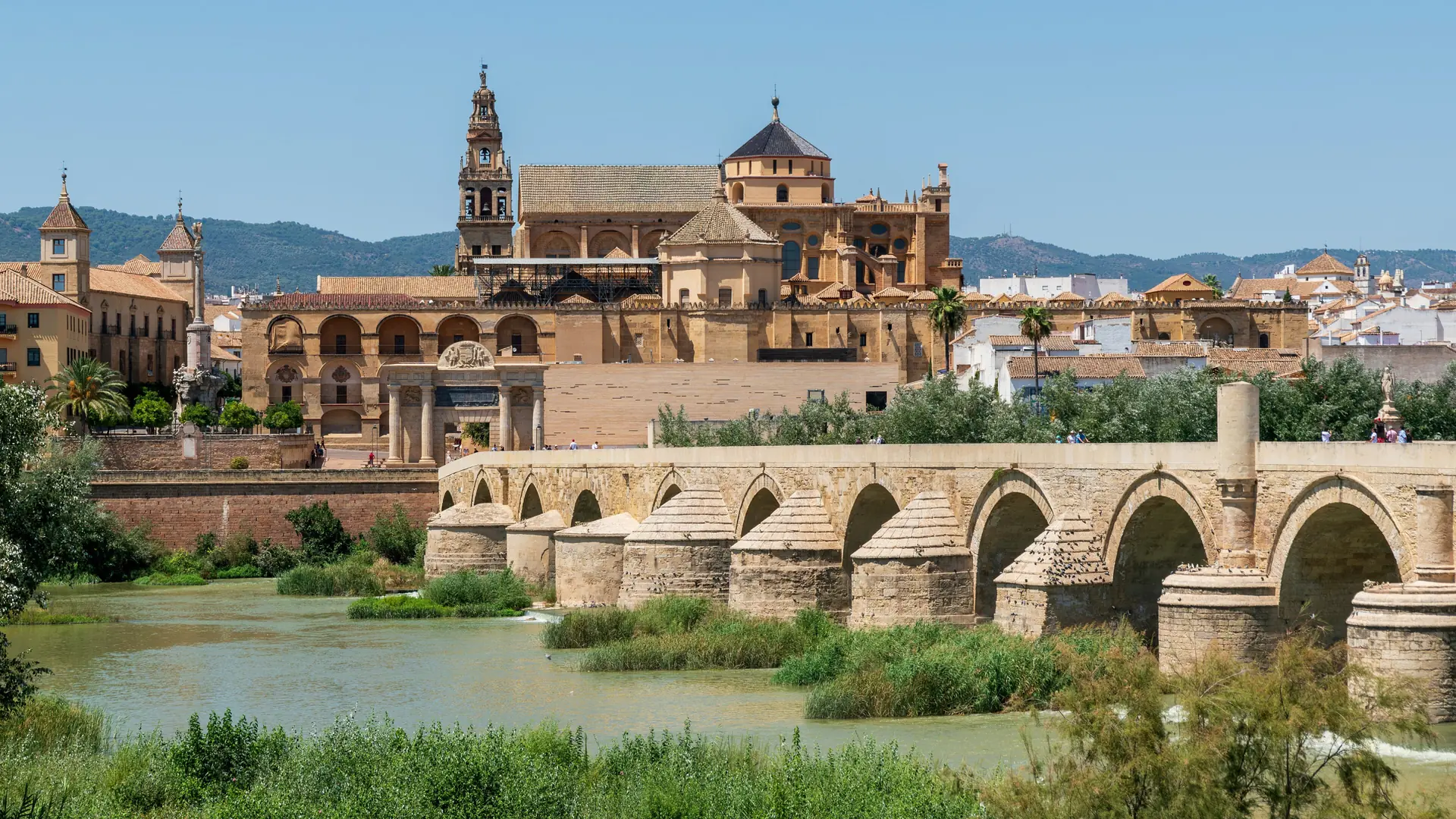
  2. Red-and-cream striped double arches and stone columns inside the Mezquita-Catedral of Córdoba. 2

    Córdoba

    1 night

    The Mezquita-Catedral, the Jewish quarter and evening walks beside the Guadalquivir

    Córdoba is compact enough for one night only if you arrive with a plan. Use the afternoon for the lanes and bridge, then see the Mezquita early the following morning before you leave.

    Watch out: Córdoba station is outside the historic centre. Leave time to drop bags and reach a timed entry instead of treating the transfer as invisible.

    Read the Córdoba guide →
  3. The marble lion fountain and ornate Nasrid colonnades in the Court of the Lions at Granada's Alhambra. 3

    Granada

    2 nights

    The Alhambra, Albaicín viewpoints and a more intimate evening rhythm

    Two nights are non-negotiable here. The Alhambra can consume half a day on its own, and Granada only feels complete when you also have an unhurried evening in the Albaicín.

    Watch out: The Alhambra ticket is a timed commitment, not a flexible museum pass. Build the whole day around the entry time shown on your official booking.

    Read the Granada guide →
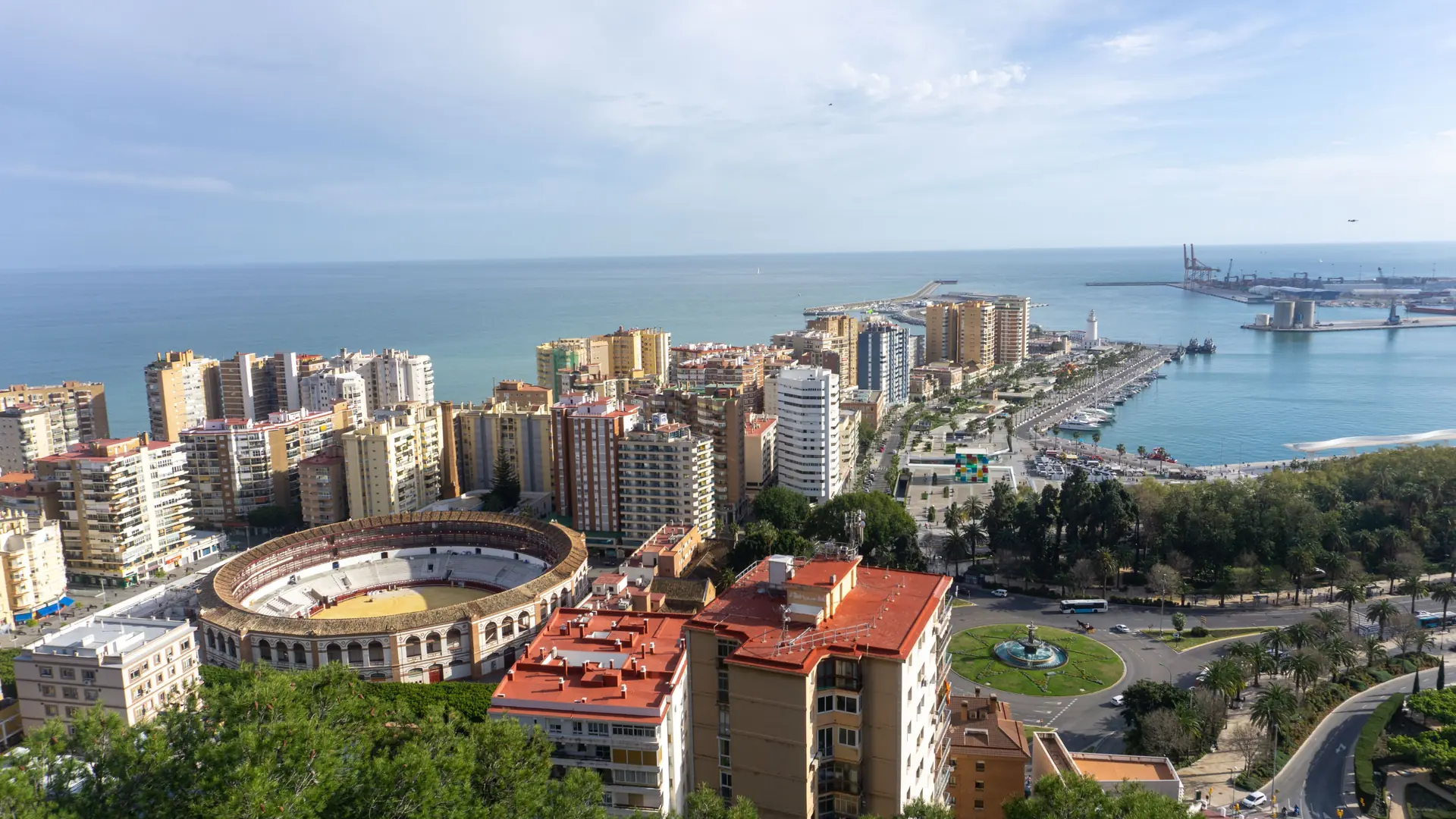
  4. Visitors walking along the sunlit Alcazaba walls above Málaga's blue Mediterranean harbour. 4

    Málaga

    1 night

    The Alcazaba, harbourfront and a relaxed final night by the sea

    Málaga is a purposeful finish, not filler. One night gives you the Alcazaba, a waterside dinner and a much simpler departure than returning inland after Granada.

    Watch out: The coast is appealing in summer, but Málaga does not make inland afternoon heat disappear. Start the Alcazaba early and keep the final day light.

    Read the Málaga guide →

Day by day

The route protects the two timed monuments and puts travel on days that still leave a useful afternoon.

1 Day 1 Arrive in Seville and take the evening slowly

Check in around the cathedral or across the river in Triana, then use the first evening to understand the centre on foot. Save the headline monuments for booked slots rather than burning your first hours in a queue.

  • Santa Cruz at dusk
  • A riverfront walk toward Triana

Overnight: Seville

2 Day 2 The Alcázar, cathedral and a real Seville evening

Put the Real Alcázar in the morning if your ticket allows it, then use the cathedral and Giralda as a separate visit rather than one frantic monument block. Keep the late afternoon deliberately free for tapas and the streets you noticed yesterday.

  • Real Alcázar on a pre-booked slot
  • Cathedral and Giralda with time to spare

Overnight: Seville

3 Day 3 Seville to Córdoba, then the old quarter

Take a late-morning direct train so the departure is calm and the afternoon remains useful. After dropping bags, walk the Judería, the Roman bridge and the lanes around the Mezquita; the point is to arrive before the next morning's entry.

  • Direct rail transfer from Seville
  • Roman bridge and Judería near sunset

Overnight: Córdoba

4 Day 4 Mezquita first, then Córdoba to Granada

Use an early Mezquita-Catedral visit, collect bags and continue to Granada. Do not schedule the Alhambra today: the arrival afternoon is better used for a gentle climb through the Albaicín and a view across to tomorrow's main event.

  • Mezquita-Catedral before the busiest hours
  • Albaicín sunset viewpoint

Overnight: Granada

5 Day 5 Give the Alhambra the time it needs

Treat the timed entry as the fixed point of the day. Leave a buffer before it, take the palace and Generalife at their own pace, then keep the evening for the lower city or a return to the Albaicín rather than another ticketed attraction.

  • Alhambra and Generalife on your official timed entry
  • Granada evening without another deadline

Overnight: Granada

6 Day 6 Granada to Málaga and down to the harbour

Move to Málaga in the morning or around lunch, depending on the current timetable. The best arrival plan is modest: check in, walk the compact centre and finish by the harbour instead of trying to turn a transfer day into a museum marathon.

  • Current direct or simplest rail service to Málaga
  • Muelle Uno and the harbour at sunset

Overnight: Málaga

7 Day 7 The Alcazaba, sea air and departure

Start with the Alcazaba while the stone is cool, then choose between a final city lunch and the beach or airport. This is intentionally a light last day: Málaga is here to make the route end well, not to add one more impossible checklist.

  • Alcazaba before midday
  • A final harbourfront lunch or beach walk

Base: Málaga

The three transfers

The first two are simple rail days. The final leg is also planned around the live operator timetable, not a fixed promise.

3 transfers

  1. Seville Córdoba

    Train Travel time: about 45 minutes

    Sevilla Santa Justa to Córdoba on the high-speed corridor. The ride is short, but allow city-to-station time at both ends rather than counting only the platform-to-platform journey.

    Booking note: Choose a direct service after you have fixed your Córdoba arrival and Mezquita plan.

  2. Córdoba Granada

    Train Travel time: about 1h 30m

    Córdoba to Granada is the route's inland transfer. It is compact enough to preserve an afternoon, but not so short that you should stack a timed Alhambra ticket onto the same day.

    Booking note: Use the operator's live results and leave room to reach your Granada hotel before an evening viewpoint walk.

  3. Granada Málaga

    Train Travel time: about 1h 20m

    Granada to Málaga turns the final change of scene into a manageable morning or midday journey. The value is the finish: harbour, sea and airport access rather than a return to Seville.

    Booking note: Confirm whether the best service is direct on your date before making a same-day dinner or airport plan.

Journey times and direct services vary with the date, operator and engineering work. Check the live timetable before buying non-refundable tickets or booking a monument entry on a travel day.

What to book first

The expensive mistake on this route is not usually transport; it is a sold-out monument slot that forces the whole day to be rebuilt.

Alhambra entry Your timed entry should shape Granada day five, not be an afterthought.
Book before trains
Seville monument visits Capacity and worship schedules can affect entry, especially at the cathedral and Giralda.
Reserve key slots
Three intercity legs Compare the live operator timetable once dates and monument slots are fixed.
Advance fares vary
Final-night location A walkable final base makes the short stay useful and departure simpler.
Near central Málaga

Booking tips

  • Reserve the Alhambra first, then place the Seville entries and trains around it. That order prevents the route's only immovable day from becoming a compromise.
  • Buy transport from the operator after checking baggage, changes and the actual station. The cheapest fare is poor value if it turns a relaxed transfer into a rushed one.
  • Choose hotels by walking distance to the old centre and departure station, not by a small nightly saving on the edge of town. Every stop here is short.

Where to stay in Granada

Live prices for the route's most important two-night base. Stay where you can reach the Alhambra transport and the lower centre without spending your one free evening on a taxi.

Search more stays in Granada →
Search stays

Granada on the map

Use the map to judge the distance between a possible stay, the lower centre and the transport up to the Alhambra before you book the route's most valuable two-night base.

Granada

Questions about this Andalusia route

Can I do this Andalusia route without a car?

Yes. The route uses rail between Seville, Córdoba, Granada and Málaga, while the historic centres are best handled on foot and with local transit or short taxis. A car becomes useful only if you replace a city with villages, remote beaches or hiking areas.

Is one night in Córdoba enough?

It is enough for this particular route if you arrive in time to walk the old quarter and reserve the Mezquita-Catedral for early the next morning. It is not enough for a slow food-focused stay or the patios festival; that is the trade-off behind the one-night stop.

When should I book the Alhambra?

Before committing to trains and hotels. The official booking gives you a timed entry, so the Alhambra is the fixed point around which Granada day five should be built.

Should Málaga have more than one night?

Add a night if you want a true beach day, museums or a Costa del Sol base. In this seven-day version Málaga is a graceful finish after Granada, not a complete beach holiday.

Is summer a bad time for this route?

It can work, but the interior cities are hotter and midday outdoor sightseeing is less pleasant. Use early monument entries, longer lunch breaks and a slower rhythm, or choose spring and autumn when you can walk more comfortably.

What is the best arrival and departure pattern?

Arrive in Seville and fly home from Málaga if fares work for you. That open-jaw shape avoids a needless return transfer and is one reason the route feels achievable in one week.

How should I pace monument visits on this route?

Put one major timed monument at the centre of a day, then let the surrounding neighbourhood provide the rest of the experience. In Seville that might mean an early Alcázar visit followed by Santa Cruz and a river walk; in Córdoba, the Mezquita-Catedral deserves unhurried time before you decide whether to add patios or Roman-bridge views. Granada works best when the Alhambra booking fixes the day rather than being squeezed between arrival and dinner. Málaga is the place to lower the intensity: choose the Alcazaba, the port or a beach walk instead of promising yourself all three. This rhythm is not about seeing less; it protects the time to notice what each city is actually like, and it gives a delayed train or a hot afternoon somewhere to go without wrecking the route.

What should I book before choosing hotels?

Start with the Alhambra time slot, then shape Granada around it. Next, reserve any Seville monument that is essential to you and only then choose train departures and hotels. This order protects the rare timed experience instead of forcing a good booking into a bad travel day.

How should I choose between a city-centre hotel and a cheaper outer base?

For one-night stops, favour a base that makes arrival, dinner and the next morning easy. A lower room rate can disappear in taxi time and the energy spent navigating after a train. In Seville and Granada, central walkability is especially valuable when the evening is part of the experience; in Córdoba, station access and a direct route to the old city matter more than a long list of facilities. Málaga can be slightly broader if your departure plans are simple, but do not book so far from the centre that the final evening becomes logistics. Check the exact walking route, luggage access and the real check-in time before committing. This itinerary changes hotels several times, so each one should reduce friction rather than add a new transport task.

Sources and review

Reviewed by StartBooker editorial Route planning and destination research

Last reviewed 2026-09-01

How this route was checked: The sequence was designed around official visitor requirements for the most capacity-constrained monuments and the current rail operator. Transfer times are described as approximate so readers confirm their exact service, while the night split reflects what each historic centre can realistically hold in one visit.

10 references reviewed

Key sources
  • Tourism and Sport of Andalusia
  • Cathedral of Seville
  • Mezquita-Catedral de Córdoba
  • Turismo de Córdoba
  • Patronato de la Alhambra y Generalife
  • Ayuntamiento de Granada
Photo credits

Photos provided by Pexels.

Have you travelled through Andalusia this way?

Which city earned an extra night on your trip?