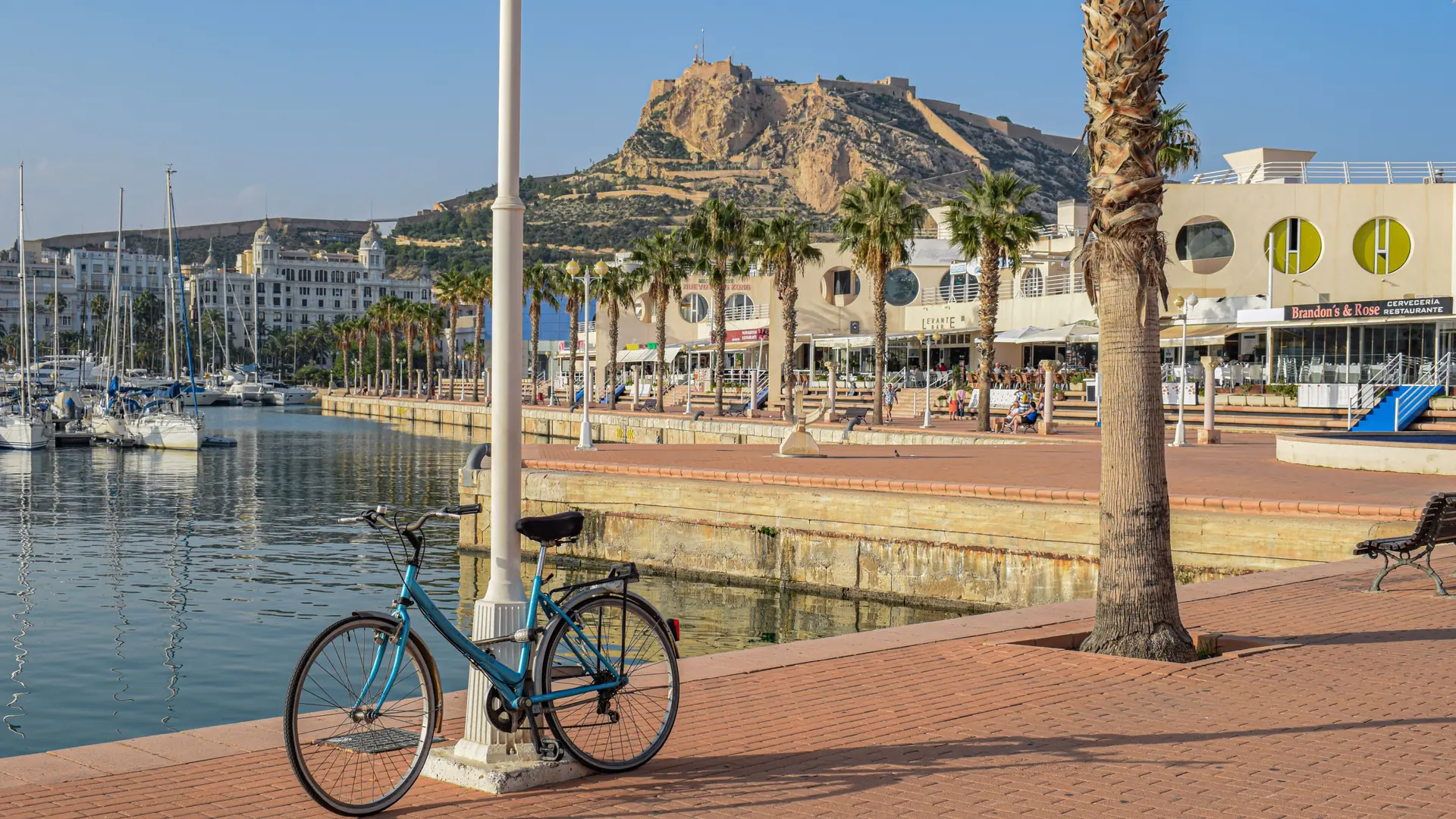
Sol & Austrias
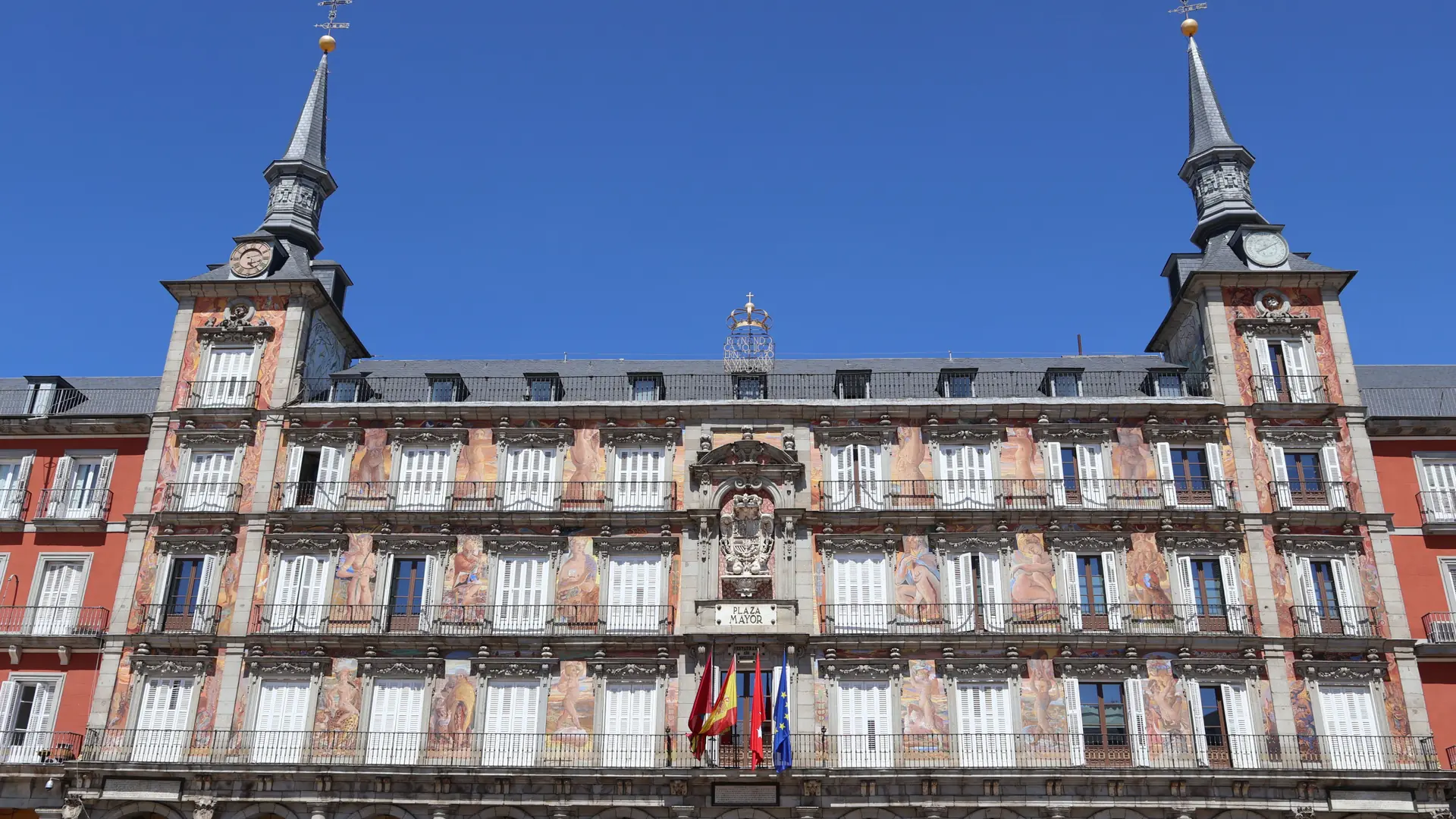
Plaza Mayor, palace walks and central shopping
Historic squares and the western palace quarter.
Hotel area
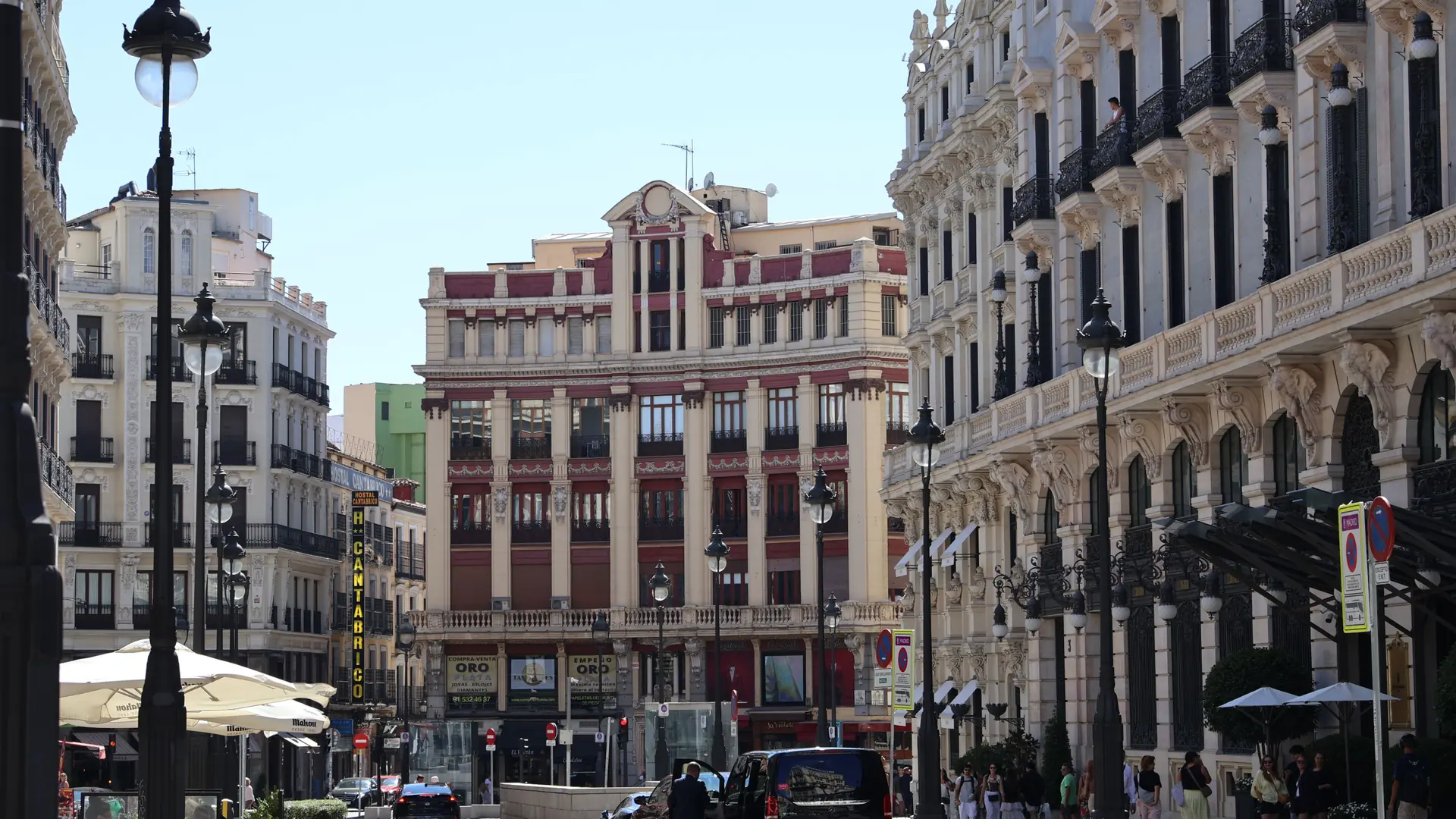
Madrid brings royal architecture and everyday street life into the same city break. The palace quarter lies west of the centre, while the art museums cluster towards Paseo del Prado to the east. Grouping nearby visits leaves more time to enjoy them and less time crossing back through the busiest streets.
The change of scale is part of the pleasure. Around Plaza de la Villa, older civic buildings frame a small square; Gran Vía opens into a broad commercial avenue. Turn north into Malasaña and the streets become smaller again, with independent shops and places to spend an evening. These contrasts give a walk a purpose beyond getting to the next ticketed doorway.
Madrid’s neighbourhood history is also visible without entering a museum. Las Letras recalls the writers of Spain’s Golden Age, while Dos de Mayo commemorates the uprising against Napoleon’s occupation. Leave room to notice what a square or a street name tells you: a stay can combine a major collection with the city’s own history outdoors.
Choose Prado for Velázquez’s Las Meninas and Goya’s Third of May, 1808; Reina Sofía for modern and contemporary art; Thyssen for a European survey. Give one collection your full middle day.
The Royal Palace has ceremonial rooms beside Plaza de Oriente. The Royal Collections Gallery is a separate venue, even with a combined ticket. Choose an interior visit or a palace-quarter walk.
Look for literary quotations in Calle Huertas, then Plaza de Santa Ana and Teatro Español. The Las Letras walk needs no booking; a house-museum interior has separate access arrangements.
Try a bocadillo de calamares, a calamari sandwich, around Plaza Mayor, or chocolate with churros nearby. Compare the menu and portion sizes; save a longer restaurant meal for later if you prefer.
Retiro’s gardens, boating lake and monument to Alfonso XII offer a break from interiors. Choose one part for a walk and a rest. Check park access and the weather before relying on this outdoor interval.
Two nights with an afternoon arrival leave one full middle day for a museum, district walk and meals. Add a third night for several interiors or a day trip. Late arrivals reduce sightseeing time.
StartBooker answer
Sol and Austrias suit a visit centred on Plaza Mayor and the Royal Palace. Las Letras puts literary streets and restaurant terraces between the historic centre and Paseo del Prado. Malasaña appeals if independent shops and evening venues are a priority. A hotel beside Retiro works for park time, but check which side: the eastern edge is farther from the main museum entrances. Compare the exact address with your booked visits and arrival route before choosing a room.
Explore tours, attractions and local experiences in Madrid, Spain.
Loading activities…
Activities provided by GetYourGuide. We may earn a commission on bookings.
Include your flight terminal or train station, the time you can leave your luggage and any museum booking. Tell the planner what you enjoy looking at and how long you like to walk. A good day has a reason for each stop and space to eat between them.
Use your email security code to continue planning.
Use your email security code to continue planning.
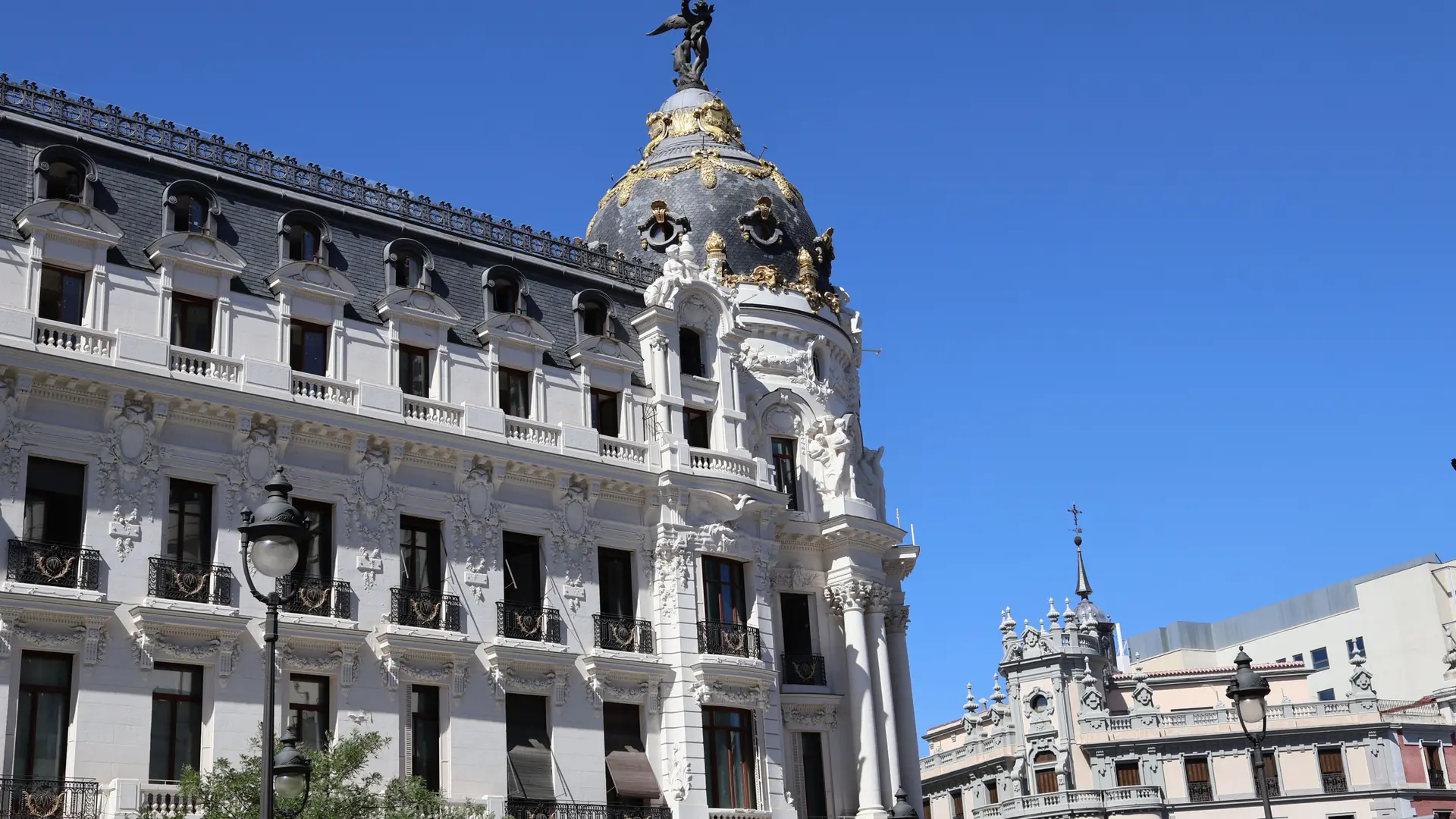
A base in the historic centre
Sol & Austrias
Sol & Austrias suits a first stay centred on Plaza Mayor, the Royal Palace and the western historic streets. The Ópera end favours the palace quarter; towards Sol, shops and meeting places become the stronger draw. Choose the part that matches your main outing. If most of your booked time is at the Prado-side museums, Las Letras offers a more direct starting point than the western palace end.
These are useful starting areas, rather than four versions of the same recommendation. Sol and Austrias cover a broad stretch of the historic centre; Las Letras, Malasaña and the streets around Retiro have different surroundings. Open the address on a map and establish which part of the named area the property actually occupies.
Plaza Mayor, palace walks and central shopping
Historic squares and the western palace quarter.
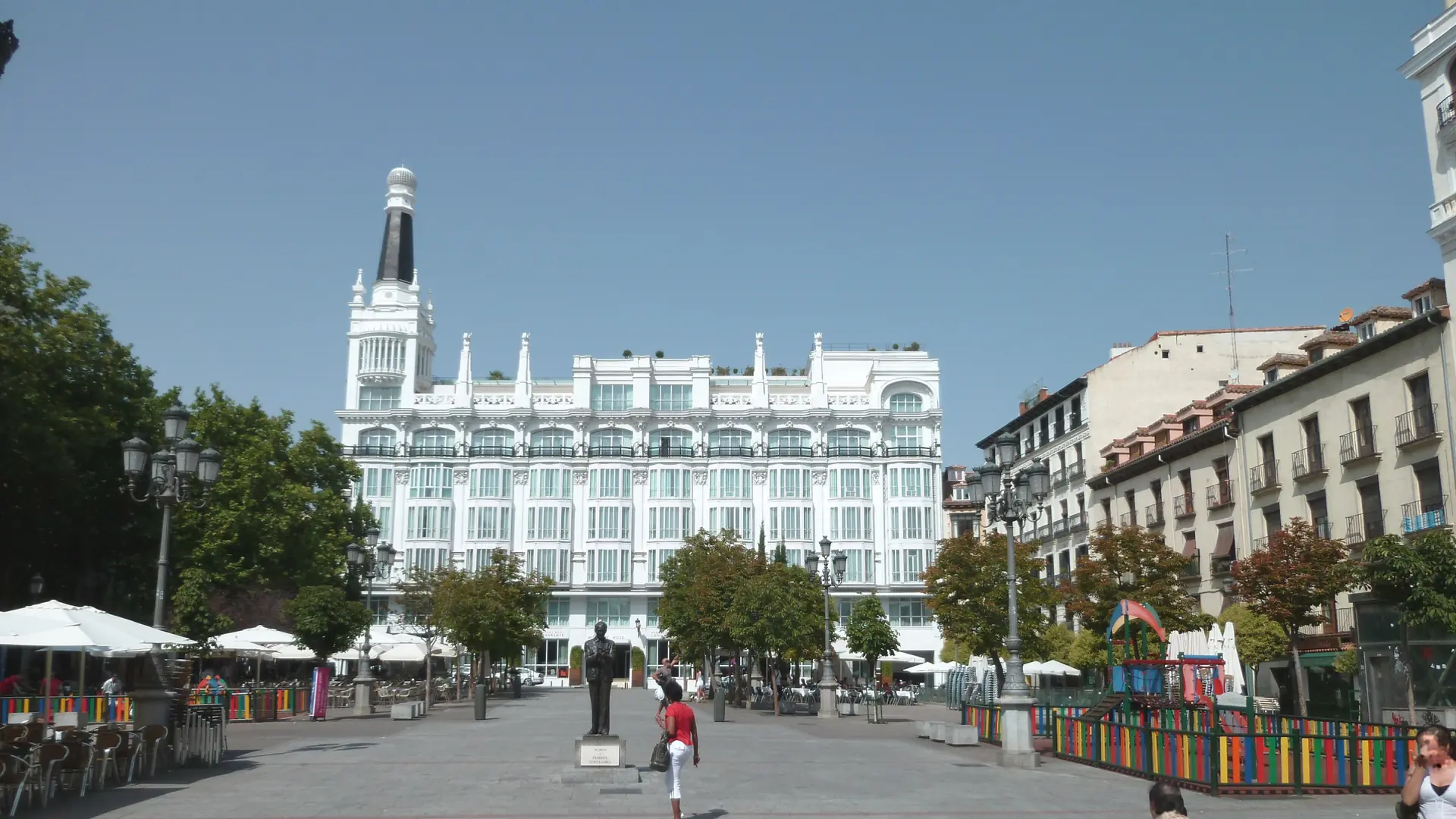
literary streets, dining and the Prado side of town
Restaurants and literary landmarks in a compact central quarter.
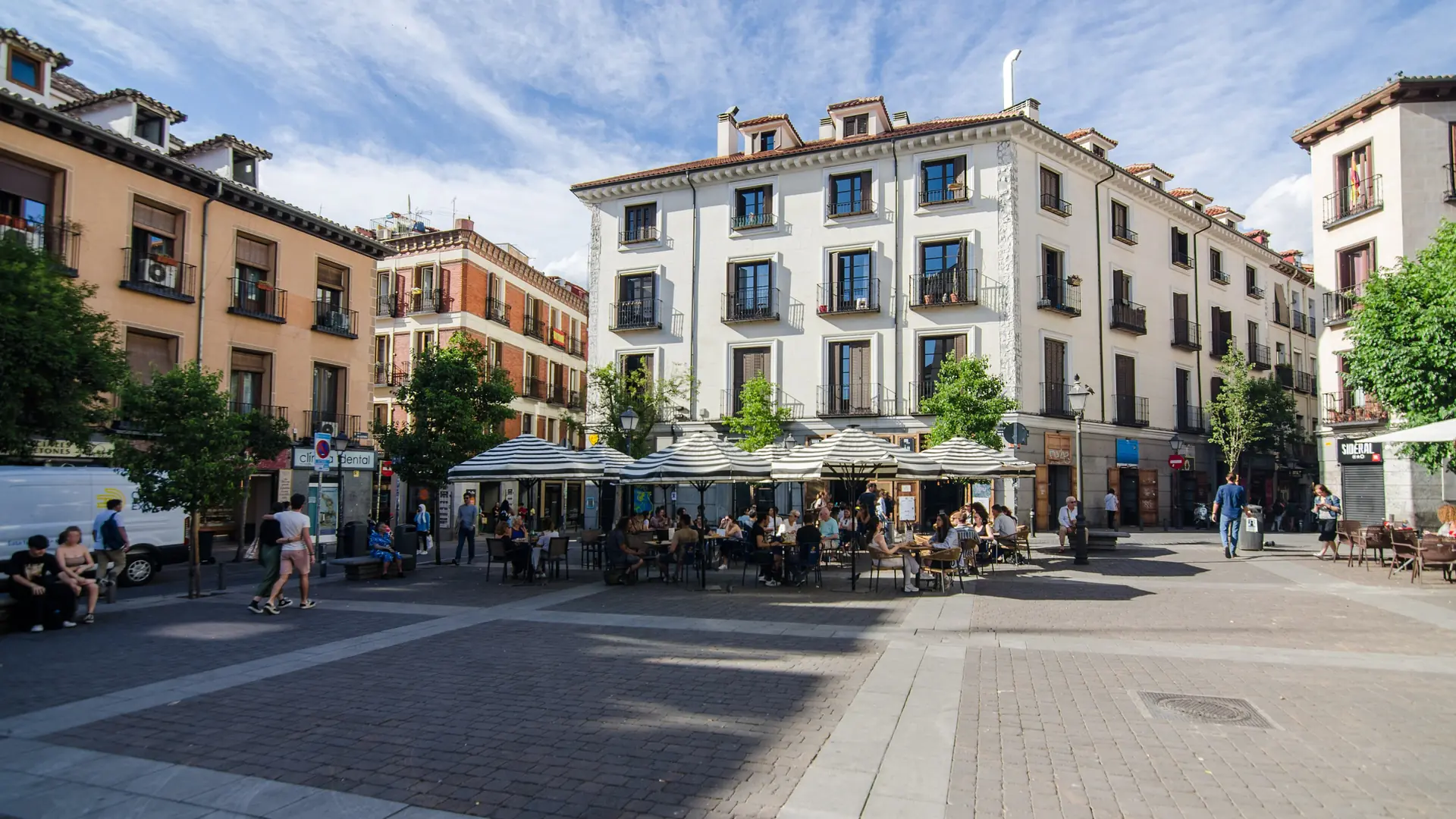
independent shopping and evenings around Dos de Mayo
Small shops and squares north of the principal shopping avenue.

a stay with time in the park
Accommodation around several sides of a large public park.
| Area | Useful for | Features | Getting around |
|---|---|---|---|
| Sol & Austrias |
Palace walks, Plaza Mayor and central shopping |
Busy terraces; a quiet room depends on its frontage |
Walk between Plaza Mayor and Ópera; Metro for longer trips |
| Las Letras |
Literary streets and Prado-side dining |
Huertas slopes towards Paseo del Prado. |
Walk down Huertas to Prado; allow for the uphill return |
| Malasaña |
Independent shops and evening venues |
Bar noise on some streets; farther from the museum corridor |
Walk via Fuencarral to Gran Vía; Metro for longer journeys |
| Retiro |
Park time between museum visits |
Eastern addresses are farther from the Prado entrances |
Western gates lead towards Prado; closed gates need a perimeter route |
The right booking depends on who is travelling and what happens outside sightseeing hours. Send the property a precise question about the service you need; a broad description such as central, family-friendly or accessible leaves too much unresolved.
Plan the morning route to the booked station: Puerta de Atocha–Almudena Grandes and Chamartín–Clara Campoamor are different places. Confirm early checkout and use the full station name when choosing a room.
Request entrance, lift and bathroom photos and measurements for the exact adapted room, including any door assistance. Give your wheelchair size and ensure that the confirmed category stays assigned at booking.
Compare beds, bathroom space and breakfast terms for your children’s ages. Request the open sofa-bed dimensions and a photo; if choosing connected rooms, establish whether the connection is guaranteed.
Confirm late entry, a working contact and a delay plan. For self-service access, find out how the code arrives and whether it needs data; save the address and instructions offline.
MAD has several terminals, and the useful city connection depends on where you land and when you leave the building. Compare the final transfer to your accommodation as well as the airport leg. Keep the chosen route and an alternative in your phone before departure.
EMT’s yellow Exprés 203 serves T1, T2 and T4 around the clock. The fare is €5 (≈ US$6) per person per journey, paid by cash, bank card or mobile device. Scheduled intervals are 15–20 minutes by day and 35 minutes overnight, subject to traffic. Atocha is the daytime terminus; at night use Cibeles. For departure, EMT estimates the Atocha-to-terminal leg at 30 minutes to T1, 35 to T2 and 40 to T4 in normal traffic. Add time to reach the stop, wait and complete airport formalities.
Line 8 links airport Metro stations with Nuevos Ministerios, where many central journeys need a change. Aena lists a Zone A single fare of €1.50–2 (≈ US$1.68–2.25) plus the €3 (≈ US$3) airport supplement; a valid Tourist Travel Pass includes it. Aena lists Cercanías C1 at T4, connecting with Chamartín and Atocha, not from T1, T2 or T3. Check Renfe’s current planner. Official taxis use the signed ranks and cost €33 (≈ US$37) between the airport and an address inside M-30; other tariffs apply beyond it.
Walking makes sense between nearby central stops, but map the attraction’s entrance rather than only its name. The approach to the Royal Palace currently uses the Almudena esplanade/Plaza de la Armería. At Retiro, choose a gate that fits the part of the park you want to visit. For a longer cross-city journey, compare a current public-transport route with the full walking route before setting out; transfers and the walk at either end can change which option feels easier.
Do not assume an evening Metro journey will still be available when you return. Check the timetable for the date and line, including the connection after the airport section. The Airport Express provides an overnight alternative, but its central stop changes. If several people have luggage or a long final walk, compare that plan with the official taxi fare. Save the hotel entrance address in addition to its booking name, so a driver can take you to the correct place.
After breakfast, collecting bags and crossing a busy station take time. For an unfamiliar departure, aim to reach the booked rail station 45 minutes before the train as an editorial planning margin; this is not a promise about an operator’s last boarding time. Add more if assistance, ticket collection or a complicated transfer is involved. Confirm the station name again when you purchase the journey, since an earlier search result may have described another service.
CRTM’s personal pass covers consecutive calendar days from first use, extending on night services to 05:00. A three-day pass started late on Monday covers Monday, Tuesday and Wednesday, not three rolling 24-hour periods. Zone A includes its Metro services and airport supplement, EMT buses except Airport Express, Zone A Cercanías and ML1. The Multi card is included with the pass. Match the zone to your journeys; regional Renfe and Avant trains need separate tickets.
Madrid’s municipal accessibility guide describes walking routes and accommodation facilities. Match the stop or station, street, doorway and interior facilities to your needs, then confirm current venue and hotel access. Request airport or rail assistance through the responsible operator before travel. A transfer that depends on an unconfirmed lift or a vehicle unable to take your chair can break an otherwise workable outing.
The two-night example separates chosen room and meal allowances from admission and airport fares checked on 19 October 2026. Indicative USD throughout uses the ECB reference of 1 EUR = US$1.1225 on that date, rounded; card and cash rates differ.
AEMET’s 1981–2010 normals at Madrid Retiro show a July average daily maximum of 32.1°C. This is historical climate context, not the temperature for your travel dates. Reserve exposed walking for cooler hours and choose an indoor part of the day when the forecast warrants it. Before booking a summer room, confirm that bedroom air conditioning is available and controllable.
At the same Retiro station, the historical average daily maximum is 18.2°C in April and 19.4°C in October; October’s average rainfall is 60 mm. Those figures help explain why an outdoor plan can need a substitute. Carry a layer and choose a nearby indoor visit or a café break when the actual forecast calls for rain, rather than forcing a long walk.
Retiro’s January historical average daily minimum is 2.7°C. Even when the daytime sightseeing feels comfortable, a late walk can call for a warmer coat. Check bedroom heating and keep the indoor finish to your day convenient. Shorter attraction hours matter too: confirm the timetable for the day you intend to visit, particularly for Sunday or a holiday.
For two adults sharing a double across three days and two nights, allow €860 (≈ US$965): €450 (≈ US$505) for the room, €300 (≈ US$337) for meals, €50 (≈ US$56) for four airport-bus rides and two Prado entries, plus €30 (≈ US$34) each for local travel and contingencies. The chosen room allowance includes VAT; meals allow €50 (≈ US$56) per person daily. Compare actual rooms before booking. Flights, intercity travel, insurance, shopping and other paid visits are excluded.
Zone A costs €10.30 (≈ US$12) for one calendar day, €17.50 (≈ US$20) for two or €23.10 (≈ US$26) for three. Two three-day passes cost €46.20 (≈ US$52): replace the local-travel allowance with that amount and keep Airport Express separate. The sample total then rises by €16.20 (≈ US$18). Choose by your actual journeys; a walking-led short visit may not use an unlimited pass enough to justify it.
The €32.80 (≈ US$37) Paseo del Arte pass allows one visit each to Prado, Reina Sofía and Thyssen within a year, excluding some exhibitions. Two cost €65.60 (≈ US$74), adding €35.60 (≈ US$40) to the two-Prado-entry allowance. Separate general admission is €12 (≈ US$13) at Reina Sofía and €14 (≈ US$16) at Thyssen. This can suit a longer stay; fitting all three into the only full day would undermine the slower two-night plan.
If you arrive in the afternoon, settle in and use the first evening for a meal and a short walk near the hotel. Give the full middle day to the museum you most want to see, lunch and one outdoor or district outing. On departure day, choose an activity that fits before luggage collection and your journey; an early train may leave no sightseeing time. This keeps the itinerary honest about the hours available. If your first day begins early and the final day ends late, you can add a second major visit without borrowing time from meals or transport.
Consider it when Toledo is a main interest and you are comfortable giving it a separate day. Renfe runs Avant services between Madrid Puerta de Atocha–Almudena Grandes and Toledo. Buy the actual outward and return services you need; the Tourist Travel Pass does not cover Avant. Add the time to reach the station and to get from Toledo’s station to the old centre. On a two-night Madrid visit, the excursion can consume your only full day, so compare it with the capital visits you would lose. A longer stay makes that trade easier.
Choose the product deliberately: ordinary palace admission is different from a guided visit or a combined palace-and-gallery ticket. Patrimonio Nacional currently lists the basic palace tariff at €18 (≈ US$20); the booking checkout can add a handling fee. In October–March, ordinary hours are 10:00–18:00 Monday–Saturday and 10:00–16:00 Sunday, with last admission an hour before closing. Official events can create additional closures, so consult the calendar for your date.
Start with the museum’s own collection and exhibition pages, then check for loans or room changes close to the visit. Thyssen explicitly notes that lending works can change what is on view. If one work is the reason for your journey, contact the museum to establish its current status rather than relying on a general highlights article. Build a short alternative list from the same collection. That way, a loan or a temporary room closure does not turn a substantial museum visit into a disappointment after you have already bought transport and accommodation.
Read the menu and establish what each ordered portion includes. A small tapa and a larger sharing dish can serve different purposes; ask which size suits the number of people at the table. Compare drinks and food separately, and check prices before accepting anything you did not order. If you want a full meal, choose a place where the kitchen offering suits that plan instead of expecting every bar to provide the same range. Madrid’s central districts offer plenty of dining choices, so there is little benefit in ordering blindly simply because a terrace looks inviting.
Ask the accommodation whether it can keep bags before check-in or after checkout, and at which hours you can retrieve them. If that service is unavailable, arrange storage separately before booking a visit that would be awkward with luggage. The Royal Palace currently advises visitors against bringing large bags because of facility works. Do not assume a museum cloakroom is a general station-style luggage service. Keep your valuables and travel documents with you, and leave enough time to collect the stored bags before setting off for the station or airport.
Reviewed by StartBooker
Last reviewed 2026-10-19
Updated
Editorial method: Editorial self-review checked district identity, transport and museum conditions against responsible operators and Madrid tourism material, with independent area-guide context. The two-night budget uses explicit room and meal allowances and dated indicative USD conversions. Earlier source dates are retained for unchanged research. Photo credits identify each selected source.
20 sources reviewed
Some photos provided by Pexels.
Compare routes by length, stops and transport.