A first Spain trip with enough room to notice where you are
Ten days gives Barcelona, Madrid and Seville two full sightseeing days each. Barcelona gets three nights because Gaudí, the old city and the sea pull in different directions. Madrid gets three nights for the museum district and neighbourhood life. Seville gets three nights for its palaces, cathedral and a separate day across the river. Each stop contains two full days; arrival and departure still take parts of the others. The worked calendar runs Monday 19 to Wednesday 28 October 2026, with trains on Thursday 22 and Sunday 25. It stays within the three cities, leaving rural Andalusia and northern Spain for another journey. The extra nights are useful for a settled base and a second kind of sightseeing, rather than a fourth hotel checkout.
Three cities, three moods
Barcelona is Mediterranean and architectural, Madrid is social and museum-rich, and Seville changes tempo with the heat and evening light. The days beyond the headline monuments have their own subjects: the Born’s merchant streets, Madrid’s taverns and Triana’s ceramic workshops.
Two direct rail transfers
The selected Thursday train reaches Madrid after 3h 17m; Sunday’s southbound service takes 2h 41m. Both finish at city stations. You still need a hotel transfer and somewhere to leave bags, but there is no airport journey between bases.
A second day beyond the monuments
A Gaudí appointment, the Prado and Seville’s palace-and-cathedral day provide the fixed visits. The following days use streets, the waterfront and a small specialist museum, giving the longer route a different balance from a seven-day version.
Best for
A first Spain visit combining architecture, painting and neighbourhood walks
Travellers who prefer two full days per city to another overnight stop
An open-jaw trip arriving in Barcelona and leaving from Seville
StartBooker answer
Is ten days enough to travel around Spain by train?
Ten days works well for Barcelona, Madrid and Seville when each city gets three nights: nine overnight stays, with departure from Seville on day ten. That gives two full sightseeing days in each base and two rail transfers. Use the first Barcelona day for Gaudí, the first Madrid day for art and the first Seville day for its main monuments; the second full days explore old quarters, neighbourhood food and Triana. The worked October trip uses direct trains between Sants, Atocha and Santa Justa.
Overnight split
Barcelona 3 nights · Madrid 3 · Seville 3
Worked rail links
3h 17m to Madrid · 2h 41m to Seville
Second full days
Born and the coast · La Latina · Triana ceramics
Things to do in Barcelona, Madrid, Seville, Spain
Explore tours, attractions and local experiences in Barcelona, Madrid, Seville along this route through Spain.
Loading activities…
Activities provided by GetYourGuide. We may earn a commission on bookings.
The three bases
Three nights in each city leaves two full days and an arrival evening. These local bases match the different walks in that stay.
3 stops
· swipe
1Barcelona
2Madrid
3Seville
1
Barcelona
3 nights
Gaudí, medieval lanes, food markets and a real Mediterranean edge
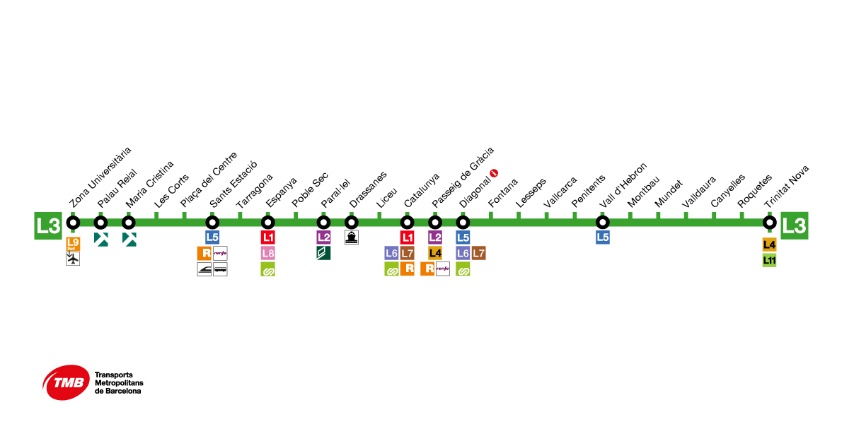
Eixample near Passeig de Gràcia favours the architecture day and the L3 connection to Sants. El Born puts Santa Maria del Mar, medieval merchant streets and evening bars close by, with narrower lanes and busy terraces. Choose between broad avenues and the old quarter for these three nights.
The Prado, Retiro, grand avenues, neighbourhood bars and late energy
Las Letras around Calle de las Huertas or Plaza de Santa Ana suits the Prado, bookshops and cafés. La Latina puts Cava Baja’s taverns and Plaza de los Carros closer, with a longer museum approach. Either base needs a separate transfer to Atocha; check that journey alongside the evening setting.
The Alcázar, cathedral, Giralda, Triana and evenings beside the Guadalquivir
Santa Cruz around Plaza de Doña Elvira and Patio de Banderas favours the palace and cathedral. Triana around San Jacinto and San Jorge puts ceramics, food and the river first, with a bridge crossing for the monuments. Santa Justa is outside both quarters: plan the station transfer separately.
The worked October dates alternate major visits with old-quarter, food and craft walks.
1
Day 1
Arrive in Barcelona and learn its scale
On foot
On the first evening, walk from Plaça de Catalunya through the Gothic Quarter or down to the waterfront. For an airport arrival, Aerobús A1 serves Terminal 1 and A2 serves Terminal 2, continuing to Plaça Catalunya in roughly 30–35 minutes under ordinary traffic conditions. From there, the hotel’s district decides the rest of the journey. Drop bags before walking into the lanes around Plaça Sant Jaume and Plaça del Rei; the old street pattern and small squares are enough of a first introduction. A late landing calls for dinner near the base instead. If the sea is the main attraction and daylight permits, choose the waterfront as the evening walk rather than attempting both circuits. At a neighbourhood bar, try pa amb tomàquet: bread rubbed with ripe tomato and finished with olive oil, a simple Catalan accompaniment to the first meal.
A slow first walk through the old city
Dinner in a neighbourhood you can return to
Base: Barcelona
2
Day 2
Give Gaudí a full day, not a rushed morning
On foot
Begin at the Sagrada Família, where Gaudí took over the project in 1883. Its sculpted façades tell biblical stories in contrasting styles; the coloured light inside changes the impression again. The €26 (≈ US$29) standard visit includes the basilica, museum and app audioguide, excluding towers and crypt. Download the app and bring headphones and the ID required by your ticket. Keep suitcases at the hotel: the basilica has no storage for them, and a late arrival can lose admission.
After lunch, follow Passeig de Gràcia through Eixample. Compare Casa Batlló’s mosaic façade and mask-like balconies with Casa Amatller’s stepped gable next door, then continue towards Casa Milà. These exterior comparisons show why an architecture day needs more than one famous doorway. The plan buys no additional house interiors; choose one separately if you would rather spend the afternoon inside. Rambla de Catalunya offers a nearby café break.
Sagrada Família on a pre-booked visit
A Passeig de Gràcia architecture walk
Base: Barcelona
3
Day 3
Choose your second Barcelona
On foot
Walk La Ribera around Carrer Montcada, where merchant palaces preserve the medieval quarter’s scale. Santa Maria del Mar began in 1329, during Barcelona’s maritime expansion. Merchants, sailors and craftspeople shaped this port-side neighbourhood, and guilds helped build its Gothic church. Continue towards Passeig del Born, with the church at one end and the former market at the other.
This day uses exterior walks; a church or museum interior needs its own time and entry arrangements. After lunch, go towards old Barceloneta and the seafront. Its regular street grid and maritime working district differ from the palaces around Montcada. If wind or rain makes the shore unappealing, stay among Born’s shops and cafés. Neither version needs another timed reservation, so the second Barcelona day can follow the weather and your interests.
Carrer Montcada and Passeig del Born
Old Barceloneta and the seafront
Base: Barcelona
4
Day 4
Barcelona to Madrid, then a first Madrid evening
Train
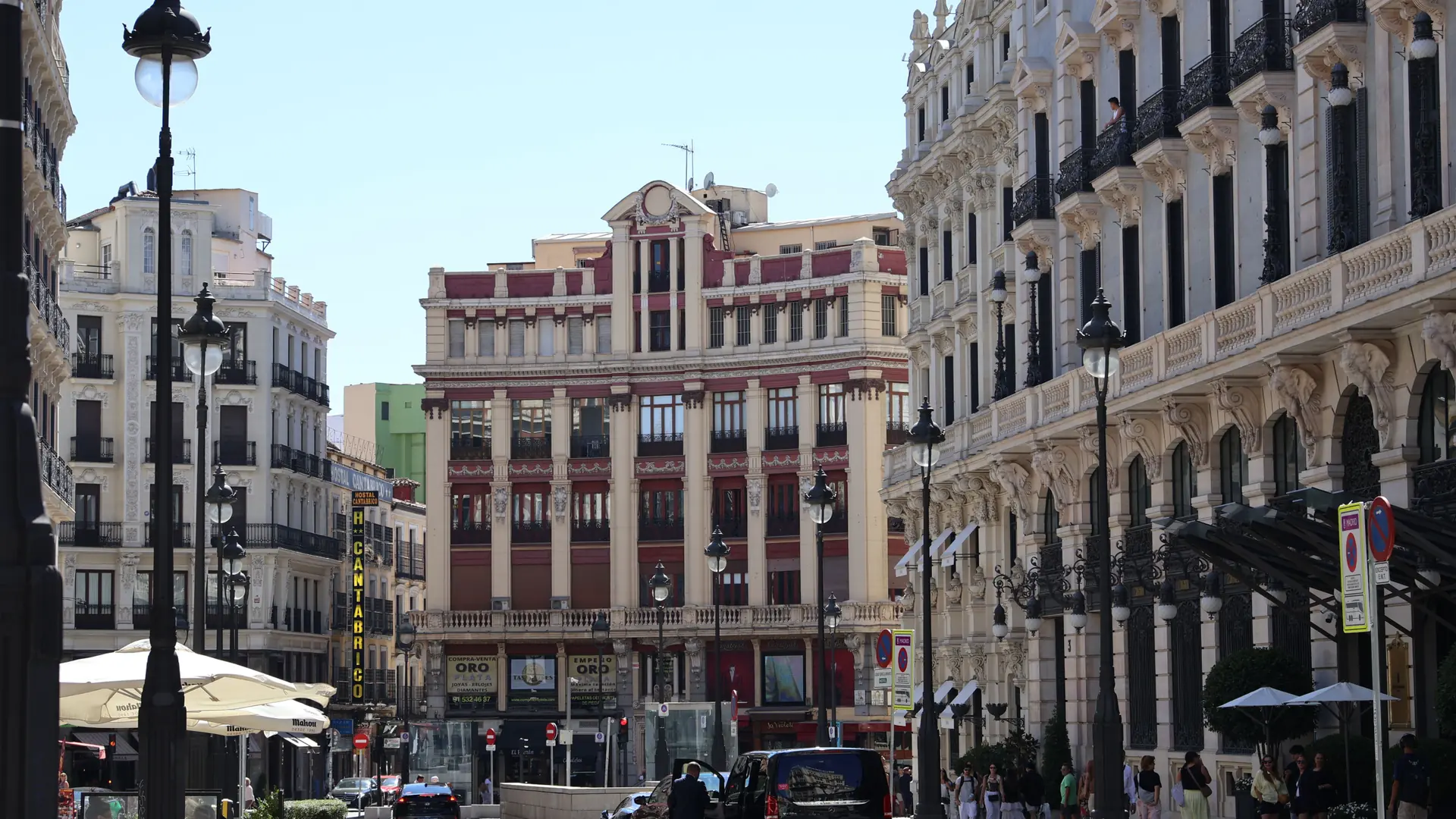
Take the Thursday morning train, arriving at Madrid Puerta de Atocha-Almudena Grandes at 12:17 in the worked example. Go to the hotel and leave bags before setting out. Gran Vía, Puerta del Sol and Plaza Mayor make a useful first orientation: the broad avenue and large squares contrast with Barcelona’s old quarter. From a Las Letras base, Plaza de Santa Ana is a natural starting point; from La Latina, begin near Plaza Mayor and work east instead. Keep paid museum entries for tomorrow, so a delayed arrival does not cost a timed ticket. The route’s Madrid photograph shows the decorated Canalejas façade on Calle de Sevilla, near the eastern approach to Sol. It is an architectural detail to notice on the walk, rather than another interior appointment.
Atocha arrival and hotel bags
Gran Vía and the central squares
Base: Madrid
5
Day 5
One museum, then the city outside it
On foot
At the Prado, focus on a few works rather than trying to cover every room. Velázquez’s Las Meninas turns a royal portrait into a puzzle about who is looking at whom; Goya’s The Third of May 1808 confronts the violence of war. These paintings give a first visit a concrete thread through the Spanish collection.
The Friday example uses ordinary 10:00–20:00 hours and €15 (≈ US$17) general admission. Reserve a time, allow two or three hours, and note that museum access ends thirty minutes before closing. After lunch, walk Retiro’s lake and paths or stay among Las Letras’ bookshops and cafés in wet weather. The Palacio de Cristal remains closed for renovation until 2027, so its interior is excluded. The FAQ compares alternative museums; choosing one well leaves attention for the city outside it.
Prado or another single museum chosen well
Retiro and Barrio de las Letras
Base: Madrid
6
Day 6
A Madrid day built around appetite and neighbourhoods
On foot
Use Saturday for La Latina’s squares and taverns. Walk between Plaza de los Carros and Plaza de la Paja, then follow Cava Baja and Cava Alta for lunch. Look for soldaditos de Pavía, battered fried cod served with red pepper, among the traditional tapas; ask what is available before settling on a bar. El Rastro’s usual outdoor stalls run on Sundays and public holidays, 09:00–15:00; Saturday 24 October is also outside its first-Saturday monthly event. Specialist shops in the wider Rastro area are a separate, everyday attraction. If vintage shops and music bars appeal more, replace this walk with Malasaña around Plaza del Dos de Mayo instead of combining both districts. The evening can still include a late dinner, but tomorrow has an 11:00 train from Atocha. Return to your own neighbourhood for the last meal if that makes the morning easier.
La Latina squares and Cava Baja
Dinner before Sunday’s train
Base: Madrid
7
Day 7
Madrid to Seville and a cooler evening by the river
Train
Travel south on Sunday, reaching Sevilla Santa Justa at 13:41 in the worked example. Check in before a river walk towards Triana or Santa Cruz, and save the cathedral and Alcázar for Monday. From the cathedral area, walk towards the Guadalquivir beside the Torre del Oro, then choose a manageable stretch of the riverside. Crossing the Isabel II bridge gives a first look at Triana and Calle Betis, with views back towards the historic centre. If you are already staying in Triana, keep the evening on that side rather than making two return crossings. A late train means a shorter walk near the base, without losing a monument booking. The temperature can be noticeably higher than in Madrid; lunch and a rest before the walk are sensible when the afternoon is hot.
High-speed rail to Seville
Triana or riverfront at dusk
Base: Seville
8
Day 8
The Alcázar, cathedral and Giralda
On foot
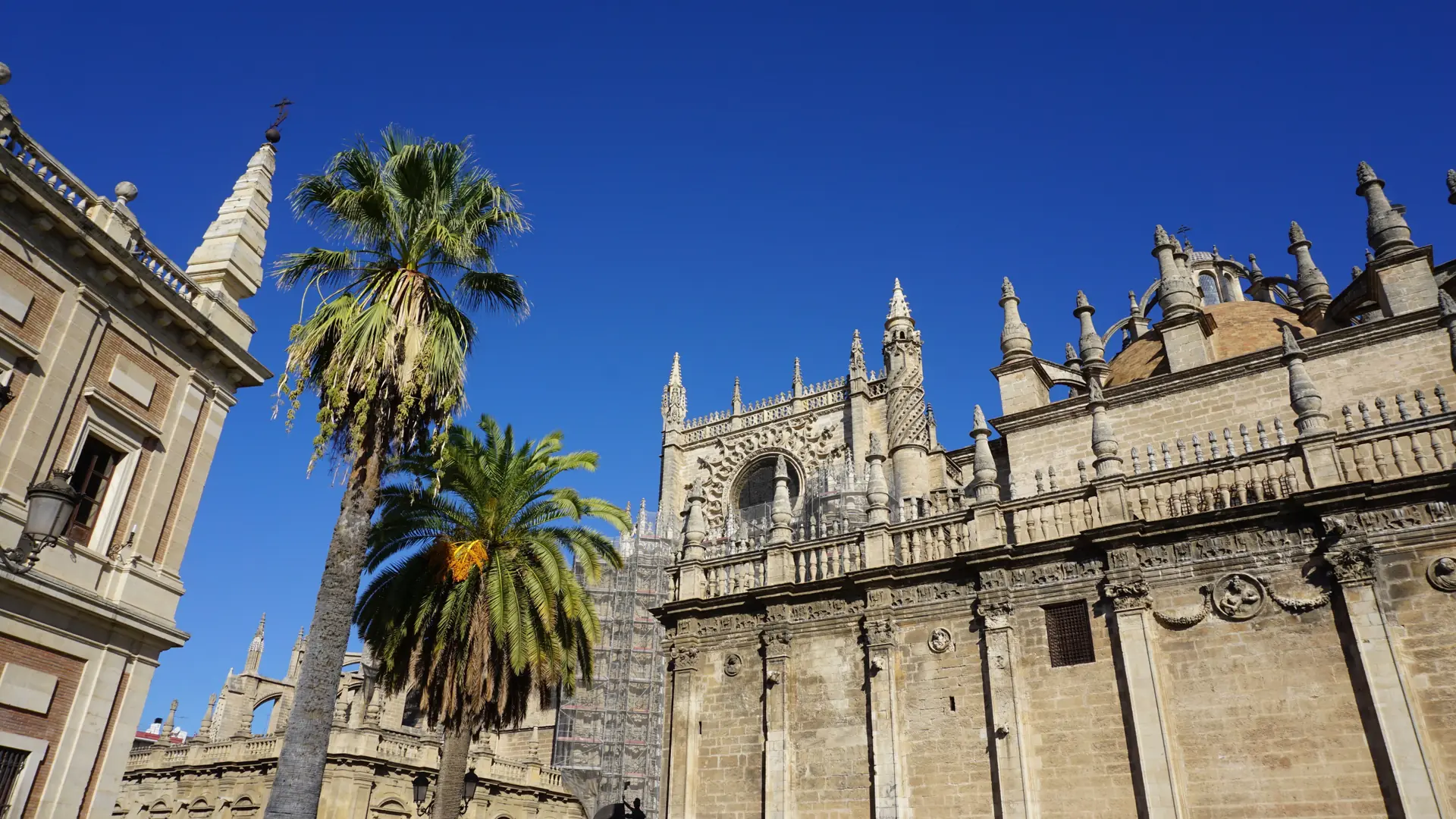
Start with the Alcázar’s palace and gardens. Pedro I’s fourteenth-century palace adapts Islamic decorative traditions for a Christian court: the patterned tiles, carved ornament and courtyards are part of its history. The cathedral and Giralda offer another sequence, from an Almohad minaret to a Renaissance belfry beside the great Gothic church.
Book the visits separately, leaving lunch and a break between them. For Monday 26 October, 09:30 at the Alcázar and 15:00 at the cathedral work if available. General Alcázar entry is €15.50 (≈ US$17) and requires physical ID matching the named ticket; allow two or three hours. The cathedral’s €13 (≈ US$15) online ticket includes the Giralda and Divino Salvador. Reach Puerta del Lagarto ten minutes early. Its October calendar closes at 18:00 from this Monday, with ticket sales ending at 17:00. The Giralda’s 34 ramps end in 17 steps; you can enjoy the cathedral without the climb. Cultural tickets do not allow re-entry.
09:30 Alcázar example with physical ID
15:00 cathedral before Monday’s 18:00 close
Base: Seville
9
Day 9
Make Seville personal
On foot
Cross to Triana for the craft behind Seville’s tiled buildings. Centro Cerámica Triana occupies former pottery premises at Calle Callao 16, near Antillano Campos; the kilns and displays connect decorative surfaces with the work that made them. The municipal tourism page lists Tuesday–Sunday 10:00–19:00. Monday’s ordinary Alcázar ticket includes this museum on the same or following day; bring it and the required identification.
Continue along San Jorge towards the bridge for lunch. Later, visit Plaza de España and María Luisa Park when the temperature permits. Aníbal González designed the square for the Ibero-American Exposition of 1929: its semicircular brick arcades and tiled provincial panels turn the afternoon into a different chapter from the medieval palace. Look closely at a panel rather than treating the square only as a photograph. A boat ride is optional and outside the budget.
Triana ceramics, included with Monday’s general ticket
Plaza de España and María Luisa Park
Base: Seville
10
Day 10
A calm departure from Seville
On foot
Use the final morning for coffee and departure, with no tenth hotel night in the plan. A later flight may leave time for a short nearby walk after storing bags, but avoid scheduling another monument. The EA airport bus costs €6 (≈ US$7) per person for a single; its €8 (≈ US$9) return works only on the purchase day and is unnecessary here. TUSSAM’s published timetable starts departures towards the airport at 04:30 from Plaza de Armas; later city stops have different passing times. Whether that bus suits an early flight depends on your boarding stop, the road journey with a traffic margin and the airline’s required check-in time. If it would leave too little time, arrange a taxi and include its quoted cost as an extra. For a rail departure instead, use the station and time on that separate ticket; this worked trip ends in Seville.
Departure from Seville
No additional overnight stay
Base: Seville
The two rail moves
The dated services below were displayed on 7 October 2026. They are direct trains for the worked calendar, rather than live availability. Allow about thirty minutes at the departure station as a planning buffer, plus the journey there; the operator’s boarding deadline still applies.
2 transfers
BarcelonaMadrid
TrainTravel time: 3h 17m — 22 October example
Observed 7 October: AVE 03092 on 22 October, Barcelona Sants 09:00 to Madrid Puerta de Atocha-Almudena Grandes 12:17. Basic seats were €87.15 (≈ US$98) per adult one way. Hotel and station transfers are additional.
MadridSeville
TrainTravel time: 2h 41m — 25 October example
Observed 7 October: AVE 02110 on 25 October, Madrid Puerta de Atocha-Almudena Grandes 11:00 to Sevilla Santa Justa 13:41. Basic seats were €67.50 (≈ US$76) per adult one way; no seats were held.
About €3,500 (≈ US$3,929) for two over nine nights
For two adults sharing a double room, the six rows total €3,477.97 (≈ US$3,904), rounded to €3,500 (≈ US$3,929), excluding flights. The 19–28 October example combines a historical hotel benchmark, earlier rail searches and current standard entries with chosen food, local-travel and incidental allowances.
Nine hotel nights
October 2025 room-only INE benchmark plus 10% VAT; historical all-category average, without breakfast or held rooms.
€1,828.73 (≈ US$2,053) per double over nine nights
Two intercity trains
Basic one-way fares observed on 7 October for 22 and 25 October 2026; two adults on each dated direct train. No seats are held.
€309.30 (≈ US$347) for two adults
Ten days of food
€50 (≈ US$56) per adult per day, including breakfast and drinks; a chosen allowance, not measured restaurant pricing.
€1,000 (≈ US$1,122) allowance for two
Airport and local journeys
Airport buses plus two Barcelona T-casuals and their supports; Madrid and Seville local journeys use a separate chosen allowance.
€115.50 (≈ US$130) planned component
Four main attractions
Two standard adult tickets each for Sagrada Família, Prado, Alcázar and Seville Cathedral online. Towers, premium rooms and tours cost extra.
€139 (≈ US$156) ordinary admissions for two
Barcelona tax and incidentals
Barcelona’s four-star hotel levy for two over three nights, plus a chosen incidental reserve. Neither sets a ceiling for actual extra costs.
€85.44 (≈ US$96) levy and reserve
Booking tips
Alcázar tickets cannot be changed, rescheduled or ordinarily refunded, and personal details cannot be edited after purchase. Sagrada exchanges or refund requests use a different process: apply at least 48 hours ahead; later requests need official supporting proof.
Nine room nights use INE’s October 2025 averages: Barcelona €190.29 (≈ US$214), Madrid €202.87 (≈ US$228) and Seville €161 (≈ US$181) per occupied room, before VAT. Three nights in each total €1,662.48 (≈ US$1,866), or €1,828.73 (≈ US$2,053) with 10% hotel VAT. These are historical room-only averages across hotel categories and booking channels, without breakfast or held rooms for the 2026 dates.
The Barcelona levy example assumes a four-star hotel: €3.40 (≈ US$4) regional tax plus €5 (≈ US$6) municipal surcharge per adult per night, for two over three nights, with 10% VAT. It gives €55.44 (≈ US$62) under the April 2026–March 2027 tariff. The remaining €30 (≈ US$34) in that row is a chosen reserve. A different hotel category changes the levy.
The airport line assumes two Aerobús singles into Barcelona at €7.75 (≈ US$9) each and two EA singles out of Seville at €6 (≈ US$7) each. Each Barcelona T-casual costs €13 (≈ US$15) plus a €1 (≈ US$1) cardboard support, covers ten single-user journeys and excludes the L9 Sud airport stations. The separate €60 (≈ US$67) local allowance is a spending choice for Madrid and Seville, not an unlimited taxi fare.
Renfe’s Basic fare allows one change at least 24 hours before departure for €10 (≈ US$11) plus any higher fare, with no ordinary refund. A separate two-hour period after purchase allows cancellation without charge. Check the conditions of the actual service before paying, particularly if choosing a different operator.
Food uses €50 (≈ US$56) per adult each day, including breakfast and drinks. The El Pintón menu example recorded for this budget was gazpacho €6.90 (≈ US$8), mushroom-and-courgette risotto €14.90 (≈ US$17) and cheesecake €7.50 (≈ US$8): €29.30 (≈ US$33) before drinks. It illustrates one meal rather than average pricing across the three cities.
Dollar comparisons are approximate: the ECB’s 19 October 2026 reference was US$1.1225 for one euro. Flights, extra nights, shows, shopping, boat rides, guided visits and additional taxis need their own allowance. Recalculate from the offers you select and their final checkout charges.
The three markers show the overnight cities and their three-night stays. The initial view covers the full route; zoom into a city to compare accommodation and check each address. Hotel prices may refer to other places in the displayed area. The map does not trace the railway lines.
StartBooker
Live travel details may be hidden by your browser
Your browser or content blocker may be hiding prices, availability, or map content from an external travel provider. To view live details, allow content for this site in your browser settings.
Madrid
Questions about ten days in Spain by train
Is ten days enough for Barcelona, Madrid and Seville?
Yes. The useful difference from a seven-day trip is two complete days in each base, rather than one. If your main interest is a single city’s art, food or architecture, reducing the route to two bases can still be the better choice. Three city stops are a first introduction, with countryside and smaller towns left for another journey.
Can I add Valencia, Granada or Córdoba?
Adding another overnight means taking a night from a three-night stop unless you extend the holiday. Valencia or Granada would also introduce another station journey, hotel move and set of timed sights. Córdoba lies on the southern rail corridor, but a stopover with luggage and separate trains is a different itinerary. Choose a route that already includes it if the Mezquita is a priority; it need not be squeezed into the Sunday transfer.
Where should I start and finish?
Barcelona to Seville is the sequence used here, with an international arrival into one city and departure from the other. Compare those flights with the total cost and travel time of returning to the starting airport. Reversing is reasonable when connections suit, but the displayed southbound rail prices are not northbound offers. Shift venue days as well: Reina Sofía closes on Tuesdays, and Seville Cathedral’s Sunday cultural visits begin at 14:30. These differences can change the daily order.
Is this route suitable in summer?
Seville is the main heat consideration. AEMET’s 1981–2010 airport normals give average daytime maxima of 32.2°C in June and 36°C in July, against 26°C in October. These are historical averages, not a forecast for your dates. Move long outdoor walks towards morning or evening, with lunch and the hotel through the strongest heat. Spring and autumn generally make walking easier, but June and September can remain hot, and October is substantially wetter than July. Carry a weather alternative for the waterfront and parks.
Would a hire car help with these three city stays?
The planned days use city streets and public transport, while the two long moves have direct rail connections. Driving would add parking and a one-way return without giving access to a rural stop in this itinerary. A car becomes useful on a different route through villages or countryside.
Which Madrid museum fits my interests?
The Prado suits older European painting, with Velázquez, Goya and El Greco among its central draws. Reina Sofía focuses on modern and contemporary art, including Picasso’s Guernica; ordinary admission is €12 (≈ US$13) and Tuesdays are closed. Thyssen’s €14 (≈ US$16) visit offers a broad survey of painting for interests spanning periods. With two full Madrid days you could substitute one of these for the Saturday neighbourhood walk, but this budget includes only a €15 (≈ US$17) Prado ticket per adult. Buy a multi-museum pass only if you intend to see its other collections.
What matters for luggage and accessible visits?
For standard AVE services, Renfe permits up to three hand-luggage pieces within a combined 25kg and 290cm, with a maximum individual size of 85 × 55 × 35cm. Avlo’s included allowance is different. Large cases belong at the hotel on museum days: Sagrada has no suitcase storage, and the Prado’s cloakroom has limited capacity and cannot take an item too large for its security scanner. Sagrada’s basilica is accessible while its towers are not. Seville’s cathedral offers wheelchair services, but the Giralda’s ramps end in stairs, so treat the climb as a separate decision from the main interior.
Sources and review
Reviewed by StartBooker editorialCultural research and route self-review
Last reviewed 2026-10-20
Updated
How this route was checked: The three-city sequence, nine-night split and existing real photos are retained. This revision adds institutional historical and food context and checks venue conditions. Dated rail searches, the October 2025 room benchmark and chosen spending allowances are distinguished from live availability; the October cathedral calendar is checked separately.






.jpg)