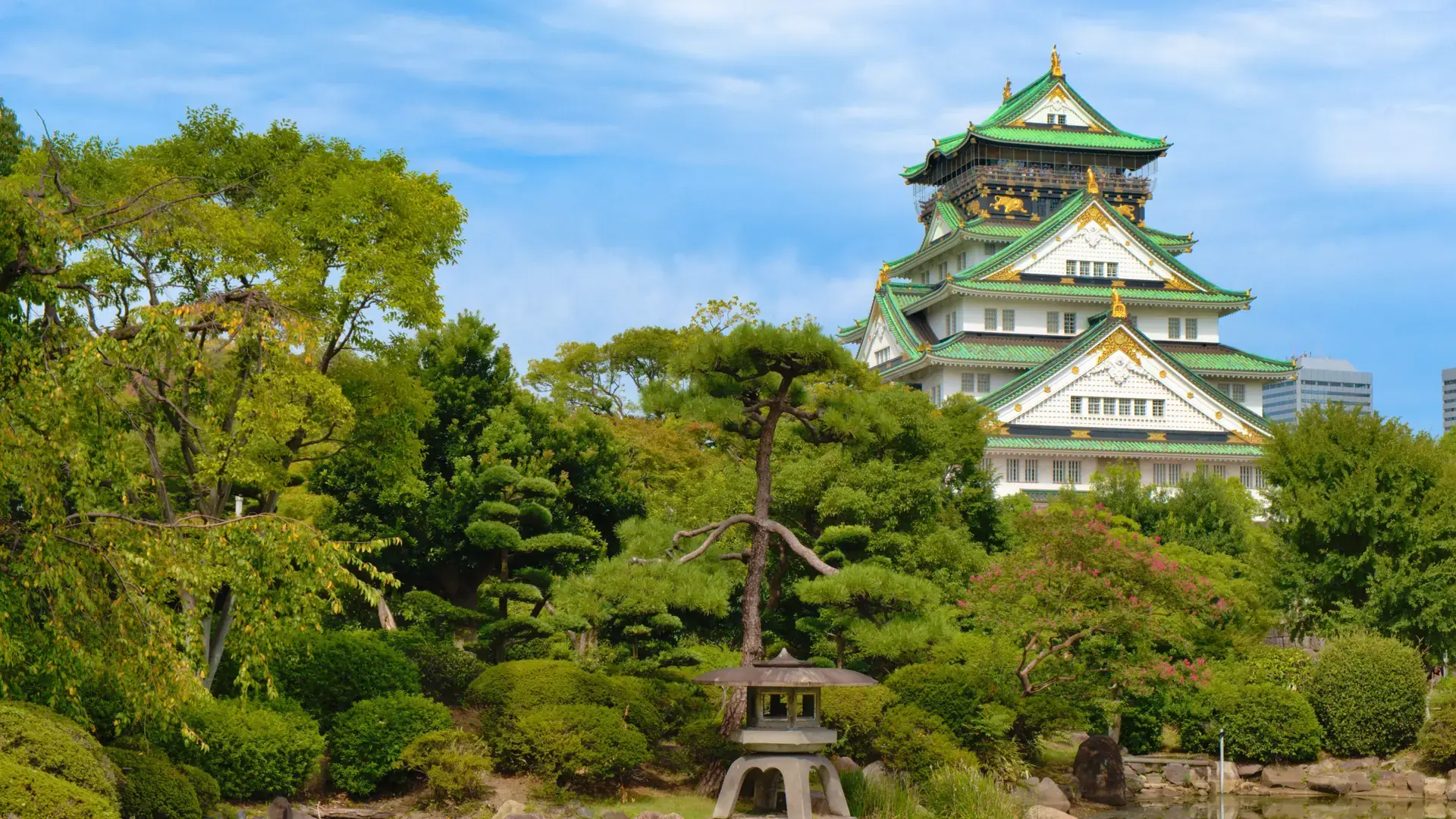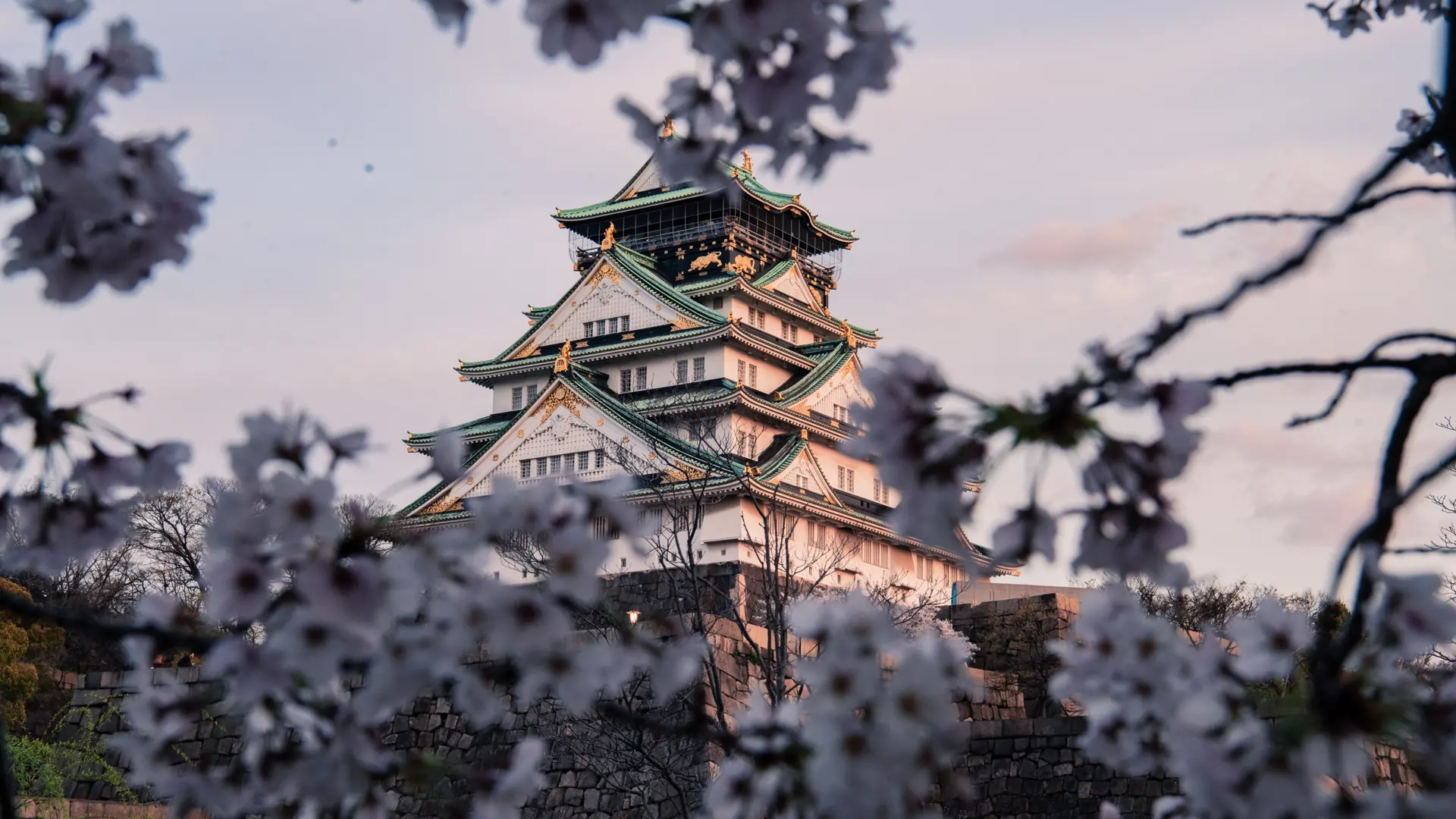
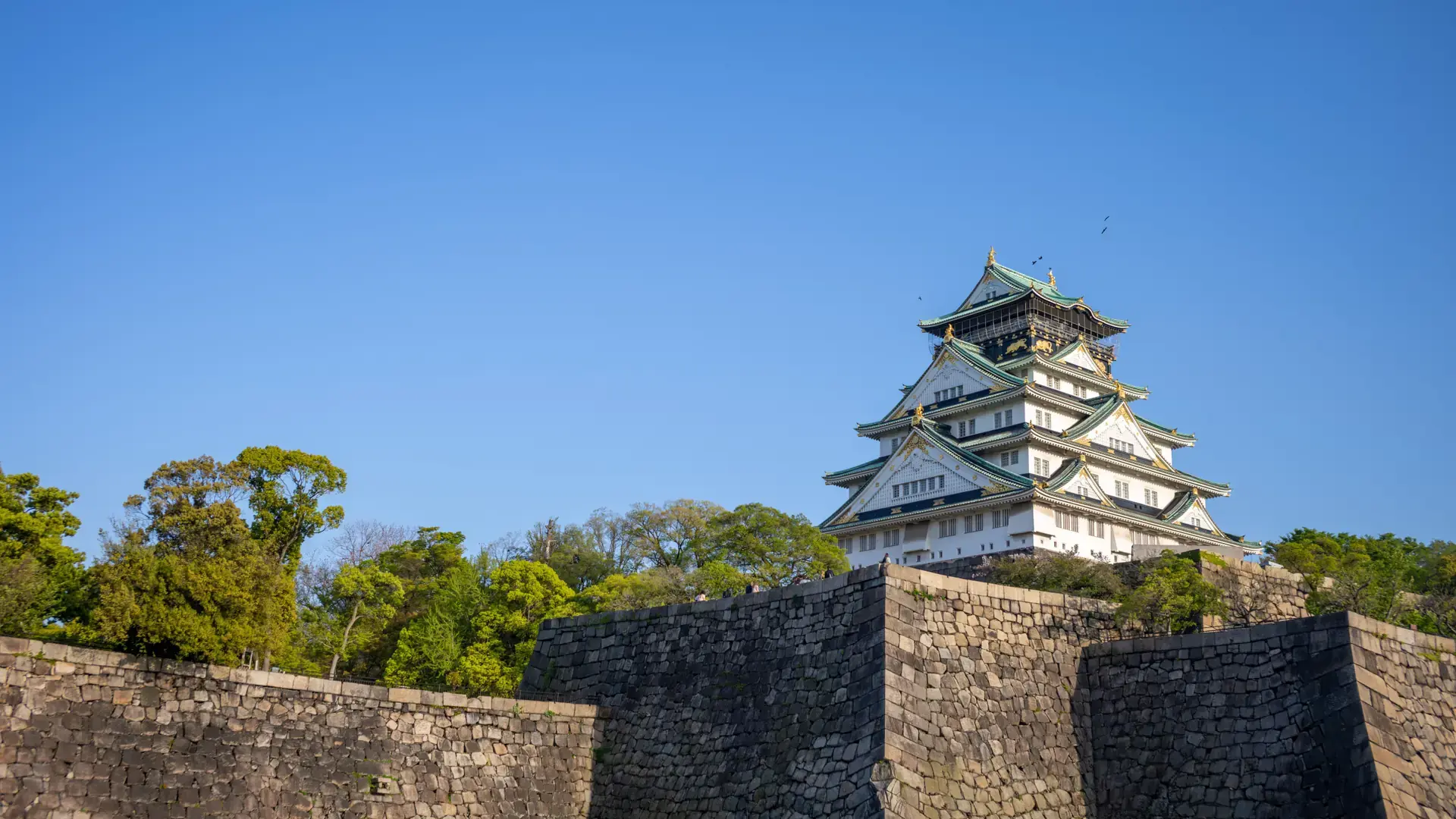
Osaka Castle glowing white and green above sunlit stone walls and cherry trees

Where to stay in Osaka for food nights, rail days and USJ

Loading Osaka hotel search

First decide whether your Osaka is north, south or west

Osaka's useful hotel geography follows repeated journeys. Minami is the after-dark city, Kita is the regional-rail city, the Midosuji corridor connects both, and the Bay Area becomes its own branch when USJ controls the clock. That division is more useful than a generic promise of being central.

Most first visits Namba

Choose the south for neon, food and a room you can reach after the last planned stop without changing lines.

Kyoto-heavy itinerary Umeda

Osaka Station and adjacent private railways reduce the friction of repeated northern Kansai departures.

Quieter balance Hommachi

This business district sits between the two main centres on the Midosuji Line and settles earlier than Dotonbori.

Theme-park focus Bay Area selectively

Stay west when an early USJ entry outweighs the value of dining and day-trip rail in central Osaka.

StartBooker answer

Which Osaka neighbourhood fits a first-time food and sightseeing trip?

Namba is the strongest first Osaka base when Dotonbori food, late evenings and direct Nankai airport rail matter most. Umeda works better for Kyoto and Kobe day trips, polished shopping and JR connections, although Osaka Station's underground network takes time to learn. Hommachi is a calmer compromise on the Midosuji Line. Families can favour Tennoji for parks and transport, while a dedicated Universal Studios Japan trip may justify one Bay Area night rather than a daily cross-city commute.

Food and nightlife
Namba and Shinsaibashi
Regional rail
Umeda and Osaka Station
KIX decision
Match Nankai or JR to the hotel
2026 planning
Accommodation tax applies from ¥5,000
AI-powered

Turn Osaka's food pins and train plans into workable days

Share your airport, USJ date, regional day trips, bedtime and dining interests; the planner can choose a base and keep north–south crossings intentional.

Eight Osaka bases that solve different journeys

Do not reduce Osaka to one central point. Its hotel districts form a north–south spine with separate airport, shinkansen and waterfront branches.

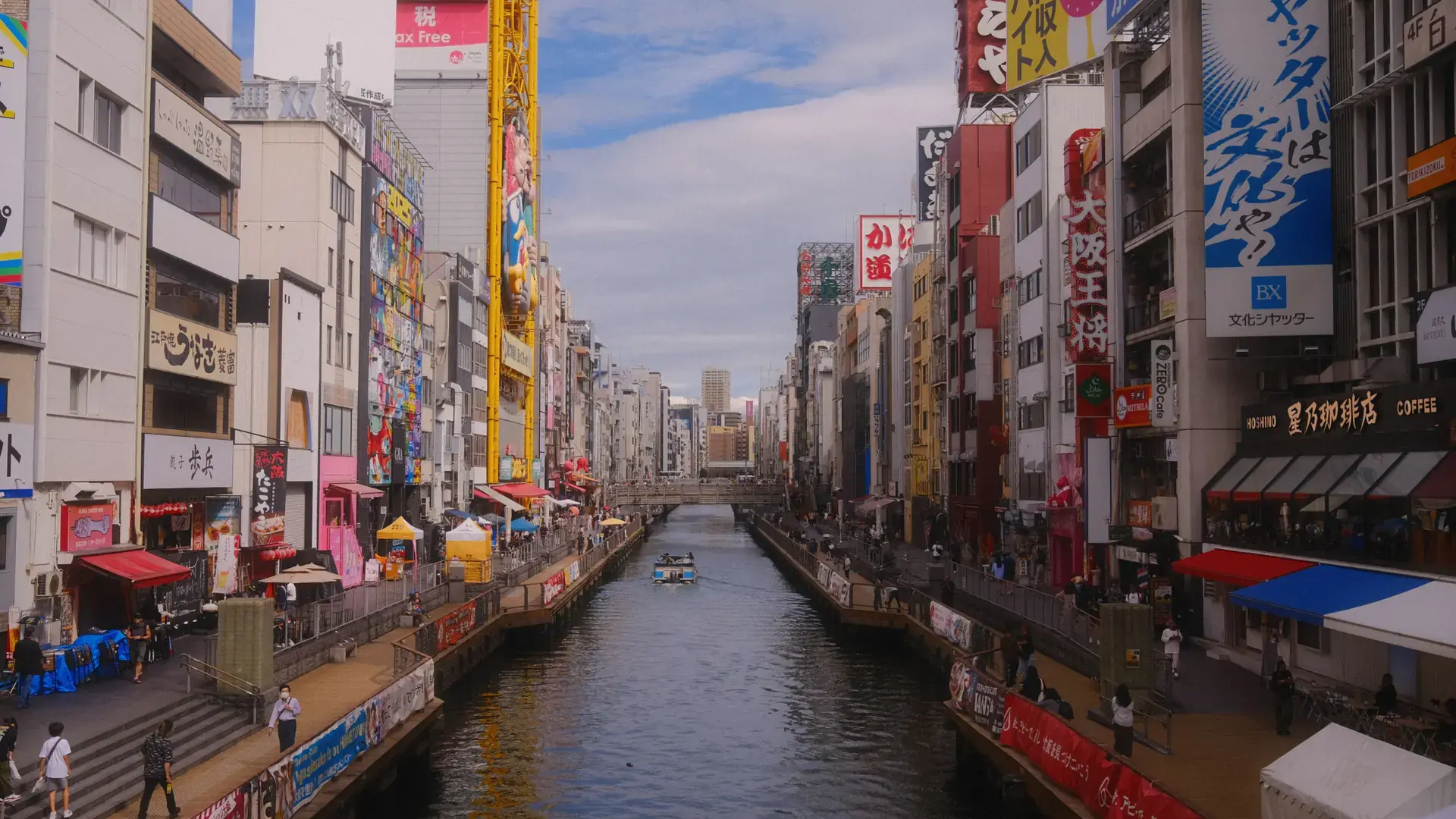
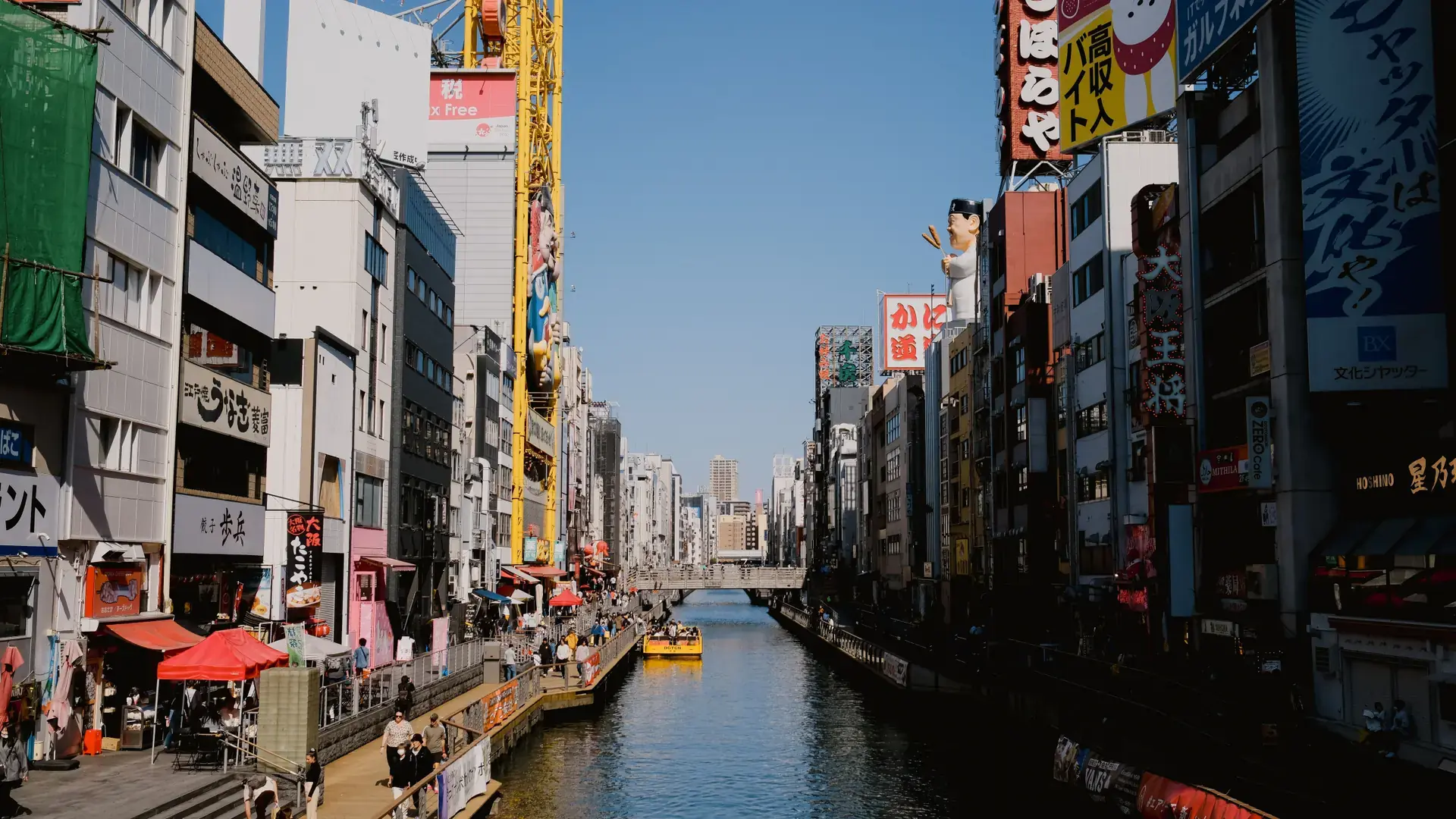
vivid blue-sky view over Dotonbori canal and colourful central Osaka signs

Namba and Dotonbori

first visits, street food and late nights

Book Namba when you want dinner to end with a short walk rather than a last-train calculation.

Sleep: avoid canal-facing entertainment blocks and request a high or inward room.

First visit Food Nightlife

Check whether the listing is near Nankai, Osaka Metro, JR or Osaka-Namba; identical area labels hide different luggage routes.
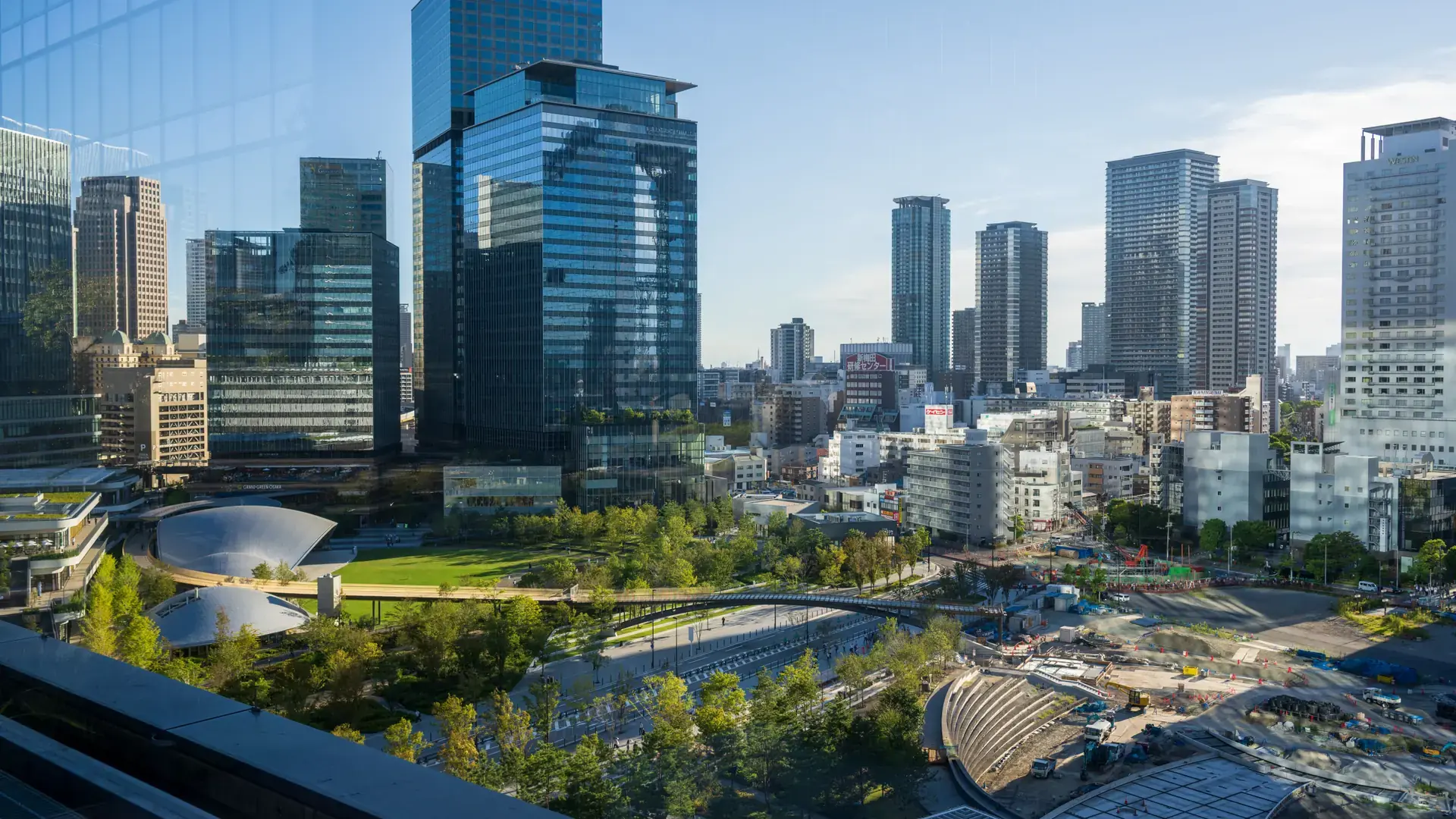
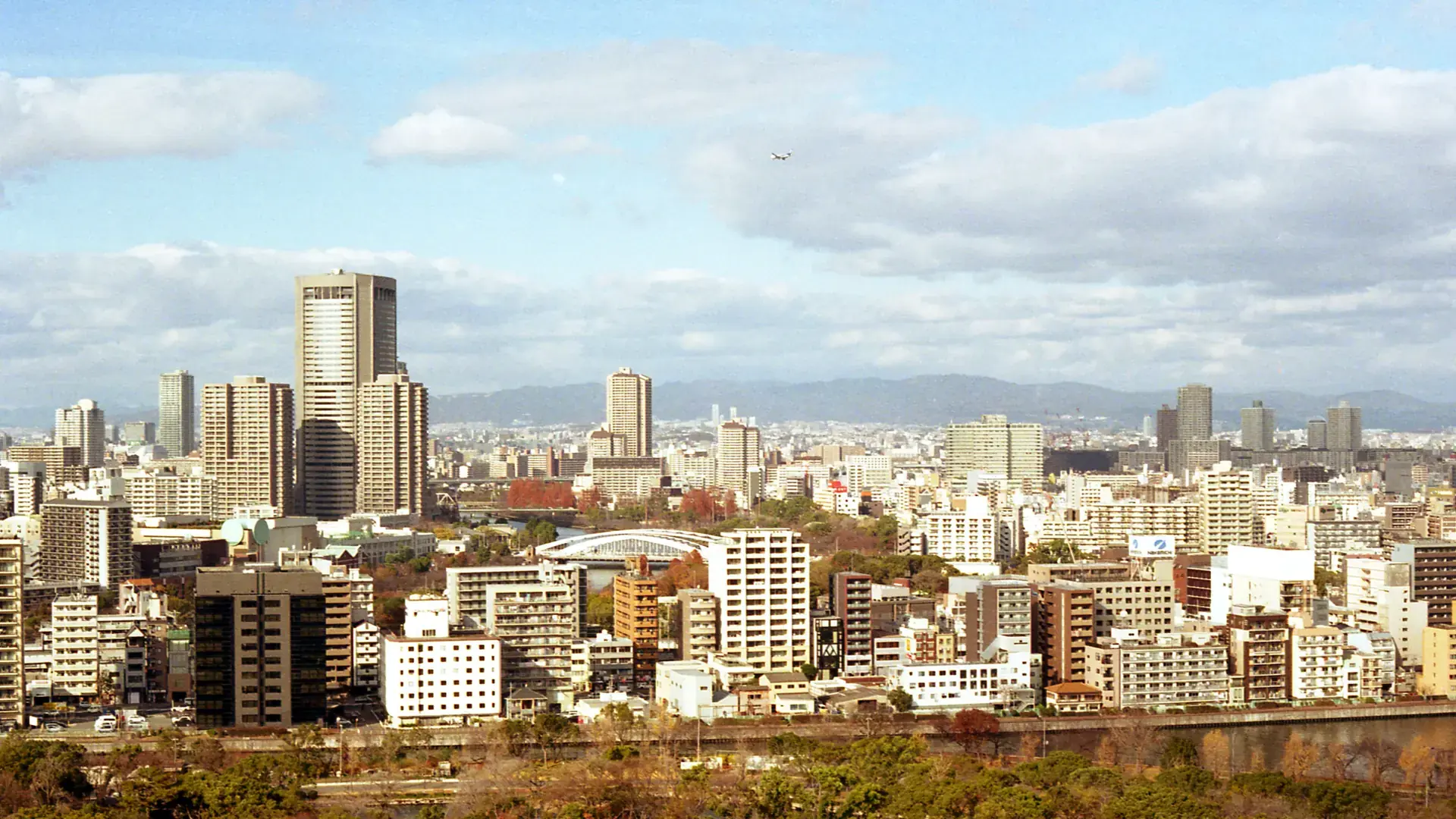
sunny modern Osaka skyline around Umeda and Osaka Station

Umeda and Osaka Station

Kyoto day trips, shopping and contemporary city views

Use Umeda when Kyoto, Kobe or airport-linked JR journeys recur more often than Namba dinners.

Sleep: upper business streets are controlled, but major-road rooms need glazing.

Day trips Shopping JR

Save the exact station exit and hotel landmark; an underground route can add twenty confusing minutes with luggage.

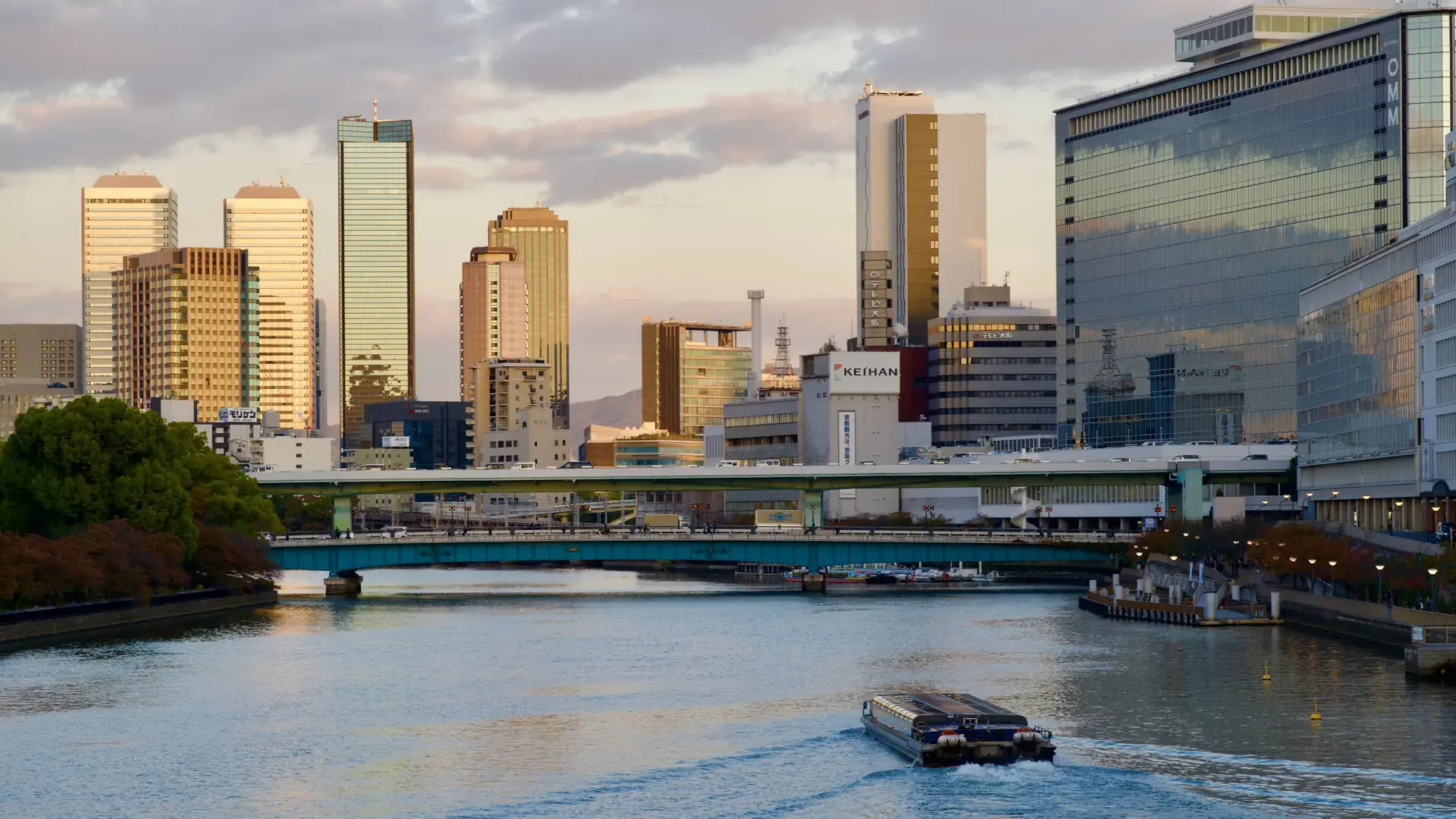
sunlit Nakanoshima riverside and elegant central Osaka buildings

Hommachi and Kitahama

calmer nights, business travel and a central compromise

Select this middle corridor when transport efficiency and sleep beat instant nightlife.

Sleep: usually more predictable than Namba, especially away from Midosuji traffic.

Quiet Central line Business

Restaurants can thin on quieter weekend blocks, so check the evening radius around the exact hotel.

bright wide cityscape across southern Osaka under a clear sky

Tennoji and Abeno

families, parks, southern rail and a local evening

Choose Tennoji for family logistics or when JR airport access and southern Osaka dominate.

Sleep: station roads stay active; park-facing and residential edges calm sooner.

Families Parks JR

Inspect the immediate block after dark rather than treating the broad Tennoji–Shin-Imamiya label as one atmosphere.

Osaka Castle above green parkland in brilliant daylight

Osaka Castle and Kyobashi

morning runs, castle grounds and quieter space

Stay here when the castle park is daily scenery rather than a single photograph.

Sleep: park edges are calmer, while Kyobashi entertainment lanes remain lively.

Green space Culture Calmer

A castle-view listing may sit far from the entrance you plan to use; measure the walking gate, not the keep.

bright Osaka Bay waterfront with colourful Universal City skyline

Bay Area and Universal City

USJ, aquarium visits and a dedicated family chapter

Spend a night here when USJ timing is the fixed priority and an early start protects meaningful park time.

Sleep: hotel zones are managed, though family corridors can be active around opening and closing.

USJ Families Waterfront

Timed-entry products and park admission are separate decisions; read current USJ rules before choosing a non-refundable room.

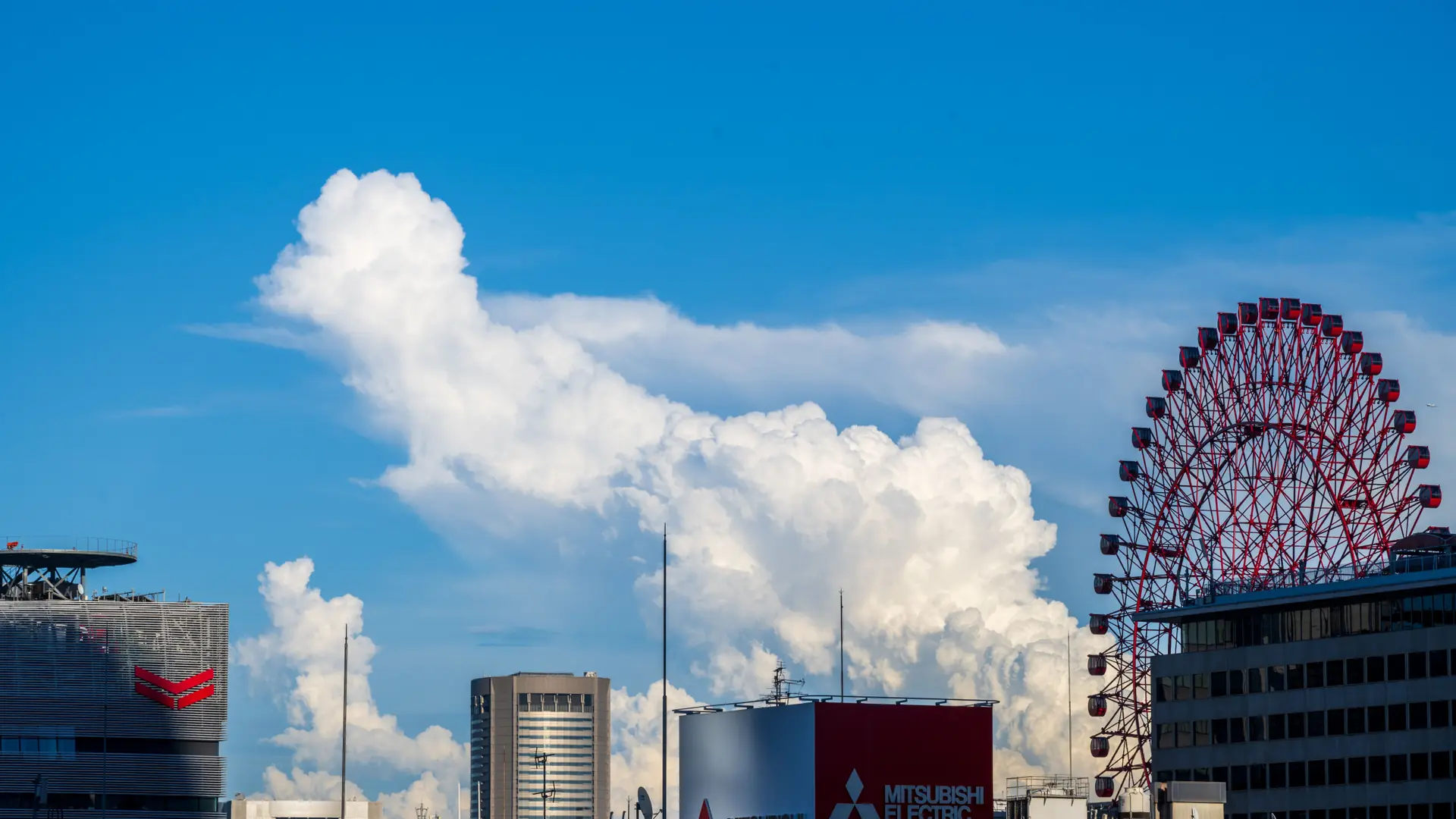
bright Osaka skyline and Ferris wheel beneath a clear blue sky

Shin-Osaka, Yodogawa and Juso

Shinkansen arrivals, Kyoto day trips and short business stays

Book at Shin-Osaka when the bullet-train platform is the trip's least negotiable appointment.

Sleep: functional around Shin-Osaka; livelier beside Juso's restaurant and entertainment lanes.

Shinkansen Kyoto trips Short stays

Confirm whether the property is truly walkable from a Shinkansen gate or requires a local transfer.

sunny retro lane in Osaka's Nakazakicho district with colourful small shops and cafés

Tenma and Nakazakicho

market breakfasts, independent cafés, bars and a lived-in north-side evening

Choose Tenma or Nakazakicho when eating and street life matter more than a polished business district.

Sleep: highly block-specific; drinking lanes stay active while residential pockets settle early.

Food Retro streets Nightlife

Inspect the exact street after dark because a quiet-looking address can back onto a late bar lane or railway.

Match the hotel to the journey you repeat
Area Best for Trade-off Getting around
Namba and Dotonbori Food-led first visit Noise and crowds Nankai plus several Metro and rail stations
Umeda and Osaka Station Regional day trips Complex station navigation JR Osaka and multiple Umeda operators
Hommachi and Kitahama Sleep and balance Quieter weekends Midosuji and Chuo lines
Tennoji and Abeno Families and southern rail Farther from Kita JR and Osaka Metro hub
Osaka Castle and Kyobashi Green mornings Evening commutes south JR Loop Line and Metro edges
Bay Area and Universal City Theme-park priority Weak central dining base JR Yumesaki and Chuo branches
Shin-Osaka, Yodogawa and Juso Bullet trains and regional day trips A transport base before a sightseeing neighbourhood Shinkansen, JR and metro; Hankyu from Juso
Tenma and Nakazakicho Casual food and small-scale nightlife Uneven late-night noise JR Loop Line, subway and walks toward Umeda

Let one non-negotiable choose the base

Osaka is forgiving when the room aligns with the trip's hardest clock.

A first weekend built around food

Stay south when Dotonbori and Shinsaibashi matter on both nights.

Avoid canal blocks if sleep begins before the crowds thin.

Hommachi is better for a calmer room with quick Metro access.

Kyoto and Kobe on separate days

Book near the relevant Osaka or Umeda platform when two mornings leave the city.

Do not pay a station premium for an Osaka-only plan.

Namba wins when regional trips are only possibilities.

One serious Universal Studios Japan day

Use Universal City when rope drop and a late park finish justify the relocation.

Stay central when the park is one flexible half-day among food plans.

Bentencho can split the difference.

Family transport without constant neon

Choose Tennoji when room size, an easy station and daytime attractions matter together.

Check the exact block before booking toward Shin-Imamiya.

Umeda better serves repeated Kyoto days.

Search Osaka hotels after choosing north, south or west

Compare live rooms against the airport line, evening return and regional journeys you will actually repeat.

Search Osaka hotels →
Loading Osaka hotel results

Build the arrival around the correct Osaka hub

KIX, Itami and the shinkansen do not deliver travellers to the same place. Namba, Umeda, Tennoji and Shin-Osaka each reward a different first leg.

From KIX and Itami

Nankai is the natural KIX line for Namba

Nankai is the natural KIX line for Namba

Kansai Airport's official access guidance routes Nankai trains to Nankai Namba. A Minami hotel can turn that into a walk; Umeda, Hommachi and Tennoji require a different connection or operator comparison.

JR and airport buses can favour other districts

JR airport services align with Tennoji and Osaka Station, while buses may reduce changes for selected hotel zones. Compare current schedules, last departures and the luggage walk after arrival rather than choosing on headline speed.

Use the Midosuji spine, then branch

Connect Kita and Minami deliberately

Connect Kita and Minami deliberately

The Midosuji Line links Umeda, Hommachi, Shinsaibashi, Namba and Tennoji. Cluster time above each station instead of riding it repeatedly for isolated food pins.

Treat Shin-Osaka as an interchange, not automatically a base

The shinkansen station is useful for an early departure, but most leisure evenings sit elsewhere. One straightforward Metro connection can be better than spending every night beside the bullet-train platforms.

Give the Bay Area its own day

USJ, Kaiyukan and port attractions lie west of the core on separate branches. Avoid sandwiching them between Namba and Umeda appointments; keep the waterfront plan coherent.

Use the JR Loop Line for lateral moves the subway does not simplify

The Loop Line can connect Osaka Station, Osaka Castle approaches, Tennoji and the Universal City transfer at Nishikujo without forcing every trip through the Midosuji spine. It is particularly useful when a day links a JR hotel with a JR destination, but platform patterns and rapid services deserve a live route check. Name the exact station in the plan because Osaka, Shin-Osaka, Osaka-Namba and JR Namba are not substitutes.

Use the 2026 product that matches the clock

Compare singles with current digital time passes

Compare singles with current digital time passes

Osaka Metro lists a 26-hour adult ticket at ¥1,000 and a 48-hour option at ¥1,700 through 30 September 2026, both with defined coverage. Price them against actual Metro rides and recheck successor products for later travel dates.

Plan the station exit as carefully as the line

Accessible routes exist, but giant hubs remain demanding

Accessible routes exist, but giant hubs remain demanding

Osaka Metro reports at least one wheelchair-accessible ground-to-platform route at all 133 Metro and New Tram stations. At Umeda and Namba, identify the useful lift, operator boundary and surface landmark before travelling with a wheelchair, stroller or large case.

Spend energy on Osaka, not its interchanges

Reserve the fixed park or rail event, then let neighbourhood food, weather and opening patterns fill the surrounding hours.

Heat, rain and event days

Use arcades and underground routes during summer heat
  • Use arcades and underground routes during summer heat

    Shinsaibashi's covered shopping and Umeda's underground network create useful midday shelter, but large stations can disorient. Save the exit and emerge near the next activity instead of wandering below ground for its own sake.

  • Rain strengthens Namba and Umeda differently

    Namba preserves food and shopping under arcades; Umeda offers vast indoor complexes and rail access. Castle and waterfront days need a nearby museum or aquarium alternative rather than a cross-city rescue.

  • USJ operating conditions override a generic itinerary

    Timed-entry availability can change or end after capacity is reached. Register valid park tickets in the current official app and read the day's rules before leaving the hotel.

  • Festival and event nights alter the best return route

    Major events around Tenjin, the castle or the waterfront can load specific stations while leaving another corridor comfortable. Check the official event and operator notices on the day, decide where dinner belongs after the event, and save one surface meeting point for the group. A hotel near the final district is more useful than an ambitious cross-city reservation after a crowded exit.

Costs that change the hotel comparison

Add the prefectural accommodation tax
  • Add the prefectural accommodation tax

    Current bands charge ¥200 per person nightly from ¥5,000 to ¥14,999, ¥400 from ¥15,000 to ¥19,999 and ¥500 from ¥20,000. Meal charges are excluded from the accommodation-fee basis described by the authority.

  • Price one taxi against repeated wrong-side journeys

    A cheaper room can still be good value, but quantify the late returns and early starts it creates. The saving disappears quickly when Namba dining and Umeda departures alternate every day.

  • Treat a Bay Area room as a time purchase

    For a family, one specialised night may buy an easier opening and recovery. Compare that value with luggage transfer and the loss of a central dinner rather than assuming closer is always cheaper.

  • Compare room size and laundry before comparing star labels

    Osaka's business hotels can be efficient but compact, which matters on a longer Kansai base or when several suitcases share the floor. Check usable room area, bed width, luggage storage, laundry access and the breakfast timetable on the property's own listing. A slightly higher nightly rate in Hommachi or Tennoji can outperform a cramped Namba bargain when the room must support five or six nights.

Errors that make Osaka feel harder

Confusing Osaka Station with Shin-Osaka
  • Confusing Osaka Station with Shin-Osaka

    JR Osaka sits in Umeda; Shin-Osaka is the shinkansen stop to the north. Hotels near one do not provide the same evening or departure walk as the other.

  • Booking Namba without checking the operator

    Nankai Namba, Osaka-Namba, JR Namba and Metro platforms occupy different positions. Pin the airport platform and hotel entrance before trusting a broad district label.

  • Making Dotonbori the entire food strategy

    Use the canal for spectacle, then explore Kuromon approaches, Ura-Namba, Tenma or neighbourhood counters that fit the day's geography. A good meal should not require another north–south crossing.

  • Assuming every late evening has the same last connection

    Subway, JR and private railway timetables do not share one closing rule. Search the actual return when deciding between a late Umeda bar, a Namba food crawl and a Bay Area event, then keep a realistic taxi fallback. The safest plan is often to place the latest evening in the district where you sleep and use daytime service for the longer crossing.

Is Namba or Umeda better for a first Osaka stay?

Namba is better for Dotonbori food, nightlife and Nankai airport access. Umeda is stronger for Kyoto or Kobe day trips, large shopping complexes and JR travel. If both matter equally, Hommachi or Shinsaibashi can reduce the daily compromise.

Where should a family stay in Osaka?

Tennoji offers parks, shopping and a major transport interchange without the most intense Dotonbori doorstep. Umeda suits families taking several regional trips, while Universal City is justified when USJ opening and closing times control the visit.

Should I stay beside Universal Studios Japan?

Stay in the Bay Area when an early entry, young children or a late park finish makes travel time decisive. For one flexible park day in a longer food-and-day-trip itinerary, a central hotel usually avoids a disruptive move.

What is the easiest area from Kansai Airport?

Namba aligns directly with Nankai rail. Tennoji and Osaka Station can align better with JR services, and selected airport buses favour particular hotel zones. Check the current operator schedule and count the final station exit walk.

Is Osaka easy without a car?

Yes. Metro, JR and private rail cover the core and regional directions well. The main task is choosing the correct operator station inside large hubs and grouping the Bay Area separately instead of treating every attraction as a short central hop. Use an IC card for ordinary rides, but compare a current time pass when the day genuinely contains several Metro journeys. At Umeda and Namba, save the exit number and a visible street-level landmark before entering the station complex.

How does Osaka accommodation tax work in 2026?

For eligible stays, Osaka Prefecture's current per-person nightly tax begins at ¥200 for accommodation charges from ¥5,000 and rises to ¥500 at ¥20,000 or more. Confirm whether the booking total includes collection at the property.

How this Osaka guide was researched

Reviewed by StartBooker editorial team Travel editorial research and rewrite

Last reviewed 2026-09-12

Editorial method: Area decisions were written from current Osaka tourism, airport, Metro, tax and USJ operator records, then cross-checked against two independent accommodation guides. Volatile products and schedules remain tied to their responsible operators.

14 sources reviewed

Primary and operator sources
  • Osaka Convention & Tourism Bureau
  • Kansai Airports
  • Osaka Prefecture via OSAKA-INFO
  • Universal Studios Japan
  • Osaka Convention and Tourism Bureau
  • Osaka Metro
Photo credits

Photos provided by Pexels.

Share an Osaka hotel-location tip another traveller can use

Which Namba or Umeda exit made your luggage route easier?