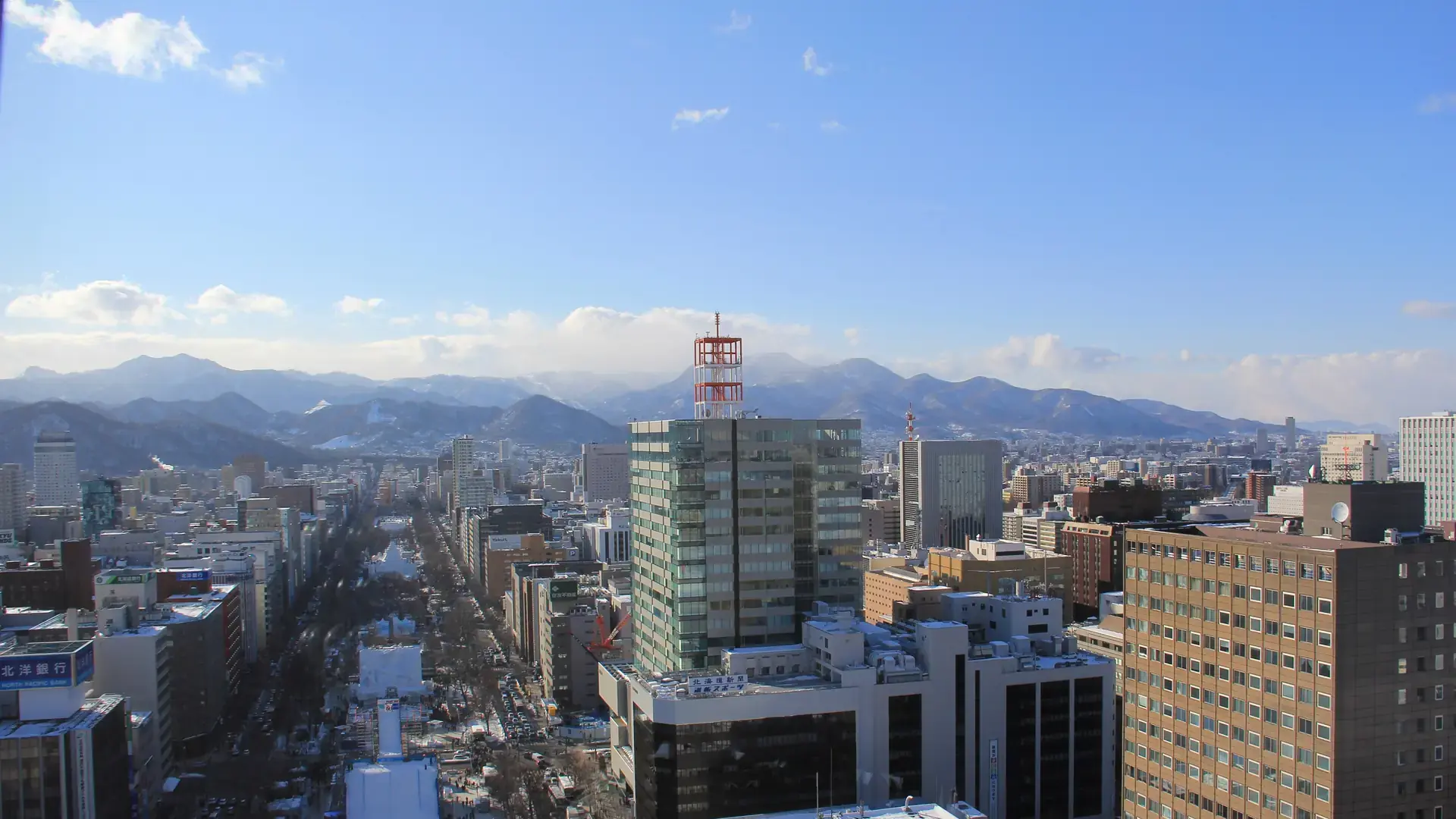
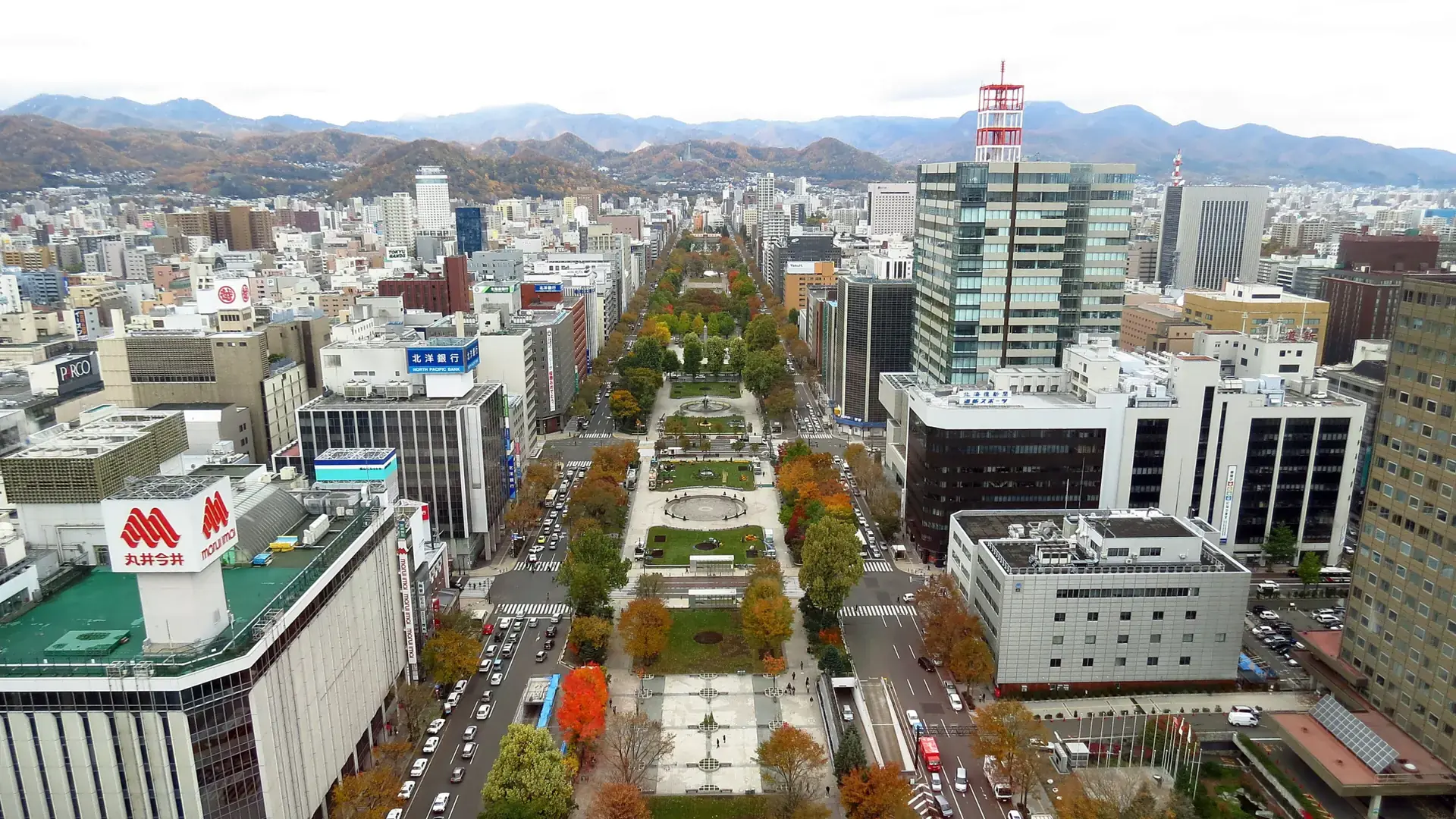
wide view across central Sapporo to snow-bright mountains beneath a clear blue sky

Where to stay in Sapporo in snow season and green summer

Loading Sapporo hotel search

In Sapporo, winter changes the meaning of nearby

Central Sapporo is compact on a map, but wind, compacted snow and icy crossings turn ordinary blocks into real travel time. Choose the repeated route first: JR platforms, Odori events, Susukino dinners, a park-side night or a deliberate onsen escape.

First city stay Odori

It preserves a central park outlook and keeps both the station and restaurant district within a short subway hop or weather-dependent walk.

Airport and Otaru Sapporo Station

The station removes a luggage transfer when rail arrival and onward excursions define the itinerary.

Late food Susukino

Stay south when the final ramen, izakaya or bar is a nightly priority and a calm lobby return matters less.

Onsen chapter Jozankei, not a city substitute

The hot-spring valley belongs to Sapporo municipality but needs a bus or road journey, so treat it as a separate overnight experience.

StartBooker answer

Which Sapporo base works for snow festivals and city touring?

Odori is Sapporo's best-balanced first base because it sits between JR Sapporo Station and Susukino, connects to all three subway lines, and places the park, TV Tower, shopping arcades and Snow Festival's central venue nearby. Choose the station when airport rail, Otaru or other Hokkaido departures dominate. Susukino is better for ramen, bars and late dinners. In winter, a hotel connected to the underground network or beside the exact subway exit can matter more than saving a few yen farther away.

Best balance
Odori
Best for Hokkaido rail
Sapporo Station
Best after dark
Susukino
New in 2026
Sapporo accommodation tax began 1 April
AI-powered

Build Sapporo around weather, food and Hokkaido departures

Add your month, airport times, Snow Festival or ski plans, winter footwear, luggage and late dinners; the planner can protect connections and avoid exposed crossings.

Eight Sapporo bases from transport grid to hot-spring valley

The numbered grid makes direction easy, yet season and purpose still separate the districts. A winter booking should include the surface route, not only the nearest station name.

aerial view along Odori Park through central Sapporo toward the mountains

Odori

first visits, festivals and a balanced centre

Book Odori when the itinerary divides evenly between rail days and food-led nights.

Sleep: streets off the park are generally calmer than Susukino, but festival setup can begin early.

First visit Festival Subway

Read the north/south and east/west block address; the district stretches farther than one park photograph suggests.
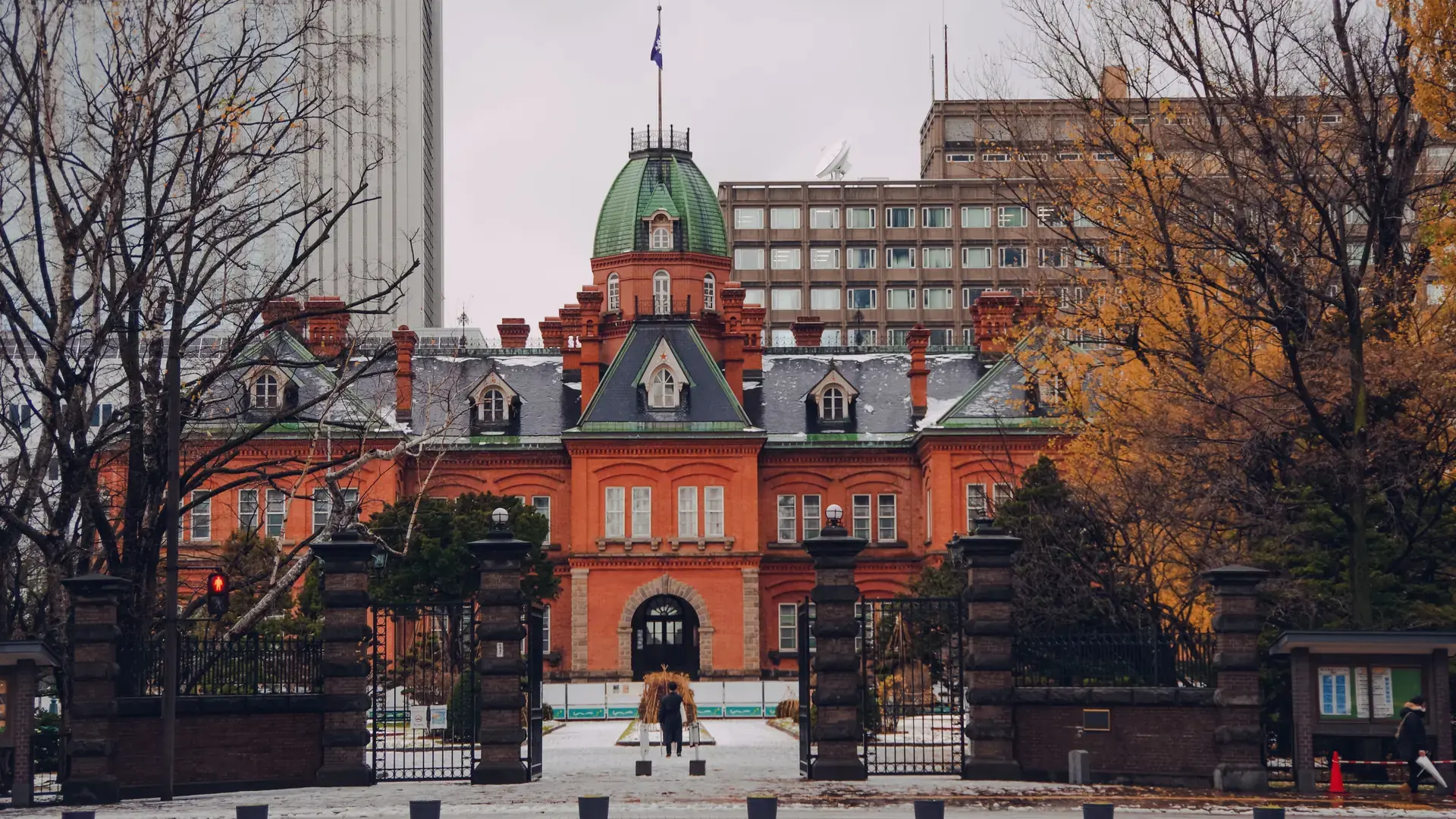
red-brick former Hokkaido Government Office near Sapporo Station framed by winter trees

Sapporo Station

airport rail, Otaru, business and heavy luggage

Stay by the station when two or more mornings begin on JR platforms.

Sleep: upper-floor business hotels tend to be controlled, though railway-side rooms need glazing.

Airport rail Day trips Winter luggage

Temporary bus stops and redevelopment can alter surface routes; confirm the operator's current boarding point.

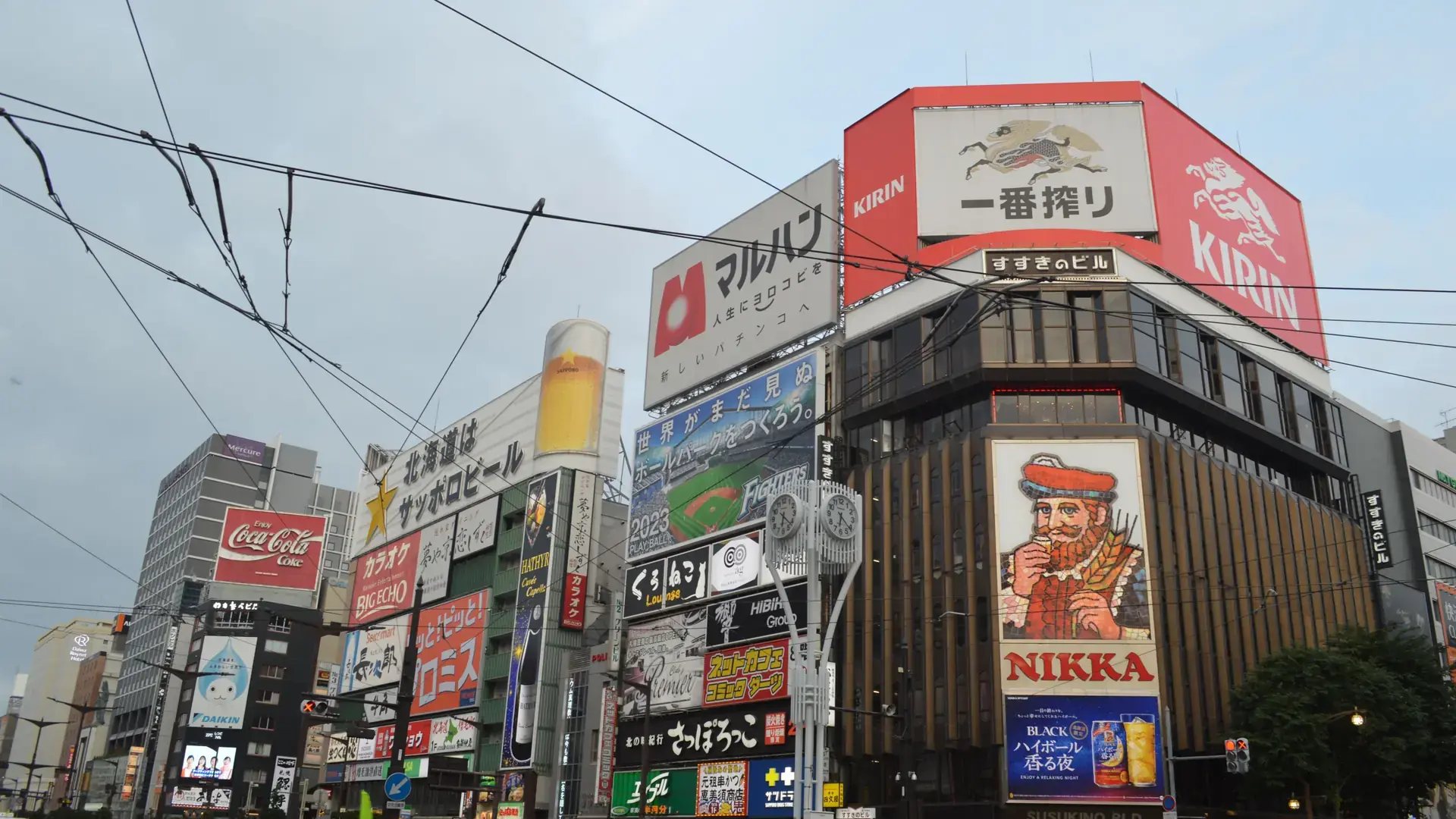
colourful Susukino crossing and neon signs in clear evening light

Susukino and Tanukikoji

ramen, nightlife, covered shopping and late dining

Select Susukino when dinner is the event and you expect to stay out after subway-friendly sightseeing hours.

Sleep: highest risk in the core; use Nakajima-facing edges or a high inward room for relief.

Food Nightlife Arcade

A low rate directly above a nightclub or busy intersection may cost sleep; read recent room-specific noise reviews.

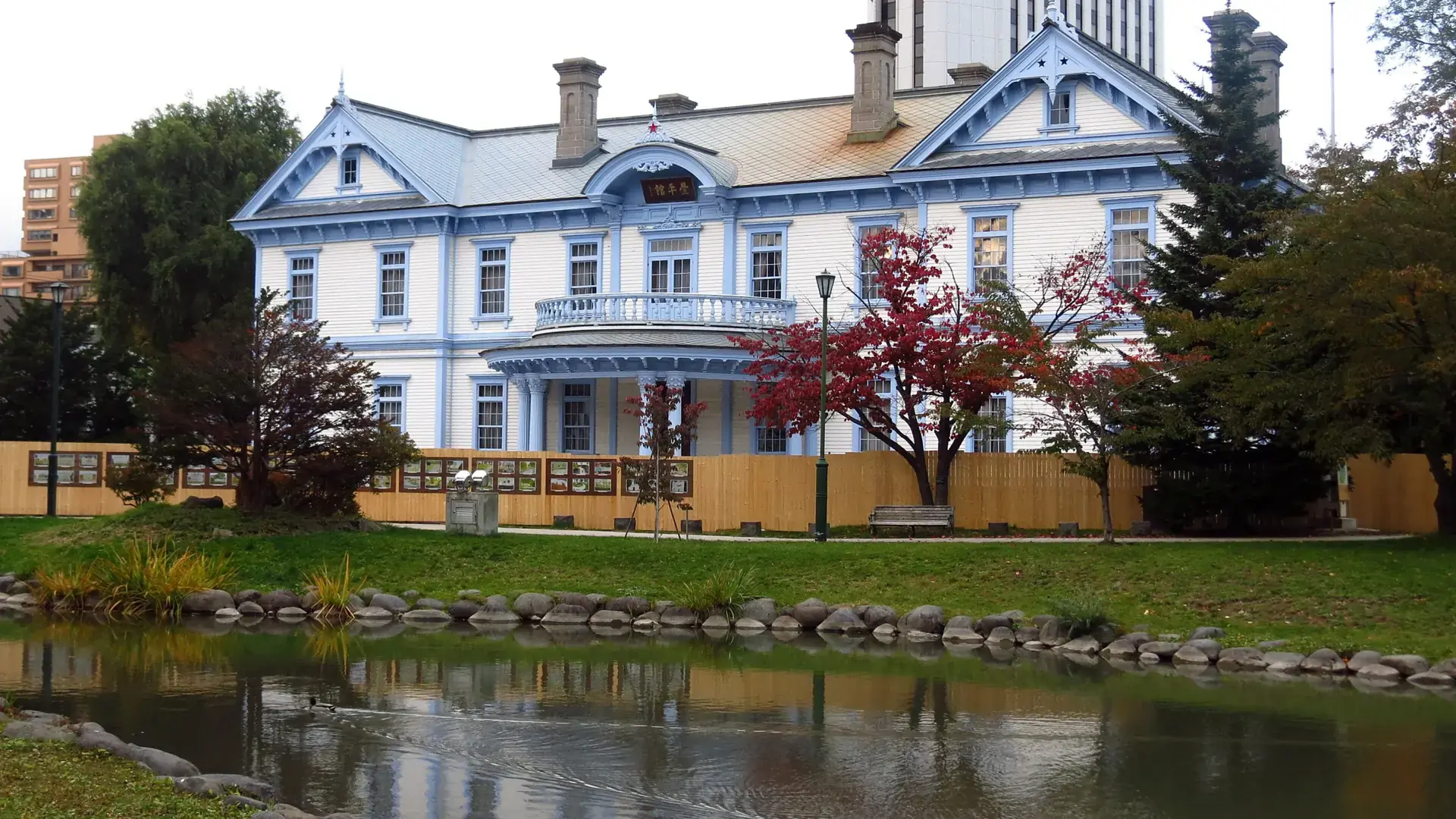
historic white Hoheikan beside the pond and autumn trees in Nakajima Park

Nakajima Park

quieter nights, families and green-space mornings

Use Nakajima when central access matters but nightlife outside the window does not.

Sleep: typically calmer than Susukino, especially on park-facing streets away from arterial roads.

Families Quiet Park

Properties spread around several park edges; match the entrance to Nakajima-Koen or Horohira-Bashi station.

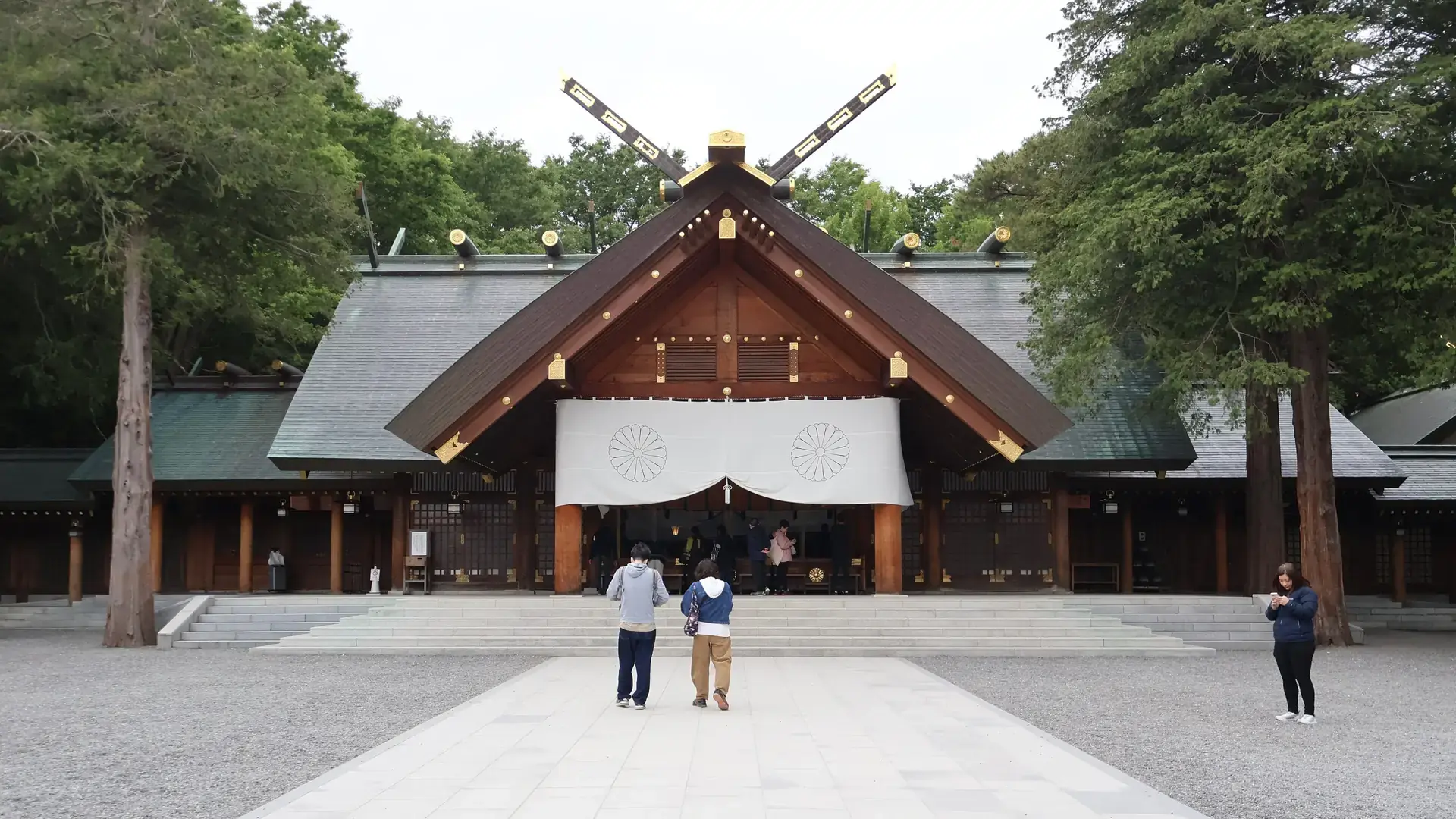
Hokkaido Shrine's timber hall and open courtyard in green Maruyama Park

Maruyama

local cafés, Hokkaido Shrine and a residential pace

Choose Maruyama when a neighbourhood morning matters more than stepping directly into central attractions.

Sleep: residential calm is the appeal, with occasional road traffic near major approaches.

Local pace Shrine Cafés

Winter walking conditions and the distance from the subway to hillier streets should be checked address by address.

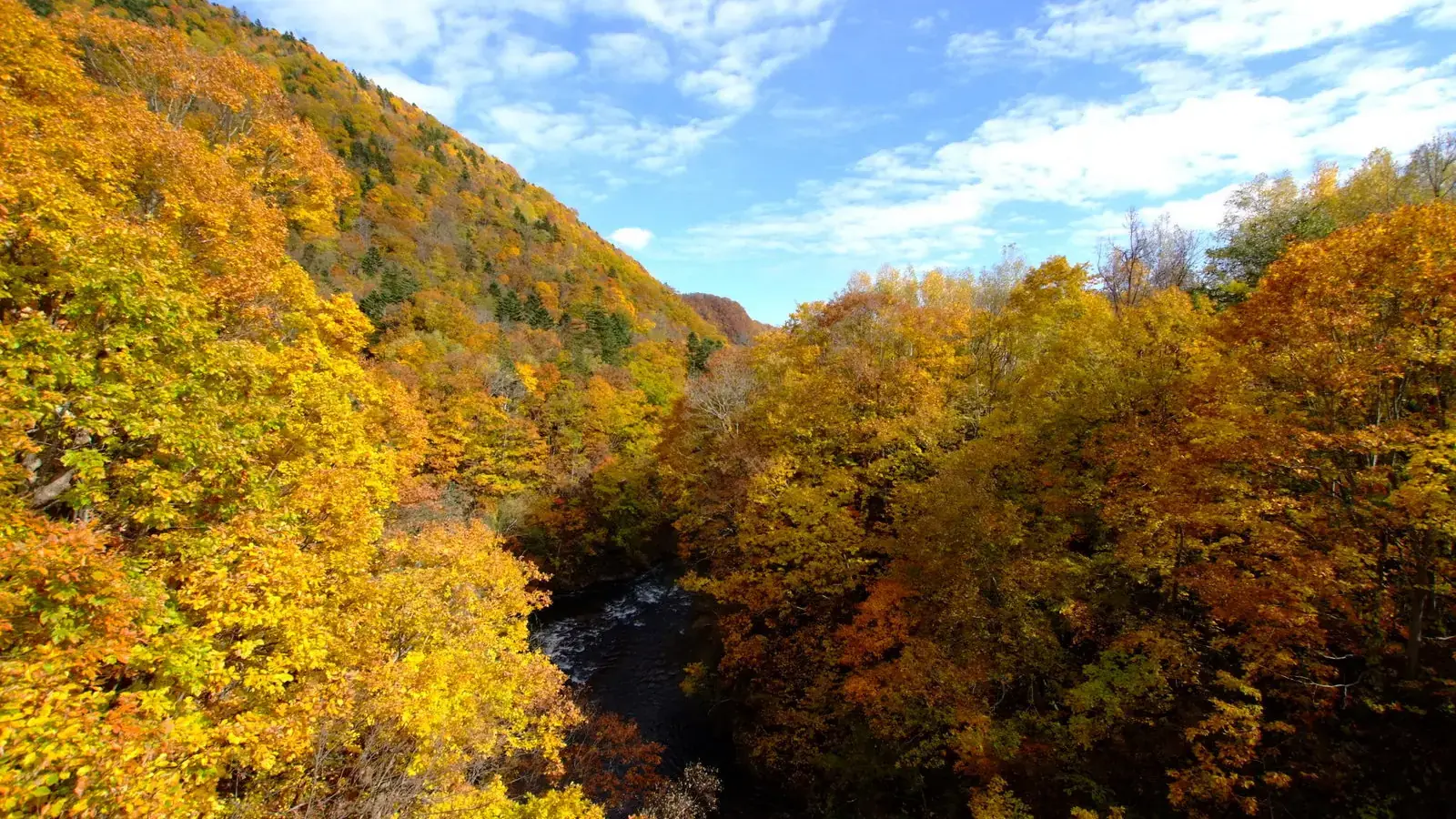
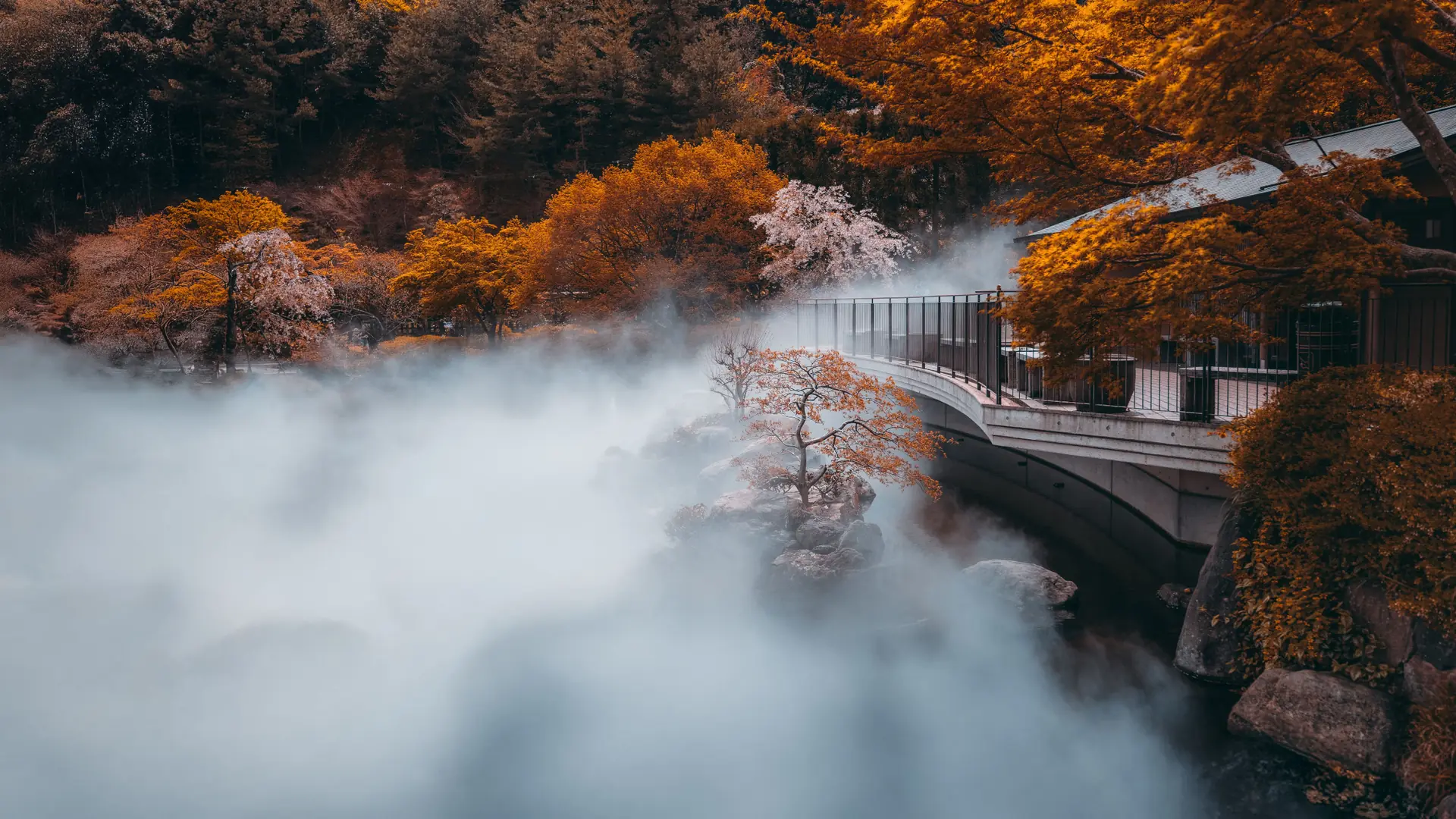
brilliant autumn forest surrounding Shigure Bridge in the Jozankei valley

Jozankei Onsen

ryokan meals, hot springs and a nature overnight

Spend one or two nights here when soaking, scenery and an unhurried dinner are primary experiences.

Sleep: resort evenings are quiet, but room, meal and bathing schedules are more structured.

Onsen Ryokan Nature

The direct Kappa Liner requires reservations and uses changed Sapporo boarding points during station redevelopment.

sunlit red-brick Sapporo Factory buildings and green courtyard beneath a blue sky

Sapporo Factory and Naebo

brick architecture, shopping, beer history and a quieter central-east stay

Base east of the grid when Sapporo Factory and Naebo-side culture outrank Susukino nights.

Sleep: generally restrained beyond the shopping complex, with traffic exposure on larger roads.

Architecture Indoor time Quiet

Map the route to the nearest subway or JR entrance; 'central Sapporo' can conceal a long snowy walk.

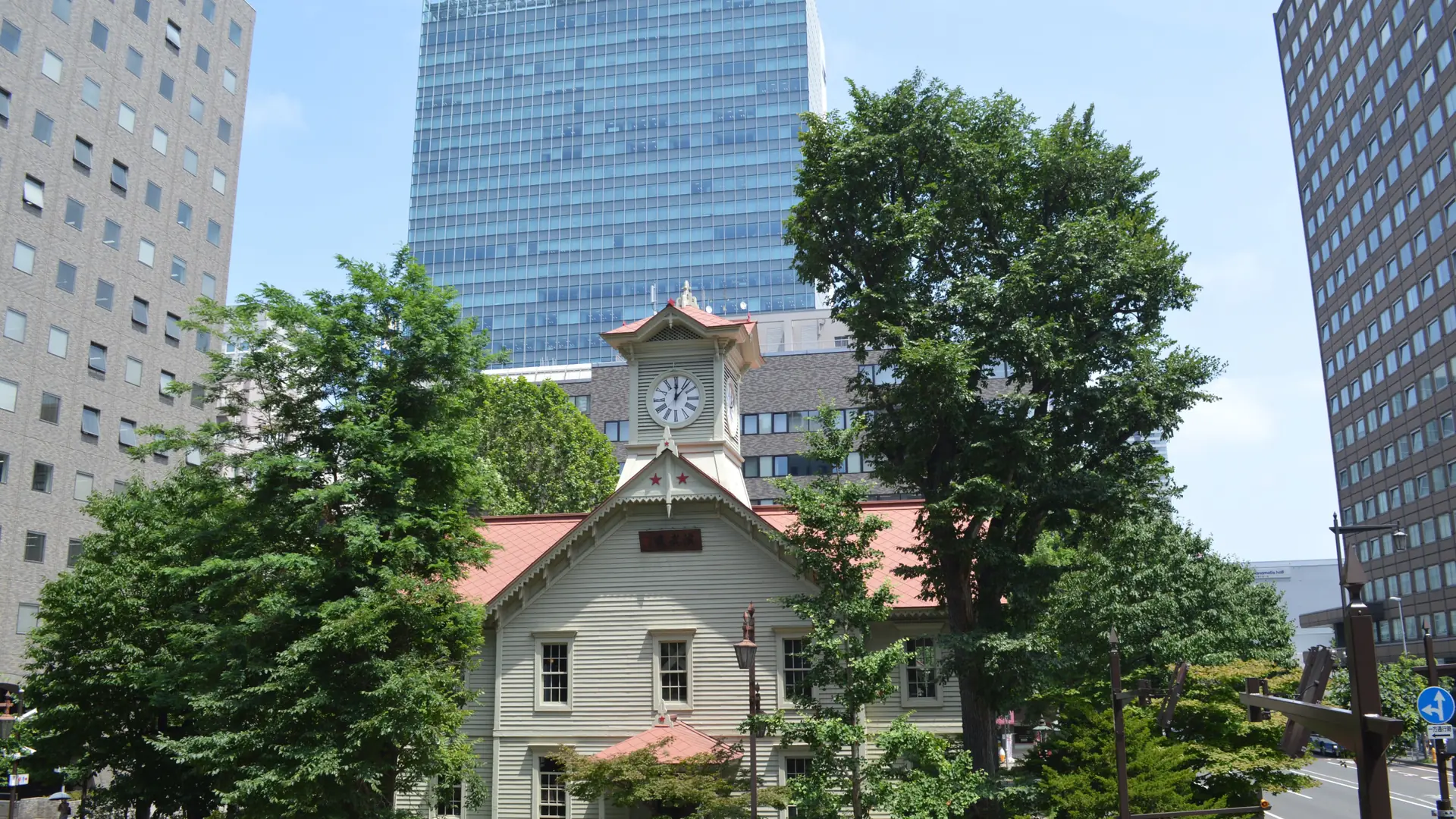
Sapporo Clock Tower framed by green trees and modern city buildings in daylight

Shin-Sapporo and Atsubetsu

suburban calm, family space and eastern Hokkaido museum visits

Use Shin-Sapporo when the Historical Village or eastern suburbs form a real part of the itinerary.

Sleep: calmer than the centre except directly beside station roads and commercial loading areas.

Families Museums Suburban

This is a deliberate eastern base, not another name for Sapporo Station; compare the last return connection.

Choose by winter route, not straight-line distance
Area Best for Trade-off Getting around
Odori Balanced first visit Event-date pressure Three subway lines and underground links
Sapporo Station Airport and rail days Farther from late food JR plus Namboku and Toho subway
Susukino and Tanukikoji Food and nightlife Noise Namboku Line, streetcar and walking
Nakajima Park Families and sleep One transfer to JR Namboku Line beside park edges
Maruyama Residential texture Less evening depth Tozai Line then walking
Jozankei Onsen Onsen immersion Not a city sightseeing base Reserved or local bus
Sapporo Factory and Naebo Indoor culture and central-east calm Fewer late dinners Walk, bus and selected JR access
Shin-Sapporo and Atsubetsu Eastern museums and family space Far from Susukino JR, Tozai subway and museum buses

Let weather and the hardest departure make the choice

A Sapporo base succeeds when it removes the outdoor segment you least want to repeat.

Snow Festival as the central event

Reserve near the correct Odori block when returning for both daylight and illuminated displays.

Do not pay the park premium if the festival is only a brief stop before rail excursions.

Sapporo Station better protects an early airport departure.

Otaru and another Hokkaido rail day

Book on the JR side when regional trains control consecutive mornings.

Avoid a remote station-edge bargain that adds an exposed walk.

Odori is stronger when only one day leaves Sapporo.

Ramen, seafood and izakaya after dark

Sleep south when dinner reservations and spontaneous counters matter nightly.

Do not place children or light sleepers on the brightest core intersection.

Nakajima offers quieter rooms one subway stop away.

One restorative night beyond the grid

Pack a small overnight bag and leave main luggage centrally when possible.

Skip the move during a short visit packed with JR departures.

Maruyama provides nature without leaving the subway network.

Search Sapporo hotels by winter route and evening priority

Compare live stays after identifying the underground entrance, JR departure or restaurant district you will repeat.

Search Sapporo hotels →
Loading Sapporo hotel results

Make New Chitose the first route decision

The airport is outside central Sapporo. Rail, airport buses and onward resort transfers serve different hotel patterns, and snow can expose weak connections.

From New Chitose Airport

JR is simplest for Sapporo Station

JR is simplest for Sapporo Station

Rapid airport trains connect New Chitose with JR Sapporo, making the station district the cleanest luggage arrival. Odori, Susukino and Nakajima require subway, taxi or a weather-dependent walk after the platform.

Airport buses can reduce the final transfer

A bus serving a central hotel zone may beat rail when suitcases, children or a difficult subway exit dominate. Confirm the current stop, reservation policy and winter operation with the responsible operator before relying on the last departure.

Use the grid above ground only when conditions support it

Walk the station–Odori–Susukino axis in fair weather

Walk the station–Odori–Susukino axis in fair weather

The central sequence is legible and compact, but winter surfaces change pace. Use underground passages and the subway for exposed segments, then emerge at the exit nearest the hotel or restaurant.

Subway solves central movement; JR solves the region

Keep operator roles clear. City subway serves Odori, Susukino, Maruyama and Nakajima; JR is the starting point for airport and regional rail, so a pass or ticket should follow the actual network used.

Treat ski transfers as booked transport

A ski area's marketing distance is not a door-to-lift guarantee. Verify pickup point, equipment rules, return time and weather cancellation directly, and avoid promising a late Susukino reservation after the final shuttle.

Choose tickets after separating city and regional days

Do not assume one product covers subway, JR and resort buses

Do not assume one product covers subway, JR and resort buses

These systems have different operators and coverage. Price central subway rides, airport rail and any ski or Jozankei bus independently, then buy a day product only when the real itinerary reaches its break-even point.

Winter accessibility includes surface conditions

Confirm the usable lift and the cleared outdoor path

Confirm the usable lift and the cleared outdoor path

A step-free station route can still finish at an icy crossing or snow-narrowed pavement. Ask the hotel for the nearest elevator exit, sheltered connection, entrance gradient and current snow-clearing route; request station assistance for platform gaps or heavy equipment.

Plan Sapporo twice: once for the map and once for the weather

Season affects walking speed, daylight, clothing, event demand and the value of every underground connection.

Four sharply different visits

Winter rewards central shelter and traction
  • Winter rewards central shelter and traction

    The official climate guide describes heavy snow and a long winter-sports window. Bring footwear suitable for compacted snow, leave transfer margins and choose a hotel whose entrance can be reached without a long exposed drag.

  • Snow Festival rooms require event-led planning

    The 2026 festival ran from 4 to 11 February across Odori, Tsudome and Susukino. Future dates and venues must be checked on the official site; Odori access is valuable, but station proximity may matter more on an early departure morning.

  • Summer unlocks park, cycling and longer evenings

    Lower humidity and milder conditions distinguish Sapporo from much of Japan in summer. Odori, Nakajima and Maruyama gain value for outdoor time, while a central subway remains useful for rain or a sudden temperature shift.

Costs hidden by a simple nightly rate

Include the city accommodation tax introduced in 2026
  • Include the city accommodation tax introduced in 2026

    Sapporo City began collecting accommodation tax on stays from 1 April 2026, including eligible reservations made before that date. Check the property's collection method and distinguish municipal tax from any other charge in the booking total.

  • Value underground access during severe weather

    A small premium near a connected entrance can replace taxis and protect time when snow is blowing. Compare the entire arrival and nightly return, not the room rate alone; an exposed bargain is least attractive when carrying skis or large cases.

  • Understand a Jozankei ryokan package

    Rates may be per person and include dinner and breakfast, while bus reservations and meal arrival deadlines constrain the schedule. Compare inclusions, bathing access and transfer cost with a central hotel plus separate meals.

Winter-city errors to avoid

Measuring blocks with a summer walking estimate
  • Measuring blocks with a summer walking estimate

    A fifteen-minute dry-pavement route can become slower on ice, in wind or with narrowed paths. Build a sheltered alternative and allow time to find the correct underground exit.

  • Calling Jozankei a central Sapporo neighbourhood

    The resort is roughly 26 kilometres south and follows bus or road timing. It deserves its own overnight plan; it cannot serve spontaneous central dinners or early JR excursions efficiently.

  • Assuming Sapporo is automatically the best ski base

    City dining is excellent, but each resort transfer has a pickup point, journey, equipment policy and final return. Choose Sapporo only after the desired slopes and shuttle schedule have been confirmed.

Is Odori or Sapporo Station better for a first stay?

Odori is better for a balanced city visit, the park, central events and equal access to Susukino. Sapporo Station wins when airport rail, Otaru or another regional train controls several mornings. In winter, compare sheltered access as well as distance.

Should I stay in Susukino?

Yes if ramen, izakaya and nightlife are central to the trip. Choose a hotel on a quieter edge or with strong soundproofing if sleep matters. Odori or Nakajima Park keeps the restaurant district close while softening its busiest atmosphere.

Where should I stay for the Sapporo Snow Festival?

Odori offers the most direct access to the main sculpture corridor, while Susukino serves the ice venue and Sapporo Station protects rail connections. Book early, identify the relevant Odori block and verify the official dates for your year.

Can Jozankei be my base for central Sapporo?

It is better treated as a separate onsen stay. The valley lies about 26 kilometres south of downtown and direct buses follow a timetable, with some services requiring reservation. Use it for baths, meals and nature rather than repeated city commuting.

What is the easiest Sapporo area from New Chitose Airport?

JR Sapporo Station is the simplest rail endpoint. Airport buses may suit selected central hotels and reduce subway handling, but current stops and winter conditions must be checked. Odori and Susukino add a final central connection after JR arrival.

Is Sapporo worth visiting outside winter?

Yes. Summer brings cooler, less humid conditions than much of Japan, while spring and autumn change the parks and nearby valleys. Odori and Nakajima suit outdoor city time; Jozankei adds foliage and hot springs when a separate overnight fits.

Do I need a car while staying in central Sapporo?

Most first visits do not. JR handles the airport and regional rail, while the subway connects the station, Odori, Susukino, Nakajima Park and Maruyama. A car adds parking and winter-driving decisions in the central grid. Consider one only when rural stops, luggage-heavy resort transfers or places beyond practical transit are essential, and verify road conditions, parking and rental winter equipment before committing.

How should I split Sapporo and Jozankei nights?

Keep the central nights together, then add Jozankei as the final or opening overnight rather than commuting back and forth. That protects JR sightseeing days and lets the ryokan meal and baths set the pace. Check the reserved Kappa Liner or local bus before choosing the sequence, because current Sapporo boarding points and meal arrival deadlines can decide whether the transfer is comfortable.

Which Sapporo area is most comfortable with children in winter?

Odori works well when the family wants short access to central sights and an underground fallback. Nakajima Park can provide a calmer night if the hotel is close to the correct subway entrance. Sapporo Station is strongest for prams, cases and repeated rail days. Inspect the final lift-to-door route, because a step-free station does not guarantee a cleared or sheltered pavement outside.

How this Sapporo guide was researched

Reviewed by StartBooker editorial team Travel editorial research and rewrite

Last reviewed 2026-09-12

Editorial method: Original winter-aware accommodation advice checked against Sapporo tourism, city tax, airport, JR, Snow Festival and Jozankei operator records, with traveller questions cross-checked against two independent 2026 guides.

11 sources reviewed

Primary and operator sources
  • Sapporo Tourism Association
  • City of Sapporo
  • Sapporo Snow Festival Executive Committee
  • New Chitose Airport
  • Jozankei Tourist Association
  • JR Hokkaido
Photo credits

Photos provided by Pexels.

Share a Sapporo stay tip that works in the actual season

Which underground exit made your winter route easier?